.gif)
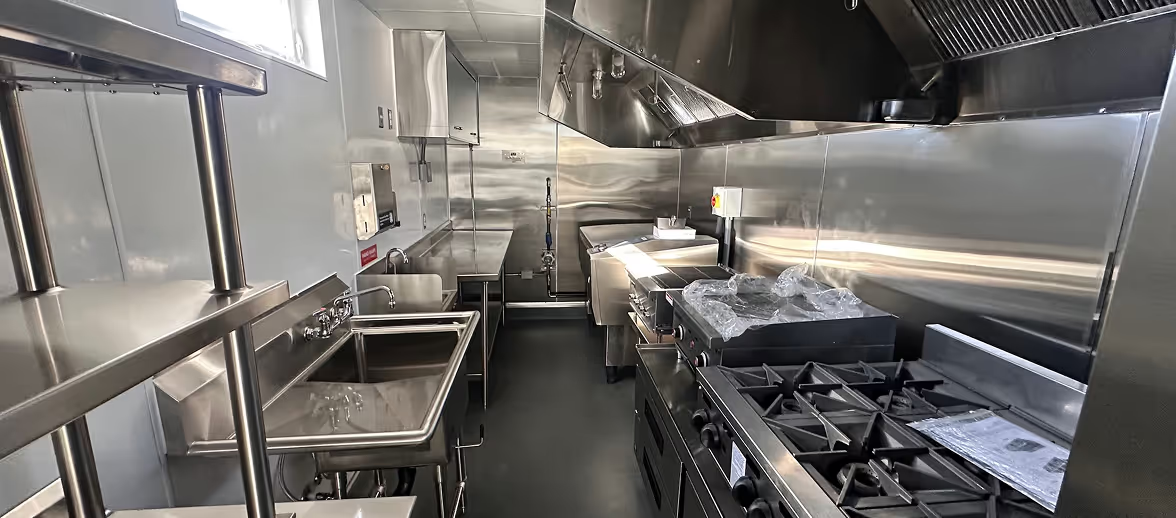
Kitchen trailers generate an average profit margin of 15-25% for food service businesses, yet many operators underestimate the true earning potential of mobile food operations. Whether you're considering a mobile kitchen for catering expansion, disaster relief contracts, or temporary service during renovations, understanding kitchen trailer profitability requires analyzing revenue streams, operational costs, and market positioning strategies. This comprehensive analysis examines real-world profit data, operational expenses, and revenue optimization techniques to help hospitality professionals make informed decisions about mobile kitchen investments and determine whether kitchen trailer operations align with their business goals.
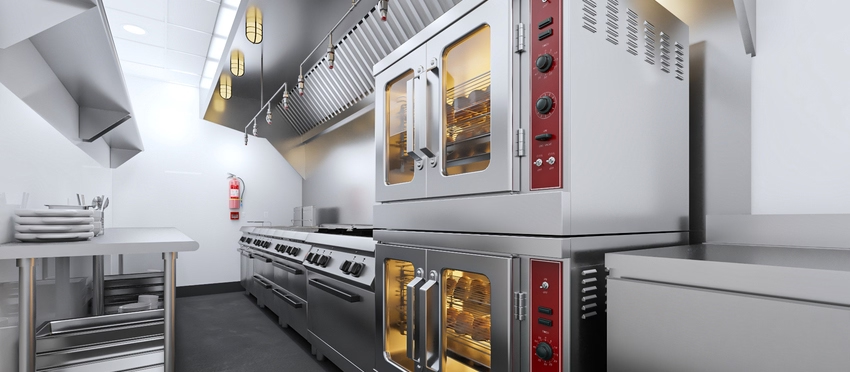
Understanding Kitchen Trailer Profitability Fundamentals
Successful kitchen trailer profitability depends on three critical metrics: revenue per service day, operational efficiency, and utilization rates. Unlike traditional restaurants that rely on fixed locations, mobile operations must optimize throughput while managing variable costs like fuel, permits, and positioning fees.
Revenue Components:
- Average ticket value across different service types
- Daily transaction volume during peak hours
- Seasonal demand patterns and booking consistency
- Premium pricing opportunities for specialized events
According to the National Restaurant Association industry outlook, mobile food services demonstrate stronger profit potential than traditional restaurants due to reduced overhead and operational flexibility.
Cost Structure Analysis:
- Equipment financing or lease payments
- Compliance with FDA mobile food unit regulations
- Insurance premiums and liability coverage
- Maintenance on the manufacturer's recommended schedule
Breaking Down Profit Margins
Most kitchen trailer operations achieve net margins between 15-25%, significantly outperforming traditional restaurants. This advantage stems from streamlined operations, reduced labor requirements, and minimal fixed costs compared to brick-and-mortar establishments.
Example: A catering-focused operation generating $1,800 daily revenue with 70% efficiency typically yields $540 in gross profit before fixed costs.

Revenue Generation Models for Mobile Kitchens
Different operational approaches generate varying revenue streams, each requiring specific cost management strategies. Common mobile kitchen users employ diverse business models that influence profitability calculations.
Event-Based Operations
Festival circuits and private events offer premium pricing but irregular scheduling. Successful operators typically charge 20-40% above standard rates while managing seasonal fluctuations through diverse booking strategies.
Hospitality Support Services
Hotels and resorts utilize mobile kitchens during renovations to maintain revenue streams. This model provides consistent income with mobile kitchen ROI calculations showing immediate returns through preserved guest services.
Tip: Hospitality operations avoid the hidden costs of kitchen shutdowns by maintaining full service capability during facility upgrades.
Corporate Catering Contracts
Long-term agreements with corporate clients provide predictable revenue streams. These arrangements often include guaranteed minimum volumes and premium pricing for specialized dietary requirements.

Operating Cost Management Strategies
Controlling operational expenses directly impacts profitability margins. Successful operators implement systematic cost controls across all expense categories while maintaining service quality standards.
Equipment and Maintenance Optimization
Quality equipment reduces long-term maintenance costs and operational downtime. Mobile kitchen equipment specifications should prioritize durability and energy efficiency to minimize ongoing expenses.
- Preventive maintenance schedules reduce emergency repairs
- Energy-efficient appliances lower utility costs
- Commercial-grade components extend operational lifespan
Note: Initial equipment investment affects profitability timelines, but quality components generate better long-term returns through reduced replacement cycles.
Food Cost Controls
Effective food cost calculation strategies maintain margins between 25-35% of revenue. Menu engineering focuses on high-margin items while minimizing waste through precise portion controls.
Regulatory Compliance Expenses
Permit fees, inspection costs, and licensing requirements vary by jurisdiction but typically range from $200-500 monthly. Operators must factor these recurring expenses into pricing models to maintain target margins.

Business Model Comparison: Purchase vs. Rental
Investment approach significantly impacts profitability timelines and operational flexibility. Each option serves different business objectives and risk tolerances.
Equipment Purchase Analysis
Ownership provides long-term asset value but requires substantial upfront capital. Typical purchase costs range from $80,000-200,000 for fully equipped units, with financing options extending payback periods.
Benefits include:
- Complete customization control
- Asset depreciation for tax purposes
- No usage restrictions or scheduling conflicts
- Potential resale value retention
Professional Rental Solutions
Rental arrangements offer operational advantages for hospitality businesses requiring temporary capacity. Professional mobile kitchen solutions provide turnkey operations without capital investment risks.
Advantages include:
- Immediate deployment capability
- Maintenance and support services included
- Scalable capacity based on demand
- Compliance certification provided
Example: A resort requiring kitchen capacity during renovation achieves immediate ROI through maintained guest services rather than revenue loss from facility closure.
Hospitality-Specific Profitability Scenarios
Luxury hospitality venues require specialized mobile kitchen solutions that maintain service standards while managing operational costs. Protecting guest experience during renovations becomes a profitability imperative rather than an expense.
Hotel Kitchen Renovations
Mobile kitchens enable continuous operations during facility upgrades, preserving revenue streams that would otherwise disappear. Cost comparisons between commercial kitchen renovation costs and temporary solutions demonstrate clear financial advantages.
Private Club Applications
Private club mobile kitchen solutions maintain member satisfaction during facility improvements while generating event revenue through expanded capacity.
Tip: Exclusive venues command premium pricing that offsets mobile kitchen rental costs while maintaining membership retention through uninterrupted service.
Seasonal Operation Expansion
Resorts and event venues utilize mobile kitchens to capture peak season demand without permanent facility expansion. This approach maximizes revenue during high-demand periods while controlling fixed costs.

Financial Planning and ROI Optimization
Comprehensive financial planning ensures sustainable profitability across varying operational scenarios. Mobile food service business planning guide provides frameworks for accurate financial projections.
Break-Even Analysis
Most operations achieve break-even within 8-14 months, depending on utilization rates and cost management efficiency. Key variables include:
- Daily service capacity and average ticket values
- Operating day frequency throughout the year
- Equipment financing terms and insurance costs
- Labor efficiency and food cost controls
Note: Hospitality operations using mobile kitchens during renovations often see immediate positive returns through preserved revenue rather than traditional profit accumulation.
Scaling Profitability
Successful operators expand through multiple revenue streams rather than single-unit optimization. Strategies include corporate contracts, event partnerships, and seasonal venue arrangements that maximize utilization across different market segments.
People Also Ask (FAQ)
What is the average profit margin for kitchen trailer operations?
Kitchen trailer operations typically achieve profit margins between 15-25%, depending on the business model and market positioning. Mobile kitchen ROI calculations show that premium hospitality operations often achieve higher margins due to elevated pricing capabilities and consistent demand patterns.
How much revenue can a mobile kitchen trailer generate per month?
Monthly revenue varies significantly based on operation type, with catering operations averaging $8,000-15,000 per month, while hospitality support services can generate $12,000-25,000 monthly. Location, menu pricing, and operational hours directly impact revenue potential, with different user types achieving varying performance levels.
What are the main operating costs for kitchen trailers?
Primary operating costs include fuel ($300-800/month), maintenance ($200-500/month), insurance ($150-400/month), permits and licenses ($100-300/month), and food costs (typically 25-35% of revenue). Professional mobile kitchen rentals often include maintenance and support services, reducing operational complexity for temporary users.
How long does it take for a kitchen trailer to become profitable?
Most kitchen trailer operations reach profitability within 6-12 months, with break-even points varying based on initial investment, operating efficiency, and market penetration. Hospitality operations using mobile kitchens during renovations typically see immediate ROI through maintained revenue streams rather than traditional profit timelines.
Conclusion
Kitchen trailer profitability depends on strategic operational planning, efficient cost management, and consistent utilization across diverse revenue streams. Mobile operations that maintain 15-25% profit margins significantly outperform traditional restaurant models while providing operational flexibility unavailable in fixed locations.
Explore comprehensive mobile kitchen solutions designed for hospitality excellence or discuss your specific operational requirements with our team.

%20(1).avif)
Testimonial
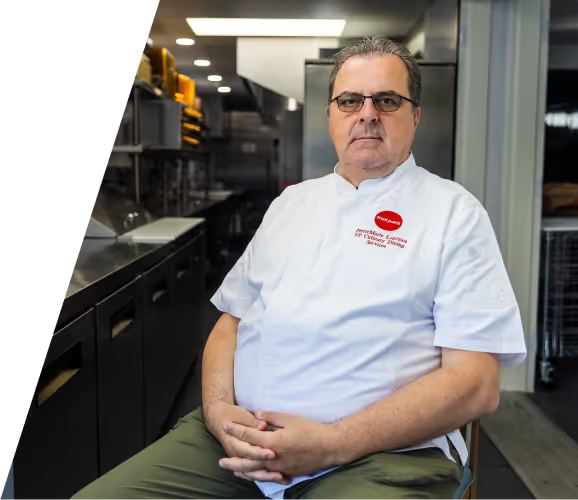
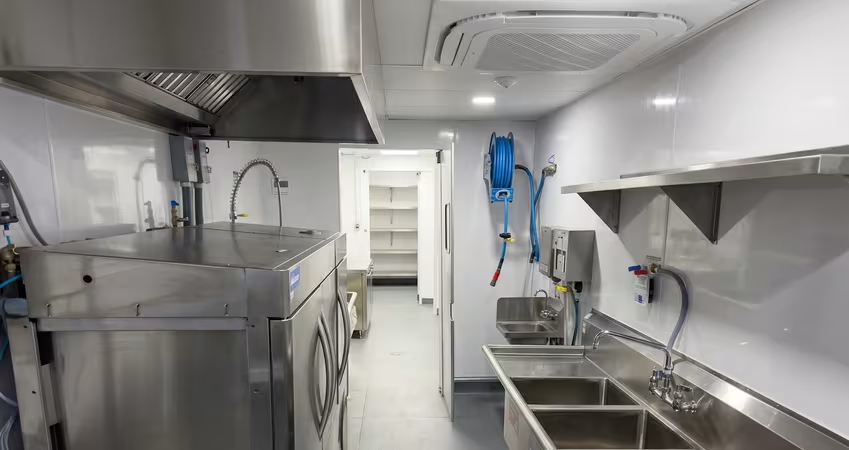
"What is standing out when you look at the mobile kitchen operation is the efficiency that we can really achieve because it's built for that."
Tell us about your kitchen needs and request a quote.
.png)
Turnkey mobile kitchen
Proudly made in-house in the USA
Commercial grade kitchen equipment
Code-compliant
Trusted by Industry Leaders