.gif)
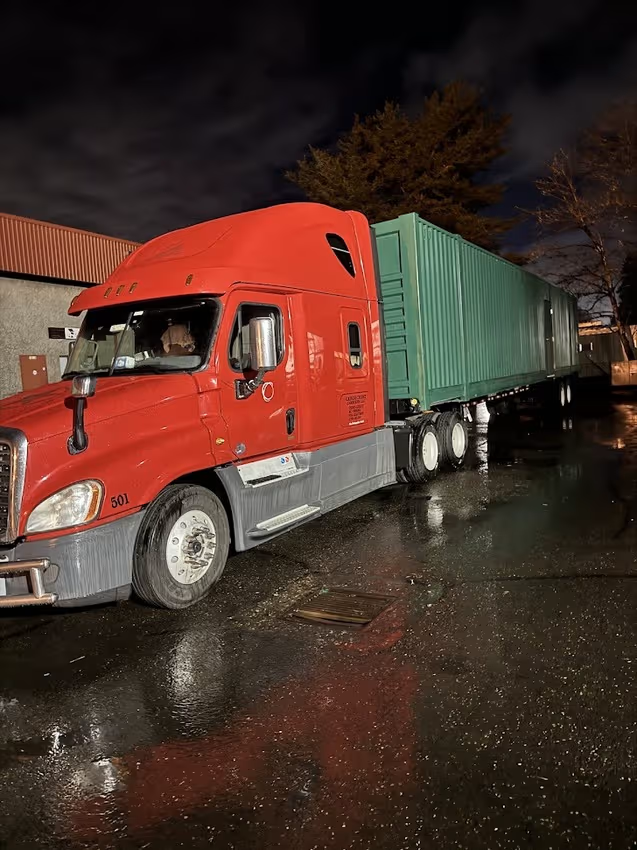
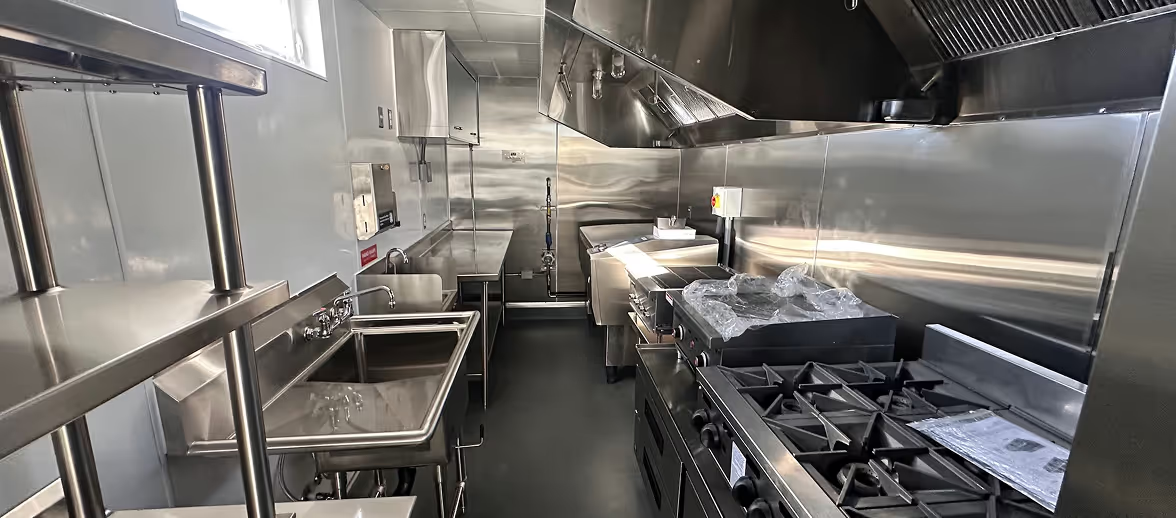
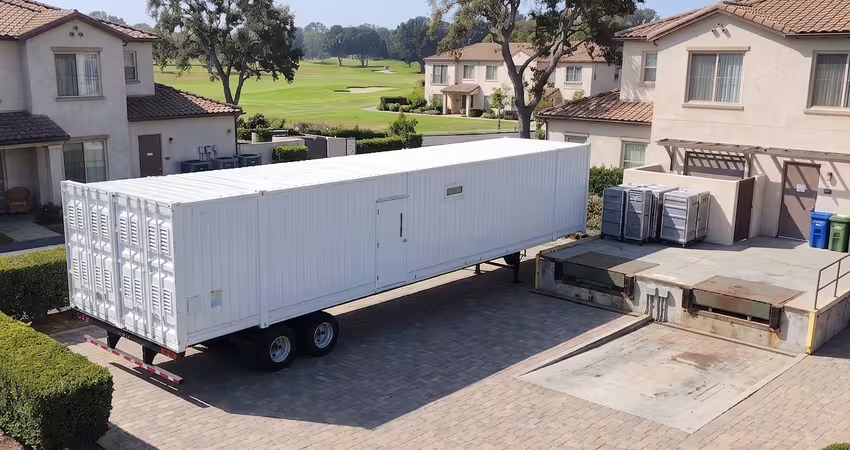
A kitchen trailer arrives on a flatbed and, about a week later, it is a working commercial kitchen. What happens in between runs through your site, your utilities, your inspectors and your permit — and it is the approvals that slip. Thirty percent of construction firms named permitting delays and regulatory reviews among their concerns for the year in the AGC's 2026 outlook, surveyed that December. Miss that step and the unit sits on your property waiting for an approval nobody started. This guide walks the kitchen trailer delivery and setup sequence in order, and marks which steps are yours rather than your provider's.
Understanding the Mobile Kitchen Rental Process
Delivery is one week of a sequence that runs two to three months. The table below sets out each step, how long it takes, and who owns it. The steps that slip are rarely the transport — they are the ones sitting on your side of that last column.
| Step | Typical duration | Who owns it |
|---|---|---|
| Discovery and agreement | 2–4 weeks | Shared |
| Planning and design | 2–4 weeks | Provider, with your input |
| Permitting | 1–6 weeks | You |
| Site preparation | Before delivery | You |
| Delivery and installation | About 1 week | Provider |
| Utility sources and connection | Within the install window | You |
| Inspection after set | Varies by jurisdiction | You book it |
Sequence the three steps you own backwards from the date you need to be serving.

Site Assessment and Pre-Delivery Requirements
Site evaluation sets the installation timeline. A provider assesses access routes, ground conditions, utility locations and clearances before scheduling delivery. What it produces is a list of things you have to fix, so run it early enough that fixing them does not push the date.
Critical Site Factors
- Ground and bearing — a level, stable pad; ask for your model's delivered weight
- Access — turning radius, gate widths and overhead clearance for a flatbed
- Utility proximity — distance from the nearest panel, water main and sewer
- Fire access — local fire lane and emergency vehicle requirements
Note: Sites that look fine on a walkthrough fail on drainage, overhead clearance or an incompatible panel. Get the numbers on paper before delivery is booked.
Utility Infrastructure Planning
Units arrive with electrical, plumbing and gas connections pre-installed. You provide and connect the sources, and carry the utility costs for the lease. Where mains services are unavailable, the sources can be tanks and generators — that changes what you connect to, not who supplies it.
Ask for the electrical draw of your configuration rather than a generic figure; it moves with the equipment schedule. If a renovation is disconnecting services, coordinate the temporary supply against your renovation timeline before either date is set.
Kitchen Trailer Delivery and Setup Coordination
Delivery is a scheduling problem more than a transport one. A loaded unit needs a route, a window that avoids guest movements and contractor traffic, and a placement point already cleared for utilities and fire access. Book it once the site work is genuinely finished.

Transportation Logistics
Units travel on specialised trailers with tractor units set up for controlled manoeuvring, and towing carries its own weight, hitch and licensing requirements — see towing requirements. Dimensions decide the route before the calendar does: the Federal Highway Administration fixes the National Network width limit at 102 inches and gross vehicle weight at 80,000 pounds, so anything beyond either moves under a state oversize or overweight permit with its own approved routing. Ask when that routing is being filed, not whether.
Positioning and Stabilization
Crews align the unit to the utility connections and fire access route, level it on stabilisers, then secure it. Position exhaust discharge away from dining terraces, guest windows and air intakes — easier on a site plan than after the unit is set. See levelling and stabilisation.
Stairs, decks and ramps are yours, and must be ready when the unit is: access requirements.
Systems Integration and Equipment Commissioning
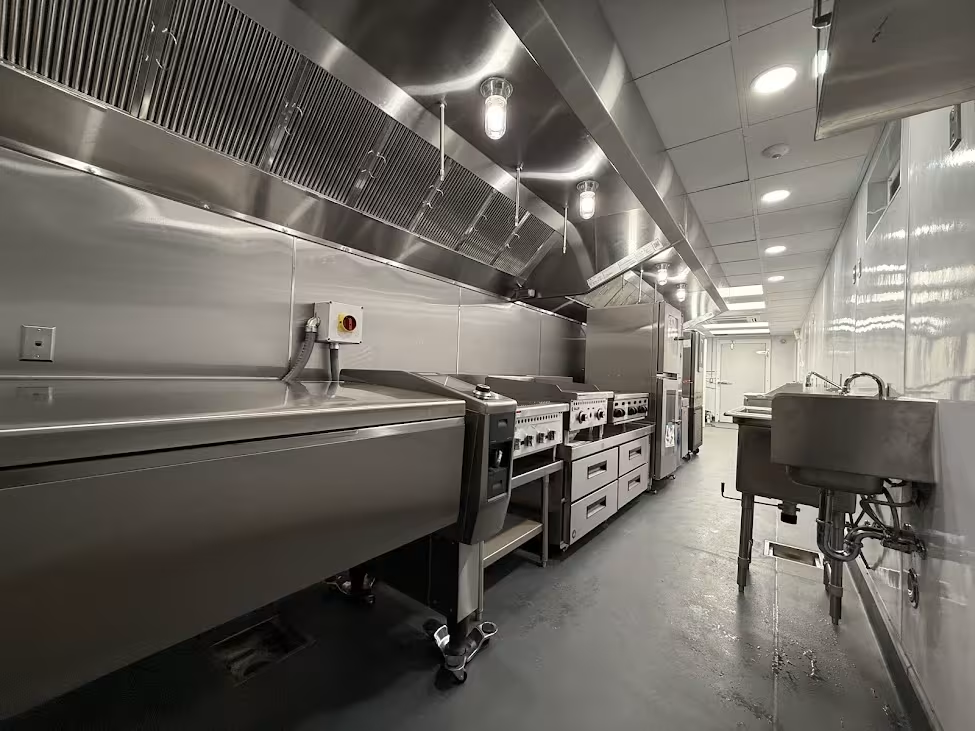
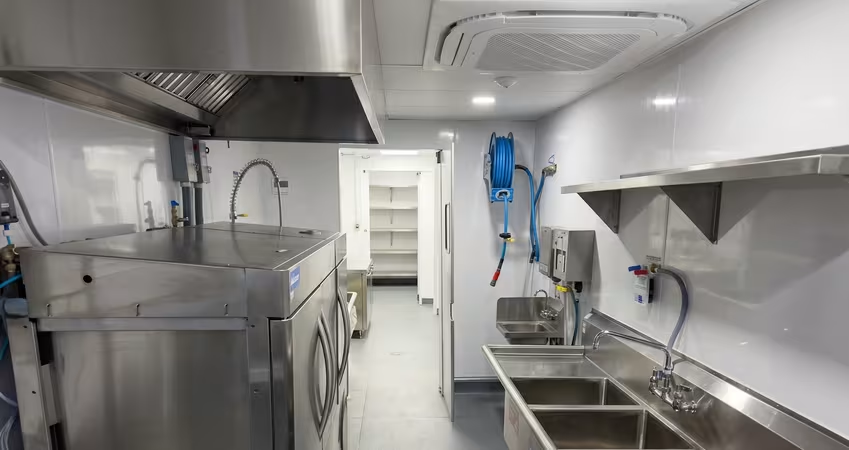
Commissioning turns a positioned unit into a working kitchen. Licensed technicians make the electrical, water and gas connections, then test everything before an appliance is fired: phase balance, ground fault protection, backflow prevention, line pressure, and gas leak checks. Nothing cooks until all of it clears.
Utility Connections and Testing
Ventilation has to satisfy NFPA 96, which governs ventilation control and fire protection for commercial cooking, in whichever edition your jurisdiction adopted. Exhaust flow and makeup air are balanced together. Waste is the connection operators forget: you provide the disposal route and a grease trap where required, and an unresolved grease trap holds an inspection as surely as a missing permit.
Equipment Validation and Certification
Commissioning verifies that cooking equipment reaches temperature, refrigeration holds food-safe ranges, and warewashing hits sanitising temperatures. The reference point is certification: NSF/ANSI food-equipment standards set the material, cleanability and performance criteria an inspector expects the equipment to have already met before it arrives on your site.
Commissioning is also where a converted trailer shows what it is. Retrofits tend to fail these checks in a consistent order — the panel first, then air balance, then temperature hold under sustained load — because none of those systems were designed against each other. A purpose-built mobile kitchen is manufactured from kitchen modules to permanent-facility standards, so commissioning confirms what was designed in. Our day-one checklist covers this step.
Tip: Refrigeration needs time to pull down after power-up. Ask how long your walk-in takes to stabilise, then book the health inspection after that.
Regulatory Compliance and Inspection Process
A rented kitchen is inspected against the same framework as a permanent one, and the permit is yours. A provider supplies code-compliant, third-party-inspected units and the documentation behind them. The operator applies, holds the permit and books the inspection — anyone describing otherwise is offering a service that does not exist.
Permit Coordination
Requirements vary by state, county and municipality, so open the conversation with your health department, fire marshal and building department during planning. Permitting runs one to six weeks on top of discovery and design — the widest variable in the sequence.
Complete documentation at first submission is what shortens it. Ask Mobile Culinaire for the equipment certifications, ventilation and fire-suppression specifications and inspection records as one package, and submit them together.
Health Department Inspections
Inspectors assess a mobile unit on the same criteria as a fixed facility: equipment certification, temperature control, handwashing, sanitation and waste management. The FDA Food Code is the federal model text; what an inspector actually applies is the edition your state adopted, and in places those are several years apart.
Failed inspections cluster around three avoidable causes: utilities unfinished, site work incomplete, or equipment inspected before it reached operating stability.
Note: The fire marshal inspects separately from the health department, and both must clear before you operate.
Financial Considerations and ROI Analysis
Budget the deployment, not just the unit. Delivery, positioning, licensed utility work, permit fees, insurance extensions and site preparation all sit outside the base rental. Several of them are yours to procure directly rather than line items you can expect on a provider's quote.
Cost Structure Components
- Base rental — the unit across the window, plus extension months
- Delivery and removal — transport, positioning, connection assistance, teardown
- Utility connection — licensed electrical, plumbing and gas work, plus the sources
- Site preparation — pad, access, decks and ramps, laydown space
- Permits and inspections — application fees and re-inspection
- Insurance — liability and property extensions
Price the delay risk alongside them, because an approval that slips keeps every one of these lines running while nothing is being served. Our rental ROI method weighs the total against revenue protected, or contact us for a figure against your dates.

Operational Transition and Staff Training
Handover is the last step and the one most often compressed. A brigade moving into a different layout needs the equipment walked through, the shutoffs located and the routines rehearsed before first service rather than during it. Build a day into the schedule.
Staff Orientation Requirements
Cover fire suppression activation, emergency gas and electrical shutoffs, waste handling, and the startup and shutdown routine. Experienced staff still need it: the equipment is commercial-grade, but the shutoffs are not where they were.
Mobile Culinaire manufactures in Oregon rather than converting road trailers, and more than 400 units have gone out in four footprints from 32 feet to a joined 2×53, with laundry and restroom units alongside. Installation is roughly one week of the two-to-three-month sequence above, and the approval documentation travels with the unit.
Performance Expectations
Expect a settling period rather than a step change. Output climbs as the team learns the layout, so planning the first fortnight's covers conservatively costs less than finding the limit mid-service. According to the U.S. Bureau of Labor Statistics (July 2026), separations in accommodation and food services ran at 5.2% against 3.2% across all nonfarm industries — a badly handled handover costs people, not just covers.
Conclusion
Kitchen trailer delivery and setup is a two-to-three-month sequence in which the transport is the predictable part. Site readiness, utility supply and permitting are yours, they run in parallel rather than after, and they decide whether the unit is serving on the date you promised.
Work backwards from that date, get the site numbers on paper early, and submit the permit package complete. A slip here is not a construction delay you can explain away — it is a closed dining room with a finished kitchen parked outside it. See how units are deployed across real projects.
Disclaimer
Permit, health, fire and building requirements for temporary and rented commercial kitchens vary by state, county and municipality, and jurisdictions adopt different editions of the applicable codes. Durations quoted here are planning figures, not commitments. Confirm every requirement and utility specification with your authority having jurisdiction before fixing a delivery date.
People Also Ask
Four questions come up in nearly every deployment conversation. Two turn on who owns a step rather than how long it takes, and that is usually the more useful answer to have in hand before you commit to a delivery date.
How long does kitchen trailer delivery and setup take?
Delivery and installation run about a week, but that is the last stage. Ahead of it sit discovery and agreement at two to four weeks, planning and design at another two to four, and permitting at one to six depending on jurisdiction. Plan two to three months to first service.
What site preparation is required before kitchen trailer delivery?
A level, stable pad; access wide and high enough for a flatbed; utility sources at the placement point; a waste route with a grease trap where required; and stairs, decks or ramps for staff access. All of it is the operator's. Ask your provider for the figures on your configuration.
Who handles permits and inspections for a mobile kitchen installation?
The operator does, not the provider. You are the applicant, the permit holder, and the one who books the inspection, under rules that differ by state, county and municipality. What a provider contributes is the evidence file — certifications, ventilation and suppression specifications, inspection records — and submitting that complete the first time is what keeps the approval short.
What happens if weather delays kitchen trailer delivery?
Delivery windows move for weather, and the knock-on lands on the inspection date rather than the transport. Keep site work finished ahead of the window rather than to it, agree a fallback date when you book, and tell your health department and fire marshal early if the date shifts. Re-booking an inspection is the longer delay.

%20(1).avif)
Testimonial

"What is standing out when you look at the mobile kitchen operation is the efficiency that we can really achieve because it's built for that."
Tell us about your kitchen needs and request a quote.
.png)
Turnkey mobile kitchen
Proudly made in-house in the USA
Commercial grade kitchen equipment
Code-compliant
Trusted by Industry Leaders