.gif)
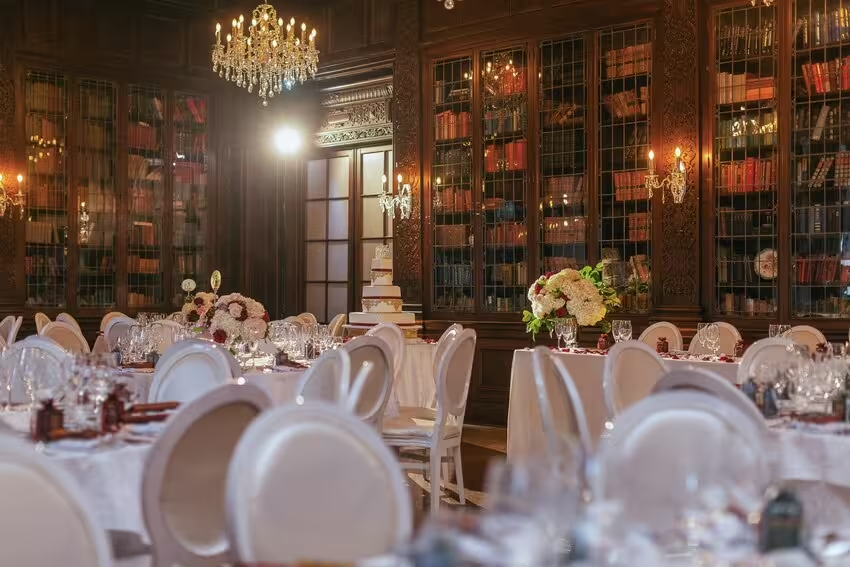
A renovation window and a wedding calendar are both fixed, and only one of them will move. Daily covers can be thinned. A signed contract has a date on it. That makes a kitchen renovation during wedding season a contract problem before it is a construction one. Club Benchmarking puts the share of clubs subsidising their food and beverage operation at about 70% — so the department holding your contracted events is also the one with the least margin to absorb a mistake.
Purpose-Built Mobile Kitchens vs. Standard Catering Trailers
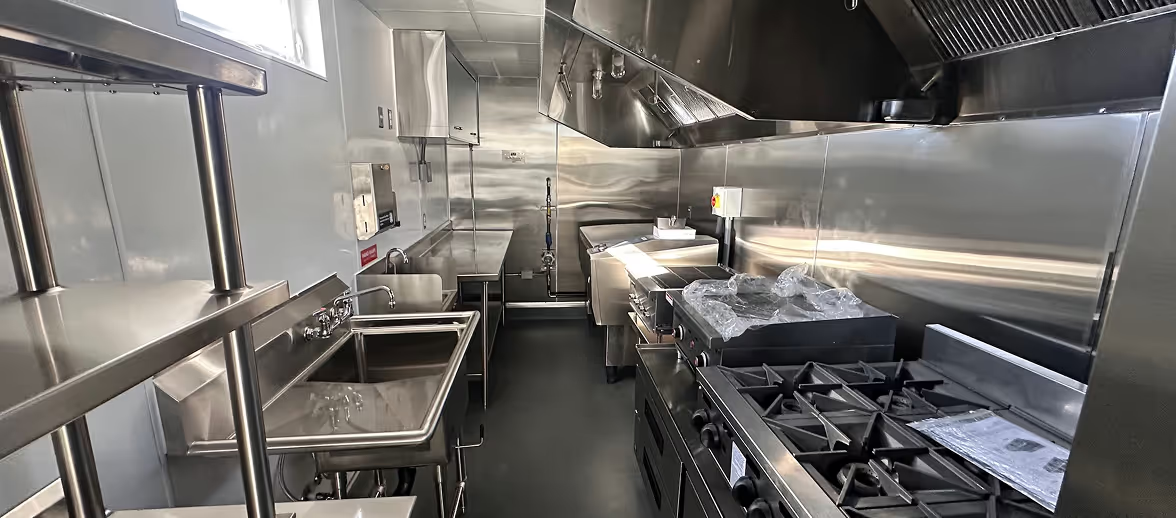
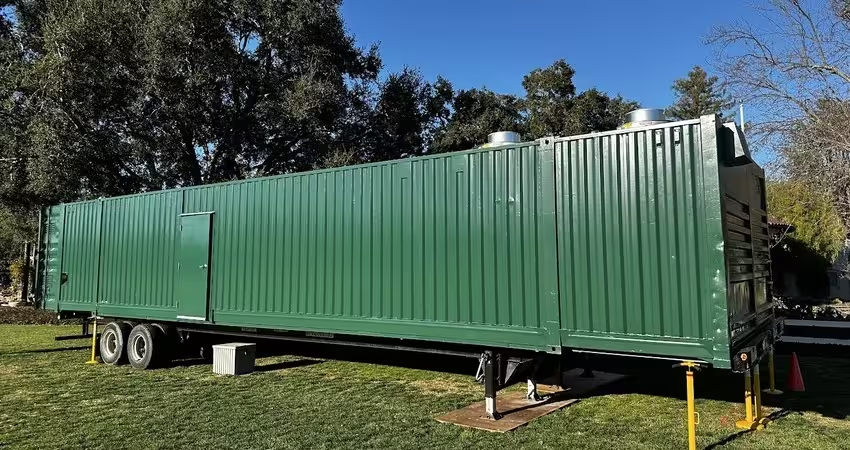
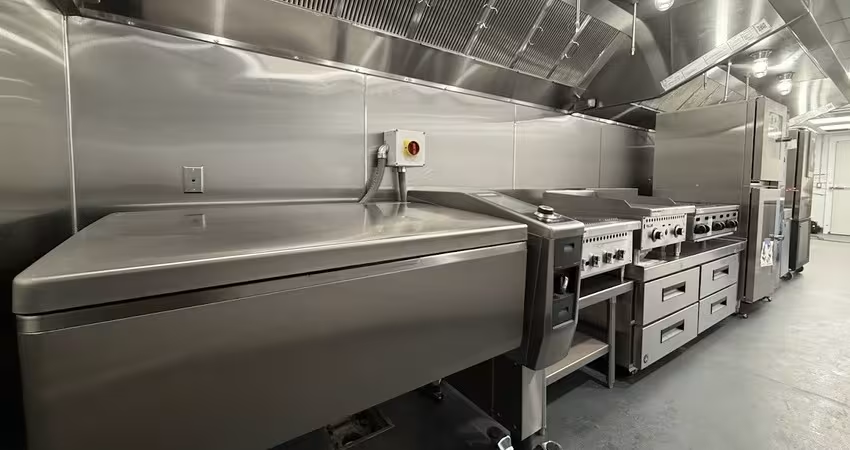
Both quote as a temporary kitchen. Only one is built to run banquet service every weekend for five months. A retrofitted trailer is a box converted after the fact; a purpose-built mobile kitchen is manufactured from kitchen modules to permanent-facility standards. The difference shows up under load, which is when your events land.
A retrofit's weak points surface under exactly the conditions a wedding creates: the whole line firing at once, a room at capacity, and an August evening the ventilation was never balanced for. A plated banquet has no tolerance for a mid-service outage, and no option to reschedule around one.
Certification is the other half. Equipment carrying NSF/ANSI certification has been tested for material safety, cleanable design and performance. Ask whether the units you are quoted actually hold it, rather than whether they are described as commercial grade.
Note: “Turnkey” is not a specification. Ask what the unit contains, what it draws, and who connects it.
%2520(1).avif)
Planning a Kitchen Renovation During Wedding Season
Two calendars collide: the construction sequence and the events book. The construction sequence can flex by a week or two; a wedding cannot. Sequence backwards from your first contracted date rather than forwards from demolition, and the whole plan changes shape.
Sequencing the Window Against the Calendar
The temporary kitchen is not a one-week purchase. Discovery and agreement run two to four weeks, planning and design another two to four, permitting one to six by jurisdiction, and delivery and installation about a week. Minimum lease is one month.
Permitting is the widest variable, and the one with no workaround. The AGC's 2026 outlook counted permitting and regulatory review among the year's concerns for 30% of construction firms. A contractor can add labour to a slipping build; nobody can add labour to a plans examiner. Start it during planning.
Events Already Under Contract
Pull the banquet book before you agree a window. Every event in it has a date, a guest count and a contracted menu, and each is a separate exposure. The question is not whether you can still host it, but on what equipment — and whether the menu you sold survives.
Three moves reduce the risk. Confirm the equipment schedule against your most demanding contracted menu, not your average one. Treat the dates nearest the delivery window as immovable when you sequence site work. And agree an extension month up front, because a renovation that runs long lands on the events at the far end of the book.
Tip: Price the extension month before you sign. It is a certainty on most projects and negotiates better in advance.
Holding Banquet Volume
Size on meals per day against peak service, not guest counts at a typical wedding:
| Configuration | Sq ft | Meals per day |
|---|---|---|
| 32′ | 256 | 150–200 |
| 40′ | 320 | 200–250 |
| 53′ | 450 | 300–450 |
| 2×53′ | 900 | 500–650 |
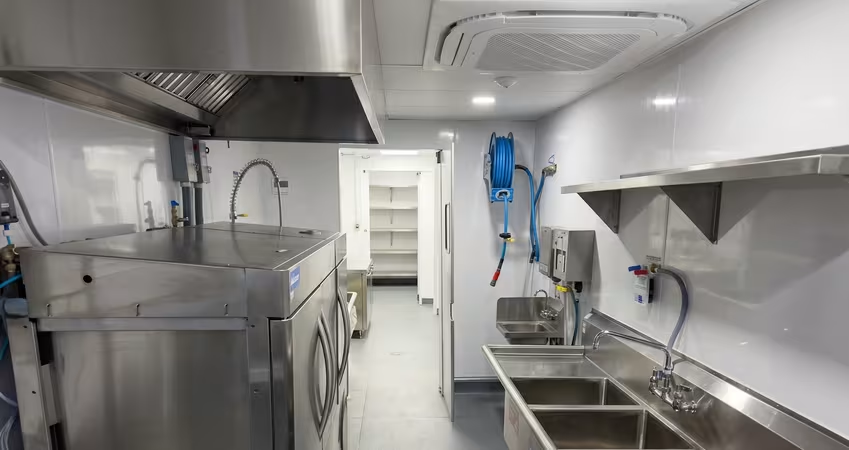
Simultaneous banquet and à la carte service is the real test, and where an undersized stopgap forces menu cuts. Menlo Circus Club ran a joined 2×53′ unit through a five-month renovation at 400–500 meals a day on a full menu — burner range, fryers, double-deck oven, walk-in cold storage — and passed California code with it. Our ROI method weighs that against the revenue it protects.
Regulatory Compliance and Permit Requirements
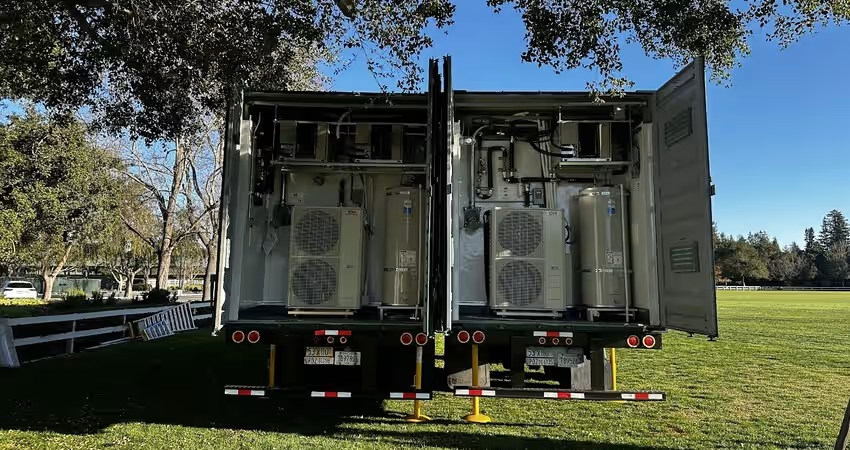
A temporary kitchen is inspected against the same framework as your permanent one, and the permit is yours rather than your provider's. A provider supplies code-compliant, third-party-inspected units and the documentation behind them. You apply, you hold it, and you book the inspection.
Health Department Approvals
Inspectors assess the unit on the same criteria as a fixed facility: equipment certification, temperature control, handwashing, sanitation and waste management. The FDA Food Code is the federal model text; your state adopted a particular edition of it, and that edition is the one the inspector arrives with.
Submit complete at first application. Ask Mobile Culinaire for certifications, ventilation and fire-suppression specifications and inspection records as one package — our permits guide lists what to assemble.
Fire Safety, Ventilation and Zoning
Ventilation and fire protection fall under NFPA 96, in whichever edition your jurisdiction adopted, and the fire marshal inspects separately from the health department. Both must clear before you operate. A unit on your grounds may also need a temporary use or zoning permit.
Financial Considerations and ROI Analysis
Budget the deployment, not the unit. Delivery, positioning, licensed utility work, permit fees, site preparation and insurance extensions all sit outside the base rental, and several are yours to procure directly rather than lines you can expect on a provider's quote.
Rental Cost vs. Revenue Protection
Rates are project-specific, and a number quoted before anyone has seen your site is a placeholder. What moves it: configuration, equipment schedule, the length of the window, and how much utility work the placement point needs. Build a total across the lease and set it against what the window costs unserved — our downtime calculator does that arithmetic.
Peak-season windows are expensive to get wrong: a cancelled event is revenue you cannot recover later. The Knot Worldwide's 2026 Real Weddings Study, covering 10,474 US couples married in 2025, puts the average wedding at 117 guests and $292 of total spend per guest. Only part of that is catering, but it sizes what a single date on your book represents.
Insurance and Liability
Do not assume the rental is covered. Whether business-interruption or extra-expense cover will pay for a temporary kitchen depends on your policy wording, and is not something to take on trust from either side. Get your broker's answer in writing, and the provider's certificates of insurance, before you sign.
Selecting the Right Mobile Kitchen Provider
Judge providers on the two things that fail during a booked event: the equipment, and the response when it stops. Ask for unit age, maintenance records, and what happens at six on a Saturday evening. A failure mid-banquet costs you the event, not a repair bill.
Equipment, Support and the Responsibility Split
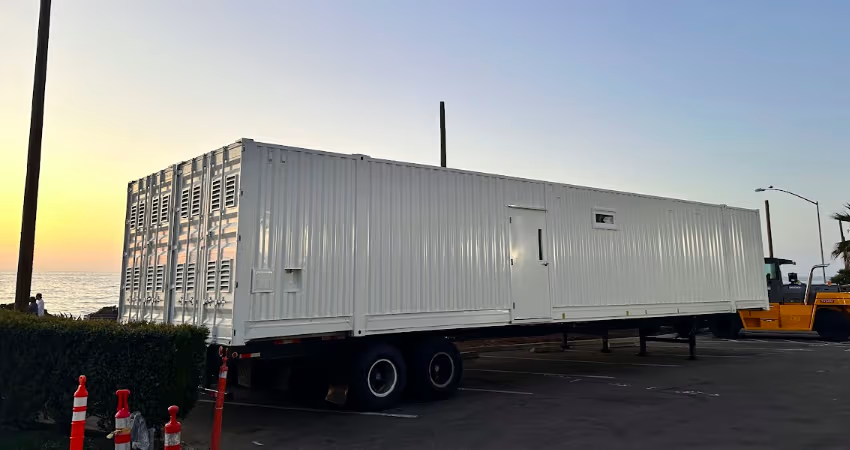
For a venue the relevant detail is capacity and finish rather than the factory. Mobile Culinaire manufactures in Oregon from kitchen modules; the range runs from 32 feet to a joined 2×53 at 900 square feet, with laundry and restroom units available where back-of-house is displaced too, and more than 400 units delivered to date.
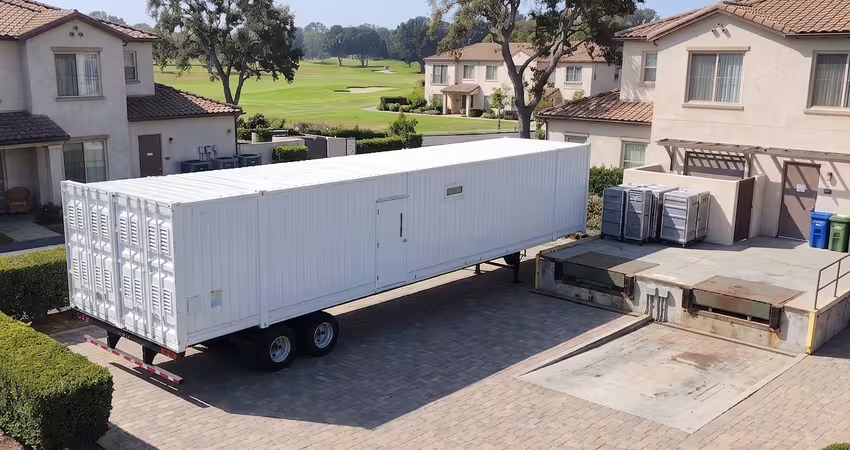
Units arrive with electrical, plumbing and gas connections pre-installed; you provide and connect the sources, carry the utility costs, and own decks and ramps. Confirm that split in writing early — it is the most common reason a delivery date slips. The delivery sequence sets out each step, or contact us for a plan against your dates.
Conclusion
A kitchen renovation during wedding season is won on the calendar, not the construction site. Pull the banquet book first, sequence backwards from the first contracted date, start permitting during planning, and size the kitchen against your most demanding sold menu.
Get those four right and the events already sold stay sold. See how event venues use them.
Disclaimer
Permit, health, fire and building requirements for temporary commercial kitchens vary by state, county and municipality, and jurisdictions adopt different editions of the applicable codes. Durations quoted here are planning figures, not commitments. Confirm every requirement, utility specification and insurance question with your authority having jurisdiction and your own broker before fixing dates.
People Also Ask
Three questions decide most renovation windows at a venue with events on the books. Two of them turn on who owns a step rather than on how long that step takes, which is usually the more useful thing to establish before you commit to a date with your contractor.
How far ahead should a venue plan a renovation around its events calendar?
Plan two to three months from first conversation to first service. Discovery and agreement run two to four weeks, planning and design another two to four, permitting one to six depending on jurisdiction, and delivery and installation about a week. Minimum lease is one month, so start before the window is fixed.
Can a temporary kitchen hold banquet-scale volume?
Yes, provided it is sized on meals per day rather than on a typical guest count. The range runs from 150–200 meals daily in a 32-foot unit up to 500–650 in a joined 2×53. The real test is simultaneous banquet and à la carte service, so match the equipment schedule to your most demanding contracted menu.
Who owns the permit for a temporary kitchen at a venue?
You do, not the provider. The venue applies, holds the permit and books the inspection, under rules that differ by state, county and municipality. The provider's contribution is documentary — certifications, ventilation and suppression specifications, inspection records — and a complete first submission is what stops approval from eating your lead time.

%20(1).avif)
Testimonial

"What is standing out when you look at the mobile kitchen operation is the efficiency that we can really achieve because it's built for that."
Tell us about your kitchen needs and request a quote.
.png)
Turnkey mobile kitchen
Proudly made in-house in the USA
Commercial grade kitchen equipment
Code-compliant
Trusted by Industry Leaders