Resource center

Every year in the U.S., an estimated 48 million people get sick from foodborne illness and norovirus is the leading cause of outbreaks. The design of your kitchen trailer directly affects food safety, throughput, and guest experience, so the specification has to be more than a gear list; it needs to function as an engineered, code-compliant system.

If you’ve ever stepped into a busy event or watched a resort keep service running during a renovation, there’s a good chance a kitchen trailer was doing most of the heavy lifting behind the scenes.

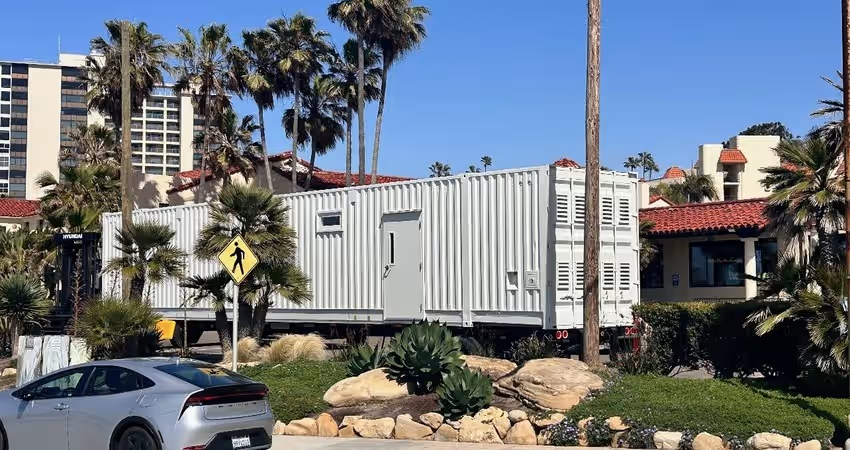
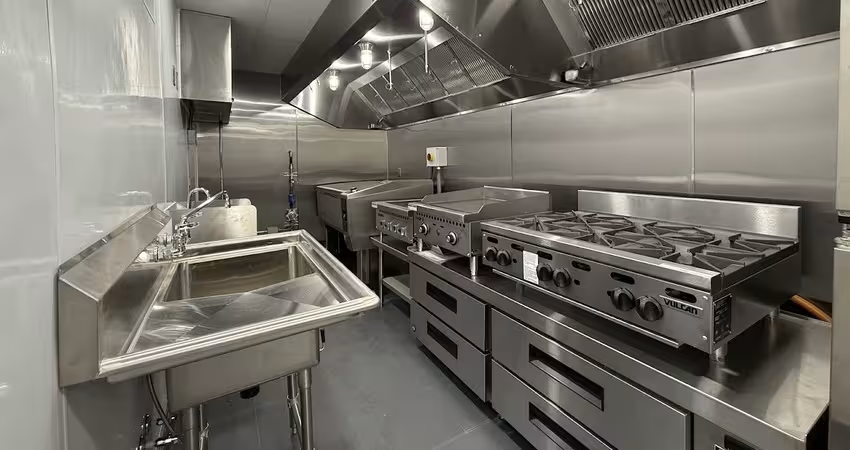
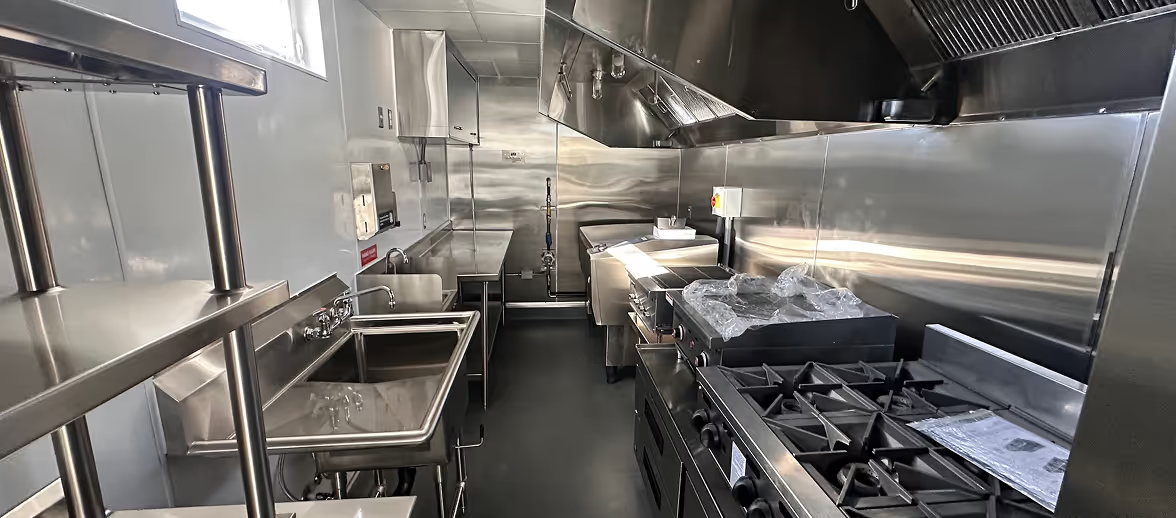
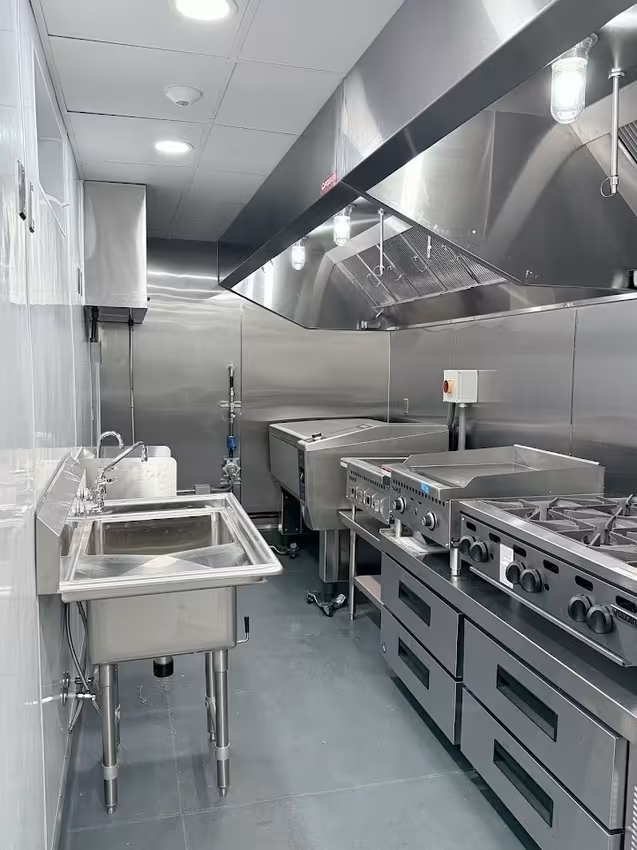
From the outside, a mobile kitchen trailer can look like a simple box on wheels. Inside, it’s a tightly engineered commercial kitchen: hot line, refrigeration, prep areas, sinks, ventilation, fire suppression, storage, and utility systems all compressed into a narrow, moveable footprint.

This article walks through what’s actually inside a mobile kitchen trailer, how the different components work together, and what to consider when you’re choosing or specifying one for your operation. Along the way, we’ll also show how prefabricated kitchen trailers from specialist manufacturers (like Mobile Culinaire) can simplify design, compliance, and deployment.

What Is a Kitchen Trailer?

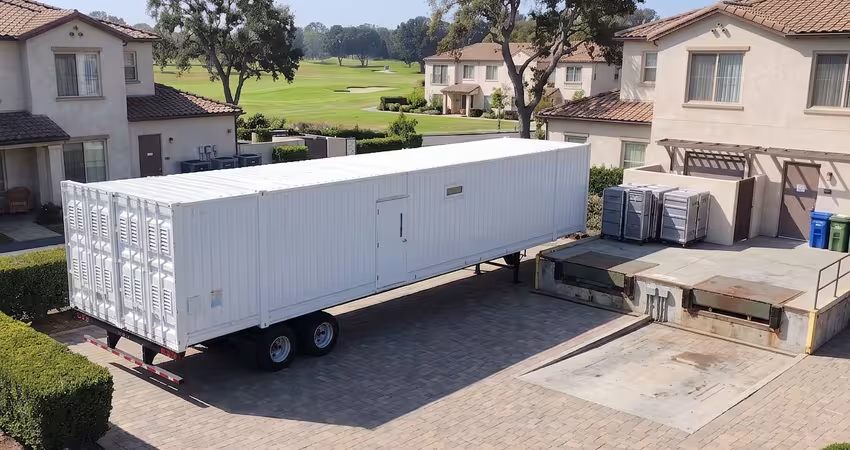
A kitchen trailer (or mobile kitchen trailer) is a fully equipped, towable commercial kitchen designed to provide temporary or supplemental foodservice capacity. Built with the same core functionality as a permanent kitchen, these units are outfitted with cooking appliances, refrigeration, dry and cold storage, prep space, ventilation, and sanitation systems. They can be deployed onsite for short-term events or used for extended periods during major renovations and planned outages.

Because they replicate the performance of permanent kitchens, kitchen trailers are especially valuable in the hospitality sector. Country clubs, golf courses, hotels, and resorts use them to maintain food service quality and menu consistency without long construction timelines, structural changes, or major capital projects. In other words, they offer a turnkey solution that combines flexibility with professional-grade standards.

Unlike a typical food truck, a kitchen trailer is a purpose-built, modular commercial kitchen with full utility connections (power, water, drainage), mechanical ventilation, and fire protection. Trailers often offer more linear footage, more flexible interior layouts, and easier tie-ins to shore power and water, and the tow vehicle can be detached to reduce the site footprint. Fire protection and ventilation requirements are similar to those of any fixed commercial kitchen and are typically governed by standards such as NFPA 96, as adopted by local authorities.

Note: For more information on mobile kitchen trailers, read our detailed blog post here.

kitchen trailer

What’s Inside a Mobile Kitchen Trailer — By System

Prep Line & Cold Holding

In a mobile kitchen trailer, the prep line has to support tight workflows in a narrow footprint. Expect:

  • Stainless steel work tables and counters for primary prep and plating. These are typically paired with undershelves or wall shelving for smallwares.
  • Cutting surfaces and boards, often color-coded to separate raw proteins, produce, and ready-to-eat items to prevent cross-contamination.
  • Undercounter refrigerators and freezers tucked beneath worktables or cooklines so cooks can access proteins, garnishes, and prepped items without crossing the aisle.
  • Prep tables with refrigerated wells (sandwich/salad or pizza prep) that combine cold wells with cutting surfaces for sandwiches, salads, wraps, bowls, or pizzas.

Because space is tight, you’ll often see fold-down shelves, wall-mounted racks, and magnetic strips to keep tools close at hand while maintaining a clear aisle.

From a food safety standpoint, you should:

  • Select pan configurations that match your highest-moving menu items.
  • Separate raw and ready-to-eat products in different units or at least different zones.
  • Keep calibrated probe thermometers at each station and follow FDA Food Code guidance for cold-holding and prep temperatures.

Standard operating procedures for temperature checks and logs are especially important in trailers, which may operate in hot parking lots, cold nights, or humid coastal conditions.

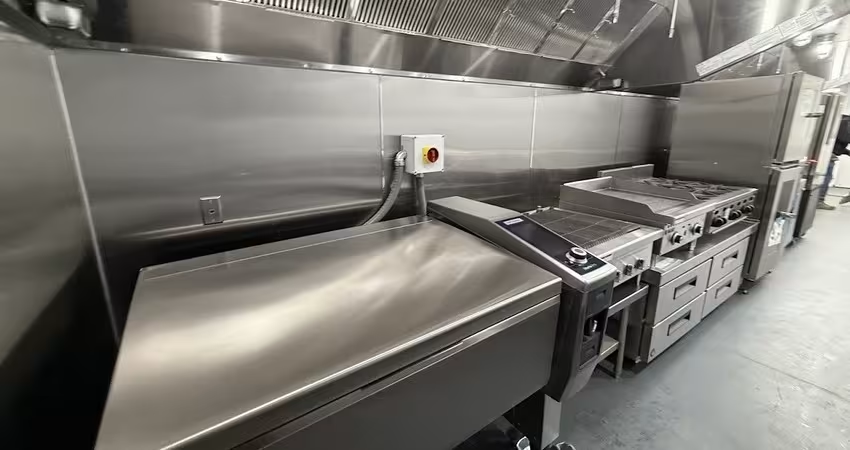
Cooking Battery (Ranges, Fryers & Ovens)

A trailer’s cooking “battery” is entirely menu-driven, but commonly includes:

  • Ranges, griddles, and hot tops for searing, sautéing, boiling, and simmering.
    • Flat-top griddles are typical for breakfast, burgers, and sandwiches.
    • Hot tops/French tops support large pots and batch cooking.
  • Deep fryers or vented countertop fryers for fries, chicken, snacks, and appetizers. Key factors include oil capacity, recovery time, and production volume.
    • Ensure proper side clearances, splash guards, and full coverage under the fire suppression system.
  • Ovens (convection, range ovens, or combi ovens) for roasting, baking, and finishing.
    • Convection ovens suit compact spaces and even baking.
    • Combi ovens can replace multiple appliances (steamers, ovens, sometimes holding equipment) and are particularly valuable in high-volume catering or hotel applications.
  • Charbroilers, panini grills, and specialty equipment (e.g., pasta cookers, woks) as dictated by the concept, though given limited space and power, these should be prioritized carefully.

Grease-producing appliances (fryers, griddles, charbroilers) typically trigger Type I hood and fire suppression requirements under standards such as NFPA 96, while some heat- or steam-only appliances may fall under Type II hoods where adopted. During plan review, verify:

  • Hood length and overhang vs. appliance footprint
  • Duct routing and cleanout access
  • Appliance clearances and mounting to withstand transit

When space is tight, combo units (e.g., ranges with ovens beneath, griddle-oven combos) help stack functions vertically instead of expanding the trailer’s footprint.

Ventilation, Fire Protection & Safety

Because a mobile kitchen trailer is compact, ventilation quality directly affects food safety, comfort, and compliance. A typical system includes:

  • Exhaust hoods sized and rated for the cooking equipment below, with adequate capture and containment for grease-laden vapors.
  • Make-up air to replace exhausted air, prevent negative pressure, and reduce cross-drafts that can compromise hood performance.
  • Grease ducting properly routed to the exterior with access panels for inspection and cleaning.

Fire protection is usually handled by an integrated UL-300 wet-chemical suppression system, with:

  • Nozzles over fryers, ranges, griddles, and charbroilers
  • Ties into the exhaust hood and fuel shutoff
  • Manual pull stations and clear instructions for activation order (activate system first, then use Class K extinguisher)

NFPA-based requirements and local fire codes typically call for semiannual inspection, testing, and maintenance of the hood, exhaust, and suppression system.

For gas-fired equipment, many trailers also incorporate:

  • Gas leak detection with alarms and, in some designs, automatic gas shutoff
  • Clearly labeled emergency stop switches and shutoff valves
  • Interlocks that shut down gas if the hood is not operating

From a worker-safety perspective, OSHA and industrial hygiene best practices emphasize:

  • Adequate capture of heat, smoke, and vapors
  • Sufficient make-up air to avoid drafts and hot spots
  • Reliable lighting levels and non-slip flooring to reduce accidents in a tight workspace
mobile kitchen ventilation

Refrigeration & Freezers

Because trailers operate in varying ambient conditions, refrigeration design is critical. Typical configurations include:

  • Undercounter refrigerators and freezers beneath worktables and under the cookline for high-use ingredients.
  • Reach-in fridges and freezers (single or double door) near the rear or prep area for bulk storage and deliveries.
  • Refrigerated prep tables and drawer bases along the line, especially for fast-casual, QSR, or banquet operations.

Design considerations:

  • Balance the number of reach-ins with your menu, delivery cadence, and storage requirements; trailers have limited space.
  • Provide dedicated electrical circuits for high-start-amp compressors and comply with manufacturer clearances for airflow.
  • Implement temperature monitoring (digital thermometers or data loggers) and logging procedures to verify holding temperatures.
  • Maintain clear separation between raw and ready-to-eat products using dedicated units, shelves, or at minimum, clearly segregated zones.

Prep Surfaces, Workstations & Space-Saving Details

Inside a kitchen trailer, every inch of prep space works double duty:

  • Stainless steel tables sized to keep aisles open while providing enough depth for safe cutting and plating.
  • Dedicated stations for raw proteins vs. ready-to-eat foods, each with nearby hand sinks and waste bins.
  • Color-coded cutting boards and sanitation buckets to align with Food Code requirements.

To maximize utility in a small footprint, many prefabricated trailers include:

  • Fold-down or flip-up shelves for peak periods and stowage during transport
  • Wall-mounted racks, hooks, and magnetic strips for utensils and small tools
  • Multi-use counters that act as prep zones during off-peak times and plating/pass space during service

Warewashing, Sinks & Sanitation

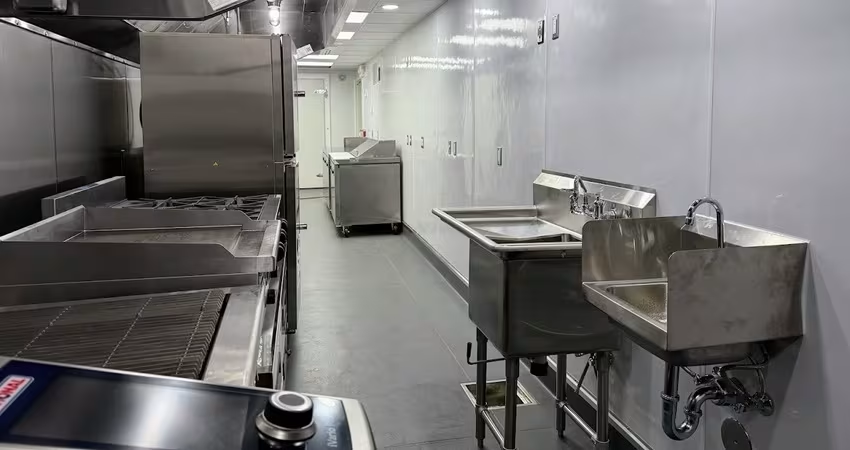
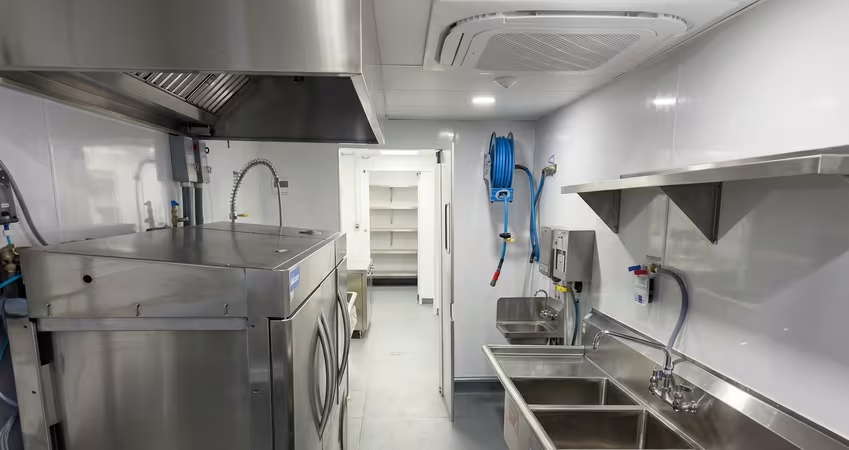
Most jurisdictions that adopt the FDA Food Code expect a three-compartment sink in a mobile kitchen trailer, with:

  • Basins sized for wash, rinse, and sanitize steps
  • Drain boards for soiled and clean wares
  • Approved sanitizer and test strips

In addition, you’ll typically need:

  • At least one handwashing sink (often more), located near the entry and prep areas, with tempered water, soap, paper towels, and required signage.
  • A separate prep or produce sink with an indirect drain when raw produce or seafood is washed on site.
  • Adequate hot-water capacity (flow rate plus recovery) to support warewashing and hand hygiene during peaks.

Many trailers rely on manual three-compartment sink washing. Compact dishmachines may be justified in high-volume or institutional settings—but they add load to both water and power, so they must be accounted for in the plumbing and electrical design.

Cleaning tools and chemicals need dedicated storage:

  • Clearly labeled chemical bottles segregated from food and packaging
  • A small janitor closet, cabinet, or corner for mops, buckets, and cleaning tools
  • Shelving, lips, and latches to keep everything secure in transit
mobile kitchen sinks

Plumbing, Water & Waste Tanks

Unlike a fixed kitchen, a mobile kitchen trailer typically carries its own water and waste capacity. Common elements include:

  • Freshwater tanks sized for handwashing, warewashing, cooking, and cleaning over the planned operating window.
  • Greywater tanks with equal or greater capacity than the freshwater tank, plus external connections for pumping/servicing.
  • Demand pumps and accumulators to maintain stable water pressure.
  • Water heaters (electric or gas) sized to the simultaneous demand of sinks, dishmachines (if installed), and any equipment requiring hot water.
  • Backflow prevention, indirect waste, and air gaps where required by code.

Plan reviewers often check tank capacities, indirect drains, and backflow devices against the adopted Food Code and local plumbing code. Undersizing tanks is a common failure point during plan review and inspection.

Electrical & Power

Most full-line kitchen trailers are engineered around 120/240V single-phase service, often in the 50–100+ amp range depending on:

  • Cooking battery (electric vs gas appliances)
  • Number and size of refrigeration units
  • Hood and make-up air fans
  • Dishmachines, hot holding cabinets, and other electric loads

Before deployment, build a load schedule that includes:

  • Each appliance’s kW/amp draw
  • Starting amps for compressors and motors
  • Hood and make-up air fans
  • Lighting, outlets, and any plug-in small equipment
  • At least ~20% headroom for safety and future flexibility

Power can be supplied from shore power (ideal in renovations and fixed sites) or generators (common for remote events). For generators, you’ll need:

  • Safe exhaust routing away from intake air and public areas
  • Adequate ventilation around the generator
  • Fuel storage that complies with fire code and site rules

Panel schedules, labeling, and accessible disconnects are key for maintenance and safety.

Storage, Service & Transport Readiness

Even in a small box, organized storage is critical:

  • Dry storage shelving and cabinets for canned goods, dry ingredients, spices, and disposables.
  • Chemicals stored separately from food and food-contact items.
  • Smallwares storage (drawers, racks, and bins) near the stations where items are used.

Many kitchen trailers are also designed for service integration:

  • Pass-through or service windows connecting to a front-of-house tent, patio, or banquet line.
  • Clearances to keep service windows away from hood exhaust discharge and generator exhaust, per fire department guidance.

Because the unit is mobile, storage systems must be secure in transit:

  • Cabinets and drawers with positive latches
  • Straps, brackets, or cages to secure large equipment and high-value inventory
  • Procedures for “travel mode” vs. “service mode” to protect equipment and maintain sanitation

Configuring a Kitchen Trailer for Different Menus and Operations

Not every kitchen trailer is built the same way. The right configuration depends on your menu, volume, and service style. Below are common operational profiles and how you’d typically configure a trailer for each.

High-Volume Fry and Grill Menus

Think fast food, burgers, tenders, wings, and fries. Here, speed and consistency are everything.

Core Cooking Equipment

  • Multiple fryers (often banked side by side) sized for peak demand, with adequate hood length and suppression coverage.
  • A large flat-top griddle or grill for burgers, breakfast items, and sandwiches.
  • Optional charbroiler or clamshell grill if you need sear marks or faster cook times.

Holding and Finishing

  • Fry dump stations, heat lamps, and countertop warmers to keep fries and fried items hot and crisp.
  • Hot holding cabinets or drawer warmers for proteins, buns, and sides to smooth out peaks.
  • Clear FIFO procedures and timers to manage hold times and quality.

Layout and Workflow

  • A straight-line cookline (fryers + griddle + assembly) minimizes cross-traffic.
  • Undercounter refrigeration and refrigerated drawer bases for patties, toppings, and sauces, directly beneath the line.
  • A short path from assembly to service window or pass, to maintain speed.

Key design Emphasis

  • Ventilation and fire suppression are critical: multiple fryers and a big griddle mean high grease load and heat.
  • Adequate make-up air to keep the line comfortable and maintain hood capture.
  • Sufficient electrical or gas capacity to support continuous high-volume production without nuisance trips.

Catering and Banqueting Trailers

For hotels, caterers, convention centers, and institutions, the priority is batch production and plating, not à la carte speed.

Core Cooking Equipment

  • One or more combi ovens or stacked convection ovens for roasting, baking, and retherm.
  • Tilt skillets, kettles, or large stock pots (where space and utilities allow) for sauces, soups, and starches.
  • Limited fryers or grills unless the menu specifically requires them.

Holding and Staging

  • Mobile hot holding cabinets for pans of proteins, sides, and baked items.
  • Sheet pan racks for tray and plate staging.
  • Space for speed racks or carts to move food between prep, hot line, and service.

Layout and Workflow

  • More square footage dedicated to plating, garnishing, and assembly tables rather than customer-facing service windows.
  • Prep and holding areas separated enough to prevent congestion during plate-up.
  • Logical flow: hot line → holding → plating line → pass-out to FOH or banquet floor.

Key Design Emphasis

  • Temperature control and holding strategy to avoid bottlenecks during banquet pushes.
  • Easy cart movement in and out of the trailer (ramps, clear doorways, non-slip surfaces).
  • A warewashing setup that can handle the volume of pans and utensils coming back between courses or events.

Baking, Coffee & Specialty Concepts

Bakery trailers, coffee trailers, and other specialty units prioritize precision and display over heavy-duty line cooking.

Bakery-Focused Trailers

  • Deck or convection ovens for breads, pastries, and desserts.
  • Proofers, mixers, and worktables with ample space for dough handling.
  • Refrigeration geared toward butter, cream, fillings, and chocolate, not large protein loads.

Coffee and Beverage Trailers

  • Espresso machines, grinders, and brewers with stable water and power supply.
  • Under-counter or upright refrigeration for milk, alt-milks, and grab-and-go items.
  • Ice makers or ice wells if cold beverages are part of the offer.

Specialty Concepts (pizza, BBQ, ethnic cuisines)

  • Pizza trailers: pizza ovens (deck or conveyor), pizza prep tables, dough storage, and topping rails.
  • BBQ or smokehouse support: holding cabinets, warmers, and limited finishing equipment if smoking is done off-site.
  • Other ethnic concepts may need woks, tandoors, or specialty ovens, which drive specific ventilation and fire-safety requirements.

Layout and Guest Experience

  • Display cases at the service window or side opening for baked goods and pastries.
  • Clean sightlines from outside into the trailer to reinforce freshness and craft.
  • Thoughtful routing of guests around order, pay, and pickup to avoid congestion.

Key Design Emphasis

  • Stable voltage, water quality, and pressure (espresso equipment is sensitive).
  • Generous counter space for barista or baker workflow.
  • Emphasis on clean finishes and lighting, since guests often see directly into the trailer.

Hotel, Resort & Institutional Backup Kitchens

When a main kitchen goes offline for renovation, repair, or an emergency, a kitchen trailer effectively becomes the temporary backbone of operations.

Matching the Main Kitchen’s Capabilities

  • A backup trailer (or multiple trailers) should mirror the core equipment set of the main kitchen:
    • Combi ovens, kettles, ranges, and fryers for hotels and resorts
    • Steamers, kettles, and high-capacity holding for healthcare or institutional feeding
  • Sufficient refrigeration and freezer capacity to maintain the existing menu or a slightly simplified version.

Service Continuity

  • The trailer must support hotel outlets, banquets, room service, staff dining, or patient feeding without major degradation in quality.
  • In multi-week or multi-month outages, there’s often a need for multiple units (e.g., hot production trailer + dish/warewashing trailer + cold prep trailer).

Site Integration

  • Logical placement relative to loading docks, waste routes, and guest areas to minimize noise, traffic, and visual impact.
  • Utility tie-ins for power, water, drainage, and sometimes gas coordinated with facilities and local inspectors.
  • Clear pathways for cart traffic to and from the main building(s), including ramps and weather protection where possible.

Where Standardized Configurations Shine

This is where standardized mobile kitchen trailer configurations are especially valuable. Instead of designing from scratch, you can:

  • Select a pre-engineered model that closely matches your existing menu and volume.
  • Get an integrated package (cooking, refrigeration, ventilation, fire suppression, plumbing, and electrical) already tested and ready for inspection.
  • Reduce lead time, design risk, and site coordination compared with a one-off build.
mobile kitchen hospitality

Why Mobile Culinaire’s Pre-Equipped Mobile Kitchen Rentals Make Sense

Outfitting a kitchen trailer from scratch usually means juggling multiple vendors, coordinating inspections, and waiting weeks or months for approvals. Mobile Culinaire solves this by delivering fully equipped, inspection-ready kitchens that are engineered from the outset to meet health, fire, and accessibility standards. Instead of building a one-off solution, you’re deploying a proven, pre-integrated platform.

Zero Upfront Capital Expenditure

Building or outfitting a permanent kitchen can run into hundreds of thousands of dollars once you factor in construction, utilities, and permitting. With Mobile Culinaire, you replace that capital project with an operating expense. The units arrive turnkey and production-ready, so you can allocate capital to growth, renovations, or new outlets instead of tying it up in fixed infrastructure.

Rapid Deployment

Traditional kitchen projects can take 6-12 months by the time design, permitting, and construction are complete. Mobile Culinaire is designed for far shorter timelines. Because layouts, utilities, and equipment packages are pre-engineered, a ready-to-use unit can be delivered in a fraction of the time. For hotels, resorts, healthcare facilities, and caterers facing renovation, unplanned closures, or urgent events, that speed can be the difference between staying operational and shutting down service.

Built-In Compliance

Every Mobile Culinaire unit is designed with regulatory approval in mind. Equipment selections and finishes are based on NSF standards for food safety; ventilation and suppression are engineered to align with NFPA 96; access, clearances, and ramps are planned to support ADA accessibility for staff and, where applicable, guests. Units are delivered with floor plans, equipment schedules, and utility diagrams that are ready to share with local health, fire, and building officials, which helps streamline plan review and inspection instead of starting from scratch.

Scalable & Configurable Layouts

Owning a single fixed kitchen locks you into one size and one configuration. Mobile Culinaire takes a systems approach: you can select a trailer that aligns with your immediate needs and then scale up by adding additional units or scale down when demand tapers off. Production can be right-sized for anything from a single outlet doing a few hundred meals per service to multi-station institutional feeding, without committing to permanent construction. Because the layouts are modular and repeatable, it’s also easier to standardize across multiple locations once you’ve validated a configuration.

Operational Flexibility and Mobility

A brick-and-mortar kitchen is tied to one address. Mobile Culinaire units move with your operation. The same trailer that supports a hotel during renovation can later be redeployed to seasonal outlets, festivals, construction sites, or emergency relief. That mobility lets you place production capacity where demand actually is, without compromising on commercial-grade equipment, ventilation, or compliance.

Simplified Project Management

Building a kitchen normally involves architects, engineers, contractors, utility providers, and multiple rounds of inspections. Mobile Culinaire condenses much of that coordination. The team can support site logistics and layout planning, advise on utility tie-ins for gas, water, electrical, and wastewater, and provide permitting support with ready-to-submit documentation. Delivery, leveling, and setup are handled as part of the deployment, and ongoing technical support is available once the unit is in operation. You focus on menus, staff, and guests while the manufacturer handles the technical backbone.

Commercial-Grade Equipment Included

Mobile Culinaire trailers are built as true commercial kitchens, not concession carts. Depending on the configuration, units can include full cooklines with ranges, fryers, ovens, and flat tops; walk-in or reach-in refrigeration and freezer capacity sized to the menu; prep stations with integrated cold storage; and warewashing zones that may include high-temperature dish machines or three-compartment sinks, all arranged for efficient workflow and food safety. Because the equipment package is integrated with the ventilation, electrical, and plumbing systems from day one, you avoid many of the fit, clearance, and load issues that appear when trying to assemble a trailer piecemeal from multiple vendors.

pre equipped mobile kitchen

Conclusion

A mobile kitchen trailer is far more than a temporary substitute for a brick-and-mortar kitchen. When it’s properly equipped and engineered, it becomes a high-performance production environment capable of supporting hotels, resorts, caterers, institutions, and specialty operators through renovations, seasonal peaks, off-site events, or unexpected outages. Understanding what goes inside gives you the framework to choose a trailer that meets your menu, volume, and regulatory requirements.

The most successful deployments happen when operators match the trailer’s configuration to their actual workflow and site conditions, rather than trying to recreate a full kitchen in a compact footprint. Capacity planning, thoughtful equipment prioritization, and early coordination with local health and fire authorities make the difference between a smooth launch and a frustrating approval process.

Prefabricated and inspection-ready units take that complexity off your plate. By combining commercial-grade equipment, compliant ventilation and suppression systems, utility integration, and pre-vetted layouts, solutions like Mobile Culinaire allow you to get operational quickly, maintain service quality, and scale production without the long timelines or capital commitments of traditional construction.

Whether you’re bridging a renovation, expanding a seasonal outlet, or supporting high-volume banquets, a well-designed kitchen trailer lets you protect revenue, maintain guest experience, and keep your culinary team performing at a high level. With the right partner and the right configuration, you gain a mobile production asset that’s both dependable and adaptable — ready to go wherever your operation needs it next.

Check out our available models here and contact us today to find the right mobile kitchen solution for your needs.

People Also Ask (FAQ)

What equipment is typically inside a kitchen trailer?

A kitchen trailer is built as a full commercial kitchen in a compact, mobile format. Inside, you’ll typically find a complete cooking battery (ranges, fryers, griddles, ovens, and sometimes combi ovens), commercial refrigeration (undercounter units, reach-ins, or walk-ins), stainless prep tables, cold prep stations, three-compartment and hand sinks, ventilation and fire suppression systems, dry storage, and a warewashing area. Depending on the menu, you may also see charbroilers, holding cabinets, hot boxes, and specialty equipment. Everything is engineered to meet health and fire code requirements and to support real production volume.

Is it better to rent or buy a kitchen trailer for short-term projects?

For short-term or temporary needs such as renovations, seasonal outlets, events, or emergency outages, renting is usually the more practical and cost-effective choice. Buying makes sense only if you plan to use the trailer year-round or across multiple long deployments. Renting eliminates the upfront capital expense, accelerates deployment, and includes support, maintenance, and compliance documentation from the provider. It also lets you scale up or down as needed, whereas ownership locks you into a single configuration.

Can a mobile kitchen trailer match my existing hotel or resort kitchen menu?

Yes. Modern mobile kitchen trailers can be configured to closely mirror the core capabilities of a hotel, resort, or institutional kitchen. For renovation or backup scenarios, providers can match your cookline — combi ovens, ranges, fryers, kettles, prep stations, holding equipment, and warewashing — so you can maintain menu consistency and service standards. Many operators deploy multiple trailers (hot line, cold prep, dishwashing) to replicate the workflow of a full back-of-house and keep guest experience seamless while the main kitchen is offline.

53' Mobile Kitchen Available Now
53' Mobile Kitchen Trailer
  • Premium equipment brands
  • Easy and quick installation
  • Combo walk-in cooler/freezer
Dimensions: 53' x 8'6"
Square feet: 450 SF
Capacity: 300-450 meals

Testimonial

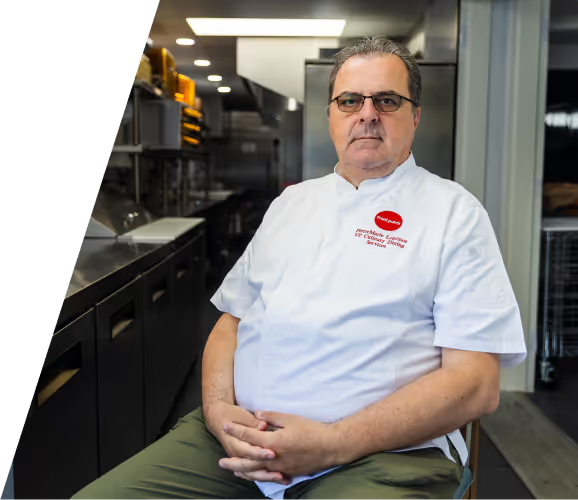
Serious male chef wearing glasses and a white uniform sitting in a professional kitchen.

"What is standing out when you look at the mobile kitchen operation is the efficiency that we can really achieve because it's built for that."

Pierre-Marie Leprince
VP Culinary Dining Services - Front Porch Communities

Tell us about your kitchen needs and request a quote.

Simple green triangle pointing to the right on a white background.

Turnkey mobile kitchen

Simple green triangle pointing to the right on a white background.

Proudly made in-house in the USA

Simple green triangle pointing to the right on a white background.

Commercial grade kitchen equipment

Simple green triangle pointing to the right on a white background.

Code-compliant

Trusted by Industry Leaders

Modern commercial kitchen with stainless steel appliances, multiple sinks, and cooking equipment.