.gif)
Food and beverage is roughly 30% of a private club's revenue — and at most clubs, it loses money anyway. That's not mismanagement; it's structural. According to Club Benchmarking and the National Club Association, nearly 70% of private clubs subsidize their F&B operation, and 59% show an outright loss. Which is exactly why a bad decision during a kitchen renovation is so expensive: there's no cushion left to absorb it. When the kitchen goes down, every outlet it feeds — dining room, bar, banquets — is exposed at once, and a cheap stopgap doesn't just risk service. It risks the one department the board is already watching hardest.
Here's what that exposure actually looks like on a club's country club F&B margin, and what protects it.
Why F&B Margin Is Already the Tightest Line on the P&L
F&B as a Subsidized Amenity, Not a Profit Center
Club Benchmarking's data is blunt about this: clubs that chase F&B profitability as a goal in itself are chasing the wrong number. F&B is a required member amenity, funded the same way the pool and the golf course are — through dues, not through covers sold.
What This Means for a Renovation Decision
That structural reality changes how a Director of F&B should read every renovation decision. A department that's already subsidized has no hidden reserve to eat a bad outcome. If a temporary kitchen fails — underpowered equipment, a failed inspection, a menu cut down to survive the space — the cost doesn't stay contained to the renovation budget. It shows up as a line the board already scrutinizes more than any other department's.
Note: Some clubs do run F&B at a modest profit — the 2025–2026 industry split is roughly 59% loss, 34% profit, 7% break-even. The subsidized-amenity framing holds either way: F&B margin is thin enough that a bad renovation decision has nowhere to hide.
What a Kitchen-Down Period Does to Your Country Club F&B Margin
A kitchen outage doesn't just threaten banquets — it threatens every outlet the kitchen feeds: daily dining, bar attach-rate, the grill room, the pool or halfway-house menu. Pre-booked events are the most visible exposure, but they're not the only one. Member dining traffic drops when the food quality or menu shrinks, and bar revenue tends to follow it down.
Independent hospitality research frames the downside in stark terms: a kitchen-down period without a real solution risks lost banquets, refunds, and damaged guest experience that outlast the renovation itself. For a club, "guest experience" means member experience — and member dissatisfaction during a capital project is exactly the kind of thing that resurfaces at the next dues conversation.
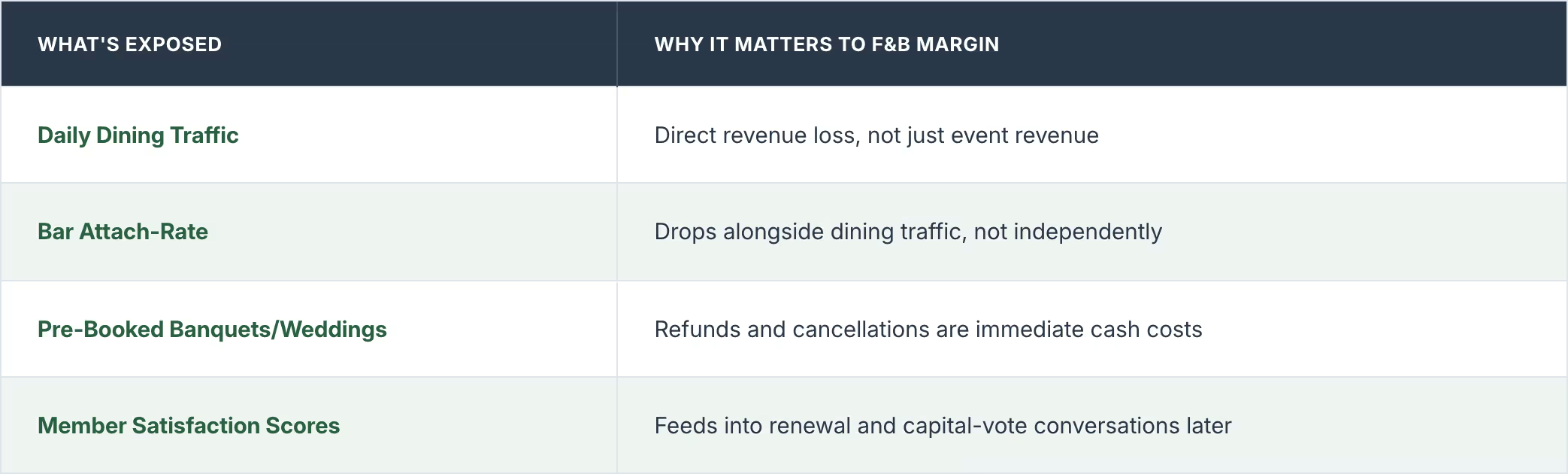
Tip: If your board is evaluating renovation options, frame the F&B exposure as total revenue at risk across every outlet, not just the events calendar. It's the more accurate number, and it's the one that actually moves a capital decision.
Where the “Cheap Fallback” Actually Loses Money
The obvious cheap option — a retrofitted trailer — looks inexpensive on the quote. It rarely stays that way. The pattern is consistent: low upfront cost, then hidden costs from maintenance, equipment replacement, and downtime stack up over a mid-to-long renovation window. Add reduced kitchen efficiency and compromised food quality, and the "savings" evaporate into lost revenue and member complaints.
This is where the F&B margin math gets punishing. A department already operating without a cushion absorbs every one of those hidden costs directly — there's no profit line to cushion the blow. A retrofitted trailer isn't just a risk to service quality; it's a risk to the number the board already watches closest.
Note: Mobile Culinaire doesn't publish a specific savings percentage for this comparison — the honest framing is qualitative: predictable rental cost versus the open-ended cost of a fallback that nickel-and-dimes a budget that has no room to absorb it.
What Banquet-Scale Volume Actually Demands From a Temporary Kitchen
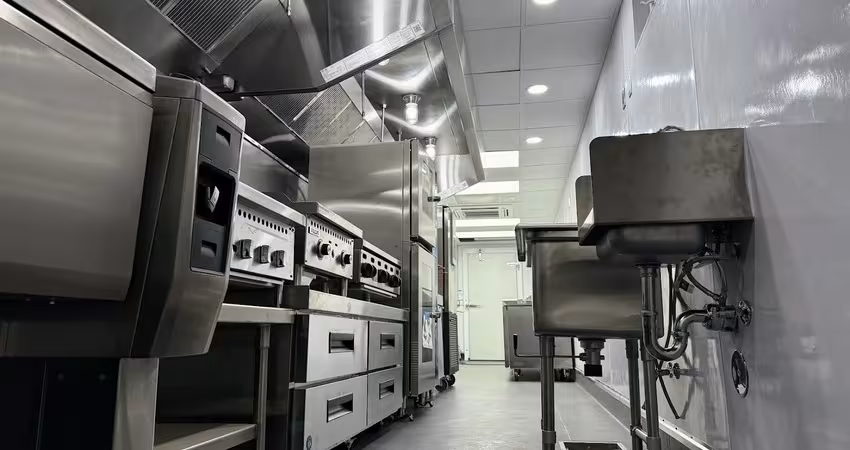
Daily dining is one exposure. Banquet volume is a different, harder one. A retrofitted trailer or an undersized stopgap struggles the moment simultaneous banquet and à la carte service hits it — and clubs regularly do hit multiple concurrent events on a single Saturday. Stadium- and venue-scale catering research is consistent on this point: high-volume temporary food service needs production-grade equipment, not a converted box with a hot plate and a prayer.
Case in Point: Menlo Circus Club
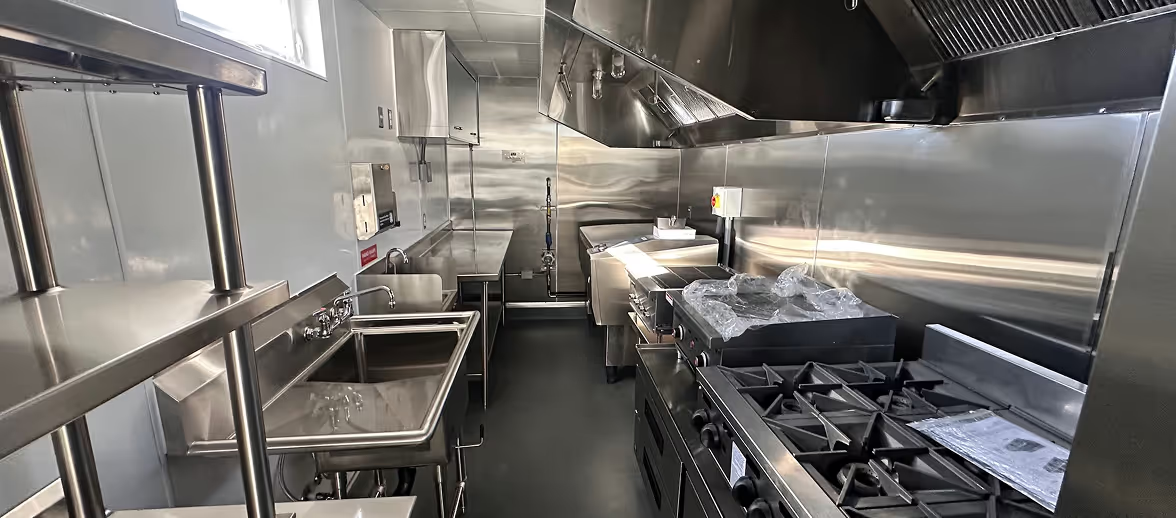
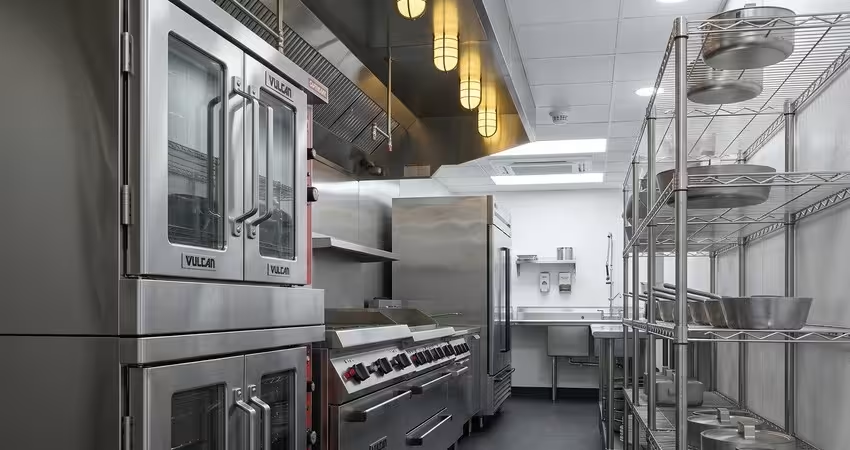
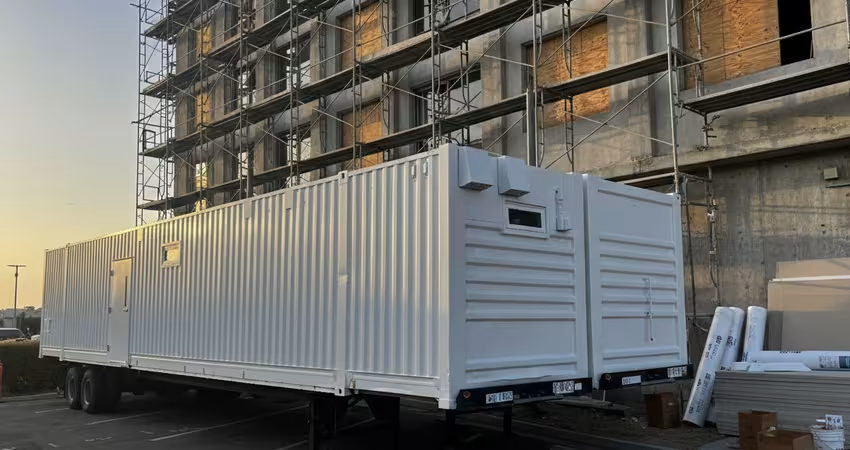
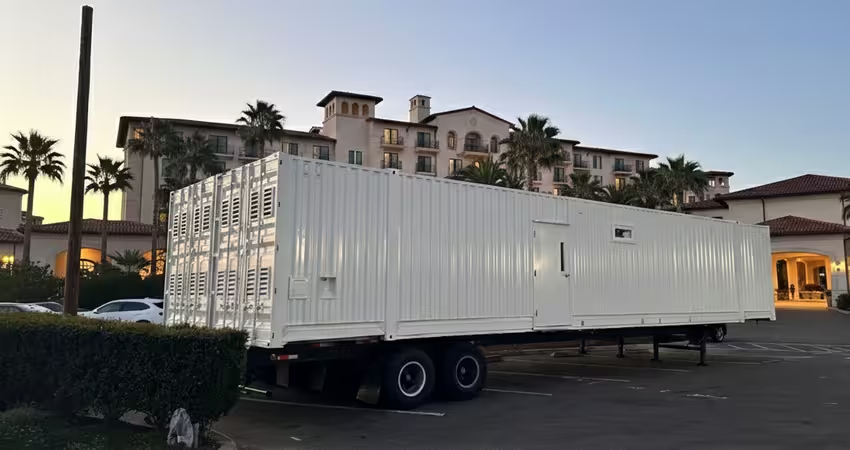
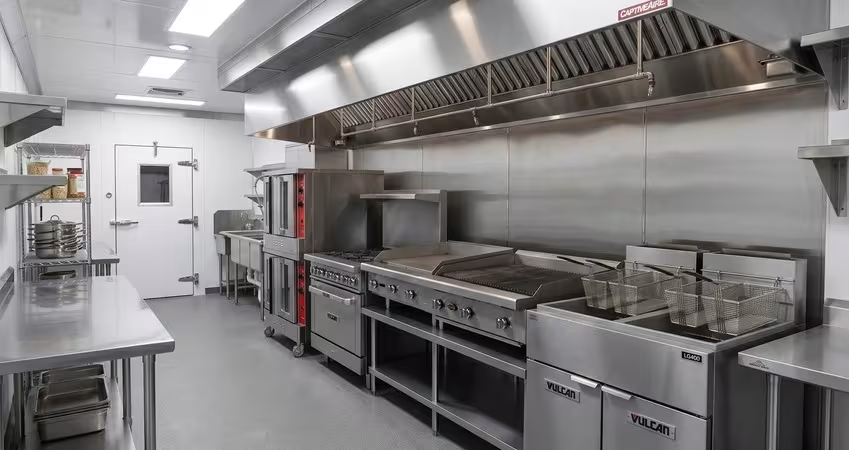
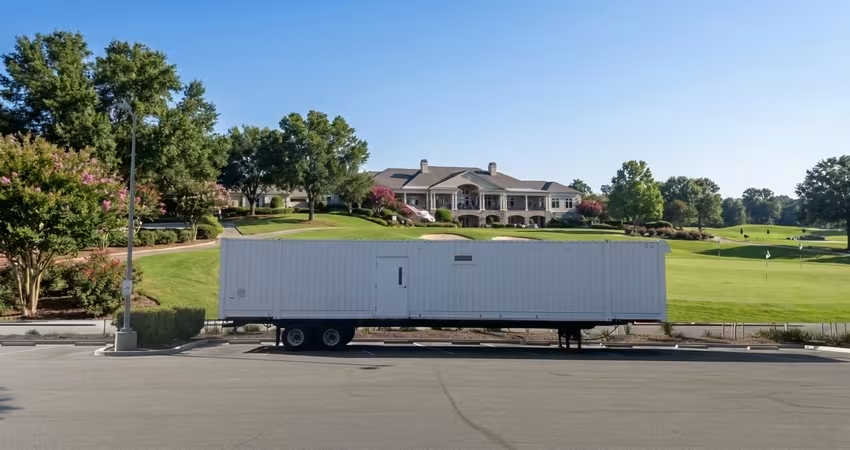
This is where a purpose-built kitchen earns its keep. Menlo Circus Club, a private country and polo club in California, ran a full menu — burner range, fryers, double-deck oven, walk-in cooler and freezer — out of a 2×53′ mobile kitchen for five months, serving 400–500 meals a day at California code compliance. That's not a scaled-down banquet season. That's the same menu, the same standards, through the entire renovation window.
What Good Actually Looks Like
Most buyers already know what a cheap trailer rental looks like — cramped, underpowered, built to survive a weekend rather than a five-month renovation. The gap that matters isn't "trailer versus no trailer." It's the difference between that retrofitted box and a purpose-built, permanent-grade mobile kitchen engineered to the same standard as the kitchen it's replacing.
That's the reframe worth carrying into any renovation budget conversation: a temporary kitchen is either protecting your F&B margin or actively eroding it. There isn't a neutral option. Menlo Circus Club's five months at full menu capability is the proof point that a mobile kitchen can hold the line on both revenue and member experience at once — not one at the expense of the other.
How to Budget for Continuity Without Gambling the Margin
The single most useful thing a Director of F&B can do before a renovation is treat the temporary-kitchen line item as margin protection, not a cost to minimize. A predictable rental cost, planned into the capital budget alongside the renovation itself, is cheaper in total-cost terms than a "savings" that reappears later as lost covers, refunds, or a permit failure.
A few practical anchors for that conversation:
- Deployment timing matters. A 1-week delivery and install window (planned scenarios) means the temporary kitchen doesn't compress your renovation schedule.
- Permitting is smoother, not free. Code-compliant, third-party-inspected units make local approval easier — but the club still owns the permit process itself.
- Size to your real volume, not your average day. A kitchen sized for daily dining alone will struggle the first time a banquet lands on top of it.
Tip: Bring your banquet calendar into the renovation-planning conversation early. Sizing a temporary kitchen around a "typical Tuesday" instead of your busiest concurrent-event Saturday is one of the most common — and most expensive — planning mistakes.
The Bottom Line
A country club's F&B margin doesn't have room to absorb a bad renovation decision — it never did. Treating the temporary kitchen as a line that protects revenue, rather than one to shave costs off, is the difference between a renovation that costs what you budgeted and one that costs what the board didn't expect.
If your clubhouse renovation is on the calendar, talk to Mobile Culinaire before you finalize the F&B line of that budget.
People Also Ask (FAQ)
Why do most private clubs lose money on food and beverage?
F&B is structured as a member amenity, not a profit center — clubs fund it the way they fund the pool or the golf course, through dues rather than covers. Club Benchmarking and CMAA-NCA data puts roughly 70% of clubs in a subsidized position, with 59% showing an outright loss. The number itself isn't the problem; the risk is treating F&B like it has profit margin to absorb a bad decision when it usually doesn't.
What does a failed temporary kitchen actually cost a club during a renovation?
There's no single dollar figure Mobile Culinaire can put on this — the honest answer is qualitative. The costs show up as refunds on cancelled banquets, reduced member dining traffic and bar attach-rate, staff turnover from working in a cramped or unreliable setup, and — in the worst case — a failed inspection that delays the whole renovation timeline.
How do country clubs protect F&B revenue during a clubhouse renovation?
The clubs that come through a renovation with F&B intact generally do three things: size the temporary kitchen to peak (banquet) volume rather than average daily volume, choose a purpose-built unit over a retrofitted trailer, and plan the temporary-kitchen line item into the capital budget from the start rather than treating it as an afterthought once the permanent kitchen is already offline.

Testimonial

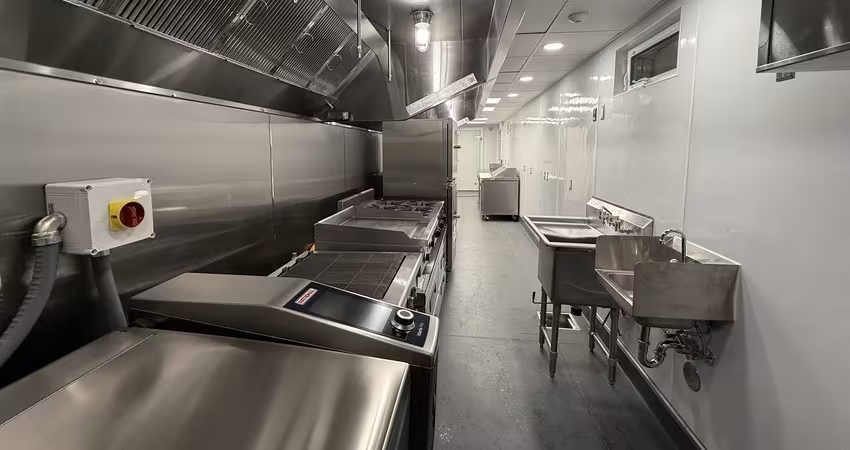
"What is standing out when you look at the mobile kitchen operation is the efficiency that we can really achieve because it's built for that."
Tell us about your kitchen needs and request a quote.
.png)
Turnkey mobile kitchen
Proudly made in-house in the USA
Commercial grade kitchen equipment
Code-compliant
Trusted by Industry Leaders