.gif)
Every club GM who's been through a clubhouse kitchen renovation remembers the same moment: standing in front of the membership, explaining that the kitchen is going offline — and watching the room decide, in real time, whether to trust the plan. At Nashua Country Club, GM/COO Jason Hurd sent that email after a kitchen fire left the club scrambling.
At Rivermont Golf Club, the message was "down for several months." The difference between a renovation that members rally behind and one that drives attrition isn't the construction timeline — it's what you communicate, when you start, and whether you have a credible answer for "what happens to dining?" This guide covers all three.
Why the GM Owns the Renovation Conversation
The general manager is the club's top operating executive, the bridge between the board's decision and every member's daily experience. When a clubhouse kitchen renovation begins, the GM is the first and most visible point of accountability — not the chef, not the facilities director, and not the board president. That makes the communication plan a GM responsibility, not a delegation.
This matters because member satisfaction and retention are the metrics a GM is judged on, and tenure itself functions as a governance red flag in the industry. A renovation that erodes trust doesn't just cost the club — it costs the GM personally.
Note: According to KOPPLIN KUEBLER & WALLACE, GM/COO turnover at private clubs is tracked as a governance indicator. A mishandled capital project accelerates it.
The communication challenge is compounded by the club's capital-approval structure. Most renovations pass through member surveys, committee review, board approval, and often a member vote. By the time construction starts, members already have opinions. The GM's job is to channel those opinions into confidence rather than complaints.
The Four Questions Members Will Ask
Before drafting a single email, know the questions that will come:
- How long will this take? Members want a number, even if it's a range. Vague answers erode trust faster than honest timelines.
- What happens to dining? This is the question most GMs underestimate. Members care less about the construction than about whether they can still eat at their club.
- What will it cost me? Assessments, capital fees, and dues increases are sensitive. Separate the renovation cost from the continuity cost.
- What will be different when it's done? Give them something to look forward to. The vision is what sustains patience.
Tip: Address all four in your first formal communication. If you leave any unanswered, members will fill the silence with assumptions — and those are always worse than reality.
Building a Communication Timeline
A strategic communication plan that starts months before the first hammer drops makes the difference between member buy-in and member backlash. Countryside Golf and Country Club in Naples, Florida, ran what their GM Joe Smith called a "drip campaign" — 18 months of neighborhood meetings, video interviews, and Q&As before construction began. The project closed $1,700 under its $15 million budget.
Your timeline doesn't need 18 months. But it does need structure.
%20(1).avif)
Tip: Golf Inc. reports that clubs using timelapse cameras and drone flyovers during construction saw higher member engagement and less pushback. Visual proof of progress beats written updates.
What "Dining Continuity" Actually Means
The most important row in that table is the one at three months out: the dining continuity plan. This is where most renovation communications fall apart — clubs announce the timeline and the vision but skip the answer to "where do I eat?" That answer is the promise members will hold you to every day of the project.
Not all temporary kitchen options deliver the same result:
- A tent or outdoor setup — works for a weekend event, not for five months of daily commercial service. Expect weather issues, member complaints, and health-code headaches.
- A local catering partnership — surrenders menu control and quality consistency. By week three, members notice.
- A retrofitted trailer — cramped, poorly insulated, and built to survive a weekend, not a renovation. Your staff will be working in it every day, and your members will taste the difference.
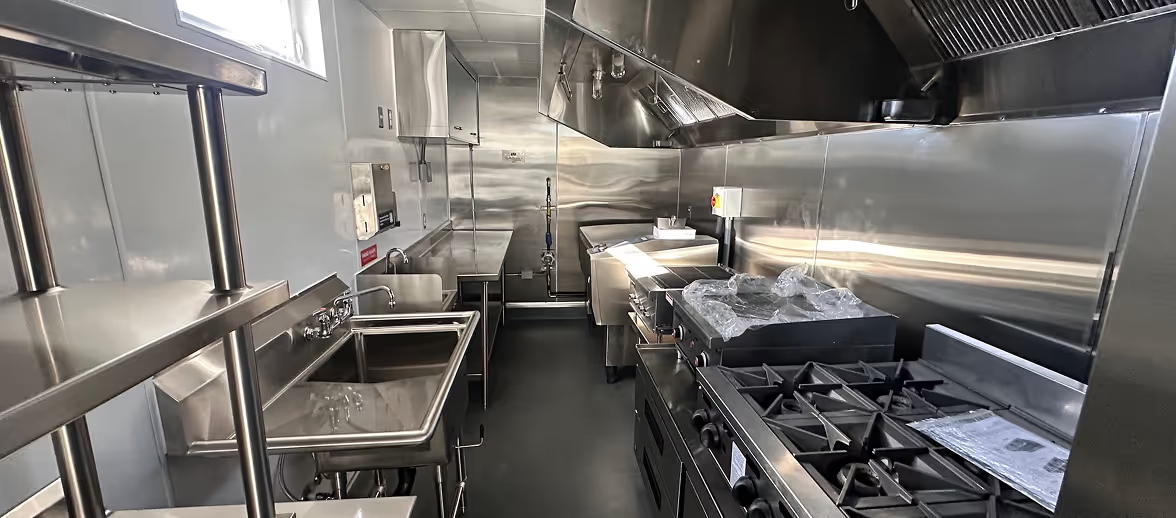
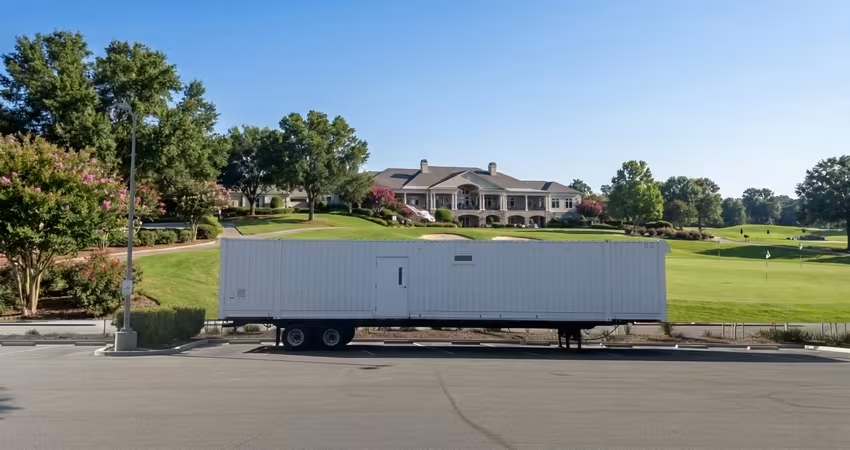
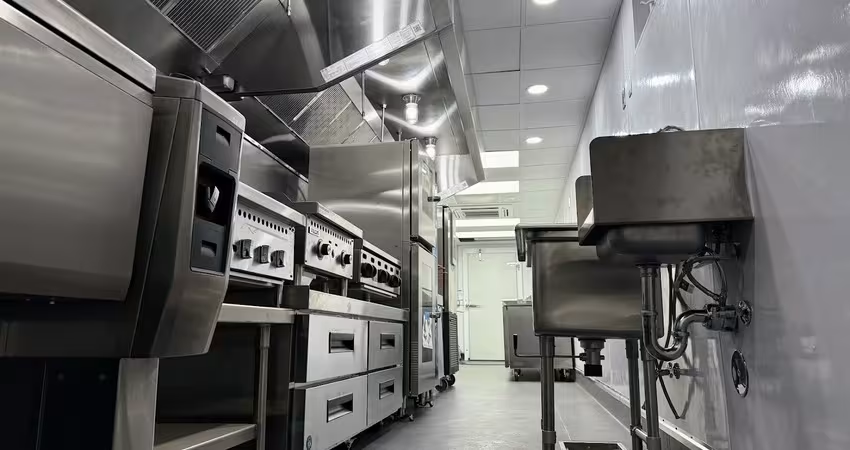
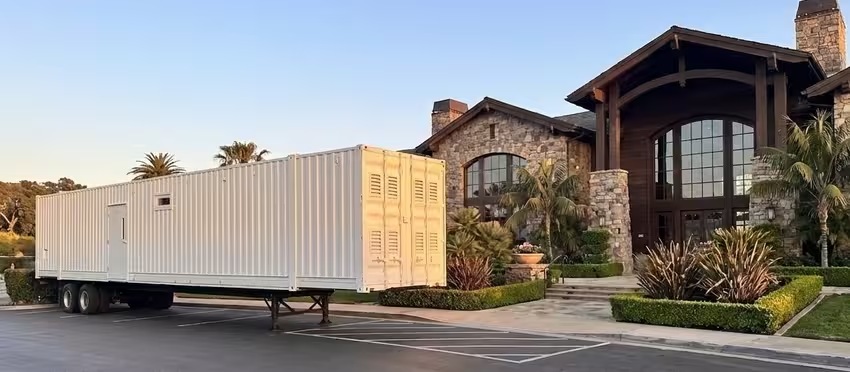
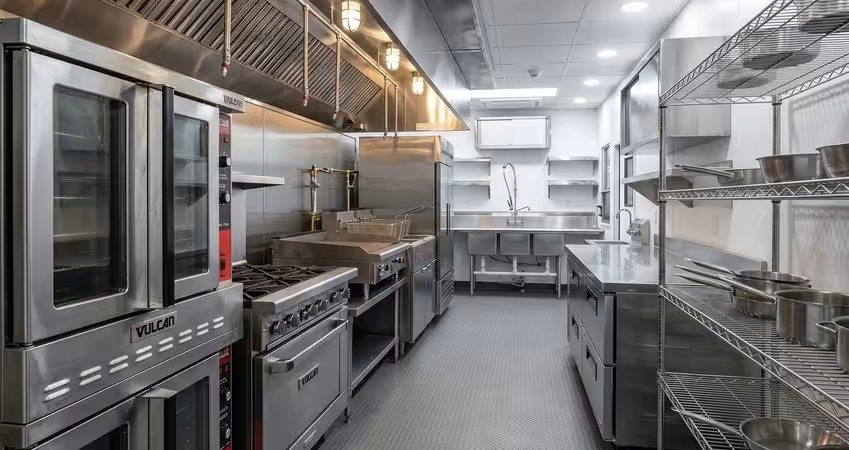
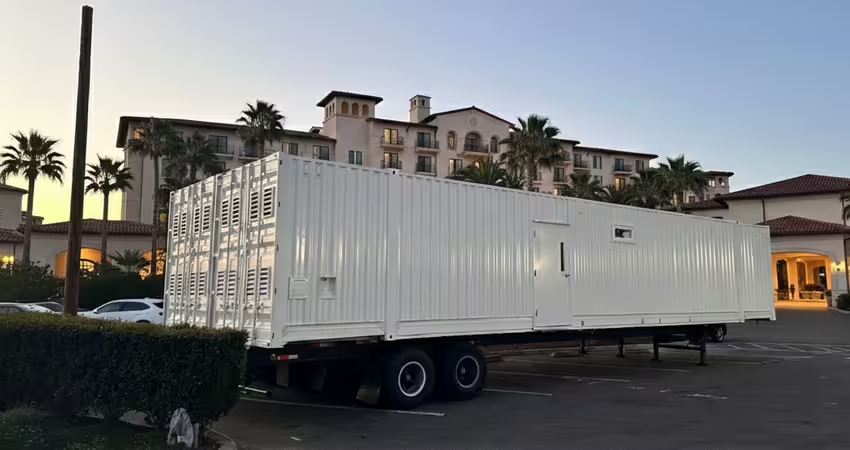
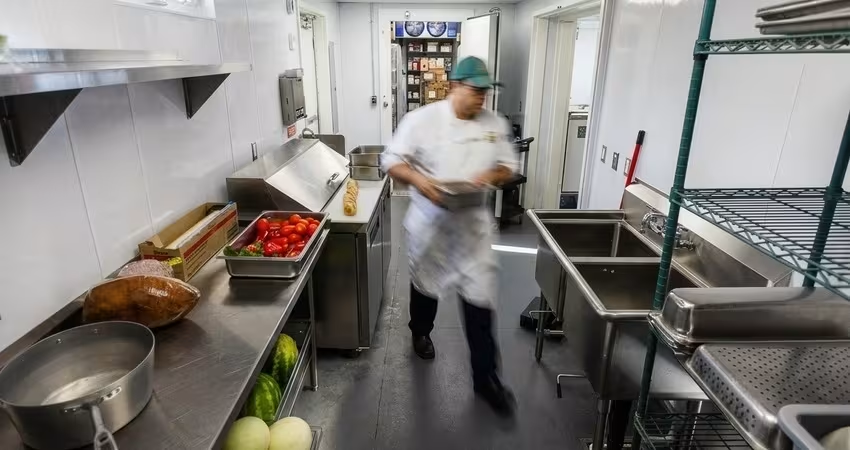
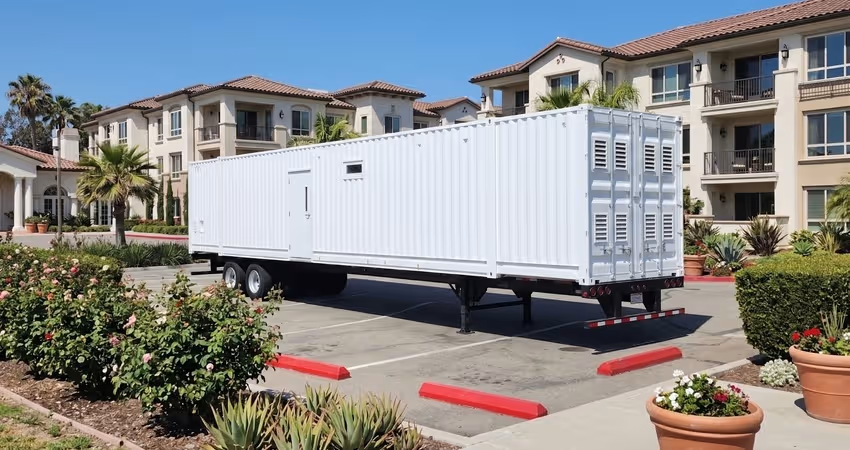
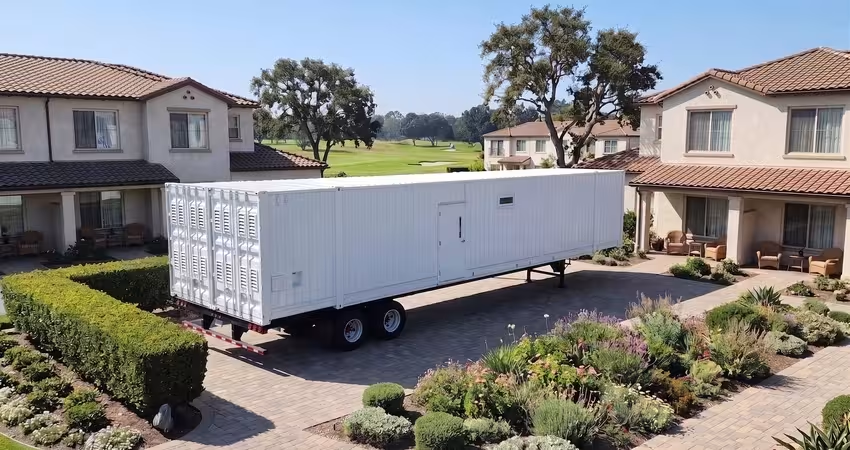
- A purpose-built mobile kitchen — commercial-grade equipment, full HVAC, walk-in cold and dry storage, fire suppression. Designed for months of daily use, not a stopgap. This is the option that lets a GM promise "same menu, same standards" and mean it.
That gap — retrofitted trailer vs. purpose-built mobile kitchen — is the spine of a credible dining-continuity plan. Menlo Circus Club, a private country and polo club in California, proved it: a 2×53′ Mobile Culinaire trailer ran a full menu with burner range, fryers, double-deck oven, walk-in cooler and freezer for five months, serving 400–500 meals a day, California code-compliant. That's the kind of answer a GM can stand behind in front of the membership.
Note: Permitting is ultimately the client's responsibility — requirements vary by state, county, and locality. Mobile Culinaire delivers code-compliant, third-party-inspected units to make the local approval process smooth, but the club should contact the local Health Department, Fire Marshal, and Building Department early in the planning phase.
When the Renovation Is Unplanned
Not every kitchen closure comes with six months of lead time. Kitchen fires at private clubs are not rare — independent local news coverage documents multiple incidents in the past two years at clubs including Oakland Hills, Nashua, Rivermont, and Niagara Frontier.
In an emergency, the GM is simultaneously coordinating insurance, fire marshal, contractors, and damage assessment — while also trying to keep the club operating. The communication cadence changes:
- Day of: brief, factual email to membership — what happened, everyone is safe, you're assessing the situation.
- Within 48 hours: the plan — what's being done, when members can expect updates, and what happens to dining.
- Weekly thereafter: progress updates until a timeline is established.
The critical difference in an emergency is that the GM cannot afford a fragmented vendor search on top of everything else. A single-source rental service — delivery, installation, project management, removal — means one fewer coordination burden during the worst week of the GM's tenure. Mobile Culinaire's standardized delivery and installation process runs approximately one week for planned deployments; emergency mobilization compresses that further.
Mistakes That Cost GMs Credibility
The renovation itself is rarely what damages a GM's standing with the board. The communication failures are:
- Going silent. No updates after the announcement is the single fastest way to generate anxiety and phone calls to the board.
- Overpromising timelines. If the contractor says 6 months, tell members 7–8. Under-promise, over-deliver.
- Not addressing dining until construction starts. By then, members have already assumed the worst.
- Choosing the cheapest stopgap under pressure. A second failure — the temporary kitchen breaking down mid-service — compounds the original problem and lands squarely on the GM.
The Story You Get to Tell
A clubhouse kitchen renovation doesn't have to be a story about what the club lost. With the right communication plan and a credible continuity solution, it becomes a story about how the club kept its promise to members — same menu, same standards, no interruption — while building something better.
"Down for several months" never has to be the message. The GM who can say "nothing changes for you while we build" earns the board's confidence, protects member retention, and turns a disruptive project into proof of leadership.
See how Mobile Culinaire serves country clubs and golf courses.
People Also Ask (FAQ)
How long does a country club kitchen renovation typically take?
Most clubhouse kitchen renovations run 4–12 months depending on scope, with full gut-and-replace projects at the longer end. The construction timeline itself is only part of the picture — the planning, committee approval, and permitting phases often add 6–18 months before the first hammer drops. A temporary kitchen deployment should be factored into the timeline from the start, not treated as an afterthought once construction begins.
Can a club maintain full dining service during a kitchen renovation?
Yes — with the right temporary kitchen solution. A purpose-built mobile kitchen trailer equipped with commercial-grade appliances, walk-in cold storage, and full HVAC can replicate the output of a permanent kitchen for months. Menlo Circus Club in California maintained 400–500 meals per day with a full menu for five months during a renovation, code-compliant throughout.
What permits does a temporary kitchen at a country club require?
Requirements vary by jurisdiction, but clubs should expect to coordinate with the local Health Department, Fire Marshal, and Building Department. A code-compliant, third-party-inspected unit streamlines the approval process, but the club is responsible for securing the local permit. Start the permitting conversation at least 6–8 weeks before the planned delivery date to avoid delays.

Testimonial

"What is standing out when you look at the mobile kitchen operation is the efficiency that we can really achieve because it's built for that."
Tell us about your kitchen needs and request a quote.
.png)
Turnkey mobile kitchen
Proudly made in-house in the USA
Commercial grade kitchen equipment
Code-compliant
Trusted by Industry Leaders