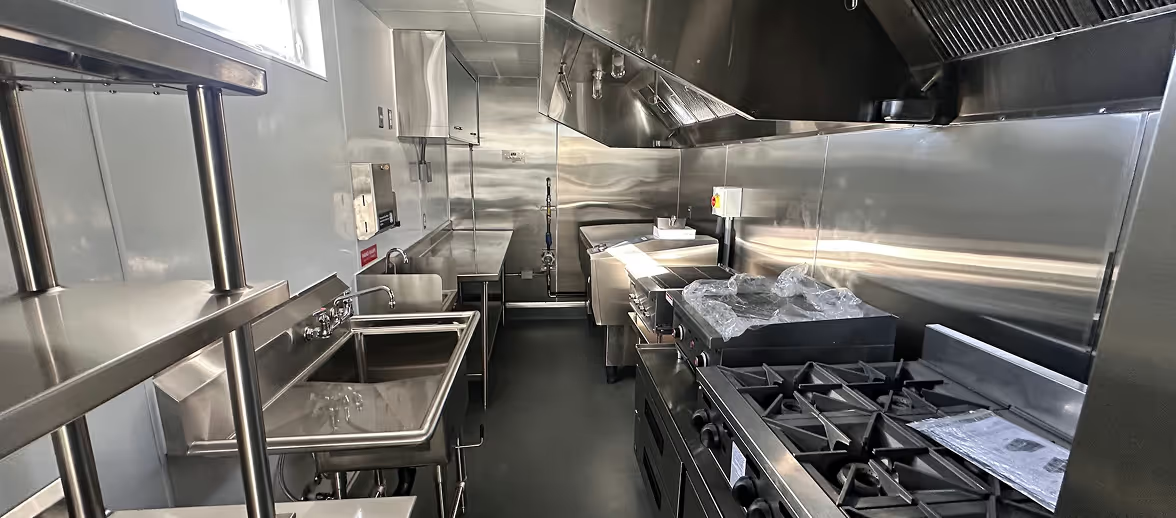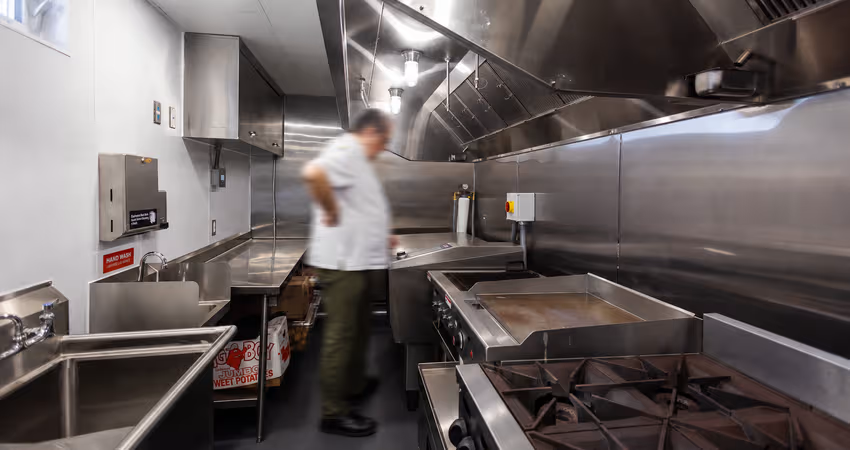
When Front Porch Communities took a dining venue fully offline for a five-month renovation, the plan wasn't just to keep residents fed. It was to use the downtime itself: training the dining team on a new menu and new equipment before the permanent kitchen reopened, instead of losing time to onboarding after the fact.
That's a different ask than most mobile kitchen senior living case study stories cover. Not "did service continue," but "did the renovation window pay for itself twice." It did, at 400 to 500 meals a day, for the full five months. (See our complete guide to mobile kitchens for senior living for the full planning picture.)
The Renovation That Couldn't Pause Dining
At a CCRC, three meals a day on a fixed schedule is a condition of the facility's operating license in most states, not a hospitality standard. Front Porch's renovation couldn't treat that gap as a scheduling inconvenience. It had to solve for zero interruption, for residents who depend on every meal.
Front Porch Communities operates 20-plus senior-living communities in California, under the same dietary-compliance expectations as any CCRC or assisted-living campus. A dining venue going offline for months means no kitchen and no fallback for residents who can't eat elsewhere.
Why a Stopgap Kitchen Wasn't an Option
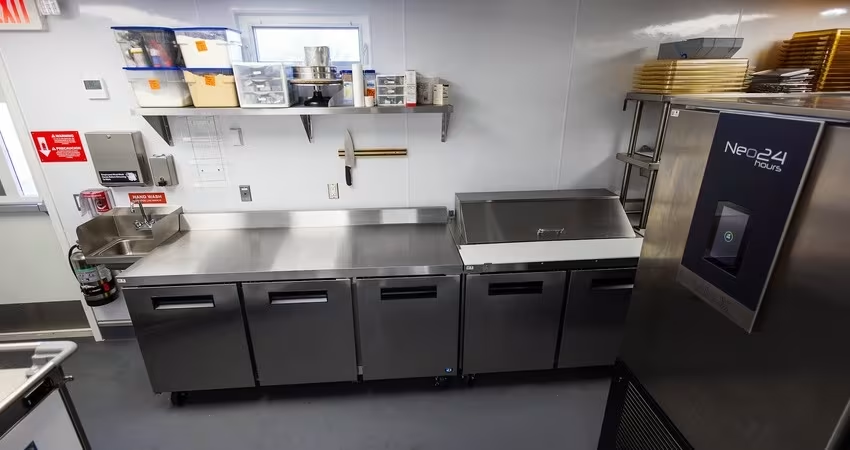
A cheap retrofit trailer can run a weekend fundraiser. It can't run five months of full therapeutic-diet production, texture-modified, low-sodium, and diabetic meals, at volume, without breaking down or forcing the team to cut corners.
- Texture-modified, low-sodium, and diabetic production needs real prep space and functional equipment, not a box built to survive two days.
- A renovation food-cost budget can't absorb agency staffing or backup catering if a stopgap kitchen fails mid-lease.
Tip: Size a renovation-period kitchen to full production volume, not a trimmed "survival menu." Rationing what the kitchen serves is a risk nobody budgeted for. Scoping a deployment now? Talk through volume and timeline with Mobile Culinaire before the renovation date locks.
For the full technical picture, heat, airflow and staff comfort over a multi-month deployment, see Five Months of Therapeutic Diets.
What Front Porch Deployed
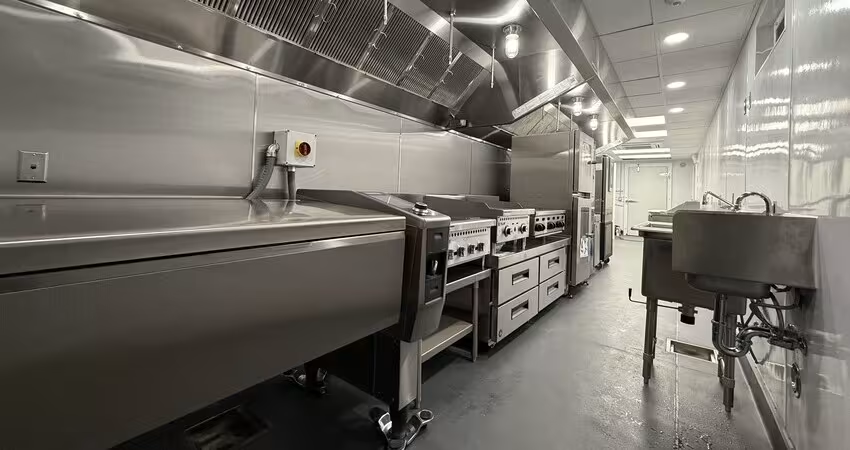
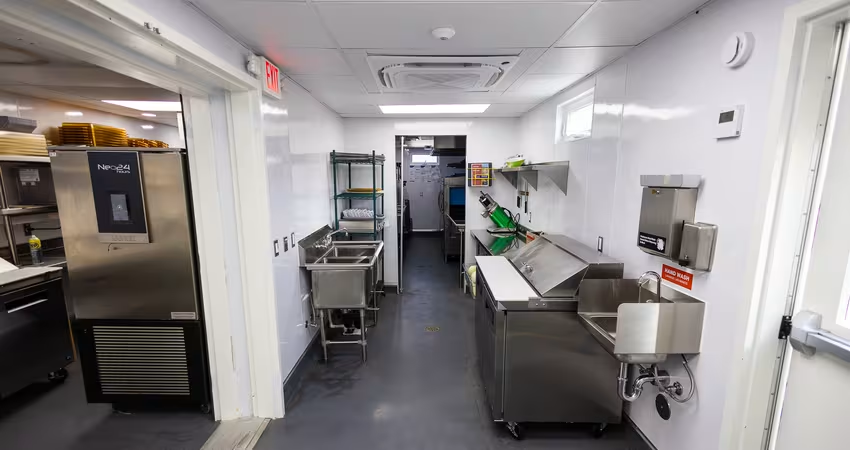
Front Porch's kitchen was a two-trailer, 850-square-foot Mobile Culinaire configuration joined by an interior door, built to run a full menu at scale rather than a stripped-down workaround.
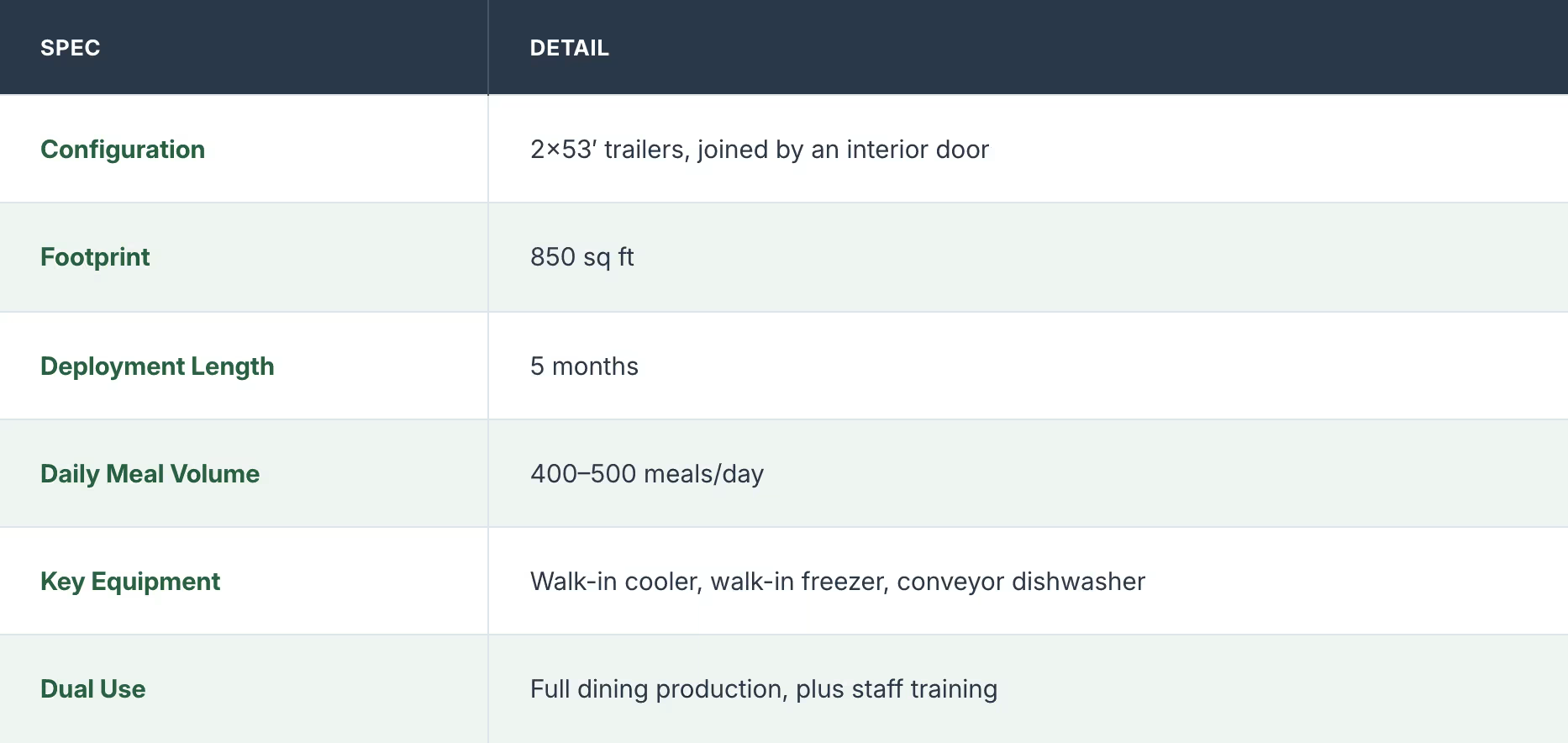
Note: This is the delivered configuration, not the standard catalog spec. The standard 2×53′ model runs 900 square feet; Front Porch's delivered footprint came in at 850.

The Second Job: Training the Dining Team Before Reopening
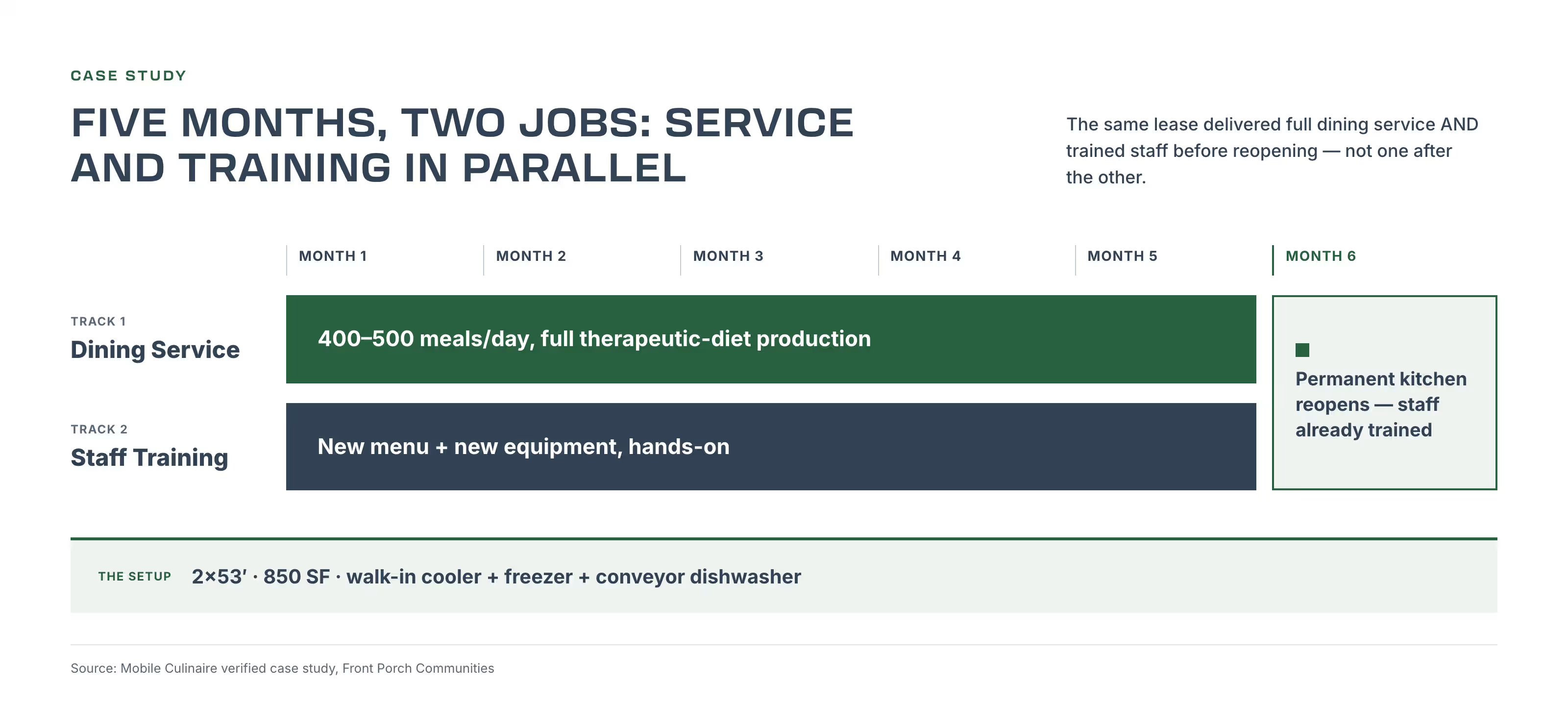
While the mobile kitchen fed residents, Front Porch's team also used it to train on the new menu and equipment the permanent kitchen would carry, so reopening day didn't cost a second disruption to relearn the line.
Workforce pressure is one of the top challenges dining leaders name for the year ahead, per the Senior Housing News and Gordon Food Service 2026 dining outlook survey. Training time is one of the places that pressure shows up hardest, often squeezed into the days right after a reopening. Front Porch avoided that by folding training into the lease: staff worked the new menu and equipment for months, not days, and arrived at the reopened kitchen already comfortable with the line.
A comparable approach is showing up elsewhere in senior living. A renovation at Vicar's Landing, a CCRC in Ponte Vedra Beach, Florida, used a rented mobile kitchen trailer to keep its foodservice department running through a six-month shutdown of its main kitchen.
Tip: Build the training window into the mobile-kitchen lease itself rather than scheduling it after reopening. Front Porch ran both in the same five months.
What This Mobile Kitchen Case Study Proves for Senior Living
Full dining service ran uninterrupted at 400 to 500 meals a day for five months, and the dining team walked into the reopened kitchen already trained, with no second disruption to relearn new equipment or menu.
- Zero gap in the three-meals-a-day schedule state licensure depends on.
- Full therapeutic-diet production sustained at scale, not a scaled-down stopgap menu.
- Staff training completed inside the renovation window instead of added on afterward.
For a Director of Nutrition & Culinary Services staring down a renovation, the lease window itself can double as training time, not just coverage, the clearest proof this mobile kitchen senior living case study offers.
Planning a renovation that can't pause dining service? Start the conversation with Mobile Culinaire about sizing a kitchen to your volume, your timeline, and your training window.
People Also Ask (FAQ)
How long can a senior living community run a mobile kitchen during a renovation?
Minimum lease is one month, and deployment scales with the project. Front Porch ran five months at full volume; other deployments have run longer. Duration isn't the constraint; what limits a deployment is whether the unit holds up at full volume.
Can a mobile kitchen trailer double as a staff training site?
Front Porch shows it can, when layout and equipment closely mirror a permanent kitchen rather than a stripped-down event setup. A cramped, retrofit-style trailer without that parity gives staff little worth training on.
What size mobile kitchen does a CCRC or assisted-living campus need?
It depends on venue count and meal volume. A single-building community with one dining venue can often right-size to a 40′ or 53′ unit; a multi-venue CCRC at Front Porch's scale needs the 2×53′ configuration.
What equipment comes standard in a senior living mobile kitchen?
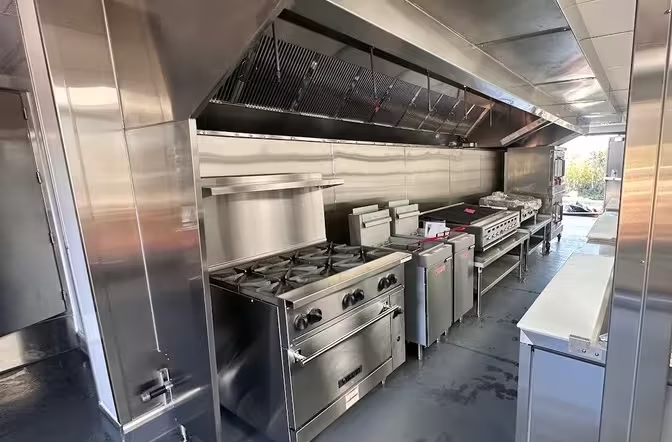
Configurations are built around commercial-grade cooking equipment, full HVAC, and cold storage, with a walk-in cooler and freezer at larger sizes. Equipment can also be configured to match an existing kitchen's inventory.

Testimonial
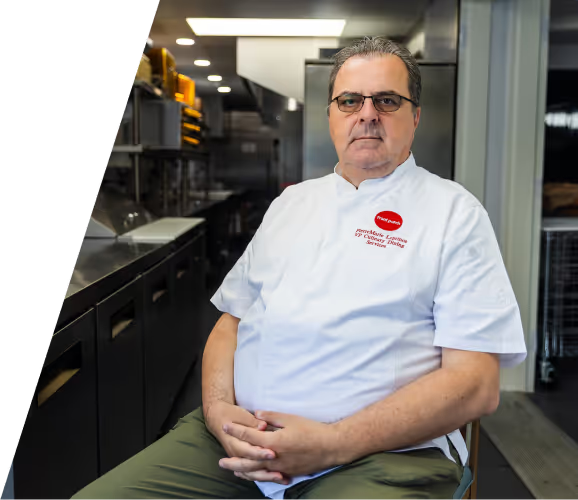
"What is standing out when you look at the mobile kitchen operation is the efficiency that we can really achieve because it's built for that."
Tell us about your kitchen needs and request a quote.

Turnkey mobile kitchen
Proudly made in-house in the USA
Commercial grade kitchen equipment
Code-compliant
Trusted by Industry Leaders