Your Facilities Director has the renovation scoped. Your Nutrition & Culinary Services Director has the mobile kitchen quote. Now it’s on your desk, and the question isn’t whether the kitchen can be replaced for the renovation window. It’s whether you can answer your board’s questions about it without inviting a harder one back.
Here are the five questions your board is actually going to ask.
1. Won’t the Board See This as More Expensive Than a Stopgap?
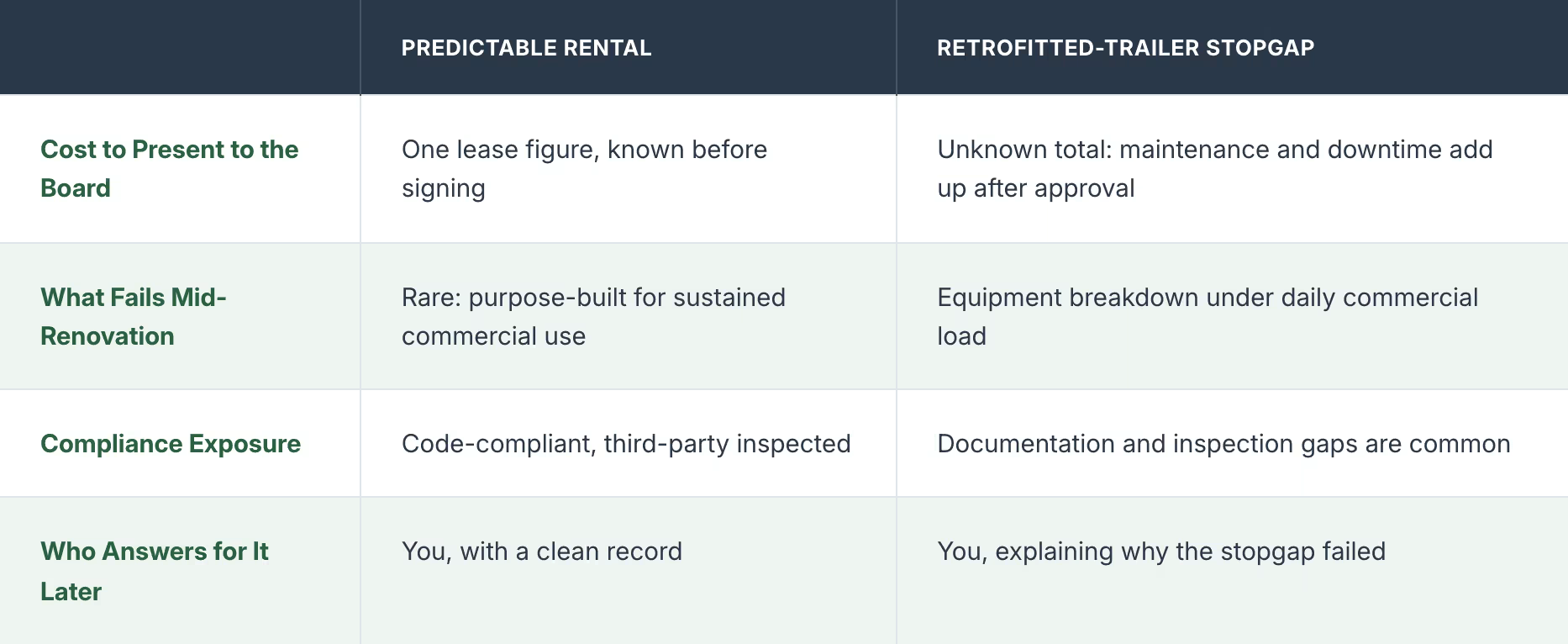
Only if the comparison stops at the first invoice. A retrofitted trailer looks cheaper going in. What it doesn’t show the board is the maintenance calls, the equipment failing under sustained commercial load, and the staff complaints that follow a community through a five-month renovation. None of that shows up until it’s already happened, and by then it’s a budget and schedule problem, not a line item.
Note: Mobile Culinaire doesn’t have a savings percentage or ROI figure to hand the board, and you shouldn’t present one that doesn’t exist. What you can present is total cost: a predictable rental fee against an open-ended risk that tends to cost more than it looked like it would.
2. Whose Budget Does This Come Out Of, and Will the Board Sign Off?
Tip: Bring the lease figure to the board as a single capital or operating-budget line, not as a range. A board that’s used to CapEx requests arriving with hard numbers attached will read a range as unresolved risk.
Be direct about the limit here: there’s no confirmed case of a senior-living board approving a mobile kitchen rental specifically on this argument. That’s not a gap in the pitch, it’s an honest statement about where the evidence currently ends. The deployment record (below) is real. The board-approval precedent isn’t established yet, and presenting it as settled would be the wrong way to walk into that meeting.
3. Will Permitting and Inspections Slow Down Our Renovation?
No. A rental unit arrives code-compliant and third-party inspected, with an install window measured in about a week, not the weeks of plan review a ground-up build can carry. That’s one less dependency sitting on your renovation’s critical path, and one less thing Facilities has to chase down mid-project.

4. What Happens to Our Dining Standards During the Rental?
A visible dining disruption reads differently here than it would at, say, a country club. Residents and families are watching for signs the community can’t reliably care for them, and that’s a trust problem, not a satisfaction-survey problem. A properly equipped rental kitchen runs the same menu at the same standard, so there’s nothing visible for families to notice.
5. Who Is Accountable if Something Goes Wrong?
You are, whether Facilities ran the project hands-on or not. A dietary-service gap isn’t an operational hiccup, it’s the kind of finding that shows up in a state survey report with your name on it. That’s why the compliance documentation matters as much as the kitchen: code-compliant, third-party inspected, paperwork ready before a surveyor or board member asks.
What Front Porch Communities Actually Shows
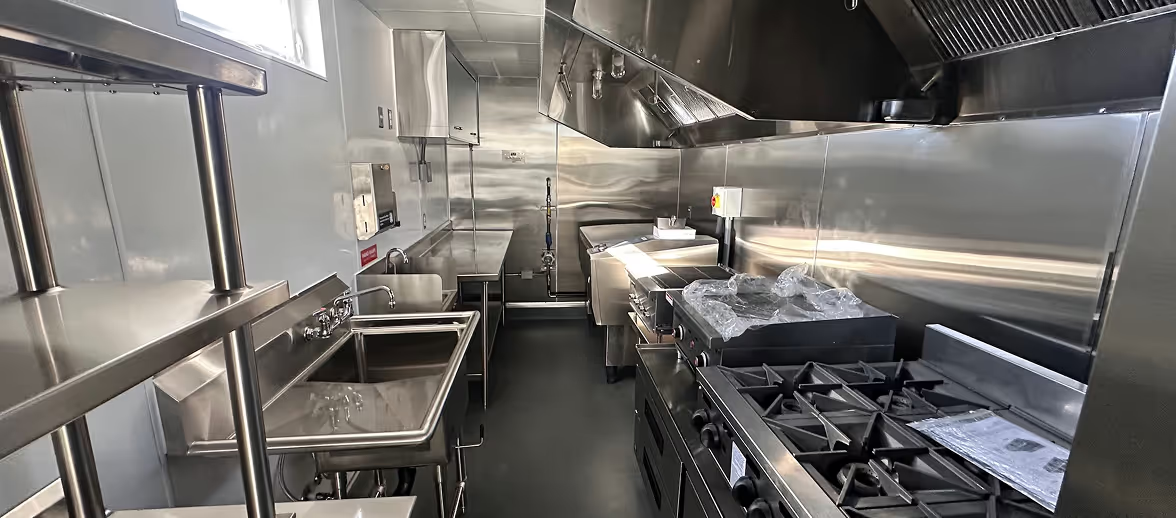
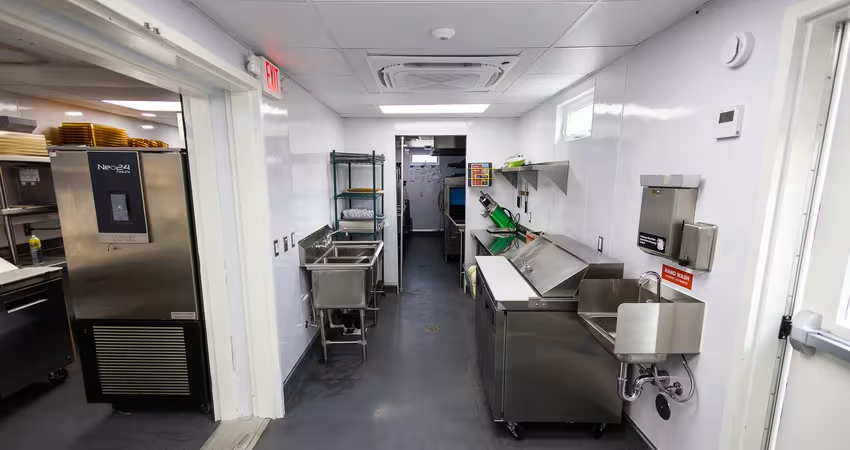
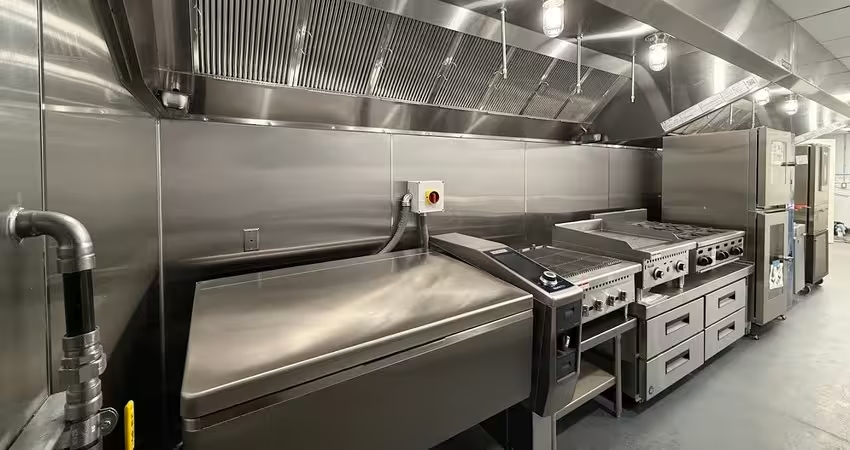
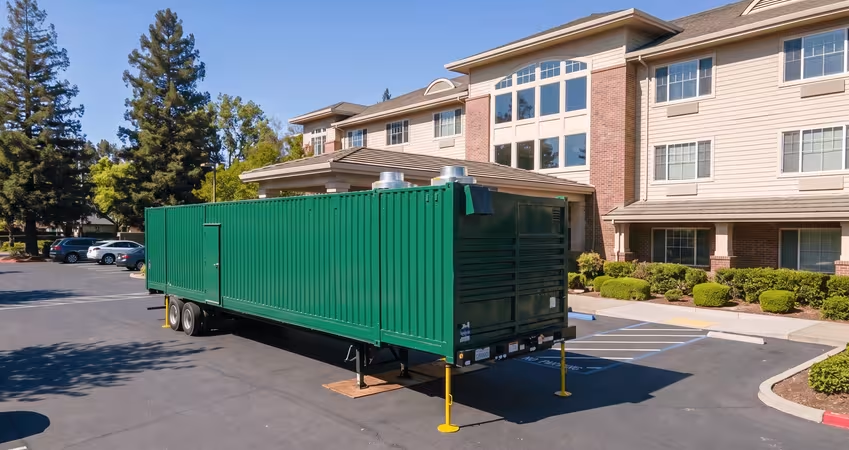
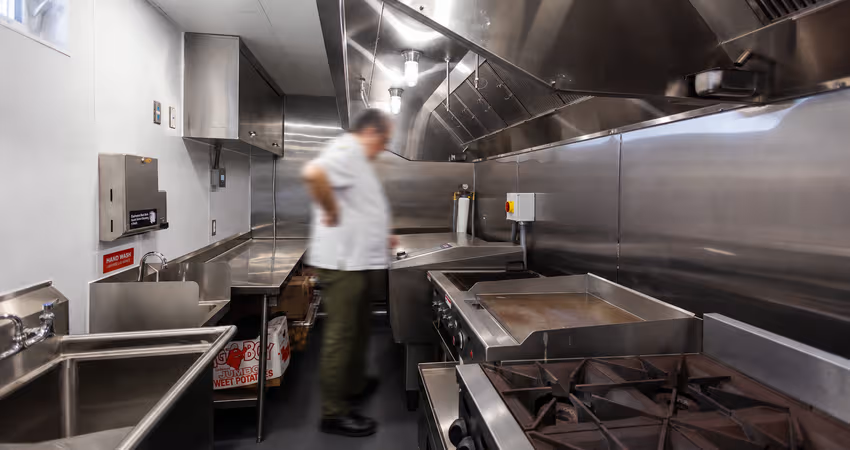
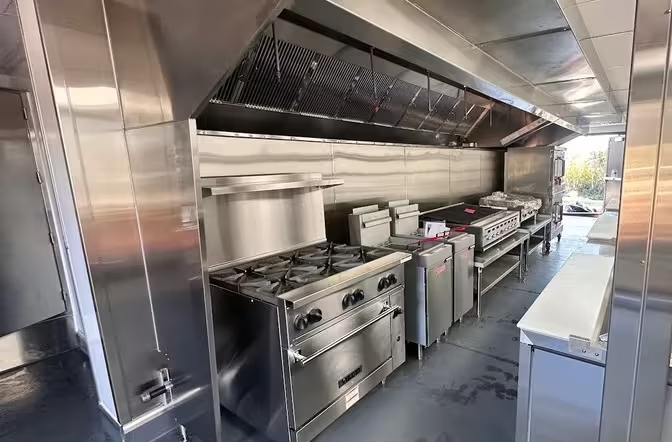
Front Porch Communities, a senior-living nonprofit running 20+ California communities, kept a full menu going for five months during a renovation out of a joined 2×53′ unit, serving in the 400-to-500-meal-a-day range, with cold storage and a conveyor dishwasher built in. The kitchen pulled double duty: operations continued, and staff trained on new menus and equipment at the same time. Standards held through the stretch, and residents kept getting served.
That’s a real deployment at the scale this role is accountable for. It answers whether the kitchen holds up, not whether the board will approve it. Keep those two questions separate.
NIC data cited in a 2025 Senior Housing News report puts roughly half of U.S. senior living communities at 25 years or older heading into renovation cycles. This isn’t a one-time decision for your board. LeadingAge’s guidance on capital planning for senior living treats CapEx requests as something boards expect to see with a clear reserve-study or budget rationale attached, not as an open-ended ask, which is exactly what a single-line-item lease gives them.
What to Bring Into the Room
- The lease cost as one number, not a range
- The Front Porch deployment as proof the kitchen itself works at scale
- A direct answer if asked about precedent: this is the first time your board will see this specific ask
- The compliance and inspection documentation, since that’s usually the follow-up question
Every rental is built to the same code-compliance and inspection standard as a permanent kitchen, so the documentation exists before the board asks for it. If you’re scoping the number to bring into that meeting, this guide to renting a mobile kitchen for senior living renovations and the cost breakdown for senior-living renovations cover what the line item typically includes. For the budget-blowout risk a stopgap carries, see the eight hidden costs most quotes don’t show. And if the board asks why rent instead of buy for a window this short, this comparison of buying, renting, and leasing lays out the math.
Ready to put a real number in front of your board? Talk to Mobile Culinaire before your next board cycle, so the line item is ready when the question comes up, not after.

Testimonial

"What is standing out when you look at the mobile kitchen operation is the efficiency that we can really achieve because it's built for that."
Tell us about your kitchen needs and request a quote.

Turnkey mobile kitchen
Proudly made in-house in the USA
Commercial grade kitchen equipment
Code-compliant
Trusted by Industry Leaders