.gif)
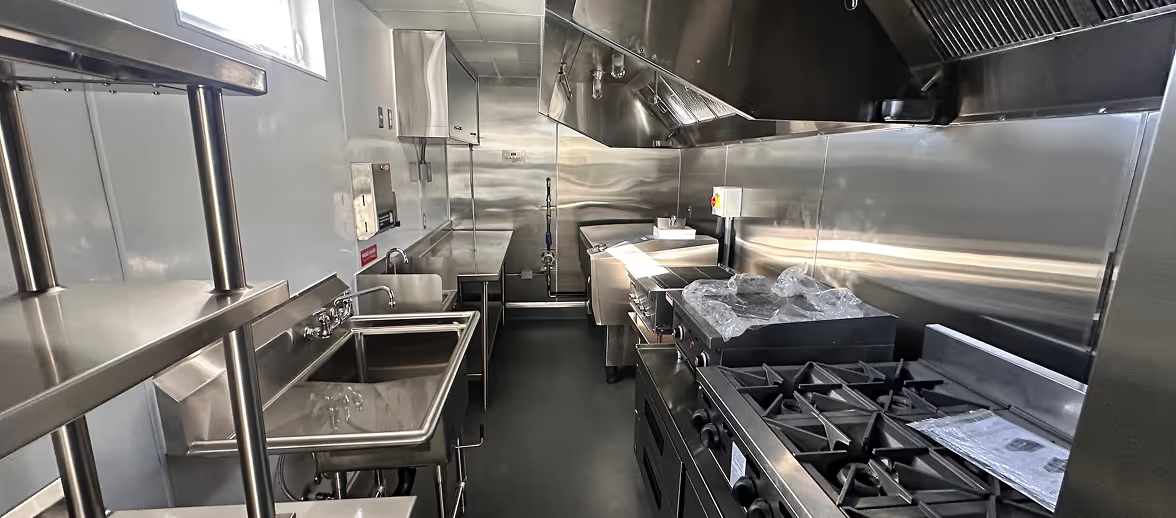
Ask an equipment rep "what size mobile kitchen do I need?" and they'll ask how many meals a day you're planning. For a single-outlet operation, that's a fair start.
For a country club running a formal dining room, a grill, and a banquet program out of one clubhouse, it's the wrong first question. Three outlets producing 300 covers a day need a very different footprint than one outlet producing the same 300.
This guide walks through matching a mobile kitchen configuration to your club's actual outlet structure — not just its headcount — so the unit you rent can do what your permanent kitchen does today.
Why Outlet Count Changes the Spec, Not Just Meal Count
A single daily meal total hides the thing that actually breaks a mobile kitchen mid-service: how many separate menus it has to produce at once.
The same 300 covers, two very different kitchens
- One outlet, 300 covers — one à la carte dining room, one cook line.
- Three outlets, same 300 covers — a grill room, a formal dining room, and a Saturday banquet. Now you need parallel prep stations, separate hold space, and enough walk-in and dry storage to keep three menus moving without one outlet cannibalizing another's ingredients mid-shift.
Why the spec sheet misleads
A unit rated for "300–450 meals" can still be wrong for your club. That number assumes one kitchen producing one menu — and your clubhouse runs three.
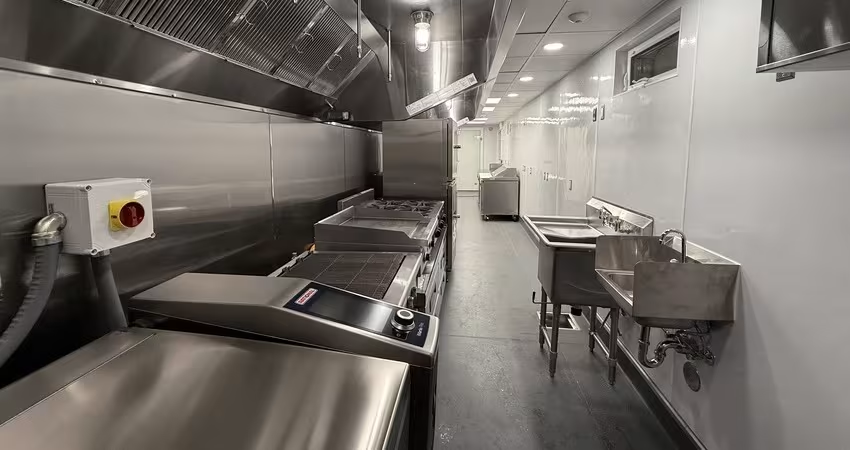
Retrofitted trailers weren't built with this in mind. They're sized for volume, not for running multiple menus in parallel, which is exactly where they run out of prep space and hold capacity first.
Which Mobile Kitchen Configuration Fits a Multi-Outlet Country Club Menu?
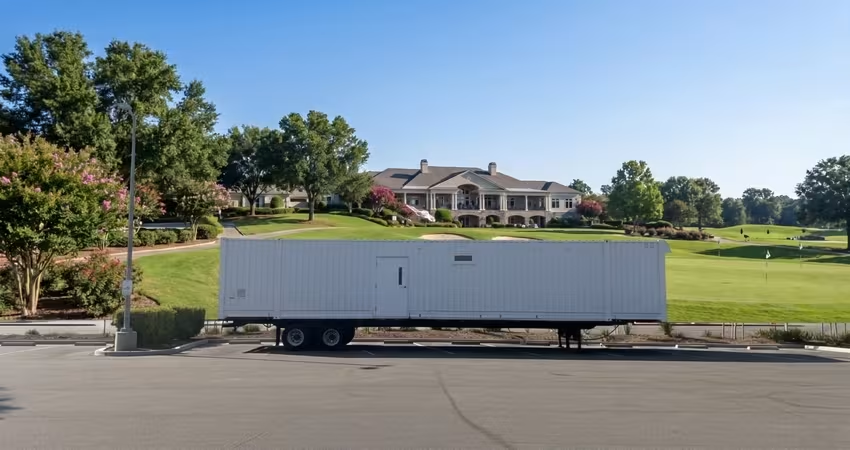
Four configurations cover the range of club operations. The right one depends on how many outlets draw on it at once — not member count.
.avif)
Note: treat this table as the catalog baseline. A delivered unit's exact footprint can differ from the standard spec depending on your equipment schedule — Mobile Culinaire configures the equipment list to available inventory rather than forcing every club into an identical layout.
The Menlo Circus Club Precedent
What the club needed
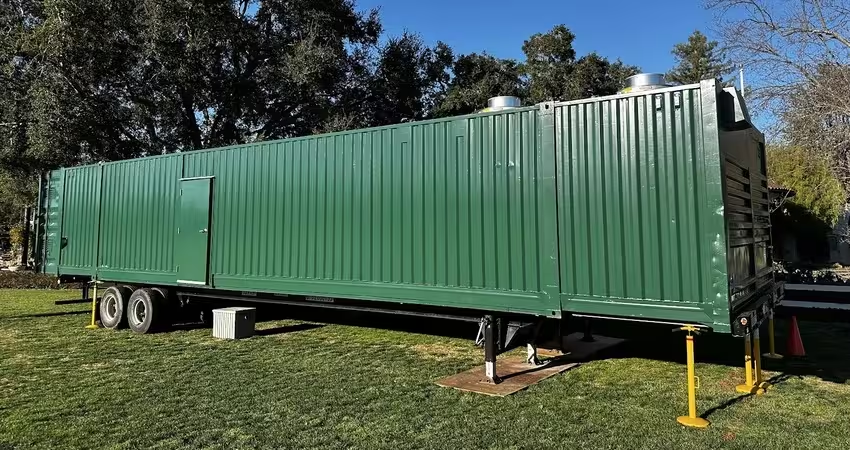
Menlo Circus Club is a private country and polo club in California. Facing a five-month clubhouse renovation, it needed its full dining program to keep running — not a stripped-down renovation menu.
.avif)
What it took
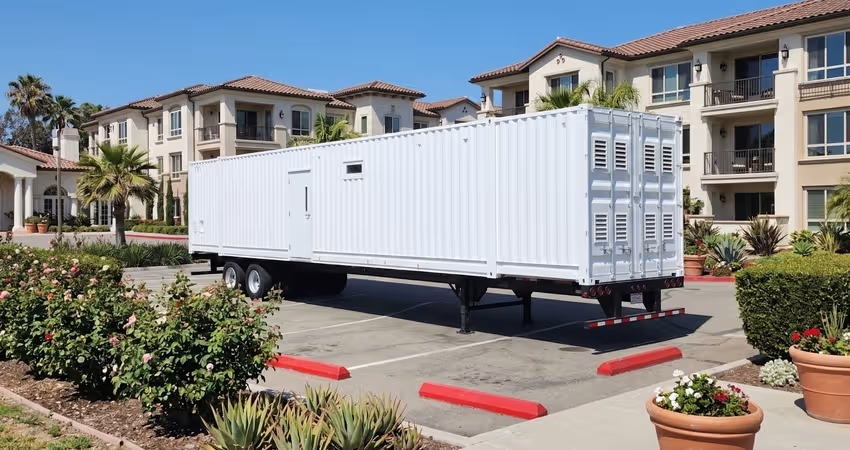
Mobile Culinaire delivered a 2×53′ configuration — two trailers joined by an interior door. That extra footprint gave the kitchen team enough parallel cook and hold space to run the club's complete menu without cutting outlets.
Tip: that's the standard worth holding any rental to. If a configuration can't carry your full menu across your actual outlet count, it isn't sized correctly yet — regardless of the meals-per-day number on the spec sheet.

Will Staff Actually Be Able to Work In It for Months?
It's a fair objection, and every executive chef raises it before signing. A renovation can run five months or longer, and a cramped, poorly-ventilated box shows up in service speed and staff turnover long before it shows up in a meal count.
Where retrofitted units fail
A custom trailer builder's own warning to buyers about the used-trailer market flags "lower quality equipment, inferior materials" as one of the most common ways a cheap unit disappoints — exactly the failure mode a multi-month club rental can least afford.
.avif)
What to press a provider on
General commercial kitchen equipment guidance makes the same point for any kitchen: size for peak volume, not average, and make sure controls and layout match how staff actually move through the space.
That applies just as much inside a trailer as inside a permanent kitchen. Purpose-built versus retrofitted is the distinction to raise before you sign — not just the square footage.
What to Bring to the Sizing Conversation
Meal count alone gets you a unit that's technically big enough and still wrong. Bring these five instead:
- Outlet count and type — how many kitchens you run in parallel (dining room, grill, banquet, snack bar), not just total covers
- Peak-day service style — à la carte, buffet, plated banquet, or a mix; each demands different hold and plating space
- Staff headcount per shift — the layout has to fit the team working it, not just the equipment
- Duration — a multi-month renovation changes what "good enough" means versus a two-week emergency bridge
- Menu complexity — made-to-order items need more cook-line depth than a banquet-only offering
Why meals-per-day isn't the spec
A standard kitchen can run efficiently anywhere from 200 to 700 meals a day depending on menu, equipment, workflow, and labor.
That's a wide enough range to be almost useless on its own. The daily total starts the conversation; it doesn't finish it.
Note: whatever configuration you land on still has to meet NFPA 96 ventilation and fire-suppression requirements for commercial cooking operations. A purpose-built, code-compliant unit is designed to clear this at inspection — a converted trailer is where it most often gets missed.
You're not an edge case
Research from Club Benchmarking, CMAA, and the National Club Association puts the number of private clubs operating in the US at roughly 5,659. A multi-outlet clubhouse is common enough that no provider should be sizing for one on the fly.
Large institutional dining programs hit the same problem. Harvard's Eliot House renovation pushed the shared Eliot-Kirkland operation — serving roughly 750 students — into a trailer plus temporary basement space, for work expected to run into 2027.
.avif)
Talk to a Provider With the Right Numbers
Tip: don't lead the conversation with "we need to feed 400 people a day." Lead with your outlet count, your peak service style, and how long the window runs. That's what actually determines whether a 53′ or a 2×53′ configuration is the right call — and it's the information Mobile Culinaire's team will ask for anyway.
For the broader decision beyond outlet sizing, see the full mobile kitchen buyer's guide, or how clubs and golf courses use mobile kitchens more broadly on the country club resource page.
People Also Ask (FAQ)
How many meals can a mobile kitchen trailer serve per day?
It depends on the configuration and how many outlets draw on it. Mobile Culinaire's single-trailer units run from 150–200 meals a day (32′) up to 300–450 meals a day (53′); the 2×53′ configuration — two trailers joined by an interior door — handles 500–650 meals a day. The number depends less on total meals than on how many separate menus the unit produces at once.
Can one mobile kitchen support multiple dining outlets at a country club?
Yes, with the right configuration. Menlo Circus Club ran a full menu — burner range, fryers, and a double-deck oven — for a private country and polo club serving 400–500 meals a day, using a 2×53′ configuration during a five-month renovation. A single-trailer unit can also cover two outlets if they don't peak at the same time; a 2×53′ is the safer call when they do.
What size mobile kitchen trailer does a country club need?
There's no fixed size per club — it depends on outlet count, peak service style, menu complexity, and rental duration more than member count alone. A single-outlet club can often run on a 40′ or 53′ unit; a full multi-outlet clubhouse running dining room, grill, and banquet at once typically needs a 2×53′.

Testimonial
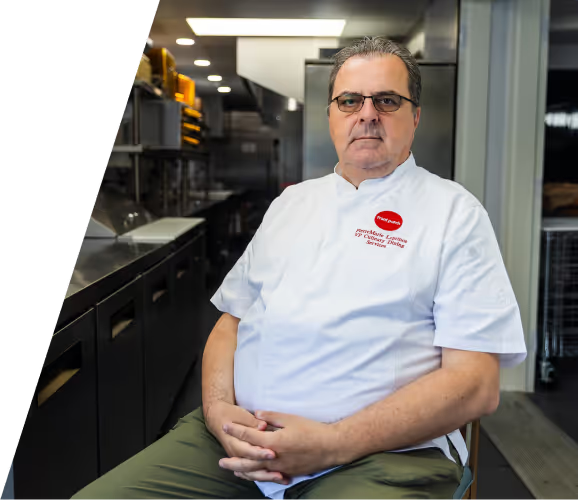
"What is standing out when you look at the mobile kitchen operation is the efficiency that we can really achieve because it's built for that."
Tell us about your kitchen needs and request a quote.
.png)
Turnkey mobile kitchen
Proudly made in-house in the USA
Commercial grade kitchen equipment
Code-compliant
Trusted by Industry Leaders