.gif)
Winter is the quietest quarter on a club's calendar and the least forgiving on a construction schedule. That combination is why a club kitchen winter renovation looks obvious in September and goes wrong in February. The GM is the one who explains it either way. On Club Benchmarking's numbers, roughly seven clubs in ten run food and beverage at a subsidy, so a closure does not pause a profit centre — it withdraws an amenity members are already paying dues for while the costs carry on. This guide covers what genuinely changes in winter.
Strategic Advantages of a Club Kitchen Winter Renovation
Winter is the right window for most clubs, for one reason: it is when the fewest members notice. That advantage is real but narrow, and it does not extend to the construction schedule itself. Treat the quiet calendar as the benefit and the weather as the cost.
Leveraging Off-Season Timing
Member traffic falls in the cold months. Golf rounds drop, outdoor dining closes, and the banquet book thins out after the holidays. That is the window, and it is valuable — the same work in June is visible to every member walking through the clubhouse.
It also lines up with the board calendar. Most clubs approve capital spend through committee and board cycles, sometimes a member vote, so a winter start gives approval autumn to run. Work backwards from the board meeting, not demolition.
Managing Winter-Specific Risks
The constraint that bites is temperature, and it is documented. According to ACI 306R-16, cold weather begins when air temperature “has fallen to, or is expected to fall below, 40°F (4°C) during the protection period.” How long that period runs depends on what the slab will carry:
| Service condition | Normal-set concrete | Accelerated-set |
|---|---|---|
| No load, not exposed | 2 days | 1 day |
| No load, exposed | 3 days | 2 days |
| Partial load, exposed | 6 days | 4 days |
Any slab work — floor pours, drainage slopes, equipment pads — inherits that schedule, and shortened daylight compresses it further. Ask which pours sit on the critical path.
Note: Ask for the cold-weather protection method in writing at bid stage. Heated enclosures and insulated blankets are a line item, not an assumption.
Pre-Construction Planning for Winter Success
Winter punishes late decisions harder than summer does, because the recovery options are thinner. A change that costs a week in July can cost a month in January once a re-order crosses the holidays. Lock the decisions that drive procurement first.
Finalizing Design Specifications Early
Freeze the items with the longest tails first, because each one drives a drawing, a permit or a fabrication order:
- hood and ventilation routing
- dish room layout and utilities
- walk-in dimensions and door orientation
- floor drainage and slopes
- electrical panel locations
Changes after demolition trigger revisions, resubmittals and re-ordering. Our week-by-week renovation timeline sets out the general sequence; the winter-specific point is that every one of those loops lands in a period with fewer working days.
Equipment Procurement and Lead Time Management
Order early and ask suppliers directly what winter does to their quoted lead time rather than applying a rule of thumb. The answer varies by manufacturer and by item, and a specific figure beats a generic buffer.
Stage deliveries under cover. Equipment left in freezing conditions can need conditioning before commissioning, so confirm storage requirements before the truck is booked.
Tip: Ask each supplier for its own winter lead-time figure and put it in the schedule. A buffer you invented is not a plan.
Implementing Professional Mobile Kitchen Solutions
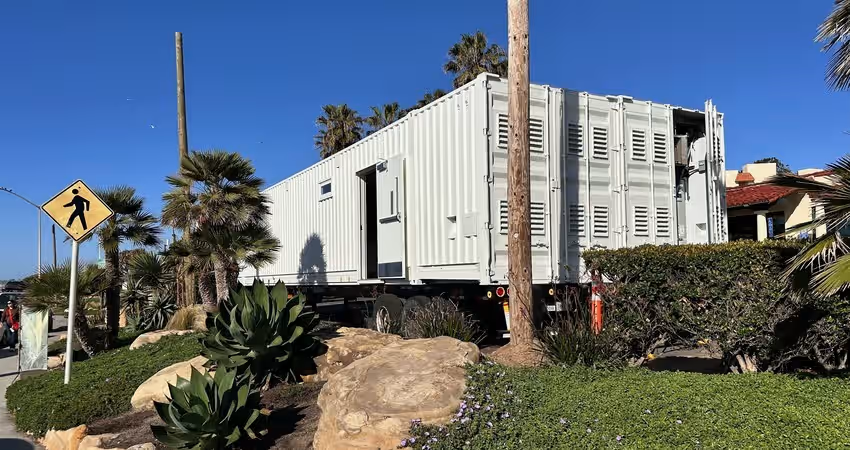
A temporary kitchen is what makes the winter window usable, because it decouples member dining from the construction schedule. If the build slips, service does not. That is the difference between a delay you manage and a delay you announce.
Temporary Kitchen Strategy for Operational Continuity
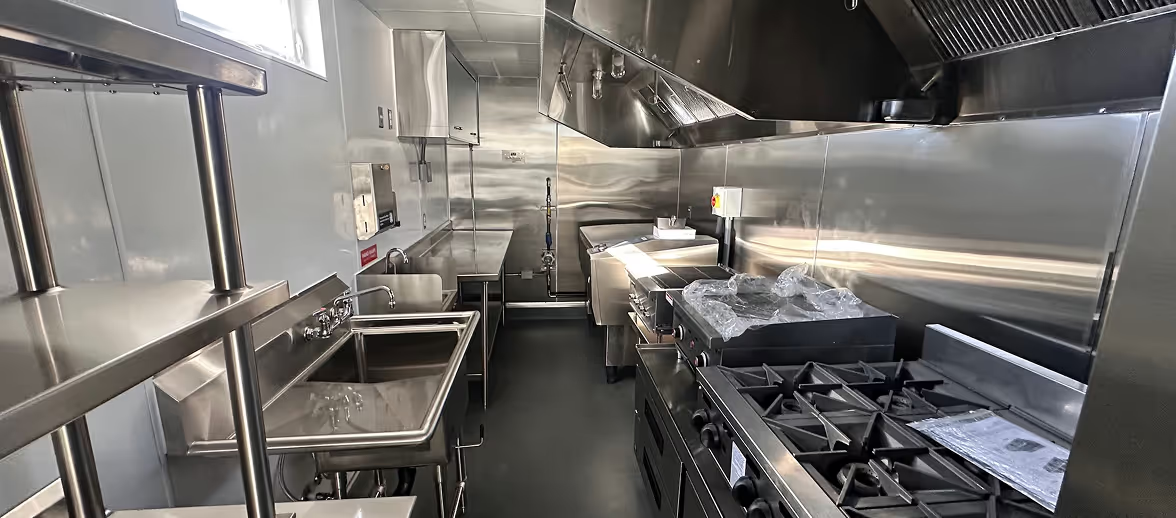
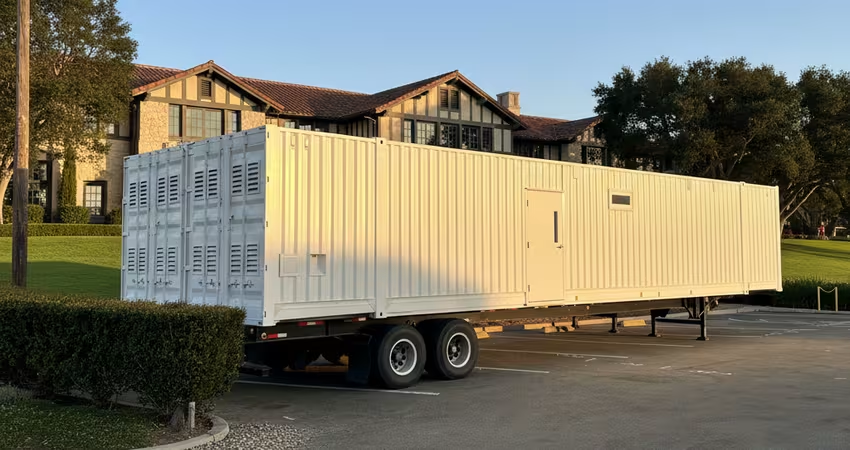
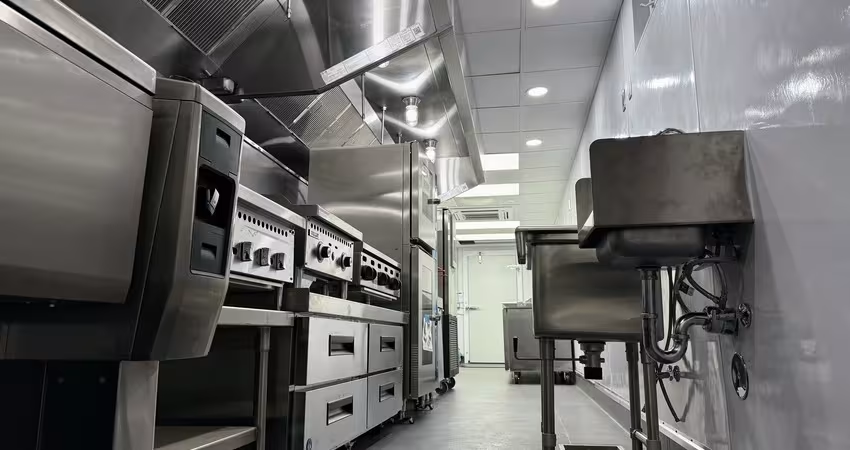
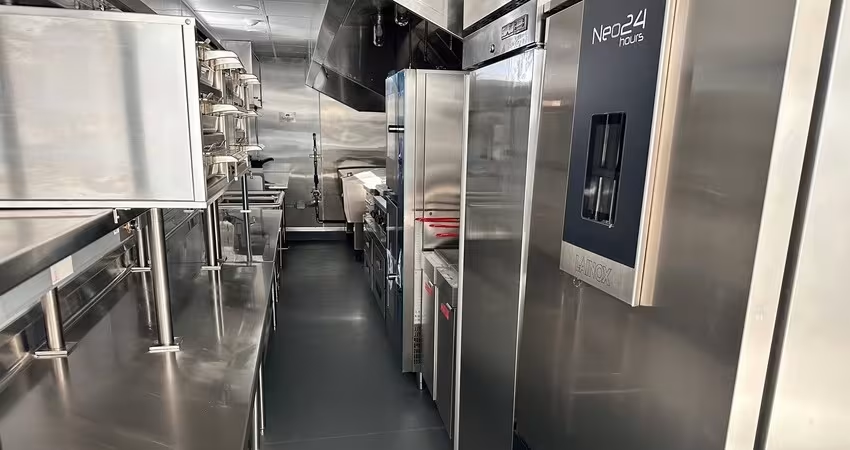
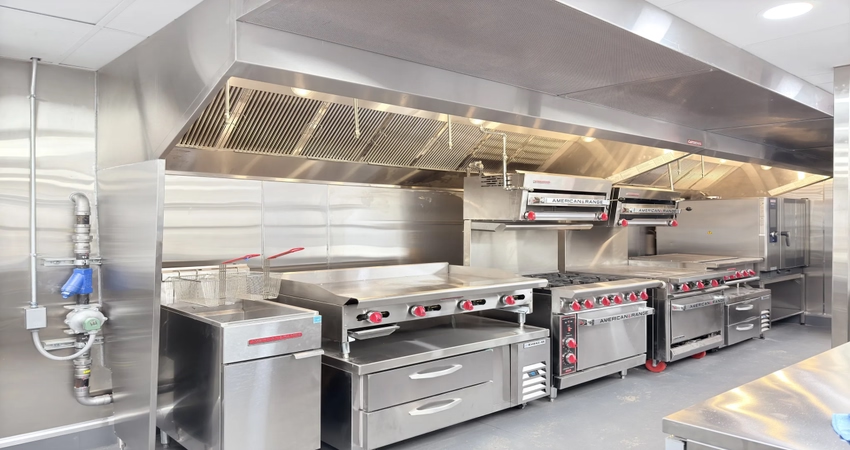
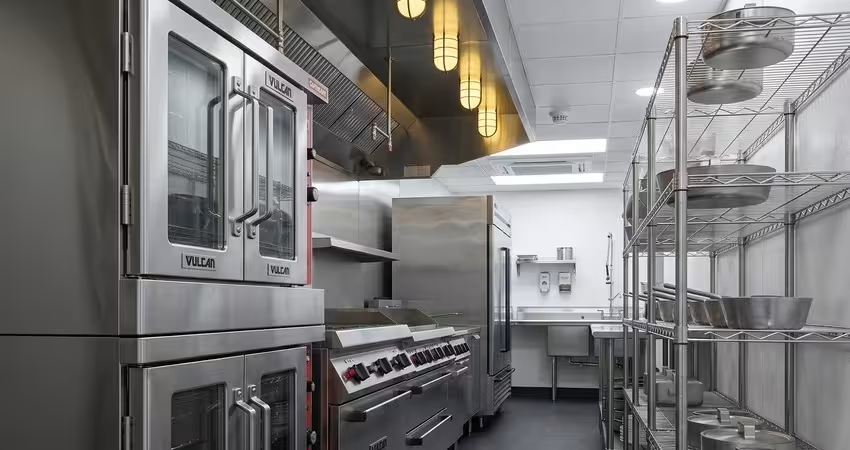
This is where the two categories of unit separate, and winter is where the gap is widest. A converted trailer was insulated for transport rather than for a January service: the envelope is thin, the air balance approximate, and the equipment specified for short bursts rather than a full winter of dinners. A purpose-built mobile kitchen is manufactured from kitchen modules to permanent-facility standards, with full HVAC and insulation pre-installed.
At Menlo Circus Club that approach carried a full menu for five months at 400 to 500 meals a day, to California code. Overlap the unit's commissioning with your existing kitchen's last service so there is no gap. See how clubs keep F&B open through a renovation.
Mobile Culinaire manufactures in Oregon, and the winter-relevant part is what arrives already installed: full HVAC, insulation and fire suppression, in footprints running up to a joined 2×53. More than 400 units have gone out to private clubs, hotels, senior living and municipal programmes, and installation runs about a week once permitting clears.
Site Planning for Winter Mobile Kitchen Operations
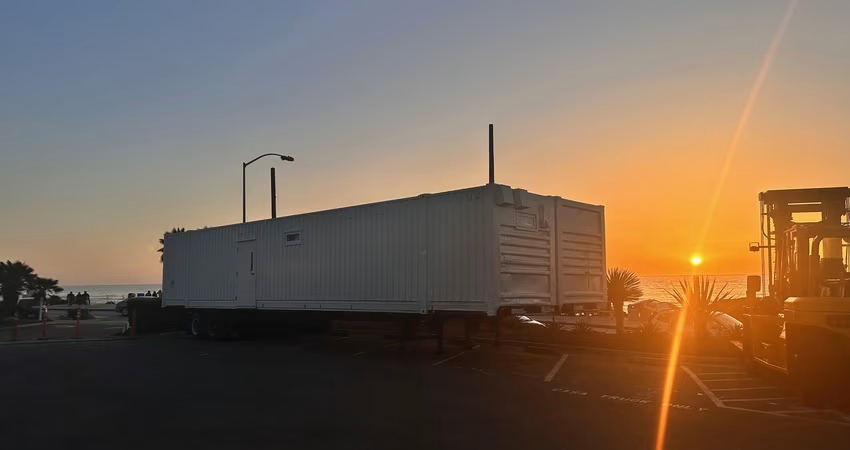
Placement is a winter problem as much as a logistics one. You need all-weather access for staff and deliveries, a stable pad, and utility connections protected from freezing — you provide and connect the power, water and gas sources, and own the decks and ramps.
The delivery date carries its own seasonal constraint, and in northern states it is not only snow. Minnesota's Department of Transportation ran spring load restrictions in 2026 from 3 March to 20 April in its metro, south and south-east zones, and from 20 March to 15 May in the north. If a heavy unit has to arrive or leave inside a thaw window, the route needs checking before the dates are agreed.
Staff will walk that route in the dark and on ice several times a service. Specify non-slip surfaces, lighting and weather protection between the unit and the dining room, and keep exhaust discharge away from member terraces. Talk to us before the site plan is fixed.
Construction Management During Winter Months
Winter separates contractors who have done it from contractors who say they can. The difference shows in whether cold-weather methods are priced into the bid or discovered in January, when the options have narrowed. Ask for evidence rather than assurances, and ask before the bid is accepted.
Contractor Selection and Performance Expectations
Ask for two things: club or hospitality projects completed in an occupied building, and winter projects specifically, with references you can call. Dust and noise control in an occupied clubhouse is a separate skill from building fast.
Tie payments to milestones rather than elapsed time, so a weather delay does not quietly become a billing event.
Material Storage and Weather Protection
Moisture-sensitive materials — flooring, millwork, finishes — need dry storage, and adhesives and sealants usually need a temperature floor to cure; confirm both against the product data sheets. Schedule deliveries close to installation, because on-site storage in winter is exposure rather than convenience.
Regulatory Compliance and Inspection Management
The permit is yours, and winter narrows the calendar it has to fit into. Municipal offices run reduced hours over the holidays and inspectors reschedule for weather, so the sequence needs slack you have actually asked for rather than assumed.
Permit Coordination and Approval Timelines
Open the conversation with your health department, fire marshal and building department during planning, and ask each one directly about holiday coverage. Permitting is the widest variable in any deployment: the AGC's 2026 outlook recorded permitting and regulatory review among the year's named concerns for 30% of construction firms — and a winter application queues behind the holidays on top of that.
Our renovation permits guide covers the general set. Mobile Culinaire supplies certifications and inspection records as one package — submit them complete at first application.
Inspection Scheduling and Code Compliance
NFPA 96 governs ventilation and fire protection, in the edition your jurisdiction adopted. Two authorities sign off on two separate visits — the fire marshal and the health department — and both have to clear before service resumes.
The FDA Food Code edition your state has adopted applies to the temporary kitchen exactly as it does to the permanent one; nothing gets a lighter standard for being temporary. Get the mobile unit inspected before decommissioning the main kitchen.
.avif)
Financial Risk Management and Cost Control
Winter adds cost lines that summer projects do not carry, and they are the ones most often missing from a board-approved budget. Name them before approval rather than as variations afterwards, because a variation is a second conversation with the board.
Budget Planning for Winter Variables
Budget for temporary enclosures and heating, additional lighting, higher utility consumption, premium rates for holiday or overtime work, and an extension month on the temporary kitchen. Price that extension up front — on most projects it is a certainty rather than a risk.
The lines that get missed are rarely the construction ones. Our hidden costs of a shutdown covers what a closure costs beyond the contract — staffing, guest attrition and a rushed reopening, none of which appear in a contractor's number.
Return on Investment Analysis
The comparison is the rental total against the revenue and goodwill a closure costs, and no single figure covers it — it turns on your outlet mix, winter volume and window length. Build it from your own numbers with the downtime calculator.
Preserved à la carte covers, held banquet bookings and dues collected without a complaint all sit on the protected side.
Comparing Renovation Approaches for Winter Projects
Winter tilts the choice toward a full shutdown with a temporary kitchen, because contractor efficiency matters more when working days are scarce. Phasing keeps some service in the building but slows the build, and slow is expensive in a short season.
Phased Renovation Versus Complete Shutdown
A complete shutdown gives contractors unrestricted access, allows utility work that phasing cannot accommodate, and contains dust and noise in one sealed zone. Phasing suits smaller scopes where one section can genuinely operate while another is stripped.
Our phased versus full shutdown comparison works through both.
Risk Mitigation Through Temporary Kitchen Solutions
The temporary kitchen is what absorbs a schedule overrun. If final ventilation testing fails during a February cold snap, service continues while the contractor resolves it — nobody is forced to reopen on an incomplete installation to stop the complaints.
That is the risk the GM is actually managing: not the construction schedule, but the gap between the schedule and what the membership was told.
Conclusion
A club kitchen winter renovation succeeds on four decisions: use the quiet calendar deliberately, freeze the long-lead specifications before demolition, get cold-weather methods and holiday permit coverage priced at bid stage, and put a temporary kitchen in place so a slipped date never becomes a closed dining room.
Get those right and winter is the cheapest window you have. See our country club deployments.
Disclaimer
Permit, health, fire and building requirements vary by state, county and municipality, and jurisdictions adopt different editions of the applicable codes, including the concrete and ventilation standards cited here. Seasonal road restrictions and their dates vary by state and by year. Durations are planning figures, not commitments. Confirm every requirement, lead time and cold-weather method with your authority having jurisdiction, your contractor and your suppliers before fixing dates.
People Also Ask
Three questions come up in nearly every winter renovation conversation at a club. Two turn on what winter actually changes rather than what it costs, and that is usually the more useful thing to settle before the board approves a start date.
What are the biggest challenges of renovating a club kitchen in winter?
Temperature-dependent work is the main one. ACI 306R-16 treats cold weather as beginning at 40°F, with a protection period of two to six days for concrete, which affects floor pours, drainage slopes and equipment pads. Shorter daylight, holiday absences among inspectors and municipal staff, and weather-delayed deliveries compress the schedule further.
How can clubs maintain food service during winter kitchen renovations?
Deploy a temporary kitchen and commission it before the main kitchen is decommissioned, so there is no gap in service. A purpose-built unit arrives with full HVAC, insulation and fire suppression pre-installed, which matters more in winter than at any other time of year. Plan the staff walking route for ice and darkness.
Should clubs delay a kitchen renovation until spring?
Usually not. Spring and summer put construction in front of every member at peak season, and the delay itself carries cost in continued equipment failures. Winter's advantage is the quiet calendar; its cost is a tighter schedule. The deciding factor is whether you have a temporary kitchen to absorb a slipped date.


Testimonial

"What is standing out when you look at the mobile kitchen operation is the efficiency that we can really achieve because it's built for that."
Tell us about your kitchen needs and request a quote.
.png)
Turnkey mobile kitchen
Proudly made in-house in the USA
Commercial grade kitchen equipment
Code-compliant
Trusted by Industry Leaders