.gif)
Your board just approved a $2 million clubhouse kitchen renovation — the capital project your executive chef has been pushing for years. But as the project timeline takes shape, a harder question surfaces: how do you keep 800 members dining at the standard they expect while your kitchen is torn down to the studs?
For country clubs, a kitchen renovation is never just a construction project. It is an operational, financial, and reputational challenge that touches every department. The clubs that execute well share one thing in common: they plan for continuity before they plan for construction.
This guide walks through the key decisions that protect your club's dining program, member satisfaction, and F&B revenue throughout a major country club kitchen renovation.
Why Country Club Kitchen Renovations Are Uniquely High-Stakes
The Member Experience Is Non-Negotiable
Unlike restaurants or hotels, country clubs operate on a membership model where dues fund the renovation — and members expect uninterrupted access to the amenities those dues support. According to the Club Management Association of America (CMAA), dining consistently ranks among the top three drivers of member satisfaction at private clubs.
When kitchen service becomes inconsistent, the impact extends beyond missed meals. Members begin questioning the value of their membership, event participation declines, and prospective member tours lose one of the club’s strongest selling points: the dining experience.
F&B Revenue, Events, and Staffing Stability Are on the Line
F&B is often the largest revenue center at a country club outside of dues. A full kitchen shutdown during a clubhouse kitchen upgrade can mean:
- Lost à la carte and banquet revenue — clubs have reported revenue declines of 30–50% during unplanned kitchen closures
- Canceled or relocated weddings, galas, and corporate events — high-margin bookings that are difficult to recover once lost
- Member dissatisfaction and attrition — especially among newer or younger members
- Staff turnover — talented chefs and line cooks leave for stable positions rather than wait out a months-long closure
Note: According to Club + Resort Business, clubs that maintained full F&B operations during renovations saw revenue increases of 25–35% after reopening. Maintaining continuity preserves momentum — members return in stronger numbers when they never had to leave.
1. Planning Your Country Club Kitchen Renovation Timeline
Picking the Right Window: Off-Season vs. Phased Approach
Timing is the single most consequential decision in any country club kitchen renovation. You have two primary strategies:
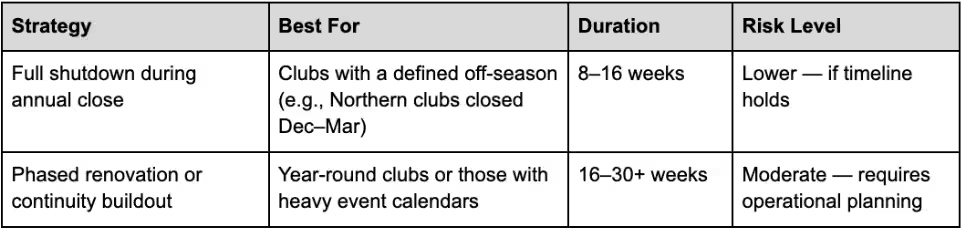
Most country clubs cannot afford a full shutdown. Their event calendars and member expectations demand a continuity plan that keeps food production online throughout construction.
Start planning 12–18 months before the target start date — equipment lead times alone stretch 10–16 weeks for commercial-grade appliances, and permit processing averages 3–6 weeks.
Working Backwards From Your Event Calendar
Every club has sacred dates — the Member-Guest tournament, the annual gala, the Fourth of July cookout. Your renovation timeline must be built around these fixed commitments.
A practical approach:
- Map every confirmed event for the next 18 months with expected covers
- Identify the lowest-volume window that gives your contractor enough consecutive weeks
- Add a 3–4 week buffer — the National Restaurant Association reports that 73% of operators underestimate renovation duration by at least three weeks
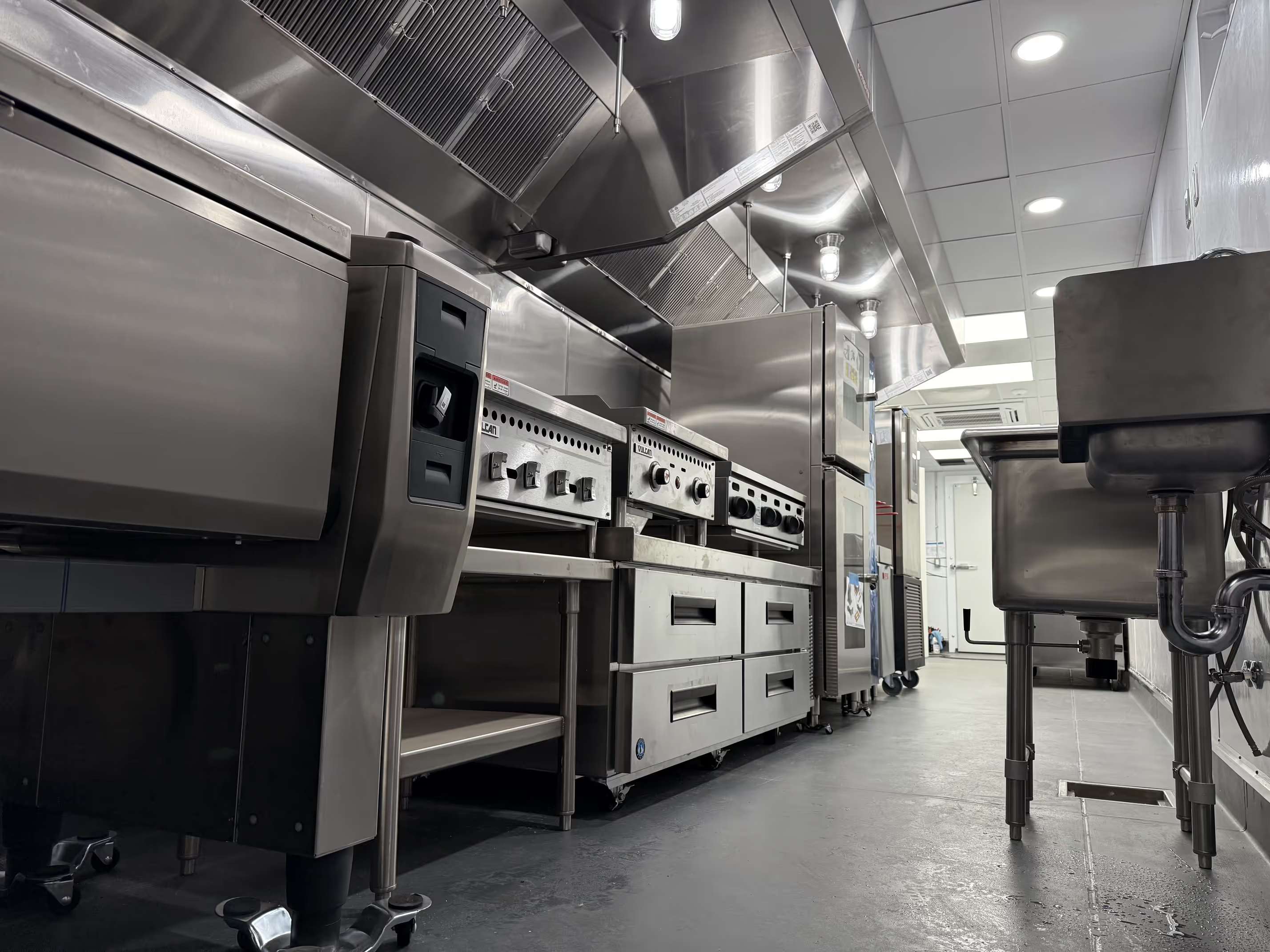
- Confirm your temporary kitchen solution is deployed before demolition begins
2. Managing Construction Logistics Without Disrupting Club Traffic
One of the most overlooked risks in a country club kitchen renovation is not food production — it is the operational disruption members experience as construction activity spreads into daily club routines.
Even when dining remains open, renovation work can create frustration if the club does not plan for:
- Delivery access and vendor routing to prevent trucks from blocking member entrances
- Temporary waste removal staging to avoid odor issues near dining patios or outdoor seating
- Noise and dust control near banquet rooms, lounges, and locker corridors
- Staff movement patterns so employees can access temporary kitchens without crossing member-heavy areas
- Temporary dishwashing workflows to prevent service delays during peak dining windows
A renovation plan that includes member-facing traffic flow, sanitation routing, and noise mitigation protects the dining experience just as much as the kitchen design itself.
3. Managing Member Communication and Expectations
Transparency as a Retention Strategy
Members who feel informed are far more forgiving of temporary inconvenience than members who feel blindsided. According to the National Club Association, clubs that implement structured renovation communication plans report significantly higher member satisfaction scores during construction periods compared to clubs that rely on ad hoc updates.
Your communication plan should include:
- Pre-renovation town hall with a clear timeline and explanation of what members will experience
- Bi-weekly email updates with construction progress and menu availability
- Visible signage showing renderings of the finished kitchen and a countdown to completion
- A dedicated staff contact who can address member concerns directly
Turning the Renovation Into a Member Engagement Opportunity
Forward-thinking clubs turn the disruption into a story their members feel part of — behind-the-scenes construction tours, "First Look" tasting events when the new kitchen comes online, member input sessions on new menu concepts, and branded renovation updates. Club + Resort Business highlighted how one club used a bi-weekly email series with behind-the-scenes content to significantly boost member engagement during their clubhouse renovation.

4. Keeping Your Kitchen Staff Through the Transition
Kitchen renovations are stressful for culinary staff. The risk of losing your best cooks to more stable positions at other clubs or restaurants is real, especially during extended projects.
Strategies that work:
- Communicate early and honestly — tell your team the renovation plan and expected timeline before the membership hears it
- Maintain full hours and compensation — any reduction signals instability and accelerates departures
- Involve the executive chef in the design process — as Club + Resort Chef emphasizes, chef involvement is essential for a functional end result and for retaining top culinary talent
- Frame it as a workplace upgrade — a new kitchen with modern equipment and improved workflow directly benefits the staff who use it daily
Bonus opportunity: The renovation period also creates space to audit recipes, update SOPs, cross-train staff, and develop new menu concepts that better match the upgraded kitchen layout and equipment package.
5. Permits, Compliance, and Code Considerations
A country club kitchen renovation triggers a complex web of regulatory requirements, including building permits (structural, mechanical, electrical, plumbing), health department approvals for both the renovated kitchen and any temporary food service operation, fire marshal inspections per NFPA 96, ADA compliance upgrades for older clubhouses, and temporary food service permits required by most local health departments when operating from a mobile kitchen during construction.
Note: Permit processing timelines vary significantly by jurisdiction. Budget 4–8 weeks for approvals and start applications as early as possible. For a detailed breakdown of permitting requirements, see our guide to commercial kitchen renovation permits.
Failing to secure the right permits can lead to costly mistakes and delays that compound quickly.
6. Maintaining Food Service During Construction
Temporary Kitchen Options for Country Clubs
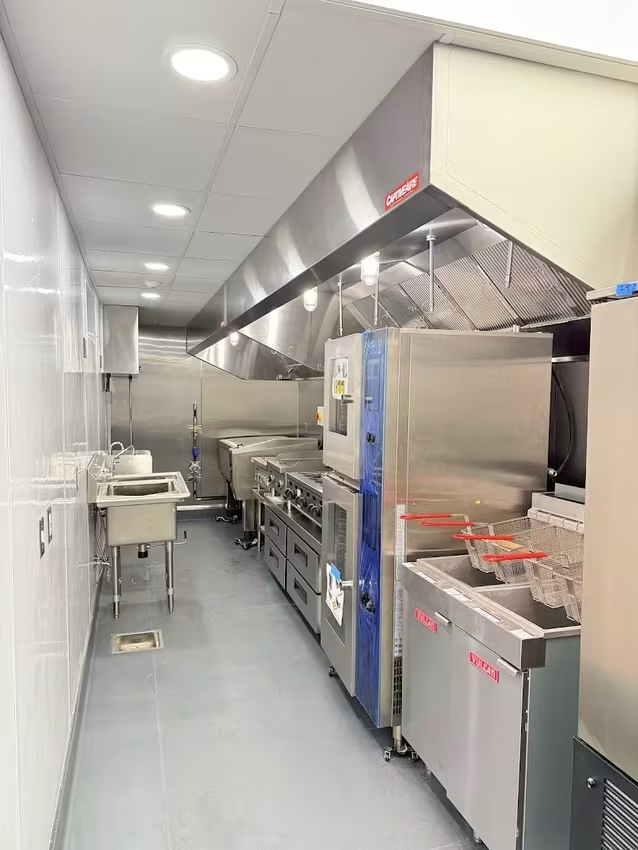
After the timeline is built, permits are underway, and construction logistics are mapped, the most important operational question remains: how will your club maintain dining standards while your main kitchen is offline? Common approaches include:
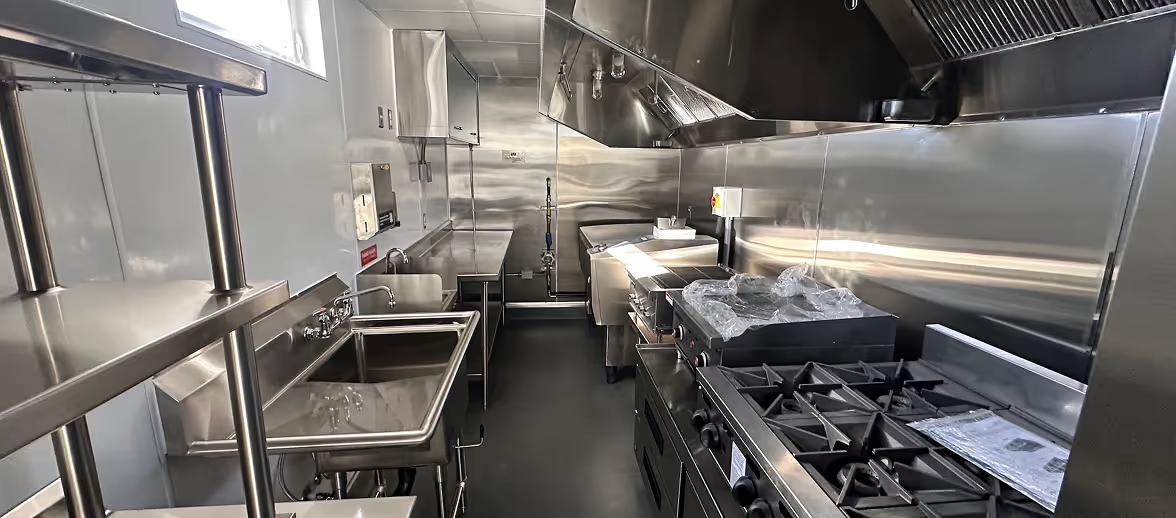
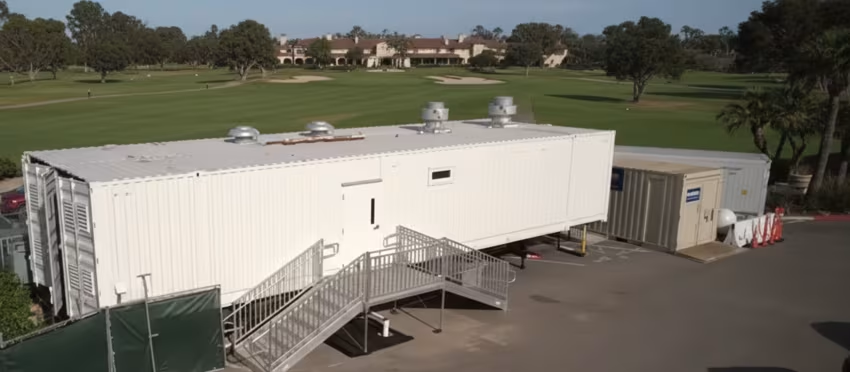
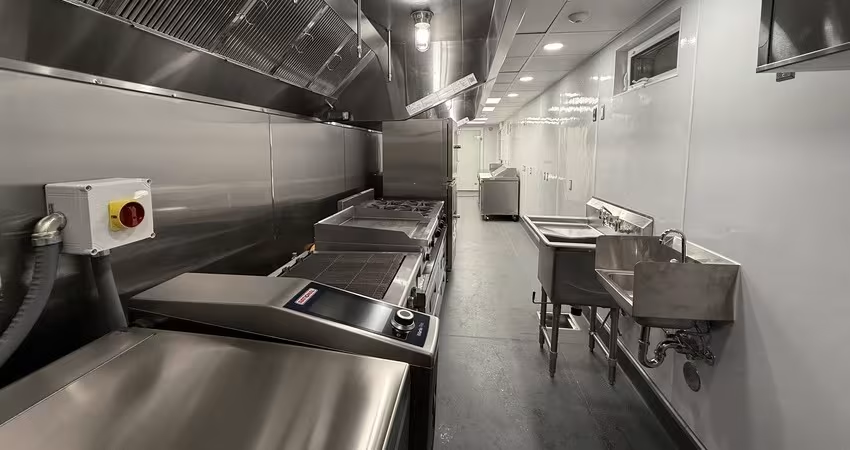
- Purpose-built mobile kitchens — fully equipped, code-compliant commercial kitchens delivered to your site. Often used when clubs need to preserve banquet production, à la carte dining, and high-volume service throughout extended renovations.
- Secondary kitchen conversion — utilizing a pool house or snack bar as a temporary production hub. Viable for limited menus but rarely sufficient for full à la carte and banquet operations.
- Phased construction — renovating in sections while keeping part of the kitchen operational. Extends the timeline and introduces contamination risks between construction and food zones.
- Off-site catering partnerships — outsourcing production to a nearby commercial kitchen. Creates logistical complexity and quality control challenges.
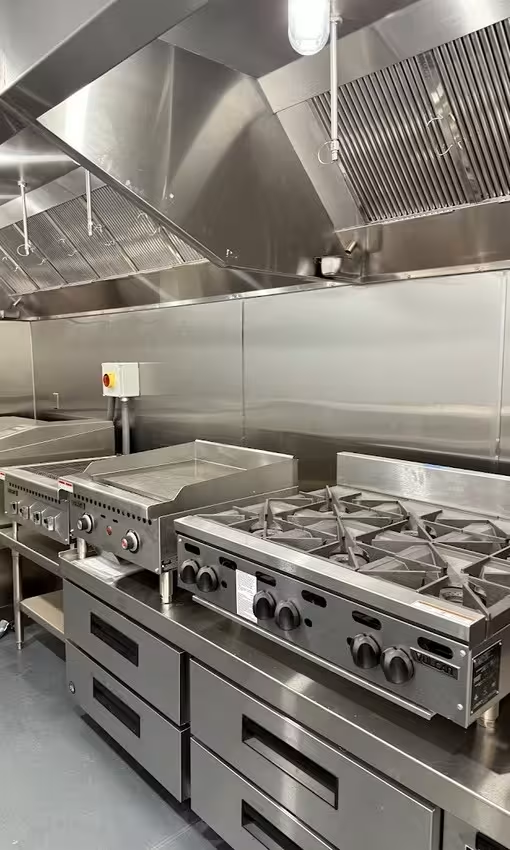
Note: Per NFPA 96, any temporary cooking setup — including mobile kitchens — must comply with the same exhaust hood, fire suppression, and ventilation standards as a permanent facility.
Adapting Menus Without Lowering Standards
A streamlined menu is not a lesser menu. Use the renovation period to focus your culinary program:
- Reduce SKUs but increase execution quality — a focused 15-item menu prepared exceptionally well outperforms a sprawling 40-item menu prepared in constrained conditions
- Prioritize signature dishes — the items your members specifically come to the club for
- Leverage outdoor cooking — many clubs find that adding a grill station, raw bar, or wood-fired pizza setup creates a unique dining experience that members actually enjoy
- Communicate menu changes proactively — frame them as curated seasonal offerings, not concessions
For clubs that cannot afford reduced menus or lost event revenue, the continuity solution must function like a true commercial kitchen — not a temporary compromise.
How Mobile Culinaire Supports Country Clubs During Kitchen Renovations
At some point in the renovation planning process, most clubs realize the renovation itself is not the real threat — the real risk is losing production capacity and disrupting service consistency.
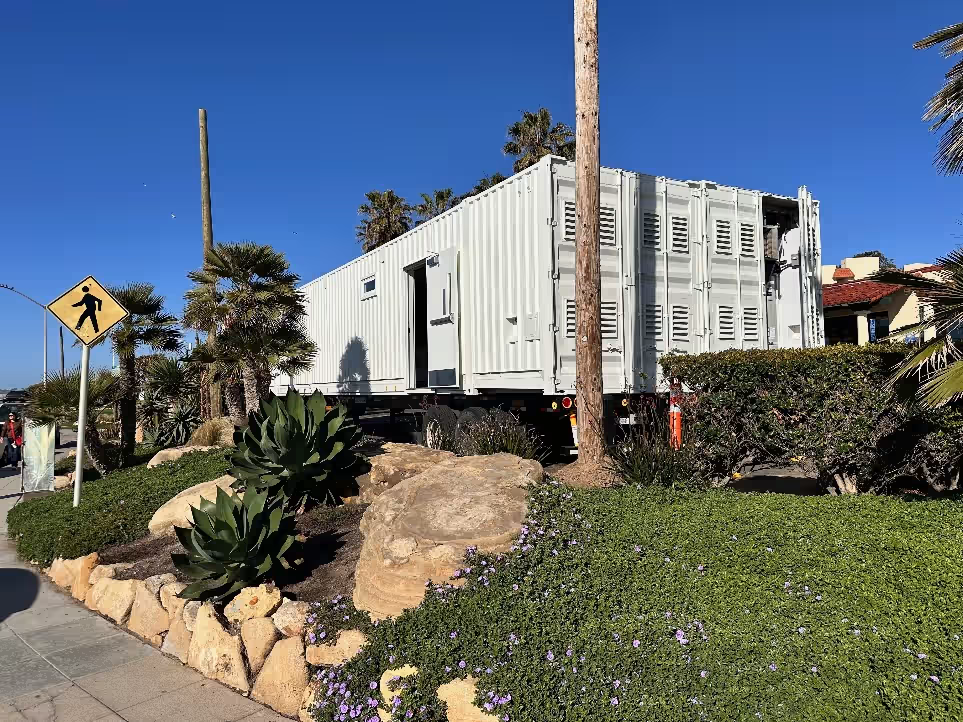
For clubs that need to maintain full food service throughout a renovation, a purpose-built mobile kitchen eliminates the compromises that come with makeshift setups, food trucks, or reduced menus.
Mobile Culinaire delivers turnkey mobile kitchens engineered for the demands of high-volume hospitality operations. Unlike retrofitted trailers, these units are manufactured in-house with:
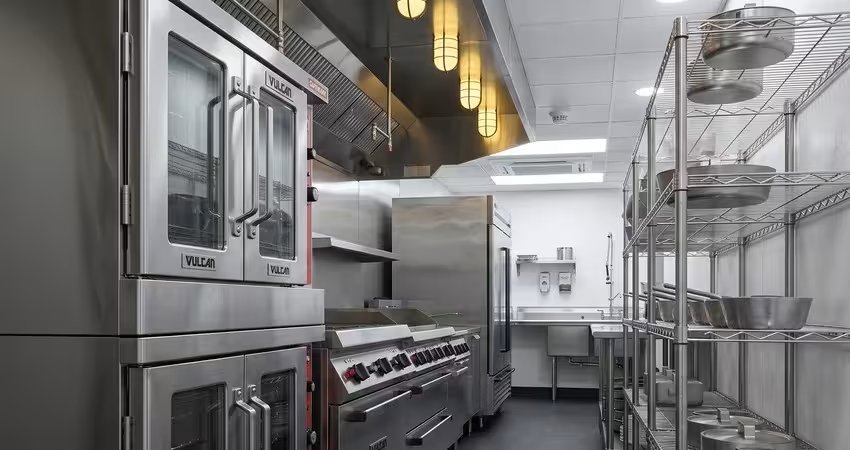
- Commercial-grade equipment — the same caliber of cooking, refrigeration, and ventilation systems found in permanent club kitchens
- Functional layouts — optimized workflow zones, ample prep space, and walk-in cooler/freezer storage
- Full code compliance — built to meet local building and health codes, inspected by third-party agencies
- Rapid deployment — standardized utility connections for water, power, and waste allow quick installation with minimal site preparation
For country clubs and golf courses, this means your executive chef can maintain full menu execution, your events team can honor every booking, and your members never notice a gap in service — even as a multi-million-dollar renovation unfolds behind the scenes.
Build the Renovation Plan That Protects Your Club's Reputation
A country club kitchen renovation is one of the most impactful capital investments your club will make — but only if you protect the member experience throughout the process. The difference between a renovation that strengthens your club and one that damages trust comes down to planning for continuity from day one.
Explore how Mobile Culinaire's purpose-built mobile kitchens keep country clubs operating at full capacity during renovations. Request a consultation or see how we serve country clubs and golf courses.
People Also Ask (FAQ)
How long does a country club kitchen renovation take?
Most country club kitchen renovations take 12–24 weeks depending on scope. Minor equipment refreshes may complete in 6–8 weeks, while comprehensive gut renovations can extend to 24 weeks or longer. Equipment lead times (10–16 weeks) and permit processing (3–6 weeks) are the most common timeline drivers. Clubs should add a 3–4 week buffer for unforeseen conditions.
How do country clubs keep serving food during kitchen renovations?
Clubs typically deploy a purpose-built mobile kitchen on-site, convert an existing secondary kitchen into a temporary production space, phase the renovation to keep part of the kitchen operational, or partner with nearby catering facilities. Purpose-built mobile kitchens offer the closest match to permanent kitchen performance for mid- to long-term projects.
How much does a country club kitchen renovation cost?
Costs typically range from $500,000 to over $3 million depending on scope. Equipment accounts for 40–50% of the total budget. Clubs should also budget for temporary food service solutions, permit fees, design services (10–15% of total), and a 10–15% contingency. For a detailed breakdown, see our commercial kitchen renovation cost guide.


Testimonial

"What is standing out when you look at the mobile kitchen operation is the efficiency that we can really achieve because it's built for that."
Tell us about your kitchen needs and request a quote.
.png)
Turnkey mobile kitchen
Proudly made in-house in the USA
Commercial grade kitchen equipment
Code-compliant
Trusted by Industry Leaders