.gif)
%20(1).avif)
Your commercial kitchen renovation timeline does not begin when demolition does. It begins when a contractor has capacity for you, when the drawings are complete enough to submit, and when the last long-lead item is ordered. Associated Builders and Contractors put its Construction Backlog Indicator at 8.8 months in June 2026 — the average contractor answering that survey was already committed most of a year ahead. That is the stretch of schedule no operator controls, and the one most project plans leave out. What follows is the sequence as it actually runs: which phases depend on which, what the building code decides on your behalf, and where the weeks genuinely go.
Why a Commercial Kitchen Renovation Timeline Slips Before It Starts
Four things set a commercial kitchen renovation timeline, and an operator controls only one. Contractor availability, the alteration level the building code assigns your work, and permit review all sit outside your hands. The one you own is when you decide how to keep serving — and that decision has the longest lead time.
Your board does not measure the project by its finish quality. It measures delivery against the date and the number you gave them, which makes the schedule the deliverable and everything else detail. A timeline built from a contractor's best case is therefore a liability, because it is the one you will be held to.
The backlog figure above is what most plans miss first. A contractor booked deep into next year is not refusing your job. They are sequencing it behind work already signed, and the slot they can offer may sit months past the conversation. The design period comes before that slot is even bookable.
Two further drivers sit downstream, and both are covered below: what the code turns your project into, and what your equipment schedule commits you to waiting for. Neither responds to pressure.
Note: Ask a contractor for their current backlog on the first call, not the third. It tells you more about your start date than any schedule they propose.
The Alteration Level Decides How Big the Job Becomes
The International Existing Building Code sorts renovation work into three alteration levels, and the level assigned to your kitchen decides how much of the surrounding building must be brought up to current code. Most commercial kitchen jobs land above the cosmetic tier, which is where schedules quietly expand.
The International Existing Building Code treats alterations in three ascending levels, each in its own chapter. The first covers replacement in kind and finish work. The second begins once space or systems are reconfigured. The third applies when the work area grows large enough relative to the building as a whole. Your state and county adopt a particular edition. That adopted edition, not the model code, is what your plan reviewer applies. Confirm the thresholds locally rather than from a published summary.
Where a kitchen job crosses the line
Moving a hood, relocating a gas line, or shifting where the dish area sits is reconfiguration, not replacement. That single distinction can pull in requirements with no relationship to your scope: fire protection across the work area, egress, and accessibility under the ADA Accessibility Standards.
This is the part that lands on the facilities desk rather than the chef's. You scoped a kitchen; the plan reviewer scoped a portion of a building. The gap between those two readings is where a project acquires weeks nobody allowed for — and it surfaces at review, after the dates have been announced.
Tip: Ask your architect which alteration level the work triggers before the drawings are finished, not after the first comment letter arrives.

Phase by Phase: Where the Weeks Actually Go
A commercial kitchen renovation runs in six phases, and they are sequential rather than overlapping: design, permit review, demolition, rough-in, finishes and equipment, then inspection and closeout. No published benchmark gives honest durations for each, because none exists — the ranges you find online are individual contractors' estimates.
| Phase | What must finish before the next starts | What typically holds it |
|---|---|---|
| Design and documentation | A drawing set complete enough to submit | Late scope changes; settling the alteration level too late |
| Permit review | Approval from every authority, not only the building department | Comment letters and resubmittal cycles |
| Demolition | Exposure of what is actually behind the walls | Conditions nobody could see when the job was priced |
| Rough-in | Mechanical, electrical and plumbing inspection signed | Inspector availability, not crew availability |
| Finishes and equipment | Delivery of the last long-lead item | One back-ordered line on the equipment schedule |
| Inspection and closeout | Health and fire sign-off, in sequence | Two authorities working two calendars |
Read the middle column rather than hunting for durations. A phase does not end when the work looks finished; it ends when the thing that releases the next phase is done. That dependency is why an overrun in one phase pushes everything behind it by the same amount instead of being absorbed somewhere later.
The demolition row is the one that breaks otherwise sound schedules. Until the walls are open, your contractor priced what they could see. Structural, electrical or drainage conditions discovered in the first week of demolition mean re-design, re-submittal and re-order — the first three phases running a second time, in the middle of the project. If you want the revenue side of that arithmetic, our downtime cost calculator works it against your own numbers.
Tip: Build two schedules — the contractor's, and one carrying a discovery allowance after demolition. Take the second to your board. Time can be given back; it cannot be taken.
Permits and Long-Lead Equipment: The Two That Move Your Date
Permit review and equipment delivery move a completion date more than any other phase, and neither responds to adding crew. Both are queues run by somebody else — a plan reviewer's caseload and a manufacturer's production schedule — so the only lever you hold is starting them earlier than feels necessary.
Three authorities, three calendars
Health, fire and building are separate reviews with separate queues, and they run in parallel less often than operators assume. Food handling is reviewed against the FDA Food Code as your state has enacted it, which is rarely the newest release. Exhaust hood and fire-suppression approval falls to the fire marshal under NFPA 96, and that office keeps a queue of its own. The permit is yours to hold and the inspection yours to book — our permits guide sets out what each authority asks for.
The equipment schedule is a commitment, not a list
Every line on it carries a lead time, and the project waits for the longest one. Get delivery dates in writing before agreeing a construction start. Then check what each piece is certified to. An NSF mark means an independent body, not the maker, has tested the unit against sanitation and durability criteria. A substitution made to recover four weeks can fail a health inspection and cost more than it saved.
Deciding About Continuity Before the Schedule Is Fixed
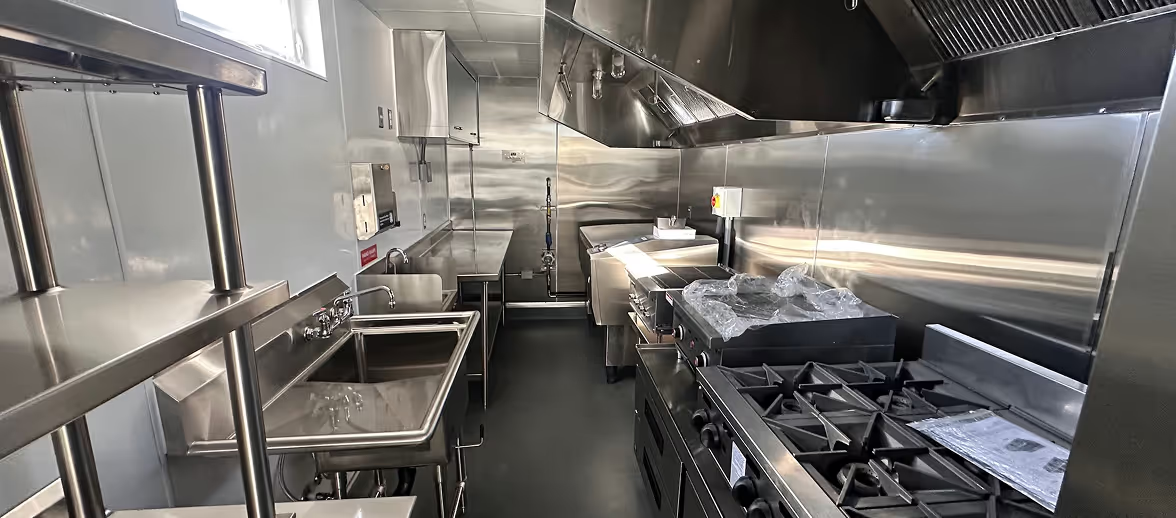
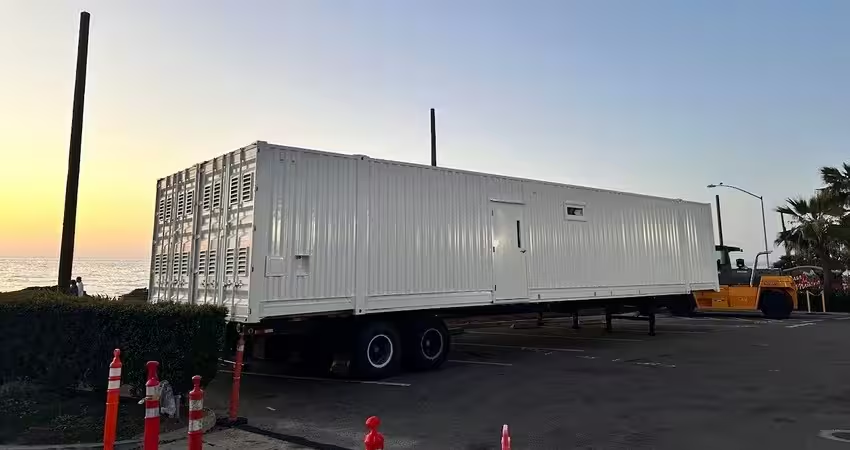
Whether you keep serving through the renovation is a decision with its own lead time, and it expires. Phasing and off-season scheduling have to be designed into the construction sequence from the start; a temporary kitchen has to be specified, permitted and delivered, which cannot be compressed into the week your dates slip.
The objection this raises on a facilities desk is fair — another vendor, another permit, another thing to coordinate on top of the main job — and it deserves a plain answer. Mobile Culinaire's own sequence runs two to four weeks to agree scope, two to four for design, one to six for permitting, and roughly a week on site. That is six to fifteen weeks end to end, and permitting is what decides where in the range you land. Started alongside the construction budget, it runs against your design period and costs the project nothing. Started once the schedule has slipped, it is simply unavailable. The alternatives — working in stages, or waiting for a quiet season — are weighed up in our comparison of the two approaches.
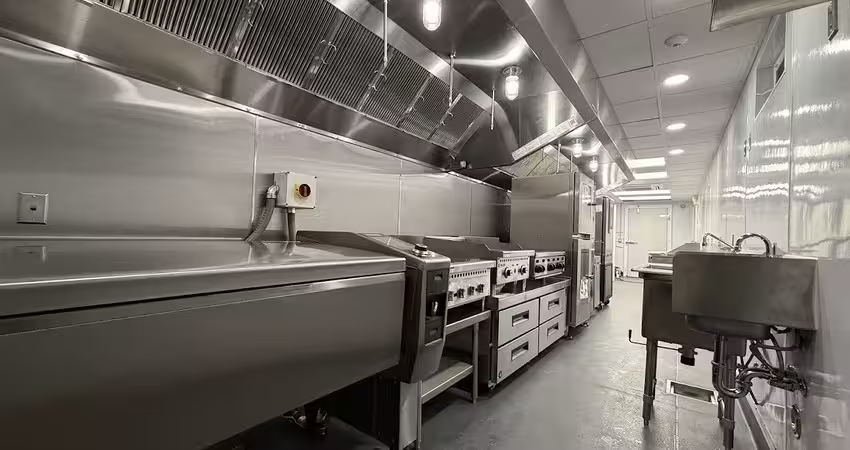
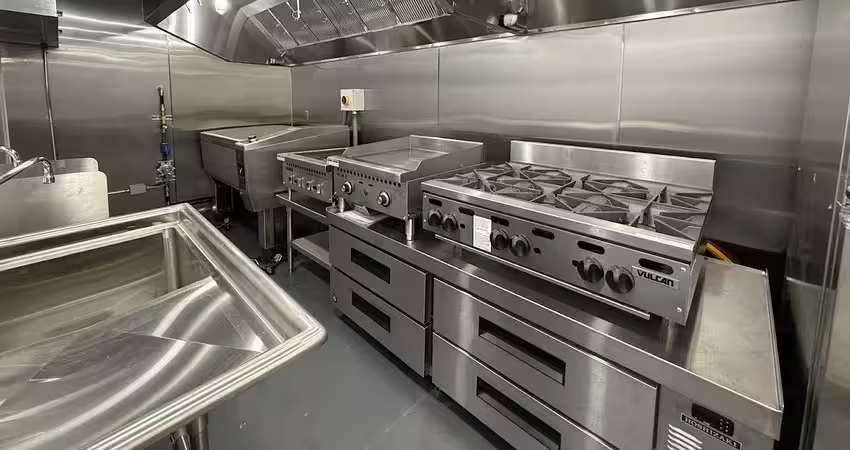
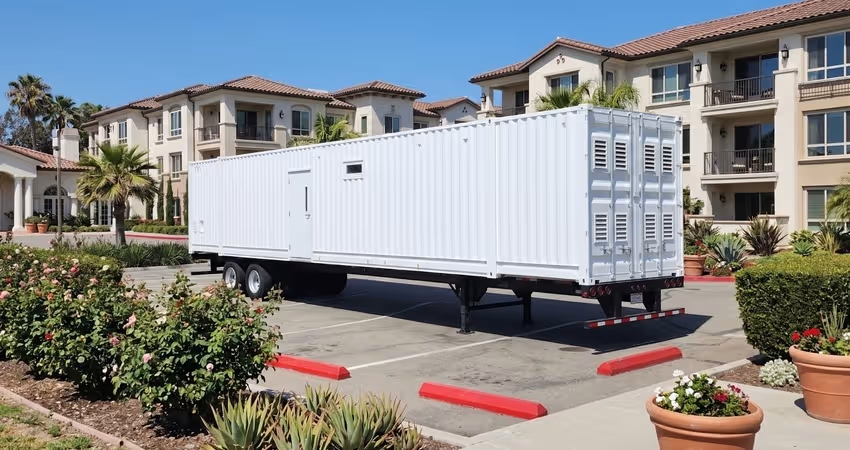
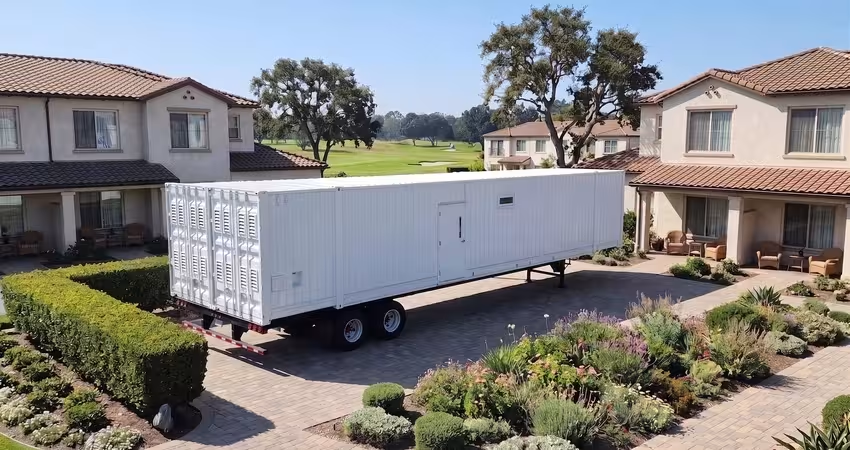
The unit itself is where the distinction matters. Most of what gets rented as a mobile kitchen is a freight trailer fitted with equipment afterwards. It was built to survive a weekend, not a five-month renovation, and its limits show up where you cannot inspect them. Mobile Culinaire manufactures its units from kitchen modules at its own Oregon facility, engineered to the standards a permanent kitchen is held to, across a fleet of 400-plus delivered to date. Our comparison of the two builds sets out what separates them. For a project owner the practical difference is one accountable partner rather than a second build to run alongside the first — and the conversation costs least while the construction schedule is still a draft, so scope it early.
Conclusion
A commercial kitchen renovation timeline is not a number you can look up. It is the sum of four things: a contractor's availability, the alteration level the code assigns your work, three permit queues you do not control, and the longest lead time on your equipment schedule. Add a discovery allowance for whatever the walls were hiding.
Build the schedule from those dependencies rather than from a best case, settle the alteration level before the drawings close, and make the continuity decision while it is still a choice rather than a reaction. See how properties hold service through a renovation window.
Disclaimer
Building, fire and health requirements for commercial kitchen renovations vary by state, county and municipality, and jurisdictions adopt different editions of the codes referenced here. Alteration-level determinations are made by your local plan reviewer against the adopted edition rather than the model code. Durations described here are planning concepts, not commitments, and nothing in this article predicts an outcome for your project. Confirm every requirement with your authority having jurisdiction.
People Also Ask
Operators ask the same handful of things once a renovation date is on the table. Not one of them resolves to a single number. That is the useful part: what governs each answer can be established long before anything is announced.
What are the phases of a commercial kitchen renovation?
Six, running in sequence: design and documentation, permit review, demolition, rough-in, finishes and equipment installation, then inspection and closeout. Each ends when it releases the next — rough-in is not done when the work looks done, but when the mechanical, electrical and plumbing inspection is signed. Treating the six as overlapping is what turns a schedule that looked achievable at bid into one that has quietly stopped being achievable by mid-job.
What usually delays a commercial kitchen renovation?
Four causes account for most of it: conditions found once demolition opens the walls, resubmittal cycles after a plan reviewer's comment letter, a back-ordered item on the equipment schedule, and inspector availability at the end. No published data ranks them, so treat all four as live. None is solved by adding crew, and three shrink if the design is genuinely finished before submission — the phase operators most often compress when they want time back.
When does a temporary kitchen need to be arranged by?
Allow six to fifteen weeks. The process runs two to four weeks to agree scope, two to four for design, one to six for permitting, and about a week for delivery and installation. Permitting is the variable that spreads that range, and the permit belongs to you rather than to the supplier. Beginning alongside your construction budget costs the project nothing; beginning once the schedule has slipped is too late to help.


Testimonial

"What is standing out when you look at the mobile kitchen operation is the efficiency that we can really achieve because it's built for that."
Tell us about your kitchen needs and request a quote.
.png)
Turnkey mobile kitchen
Proudly made in-house in the USA
Commercial grade kitchen equipment
Code-compliant
Trusted by Industry Leaders