.gif)
%20(1).avif)
There is no national permit list for a commercial kitchen, and the reason is in the FDA's own numbers. The Food Code is a model that states adopt rather than federal law — oversight, as the agency puts it, "is typically handled at the state and local levels, rather than the federal level." Its adoption tracker, reporting 2024 status, shows 11 state agencies in 7 states on the current 2022 edition, and the three most recent editions between them covering 64.64% of the population.
So the reviewer reading your drawings may be working from an edition published years apart from the one your consultant quoted. That is not a technicality — it is a common reason a renovation acquires weeks nobody scheduled, and it is why what follows is about which authorities review what, rather than a checklist claiming to be universal.
A scope note: these are the permits for rebuilding your permanent kitchen. Permitting a temporary unit to cover the closure is a separate path, covered in our mobile kitchen code and permit guide.

Understanding the Regulatory Framework
Four authorities typically hold a piece of the project and they do not coordinate with each other. Each keeps its own queue, its own criteria and its own clock.
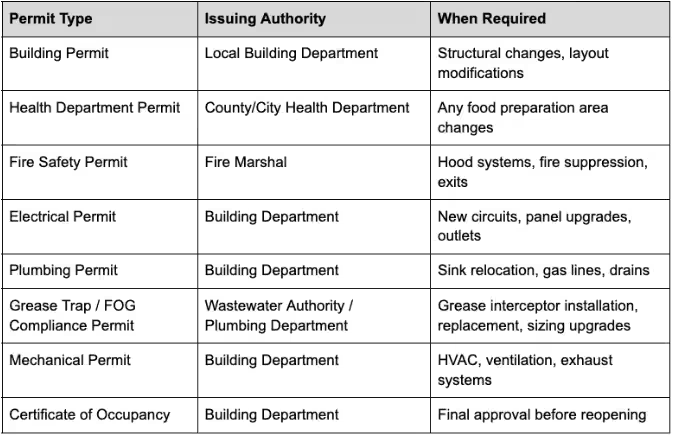
| Authority | What they review | What they will ask for |
|---|---|---|
| Building department | Structural changes, layout, occupancy, accessibility | Stamped drawings, engineering calculations, code analysis |
| Health department | Food safety, sanitation, workflow, finishes | Plan review submission, equipment schedule with certifications |
| Fire marshal | Suppression, hood and duct, clearances, egress | Suppression system design, hood specifications, commissioning report |
| Utility / mechanical | Electrical load, plumbing, gas, grease | Load calculations, riser diagrams, interceptor sizing |
Note: Because the reviews run in parallel rather than in sequence, one agency's revision request does not pause the others. Submitting late to one is what serialises a process that should have run concurrently.
Financial Impact of Permit Violations
The fine is rarely the expensive part. A stop-work order idles a crew that is still being paid, and re-mobilising a contractor who has moved to another job costs more time than the violation did. Unpermitted work also has to be opened up and re-inspected whether or not it was done correctly.
What actually bites:
- Stop-work orders halting all trades, not just the one at fault
- Demolition and reinstatement of completed work
- Retroactive fees on top of the original permit
- A delayed certificate of occupancy, which delays reopening
Tip: The exposure is schedule, not penalty. Price it in weeks of lost service.
Essential Building and Structural Permits
Building permits cover anything affecting structure, layout or occupancy. This is the permit most often assumed unnecessary on a project described as "just new equipment," and the one whose absence stops everything.
Scope of Building Permit Requirements
Work that requires one includes:
- Wall removal or relocation, load-bearing or not
- Floor penetrations for utilities or equipment
- Ceiling modifications for ventilation
- Door and window changes
- Accessibility improvements
Drawings must show compliance with the International Building Code as your jurisdiction adopted and amended it — the amendments matter as much as the base code.
Tip: Submit early in design, not after equipment is selected. A reviewer's comment on a wall you have already specified equipment against is a re-design; three weeks earlier it was an edit.
Health Department Plan Review Process
Health department approval is the longest pole for most kitchen renovations. Reviews often take 4–8 weeks, which is why submission timing drives the construction schedule rather than following it.
Food Safety Compliance Standards
Reviewers assess the plan against the edition their jurisdiction adopted, which — per the FDA data above — is frequently not the newest. The review covers equipment placement, storage separation, finishes and contamination control:
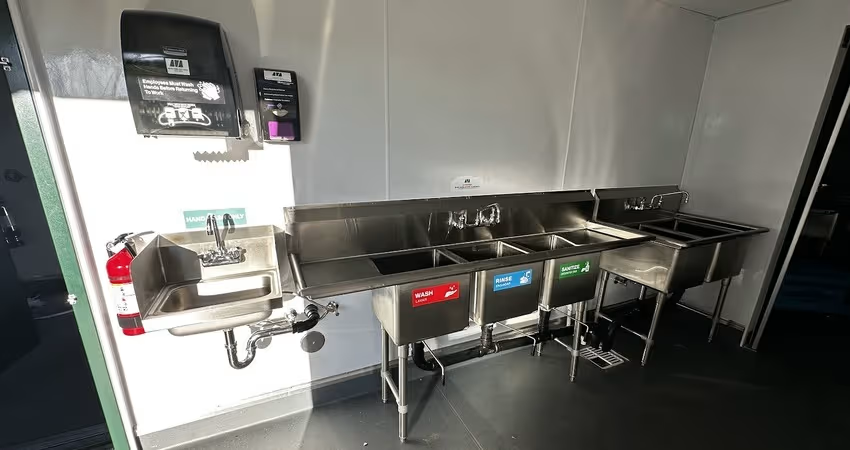
- Three-compartment sink sizing and position
- Handwashing station placement and accessibility
- Separation of raw, prepared and chemical storage
- Surface materials and finishes that can actually be cleaned
- Pest prevention and waste handling
The Food Code requires handwashing sinks to be conveniently located for the areas they serve; any specific distance is a local amendment rather than a federal figure, so confirm yours instead of designing to a number you read somewhere.
Equipment must carry NSF certification for food-contact surfaces. Non-compliant equipment triggers rejection and a substitution at your cost.
Fire Safety and Life Protection Systems
Fire permits cover suppression, exhaust hoods, clearances and egress. These are inspected at more than one stage, and a failure at final commissioning holds the certificate of occupancy.
NFPA 96 Compliance Requirements
NFPA 96 governs the exhaust system, the suppression equipment and the maintenance regime that follows it.
Requirements include:
- A wet chemical suppression system to UL 300
- Welded steel or stainless exhaust ductwork
- Clearances between cooking equipment and combustibles
- Access panels for cleaning and inspection
- Interlock with the building alarm and shutoffs
Inspections happen at rough-in and again at commissioning. Our suppression and extinguisher guide covers what the inspector checks and how often.
Utility System Permits
Electrical, plumbing and gas permits confirm the connections can carry what the new equipment draws. On a renovation, the existing service is the constraint more often than the equipment is.
Electrical System Upgrades
Commercial lines need capacity for high-draw appliances, grounding and GFCI protection in wet areas. Applications turn on the load calculation, and the figure that matters is starting load rather than running load, since motors and compressors draw a multiple of their rating on start-up. Expect to submit load calculations per appliance, circuit diagrams showing dedicated connections, any panel upgrade, and emergency lighting and signage.
Tip: Book the rough-in inspection before walls close — opening finished work to show a junction box is the avoidable cost here. Our electrical planning guide covers reading a load schedule.
Plumbing and Gas Line Modifications
Plumbing permits cover supply, drainage and gas. Kitchens add warewashing, ice and grease management to an ordinary building's requirements.
Gas carries its own scrutiny: licensed connections only, pressure testing before startup, and frequently a separate approval from the utility where service capacity changes. That utility approval sits outside the building department's queue and is routinely discovered late.

Specialized Compliance Requirements
Grease Management and Environmental Permits
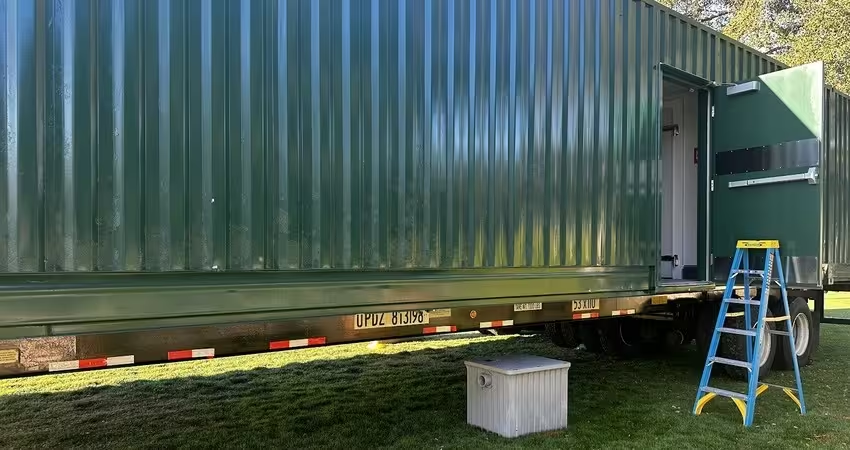
Interceptors need sign-off from plumbing and, in many places, an environmental or wastewater authority as well. Sizing is calculated from the kitchen's throughput, not chosen from a catalogue — our grease trap guide covers types and maintenance.
You may also need wastewater discharge authorisation for high-volume operations, air quality permits in stricter districts, and a documented waste plan for scraps and used oil.
Accessibility and ADA Compliance
Renovations frequently trigger ADA Standards for Accessible Design obligations, particularly where public areas or seating capacity change. These can carry their own review and inspection.
Note: Accessibility covers reach ranges, maneuvering clearances and route continuity, not just door widths.
Streamlining the Approval Process
Documentation Best Practices
Incomplete applications are the main cause of extra review cycles. Assemble:
- Construction drawings with specifications
- Equipment cut sheets and certification documents
- Engineering calculations, structural and utility
- Food safety plan and operational workflow
- Suppression design and commissioning procedure
Check file formats and drawing scales first; digital intake is common but not standardised.
Managing Multiple Agency Coordination
Give one person the tracker. Four authorities, each with its own queue and revision cycle, is an administrative job rather than something absorbed between other duties.
Tip: Ask for pre-application meetings. A reviewer will usually tell you what will come back on the first submission, and that conversation is free.
Operational Continuity During Renovations
Permits are why a renovation closure is longer than the construction. If health review runs 4–8 weeks and you submit after design is finished, the kitchen is dark for that period as well as the build.
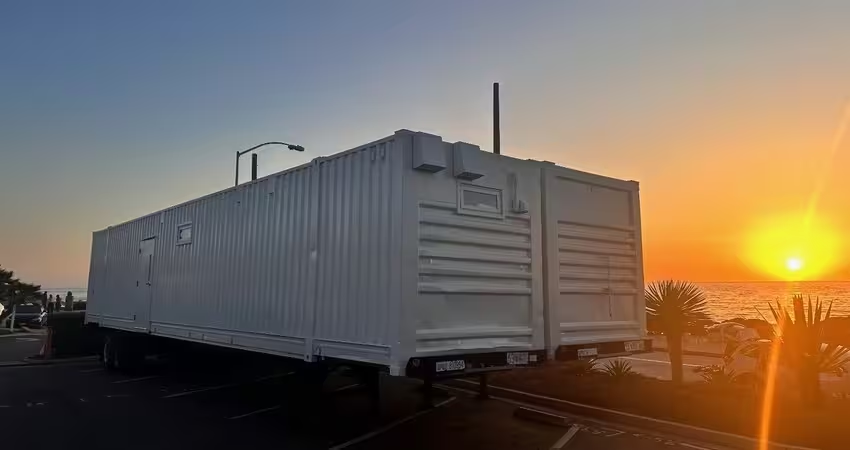
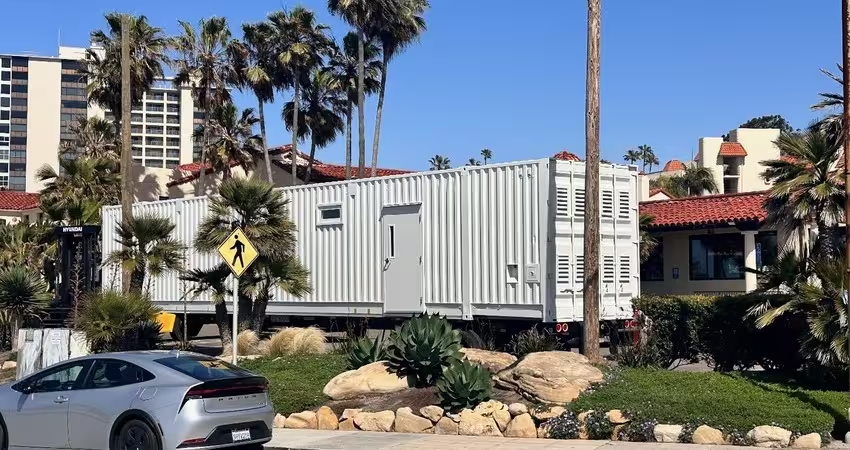
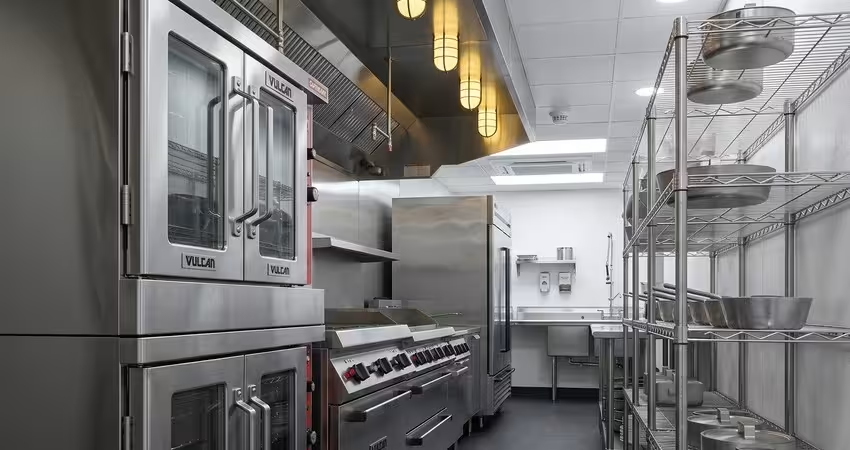
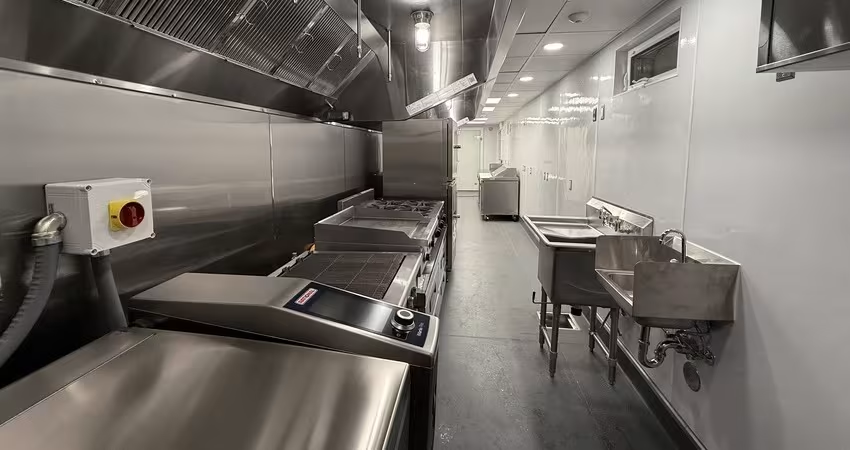
This is where a temporary kitchen either helps or arrives too late. Our units are built from kitchen modules at our own Oregon facility rather than converted from freight trailers, we hold modular manufacturer approval across several states, and every unit is third-party inspected before it ships with its documentation set. None of that removes your permit — the local approval for a temporary unit is the client's, exactly as the renovation permits are. It removes the reason to wait.
Our renovation guide and temporary kitchen options cover the wider decision, phased versus full shutdown covers how the approach changes permit complexity, and renovate or rebuild sits above all of it.
Disclaimer
Rules differ between jurisdictions, and the governing code is whichever edition your locality adopted. Confirm scope with the building department, health department and fire marshal before fixing dates. Permits are the client's responsibility.
People Also Ask
What building permits are required for commercial kitchen renovations?
A general building permit for structural or layout change, plus separate electrical, plumbing and mechanical permits for wiring, water and drainage, and ventilation. Which of them apply depends on scope — equipment swaps inside an unchanged envelope need fewer than a gut rebuild. Our renovation guide covers how scope drives the list.
How long is the permit process for a kitchen renovation?
It varies by jurisdiction, but standard renovations typically run 2–8 weeks and complex projects involving structural work can reach 3–6 months. Health review is usually the longest single item. Since the reviews run in parallel, your finish date is set by the slowest agency rather than by adding them together.
Do I need health department approval for kitchen renovations?
Yes, for anything changing layout, equipment or food preparation areas. Reviewers check the plan against the food code edition their jurisdiction has adopted, which is often not the newest one — avoiding the common mistakes starts with confirming which edition applies to you.
What fire safety permits are needed?
Any work on suppression, exhaust hoods or gas lines requires fire marshal approval, with inspections at rough-in and commissioning against NFPA 96. Egress changes and fire-rated construction can add further approvals.
Conclusion
Permits are a scheduling problem dressed as a paperwork problem. Four authorities review in parallel, each against its own adopted code edition, and the project finishes when the slowest one does. Submitting early — typically 8–12 weeks before construction — keeps that from becoming the story of your renovation.
If the closure those approvals create is the part you cannot absorb, tell us your dates.

Testimonial

"What is standing out when you look at the mobile kitchen operation is the efficiency that we can really achieve because it's built for that."
Tell us about your kitchen needs and request a quote.
.png)
Turnkey mobile kitchen
Proudly made in-house in the USA
Commercial grade kitchen equipment
Code-compliant
Trusted by Industry Leaders