.gif)
Facing a major commercial kitchen decision? Across the hospitality industry, 73% of food service operators report their kitchen infrastructure as a critical factor in operational success, yet many struggle with the fundamental choice: renovate the existing space or rebuild from scratch. This decision impacts everything from your operational continuity and guest satisfaction to your bottom line and regulatory compliance. Whether you're managing a resort kitchen nearing the end of its lifecycle or planning a strategic upgrade for competitive advantage, understanding the true costs, benefits, and operational implications of each path is essential. This comprehensive analysis will guide you through the key factors, hidden considerations, and strategic frameworks to make the right choice for your specific situation and long-term goals.

Assessing Your Current Commercial Kitchen Infrastructure
The first step in any kitchen renovate or rebuild decision involves a comprehensive evaluation of your existing facility. This assessment determines whether your foundation can support modern operations or requires complete replacement.
Equipment Age and Performance Metrics
Commercial kitchen equipment typically reaches end-of-life between 10-15 years of heavy use. Walk-in refrigeration, convection ovens, and fryers showing frequent breakdowns beyond this threshold signal deeper infrastructure concerns. When annual repair costs exceed 40% of replacement value, your equipment has crossed the economic threshold.
Note: Document all signs your kitchen needs renovation to establish a baseline for your decision-making process.
Building Systems Capacity
Modern commercial equipment demands significantly more electrical capacity than older installations. A single combi oven requires 40-60 amps, while induction cooking surfaces need dedicated 208V circuits. Kitchens built before 2010 often lack adequate electrical infrastructure to support current commercial kitchen equipment standards.
Gas supply, water pressure, and drainage capacity create similar bottlenecks. Undersized utility systems force operators into suboptimal equipment choices that compromise performance.
Code Compliance Gaps
Regulatory standards evolve continuously, creating compliance gaps in older facilities. Current NFPA 96 ventilation code requirements mandate specific hood designs, ductwork materials, and fire suppression integration that may not exist in legacy kitchens.
Similarly, FDA Food Code guidelines establish handwashing, storage, and workflow standards that older layouts cannot accommodate without significant modification.
Financial Analysis: Renovation Costs vs Rebuild Investment
Understanding the true cost differential between renovation and reconstruction requires examining both immediate expenses and long-term operational impacts.
Renovation Budget Components
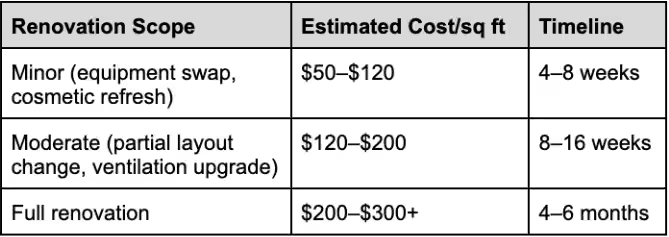
Commercial kitchen renovations average $150-400 per square foot, depending on scope and complexity. A typical 1,200 square foot kitchen renovation ranges from $180,000 to $480,000, excluding equipment purchases.
Key cost drivers include:
- Structural modifications and wall reconfiguration
- Electrical system upgrades for modern equipment loads
- Plumbing modifications for new fixture placement
- Ventilation system updates to meet current codes
- Fire suppression system integration
Tip: Avoid common commercial kitchen renovation mistakes that can inflate costs by 25-40% through poor planning and scope creep.
Complete Rebuild Investment
New construction typically costs $250-600 per square foot for commercial kitchen space. This includes foundation work, complete MEP systems, and purpose-built infrastructure designed for optimal workflow.
While rebuild costs appear higher initially, they eliminate hidden expense risks common in renovation projects. New construction also qualifies for accelerated depreciation schedules and energy efficiency incentives that improve return on investment calculations.
Hidden Cost Factors
Renovation projects frequently encounter unexpected expenses once construction begins. Hazardous material remediation, structural reinforcement, and utility system upgrades can add 20-35% to initial budgets in buildings over 20 years old.
Example: A resort kitchen renovation budgeted at $350,000 required an additional $85,000 for electrical panel upgrades and $45,000 for asbestos abatement discovered during demolition.
Operational Continuity During Construction
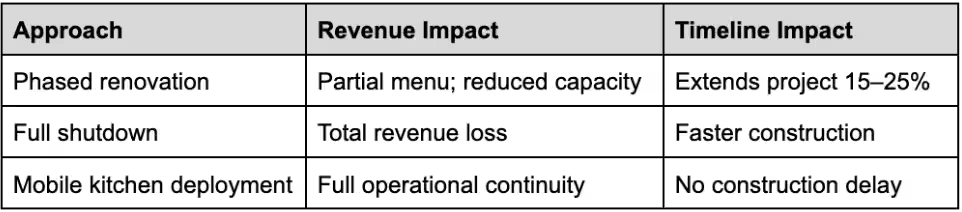
Revenue protection during construction often becomes the deciding factor between renovation and rebuild approaches. Different project management strategies offer varying levels of operational continuity.
Phased Renovation Approach
Phased construction allows partial kitchen operations to continue while sections undergo renovation. This approach typically extends project timelines by 30-50% but maintains some revenue generation capability.
Note: Our guide to phased renovation versus full shutdown strategies details the operational trade-offs of different construction approaches.
Complete Shutdown Impact
Full kitchen closure eliminates construction coordination challenges but creates immediate revenue loss. Hotels and resorts can lose $3,000-12,000 daily during kitchen downtime, making short project timelines critical for financial viability.
Mobile Kitchen Solutions
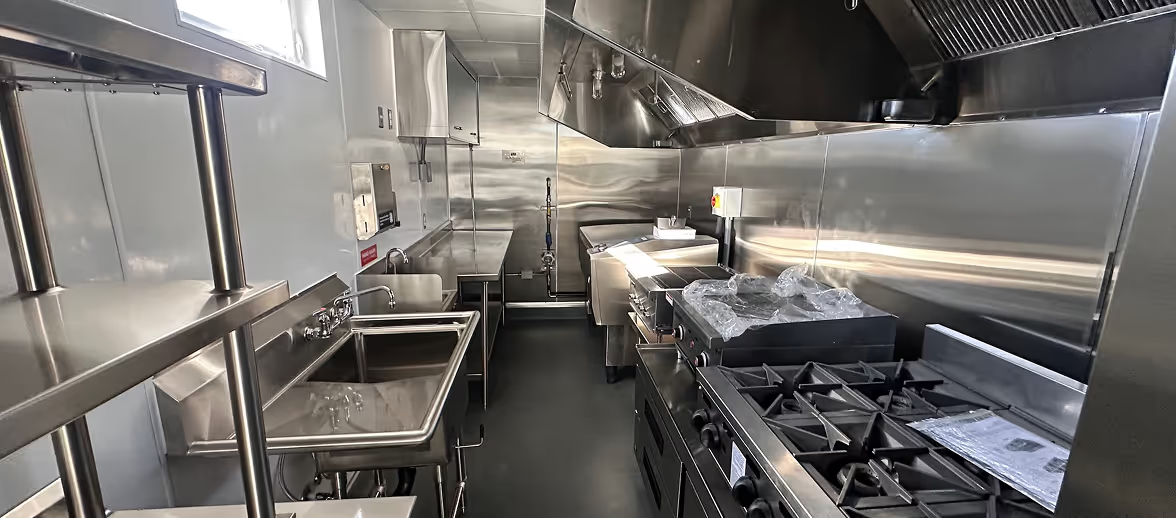
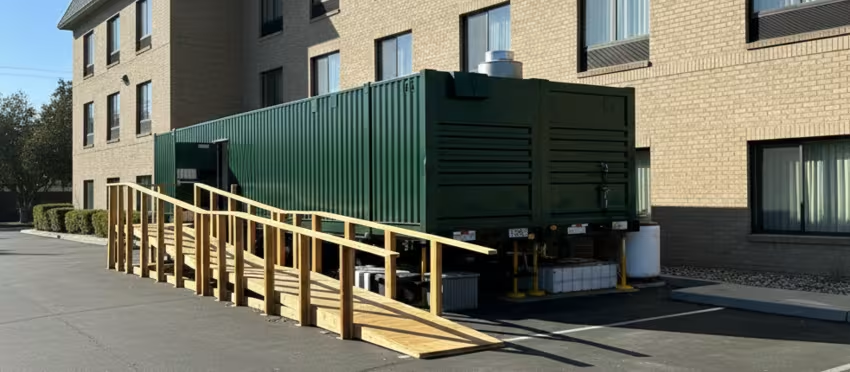
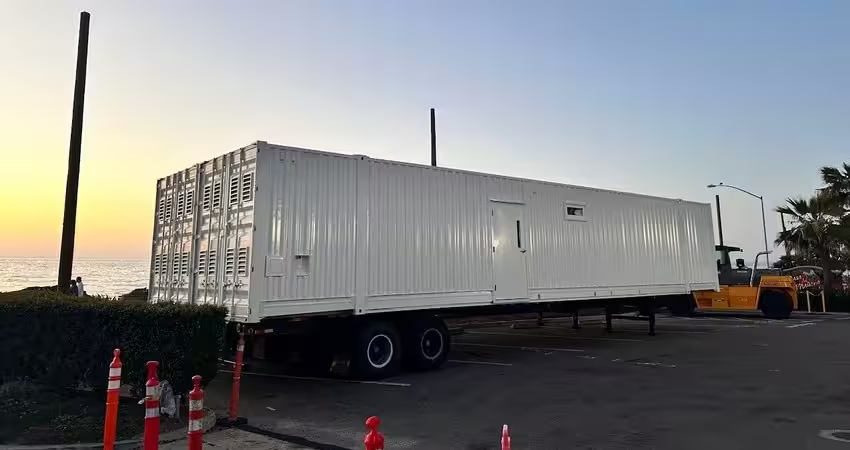
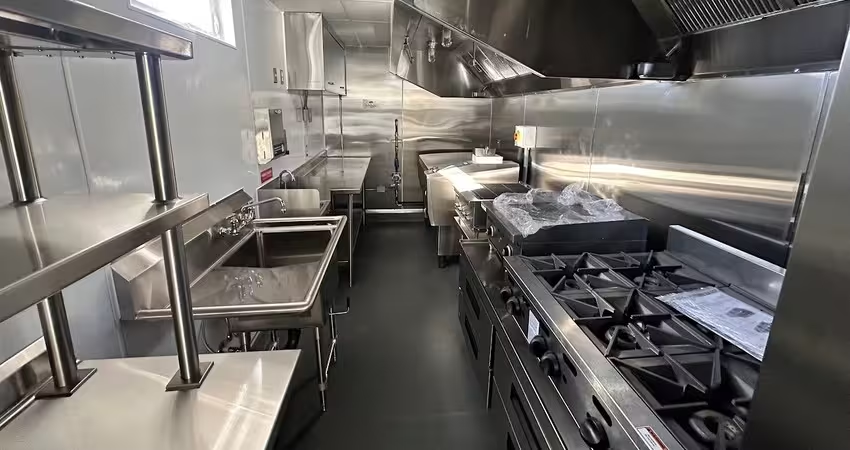
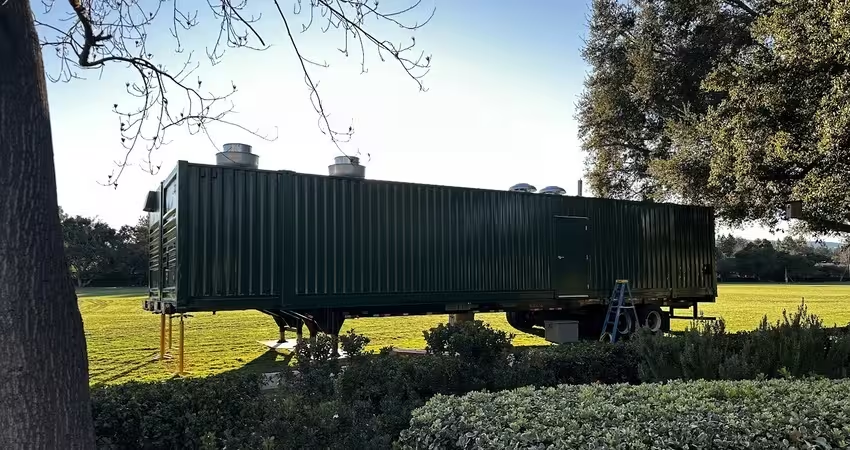
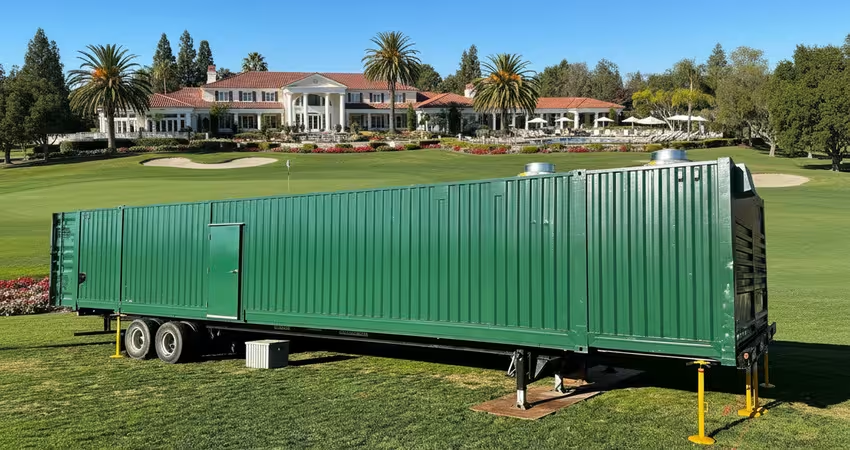
Deploying mobile kitchen rental solutions provides complete operational continuity during either renovation or rebuild projects. Purpose-built units deliver full commercial kitchen functionality while permanent construction proceeds uninterrupted.
This approach proves particularly valuable for hospitality operations where protecting guest experience during hotel kitchen renovations directly impacts future bookings and brand reputation.
Regulatory Compliance and Permitting Considerations
Commercial kitchen renovation permits involve complex approval processes that vary significantly between renovation and new construction projects.
Renovation Permitting Challenges
Extensive renovations often trigger requirements to bring entire facilities up to current code standards. This can include ADA compliance, updated fire suppression, and modern ventilation systems even when those areas weren't originally planned for modification.
The commercial kitchen renovation permits process frequently involves multiple approval agencies and can extend project timelines by 2-4 months in complex jurisdictions.
New Construction Advantages
New builds start from current code requirements, eliminating legacy compliance issues. NSF commercial kitchen design principles can be integrated from the foundation up, creating more efficient approval processes.
Tip: Engage health department officials early in either process to identify potential approval obstacles before construction begins.
Design Flexibility and Future-Proofing
The choice between renovation and rebuild significantly impacts your kitchen's ability to adapt to future operational changes and industry evolution.
Renovation Design Constraints
Existing structural elements limit layout optimization in renovation projects. Load-bearing walls, fixed utility locations, and ceiling height restrictions often force compromises in equipment placement and workflow design.
These constraints may prevent implementation of modern kitchen design concepts like separate prep zones, dedicated allergen-free areas, or expanded cold storage that current operations require.
Rebuild Design Freedom
New construction allows complete workflow optimization based on actual operational needs rather than structural limitations. Kitchen zones can be sized precisely for volume requirements, with equipment placement following optimal workflow patterns.
Current hospitality kitchen renovation trends emphasize flexibility, energy efficiency, and technology integration that older structures cannot easily accommodate.
Technology Integration Capabilities
Modern commercial kitchens increasingly rely on integrated technology systems for inventory management, temperature monitoring, and energy optimization. New construction can incorporate these systems at the infrastructure level, while renovations often require workaround solutions.
Timeline Comparison and Project Management
Project duration significantly impacts both costs and operational disruption, making timeline analysis crucial for decision-making.
Renovation Timeline Variables
Minor kitchen updates can complete within 8-12 weeks, while comprehensive renovations typically require 4-6 months. Timeline variability increases with building age due to unexpected conditions discovered during construction, and the phase-by-phase breakdown behind those ranges shows where the variability actually sits.
Permit approval processes add 4-8 weeks to renovation timelines, with complex jurisdictions potentially extending approvals to 3-4 months.
New Construction Schedules
Complete kitchen rebuilds span 12-18 months from design through occupancy. This includes 2-3 months for architectural development, 1-3 months for permitting, and 8-12 months for construction and commissioning.
While longer than renovation, rebuild timelines are generally more predictable due to fewer unknown conditions.
Project Risk Management
Renovation projects face higher schedule risk due to concealed conditions, while new construction risks center on material availability and weather delays. Both approaches benefit from deploying temporary kitchen solutions during renovation to maintain operational flexibility.

Making the Strategic Decision
The kitchen renovate or rebuild choice ultimately depends on four critical factors that determine long-term operational success.
Infrastructure Adequacy Assessment
If existing electrical, plumbing, and structural systems can support modern equipment loads and workflow requirements, renovation becomes economically attractive. When infrastructure upgrades approach 60-70% of new construction costs, rebuilding offers better value.
Operational Growth Projections
Consider your volume growth trajectory over the next 15-20 years. Kitchens operating near capacity today will likely outgrow renovation improvements within 5-7 years, making new construction the more strategic investment.
Example: A country club kitchen serving 150 covers daily that projects growth to 250 covers should prioritize rebuild capacity over renovation efficiency.
Capital Availability and ROI Timeline
While renovation requires lower upfront investment, total cost of ownership calculations often favor new construction when operational efficiency gains and extended asset life are considered.
Detailed financial modeling using National Restaurant Association industry research helps quantify long-term value creation for each approach.
Regulatory Environment
Properties in jurisdictions with frequent code updates may find new construction provides better long-term compliance stability. Historic districts or locations with strict zoning limitations may require renovation regardless of other factors.

People Also Ask (FAQ)
When should you rebuild a commercial kitchen instead of renovating?
Rebuilding becomes the preferred option when structural issues compromise safety, when existing utilities can't support modern equipment loads, or when layout inefficiencies can't be resolved through renovation. Major indicators include foundation problems, inadequate electrical capacity for current codes, and when renovation costs exceed 60-70% of rebuild costs. If your kitchen layout fundamentally doesn't support your operational flow, a complete rebuild allows for optimized design from the ground up.
How do renovation costs compare to rebuilding costs for commercial kitchens?
Kitchen renovations typically cost 40-70% of a complete rebuild, but hidden expenses often push costs higher than initially projected. Renovations average $150-400 per square foot, while rebuilds range from $200-600 per square foot depending on complexity and location. common renovation mistakes can escalate costs significantly, sometimes making rebuilding the more economical long-term choice when factoring in operational efficiency gains.
What operational disruptions should I expect during kitchen renovation vs rebuild?
Renovations can often be completed in phases, allowing partial operations to continue, but may extend project timelines by 30-50%. Complete rebuilds typically require full kitchen shutdown for 3-6 months but allow for faster, uninterrupted construction progress. Temporary kitchen solutions become critical for maintaining service during either scenario, with mobile kitchens offering the most comprehensive operational continuity.
How do building codes affect the renovation vs rebuild decision?
Current building and health codes significantly impact this decision, as renovations often trigger compliance requirements that can add substantial costs. Extensive renovations may require bringing the entire kitchen up to current code standards, including ventilation, fire suppression, and accessibility requirements. Required permits and inspections can also extend renovation timelines, sometimes making a code-compliant rebuild more straightforward and cost-effective.
Conclusion
The decision between renovation and rebuild ultimately hinges on your existing infrastructure condition, operational growth requirements, and long-term strategic goals. Renovation works best when structural systems remain sound and layout modifications can address current inefficiencies, while rebuilding provides optimal value when fundamental infrastructure limitations constrain operations.
Regardless of your chosen path, maintaining operational continuity during construction remains critical for preserving revenue and guest satisfaction. Explore our purpose-built mobile kitchen solutions or discuss your specific project requirements to ensure uninterrupted service throughout your kitchen transformation.

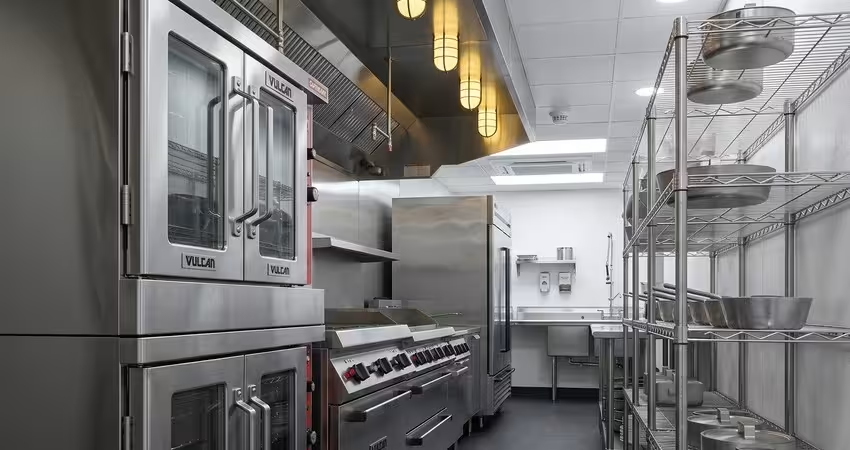
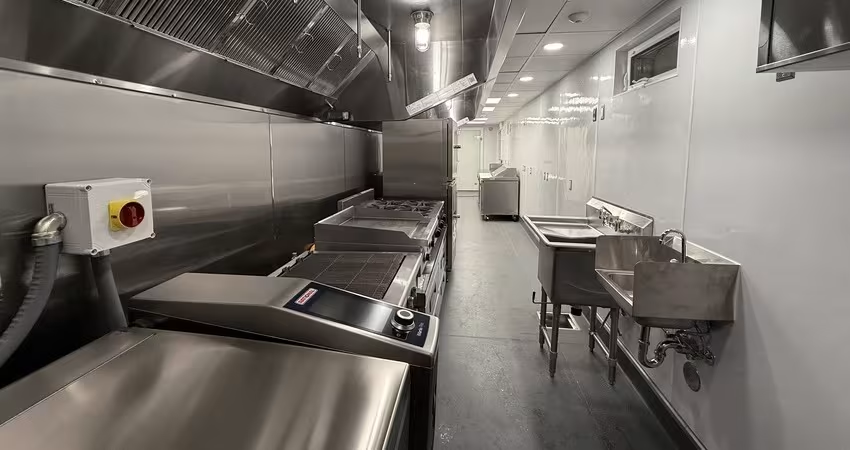
Testimonial

"What is standing out when you look at the mobile kitchen operation is the efficiency that we can really achieve because it's built for that."
Tell us about your kitchen needs and request a quote.
.png)
Turnkey mobile kitchen
Proudly made in-house in the USA
Commercial grade kitchen equipment
Code-compliant
Trusted by Industry Leaders