.gif)
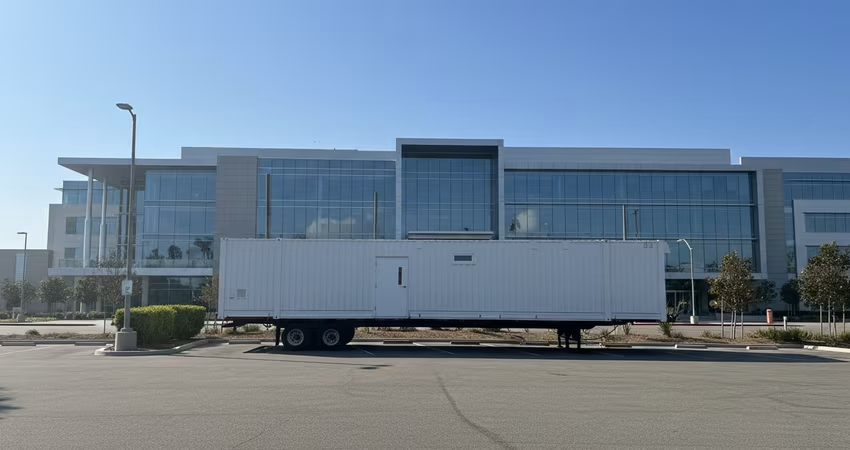
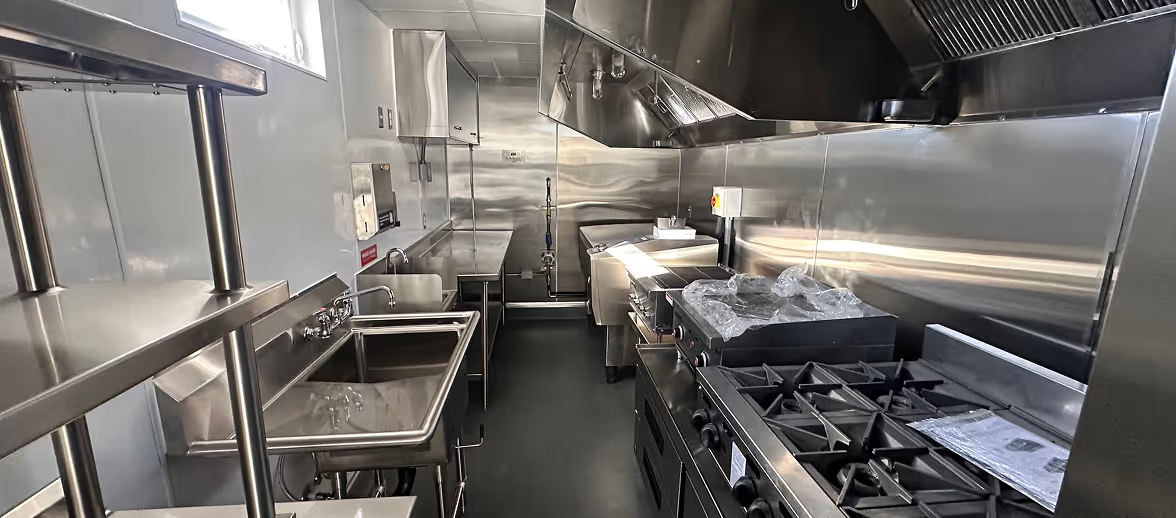
On December 1, 2025, a fire knocked out the back-of-house kitchen at the Raleigh Convention Center — with a fully booked calendar of conventions, sporting events, and corporate meetings still on the schedule. Within weeks, the venue deployed a mobile kitchen at the adjacent Red Hat Amphitheater and went on to serve over 86,000 meals to nearly 30,000 attendees while repairs continued, according to Exhibitor News Network.
It's one of the clearest recent examples of how a mobile kitchen for conference centers has moved from last-resort contingency to a viable operational strategy. This article breaks down when convention venues turn to mobile kitchens, what purpose-built units actually deliver at exhibition scale, and what operators need to evaluate before renting one.
Why Conference Centers Depend on Uninterrupted Back-of-House Operations
Conference centers and exhibition halls run on razor-thin operational margins against extraordinarily tight event timelines. When the kitchen goes down, the revenue disruption is immediate and cascading.
F&B as a Core Revenue Line, Not an Amenity
For most large venues, food and beverage isn't a supporting service — it's a primary revenue stream. The Events Industry Council's Economic Significance Study documents the business events sector generating hundreds of billions in direct spending in the U.S., with F&B representing one of the largest line items inside venue contracts. Catering, concessions, and sponsor activations often account for 25–40% of total event revenue at major convention venues.
The Consequences of Kitchen Downtime
When a convention center kitchen goes offline, the damage extends well beyond lost meal revenue:
- Contractual exposure — booked events carry pre-negotiated F&B minimums that must be fulfilled.
- Reputational risk — show organizers publicly rate venues on attendee experience, and F&B is near the top of every post-event survey.
- Lost future bookings — a single high-profile failure can impact a venue's pipeline for years.
- Exhibitor dissatisfaction — sponsors paying premium rates for show-floor activations expect flawless culinary execution.
Note: Unlike a restaurant closure, a convention center rarely has the option to simply cancel. Events are booked 12–36 months in advance, contracts are binding, and rescheduling tens of thousands of attendees isn't feasible.
When Conference Centers Turn to Mobile Kitchens
Four scenarios consistently drive venue operators toward a convention center kitchen rental:
1. Kitchen Fires, Equipment Failures, and Emergency Recovery
Commercial kitchen fires are the single most common cause of unplanned venue BOH shutdowns. Hood systems, fryers, and cooking line equipment are the primary ignition sources addressed under NFPA 96, the Standard for Ventilation Control and Fire Protection of Commercial Cooking Operations. When a fire strikes, rebuilding a code-compliant permanent kitchen typically takes 4–9 months. Mobile kitchens close that gap.
2. Planned BOH Renovations Without Canceling the Event Calendar
Many convention centers built in the 1990s and early 2000s are now facing major kitchen modernizations — upgrades to refrigeration, ventilation, and electrical systems to meet current FDA Food Code standards and support modern menu formats. Operators who try to sequence renovations around dark periods almost always run out of runway.
Tip: The smartest venue operators are now treating planned kitchen renovations as multi-month projects and budgeting a temporary mobile kitchen into the capital plan from day one — rather than scrambling for one mid-project.
3. Capacity Overflow During Peak Exhibition Seasons
The business events sector is growing again post-pandemic. Center for Exhibition Industry Research (CEIR) data shows exhibition attendance and exhibitor square footage recovering toward pre-2020 levels. Many venues now book events that exceed the rated capacity of their permanent kitchens — particularly for multi-day exhibitions with concurrent breakfast, lunch, and reception service across multiple halls. A supplemental mobile kitchen handles the overflow without permanent capital investment.
4. Sponsor Activations and Show-Floor F&B Programs
Premium exhibitors and sponsors increasingly demand branded culinary activations on the show floor — cooking demos, chef-driven pop-ups, VIP dining, and custom concessions. These activations often require dedicated production capacity that competes with baseline venue catering. A mobile kitchen dedicated to sponsor activations keeps the main kitchen focused on core F&B obligations.
What a Purpose-Built Mobile Kitchen Delivers at Convention Scale
Not all "mobile kitchens" are equal. The gap between a purpose-built commercial unit and a retrofitted trailer is enormous — and at convention scale, it's the difference between a working solution and a failed inspection.
Meal Output Capacity
A properly specified mobile kitchen can match permanent BOH production:
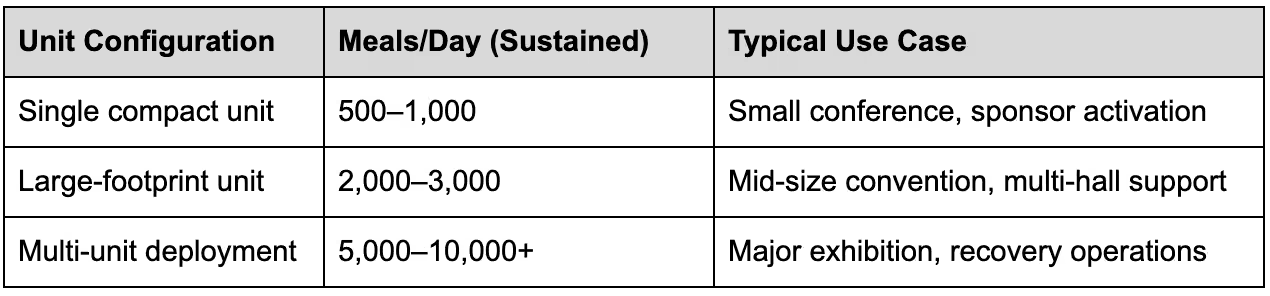
The Raleigh Convention Center deployment averaged roughly 2,000+ meals per day across concurrent events during its three-month operational window, demonstrating what a well-sized mobile kitchen can sustain in a real venue environment.
Code Compliance in Strict Venue Environments
Convention centers operate under some of the most rigorous inspection regimes in hospitality. Any mobile unit brought on site must pass:
- NFPA 96 — exhaust hood, fire suppression, and grease management standards
- FDA Food Code and local health department — food safety, temperature control, sanitation
- Local fire marshal and building department — structural, electrical, and gas compliance
- Venue-specific operational policies — union labor rules, insurance minimums, load-in protocols
Purpose-built units are engineered from the ground up to pass these inspections. Retrofitted trailers frequently fail them.
Commercial-Grade Equipment vs. Retrofitted Trailers
The National Restaurant Association has documented consistent operator dissatisfaction with low-cost retrofitted trailers — primarily around equipment reliability, HVAC performance, and ventilation adequacy under sustained high-volume service. At convention scale, equipment failure isn't an inconvenience; it's a breach of contract.
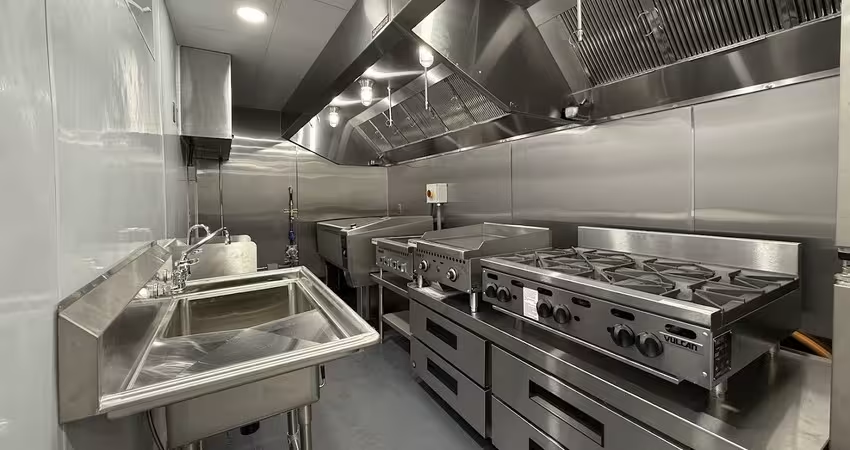
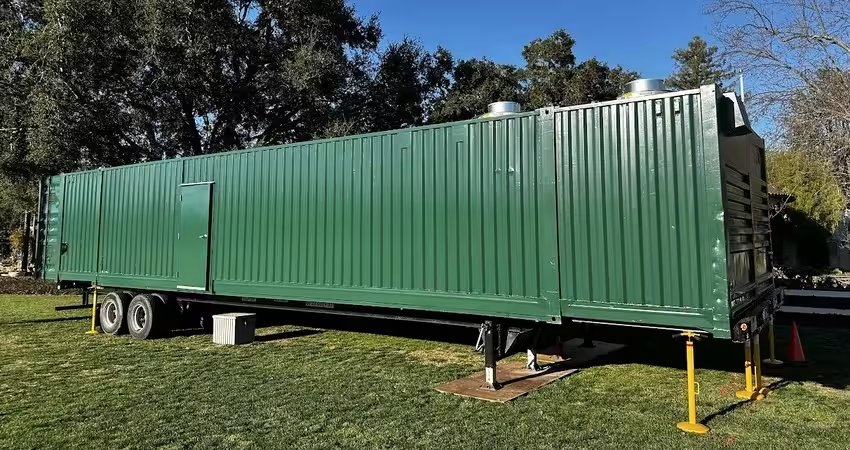
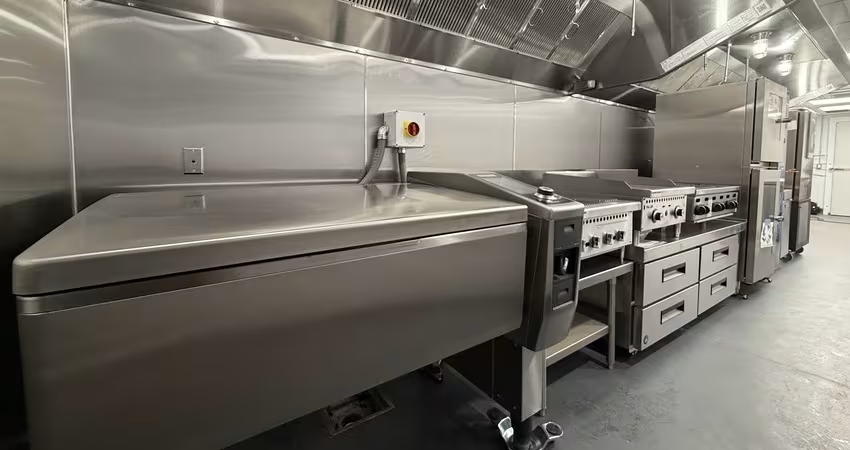
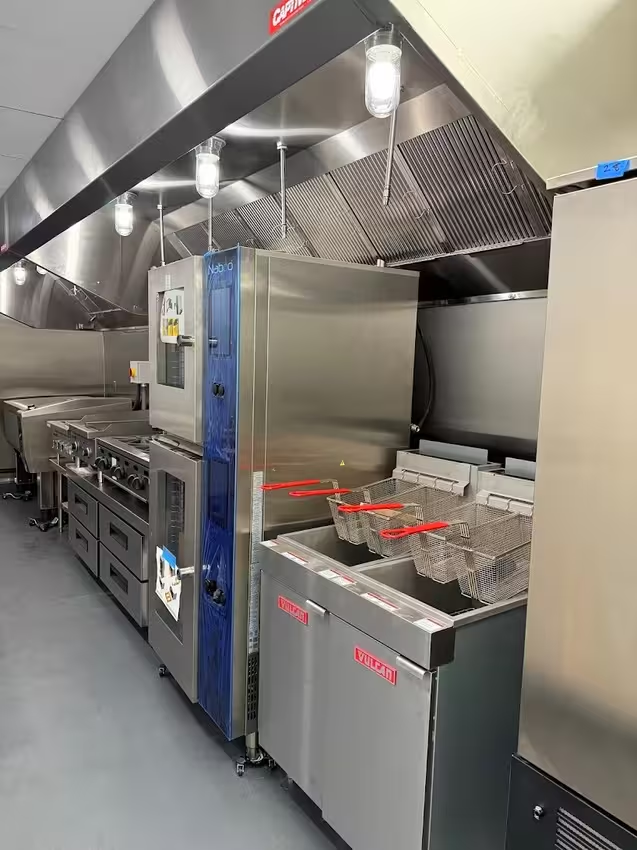
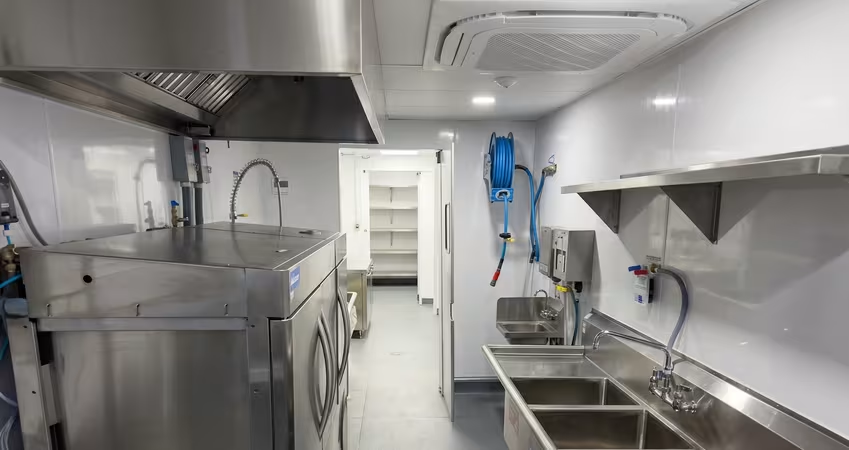
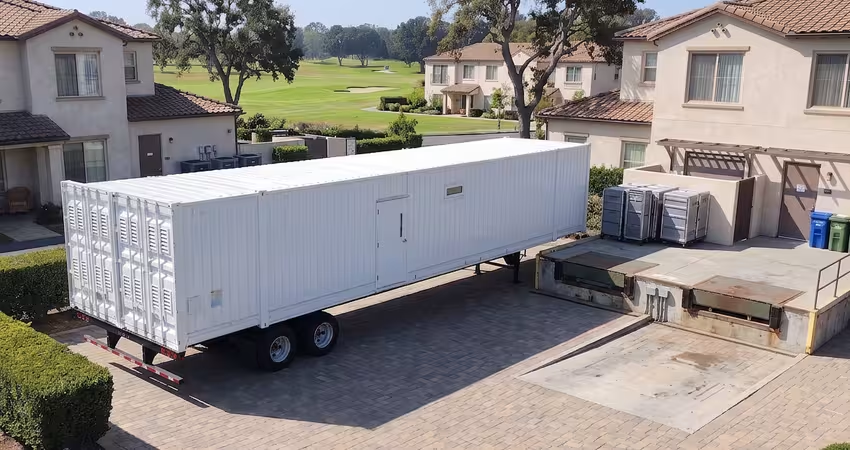
Mobile Culinaire manufactures its units in-house as modular steel-framed kitchens with the same commercial-grade equipment, ventilation, and insulation specifications as a permanent BOH — the engineering principles behind mobile kitchen design are identical to those of fixed installations.
Integration With Existing Commissary Workflows
Most convention centers operate centralized commissary models — food is prepped in the main kitchen and distributed to café outlets, concessions, and banquet staging across the facility. A mobile kitchen can slot into this workflow either as a replacement for the central commissary or as a dedicated production annex feeding specific halls.
Deployment and Site Logistics at a Conference Center
Convention venues are operationally complex environments, and deploying a mobile kitchen on site is more involved than a standard parking-lot drop.
Site Selection and Utility Hookups
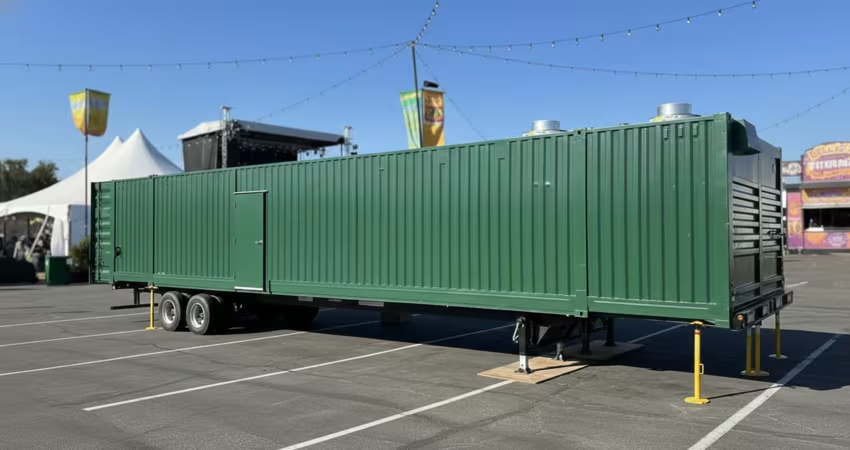
Mobile kitchens need a level pad, adequate clearance for exhaust, and access to power, water, gas, and waste. At a convention center, this usually means:
- Loading dock adjacency — critical for shared commissary operations
- Service corridor access — separating BOH traffic from guest flow
- Dedicated electrical service — typically 200–400A 3-phase depending on unit
- Potable water and grease waste connections — with capacity for sustained high-volume use
Working With Union Labor and Facility Operations
Most major convention centers operate under union labor agreements that govern food service, installation, and maintenance work. Coordination with facility operations is essential for load-in scheduling, utility connections, and ongoing support. The International Association of Venue Managers (IAVM) publishes resources that help operators plan these interfaces.
Permits, Inspections, and Fire Marshal Sign-Off
Even purpose-built units need local approval. A typical convention-venue deployment involves:
- Pre-deployment submission of equipment schedules and utility diagrams to the local AHJ
- Post-installation health department inspection
- Fire marshal walk-through and fire suppression system verification
- Building department sign-off for electrical, gas, and structural connections
Note: Premium providers handle permit coordination as part of their service. Cheap retrofitted rentals typically push this burden onto the venue operator — and failed inspections are a leading cause of deployment delays.
Evaluating a Mobile Kitchen Provider for a Convention Venue
At exhibition scale, the provider matters as much as the equipment. Key evaluation criteria:
- Equipment schedule flexibility — can the unit be configured to your menu and service volume?
- Lease duration terms — what's the minimum, and what are extension terms?
- Deployment speed — for emergency scenarios, inventory availability is everything
- Code compliance track record — NFPA 96, FDA, and local AHJ experience
- Project management capability — on-site coordination, permit support, utility integration
- Footprint options — single unit vs. multi-unit configurations for different event scales
Mobile Culinaire's mobile kitchen rental units are manufactured in-house and delivered turnkey with commercial-grade HVAC, fire suppression, and code-compliant equipment. Past project deployments include large-footprint installations for hospitality and food service operators nationally, including environments comparable to convention-scale venues.
The Bottom Line for Convention Venue Operators
A mobile kitchen for conference centers is no longer a stopgap. For venues facing BOH renovations, post-incident recovery, capacity overflow, or premium sponsor activations, it's a planned operational tool — one that protects F&B revenue, contractual obligations, and attendee experience during periods when the permanent kitchen can't deliver alone.
The Raleigh case made the playbook visible at industry scale. The venues adopting it first are the ones that will absorb future disruptions without losing a single booked event.
Mobile Culinaire has worked alongside large-footprint hospitality and food service operators on similar deployments. If you're planning a kitchen renovation, preparing a business continuity plan, or evaluating temporary kitchen solutions for an upcoming event calendar:
Explore our past mobile kitchen deployments to see what convention-scale solutions look like in practice, or request a site assessment for your venue.
For adjacent use cases, see also our deep-dives on how events and festivals deploy mobile kitchens and Mobile Culinaire's events use case overview.
People Also Ask (FAQ)
How quickly can a mobile kitchen be deployed at a convention center?
A properly permitted, purpose-built mobile kitchen can be delivered and operational within 24–72 hours of arrival on site, depending on permitting, utility availability, and site preparation. Emergency recovery deployments can often be expedited further when the provider maintains deployment-ready inventory. Full commissioning and fire marshal sign-off typically add another 24–48 hours under most AHJ jurisdictions.
Can a mobile kitchen serve thousands of meals per day at a trade show or exhibition?
Yes. A single large-footprint mobile kitchen outfitted with combi ovens, flat-tops, fryers, tilting kettles, and adequate hot-holding can sustain 2,000–3,000 meals per day. For larger conventions, providers deploy multiple units in parallel. The Raleigh Convention Center's post-fire deployment served over 86,000 meals across three months using a mobile kitchen setup, averaging more than 2,000 meals per day across concurrent events.
Are mobile kitchens code-compliant for convention center use?
Purpose-built mobile kitchens — as opposed to retrofitted trailers — are engineered to meet or exceed NFPA 96 fire protection standards, the FDA Food Code, and local health department requirements. They pass fire marshal, health department, and building department inspections the same way a permanent commercial kitchen does. Compliance depends on manufacturing quality and provider permitting support, which is why venues should evaluate providers on more than price alone.

%20(1).avif)
Testimonial
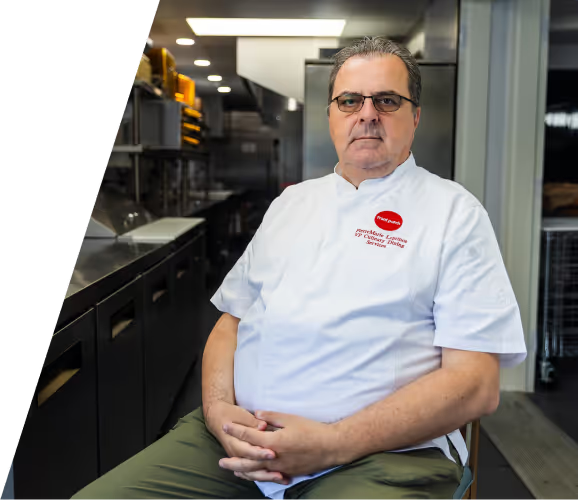
"What is standing out when you look at the mobile kitchen operation is the efficiency that we can really achieve because it's built for that."
Tell us about your kitchen needs and request a quote.
.png)
Turnkey mobile kitchen
Proudly made in-house in the USA
Commercial grade kitchen equipment
Code-compliant
Trusted by Industry Leaders