.gif)
Dump 5 gallons of mop water into a storm drain outside your mobile kitchen and Austin, Texas can fine you up to $2,000 per day, per violation. Los Angeles County will revoke your operating permit. State environmental departments routinely treat improper kitchen wastewater discharge as a stormwater pollution incident — not a paperwork issue.
For hospitality operators scoping a mid-to-long-term deployment, mobile kitchen wastewater disposal is not a back-of-house afterthought. It is the single utility most likely to trigger a health inspection failure, a shutdown order, or a six-figure environmental fine. This article breaks down the specs that matter: greywater vs. blackwater classification, how much wastewater a hospitality-scale unit actually generates, the three viable disposal methods, grease interceptor sizing, and the permit stack you need before commissioning.
Why Mobile Kitchen Wastewater Is a Higher-Stakes Problem Than Most Operators Realize
The compliance cost of getting it wrong
Wastewater is the only utility on a mobile kitchen where mistakes are visible — to inspectors, to neighbors, and to anyone with a smartphone camera. Discharge violations trigger fines, stop-work orders, and reputational damage. Improper discharge during a hotel renovation or a country club season can stall the entire project until remediation is verified by the local water utility.
Why food-truck playbooks don't apply to hospitality-scale mobile kitchens
The internet is full of food-truck wastewater guides that assume a single operator, a 30-gallon gray water tank, and a daily commissary dump-station run. None of that math applies to a trailer serving 400 covers per service for a hotel during a kitchen remodel.
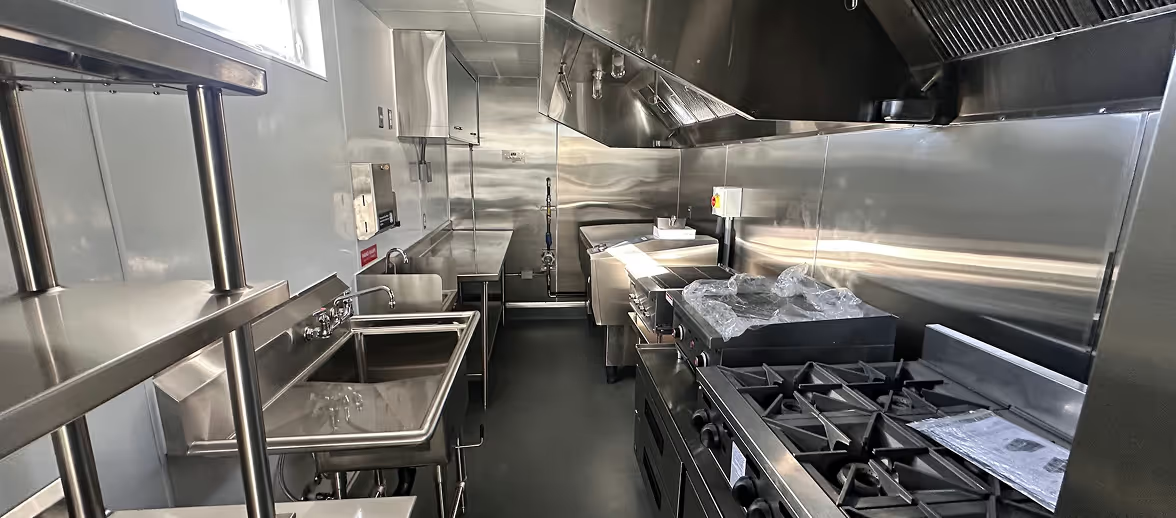
Hospitality mobile kitchens run multi-zone operations: three-compartment warewashing, commercial dishwashers, prep sinks, pre-rinse sprayers, handwash stations, and HVAC condensate lines. Daily discharge often exceeds 800 gallons. That changes everything about how wastewater is sized, classified, and routed.
Greywater vs. Blackwater: What Counts as Each in a Commercial Mobile Kitchen
Greywater sources in a mobile kitchen
Greywater is wastewater that has not contacted toilet waste or food-contaminated streams. In a hospitality mobile kitchen, greywater is typically limited to:
- Handwash sink drainage
- HVAC condensate
- Floor drains in non-food-prep zones
- Mop sink discharge (in some jurisdictions)
Why kitchen wastewater is classified as blackwater in most U.S. jurisdictions
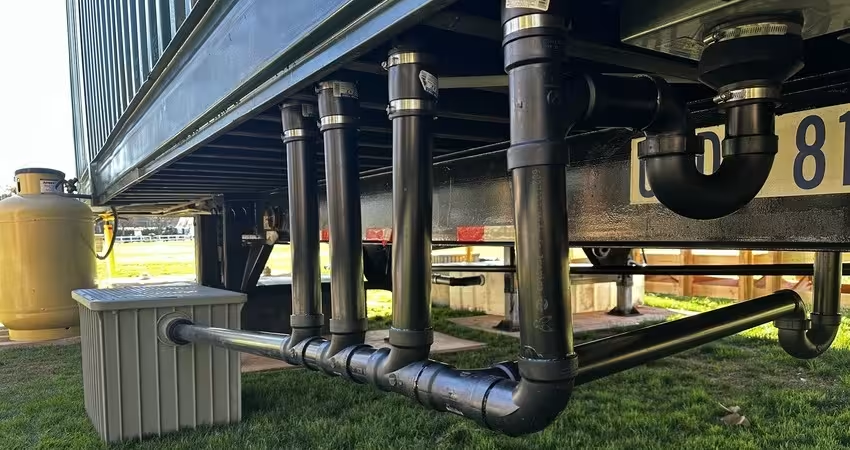
Here is where most operators get caught off guard. Under the Los Angeles Department of Water and Power's wastewater classification, kitchen sink and dishwasher discharge is blackwater — not greywater — because of high organic content, food-borne pathogen risk, and grease load. The same logic applies under most state plumbing codes.
That means the bulk of a mobile kitchen's daily discharge — the water from three-compartment sinks, prep sinks, dishwashers, and pre-rinse sprays — is regulated as blackwater. It cannot be dispersed, irrigated, or discharged to surface water. It must go to a sanitary sewer or a permitted holding tank.
The jurisdictional split that catches operators off guard
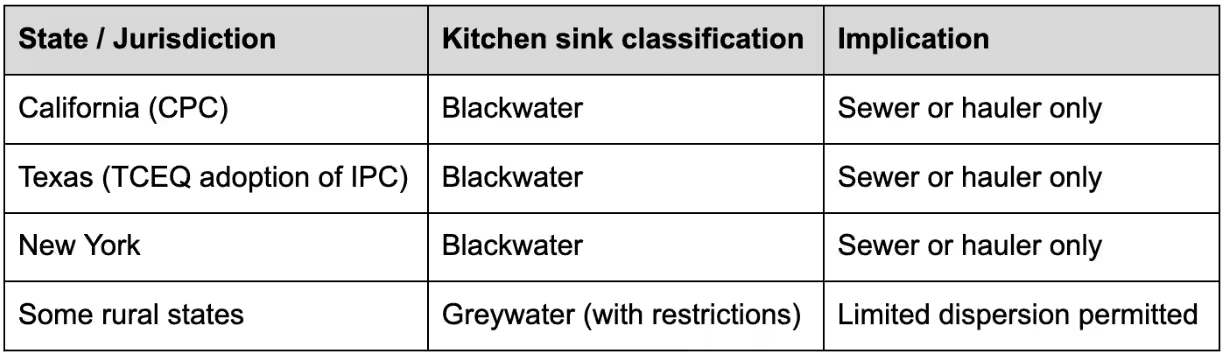
Note: Always verify with the local health department and water utility before signing a deployment contract. A unit specified for California compliance may need adjustment for a deployment in a state with looser rules — or, more commonly, tighter ones.
How Much Wastewater a Mobile Kitchen Actually Generates
Daily volume math by cover count
A rough planning estimate for full-service hospitality operations is 1.5 to 3 gallons of wastewater per cover served, accounting for prep, cooking, warewashing, and cleaning. For a country club running 400 covers per day, that's 600–1,200 gallons of daily discharge. For more on intake-side sizing, see our mobile kitchen water supply technical guide.
The FDA Food Code 15% oversize rule
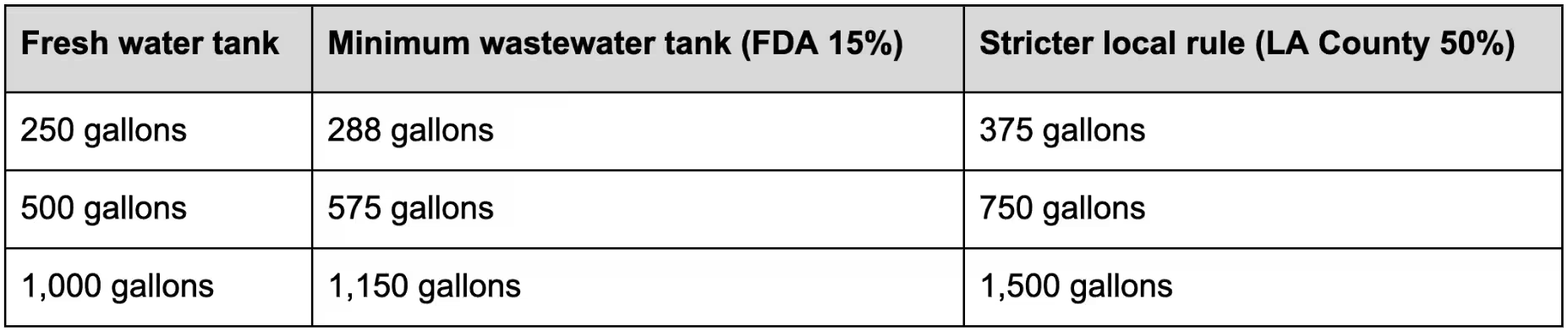
The FDA Food Code §5-401.11 sets the baseline rule for mobile food establishment holding tanks: the wastewater tank must be at least 15% larger than the fresh water supply tank. The Los Angeles County Department of Public Health Mobile Food Facility plan check extends this further, requiring up to 50% greater capacity when handwash and warewashing sinks share the tank.
Peak-demand spikes that exceed nominal capacity
Average daily volume hides the real engineering problem. Wastewater discharge spikes during three windows: post-service warewashing (60–90 minutes of continuous dishwasher and three-comp sink flow), end-of-day cleaning, and shift changeover. A nominally compliant tank can overflow during peak warewashing if the system is sized to daily averages rather than peak hourly flow.
Tip: Size the wastewater system to peak hourly flow, not daily average. A 1,000-gallon tank that handles 800 gallons over 16 service hours will fail if 400 of those gallons hit the tank in a single 90-minute warewashing window.

The Three Wastewater Disposal Methods for Mobile Kitchens
Method 1 — Direct sanitary sewer tie-in (the gold standard)
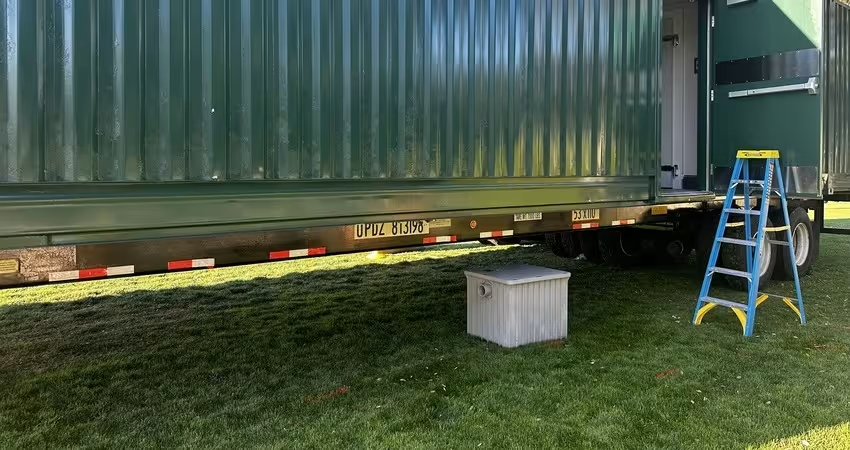
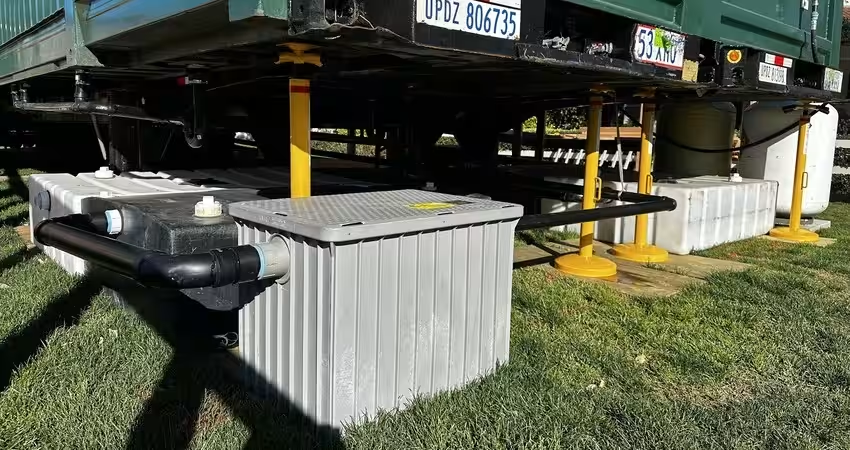
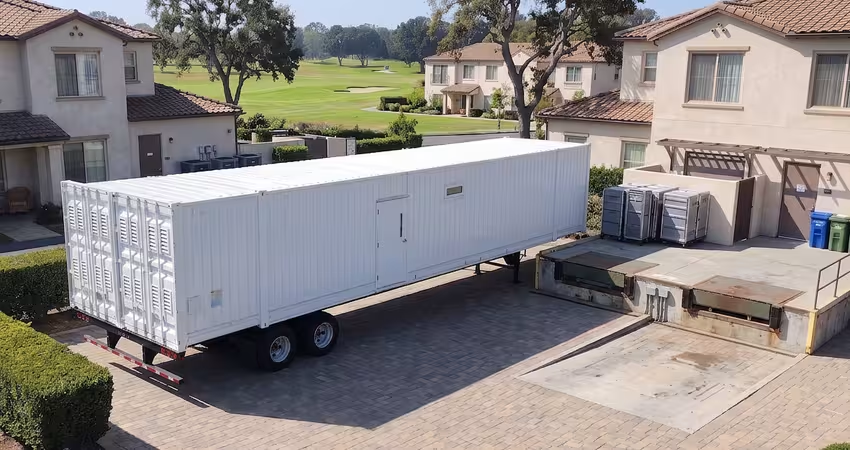
For deployments at properties with municipal sewer access — most hotels, country clubs, and corporate campuses — a direct sewer tie-in is the cleanest solution. The mobile kitchen's discharge line connects through a grease interceptor to the property's sanitary sewer lateral, mimicking how a permanent commercial kitchen operates.
Requirements:
- A wastewater discharge permit from the local water utility
- A grease interceptor sized per IPC, UPC, or local code
- Backflow prevention at the connection
- Approved trenching or above-ground routing of the discharge line
Method 2 — On-board holding tanks with scheduled hauler service
When sewer access is not available — historic properties, remote resorts, or sites where lateral access is blocked by hardscape — operators rely on on-board holding tanks pumped on a scheduled cadence by a licensed liquid waste hauler.
Plan for:
- A wastewater tank sized to FDA §5-401 standards plus a local code buffer
- A contracted hauler with a permit to operate in the jurisdiction
- Manifest documentation for each pump-out (required for inspection)
- Pump-out frequency typically 2–5 times per week for full-service operations
Note: Hauler costs and availability vary significantly by region. Build hauler scheduling into the deployment timeline before the unit arrives, not after.
Method 3 — Hybrid sewer-and-tank configurations
Some properties allow a hybrid: greywater discharges to the sanitary sewer through a small interceptor while blackwater accumulates in an on-board tank for hauler service. This configuration is common when the property's sewer lateral has limited capacity or when a temporary discharge permit is restricted to non-FOG streams.
Grease Interceptor Requirements for Mobile Kitchen Operations
Why every fixture that touches food needs FOG pretreatment
The Plumbing & Drainage Institute (PDI) G-101 method and Appendix H of the Uniform Plumbing Code require grease pretreatment for any commercial kitchen that discharges to a public sewer — and that includes mobile units operating under temporary permits. Fixtures that must route through a grease interceptor:
- Three-compartment warewashing sinks
- Prep sinks
- Pre-rinse spray stations
- Commercial dishwashers (where local code permits)
- Mop sinks
- Floor drains in cook zones
Handwash sinks are typically exempt — and food waste disposers are explicitly prohibited from discharging through most interceptors under IPC Section 1003.
Sizing per IPC, UPC, and PDI G-101 standards
The PDI G-101 method sizes the interceptor by multiplying total connected fixture flow rate (GPM) by a drainage period — typically 30 minutes for hydromechanical units. The result rounds up to the next standard capacity.
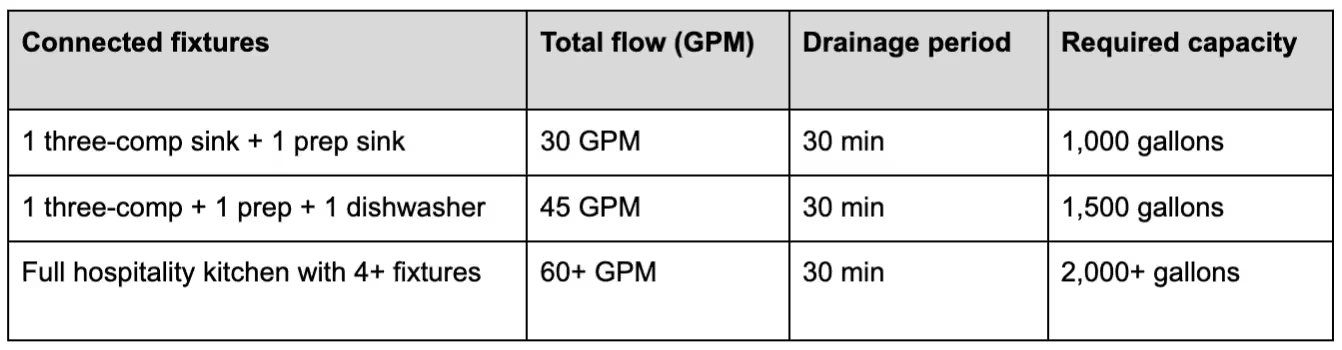
Tip: Standard interceptor capacities are 500, 750, 1,000, 1,500, 2,000, 3,000, and 5,000 gallons. If your calculation lands between sizes, always round up — never install below the calculated minimum.
Hydromechanical (HGI) vs. gravity (GGI) grease interceptors
Hydromechanical interceptors are the smaller, fixture-mounted units (under 100 GPM) typically integrated into the mobile kitchen itself. Gravity interceptors are 500-gallon-plus in-ground vaults installed outside the building and serviced by a grease hauler. For mobile kitchens, hydromechanical units inside the trailer are the standard; gravity interceptors are reserved for very large or long-duration deployments where the property already has one in place.
Permits, Approvals, and the Compliance Stack
A compliant deployment requires three overlapping permits. None is optional. For a deeper breakdown, see our guide to essential permits for mobile kitchen trailers.
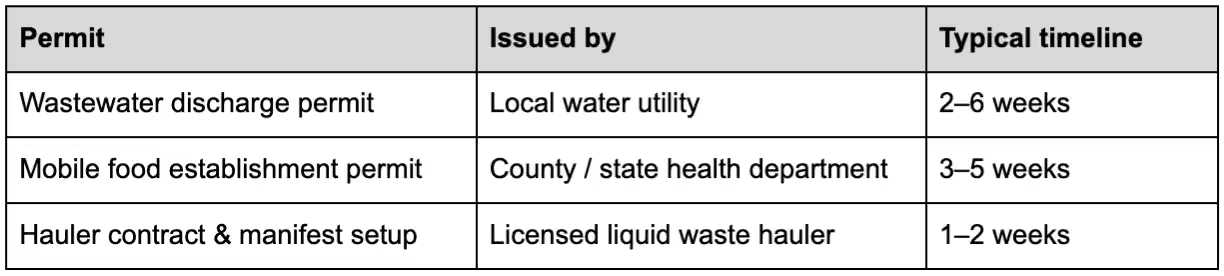
Note: Many jurisdictions require a notarized commissary agreement or a hauler contract on file before issuing the health department permit, regardless of whether the trailer is fully self-contained. Confirm sequencing with the issuing authority early — a missed dependency can add four weeks to a deployment.
Planning Your Wastewater System for a Long-Term Deployment
Before signing a mobile kitchen rental contract, walk through these questions with the property's general contractor and facilities team:
- Where is the nearest sanitary sewer lateral, and what is its capacity?
- Is there an existing grease interceptor on-site, and is it sized for the additional load?
- What does the local water utility require for a temporary discharge permit?
- If sewer tie-in is not feasible, which licensed haulers operate in the area, and at what cost?
- Does the jurisdiction classify kitchen wastewater as greywater or blackwater?
- What is the projected peak hourly wastewater flow, and does the system handle it?
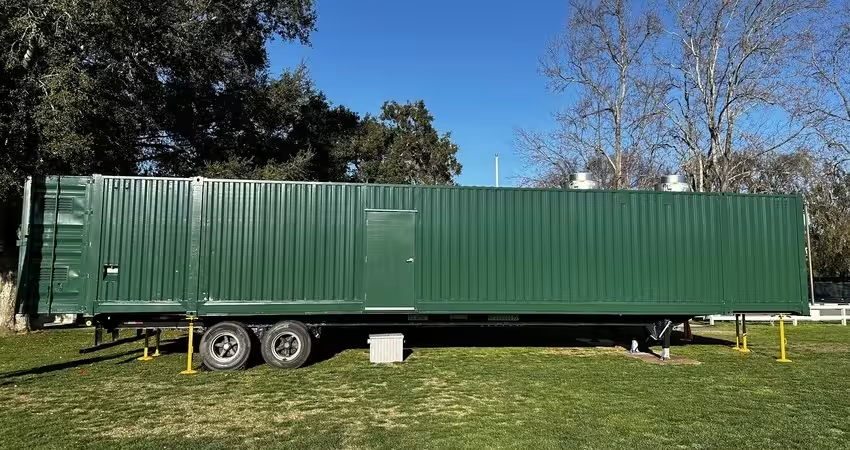
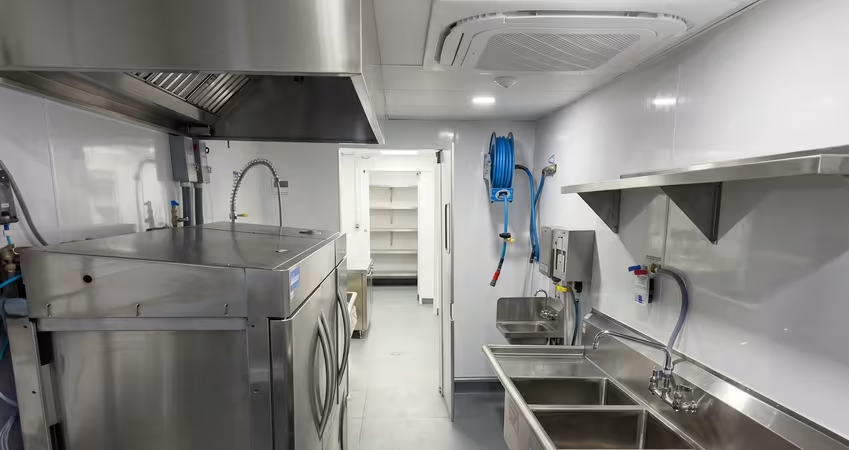
Mobile Culinaire's purpose-built mobile kitchens are engineered around these questions. Each unit ships with factory-sized greywater and blackwater systems, integrated FOG pretreatment, and standardized utility connection panels that support direct sewer tie-in, holding-tank operation, or hybrid configurations — matching the same plumbing standards as a permanent commercial kitchen, not a retrofitted trailer.
Ready to Spec a Wastewater-Compliant Mobile Kitchen?
Wastewater compliance is one of the costliest variables in any mid-to-long-term deployment — and one of the easiest to get wrong with a cheaply retrofitted unit. Mobile Culinaire's mobile kitchen rentals are built from in-house manufactured modules with code-compliant greywater and blackwater systems, third-party inspected to FDA Food Code and local plumbing standards before delivery. Companion technical references are available for electrical requirements and water supply sizing.
Request a site assessment and a project coordinator will walk through your discharge path, hauler logistics, and permit stack with your facilities team before the unit arrives.
Disclaimer
This article is for informational purposes only and does not constitute legal, plumbing, environmental, engineering, or code-compliance advice. Wastewater disposal requirements for mobile kitchens vary by jurisdiction, utility authority, health department, and site conditions. Always consult licensed plumbing professionals, local health departments, water utilities, environmental agencies, and applicable FDA Food Code, IPC, UPC, and local regulations before deploying or operating a mobile kitchen.
People Also Ask (FAQ)
How is wastewater disposed of from a mobile kitchen trailer?
Three methods are viable. The gold standard is a direct sanitary sewer tie-in through a grease interceptor — used at most hotels, country clubs, and corporate campuses with municipal sewer access. The fallback is on-board holding tanks pumped on a scheduled cadence by a licensed liquid waste hauler, typically 2–5 times per week. A hybrid configuration routes greywater to the sewer while blackwater accumulates in a tank for hauler service. All three require a wastewater discharge permit from the local water utility before commissioning.
Do mobile kitchens need a grease trap?
Yes. Virtually every U.S. plumbing code requires grease pretreatment for any commercial kitchen that discharges to a public sewer — and that includes mobile units operating under temporary permits. The IPC, UPC, and PDI G-101 method size the interceptor based on connected fixtures (three-compartment sinks, prep sinks, dishwashers, pre-rinse sprays). Undersized interceptors back up during peak service and trigger municipal FOG ordinance violations. Handwash sinks are typically exempt, and food waste disposers are explicitly prohibited from discharging through most interceptors.
How much wastewater does a mobile kitchen produce per day?
Hospitality mobile kitchens typically generate 1.5 to 3 gallons of wastewater per cover served. A country club serving 400 covers per day produces 600–1,200 gallons of daily discharge. The FDA Food Code requires the wastewater tank to be at least 15% larger than the fresh water tank, and stricter local jurisdictions like LA County require up to 50% greater capacity. Always size the system to peak hourly flow during warewashing windows — not daily averages — to avoid overflow.

%20(1).avif)
Testimonial

"What is standing out when you look at the mobile kitchen operation is the efficiency that we can really achieve because it's built for that."
Tell us about your kitchen needs and request a quote.
.png)
Turnkey mobile kitchen
Proudly made in-house in the USA
Commercial grade kitchen equipment
Code-compliant
Trusted by Industry Leaders