.gif)

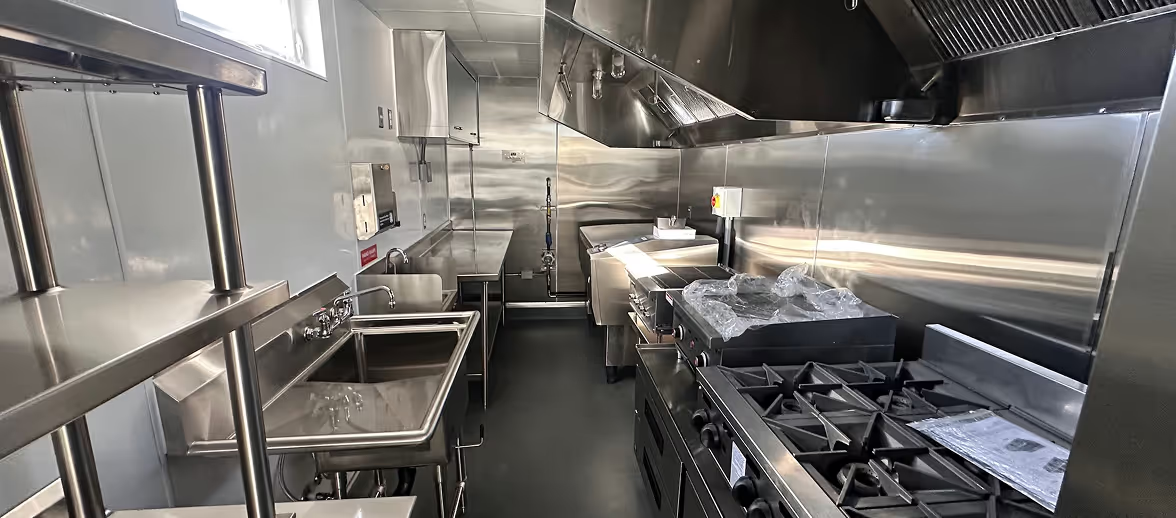
A commercial kitchen at full service can pull more current than a small office building — a single combi oven alone draws 35 amps at 208V, and a full production line easily exceeds 200 amps. Yet most mobile kitchen deployment delays trace back to the same overlooked detail: site electrical capacity that doesn't match the unit's actual load.
Mobile kitchen electrical requirements are not a peripheral concern. They determine whether a renovation stays on schedule, whether a peak-season event runs smoothly, and whether the unit passes inspection on day one.
This guide walks through what drives those requirements, who's responsible for sizing them, and why planning for electrical service early — not the week before delivery — is one of the most important things an operator can do.
Why Electrical Planning Drives Deployment Success
Most operators assume permits and delivery logistics are the hardest parts of a mobile kitchen rental. In practice, electrical service mismatches are the most common cause of delayed startup. A unit can arrive on time and code-compliant, then sit idle while an electrician runs a properly sized feeder — or while a utility upgrade works its way through a permitting and scheduling queue that can take weeks or months.
Undersized power has three consequences: breakers trip during peak service and force kitchens to stagger equipment use; voltage drop on an underspec'd feeder degrades motors and heating elements over time; and emergency generator rentals add $400–$800/day on top of planned costs.
Note: Per the U.S. Department of Energy, commercial kitchens are among the most energy-intensive spaces per square foot in any building type. A mobile unit concentrates that demand into 400–800 sq ft, making electrical sizing even more critical than in a permanent build.
Who's Responsible for What

Quality providers supply a load schedule and connection diagram for the unit itself. But sizing the actual site electrical service is an engineering exercise, not a checklist item — it depends on far more than the kitchen equipment alone.
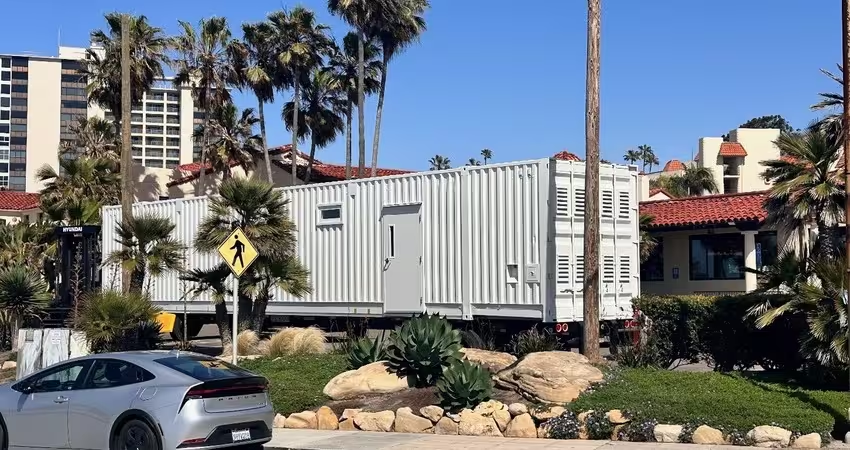
Sizing Electrical Service Is an Engineering Job, Not a DIY Calculation
It's tempting to think of mobile kitchen power needs as a matter of adding up equipment nameplates. In reality, a licensed electrical engineer — not the operator, and not a generic worksheet — should determine the site's required electrical service. That's because the number depends on far more than the cooking line:
- HVAC and makeup air, which often adds significant load and doesn't get the benefit of demand-factor reductions
- Refrigeration, including walk-ins, reach-ins, and ice machines
- Water heating, whether tankless, booster, or storage-tank systems
- Lighting and general receptacles throughout the unit and any adjacent structures
- Other building loads at the site itself — existing panel draw, adjacent tenants, or shared infrastructure the mobile kitchen will tie into
An engineer will apply the relevant code-based demand factors, account for simultaneous vs. staggered equipment use, and size the feeder, panel, and (if needed) generator accordingly. This is exactly the kind of calculation where getting it "close enough" isn't good enough — undersizing creates safety and reliability problems, and oversizing wastes budget on unnecessary infrastructure.
What operators should take away: you don't need to run the load calculation yourself, but you do need to make sure it happens and happens early. Engage an electrical engineer or your provider's project coordinator as soon as a site is under consideration, not once the unit is already scheduled for delivery.
Standard Mobile Kitchen Electrical Requirements at a Glance
While every unit is different, purpose-built mobile kitchen electrical requirements converge on a narrow band of specifications.
Voltage and Phase
Commercial mobile kitchens typically require 208V or 480V three-phase service, not single-phase residential power. Three-phase is necessary because most commercial cooking, refrigeration, and HVAC equipment is built for it; it delivers more power through smaller conductors (reducing voltage drop on long feeder runs); and motor-driven equipment runs more efficiently and lasts longer on three-phase.
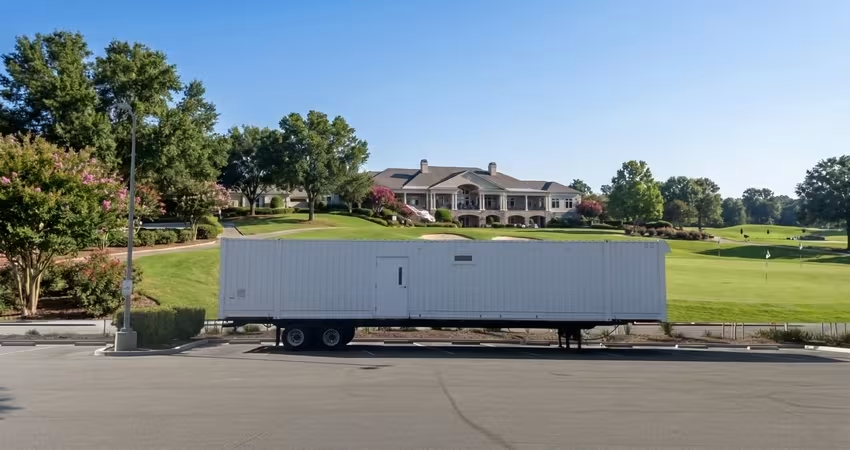
Tip: If your site only has single-phase service, a phase converter or generator will be required. This is common at remote venues, country clubs, and older properties — flag it during initial site assessment, not the week before delivery.
Typical Amperage by Unit Size
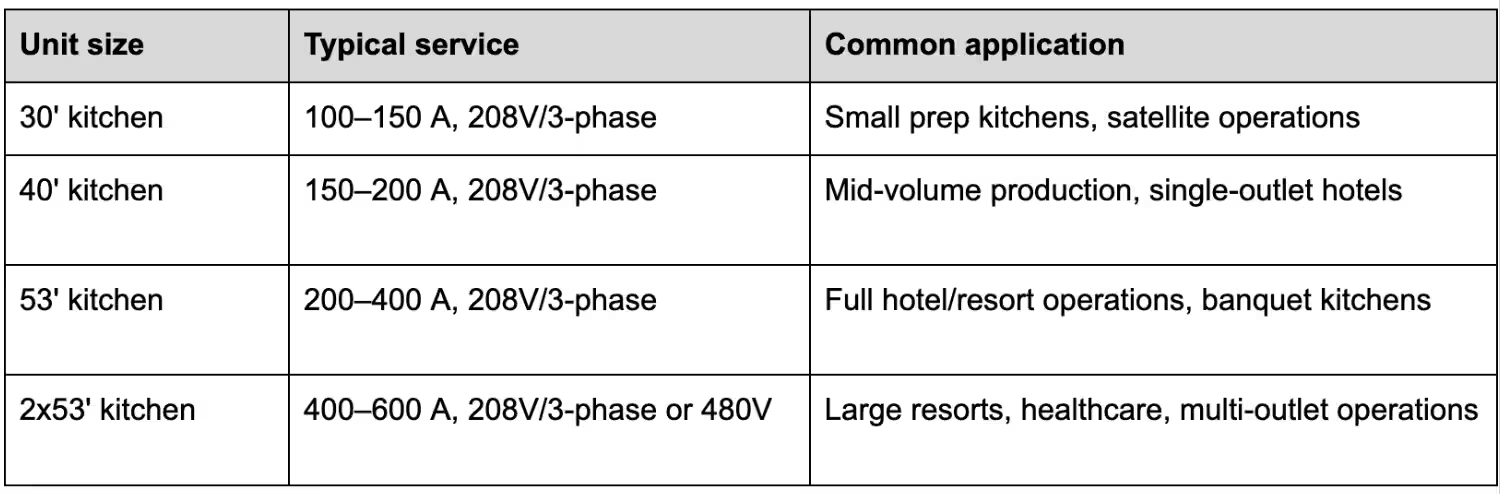
For unit-specific sizing, see our guide to choosing the perfect mobile kitchen.
Connection Standards
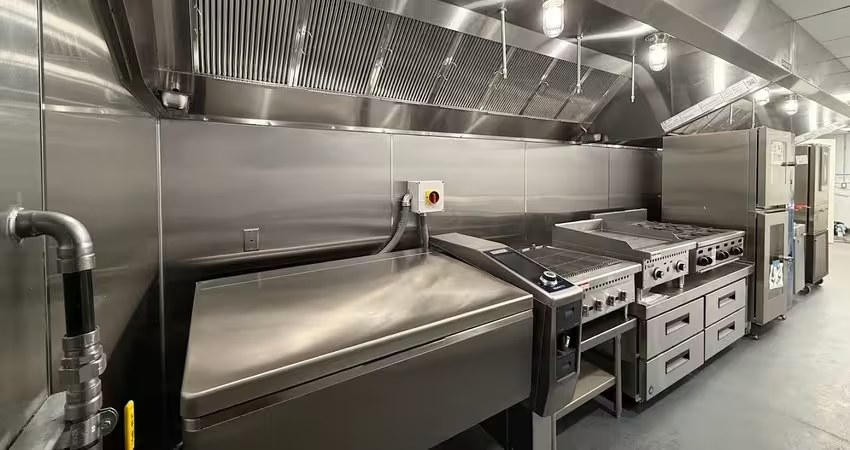
Most professional units use camlock connectors for service tie-in — the same connectors used on film sets, large events, and industrial applications. They allow safe, weatherproof connection of large feeder cables.
Why Budgeting for Electrical Service Early Matters
Because the true electrical requirement depends on so many site-specific factors, the biggest risk to a project isn't miscalculating amperage — it's failing to budget time and money for electrical service until late in the process. A few things worth planning for from day one:
- Upgrade lead time: If a site's existing panel or utility service can't support the added load, upgrading it can take weeks to months depending on the utility, permitting authority, and equipment availability — timelines that rarely align with a rental's start date if addressed late.
- Upgrade cost: Panel upgrades, new service drops, or transformer changes can be a significant line item. This should be scoped and budgeted alongside the kitchen rental itself, not treated as a surprise change order.
- Site assessment timing: The earlier an electrician or engineer assesses the site, the more options remain on the table — including whether grid tie-in is feasible at all, or whether a generator is the more practical (and sometimes cheaper) path.
Building electrical planning into the project timeline from the outset — alongside permitting, site prep, and delivery logistics — is the single biggest thing an operator can do to avoid delays.
Site Power Sources: Grid Tie-In vs. Generator
When Grid Tie-In Is the Right Choice
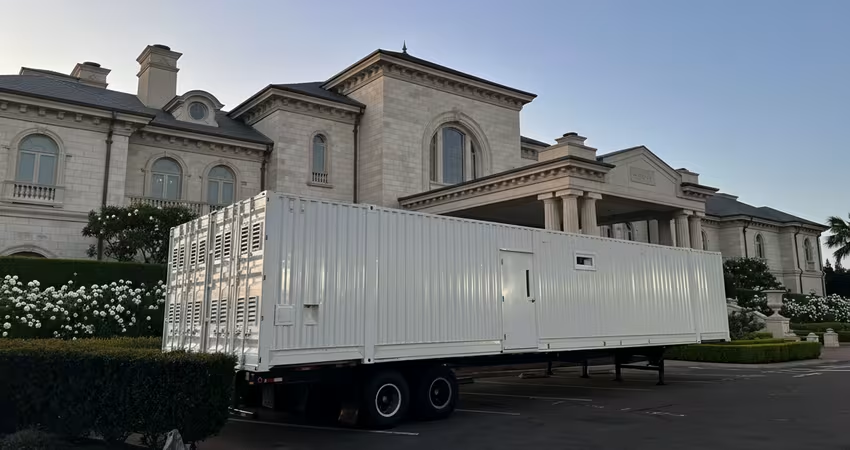
Grid power is preferable for long deployments (3+ months), sites with existing panel capacity, and locations sensitive to noise or emissions (resorts, hospitals, residential-adjacent venues). Hotels and resorts undergoing renovation often have spare capacity at the main service — a licensed electrician can run a temporary feeder from the main panel to the unit's connection point.
When You Need a Generator
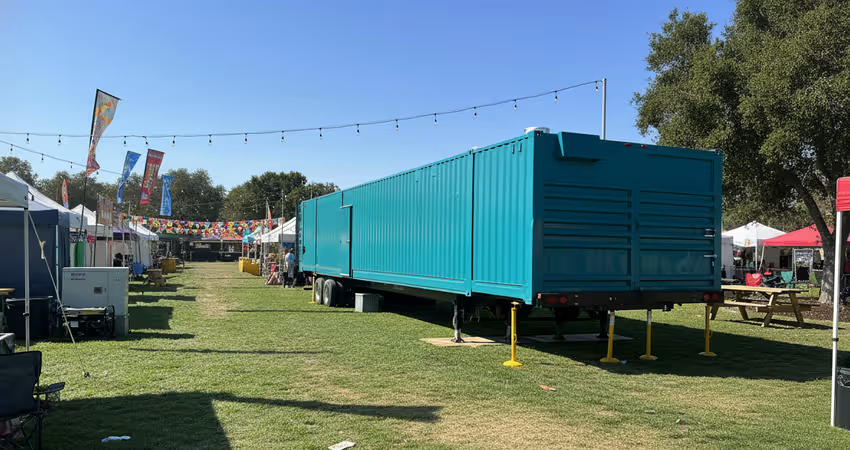
A generator is required when site service can't support the additional load, when the deployment is in a remote location, or when a panel upgrade would cost more than generator rental over the project duration. A 53' unit drawing 71 kW design load typically pairs with a 100 kW (125 kVA) prime-rated diesel generator.
Tip: Always specify a prime-rated generator, not standby. Prime-rated units are designed for continuous operation; standby units will fail under sustained load.
For broader deployment planning, our mobile kitchen site preparation guide covers utility coordination in detail.
Hybrid Setups
For 6+ month deployments, a hybrid approach often makes sense: a generator handles startup and serves as backup, while a temporary grid tie-in handles continuous load — protecting against outages without daily fuel costs.
Code Compliance and Safety
Mobile kitchens must comply with the National Electrical Code (NFPA 70) and applicable OSHA electrical safety standards for both internal wiring and the temporary service connection. Key requirements include GFCI protection on 125V receptacles within 6 feet of sinks, bonding and grounding of the unit chassis, proper conductor sizing to prevent voltage drop, and lockable disconnects at the connection point.
NFPA 96 — the Standard for Ventilation Control and Fire Protection of Commercial Cooking Operations — requires hood fire suppression systems to automatically shut off fuel and electrical power to cooking equipment when activated. Confirm this interlock is wired and tested before energization.
Most jurisdictions require an electrical permit and inspection for the temporary service connection, separate from health department or fire marshal sign-offs. For broader context, see our guide to permits required for mobile kitchen operations.
Common Mobile Kitchen Electrical Planning Mistakes
- Waiting until delivery is scheduled to assess site electrical capacity
By then, upgrade lead times can push back the entire project.
- Assuming the cooking equipment list tells the whole story
HVAC, refrigeration, water heating, and building loads all factor into the real requirement — and only an engineer's calculation captures all of them.
- Not budgeting for a possible panel or service upgrade
These can be a significant cost and lead-time item; they belong in the project budget from the start, not as a change order.
- Underestimating cable runs
A 200-foot feeder requires larger conductors than a 50-foot feeder to manage voltage drop — another reason site-specific engineering matters.
- Sizing the generator at exactly the design load
Always size at 110%+ for headroom and longevity, per International Code Council guidance.
How Mobile Culinaire Approaches Electrical Planning
Every Mobile Culinaire unit ships with a complete electrical specification package: nameplate inventory, NEC 220.56 demand calculation, single-line diagram, and color-coded camlock connection points. Because our units are purpose-built rather than retrofitted, the electrical system is engineered to commercial-kitchen standards from the modular framing up.
Project coordinators work directly with the operator's electrician during pre-deployment to confirm site capacity matches unit requirements.
Plan Your Power Requirements With Confidence
The difference between a smooth mobile kitchen deployment and a delayed one almost always comes down to whether the electrical service was sized correctly before delivery. Get the load calculation right, specify three-phase service at the proper amperage, confirm the camlock connection match — and the rest of the deployment follows.
Mobile Culinaire's purpose-built mobile kitchens ship with full electrical documentation and project coordinator support. Whether you're scoping a 30' satellite unit or a 2x53' resort kitchen, request a quote and a coordinator will review your site's capacity, recommend the right unit, and outline the connection plan.
People Also Ask (FAQ)
What size electrical service does a mobile kitchen need?
Mobile kitchen electrical requirements typically range from 100 to 600 amps at 208V three-phase, depending on unit size. A 30' unit usually runs on 100–150 amps; a full 53' production kitchen needs 200–400 amps; 2x53' configurations can draw 400–600 amps. These are useful planning benchmarks, but the exact service size for your project should come from a licensed electrical engineer's load calculation, which accounts for HVAC, refrigeration, and other site-specific factors.
Can you run a mobile commercial kitchen on a generator?
Yes — generators are common for remote sites, event venues, and locations where panel upgrades aren't practical. A 53' unit typically pairs with a roughly 100 kW prime-rated diesel generator, though exact sizing should be confirmed by an engineer for the specific site and equipment. Specify prime-rated, not standby, for continuous operation.
Do mobile kitchens need 3-phase power?
Yes, in nearly all cases. Commercial cooking, refrigeration, and HVAC equipment is built for three-phase operation. Single-phase service requires a phase converter or three-phase generator, which adds cost and complexity.
Who is responsible for calculating a mobile kitchen's electrical requirements?
The provider supplies equipment nameplate data and the unit's internal electrical specifications, but sizing the site's electrical service is the responsibility of a licensed electrical engineer. The final requirement depends on more than the cooking equipment — HVAC, refrigeration, water heating, lighting, and other building loads all factor in.

Testimonial

"What is standing out when you look at the mobile kitchen operation is the efficiency that we can really achieve because it's built for that."
Tell us about your kitchen needs and request a quote.
.png)
Turnkey mobile kitchen
Proudly made in-house in the USA
Commercial grade kitchen equipment
Code-compliant
Trusted by Industry Leaders