.gif)

What does a 600-guest summer wedding at an estate vineyard, a 5,000-person music festival, and a three-day pharmaceutical sales conference at a convention center all have in common? None of them have a permanent commercial kitchen large enough to handle the volume — and all three solve that problem the same way. Mobile kitchen rentals for events have quietly become the standard answer for serious event programs that refuse to compromise on food quality. For planners and venue operators encountering them for the first time, the basics aren't obvious.
This guide covers what mobile kitchen rentals for events actually are, how they work, and when they're the right call.
What Is a Mobile Kitchen Rental for an Event?
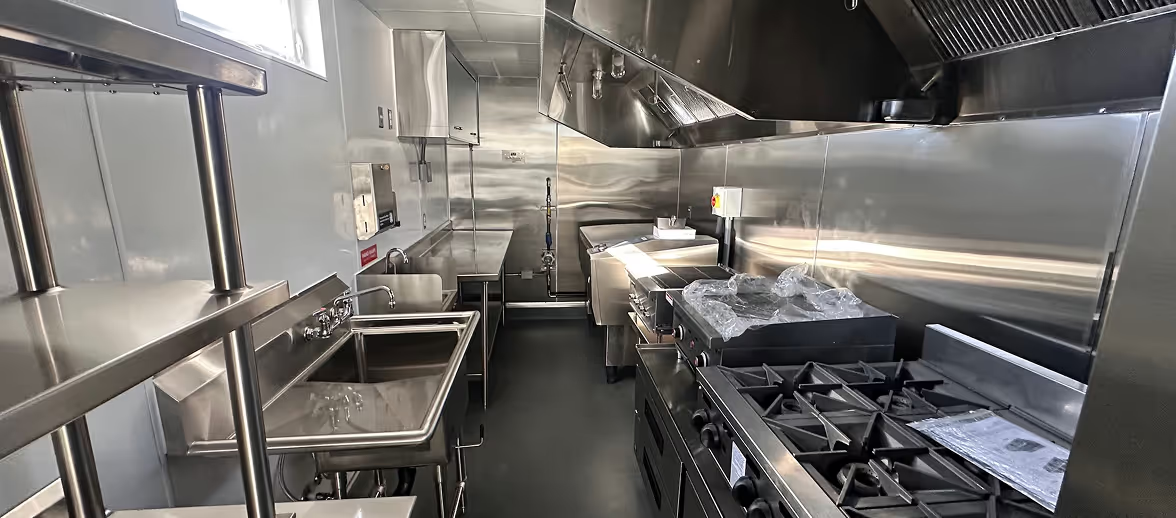
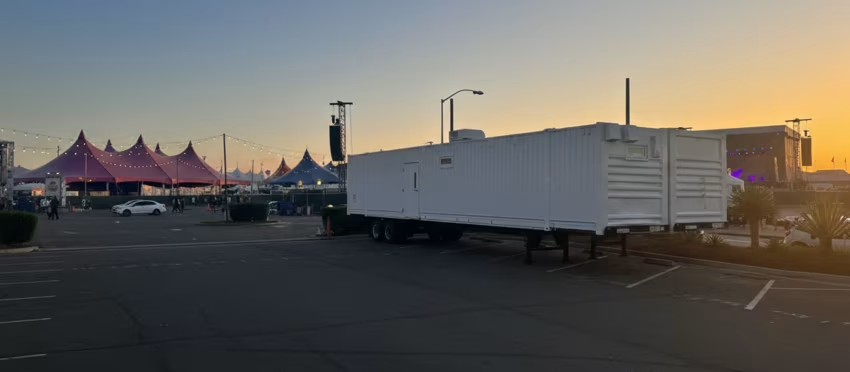
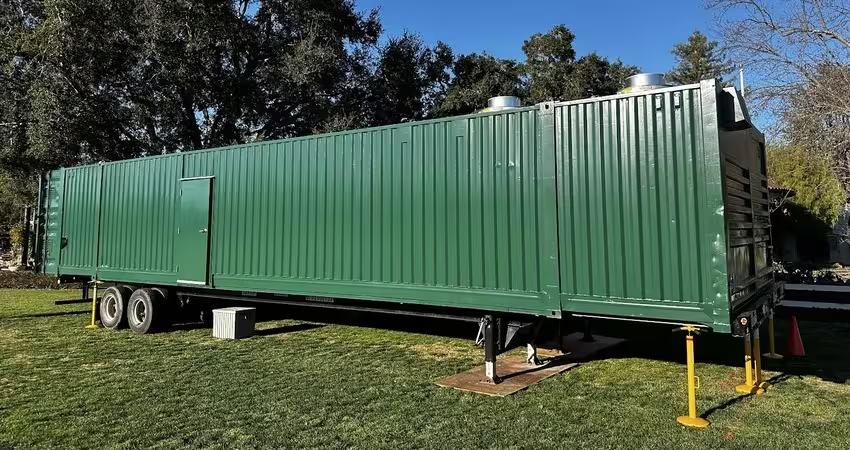
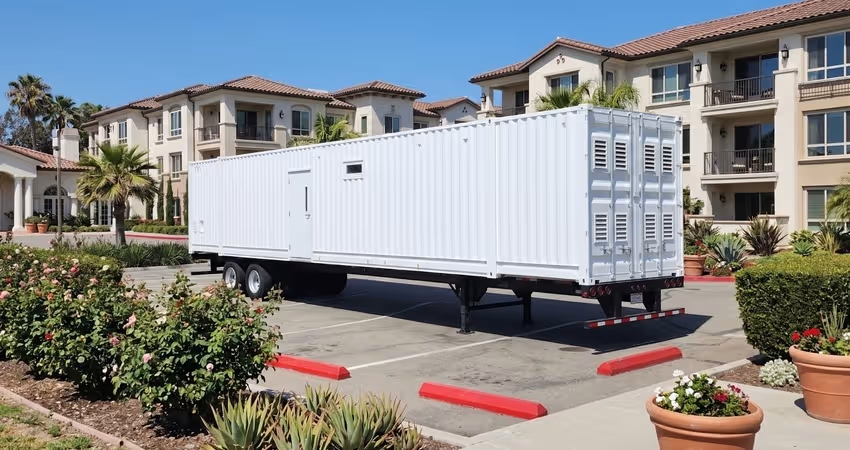
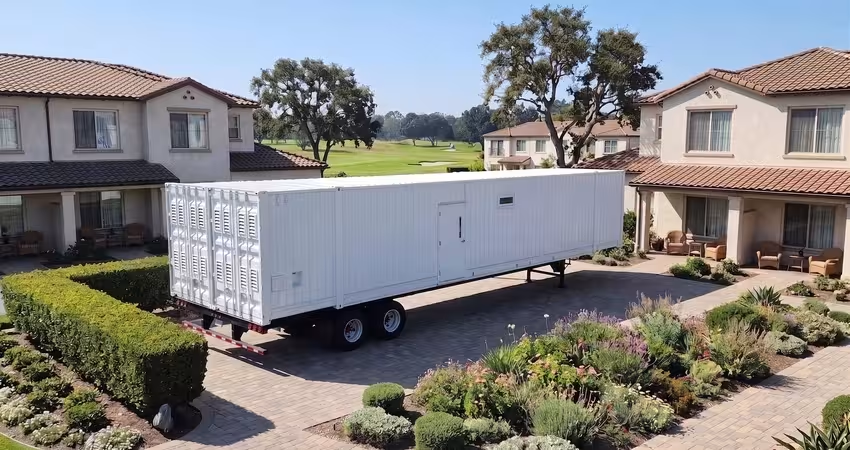
A mobile kitchen rental for an event is a fully equipped, code-compliant commercial kitchen housed in a transportable trailer or modular structure, leased for the event and returned afterward. It's not a food truck, not a catering tent, not propane burners under a marquee. It's a permanent-grade kitchen on wheels — engineered to match the equipment, ventilation, sanitation, and workflow standards of a brick-and-mortar facility.
Modern purpose-built mobile kitchens are designed from the ground up for commercial output, which matters because not every unit on the market is built to the same standard.
Mobile Kitchen vs. Food Truck vs. Catering Tent
Each has a use case — and they're not interchangeable. Choosing the wrong format is one of the most expensive mistakes an event planner can make.

Note: A food truck is built to drive and serve from a window. A mobile kitchen is built to cook at full commercial volume and stay parked. For a deeper breakdown, see our trailer kitchens vs. food trucks comparison.
What's Actually Inside a Rental Unit
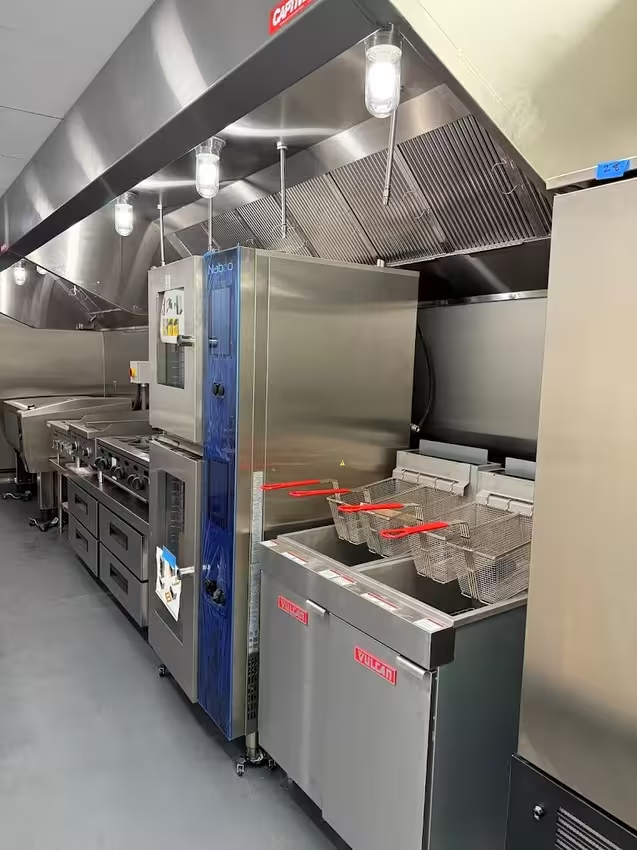
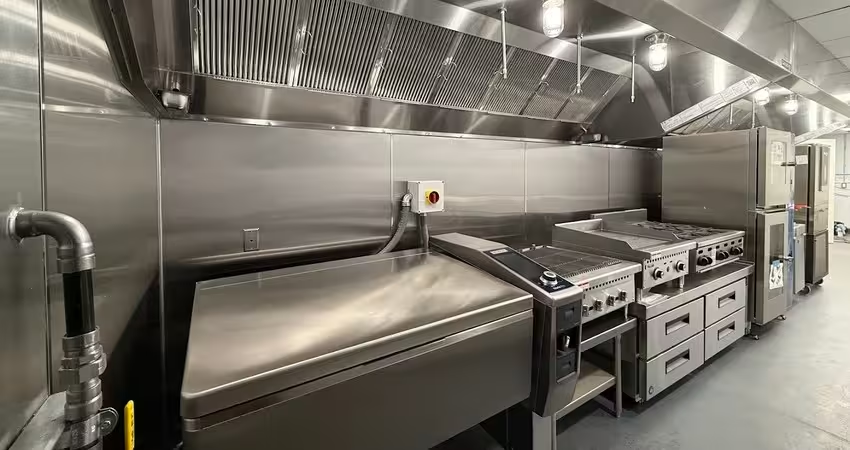
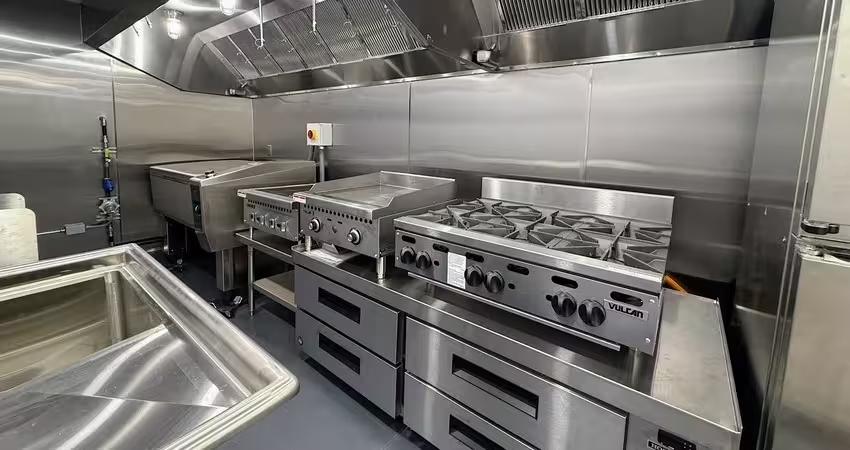
A turnkey rental arrives with the same equipment categories as a permanent commercial kitchen. The exact package scales with unit size, but the systems are consistent:
- Cooking line: convection ovens, ranges, fryers, griddles, char-broilers, tilt skillets, combi ovens
- Refrigeration: reach-in coolers, freezers, prep tables; walk-in cold storage on larger units
- Prep zone: stainless work tables, three-compartment sinks, hand sinks, dry storage
- Ventilation: Type I exhaust hoods with automatic fire suppression and makeup air, compliant with NFPA 96 standards
- Plumbing & utilities: pre-installed electrical, hot/cold water, grease management, and propane or natural gas connections
- HVAC: climate-controlled interior so staff can work twelve-hour event days
All food-contact surfaces carry NSF International certifications, and units are built to meet the FDA Food Code — the same baseline that governs every commercial kitchen in the country.
How They Differ from Retrofitted Trailers
This is the dividing line in the industry. Retrofitted trailers — converted from used vehicles — can look similar from the outside but are engineered backward: equipment squeezed into a chassis it wasn't designed for, with downstream consequences for ventilation, electrical capacity, and inspection readiness.
Purpose-built units, like those Mobile Culinaire manufactures from steel-framed modular construction, are designed around the kitchen first and the trailer second. The difference shows up in inspection passes, equipment reliability over a multi-day event, and crew comfort during peak service.
How Mobile Kitchen Rentals for Events Work
The mechanics are simpler than most planners assume. There are three phases — scoping, deployment, and operation — and the provider handles the logistical heavy lifting on the first two.
From Request to Delivery — The Basic Timeline
Lead times vary based on unit availability and permit complexity, but a typical schedule looks like this:

For a step-by-step breakdown of every phase, including what to expect from each touchpoint, our full event rental lifecycle guide walks through the entire process.
Site, Utilities, and Permits at a Glance
Three things determine whether a site is ready to host a mobile kitchen: footprint, utilities, and access.
- Footprint: A 30' unit needs roughly 200 sq ft; a 53' or 2x53' setup needs 500–1,200+ sq ft. Add clearance for utility connections, staff movement, and waste removal.
- Utilities: Water (¾" supply minimum), wastewater drainage, three-phase electrical (or generator), and gas if the menu requires it. Off-grid sites can run on generators, water tanks, and propane.
- Permits: Health department approval, fire marshal sign-off (especially for the hood and suppression system), and zoning/temporary structure permits where applicable.
Tip: Permits are almost always the longest lead-time item, not the unit itself. Start the application process 4–6 weeks before delivery. Quality providers support documentation, but the venue or event operator is usually the named permittee. Our event permits guide and site preparation guide cover jurisdiction-specific requirements and surface readiness in detail.
Operating the Unit During the Event
Once on site and connected, the unit operates exactly like a fixed kitchen. Your culinary team — or a contracted catering crew — runs service from inside. The provider's role during the event is typically standby technical support; day-to-day operation belongs to your team. For guidance on workflow and staff handoff, see our guide to integrating a mobile kitchen into venue operations.
The workflow stays familiar — chefs don't need a learning curve, and service standards don't drop. According to industry coverage from BizBash, event programs at the high end of hospitality have moved toward mobile kitchen rentals as a default infrastructure choice rather than an emergency fallback.
When to Use a Mobile Kitchen Rental for Your Event
Not every event needs a mobile kitchen. The economics and logistics only make sense above a certain threshold of volume, complexity, or duration. Below those thresholds, a caterer with hot boxes and a tent can usually handle it. Once an event crosses into serious-volume territory — or a venue without infrastructure — a mobile kitchen rental is often the only option that protects food quality, compliance, and brand reputation.
Four Scenarios Where a Mobile Kitchen Is the Right Call
1. Venues without permanent kitchens
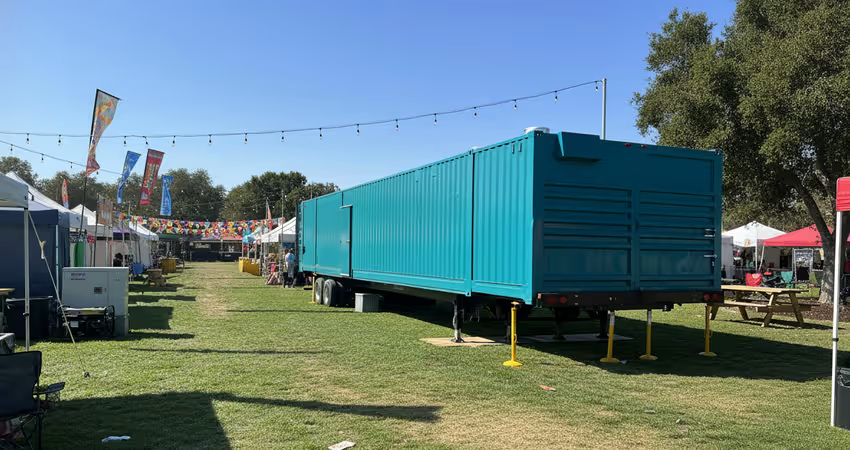
Vineyards, historic estates, beachfront properties, industrial event spaces, and warehouse venues frequently lack any onsite cooking infrastructure. A mobile kitchen converts these spaces into fully catering-capable venues without permanent construction. We cover this scenario in depth in our article on adding foodservice to a venue without a permanent kitchen.
2. Multi-day or large-volume events
Festivals, conferences, sporting events, and corporate retreats serving 500+ meals per service or running across multiple days quickly outgrow what tent-and-burner setups can support. Industry analysts project the catering equipment rental market to reach USD 433.9 million by 2032, driven largely by demand from large-format events with health-code-compliant requirements. Our breakdown of how events and festivals use mobile kitchens goes deeper on volume-driven use cases.
3. Existing kitchen capacity overflow
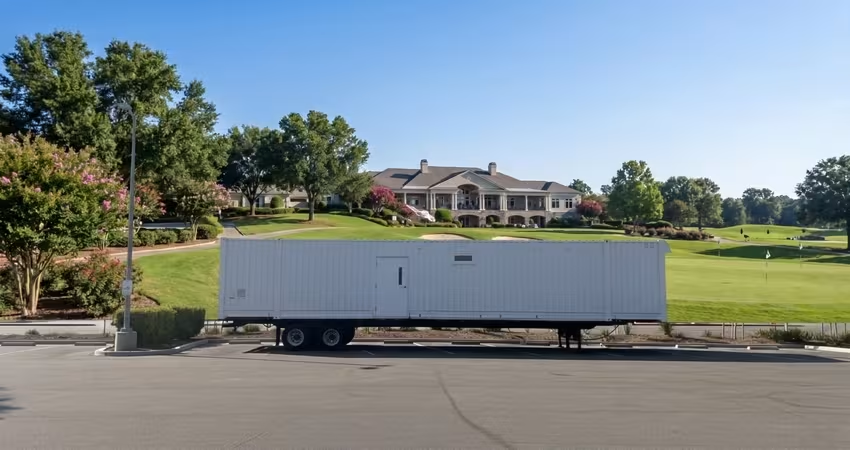
Hotels, resorts, and country clubs with permanent kitchens often hit capacity ceilings during peak event programming — wedding season, conference weeks, holiday banquets. A mobile kitchen rental for events expands production capacity for the surge without permanent expansion costs.
4. Brand activations, productions, and high-end private events
Product launches, film and TV productions, and ultra-high-net-worth private events demand consistent culinary quality in unconventional locations. The same equipment category is used by FEMA-deployed mass-care operations — which speaks to the durability and compliance baseline these units operate at. The National Restaurant Association tracks how flexible foodservice infrastructure has become a standard tool across hospitality and corporate event programs.
When a Mobile Kitchen Is Not the Right Fit
Equally important — knowing when to skip it:
- Small events under ~150 guests with a simple menu
A caterer with off-site prep and on-site finishing is usually cheaper and equally effective.
- Single-meal cocktail receptions
Cold canapés and bar service rarely justify a full mobile kitchen.
- Truly remote sites with no utility access AND no generator/tank options
May need a different solution category.
- Budget-constrained events where food is secondary
A mobile kitchen is a quality and capacity tool, not a cost-minimization tool.
Note: A common misconception is that mobile kitchens are only worth it at thousand-guest scale. In practice, events serving ~200+ hot meals over multiple services often see better ROI than layered tent-and-equipment rentals. See our breakdown of common myths about mobile kitchen rentals for events.
A Simple Decision Framework: 5 Questions to Ask First
Before scoping a mobile kitchen rental for events, work through these:
- How many hot meals per service, across how many services? 200+ per service or 500+ across the event → mobile kitchen likely justified.
- Does the venue have any onsite commercial kitchen capacity? No → strong case. Yes, but at capacity → still a strong case.
- What's the menu? Plated hot meals and live cooking demand more infrastructure than buffet-style or cold service.
- How many days of service? Multi-day events amortize the rental cost across more meals, improving the math significantly.
- What's the cost of a food-quality failure? For weddings, brand activations, and member events, brand and reputation risk often dwarf the rental fee.
If three or more point toward "yes," a mobile kitchen rental is worth scoping seriously.
Choosing the Right Provider
The provider you choose matters as much as the unit itself. Two units that look similar on a brochure can perform very differently across a five-day event.
Purpose-Built vs. Retrofitted Units
Ask directly: "Are your units purpose-built from in-house manufactured modules, or retrofitted trailers?" Purpose-built units arrive code-compliant with predictable performance. Retrofitted units — converted from used vehicles — frequently require last-minute fixes to pass health and fire inspections, which can delay event readiness.
Service Scope: Turnkey vs. Equipment-Only
A true turnkey provider handles pre-event consultation, unit sizing, permitting documentation, delivery logistics, on-site setup and utility connections, standby support during the event, and decommissioning afterward. Equipment-only rentals leave most of these tasks with the event operator — workable for sophisticated venues with full F&B teams, but a significant coordination burden otherwise. For a deeper checklist on selecting the right unit and provider, see our guide to choosing the perfect mobile kitchen, our event venue market page, and project portfolio.
When the Food Matters as Much as the Venue
A mobile kitchen rental for events isn't a stopgap — it's a deliberate infrastructure choice that protects food quality, regulatory compliance, and guest experience at scale. The question isn't whether to consider one. It's which provider can deliver a unit that performs like a permanent kitchen across the full duration of the event.
Mobile Culinaire builds purpose-built mobile kitchens designed to deliver permanent-kitchen performance for temporary events — fully equipped, fully compliant, and ready to deploy nationwide. Explore our mobile kitchen models or request a quote to scope a unit for your next event.
People Also Ask (FAQ)
What is included in a mobile kitchen rental for an event?
A turnkey rental typically includes commercial-grade cooking equipment (ovens, ranges, fryers, refrigeration), prep surfaces, ventilation with fire suppression, plumbing with grease management, electrical distribution, HVAC, and sometimes walk-in cold storage. Purpose-built units arrive pre-installed and inspection-ready, while delivery, setup, and removal are handled by the provider. The exact equipment package depends on unit size, menu, and meal volume.
How much does it cost to rent a mobile kitchen for an event?
Short-term event rentals generally start around $450–$600 per day for compact trailers and run $1,200–$1,600+ per day for fully equipped large units. Multi-week or monthly rentals offer better daily rates. Final pricing depends on unit size, equipment package, delivery distance, rental duration, and ancillary needs like generators or additional cold storage. Always confirm whether the quote includes transport, setup, permits, and utility hookups, since these meaningfully affect total landed cost. For a full breakdown of expenses operators often miss, see our guide to hidden costs in mobile kitchen rentals.
How long does it take to set up a mobile kitchen for an event?
With proper site preparation and utility readiness, a purpose-built mobile kitchen for events is typically operational within 24 to 72 hours of arrival. The provider's coordinator handles utility connections, equipment testing, and final inspection on-site. Delivery is usually scheduled 1–3 days before event day to allow buffer for inspections and staff orientation. Permits and site prep should begin 4–6 weeks ahead — that's the part that takes time, not the kitchen itself.

Testimonial
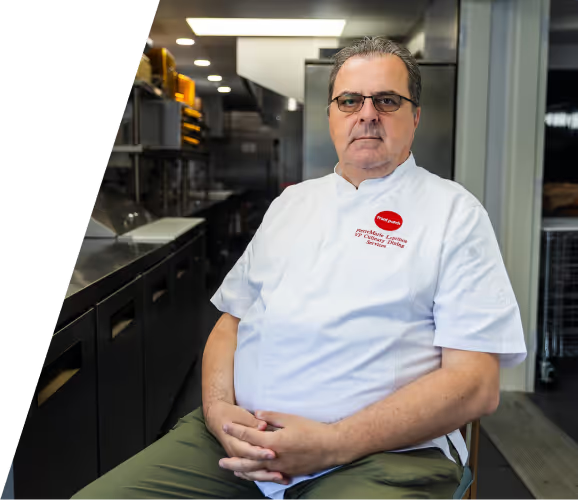
"What is standing out when you look at the mobile kitchen operation is the efficiency that we can really achieve because it's built for that."
Tell us about your kitchen needs and request a quote.
.png)
Turnkey mobile kitchen
Proudly made in-house in the USA
Commercial grade kitchen equipment
Code-compliant
Trusted by Industry Leaders