.gif)
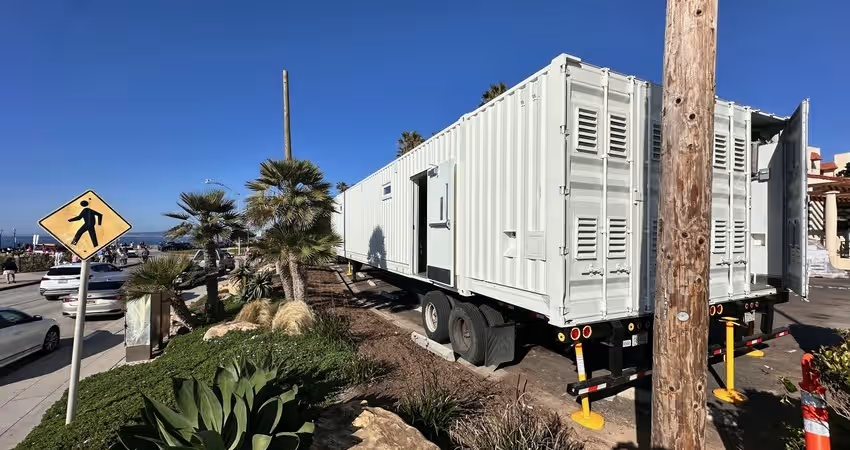
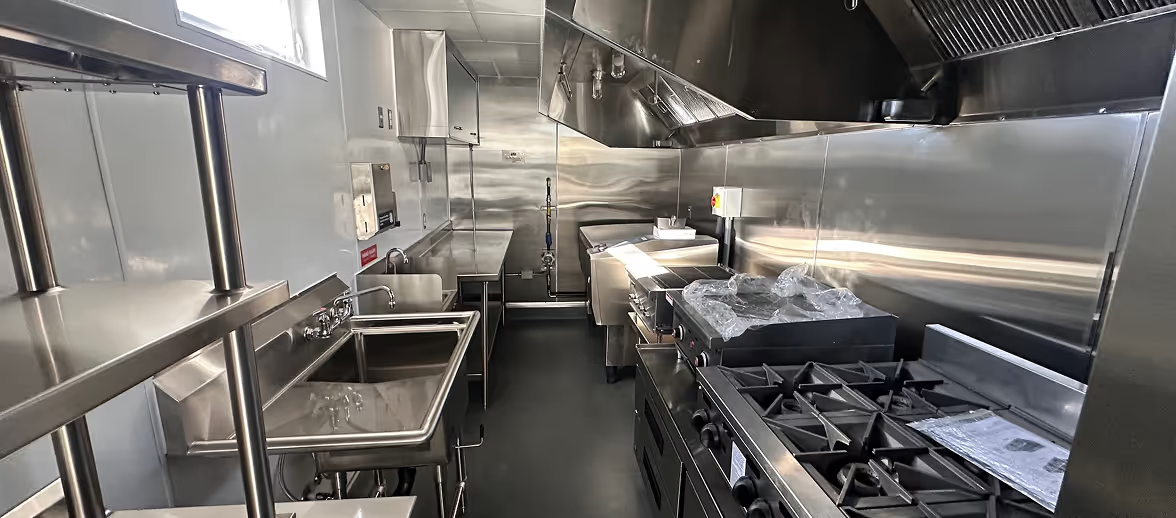
Your event is six weeks away. The venue is booked, the guest list confirmed, and the menu designed — but the property doesn't have a kitchen that can handle 800 covers in a single evening. Building one isn't an option. Outsourcing the entire catering operation to an offsite commissary introduces cold-chain risks and service delays.
This is the exact scenario where a mobile kitchen rental for events transforms from a nice-to-have into a mission-critical asset. Yet for most event managers, the process from first inquiry to final site restoration remains opaque.
This guide walks through the complete lifecycle of an event-based mobile kitchen deployment — phase by phase — so you can plan with precision and execute without surprises. For a broader look at when and why event venues turn to temporary kitchens, see our overview of how events and festivals use mobile kitchens.
Why Event Venues Need a Structured Rental Lifecycle
The Operational Stakes of Event Foodservice
Event foodservice operates on a razor-thin margin for error. Unlike a renovation scenario — where a temporary kitchen supports ongoing daily operations over months — an event deployment must hit full production capacity on a fixed date. There is no soft opening. According to the National Restaurant Association, food and beverage can account for 25–40% of total revenue at full-service hospitality properties, making every service window financially significant.
A failed or delayed kitchen deployment doesn't just impact one meal period — it can derail an entire event and the revenue, reputation, and guest relationships tied to it.
What Makes Event Deployments Different from Renovation Rentals
Event-based mobile kitchen rentals differ from renovation deployments in several key ways:
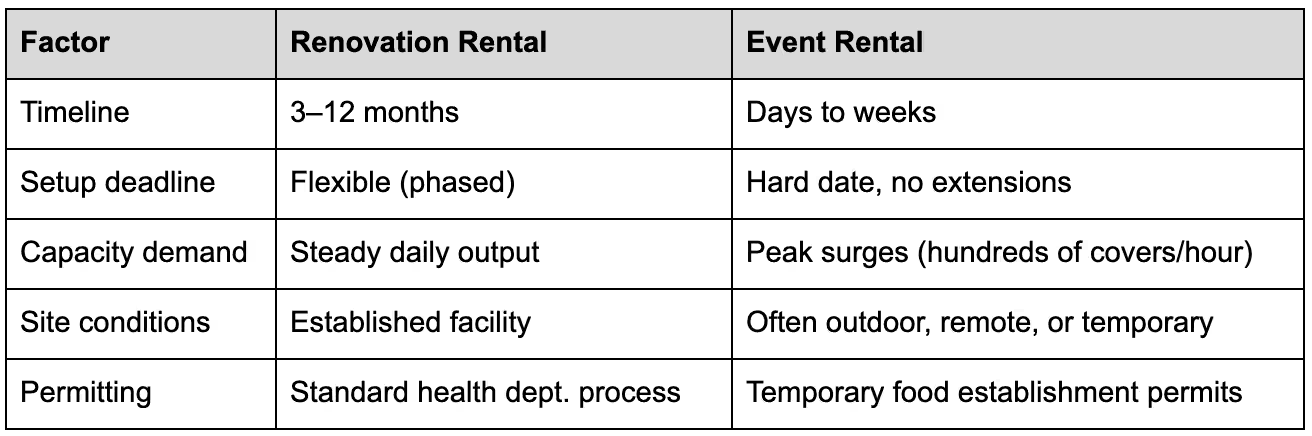
Understanding these differences is essential to planning a deployment that works on event timelines. For a general overview of the rental process, our step-by-step rental guide covers the fundamentals.
Phase 1 — Scoping and Consultation (8–12 Weeks Out)
Defining Capacity, Menu, and Service Style
Every successful mobile kitchen rental for events begins with a scoping conversation between the event organizer and the rental provider. The goal is to match the mobile kitchen configuration to the event's specific operational demands. Key variables to define upfront:
- Guest count and service format — A 200-person seated dinner requires a different setup than a 1,500-person festival with roaming food stations.
- Menu complexity — A five-course plated menu with hot and cold courses demands separate prep, cooking, and plating zones. A buffet or food-truck-style service may require fewer stations but higher throughput on fewer items.
- Service duration — A four-hour cocktail reception has a different peak-load profile than a three-day sporting event.
Tip: Provide your rental provider with the actual menu and projected daily cover counts as early as possible. This directly determines equipment specifications, storage needs, and unit size.
Site Assessment and Utility Mapping
Before a unit can be specified, the site must be evaluated. A qualified provider will assess:
- Access routes — Can a semi-truck and trailer navigate to the deployment location? Are there low bridges, tight turns, or weight-restricted roads?
- Surface conditions — The unit requires a level, load-bearing surface (asphalt, compacted gravel, or concrete). Grass or soft ground may require matting or gravel pads.
- Utility access points — Where are the nearest connections for electrical (typically 480V three-phase for commercial units), water supply, gas lines, and sewer/waste drainage?
- Clearance and code setbacks — Most fire codes require minimum clearance distances between the kitchen unit and permanent structures or tent installations.
Note: According to industry data, roughly 30% of mobile kitchen setup delays trace back to inadequate site preparation. Investing time in this phase pays off in every phase that follows.
Phase 2 — Permitting and Pre-Delivery Logistics (4–8 Weeks Out)
Navigating Health, Fire, and Zoning Permits for Events
Event-based deployments often require a temporary food establishment permit — distinct from the standard food service license used for permanent restaurants. Whether your event venue operates as a hotel, resort, or standalone property, the requirements are jurisdiction-specific. Most municipalities will require:
- Health department approval — Submission of equipment plans, menu details, water source documentation, and waste disposal plans. The FDA Food Code (2022) provides the federal model framework, but individual states and counties set enforcement standards.
- Fire department clearance — Verification that the mobile kitchen's fire suppression system meets NFPA 96 (Standard for Ventilation Control and Fire Protection of Commercial Cooking Operations). This includes hood systems, Ansul or similar wet-chemical suppression, and portable extinguisher placement.
- Zoning or site-use approval — Confirmation from the local planning department that a temporary commercial kitchen is permitted at the event location.
Tip: Start permit applications immediately after confirming the rental. Processing timelines range from 2–6 weeks depending on the jurisdiction. For a comprehensive breakdown of permitting requirements, see our guide on permits and licenses for mobile kitchen operations.
Coordinating Delivery Access and Site Preparation
With permits in process, the focus shifts to site readiness. This phase includes:
- Scheduling delivery windows — Coordinate with the venue to establish arrival times that don't conflict with other vendor load-ins or guest activities.
- Utility staging — Electrical panels, water lines, and gas hookups should be positioned and tested before the unit arrives. A licensed electrician may be needed to ensure the power supply meets NEC (NFPA 70) requirements for temporary electrical installations.
- Waste management — Grease trap placement, gray water drainage, and solid waste disposal must be arranged. Some remote venues require bladder tanks or pump-out services.
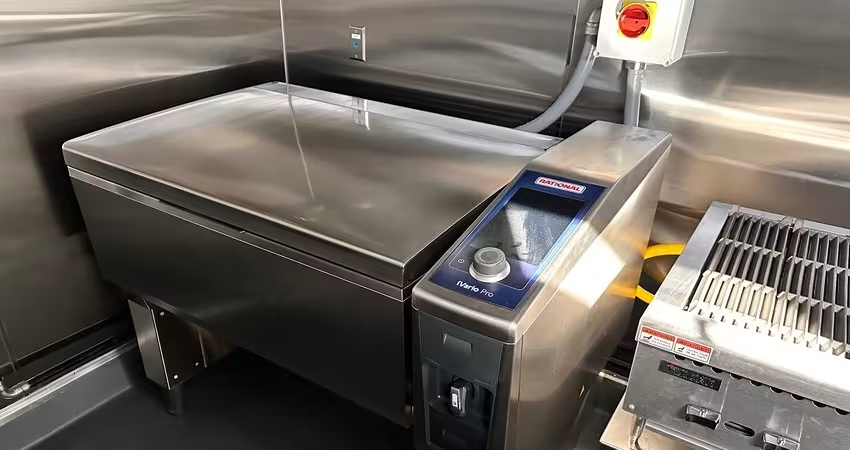
Note: Purpose-built mobile kitchens arrive with standardized utility connection points for water, power, and waste — dramatically reducing the on-site labor and time required for hookup compared to improvised trailer setups.
Phase 3 — Delivery, Installation, and Commissioning (1–3 Days Before)
What Happens on Delivery Day
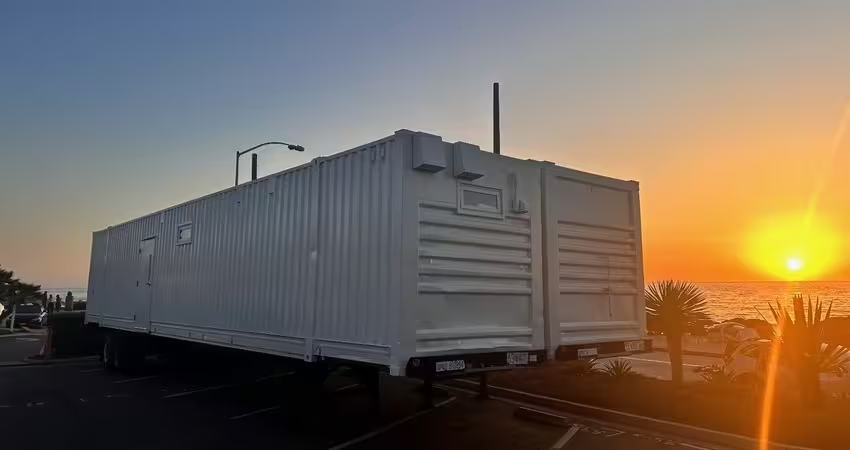
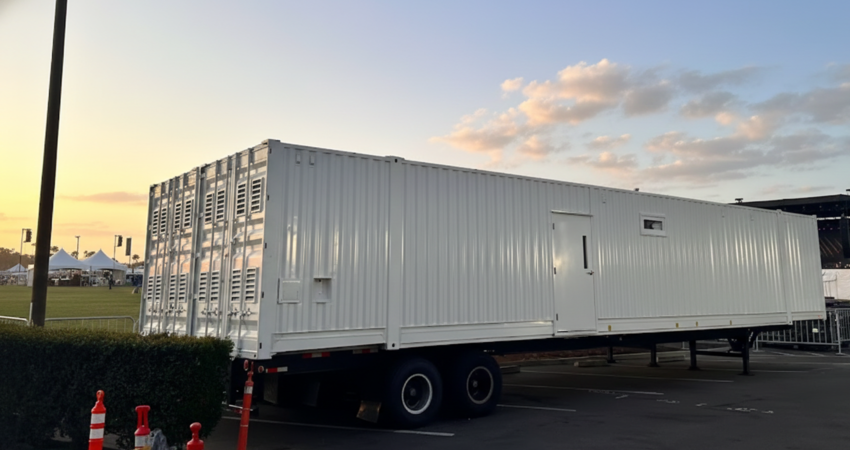
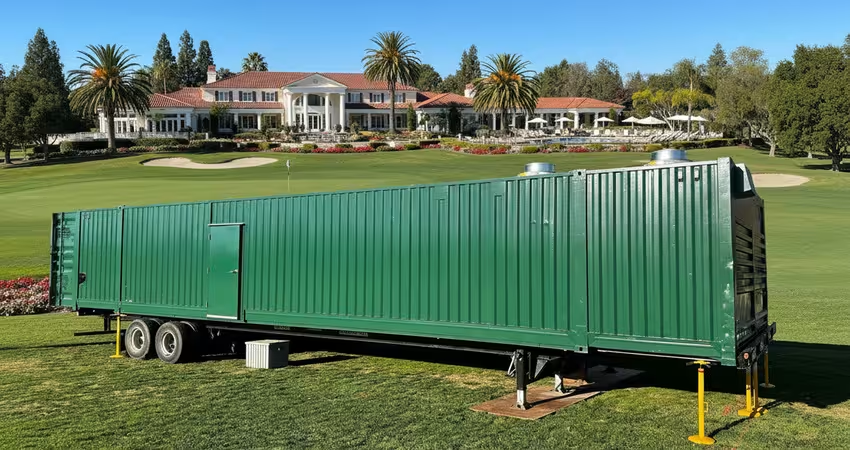
On delivery day, the mobile kitchen arrives by flatbed or is towed directly to the prepared site. A professional deployment typically follows this sequence:
- Positioning and leveling — The unit is placed on the prepared surface and leveled using hydraulic jacks or cribbing to ensure proper drainage and equipment operation.
- Utility connection — Electrical, plumbing, gas, and waste lines are connected to pre-staged site utilities.
- Systems test — HVAC, exhaust hoods, fire suppression, refrigeration, and all cooking equipment are powered on and tested individually.
- Safety walkthrough — A final walkthrough verifies ADA accessibility, egress paths, fire extinguisher placement, and emergency shutoff locations.
With a purpose-built modular unit, this entire process — from truck arrival to operational kitchen — can be completed within hours, not days. Explore Mobile Culinaire's mobile kitchen models to see how standardized engineering accelerates this timeline.
Utility Connections, Equipment Testing, and Safety Walkthroughs
The commissioning phase is where quality of construction becomes immediately apparent. Key checks include:

Tip: Request a commissioning checklist from your provider and have your executive chef or kitchen manager present during the walkthrough. Identifying layout or equipment questions before the event — not during service — prevents costly mid-event adjustments.
Phase 4 — Event Operations and On-Site Support
Staff Onboarding and Workflow Optimization
Even experienced kitchen teams need time to orient to a new environment. Best practices for staff onboarding in a mobile kitchen include:
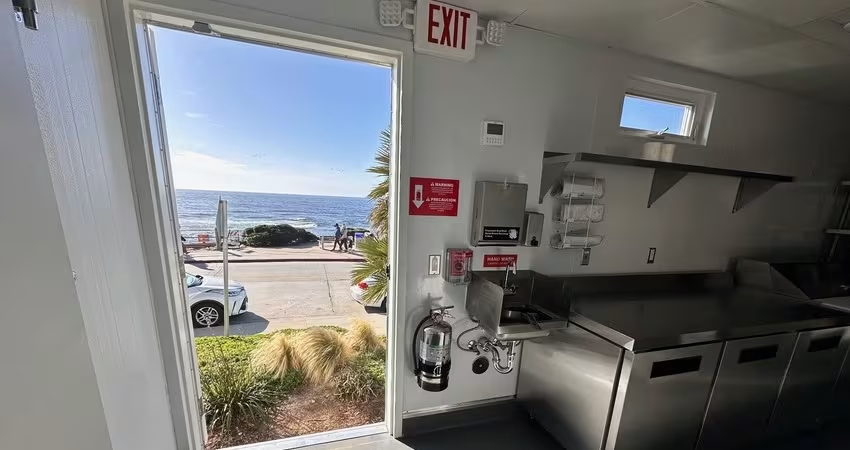
- Pre-event walkthrough — Walk the entire team through the kitchen before the first service. Cover equipment locations, storage zones, fire exits, and the location of shutoffs for gas, electric, and water.
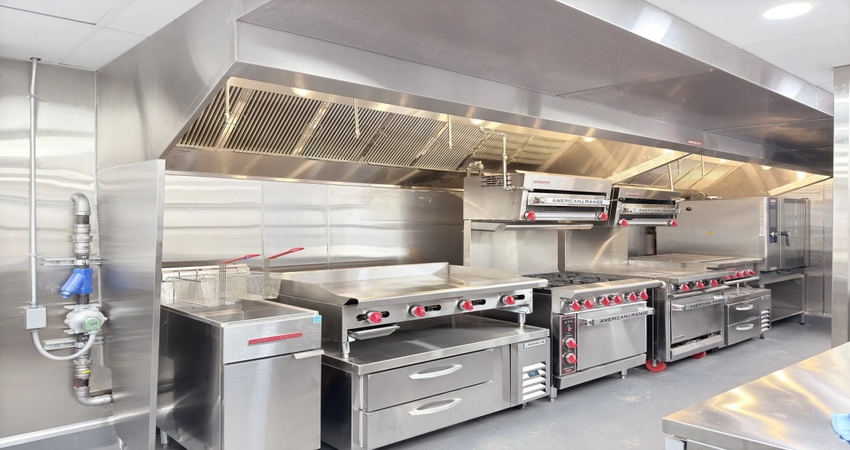
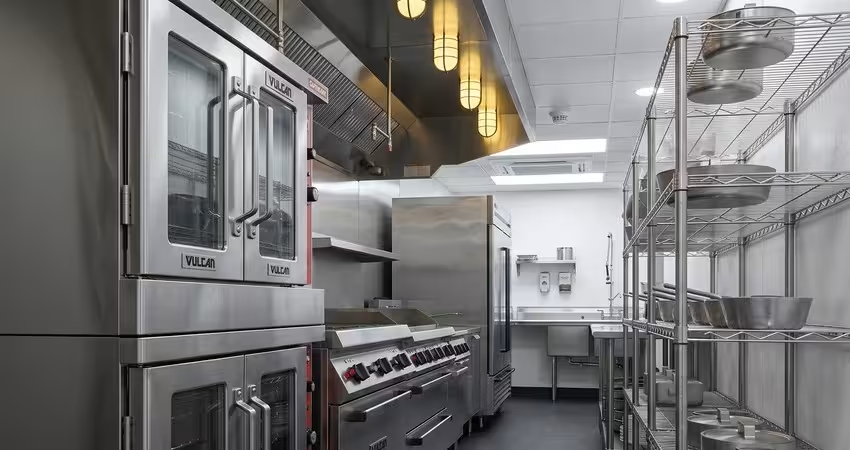
- Station assignments — Map each chef's station against the mobile kitchen's layout. Purpose-built units are designed with logical workflow zones (receiving → storage → prep → cook → plate → service), but staff need to understand the specific configuration.
- Dry run — For high-stakes events, schedule a partial-volume trial service 24 hours before the main event. This reveals any workflow bottlenecks, equipment questions, or supply gaps while there's still time to address them.
Note: The Occupational Safety and Health Administration (OSHA) requires that all employees be informed of workplace hazards — including fire suppression systems, ventilation, and emergency exits — before they begin work in any new facility, including temporary installations.
Maintaining Compliance and Food Safety During Service
During the event itself, compliance responsibilities don't pause. Your mobile kitchen rental for events must meet the same standards as any permanent commercial kitchen. Critical operational standards to maintain:
- Temperature monitoring — Cold-hold items at or below 41°F; hot-hold items at or above 135°F per FDA Food Code guidelines. Log temperatures at regular intervals.
- Handwashing stations — Must be accessible and stocked at all times. Water temperature at handwash sinks should reach at least 85°F per the 2022 FDA Food Code.
- Waste management — Grease traps, gray water systems, and solid waste bins require monitoring throughout service — especially during multi-day events.
- Documentation — Keep permits, inspection reports, temperature logs, and equipment certifications in an accessible compliance binder on-site.
Tip: Designate one team member as the on-site compliance lead responsible for temperature logs, handwashing station checks, and health inspector liaison. This single point of accountability prevents gaps during the intensity of peak service.
Phase 5 — Decommissioning, Removal, and Site Restoration
Post-Event Teardown Process
Once the final service concludes, the decommissioning process begins — typically within 24 hours for event-based mobile kitchen rentals. The sequence mirrors installation in reverse:
- Equipment shutdown and cleaning — All cooking and refrigeration equipment is powered down, cleaned, and secured for transport.
- Utility disconnection — Gas, water, electrical, and waste lines are safely disconnected and capped.
- Unit preparation for transport — Leveling equipment is retracted, doors are secured, and the unit is inspected for transport readiness.
- Site restoration — The deployment area is cleaned, any gravel pads or protective matting removed, and the ground inspected for damage.
Final Inspection and Site Handoff
A professional provider will conduct a final site inspection with the venue's operations team to confirm:
- The deployment area is restored to its pre-installation condition.
- All utility connections are properly capped and sealed.
- Open permits are closed out with the relevant agencies (health department, fire marshal).
- A final condition report is documented and shared.
This handoff ensures the venue is immediately ready for its next event — no lingering infrastructure, no open permits, no surprises for the next booking.
Note: If your event schedule requires a mobile kitchen across a multi-event season (wedding season, summer concert series, holiday gala schedule), discuss extended or recurring rental terms with your provider. Keeping a unit on-site across a season often proves more cost-effective than repeated mobilization and demobilization cycles.
Plan Your Event Kitchen Deployment with Confidence
A mobile kitchen rental for events is only as good as the process behind it. From the first scoping call to the final site handoff, every phase of the mobile kitchen rental lifecycle matters — and the difference between a seamless deployment and a chaotic one comes down to planning, construction quality, and provider expertise.
Mobile Culinaire manages the full deployment lifecycle — consultation, engineering, permitting support, delivery, installation, and removal — so your team can focus on what matters: delivering an exceptional event.
Contact our specialists to start scoping your event kitchen, or explore our mobile kitchen models to see the units built for this exact purpose. For inspiration from real-world deployments, browse our project portfolio.
People Also Ask (FAQ)
How long does it take to set up a mobile kitchen for an event?
A professional, purpose-built mobile kitchen can typically be delivered and fully operational within 24–72 hours, depending on site conditions and utility availability. Units with pre-installed MEP systems and standardized connection points significantly reduce setup time compared to improvised solutions. The most common variable is advance site preparation — leveling, utility staging, and permit readiness.
What permits do you need for a temporary kitchen at an event?
Requirements vary by jurisdiction, but most event-based deployments require a temporary food establishment permit from the local health department, fire department approval (including NFPA 96–compliant suppression verification), and zoning or site-use clearance. Lead times range from 2–6 weeks, so initiating applications early is essential. Your rental provider should be able to supply the equipment documentation needed for these applications.
What happens when the mobile kitchen rental period ends?
The provider schedules a decommissioning sequence that includes disconnecting utilities, cleaning equipment, removing the unit, and restoring the site. For event deployments, this typically takes one day. A professional provider will document the final site condition, close any open permits, and ensure the venue is ready for its next use.

Testimonial

"What is standing out when you look at the mobile kitchen operation is the efficiency that we can really achieve because it's built for that."
Tell us about your kitchen needs and request a quote.
.png)
Turnkey mobile kitchen
Proudly made in-house in the USA
Commercial grade kitchen equipment
Code-compliant
Trusted by Industry Leaders