.gif)
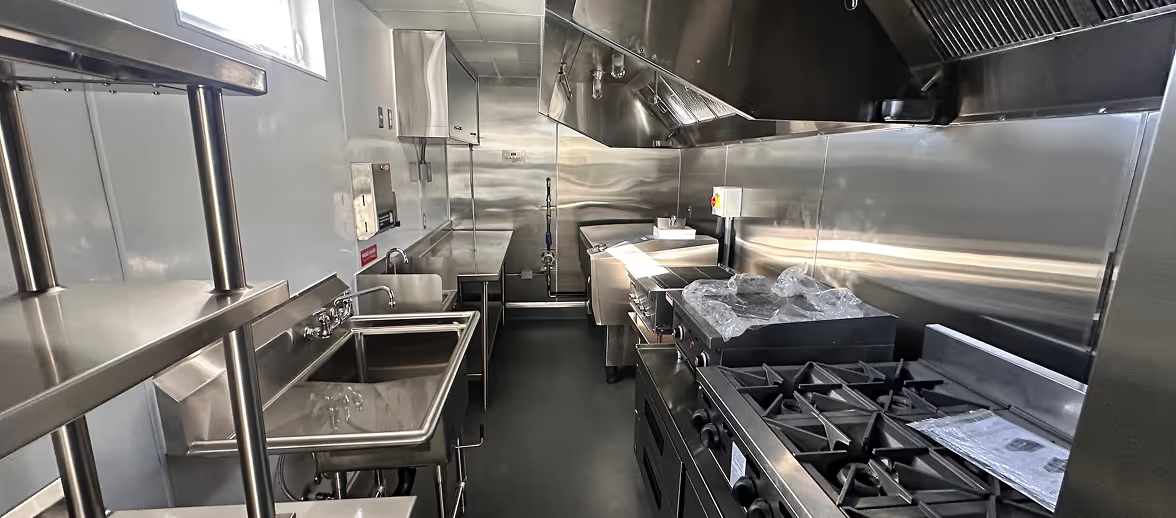
Picture an executive chef walking his team into a mobile kitchen for the first time. He watches her line cooks instinctively reach for stations that aren't there and retrace prep paths that no longer exist. This moment defines whether a renovation, expansion, or seasonal deployment runs smoothly — or stalls.
Effective mobile kitchen staff training is the bridge between a permanent kitchen and a temporary one. Done right, it eliminates productivity loss, protects food quality, and keeps service uninterrupted. This guide walks operators through every stage of mobile kitchen staff training — from pre-deployment briefings to live-service workflow adjustments.
Why Mobile Kitchen Staff Training Is Different from Permanent Kitchens
A purpose-built mobile kitchen replicates the performance of a permanent commercial kitchen, but the working environment isn't identical. Without targeted onboarding, even seasoned chefs face a learning curve.
Compressed footprint and altered traffic flow
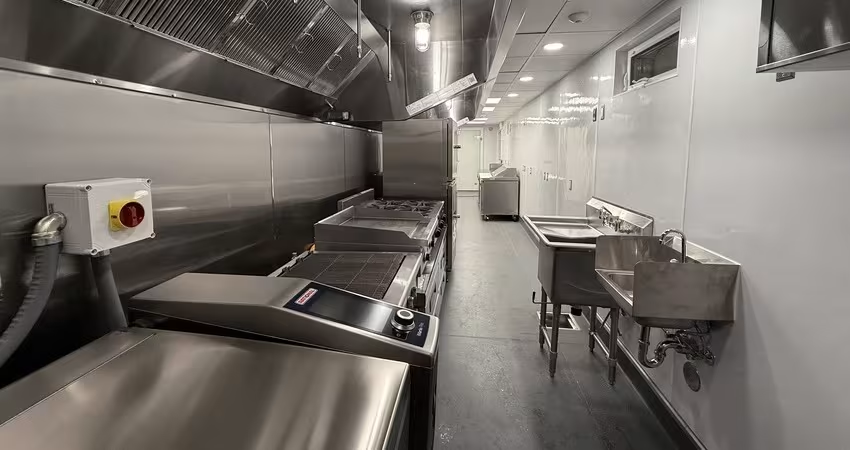
A typical hotel or country club kitchen ranges from 1,500 to 4,000 sq ft. A mobile unit condenses the same equipment into a smaller, linear layout. Staff must adjust to tighter clearance between stations, single-direction prep and plating flow, and shared zones that previously had dedicated space.
Modified equipment and utility access
Even if the appliances are the same models, their placement, controls, and access points differ. Reach-ins, fryers, and combi ovens may sit at unfamiliar heights. Utility shut-offs, breaker panels, and gas valves are clustered differently for code compliance.
Heightened safety and compliance considerations
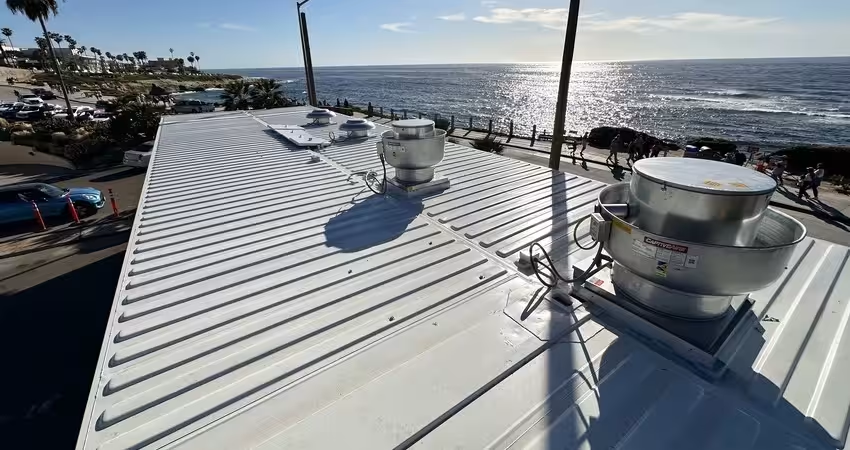
Temporary kitchens operate under the same regulatory framework as permanent ones. Staff must understand the unit's fire suppression system, HVAC controls, and emergency egress before stepping behind the line.
Note: A well-designed mobile kitchen is engineered to feel intuitive. Units that follow standard commercial layouts keep retraining time under two days for most teams.
The Hidden Cost of Skipping Mobile Kitchen Onboarding
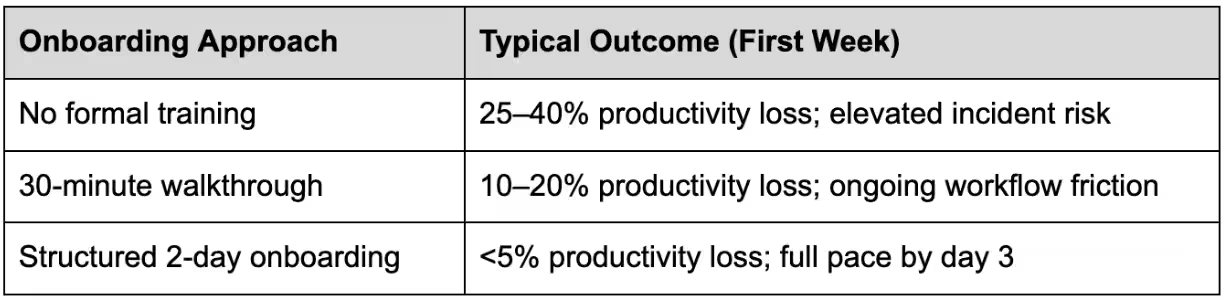
Some operators treat mobile kitchen onboarding as a 30-minute walkthrough on delivery day. The financial consequences of that shortcut are significant.
Productivity drop in the first 72 hours
Without structured training, ticket times typically extend by 20–40% during the first three service periods. In a hotel restaurant or country club doing 200 covers a night, that translates directly to slower service and reduced table turnover.
Safety incidents during equipment transitions
The U.S. Bureau of Labor Statistics reports that foodservice has consistently elevated rates of cuts, burns, and slips. Unfamiliar layouts amplify those risks. A line cook reaching across a hotter-than-expected flat-top, or stepping onto a section of floor with different drainage, can sideline a team member during a critical project window.
Service quality and guest perception impacts
The National Restaurant Association consistently identifies service consistency as a top driver of guest satisfaction. A temporary kitchen is supposed to be invisible to the guest. If service slows or food quality dips during the transition, the guest blames the brand — not the trailer.
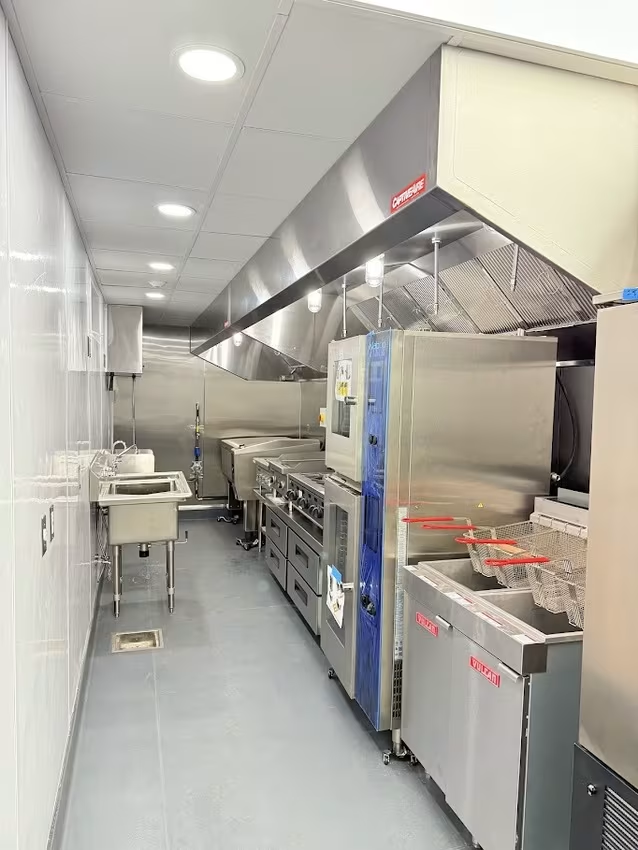
Pre-Deployment Training: What to Cover Before the Unit Arrives
Smart operators begin preparing kitchen staff for renovation or seasonal deployment two to three weeks before the unit arrives on site. This phase of temporary kitchen onboarding is low-cost and high-leverage.
Reviewing the floor plan with line cooks and stewards
Request the unit's CAD drawing or layout sketch from your provider. Walk the team through it during a pre-shift meeting:
- Identify each station and the equipment assigned to it
- Map prep flow from cold storage to plating window
- Show ware-washing and waste paths
For deeper context on how mobile units are built around operational continuity, our mobile kitchen design and engineering article explains the principles behind unit layouts.
Setting expectations on station assignments
A smaller footprint may mean two prep cooks share a station they previously had to themselves. Decide assignments before delivery — not on day one — to avoid territorial friction. Document the new station map and post it in the existing kitchen for reference.
Briefing on revised prep and storage protocols
Mobile kitchens typically include a walk-in cooler, freezer, and dry storage, but volumes may be tighter than a permanent facility. Adjust par levels, supplier delivery frequency, and FIFO labeling routines accordingly.
Tip: Use the renovation as an opportunity to tighten waste protocols. Many operators report a permanent reduction in food waste after the discipline imposed by a temporary kitchen carries back into the rebuilt one.
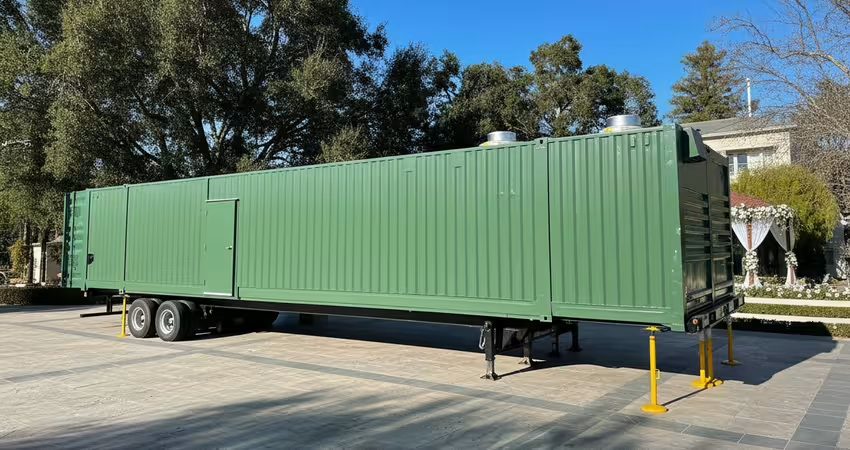
Day-One Walkthrough: Onboarding Staff Inside the Unit
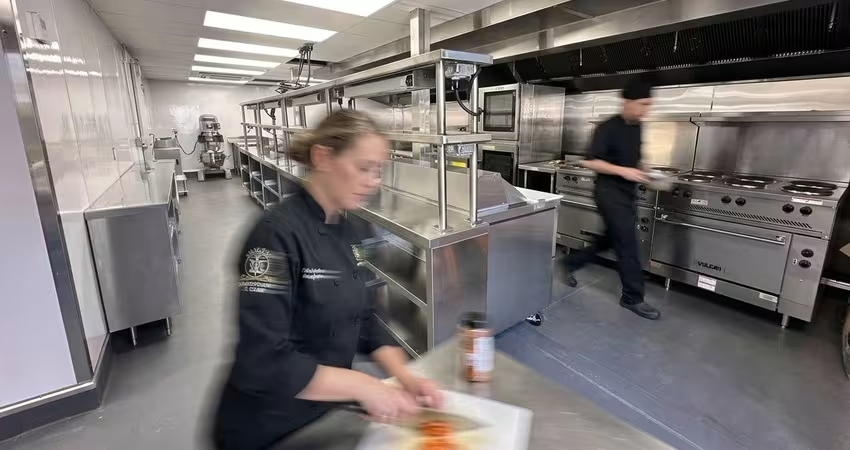
The first hours inside the mobile kitchen are the highest-leverage training window. A good provider will conduct an in-person commissioning walkthrough — but the executive chef should lead a separate session for the culinary team.
Equipment familiarization
Walk every station, every appliance, every control panel. Cover power-on and shutdown sequences, calibration of ovens and refrigeration, cleaning procedures specific to the unit, and manufacturer warranty and service contacts.
Safety systems and emergency procedures
Every team member — not just managers — should know:
- Location of the fire suppression pull station
- Manual gas shutoff
- Electrical disconnect and breaker panel
- Emergency exit and assembly point
These details are required under NFPA 96 for any commercial cooking environment, and they're often the first thing health and fire inspectors verify.
Identifying utility shutoffs
Color-code or label utility points if your provider hasn't already. In an emergency, finding the right valve in three seconds versus thirty can be the difference between a minor incident and a major one.
Note: Document the day-one walkthrough with photos and a short video. New hires arriving mid-deployment can be onboarded in 30 minutes using that material instead of a full re-training.
Adjusting Workflow for a Mobile Kitchen Environment
Once staff understand the unit, the next phase of mobile kitchen staff training is rebuilding service rhythm. Mobile kitchen workflow differs in three predictable ways.
Mise en place in a smaller footprint
Permanent kitchens reward stockpiling — extra hotel pans on every shelf, surplus tools at every station. A mobile kitchen rewards discipline. Train the team to set up only what's needed for the upcoming service, reset stations between services rather than letting them accumulate, and stage backup product in walk-ins, not on the line.
Communication during service rushes
In a tighter space, voice volume and call-outs matter more. Re-establish standard call-and-response protocols. Some operators introduce a small whiteboard or digital ticket display to reduce verbal traffic during peaks.
Cross-training for redundancy
In a smaller team operating in a smaller space, a single absence has bigger ripple effects. Use the mobile kitchen period to deliberately cross-train cooks across two or more stations. The discipline pays dividends long after the team returns to the permanent kitchen.
For a fuller picture of how mobile kitchens integrate into renovation projects, our guide on how to prepare for a commercial kitchen renovation covers the complementary planning steps.
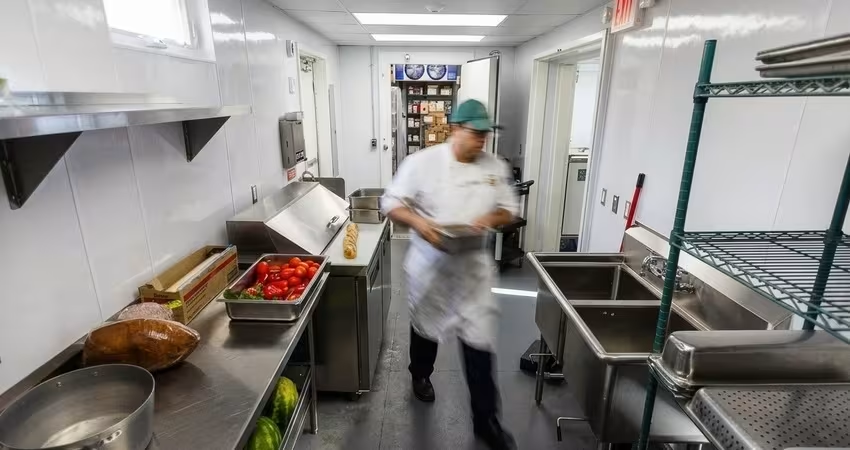
Health, Safety & Compliance Training for Temporary Kitchens
A mobile kitchen carries the same health and safety obligations as a permanent facility — sometimes more.
Food code adherence
Refresh the team on the FDA Food Code sections most affected by the change of environment: time and temperature controls (refrigeration may behave slightly differently in a new unit), cross-contamination prevention in tighter spaces, and handwashing station accessibility.
OSHA-aligned safety protocols
OSHA's restaurant and grocery safety guidance outlines core hazards: knife handling, hot surfaces, slips, and chemical exposure. Each one is amplified in a smaller footprint and should be re-briefed before service begins.
Documentation and inspection readiness
Health departments often inspect mobile kitchens shortly after deployment. Make sure temperature logs are running from day one, cleaning schedules are posted and signed, allergen procedures match the new layout, and all staff certifications (e.g., ServSafe Manager) are current and accessible.
For operators handling permitting alongside training, our licenses and permits guide breaks down jurisdictional requirements.
Common Mistakes Operators Make During the Transition
Drawing from patterns observed across hospitality deployments:
- Treating onboarding as optional. A 30-minute tour is not training.
- Assuming senior staff don't need it. Veterans struggle most with workflow adjustments because their muscle memory is strongest.
- Skipping the dry run. Always do a no-guests practice service before opening.
- Forgetting the dishwashing team. Stewards face just as many layout changes as cooks.
- Not adjusting prep schedules. New refrigeration capacity changes par levels — failing to update them causes shortages or waste.
Tip: Schedule a 15-minute team debrief after the first three services. Small frictions identified early are easy to fix; left for two weeks, they become entrenched bad habits.
How Mobile Culinaire Supports Staff Training and Onboarding
A purpose-built mobile kitchen is engineered to shorten the learning curve, not lengthen it. Mobile Culinaire's units are manufactured to mirror permanent commercial kitchens in equipment quality, layout logic, and finish — which is why most clients report their teams reach full pace within 48 hours.
Every deployment includes commissioning support, technical documentation, and installation guides that double as onboarding tools for the kitchen team. Operators can review past projects across hotels, country clubs, and resorts on our projects page to see how teams have used the transition period as a chance to strengthen their operations.
Conclusion
Mobile kitchen staff training is not a checklist task — it's the operational hinge that determines whether a renovation, expansion, or seasonal deployment protects revenue or quietly erodes it. Operators who invest two days in structured onboarding consistently outperform those who rely on improvisation, both during the deployment and in the months that follow.
The fundamentals are straightforward: walk the layout before the unit arrives, run a thorough day-one walkthrough, adjust workflow deliberately, and treat compliance refreshers as non-negotiable. When the unit itself is designed to mirror a permanent commercial kitchen, the rest falls into place.
Ready to make your next deployment seamless?
Planning a renovation or seasonal deployment? Our mobile kitchens are engineered to mirror permanent commercial kitchens — making staff training faster and your transition smoother. Talk to our team about your project, or explore our mobile kitchen units to see how a purpose-built unit changes what your team can deliver.
People Also Ask (FAQ)
How long does it take to train staff for a mobile kitchen?
Most teams need one to two days of structured onboarding before live service. Day one focuses on equipment walkthroughs, safety procedures, and station assignments. Day two reinforces workflow under simulated service conditions. Larger operations or unfamiliar equipment may extend training to three to five days. Cross-training for redundancy reduces vulnerability if a key team member is absent.
Do staff need new certifications for working in a temporary kitchen?
No new certifications are typically required. Existing food handler permits, ServSafe credentials, and allergen training carry over. However, staff must be re-briefed on the unit's HVAC, fire suppression, and utility systems, since these differ from a permanent facility. Operators should confirm local health-department requirements, as some jurisdictions request a temporary food service notification. The CDC's foodservice guidance provides a useful baseline review.
What's the biggest mistake operators make when moving staff to a mobile kitchen?
Underestimating the workflow adjustment. Teams trained in a 2,000 sq ft kitchen instinctively use familiar movement patterns that don't translate to a tighter footprint. Without a deliberate walkthrough, prep collisions, equipment overcrowding, and slower ticket times emerge in the first week. A 30-minute pre-shift briefing during the first three days of service eliminates most of these issues.

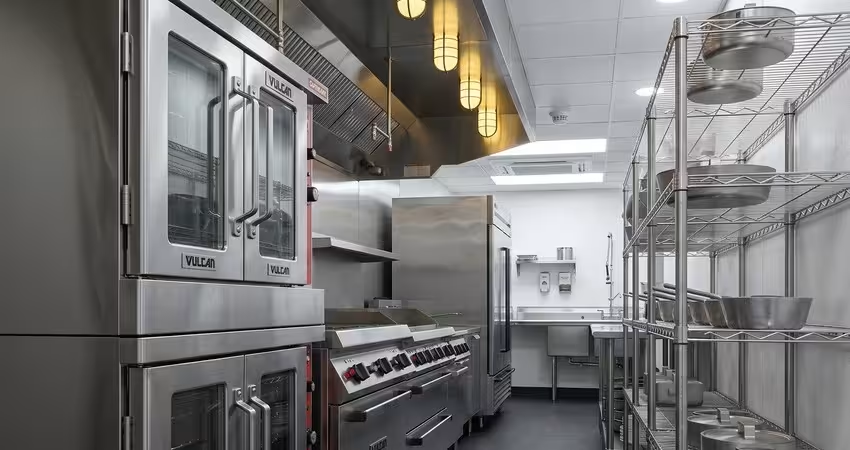
Testimonial

"What is standing out when you look at the mobile kitchen operation is the efficiency that we can really achieve because it's built for that."
Tell us about your kitchen needs and request a quote.
.png)
Turnkey mobile kitchen
Proudly made in-house in the USA
Commercial grade kitchen equipment
Code-compliant
Trusted by Industry Leaders