.gif)
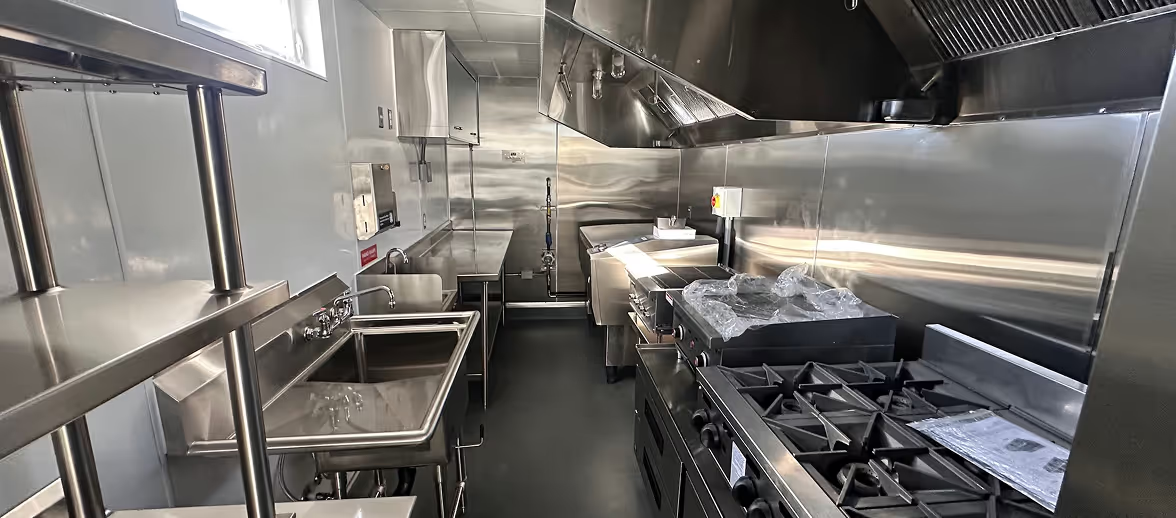
How many gallons per minute does the dish room actually need at 7:30 p.m. on a Saturday? It's the question every project manager forgets to ask until the trailer is on-site, the line is fired, and the pre-rinse sprayer is running at half pressure.
Mobile kitchen water supply is the spec that hides in plain sight — buried under electrical load calculations and HVAC sizing — until inadequate flow stalls service. For hospitality operators planning a renovation deployment, water isn't a hookup. It's a system: tank capacity, municipal pressure, hot water recovery, and wastewater throughput, all sized to the volume the kitchen will actually run.
This guide breaks down the four decisions that determine whether your mobile kitchen runs at full speed or hits a flow-rate ceiling: supply architecture, fixture flow rates, hot water sizing, and wastewater management. It pairs with our electrical requirements for mobile kitchens deep-dive to give project teams a complete utility-spec reference.
Why Water Supply Is the Most Underestimated Spec in Mobile Kitchen Planning
Most operators arrive at the water question late. The trailer footprint is locked, the electrical service is engineered, the propane staging area is permitted — and then someone asks where the ¾-inch supply line is coming from.
The Three Failure Points That Stall Deployments
Three water-related issues account for the majority of post-delivery delays:
- Insufficient supply pressure at the tap point, which starves dishwashers and pre-rinse sprayers during peak service
- Undersized hot water capacity, where recovery rate can't keep up with simultaneous fixture demand
- Wastewater bottlenecks, particularly grease interceptor capacity and sewer tie-in distance
Each is fixable in advance and expensive to fix once the trailer is on-site.
Why Food-Truck Spec Sheets Don't Apply Here
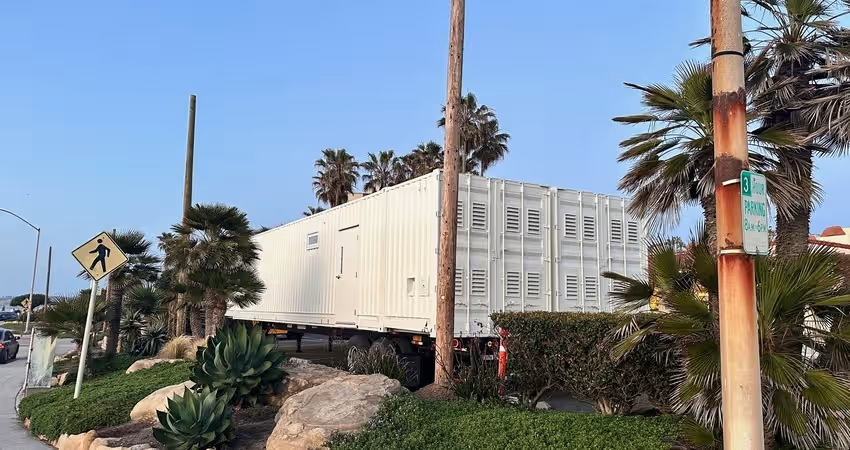
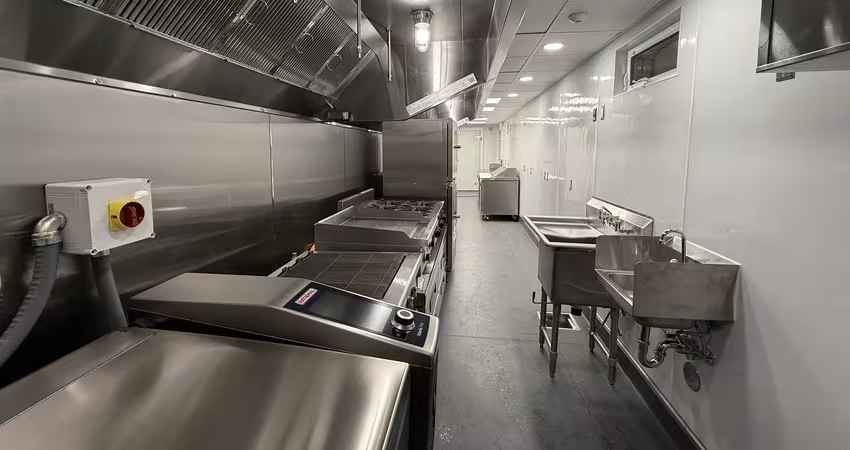
Search "mobile kitchen water tank" and the results center on 30–40 gallon RV-grade tanks built for single-cook food trucks. That's the wrong benchmark for hospitality. A trailer-grade mobile kitchen serving a 200-room hotel or a country club banquet program runs three-compartment sinks, commercial dishwashers, prep sinks, and multiple handwash stations — often simultaneously. The math is different by an order of magnitude.
Tip: When evaluating water supply specs, anchor your calculations to your peak-hour cover count, not your daily total. Peak demand drives sizing.
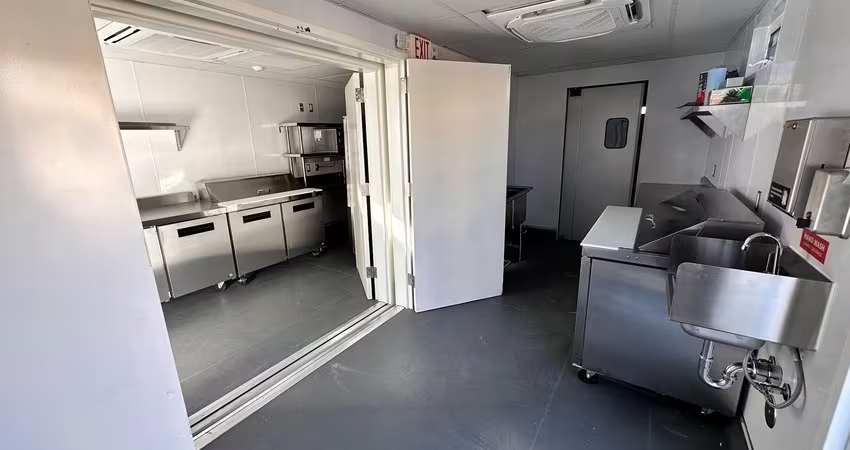
The Two Water Supply Architectures: Municipal Hookup vs. On-Board Tanks
Every mobile kitchen draws water through one of two configurations — or a hybrid. The choice depends on site infrastructure, deployment duration, and local code.
Municipal Hookup (Direct Connection)
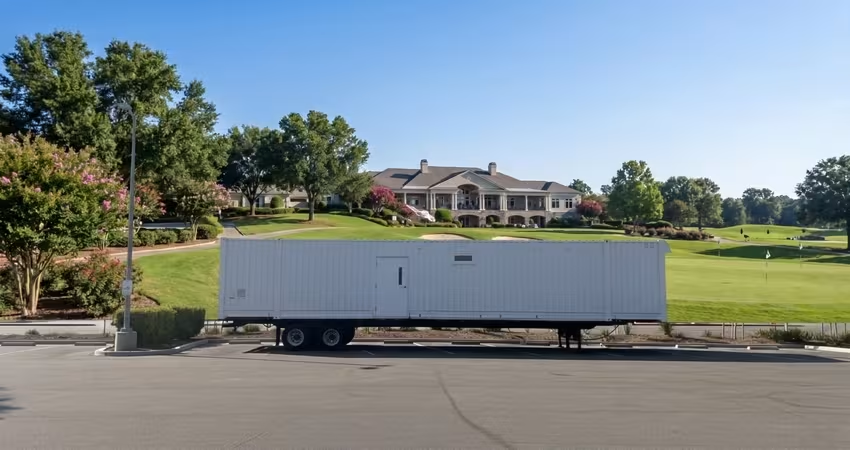
Direct connection to the building's potable water service is the default for renovation deployments at hotels, resorts, and clubs with existing infrastructure. A licensed plumber ties the trailer's inlet manifold into a nearby hose bib, exterior spigot, or dedicated tap.
.avif)
On-Board Potable Water Tanks
When municipal hookup isn't feasible — remote properties, off-grid event grounds, or sites where the nearest tap is impractically far — on-board tanks fill the gap. Hospitality-grade mobile kitchens carry potable tanks ranging from 250 to 500 gallons, refilled on a scheduled cadence by a licensed water hauler.
The FDA Food Code specifies that mobile water tanks must be enclosed, sloped to a single drainage outlet, and equipped with inspection ports. Tank materials must be food-grade and corrosion-resistant.
Note: Tank-fed operation is operationally heavier than municipal hookup. A 200-cover dinner service can drain a 300-gallon tank in under three hours of peak operation. Schedule refills based on peak-hour consumption, not daily averages.
Hybrid Configurations for Phased Deployments
Some deployments shift architecture mid-project. A unit may launch on municipal supply, then switch to tank operation when the building's water service is shut down for repiping during a renovation phase. Purpose-built units handle this with standardized connection panels — no on-site re-plumbing required.
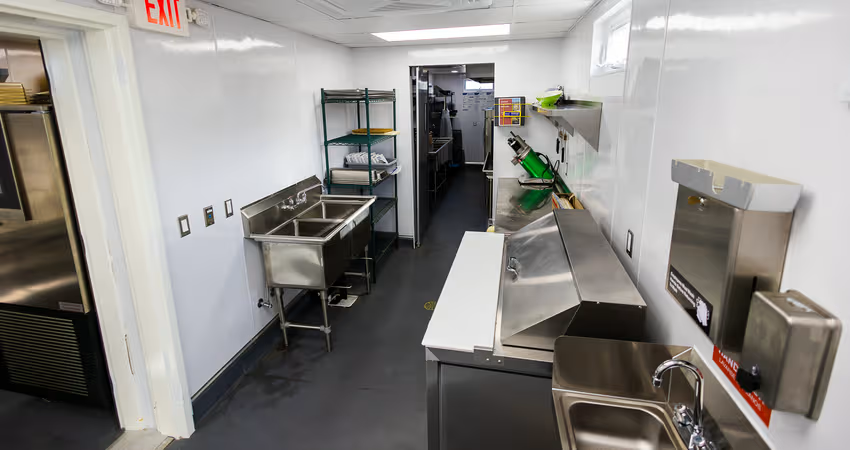
Flow Rate Requirements by Fixture and Service Volume
Pressure gets the headlines, but mobile kitchen flow rate — measured in gallons per minute (GPM) — is what actually determines whether the line keeps moving during service.
Per-Fixture Flow Rate Specifications
Each commercial fixture has a baseline GPM draw. The table below reflects standard commercial-grade equipment installed in trailer-grade mobile kitchens:
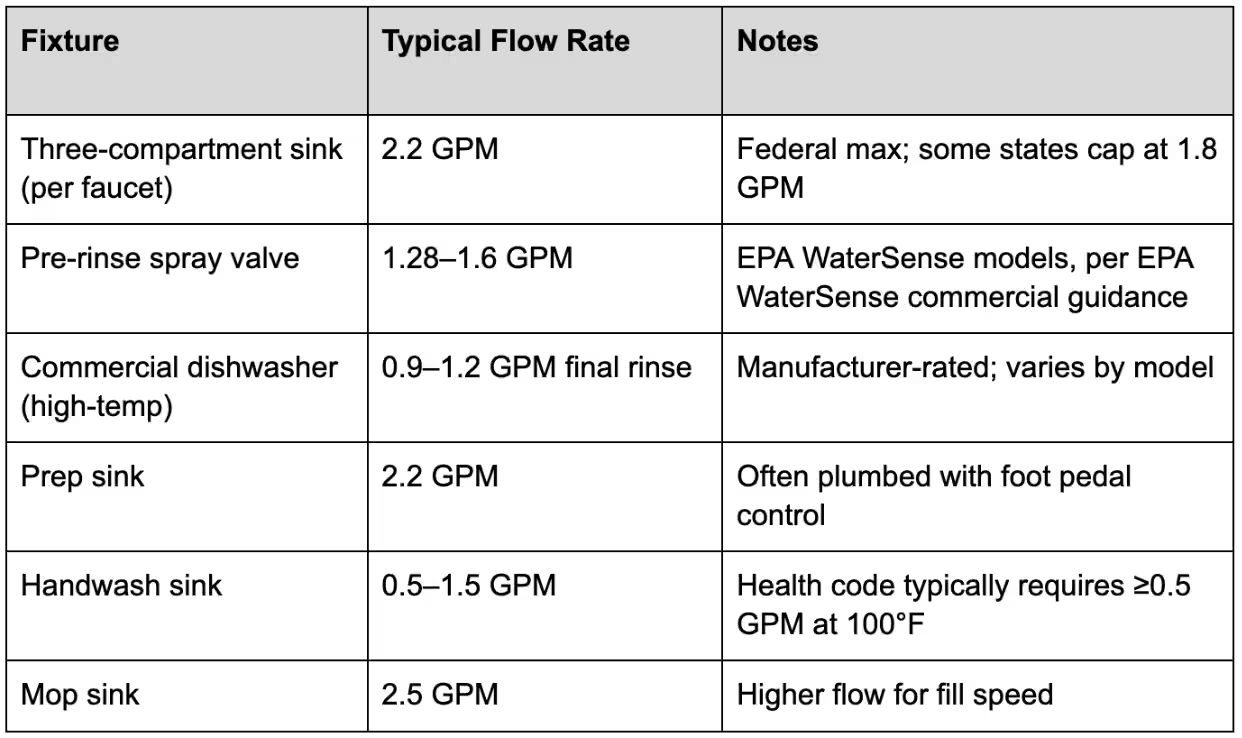
Calculating Peak Demand for Your Service Volume
Peak demand is the sum of fixtures running simultaneously during your busiest service window. A typical 200-cover banquet service might run:
- 1 dishwasher final rinse (1.2 GPM)
- 2 three-compartment sink stations (4.4 GPM)
- 1 pre-rinse sprayer (1.5 GPM)
- 2 prep sinks intermittent (1.0 GPM averaged)
- 2 handwash sinks intermittent (0.5 GPM averaged)
Peak simultaneous demand: ~8.6 GPM
Your supply line and pressure must sustain this load without dropping below the dishwasher's minimum operating pressure (typically 20 PSI flowing).
Why Pressure (PSI) Matters as Much as Flow Rate
Flow rate is what comes out of the tap; pressure is what pushes it there. A ¾-inch supply line at 60 PSI delivers very different real-world flow than the same line at 25 PSI. Commercial dishwashers are particularly pressure-sensitive — most require 20 PSI minimum at the inlet during operation, not at rest. If pressure drops below that during peak draw, the wash cycle fails sanitation requirements.
Tip: Have a plumber test flowing pressure at the proposed tap point during the building's peak demand window — not at 6 a.m. when the building is empty. Static pressure readings can mislead.

Hot Water Sizing — The Calculation Most Operators Get Wrong
Cold water flow is straightforward arithmetic. Hot water is where most mobile kitchen deployments hit their first real bottleneck.
Temperature Requirements per Fixture
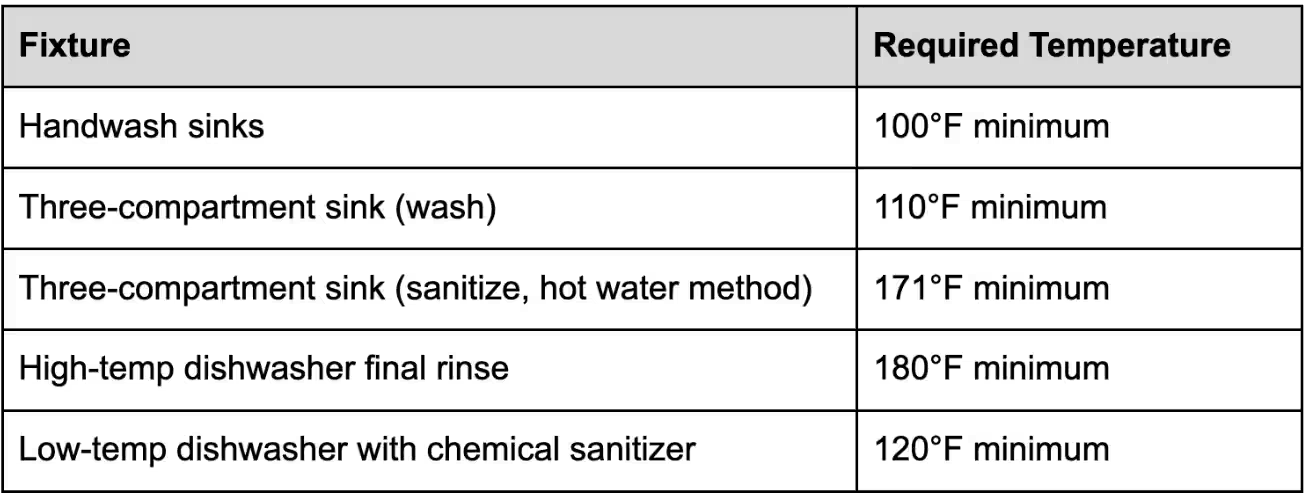
These are FDA Food Code minimums. Most jurisdictions adopt them directly; some add stricter local requirements.
BTU and Recovery Rate Math
A water heater's nameplate capacity is less important than its recovery rate — the gallons per hour it can heat from inlet temperature to setpoint. For a mobile kitchen running a 200-cover service, you typically need:
- 40–60 gallon storage for buffering peak draws
- Recovery rate of 100+ GPH at 100°F rise
- BTU input of 150,000–250,000 for gas-fired units
Sizing per ASHRAE technical guidelines accounts for incoming water temperature (cold in winter requires more BTUs to heat) and simultaneous draw patterns.
Tank-Type vs. Tankless for Mobile Applications
Tank-type heaters dominate mobile kitchen builds because they buffer demand spikes — when three fixtures fire simultaneously, the tank delivers while the burner catches up. Tankless units have higher continuous output but can struggle with simultaneous high-demand draws unless oversized or installed in series.
Note: A common mistake is sizing the water heater to average daily demand. Size to peak-hour demand with a safety margin — 1.5x is standard for commercial applications.

Wastewater, Drainage, and Grease Management
What goes in must come out. Wastewater handling determines whether your mobile kitchen operates legally and continuously.
Wastewater Tank Sizing (the 15% Rule and Beyond)
For tank-based operations, wastewater capacity must exceed potable capacity. Most jurisdictions require wastewater tanks to be at least 15% larger than fresh water tanks. For commercial-volume mobile kitchens, plan for 20–25% larger to absorb cleaning surges and avoid mid-service shutdowns.
A 300-gallon fresh water setup pairs with a 360–375 gallon wastewater tank under most code interpretations.
Direct Drain Tie-Ins
Where municipal sewer access is available, direct tie-in is preferred. Requirements include:
- Drain line diameter of 2 inches minimum (3 inches for high-volume)
- Slope of ¼ inch per foot for gravity drainage
- Air gap or backwater valve to prevent sewer gas intrusion
- Trap primer for fixtures with infrequent use
Grease Interceptors for Mobile Operations
Grease management is the single most-cited compliance issue in mobile kitchen inspections. Fats, oils, and grease (FOG) must be intercepted before discharge to municipal sewer. Most jurisdictions require:
- Hydromechanical grease interceptors (10–50 GPM rated, sized to fixture flow)
- Cleaning cadence of 30–90 days, with maintained logs available for inspection
- Licensed waste hauler contract for FOG removal in many municipalities, per EPA pollution prevention guidance
Larger deployments may require gravity grease interceptors (1,000+ gallon underground units), though this is rare for mobile applications.

Code Compliance and Health Department Approvals
Mobile kitchen plumbing must satisfy three regulatory layers: federal food safety, model plumbing codes, and local health department requirements.
FDA Food Code Requirements for Water Tanks
Chapter 5 of the FDA Food Code governs water systems in mobile food operations. Key requirements:
- Water source must be from an approved public system or an approved alternative
- Tanks must be enclosed, sloped to a drain, with inspection ports
- Filling hoses must be food-grade, dedicated to potable use, and capped when not in service
- CDC potable water guidance supplements FDA requirements for tank sanitization protocols
International Plumbing Code (IPC) and Local Variations
The International Plumbing Code sets baseline requirements for water service sizing, fixture units, drainage, and venting. Most U.S. jurisdictions adopt the IPC with local amendments. Verify your specific jurisdiction's adopted edition — some lag two or three cycles behind current.
Backflow Prevention and Cross-Connection Control
Every municipal hookup requires a backflow preventer to protect the public water supply from contamination. The device class (RPZ, double-check, atmospheric vacuum breaker) depends on the assessed hazard level. ASSE International standards define device specifications and testing protocols. Annual testing by a certified backflow specialist is required in most jurisdictions.
For broader compliance context, our guide to permits required for mobile kitchen trailers covers the parallel approval workflows.
Site Readiness Checklist for Water Supply
Before the trailer arrives, confirm these specifications with your project team and selected provider. Locate the proposed tap point and measure its distance to the trailer placement zone — every additional 50 feet of run reduces effective pressure. Test flowing pressure at peak building demand, not at rest. Identify the nearest sewer tie-in and verify the path for drain line routing. Confirm grease interceptor capacity meets the fixture flow rate, and stage a hauler contract if required by local code. Finally, document backflow device specifications and schedule the certified test before the health inspection.
For broader pre-deployment planning beyond water systems, our guide to selecting the right mobile kitchen unit walks through the full project workflow.
Build Around the Water System, Not Around It
Water supply isn't a finishing detail — it's a foundational system that determines whether a mobile kitchen runs at the volume it was specified for. Tank capacity, flow rates, hot water recovery, and wastewater throughput each have to match the operational reality, not the daily average.
Mobile Culinaire's purpose-built mobile kitchens ship with standardized utility connection panels, factory-sized water systems, and pre-engineered backflow and grease management — the same assemblies used in permanent commercial kitchens, configured for mid- to long-term rental.
Planning a renovation deployment? Request a site assessment and a project coordinator will walk through your water supply path, peak-demand calculations, and code requirements with your facilities team and GC. For deployment examples across hotels, resorts, and clubs, browse our project case studies.
Disclaimer
This article is for general informational purposes only and does not constitute engineering, plumbing, code, or legal advice. Water supply requirements for mobile kitchens vary by jurisdiction, site conditions, service volume, and local health department regulations. Always consult licensed contractors, equipment manufacturers, and local authorities before finalizing utility specifications or installation plans. Actual flow rates, tank sizing, pressure, and wastewater requirements may vary based on operational demand and site infrastructure.
People Also Ask (FAQ)
How much water does a mobile kitchen use per day?
A trailer-grade hospitality mobile kitchen serving 200–400 covers per day typically consumes 400–800 gallons of potable water daily, depending on menu complexity, dishwasher usage, and cleaning protocols. Peak-hour consumption can exceed 80 gallons per hour during dinner service. High-volume banquet operations or units running extended service windows can push daily consumption above 1,000 gallons. Always size supply infrastructure to peak demand, not daily averages.
Can a mobile kitchen operate without a municipal water connection?
Yes. Purpose-built mobile kitchens can operate fully off-grid using on-board potable water tanks (typically 250–500 gallons) paired with oversized wastewater holding tanks. Off-grid operation requires scheduled water deliveries from a licensed potable hauler and contracted wastewater pump-out service. The operational cost is higher than municipal hookup, but for remote properties, outdoor venues, or sites mid-renovation, it's the only viable path.
What size water tank does a mobile kitchen need?
Tank size depends on service volume, refill cadence, and local code. For hospitality-grade mobile kitchens serving 100–200 covers per service, a 250–300 gallon potable tank with a 300–375 gallon wastewater tank is standard. Higher-volume operations (300+ covers, multiple services per day) typically require 400–500 gallon potable capacity. Wastewater tanks must always exceed potable capacity by at least 15% to comply with most health department requirements.

Testimonial

"What is standing out when you look at the mobile kitchen operation is the efficiency that we can really achieve because it's built for that."
Tell us about your kitchen needs and request a quote.
.png)
Turnkey mobile kitchen
Proudly made in-house in the USA
Commercial grade kitchen equipment
Code-compliant
Trusted by Industry Leaders