.gif)
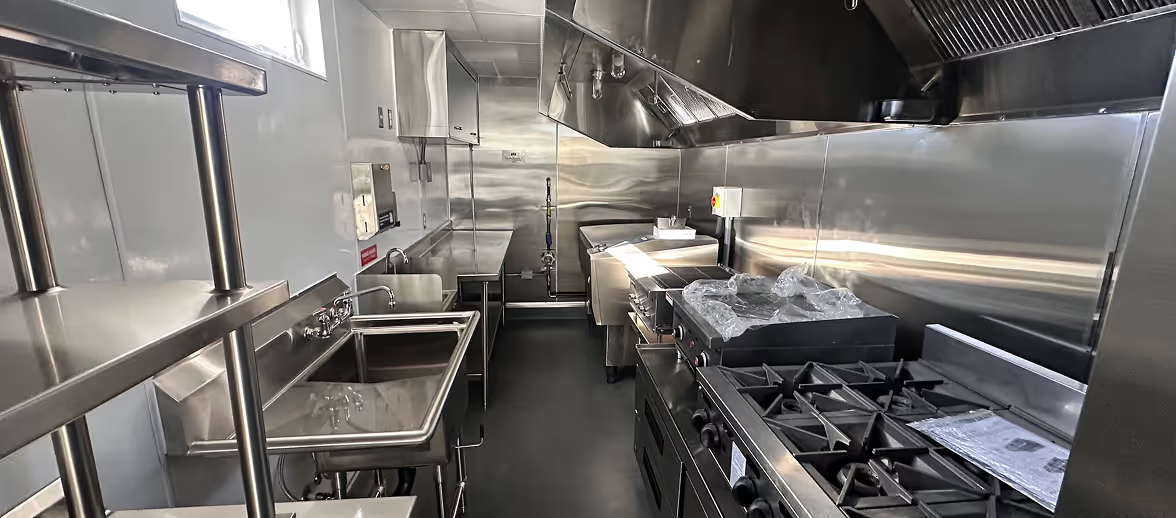
Cooking equipment is implicated in roughly 60% of structure fires in eating and drinking establishments, according to NFPA fire research. That statistic carries a sharper edge when the kitchen is temporary. Mobile kitchen fire safety isn't a downgraded version of permanent-kitchen fire safety — it's held to the same NFPA codes, the same UL listings, and the same authority-having-jurisdiction (AHJ) inspections. The only variable is who confirms the unit meets those standards before service begins.
This guide breaks down the four standards that govern mobile kitchen fire safety in a hospitality-grade rental — NFPA 96, UL 300, NFPA 17A, and NFPA 10 — and gives operators a practical framework for auditing any provider's fire safety posture before signing.
Why Mobile Kitchen Fire Safety Is a Different Compliance Conversation
A mobile unit carries the same fire risk profile as a permanent commercial kitchen — open flame, grease-laden vapors, high-temperature oils, and gas or electric heat in a confined space. What's different is the regulatory framing and the speed at which compliance has to be proven.
How Temporary Cooking Operations Are Treated Under NFPA 96
The NFPA 96 standard — Standard for Ventilation Control and Fire Protection of Commercial Cooking Operations — governs every commercial kitchen producing grease-laden vapors. The 2024 edition added Chapter 14 provisions for mobile and temporary cooking, covering fire suppression, LP-gas safety, carbon monoxide detection, and ventilation specs for transportable units. Fire marshals reference these directly when inspecting deployed units.
Why Food-Truck Fire Advice Doesn't Transfer
Most online fire-safety content targets food trucks — small chassis, single-line cooking, intermittent operation. Hospitality-grade mobile kitchens are different: multi-line production, full walk-in refrigeration, integrated HVAC, and continuous operation across 3- to 18-month deployments. A food-truck suppression system is undersized for a hotel renovation kitchen, and food-truck guidance routinely understates inspection requirements for longer-term installations.
The Insurance and Liability Stakes
Insurance carriers tightened underwriting on temporary cooking installations through 2025 and into 2026, requiring documentation of UL 300 system compliance and current inspection tags before binding coverage. A gap in mobile kitchen fire safety documentation now translates directly to a gap in coverage — the operator, not the provider, absorbs liability if an incident occurs.
Note: When a mobile kitchen operates on a hotel, resort, or country club property, the property's general liability and property policies typically cover the temporary unit only if it meets NFPA and UL standards. Confirm coverage scope with your broker before the unit arrives.
The Standards Every Hospitality Operator Should Know
Effective commercial kitchen fire protection rests on a stack of codes — each addressing a different layer of the system.
NFPA 96 — The Master Standard
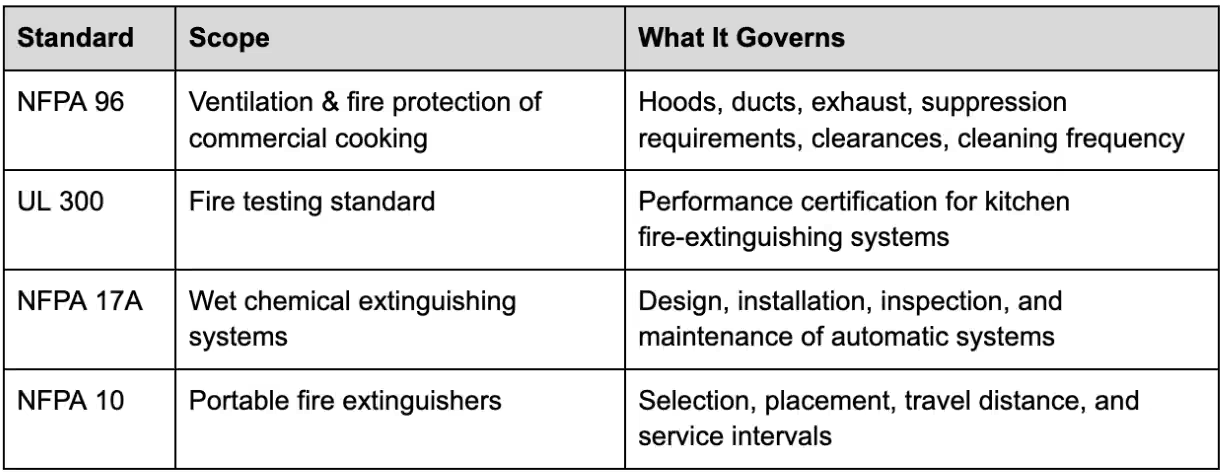
NFPA 96 sets requirements for Type I hood coverage over grease-producing appliances, grease-duct construction, exhaust fan operation, clearance to combustibles, and the obligation to install an automatic fire-extinguishing system. It also dictates hood and duct cleaning frequency based on cooking volume.
UL 300 — The Performance Standard for Fire Suppression
UL 300 is the testing standard any kitchen fire suppression system must meet to be code-compliant. It emerged in the 1990s after vegetable oils — with auto-ignition points around 685°F, well above traditional animal fats — and better-insulated cooking equipment made older dry-chemical systems ineffective. Every NFPA 96–compliant suppression system today must carry a UL 300 listing, and insurers treat the listing as a baseline requirement for coverage.
NFPA 17A and NFPA 10 — The Supporting Standards
NFPA 17A governs wet chemical extinguishing systems — the type protecting virtually all modern commercial kitchens. NFPA 10 covers portable fire extinguishers, including the Class K units required as a secondary line of defense. OSHA workplace fire safety guidance layers on top, requiring that all employees be trained on fire protection equipment and emergency procedures before working in the kitchen.
Tip: When evaluating a mobile kitchen provider, request documentation showing the unit's suppression system carries a current UL 300 listing and was installed by a manufacturer-certified technician. Either is grounds for fire marshal rejection if absent.
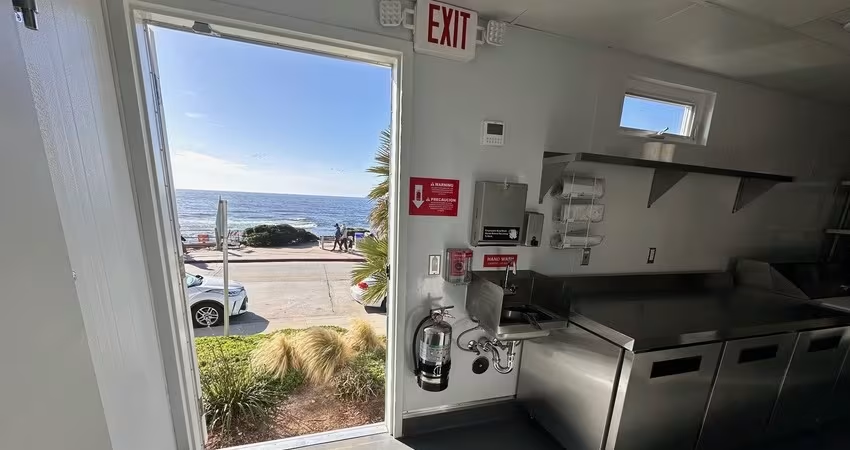
Inside the Suppression System: What's Actually Protecting the Kitchen
A modern wet chemical kitchen fire suppression system is engineered to detect and extinguish a fire faster than any human can react. Understanding what's inside the unit clarifies what to require from a rental provider.
Wet Chemical Agent, Nozzles, and Appliance Coverage
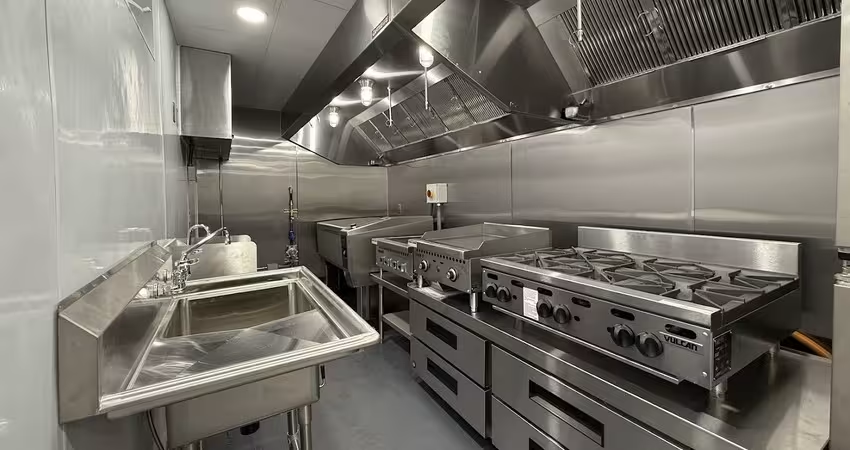
The system releases a potassium-based agent through fixed piping and pre-positioned nozzles. The agent reacts with hot cooking oil to form a foam blanket — a process called saponification — that smothers the fire and cools the surface below the oil's flash point. Nozzles protect each cooking appliance under the hood (fryer, range, char broiler, griddle, salamander, wok, combi oven), the hood plenum, and the grease-laden exhaust duct.
Nozzle layout is appliance-specific — a system designed for a four-burner range cannot legally protect a 24-inch char broiler without re-engineering. Pre-engineered systems must match the cooking equipment actually installed.
Automatic and Manual Activation
The kitchen fire suppression system activates two ways. Automatic activation occurs when fusible links above each appliance melt at preset temperatures (typically 360°F to 500°F), releasing tension on a control cable and triggering the system. Manual activation comes via a clearly marked pull station along the path of egress. Both pathways are required under NFPA 17A — a system depending on only one is non-compliant.
Fuel Shut-Off and Hood Integration
When the system activates, it must simultaneously cut the fuel supply to all cooking equipment under the hood. Gas appliances get a mechanical valve closure; electric appliances get a contactor trip. This prevents continued heat input that would re-ignite the fire. Building fire alarms must trigger at the same time.
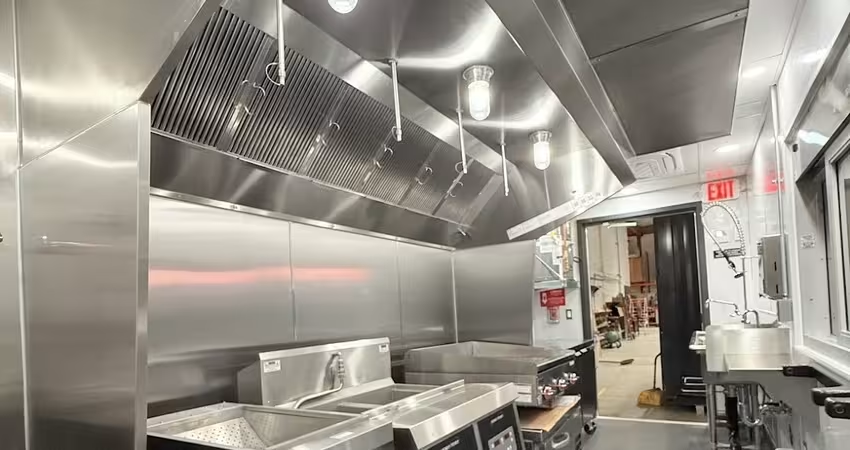
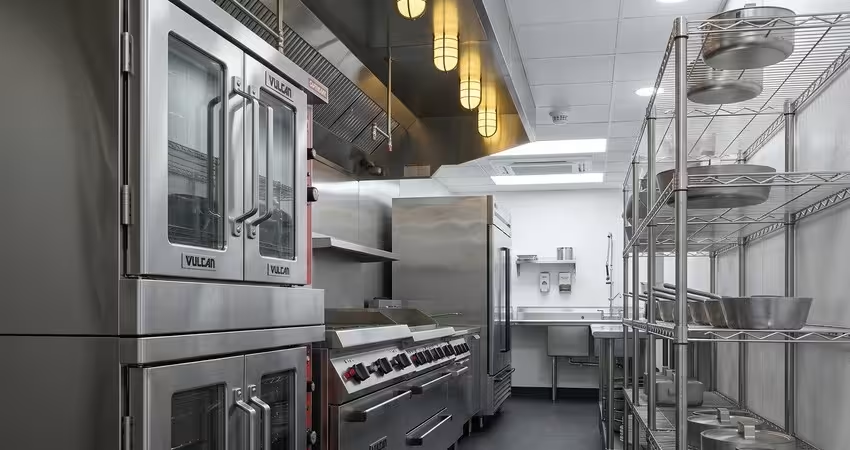
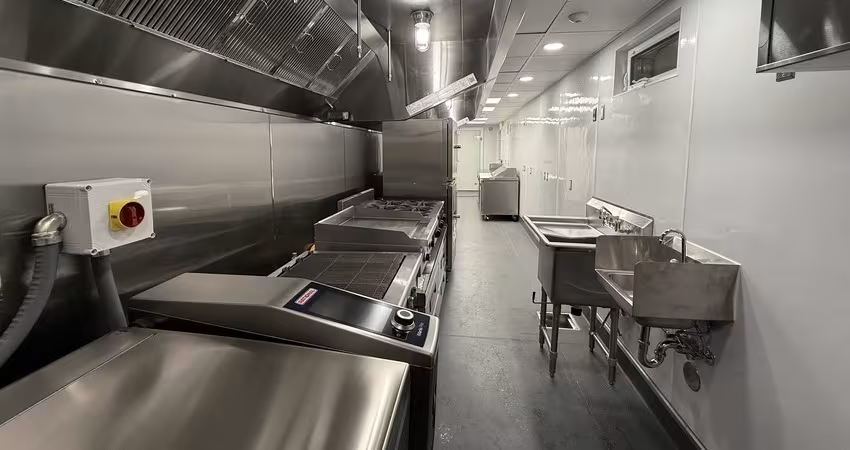
The Type I exhaust hood is the first line of defense — capturing grease-laden vapors, routing them through baffles and grease filters, and exhausting air through a code-compliant duct to the exterior. Undersized capture or unbalanced makeup air undermines the entire commercial kitchen fire protection stack.
Class K Fire Extinguisher Requirements for Mobile Kitchens
Even with an automatic suppression system in place, every commercial cooking operation requires portable Class K fire extinguishers as a secondary line of defense. This is non-negotiable under NFPA 10 and NFPA 96.
Why Class K Is the Only Acceptable Choice
Class K extinguishers use a potassium-based wet chemical agent designed for high-temperature cooking oil and grease fires. Water-based extinguishers worsen oil fires by causing flash steam explosions, and ABC dry-chemical units are ineffective against hot vegetable oils. Class K is the only portable extinguisher type rated and listed for commercial cooking applications.
Placement and Visibility Rules
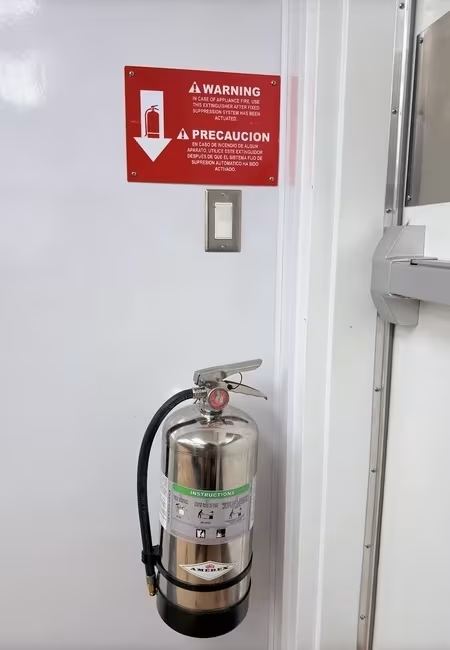
NFPA 10 sets specific placement rules for Class K fire extinguishers: no more than 30 feet of travel distance from any cooking appliance, mounted no higher than 5 feet above the floor (for units up to 40 lbs), clearly visible and signed, and never placed on the floor. In a mobile kitchen footprint, this typically means one Class K extinguisher near the cook line and a second near the exit path.
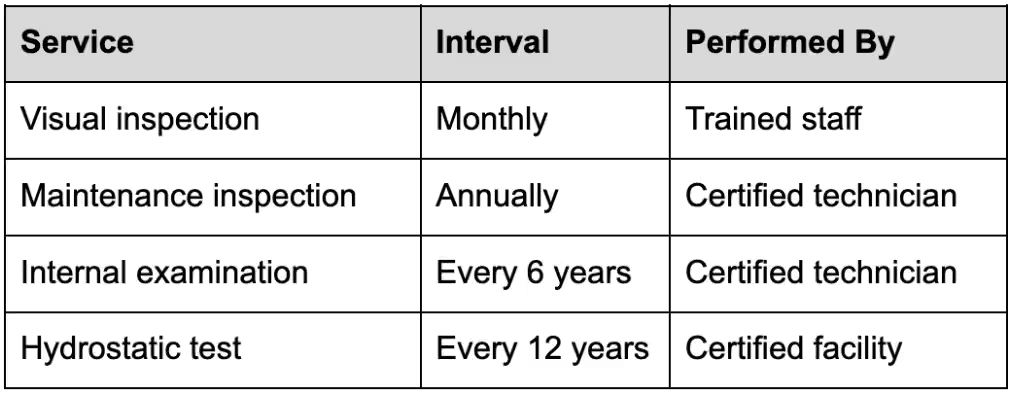
Service Tags and Inspection Intervals
Extinguishers carry their compliance history on the inspection tag, and AHJs look for current tags during every inspection.
Note: A Class K extinguisher should only be used after the automatic suppression system has activated and the appliance fuel supply has been shut off. It is a backup tool, not a first response.
Inspection, Maintenance, and Documentation Schedule
Mobile kitchen fire safety isn't a one-time certification — it's a recurring schedule that produces documentation fire marshals, insurance carriers, and risk managers all rely on.
Suppression System: Semi-Annual Inspection
Under NFPA 17A, wet chemical kitchen fire suppression systems require professional inspection every six months by a technician certified by the system manufacturer. The inspection covers cylinder pressure and weight, nozzle condition, fusible link replacement (annual or after each activation), detection and control circuit testing, gas valve and electrical shut-off function, and manual pull-station verification. Missing or expired suppression tags are a top reason mobile kitchens fail fire marshal pre-deployment inspections.
Hood and Duct Cleaning
NFPA 96 sets cleaning frequencies based on cooking volume — monthly for high-volume operations (24-hour service, solid-fuel cooking, wok lines), quarterly for most hospitality-grade mobile kitchens, and annually for low-volume settings. Cleaning must be performed by a certified contractor, with dated reports retained.
Documentation Package
Before deployment, the operator should have access to a complete fire-safety documentation package: UL 300 listing, manufacturer installation certification, the most recent semi-annual inspection report, Class K extinguisher service tags, hood and duct cleaning records, equipment specs, and nozzle layout diagrams. This is the package the permitting and inspection process depends on, and what the AHJ references on site.
How to Audit a Mobile Kitchen Provider's Fire Safety Posture
For hospitality operators evaluating rental providers, the audit framework below separates compliant operators from those who create regulatory exposure.
Five Questions to Ask Before Signing
- Is the suppression system UL 300 listed, and can I see the documentation? A compliant provider produces the listing in under a business day.
- When was the last semi-annual inspection, and who performed it? The technician must be certified by the system manufacturer — not a general fire-protection contractor.
- Can you provide the nozzle layout diagram and confirm it matches the installed cooking equipment? Mismatches between protected and installed equipment are an automatic AHJ fail.
- What Class K fire extinguishers are installed, and what are the service tag dates? Expect specific model and date answers, not "we'll check."
- What documentation arrives with the unit, and who supports me through the fire marshal inspection? A premium provider arrives with the full package and offers inspection support.
Red Flags in Retrofitted Trailers
Cheaply retrofitted trailers — recreational or utility chassis adapted with consumer-grade equipment — typically show several of these problems:
- Residential-grade range hoods without Type I capture or grease filters
- Undersized or absent fire suppression systems
- Suppression coverage that doesn't match the installed cooking line
- No documentation of UL 300 listing
- Class K extinguishers missing, expired, or floor-placed
- No clearance between cooking equipment and combustible interior surfaces
Tip: Request photos of the suppression cylinder, hood, and extinguisher mounting before signing. A reputable provider will share them on request.
What a Code-Compliant Provider Delivers
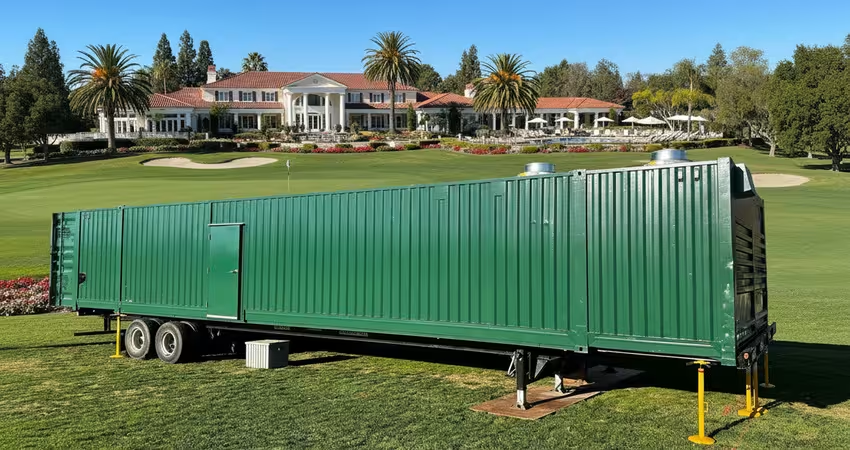
A purpose-built mobile kitchen — like the units Mobile Culinaire manufactures in-house — arrives with the full NFPA 96 suppression and ventilation stack factory-installed and designed to clear fire marshal inspection without retrofits.
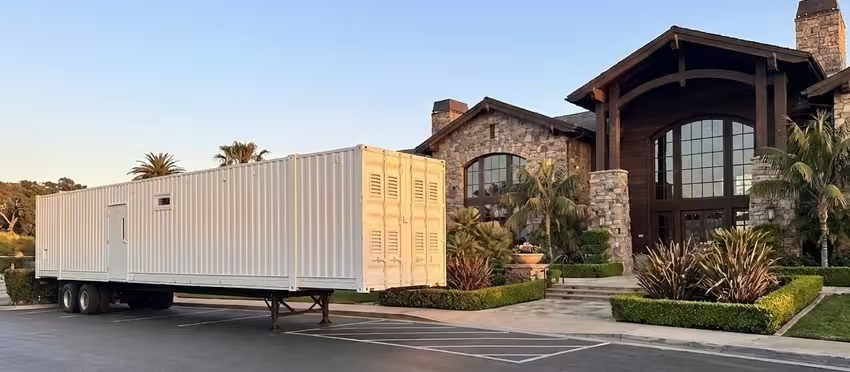
The same level of mobile kitchen fire safety applies whether the unit supports a hotel renovation, an event venue deployment, or fire-loss recovery for a country club. Code compliance is built in, not bolted on — which is what a pre-deployment inspection checklist ultimately verifies.

See What Compliant Mobile Kitchen Fire Safety Looks Like in the Field
Every Mobile Culinaire unit ships with a UL 300 wet chemical suppression system, an NFPA 96–compliant Type I hood with integrated grease filtration, Class K fire extinguishers placed to code, and the full documentation package — ready for fire marshal inspection on day one. See real deployments in our project showcase, or speak with our team about your project's fire-safety requirements.
Disclaimer
This article is for informational purposes only and does not constitute legal, engineering, fire-protection, or code-compliance advice. Mobile kitchen fire safety requirements vary by jurisdiction and project conditions. Always consult your local AHJ, fire marshal, insurance carrier, and licensed fire-protection professionals before deploying or operating a mobile commercial kitchen.
People Also Ask (FAQ)
What fire suppression system is required for a mobile commercial kitchen?
Any mobile commercial kitchen producing grease-laden vapors must include a UL 300–listed wet chemical fire suppression system meeting NFPA 96 and NFPA 17A. The system protects all cooking appliances, the exhaust hood plenum, and the grease duct. It must integrate automatic fuel shut-off — gas or electric — and accept both automatic heat-link activation and manual pull-station triggering. Class K portable fire extinguishers are required as a secondary line of defense.
How often does a mobile kitchen's fire suppression system need to be inspected?
Under NFPA 17A, wet chemical kitchen fire suppression systems require professional inspection every six months by a manufacturer-certified technician. Inspection tags must be visible and current. Class K portable extinguishers require monthly visual checks, an annual maintenance inspection, a six-year internal exam, and a twelve-year hydrostatic test under NFPA 10. AHJ inspectors look for current tags and documentation during any deployment inspection.
Is a Class K fire extinguisher required if the mobile kitchen already has an automatic suppression system?
Yes. NFPA 10 and NFPA 96 both require Class K portable extinguishers in any commercial cooking operation, even with an automatic wet chemical suppression system installed. The Class K extinguisher is a backup — handling small flare-ups before they trigger the main system and providing post-suppression cleanup. Travel distance from any cooking appliance to the nearest Class K extinguisher cannot exceed 30 feet under NFPA 10.

Testimonial

"What is standing out when you look at the mobile kitchen operation is the efficiency that we can really achieve because it's built for that."
Tell us about your kitchen needs and request a quote.
.png)
Turnkey mobile kitchen
Proudly made in-house in the USA
Commercial grade kitchen equipment
Code-compliant
Trusted by Industry Leaders