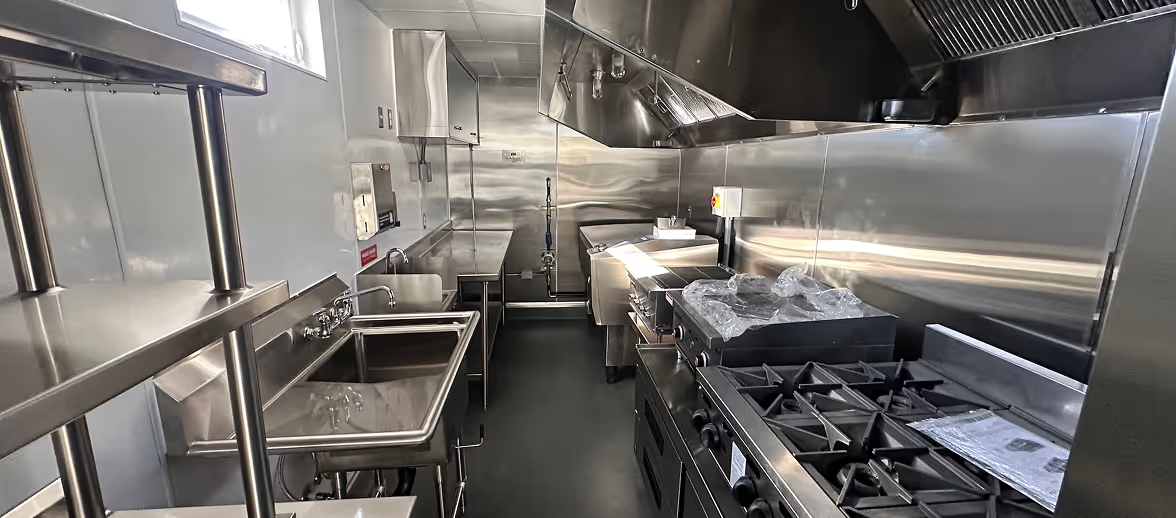
.gif)
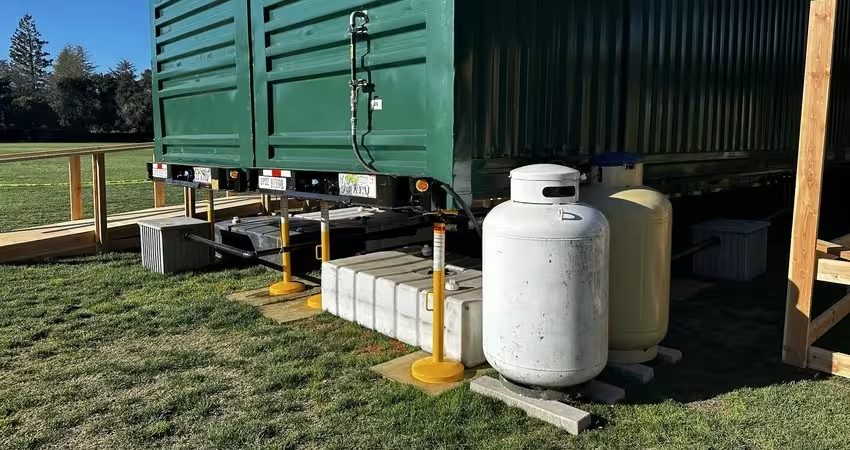
NFPA fire research attributes an average of 540 vehicle fires per year to propane as the first material ignited, with three deaths and $8 million in property damage annually. The statistic lives mostly in the food-truck conversation, but the same physics apply to mobile kitchen trailers — and the stakes look different in hospitality.
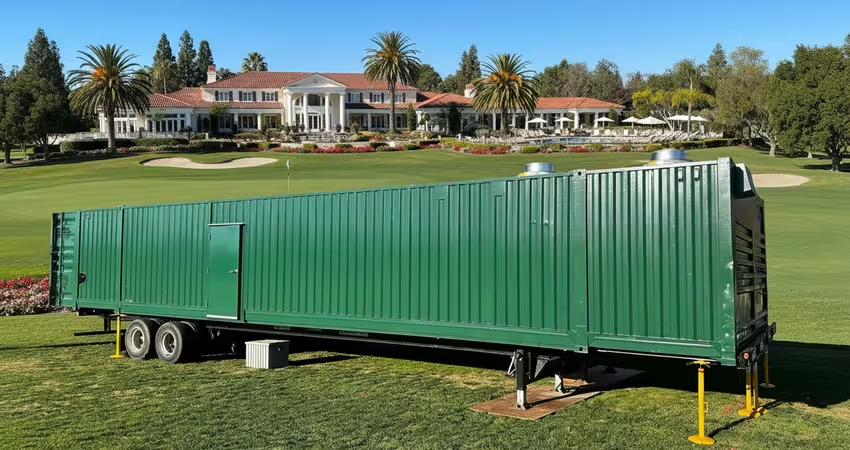
A trailer parked at a resort for nine months during a kitchen renovation isn't a weekend concession. It serves paying guests, sits inside an insured property envelope, and falls under the same fire marshal scrutiny as the permanent kitchen it's replacing. Propane safety for mobile kitchen trailers, in that context, is a specification and audit topic — not a checklist of operator tips. This article walks through the codes that govern LP gas on hospitality-grade units (NFPA 58, NFPA 96 Chapter 17, OSHA 1910.110, and DOT cylinder rules) and gives operators a framework for verifying a rental provider's propane compliance before deployment.
Why Propane Safety Looks Different in a Hospitality-Grade Mobile Kitchen
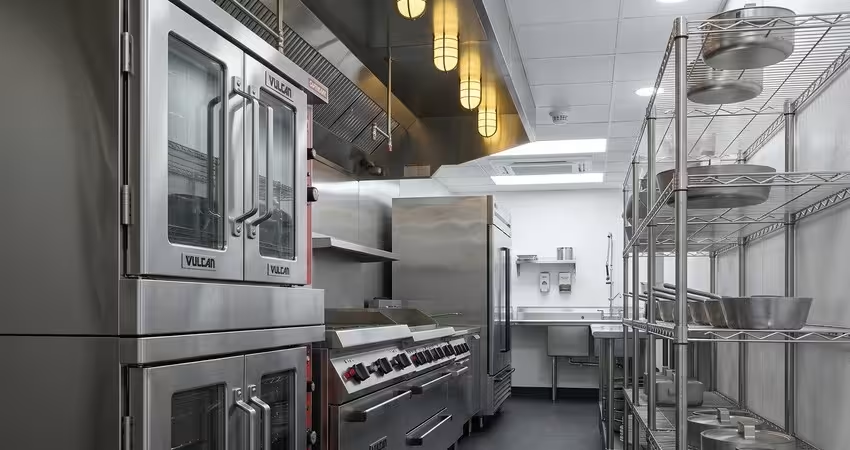
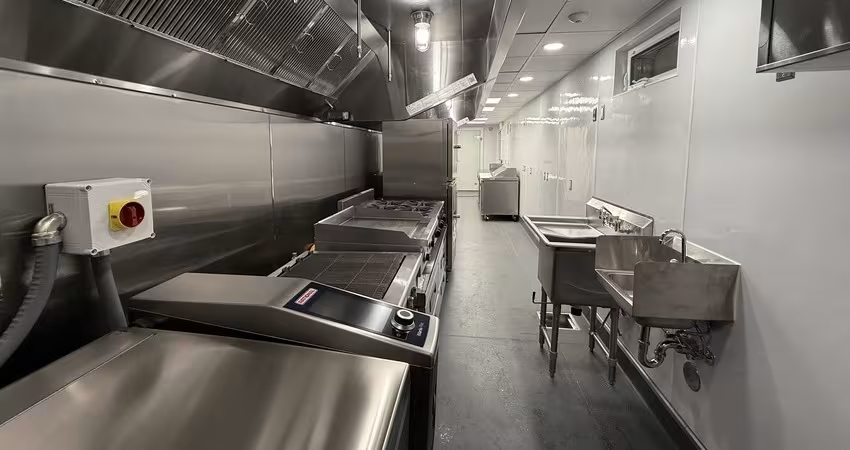
Propane is the dominant cooking fuel for mobile units — portable, energy-dense, independent of utility hookups, and one of the most heavily regulated substances on the unit. The difference between a retrofitted food trailer and a purpose-built hospitality rental shows up most clearly in how each handles it.
The Code Framework: NFPA 58, NFPA 96 Chapter 17, and Local AHJ Authority
Four code bodies govern propane on a mobile kitchen in the United States:
- NFPA 58: Liquefied Petroleum Gas Code — the master standard for storage, handling, transport, and use of LP gas. Covers container types, setback distances, regulators, hose assemblies, and overpressure protection.
- NFPA 96 Chapter 17: Mobile and Temporary Cooking Operations — operational requirements specific to mobile cooking, including LP-gas leak detection mandates, refueling protocols, and inspection cadence.
- OSHA 29 CFR 1910.110 — federal workplace standard for LP gas storage and handling, including training and emergency response.
- DOT/PHMSA 49 CFR Part 180 — federal regulations governing cylinder requalification, marking, and transport.
On top of these, the local Authority Having Jurisdiction (AHJ) — typically the fire marshal — applies state and municipal amendments. A trailer that satisfies federal and NFPA standards can still fail local inspection if the AHJ has tightened setbacks, mandated additional signage, or restricted bulk tank placement.
Note: The AHJ has final authority. NFPA codes are model standards that jurisdictions adopt with modifications. Before signing a rental contract, confirm which edition of NFPA 58 and NFPA 96 the local AHJ enforces — editions vary by state.
Why Retrofitted Trailers Fail Propane Inspections
Cheap retrofitted trailers fail propane inspections for a predictable set of reasons:
- DOT cylinders mounted in locations that violate setback distances from doors, windows, and intake vents
- Hose assemblies and regulators not UL- or CSA-listed for commercial cooking
- Missing or non-functional LP-gas leak detectors
- No documented leak-test history at cylinder changeouts
- Pressure relief valves discharging toward combustible surfaces or pedestrian areas
- No emergency shutoff valve at the supply manifold
Purpose-built mobile kitchens — like the units engineered in-house and described in our mobile kitchen design and build article — address each of these at the manufacturing stage, not in the field.
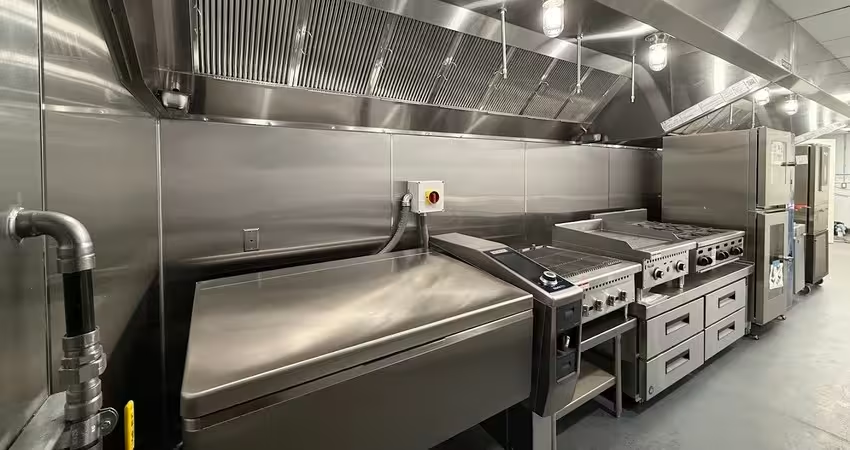
NFPA 58: The LP-Gas Code Governing Propane on Mobile Kitchens
NFPA 58 is the foundational standard for storage, handling, and use of LP gas. Every propane decision on a mobile kitchen traces back to it.
Container Types: DOT Cylinders vs. ASME Tanks
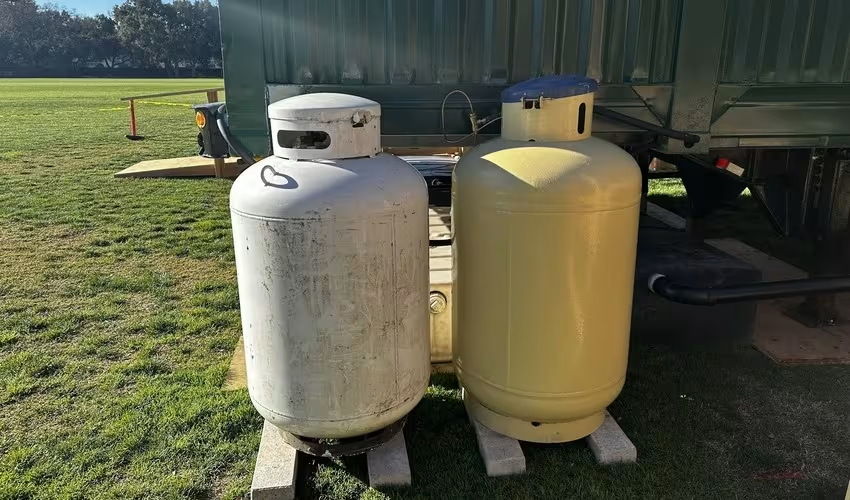
Propane on mobile kitchens comes in two container categories with very different rules:
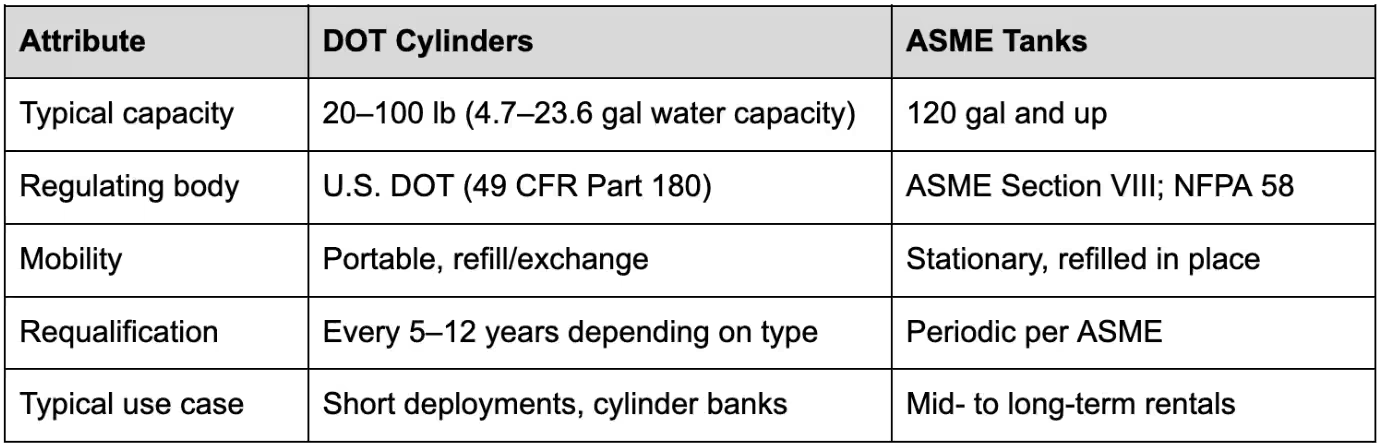
For mid- to long-term hospitality rentals — the 90+ day window that defines Mobile Culinaire's core use cases — ASME tanks are typically the better fit, reducing refueling frequency and consolidating regulatory paperwork. DOT cylinders must be requalified per 49 CFR 180.205; cylinders past requalification can't legally be refilled.
Tip: Before accepting cylinder delivery, check the requalification stamp on the collar (format: month/year + tester ID, e.g. 04-25 E). Past the requalification interval, refuse the cylinder.
Setback Distances and Tank Siting
NFPA 58 specifies minimum separation between propane containers and buildings, property lines, ignition sources, and openings. For DOT cylinders up to 125 gallons aggregate water capacity, the typical minimum is 5–10 feet from building openings — though AHJs often extend this to 10–25 feet for active cooking.
For ASME tanks, distances scale with capacity:
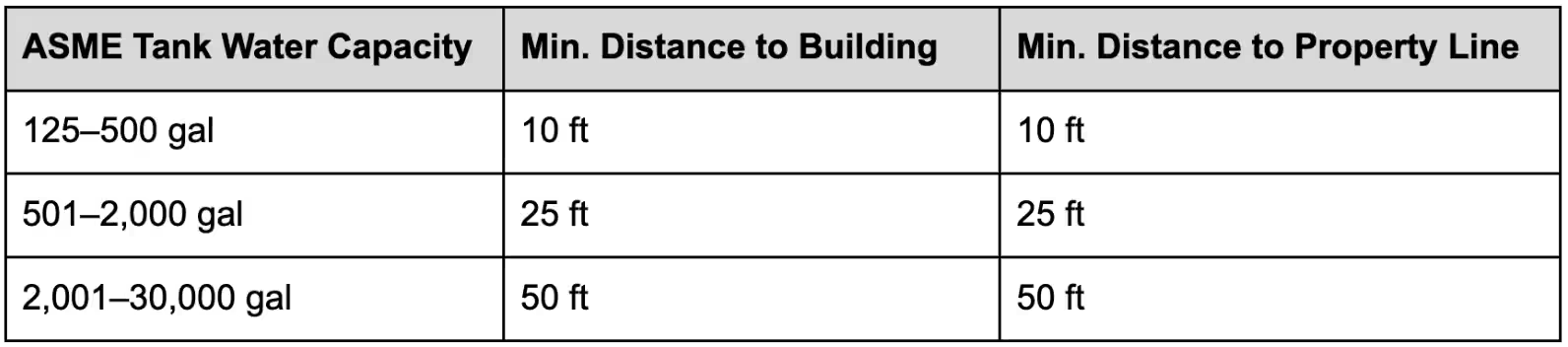
Site planning should incorporate these distances early — a late-discovered conflict with an HVAC intake can delay deployment by weeks. Our permits and licenses guide for mobile kitchen trailers covers the broader AHJ-coordination process.
Note: Setback rules apply to non-obvious ignition sources too — generator exhausts, electrical panels, HVAC condensers, smoking areas, and trash compactors. A 25-foot setback from a tank to a designated smoking area is enforceable.
Pressure Relief, Regulators, and Hoses
NFPA 58 mandates pressure relief valves on all propane containers, venting vertically upward and away from structures. Commercial cooking installations use two-stage regulation: a first-stage regulator at the tank reduces ~250 psi to about 10 psi, and a second-stage regulator at the appliance manifold drops 10 psi to 11 inches water column (the operating pressure for most commercial cooking equipment). Hose assemblies must be UL- or CSA-listed for LP-gas service — generic rubber hose is one of the most common citations on retrofitted units.
NFPA 96 Chapter 17: Leak Detection and Operational Requirements
NFPA 96 governs commercial cooking ventilation and fire protection; Chapter 17 (2024 edition) consolidates requirements specific to mobile and temporary cooking operations and is the operational backbone of mobile kitchen gas leak detection compliance. The chapter pairs with the suppression and extinguisher requirements covered in our mobile kitchen fire safety guide.
Mandatory LP-Gas Leak Detection Systems
Any mobile cooking unit with a propane appliance and an electrical system is required to carry an LP-gas detection system. NFPA 96 references ANSI/UL 1484 as the listing standard. The detector must be positioned at floor level (propane is denser than air and pools low), trigger audible and visual alarms at preset thresholds, and be powered independently of the cooking equipment circuits. Higher-spec systems interlock with the gas supply for automatic shutoff.
Testing Cadence and Documentation
Chapter 17 sets a non-negotiable inspection rhythm:
- Monthly: Test the LP-gas leak detection system
- Before every use: Visual inspection for damage, hose wear, and connection integrity
- At every cylinder changeout or new connection: Leak test with a listed detection solution or electronic detector
- Annually: Full system inspection by a qualified gas technician (insurers often require this; some require semi-annual)
Tip: Documentation is the inspection trail. Every test, changeout, and annual inspection must be logged and kept on the unit, available to the AHJ on request. A clean physical install with no paperwork is still a failed inspection. Quality rental providers deliver a documentation package; weak ones leave the binder empty.
Refueling and Cylinder Changeout Protocols
Chapter 17 also prescribes the operational rules that distinguish hospitality-grade kitchens from concession trailers: refueling is prohibited during active cooking; engines and power sources must be shut down and below the fuel's autoignition temperature before any fuel transfer; the vehicle must be stabilized with wheel chocks or jacking; cylinder reconnections require a fresh leak test; and the unit must be sited at least 10 feet (3 m) from buildings, combustibles, vehicles, and other cooking operations.

Propane Tank Sizing and Capacity Planning
Tank sizing for a hospitality-grade mobile kitchen isn't a guess — it's a BTU calculation tied to equipment load, daily operating hours, and rental duration.
Calculating BTU Demand for Mid- to Long-Term Service
The sizing formula starts with total connected BTU input across all gas appliances. A representative full-service mobile kitchen runs:

One gallon of propane delivers approximately 91,500 BTU. At full load over a 12-hour service day, the unit theoretically consumes about 84 gallons per day — though real-world duty cycles bring that closer to 35–50 gallons per day with equipment cycling on and off. A 90-day deployment at the lower end of that range projects around 3,150 gallons total.
Cylinder vs. Bulk Tank Decisions
The decision tree is straightforward:
- DOT cylinder bank with automatic changeover — deployments under 30 days, sites with restricted bulk-tank clearance, or where bulk delivery isn't available
- 500-gallon ASME tank — mid-duration deployments (30–90 days) at hotels, resorts, and clubs
- 1,000-gallon ASME tank — extended deployments (90+ days) and high-volume operations
- Multi-tank manifold — large-footprint operations or properties with peak/off-peak service models
Mid- to long-term rentals require a fuel supply contract negotiated alongside the rental contract — covering delivery schedule, emergency response time, telematics-based tank monitoring, OSHA training compliance, and AHJ documentation. A turnkey rental provider folds this into the contract; a weak provider leaves it as a side coordination during a renovation already stretched thin.
What Hospitality Operators Should Require from a Propane Rental Service Provider
Propane safety for mobile kitchen trailers separates premium rentals from retrofitted units more decisively than almost any other technical category. The audit checklist for an F&B Director or GM should include the following.
Documentation Package
A code-compliant unit arrives with paperwork:
- Engineering drawings of the propane system layout — container location, regulator placement, manifold, hose routing, appliance connections, detector positioning
- Third-party inspection certificate verifying NFPA 58 and NFPA 96 Chapter 17 compliance
- DOT cylinder requalification records or ASME tank data plate documentation
- LP-gas leak detector listing and installation record
- Hose and regulator UL/CSA listings
- Pressure test records (initial and most recent)
- Emergency shutoff procedure and operator training materials
Insurance and Underwriting
Carriers in 2025–26 have tightened underwriting on temporary cooking installations involving LP gas. Common requirements now include proof of NFPA-compliant suppression and detection systems before binding coverage, named additional insured status for the rental provider, annual gas system inspection as a continuing condition, and documented operator training — often through the Propane Education and Research Council or equivalent.
The National Propane Gas Association maintains member-facing safety standards that align with insurer expectations.
Pre-Deployment Site Verification
Before the trailer arrives, the operator and rental provider should jointly verify tank siting against NFPA 58 setbacks, clearance to building openings and ignition sources, surface conditions for tank placement, AHJ pre-approval of the gas system layout, fuel delivery access, and emergency egress and shutoff valve accessibility. A fire marshal walkthrough at this stage — before equipment lands — is the fastest way to surface conflicts and resolve them on paper.
Note: Propane rental service providers handle this site verification as part of project management. Confirming this scope is in the contract is one of the most reliable signals that the provider operates at hospitality standard.
Propane Compliance Is a Specification, Not a Hope
Propane safety for mobile kitchen trailers belongs in the contract before the trailer arrives — not in the inspection report after. NFPA 58 governs the container infrastructure, NFPA 96 Chapter 17 governs operational use and leak detection, OSHA 1910.110 covers workplace handling, and the local AHJ has final say. A rental provider operating at hospitality standard delivers documented compliance against all four in a turnkey package the property's risk management team can accept on first review. Treating propane safety for mobile kitchen trailers as a specification — not a hope — is what separates a renovation that runs on schedule from one that doesn't.
If you're scoping a renovation deployment and need a partner that handles the propane compliance audit, fuel logistics, and AHJ coordination as part of the rental scope, request a pre-deployment site assessment. For deployment examples across hotels, resorts, and clubs at similar scale, browse our project case studies.
Disclaimer
This article is for informational purposes only and does not constitute legal, engineering, fire-protection, or code-compliance advice. Propane regulations for mobile kitchen trailers vary by jurisdiction, site conditions, and AHJ requirements. Always consult your local fire marshal, licensed gas professionals, insurance carrier, and applicable NFPA, OSHA, DOT, and local code requirements before deploying or operating a mobile commercial kitchen.
People Also Ask (FAQ)
Do mobile kitchen trailers need a propane leak detection system?
Yes. NFPA 96 Chapter 17 (2024 edition) requires LP-gas detection systems on mobile cooking units with propane appliances and an electrical system. Detectors must be UL 1484 listed, tested monthly, and inspected before every use. A leak test is also required at every cylinder reconnection, with documentation kept on the unit and available to the AHJ on request. For mid- to long-term hospitality rentals, this isn't optional — it's a baseline inspection requirement.
How far must a propane tank be from a mobile kitchen trailer?
NFPA 58 sets minimum separation based on container capacity. For DOT cylinders up to 125 gallons aggregate water capacity, the typical minimum is 5–10 feet from building openings — though AHJs often extend to 10–25 feet for cooking operations. ASME tanks above 125 gallons require 10 feet (125–500 gal) or 25 feet (501–2,000 gal) from buildings and property lines. Always confirm with the local fire marshal, who can apply state and municipal amendments to NFPA 58.
What's the difference between DOT cylinders and ASME propane tanks?
DOT cylinders (typically 20–100 lb portable tanks) are regulated by 49 CFR Part 180 and require requalification every 5–12 years depending on type. ASME tanks (typically 120 gallons and larger) are stationary, permanently installed vessels regulated under ASME Section VIII and NFPA 58. Mid- to long-term hospitality rentals often run on ASME installations for capacity and refueling efficiency; shorter deployments typically use DOT cylinder banks with automatic changeover.

Testimonial

"What is standing out when you look at the mobile kitchen operation is the efficiency that we can really achieve because it's built for that."
Tell us about your kitchen needs and request a quote.
.png)
Turnkey mobile kitchen
Proudly made in-house in the USA
Commercial grade kitchen equipment
Code-compliant
Trusted by Industry Leaders