.gif)
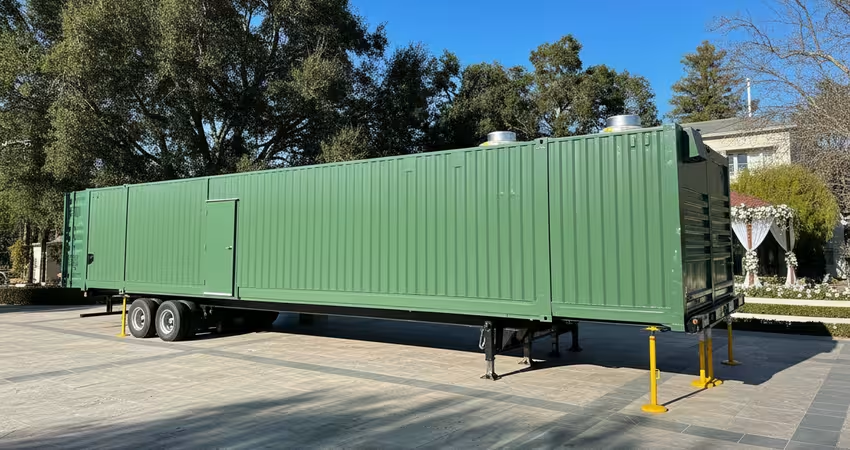
The American wedding venue map has quietly reinvented itself. Restored barns, working vineyards, warehouses, beachfront estates, historic mansions — the fastest-growing categories in the $66 billion U.S. wedding market are almost never built around a commercial kitchen. Yet couples booking them still expect plated, multi-course, hot service at five-star standard. That mismatch is why a mobile kitchen for wedding venues has become a standard line item in peak-season planning. Purpose-built modular units deliver full commercial cooking capacity to any site — for a weekend, a season, or a multi-year renovation. Below are the seven scenarios in which renting a mobile kitchen for wedding venues actually makes sense.
The Wedding Venue Landscape Is Shifting
Couples are choosing venues that reflect their personality. Grand View Research projects the U.S. wedding services market to grow at a 6.8% CAGR through 2030, driven largely by non-traditional, experiential venues — rustic farms, barns, ranches, and outdoor gardens top the venue categories most-preferred by U.S. couples. None of those spaces were designed around a commercial kitchen.
Meanwhile, The Knot's 2026 Real Weddings Study puts the average U.S. wedding at roughly $34,000 with catering at 24% of the total, and guest counts sit near 122–132 nationally per The Wedding Report. That's a lot of plated dinners running through a wedding venue kitchen that often doesn't exist. A mobile kitchen for wedding venues closes that gap without the capital, permits, and construction timeline of a permanent build.
Note: For event-only F&B demand, renting a purpose-built mobile unit is almost always more economical than building a permanent commercial kitchen. The event venue market page breaks down where rental economics land across venue types.
7 Reasons Wedding Venues Rent Mobile Kitchens
Each scenario maps to a distinct operational trigger. Most venues fit one clearly; some fit two or three at once.
1. The Wedding Venue Has No Kitchen at All
Barns, vineyards, restored warehouses, museums, historic estates, and outdoor properties often have power and water but no cooking infrastructure. A wedding venue without kitchen infrastructure loses bookings every time a caterer declines the site.
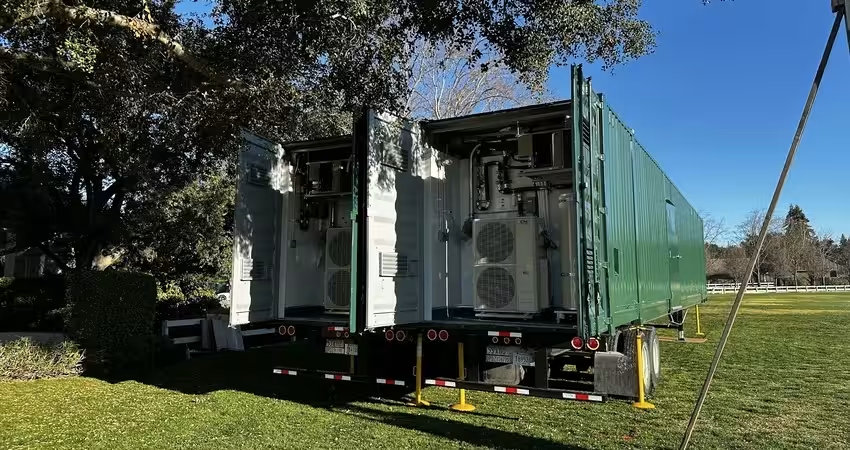
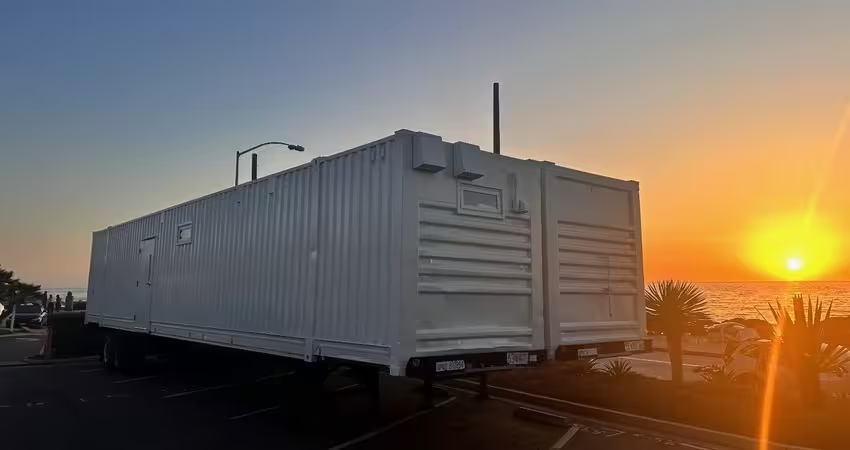
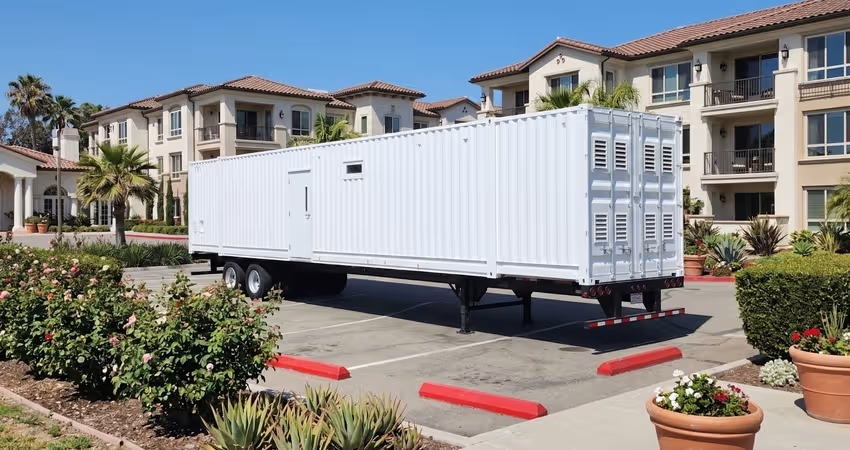
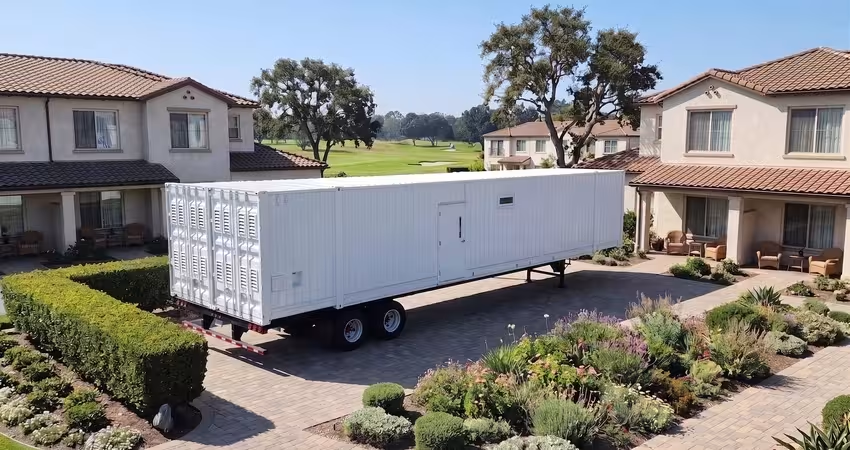
Renting a purpose-built mobile kitchen turns a blank canvas into a full-service catering site for a weekend or a full season. The unit connects to on-site utilities (or runs self-contained on generators and water tanks) and leaves when the season ends.
Tip: A wedding venue without kitchen capability considering its first commercial cooking setup should start with a seasonal rental rather than a permanent build. You'll collect real data on menu complexity, staff flow, and caterer preferences before committing capital to a permanent wedding venue kitchen layout.
2. The On-Site Wedding Venue Kitchen Is Prep-Only or Warming-Only
Plenty of older venues have something labeled a "kitchen" — a galley with two residential ovens, a fridge, and a handwash sink. That supports drop-off catering and re-plating, nothing more. Caterers running multi-course plated service for 150 guests can't cook there.
Adding a temporary kitchen for wedding service on event days upgrades the site from drop-off-only to full plated-service capability: multi-course dinners, live-action stations (carving, pasta, sushi), and premium caterers who previously declined the venue all become viable.
3. The Existing Kitchen Can't Handle Peak-Season Volume
Wedding season compresses May through October in most U.S. markets. Venues with a functional kitchen for everyday service often find it overwhelmed on peak weekends — especially those also running a restaurant, winery tasting room, or year-round calendar.
The National Restaurant Association's State of the Industry reporting shows catering and private-event volumes spiking 40–60% during peak wedding months. Rather than oversizing the permanent kitchen for twenty weekends a year, venues add a parallel commercial kitchen for wedding venue overflow — one kitchen handles daily business, the other handles the wedding.
Note: Venues with both daily food service and high-volume weekend events get more value from a seasonal rental than from renovating their permanent wedding venue kitchen for capacity they won't use eleven months of the year. A unit sized to the venue's typical seasonal event use case is usually the leanest answer.
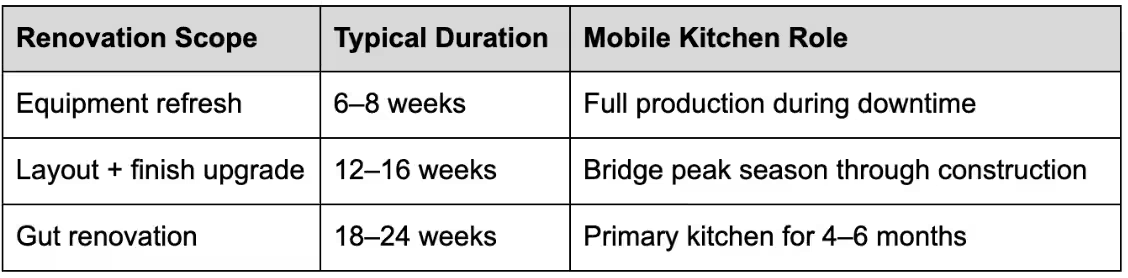
4. The Permanent Kitchen Is Under Renovation Mid-Season
Renovation calendars rarely line up with booking calendars. Venues with weddings on the books when construction begins face a binary choice: break contracts and refund deposits, or keep operating through the work.
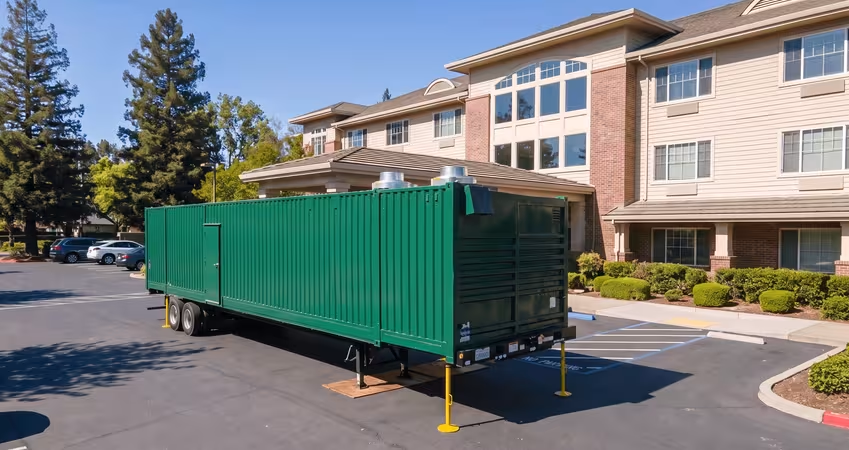
A mobile kitchen for wedding venues, positioned outside the construction zone, keeps the booking calendar intact. Purpose-built units can be operational in 48–72 hours with pre-installed MEP and standardized utility connections.
5. A Single Booking Exceeds Normal Kitchen Capacity
Some weddings are simply too large for the venue's permanent kitchen. A vineyard that handles 120-guest receptions gets a 350-guest booking. A country club kitchen built for 180 covers gets asked to produce 280. Refusing means losing a premium wedding — often with the rehearsal dinner, brunch, and welcome reception attached.
Renting a mobile kitchen for wedding venues for that single weekend lets the operator accept bookings they would otherwise refuse. A temporary kitchen for wedding use pays for itself on a single oversized booking. Capacity by unit size:
- 30' mobile kitchen: 150–200 plated meals per service
- 40' mobile kitchen: 200–250 plated meals per service
- 53' mobile kitchen: 300–450 plated meals per service
- 2x53' configuration: 500–650 plated meals per service
6. Preferred Caterers Require Commercial-Grade Infrastructure
Premium caterers have standing policies about which venues they will and won't work. Venues without adequate kitchens get quietly removed from preferred-vendor lists. The venue never hears why — it just stops showing up in planner recommendations.
A commercial kitchen for wedding venue service, built to NSF certification standards and NFPA 96 ventilation and fire suppression codes, puts the venue back on every caterer's short list. A temporary kitchen for wedding operators that meets code opens doors that stay closed to sites relying on warming galleys and residential equipment.
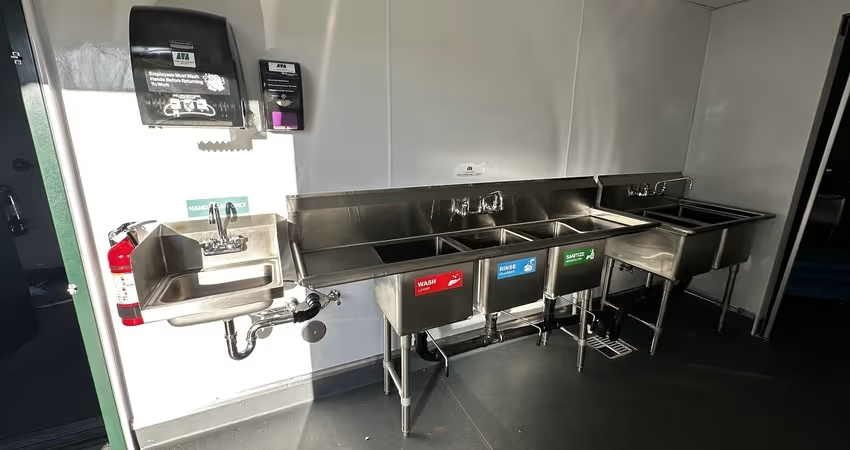
Tip: Ask your frequent caterers which kitchen features make or break their willingness to work a venue. It usually comes down to three: code-compliant ventilation, three-compartment warewashing, and adequate refrigeration. Purpose-built mobile units include all three by design.
7. The Venue Is Expanding Its F&B Positioning Strategically
Some venues rent a mobile kitchen for wedding venues not to solve a problem but to reposition the business — the same move a wedding venue without kitchen infrastructure makes to leapfrog from space-rental to full-service event host. The strategic shift changes:
- Average booking value — plated dinners command higher per-guest spend than buffets
- Booking mix — premium weddings, corporate galas, and multi-day activations become viable
- Preferred-vendor positioning — planners and caterers actively recommend the venue
- Pricing leverage — venues supporting full catered service quote higher rental fees
The ROI analysis on mobile kitchen rentals in hospitality typically shows payback within a single season for venues that shift even a handful of events from drop-off to full-service.
What a Venue-Grade Mobile Kitchen Delivers
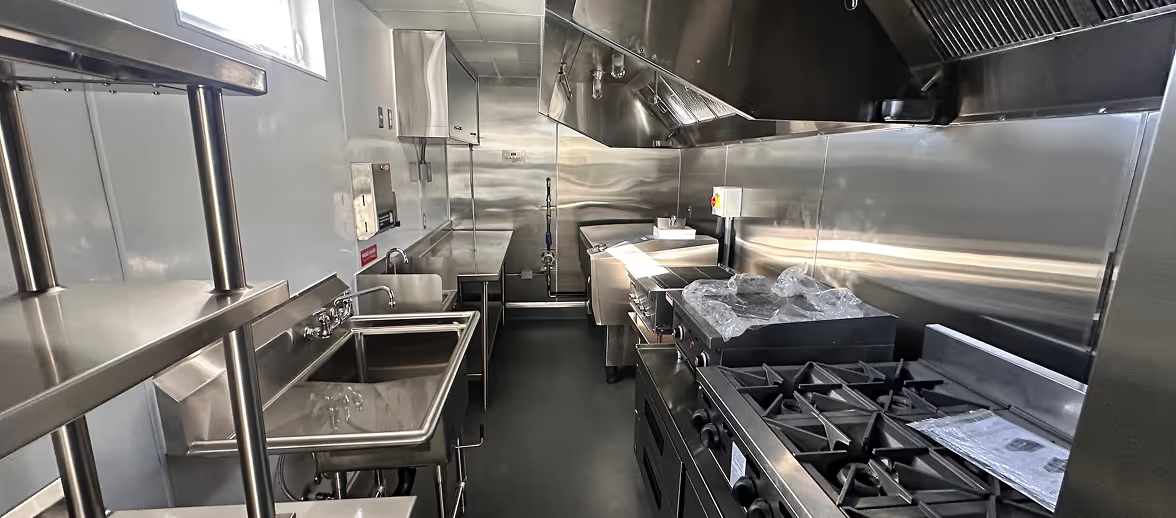
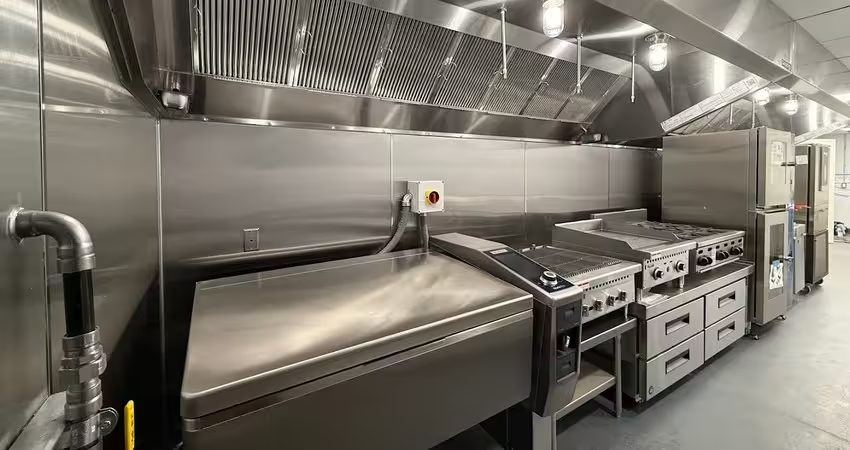
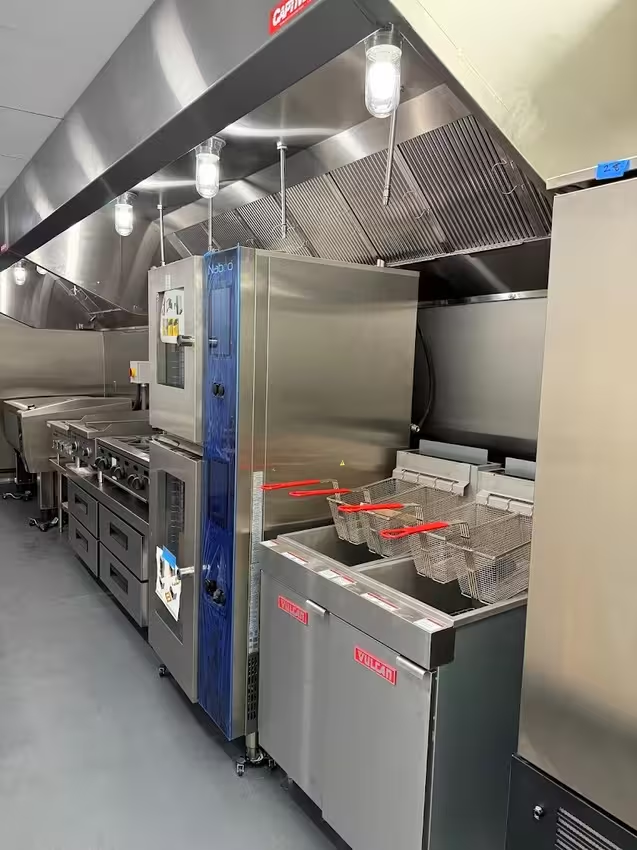
Not every unit labeled "mobile kitchen" qualifies for catered wedding service — the category includes food trucks, retrofitted utility trailers, and purpose-built modular kitchens. For a commercial kitchen for wedding venue use, the unit has to match a permanent commercial kitchen in equipment grade, code compliance, and staff workflow:
- Full hot line (ranges, ovens, griddles, fryers, combi ovens)
- Walk-in cooler and freezer sized to guest count
- Three-compartment sink, handwash station, warewashing area
- Code-compliant exhaust hood with built-in fire suppression
- Pre-installed MEP with standardized utility connections
- Inspection-ready documentation for health and fire marshal reviews
Mobile Culinaire's units are manufactured in-house from steel-framed modular assemblies — not retrofitted from recreational chassis — and arrive inspection-ready against NFPA, NSF, and FDA Food Code standards.
How Wedding Venues Structure the Rental
The right rental structure depends on how often the venue needs the unit.
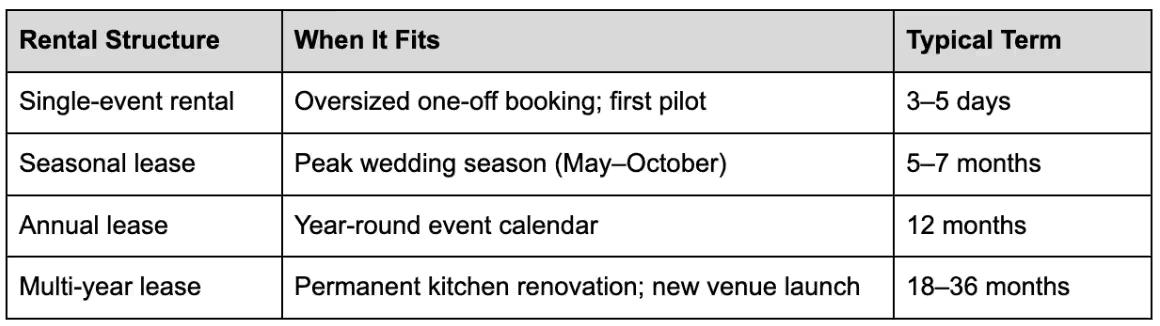
Note: Venues running 15+ events per year that require hot service almost always save by negotiating a seasonal or annual lease rather than paying per-event. Recurring use unlocks better per-event economics and guarantees availability through peak weekends when rental inventory tightens industry-wide.
Matching the Rental Decision to the Scenario
A mobile kitchen for wedding venues isn't one solution — it's the same physical asset deployed against seven distinct problems: blank-canvas venue, prep-only kitchen, peak-season overflow, renovation bridge, oversized booking, caterer requirements, F&B repositioning. Each has its own financial case, rental structure, and timeline.
Venues that get this right treat the rental as a planning tool, not an emergency response. They size the unit to their actual booking mix, sign the right-length lease, and treat the added catering capability as a strategic asset that changes what kinds of weddings they can quote.
See how event venues across the country have hosted full catered weddings using purpose-built mobile kitchens — without breaking ground, losing a booking, or compromising on service. Explore Mobile Culinaire's project portfolio for real venue deployments, or talk to our team about your venue's calendar for a unit configured to your specific booking mix.
People Also Ask (FAQ)
What size mobile kitchen does a 150-guest wedding need?
For a 150-guest plated wedding, a 30' or 40' unit is typically the right fit. Menu complexity matters more than guest count — a plated dinner with three proteins and multiple live-action stations may call for a 40', while simpler plated service runs well in a 30'. Buffet service needs less hot-line capacity than plated. A walk-through with the rental provider and the caterer confirms the right configuration.
Can a wedding venue rent a mobile kitchen for a single event?
Yes. Per-event rentals are common for venues testing the format or covering a single oversized booking. Lead time is typically 4–8 weeks for site survey, permit coordination, and delivery. Venues running more than 15 events per year that require hot service almost always find seasonal or annual leases more economical, and the recurring structure guarantees unit availability through peak season.
Does renting a mobile kitchen help a wedding venue book more events?
Directly — renting a mobile kitchen for wedding venues removes the "what kitchen does the caterer work out of?" objection that kills premium bookings. Venues adding commercial-grade cooking capability typically see their preferred-vendor list expand, their appearance in planner recommendations rise, and their conversion on higher-value catered events improve. The shift from space-rental to full-service event host compounds over one to two seasons.

Testimonial
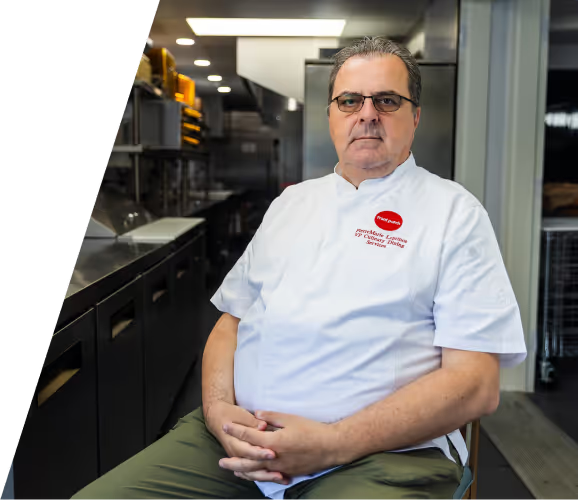
"What is standing out when you look at the mobile kitchen operation is the efficiency that we can really achieve because it's built for that."
Tell us about your kitchen needs and request a quote.
.png)
Turnkey mobile kitchen
Proudly made in-house in the USA
Commercial grade kitchen equipment
Code-compliant
Trusted by Industry Leaders