.gif)
Your venue has landed a high-profile gala — 300 guests, a four-course plated dinner, and a culinary team that expects a professional kitchen to execute it. Your existing kitchen is unavailable. Someone suggests a catering tent. Someone else mentions a mobile kitchen. Both sound viable on the surface, but the differences between them will determine whether your event runs seamlessly — or becomes a compliance, comfort, and capability problem.
This guide breaks down the critical distinctions between mobile kitchens and catering tents so event venue operators can make the right call before signing a rental agreement.
Two Approaches to Temporary Foodservice — And Why the Difference Matters
When a permanent kitchen is offline or insufficient for an event's demands, operators have two primary options for on-site food production: a catering tent kitchen or a purpose-built mobile kitchen trailer. These are not interchangeable solutions. Each carries different implications for food quality, staff performance, compliance, and operational risk.
Understanding what each solution actually is — not just what it looks like on a vendor's website — is the first step to making the right decision.
What Is a Catering Tent Kitchen?
A catering tent kitchen is a temporary food preparation setup housed under a canopy or open-sided tent structure. Equipment — typically portable propane stoves, convection ovens, prep tables, and refrigeration units — is sourced separately and assembled inside the tent on-site.
Key characteristics:
- Equipment is rented or owned independently from the tent structure
- No fixed utility connections — power typically comes from generators
- No integrated ventilation, HVAC, or fire suppression system
- Setup and teardown is fully manual, coordinated across multiple vendors
- Permitting requirements vary widely by jurisdiction and must be self-managed
Tent kitchens are popular for short-duration events like outdoor festivals, farmers markets, and food fairs — scenarios where simplicity and low cost matter more than performance.
What Is a Mobile Kitchen?
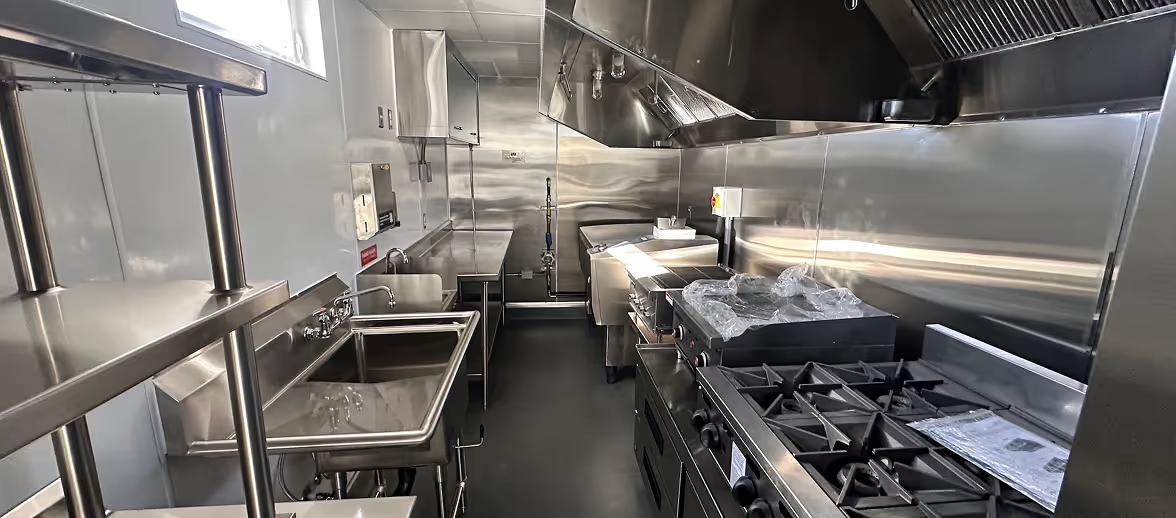
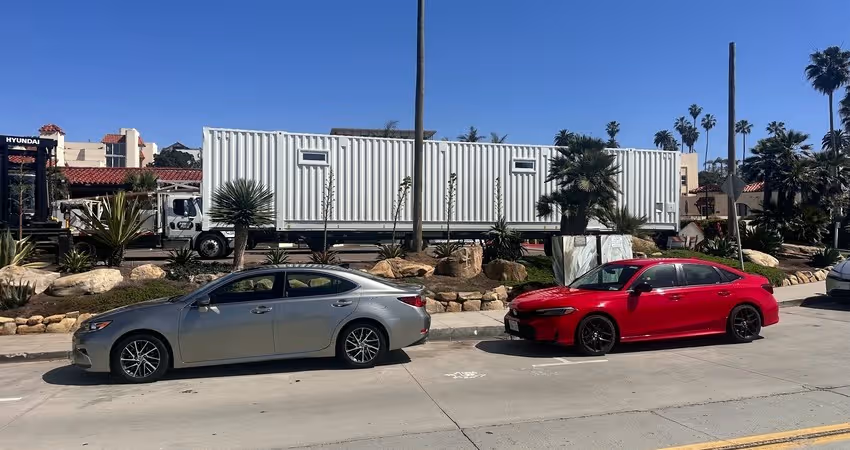
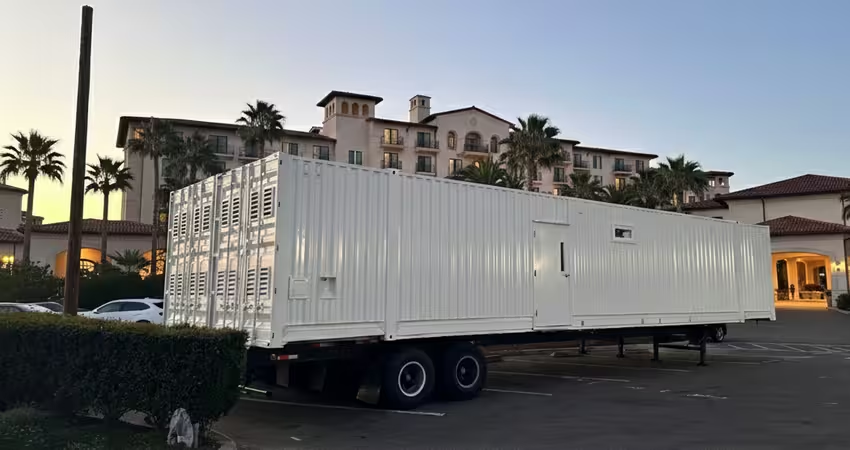
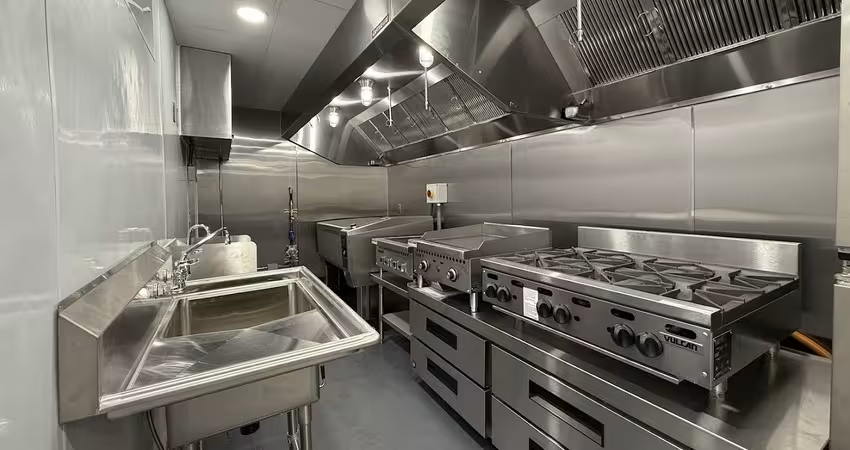
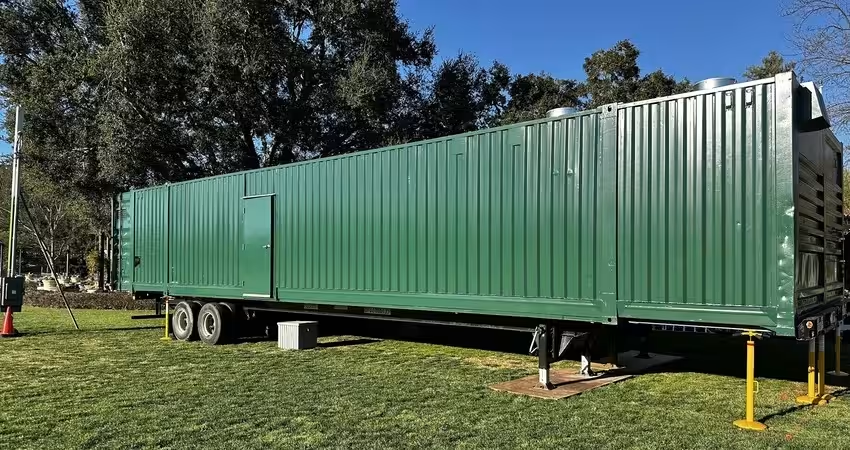
A mobile kitchen is a purpose-engineered, self-contained commercial kitchen built into a trailer or modular unit. Unlike a tent kitchen assembled from individual rental pieces, a mobile kitchen arrives as a fully integrated, code-compliant facility — including cooking equipment, refrigeration, exhaust hoods, fire suppression, HVAC, and utility connection points, all pre-installed and pre-inspected.
Key characteristics:
- Turnkey delivery: fully equipped and ready to connect
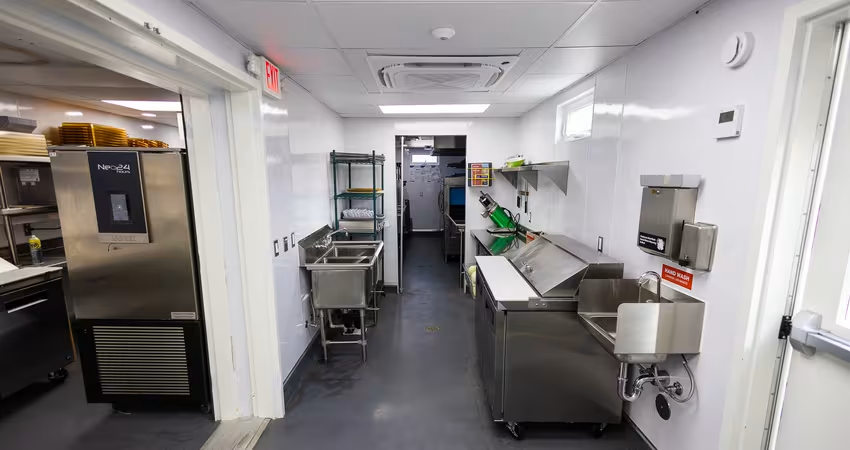
- Standardized utility hookups for water, power, and waste
- Built-in HVAC, exhaust hoods, and fire suppression systems
- Manufactured to meet or exceed local building and health codes
- Supported by project management, documentation, and technical guidance
Note: Not all mobile kitchens are created equal. Purpose-built, in-house manufactured units — constructed with commercial-grade steel framing and permanent kitchen assemblies — are categorically different from retrofitted trailers, which share many of the same limitations as tent kitchens.
Side-by-Side Comparison: Mobile Kitchens vs. Catering Tents
The table below compares both solutions across the factors that matter most to event venue operators.
.avif)
Structural Integrity and Weather Protection
A mobile kitchen trailer is a sealed, insulated structure. Staff work in an enclosed environment regardless of outdoor conditions — heat, rain, wind, or cold. This matters significantly for events that span multiple days or are scheduled during unpredictable weather.
A catering tent offers only partial protection. In high heat, tent kitchens become physically punishing workspaces. In rain or wind, they become safety hazards — particularly when open flames or electrical equipment are involved.
Tip: If your event runs across multiple days or into evening hours, factor in ambient temperature shifts. A kitchen team working a 12-hour service in an unventilated tent during summer will underperform — and so will the food.
Equipment and Cooking Capability
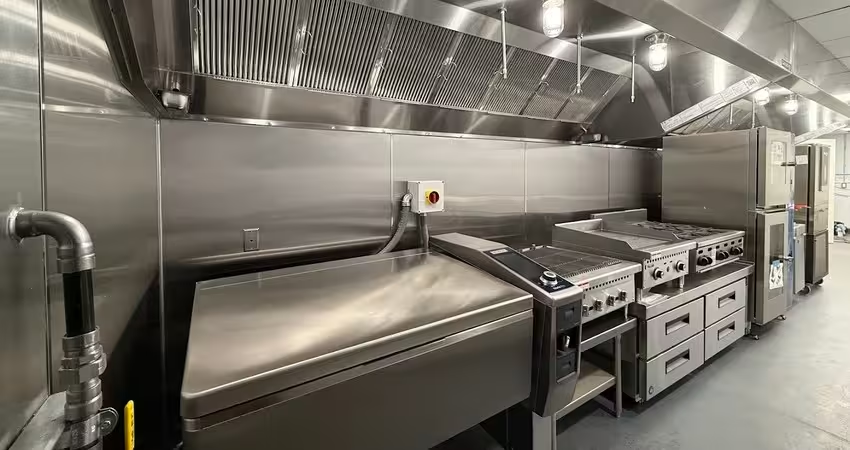
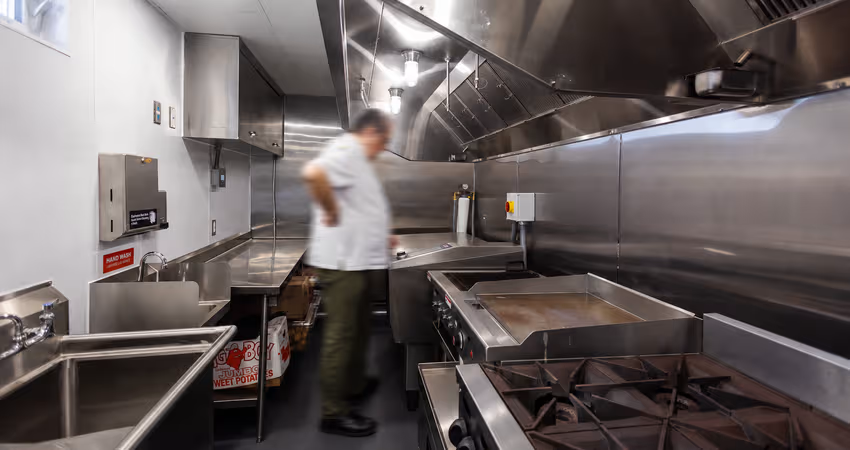
Mobile kitchens are built around the same cooking assemblies found in permanent commercial kitchens — combi ovens, commercial ranges, flattop griddles, commercial fryers, and refrigerated walk-in storage. The equipment is sized, positioned, and laid out for professional kitchen workflow, with ample prep surfaces and organized stations.
Tent kitchens rely on portable-grade equipment: standalone propane burners, countertop convection ovens, and coolers or reach-in refrigerators. While functional for simple menus, this configuration limits what a chef can execute at volume. Multi-course plated dinners, banquet service, and high-output catering are not well-suited to tent kitchen setups.
HVAC, Ventilation, and Fire Suppression
This is where the performance gap becomes a compliance gap.
NFPA 96 — the National Fire Protection Association's standard for ventilation control and fire protection of commercial cooking operations — applies to all cooking equipment that produces grease-laden vapors, including operations in tents and temporary structures. Specifically, NFPA 96 Section 1.1.3 states that cooking equipment in tents and roofed enclosures must comply with the standard, though local Authorities Having Jurisdiction (AHJ) may grant exemptions for temporary facilities upon evaluation.
In practice, this means:
- Mobile kitchens arrive with UL-listed exhaust hoods, grease removal devices, integrated fire suppression systems, and automatic gas shutoffs — pre-compliant with NFPA 96 requirements
- Tent kitchens typically have none of these systems in place, placing the compliance burden entirely on the operator to source, document, and verify each component before a health or fire inspection
Note: The 2024 edition of NFPA 96 includes an expanded chapter specifically addressing mobile and temporary cooking operations — a signal that regulators are tightening expectations for exactly these scenarios.
Health Code Compliance and Permitting
Temporary Food Establishment (TFE) regulations vary by state and jurisdiction, but most require temporary kitchens to demonstrate compliance with food temperature control, sanitation, handwashing, and wastewater management standards. For tent kitchens, this means:
- Sourcing compliant equipment and documenting specifications
- Arranging a pre-operational inspection before service begins
- Ensuring waste disposal through approved sanitary connections
- Managing permitting timelines — applications are typically due 14–30 days before the event
A mobile kitchen that arrives pre-inspected and code-certified significantly compresses this process. The compliance documentation comes with the unit — it doesn't need to be assembled from scratch.
Tip: Check with your local health department on whether your jurisdiction classifies tent kitchens as "temporary food booths" rather than commercial kitchen operations. The distinction affects permitting timelines, inspection requirements, and what menus you're legally permitted to execute. Review the Larimer County food safety framework as an example of how this classification works in practice.
The Hidden Costs of a Catering Tent Setup
Catering tents appear affordable in initial quotes. The full cost picture looks different once all components are accounted for.
A complete tent kitchen setup typically requires:
- Tent and flooring rental (including sidewalls for weather protection)
- Generator rental (multiple units for high-draw cooking equipment)
- Portable cooking equipment (stoves, ovens, fryers — rented separately)
- Refrigeration units (reach-ins or transport coolers)
- Handwashing and warewashing stations (required by most health codes)
- Permitting fees for each temporary food facility component
- Labor for multi-day setup and teardown across multiple vendor schedules
- Potential re-inspection costs if initial setup fails compliance review
Each line item involves a separate vendor, a separate delivery, and a separate coordination point. When timelines compress — as they often do in event production — the complexity of managing a tent kitchen becomes a liability.
Note: A tent kitchen failure during peak event service — whether from equipment breakdown, ventilation issues, or a failed inspection — has no quick fix. With a mobile kitchen, the unit arrives as a tested, complete system. The risk profile is fundamentally different.
When a Catering Tent Might Be Sufficient
To be direct: there are scenarios where a catering tent kitchen is a reasonable choice.
A tent setup may be appropriate when:
- The menu is limited and pre-prepped — simple reheating, holding, and plating with no complex on-site cooking
- The event is short-duration — a single day with a defined service window
- Volume is low — fewer than 75–100 guests with straightforward service
- Weather is reliably mild — the event is in a controlled season with no forecast risk
- Regulatory requirements are minimal — the jurisdiction permits simplified TFE operations for the type of event
For event venues hosting casual outdoor gatherings, food festivals with pre-packaged or simple menu items, or pop-up activations, a tent setup can be cost-effective. But even in these cases, catering licenses and permit requirements still apply — and the operator remains responsible for compliance.
When Event Venues Should Choose a Mobile Kitchen
For most professional event venues, the scenarios below represent situations where a mobile kitchen is not just preferable — it is the only operationally sound choice.
Multi-Day or Multi-Week Events
A temporary kitchen for event venue operations spanning multiple days must sustain consistent food production across service periods. Mobile kitchens are engineered for exactly this — climate-controlled, fully equipped, and capable of supporting back-to-back service without equipment degradation or compliance lapses.
High-Volume, Full-Menu Service
When a culinary team needs to execute a complete menu — appetizers through dessert, plated or buffet — the cooking infrastructure must match the scope. Mobile kitchens support multi-station operation with commercial combi ovens, ranges, fryers, and refrigerated walk-in storage. A tent kitchen cannot match this capability without significant equipment augmentation, at which point the cost advantage disappears entirely.
Premium Guest Experience Requirements
For hotels, resorts, country clubs, and upscale event venues, the quality of the food experience is non-negotiable. A compromised kitchen environment produces compromised food — whether from inconsistent cooking temperatures, inadequate refrigeration, or a staff team working in punishing conditions. Mobile kitchens for events and festivals are designed to maintain the standards guests expect from premium venues, regardless of whether the kitchen is permanent or temporary.
When Compliance Cannot Be Left to Chance
Any event where a failed inspection means a cancelled service — and the reputational and financial consequences that follow — warrants the certainty of a pre-compliant mobile kitchen. Review the key requirements outlined in our guide to mobile kitchen permit requirements to understand what compliance documentation should accompany any temporary kitchen solution.
Tip: When evaluating mobile kitchen providers, ask specifically whether units are inspected by a third-party agency before delivery and whether full technical documentation and installation guides are included. These are non-negotiable markers of a professional-grade rental.
The Bottom Line
The choice between a mobile kitchen and a catering tent is not a question of budget alone — it is a question of risk tolerance, menu scope, and the standard your guests expect.
Catering tents have their place in low-complexity, short-duration scenarios. But for event venues committed to delivering professional, full-service dining experiences, a tent kitchen introduces equipment limitations, compliance uncertainty, and operational fragility that a high-stakes event cannot afford.
A purpose-built mobile kitchen delivers what a permanent kitchen delivers — just on a temporary timeline. That is the standard event venues should hold their temporary kitchen solutions to.
Ready to Find the Right Solution for Your Venue?
Not sure which setup is right for your event? Mobile Culinaire's team works directly with event venues to assess your site, menu requirements, and timeline — and recommends the setup that protects your operation and your guests' experience.
Explore our mobile kitchen rentals. Contact us to speak with a specialist.
People Also Ask (FAQ)
Can a catering tent replace a commercial kitchen at an event venue?
A catering tent can support basic food holding and simple prep, but it cannot replicate a commercial kitchen environment. Tents lack integrated HVAC, fire suppression systems, and fixed utility connections — all of which are typically required by local health departments for mid- to high-complexity menus. For venues hosting plated dinners, multi-course events, or high-volume service, a tent kitchen falls short of both operational and regulatory requirements. For a deeper look at how to evaluate your options, see our guide to choosing the right mobile kitchen.
What permits are required for a mobile kitchen at an event venue?
Requirements vary by jurisdiction, but mobile kitchens at event venues typically need a temporary food establishment permit from the local health department, fire department approval for cooking equipment and suppression systems, and sometimes a site-specific zoning clearance. Purpose-built mobile kitchens that arrive pre-inspected and code-compliant significantly reduce the permitting burden compared to tent setups, where operators must self-assemble and document compliance from scratch. Most health departments require applications 14–30 days before the event — plan accordingly.
How long does it take to set up a mobile kitchen vs. a catering tent?
A purpose-built mobile kitchen trailer can typically be connected to site utilities and operational within hours to one to two days after delivery. A full catering tent kitchen — including tent erection, flooring, equipment sourcing and setup, utility connections, and regulatory inspection — often takes one to two weeks of lead time and coordination across multiple vendors. For time-sensitive events, the mobile kitchen's deployment speed is a significant operational advantage. Review real-world event venue projects to understand typical deployment timelines.

%20(1).avif)
Testimonial
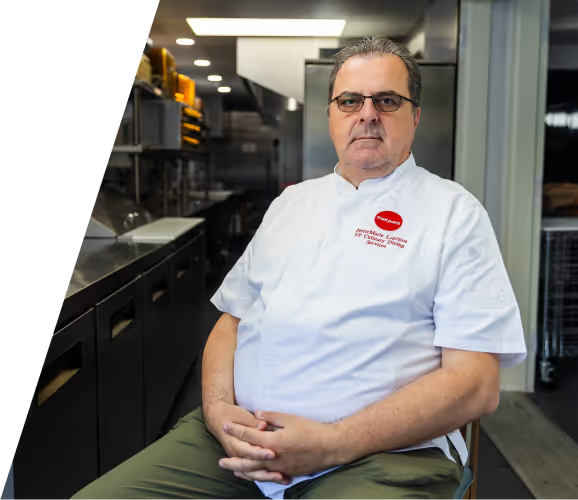
"What is standing out when you look at the mobile kitchen operation is the efficiency that we can really achieve because it's built for that."
Tell us about your kitchen needs and request a quote.
.png)
Turnkey mobile kitchen
Proudly made in-house in the USA
Commercial grade kitchen equipment
Code-compliant
Trusted by Industry Leaders