.gif)
A winery's tasting room is now the product, not the shop floor. WineAmerica's 2025 economic impact study counts 74 million wine-country visits a year and $14.13 billion in tourism spending — money that arrives on site, in person, and expects to be fed. The constraint is rarely the wine or the room. It is a 200-square-foot galley built to plate cheese boards, asked to run a hot line across two seatings. A mobile kitchen for wineries adds that capacity for a season or a renovation without stopping to build. Here are the three situations where it earns its place — and the ones where it doesn't.
Why Winery Food Service Is Becoming a Revenue Imperative
Food has stopped being an add-on to the pour. With fewer people walking in, each visit has to be worth more, and the kitchen caps how much more it can be. Most winery kitchens were sized for a team plating cold boards, not a programme selling seated courses.
Silicon Valley Bank's 25th annual State of the US Wine Industry Report, published January 2026, puts 2025 at roughly 329 million cases and $74.3 billion — down 2.0% by case, 1.6% by dollar. Selling to fewer, higher-spending visitors is the strategy left standing, and hospitality is the lever.
That pressure lands somewhere specific. Whoever runs the property answers for revenue per visit, club retention, and what the owner hears — all three moved by a food programme, all three capped by the galley.
Note: Extending a visit lifts bottle sales and club sign-ups. Anything that shortens it costs more than the covers it loses.
What a Mobile Kitchen for Wineries Actually Is
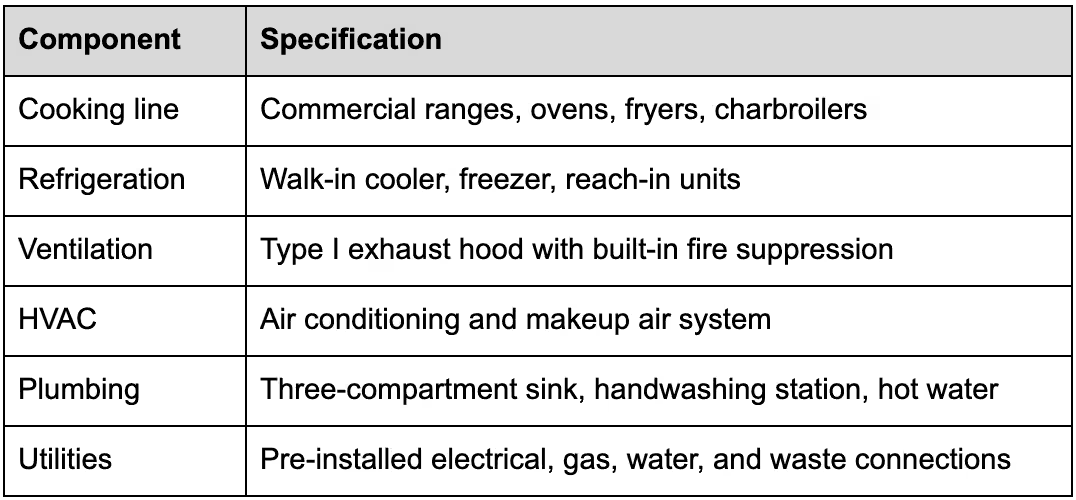
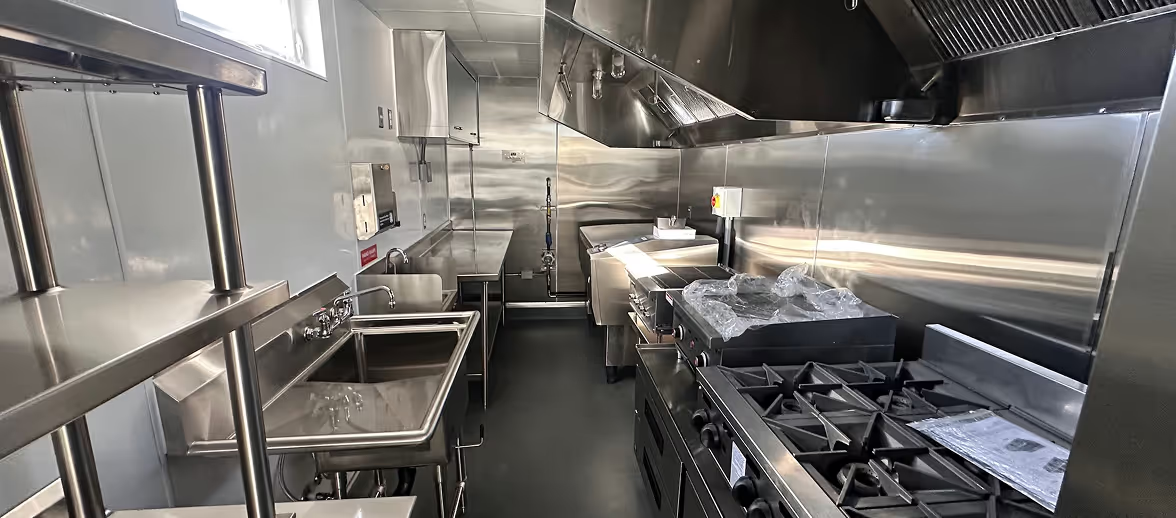
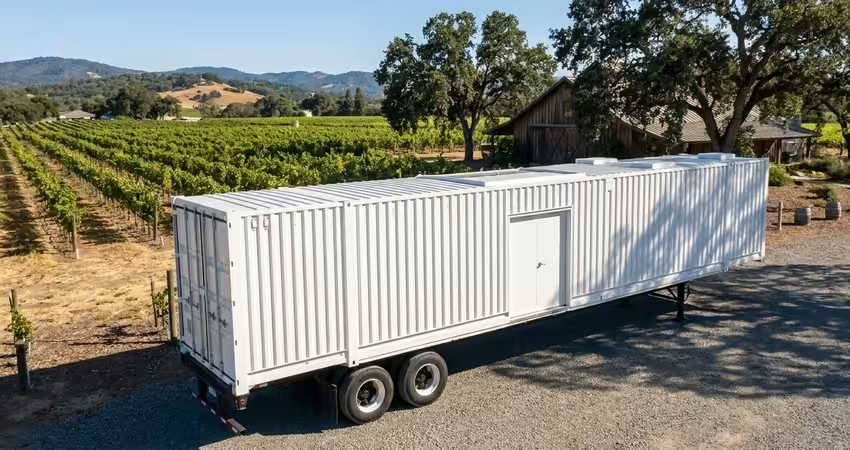
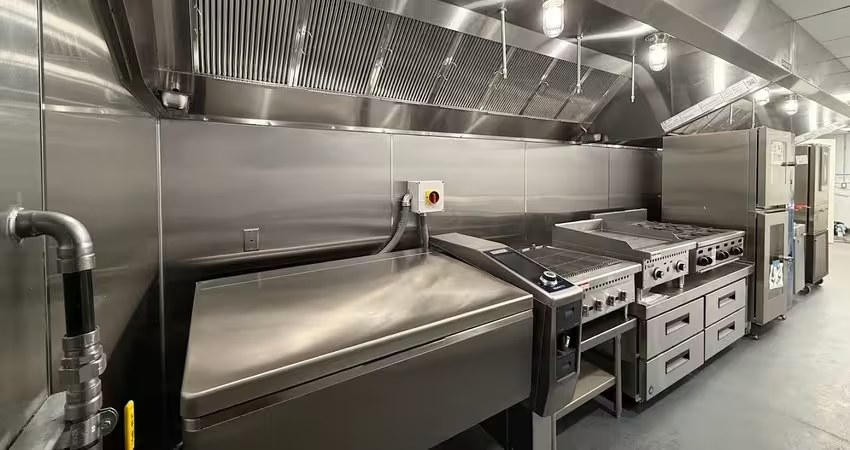
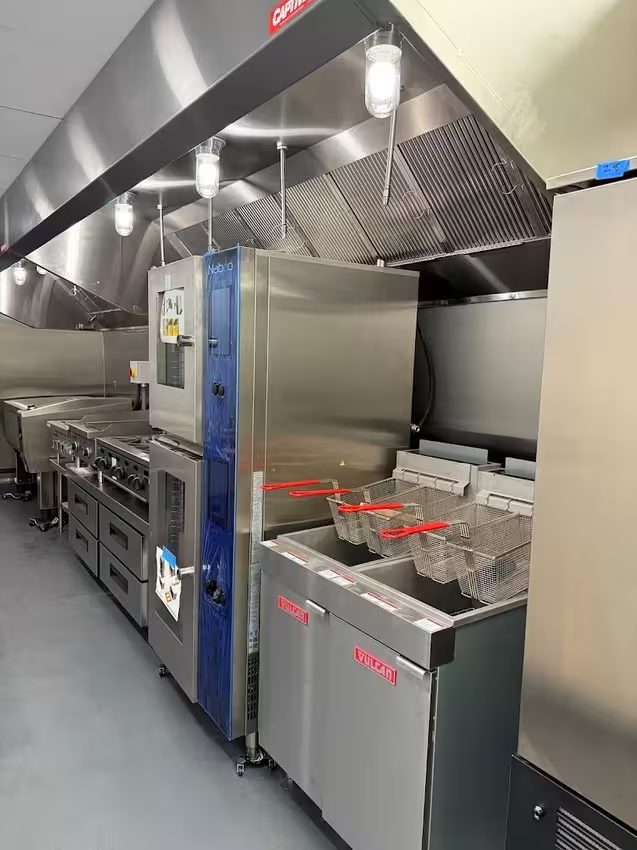
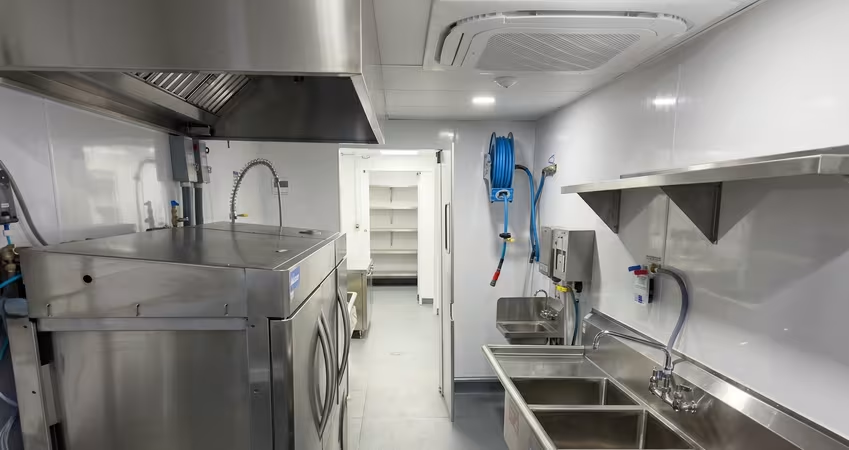
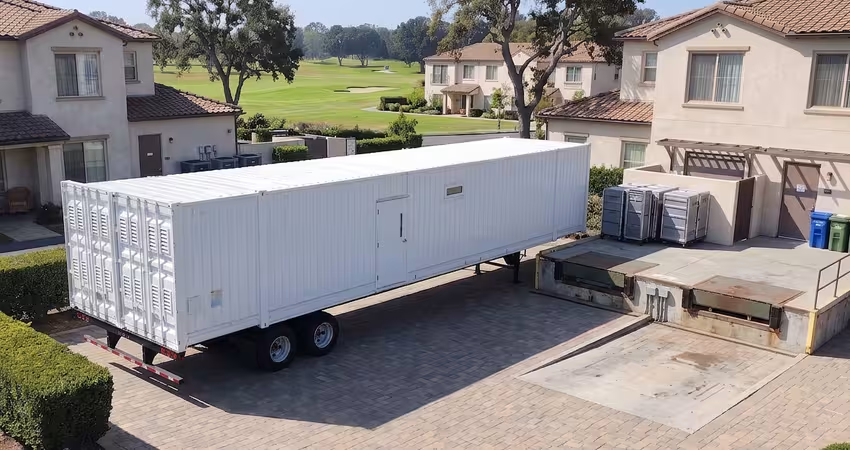
A mobile kitchen is a commercial kitchen built inside a transportable unit and leased for a defined window. It arrives with the cooking line, cold storage, warewashing and ventilation installed, connects to your services, and leaves when the window shuts. Rented monthly, not bought.
The distinction that matters on a quote is how the unit was made. One kind starts as a freight box and has kitchen equipment fitted afterwards, which is why its limits appear where you cannot inspect them — panel capacity under a full line, air that will not balance, walls built to keep cargo dry rather than a kitchen at temperature. The other is assembled from kitchen modules to the same standards as a fixed facility. Both are quoted as a mobile kitchen rental; our side-by-side comparison separates them.
Mobile Culinaire builds the second kind, in Oregon, in four footprints, with more than 400 units in service. Ask what the equipment is certified to: NSF assesses material safety, cleanable design and performance through a third party rather than the manufacturer.
Note: This is a rental held for a month upwards — not a wine truck, a mobile bar, or a catering van.
Use Case 1 — Elevating Tasting Room Food Pairings
The most common trigger is a pairing programme the back-of-house cannot hold. A galley of 150 to 300 square feet will plate cold items and reheat prepared dishes competently. It will not run a hot line across two Saturday seatings without something giving way — usually ticket times, menu scope, or sanitation.
What the bottleneck looks like
- Tickets slow, visits shorten, and the spend that lands late in a visit never happens
- The chef writes down to the equipment instead of to the wines
- Prep surfaces and refrigeration crowd past what an inspector accepts, and a team works July service in a room with no path to cooling it
How the added capacity works
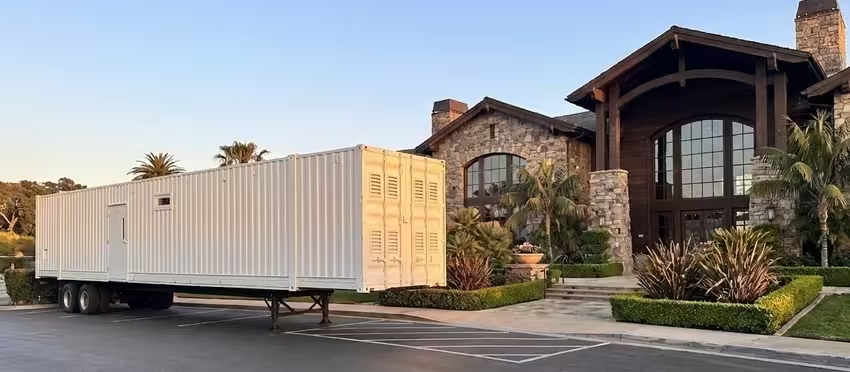
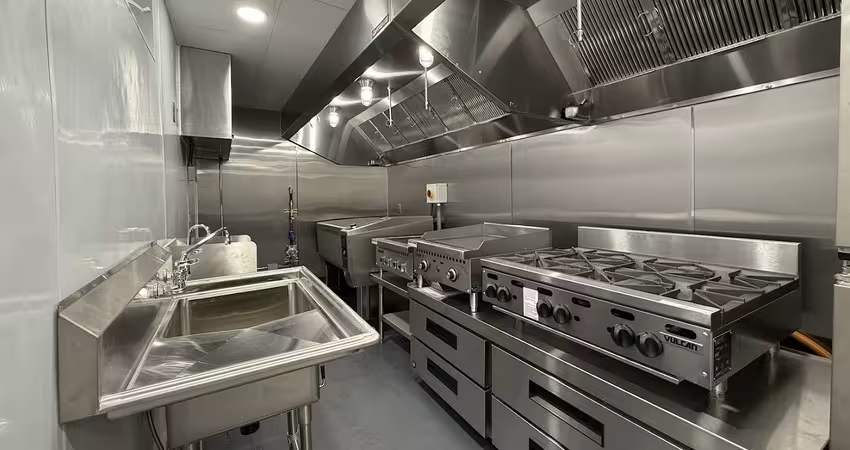
A leased unit adds a hot line, separate refrigeration and prep zones without touching the building, sited near the tasting room or in a service yard. Nothing is demolished, so the programme is proven before the capital decision — size it against peak service with our capacity planning guide.
Compliance considerations
Food service answers to your county health department as a food establishment, separately from your alcohol licence. Cooking equipment falls under NFPA 96; preparation is measured against your state's own adoption of the FDA Food Code, not the model text. Federal licensing sits with the Alcohol and Tobacco Tax and Trade Bureau and does not cover food — check with your state how the two interact.
Use Case 2 — Serving a Booked Event Season
Wineries that host sell the calendar months ahead, so the capacity question arrives long before the dates. When what has been sold exceeds what the kitchen can produce, the answer is capacity leased across the season — one month being the shortest term, this works at season scale, not for a single date.
That boundary decides whether this is the right tool at all. No kitchen arrives for a Saturday. What one carries is a summer of bookings, or a programme held together while the permanent kitchen is rebuilt — and inside that window the chef builds to the wines instead of the equipment.
The alternative that needs no construction
The comparison operators reach for is a permanent extension — a capital project whose design, build and permitting phases land somewhere in the calendar, usually across the season you were protecting.
Tip: Agree the cost of an extra month at signing. Seasons overrun more often than not, and that clause is cheaper to settle before you need it.
Use Case 3 — Seasonal Programs: Harvest, Crush and Club Weekends
The overlooked case is the calendar itself. Winery work is not spread evenly: three or four windows carry most of the labour and most of the visitors. Those are exactly the weeks where a kitchen sized for the annual average gives out, and the weeks that matter most.
Harvest and crush
From late August into October, cellar crews, pickers and interns work long shifts, and feeding them on site is an operational line, not a courtesy. A leased kitchen serves hot meals without pulling crews off the property and keeps production clear of guest-facing areas.
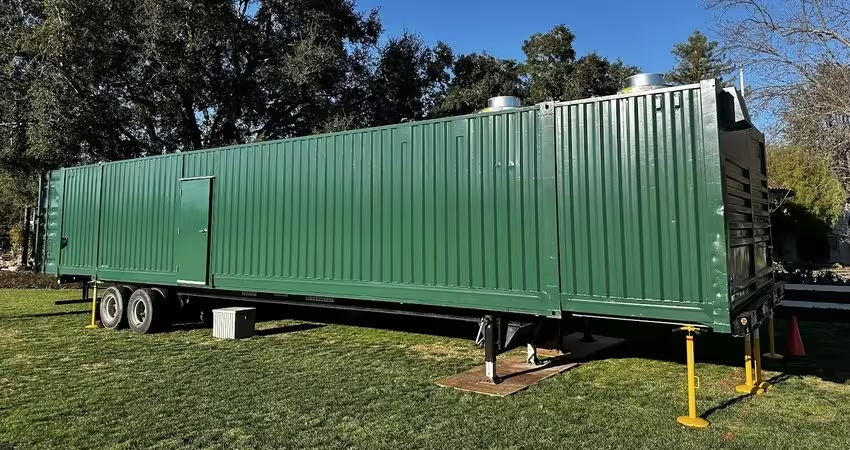
Site conditions bite here. Vineyard blocks away from the main building often have nothing to connect to — the unit runs from tanks and generators instead, and our water supply guide covers that.
Club weekends and summer peaks
Pickup weekends put hundreds of high-value members on the property in two days, and they decide renewals. Destination regions get the same shape all summer — demand that never justifies permanent infrastructure, the pattern resorts handle with seasonal capacity.
Key Operational Considerations for Winery Operators
Four practical questions decide whether a lease runs smoothly or awkwardly, and every one of them is answerable before a quote exists: the site, the permits, the term, and the comparison you are genuinely making. Take them in that order, because each answer narrows the next one.
| The question | What settles it |
|---|---|
| Where does it go | A level pad, delivery access, and a route staff can walk in service |
| What connects to it | Power, water, gas and a waste route — all supplied by the winery |
| How long is the window | Season, renovation, or multi-year — the lease follows the need |
| What is the real comparison | Not rent versus own, but leased capacity versus capped food revenue |
Site selection and utility hookups
The unit needs a level pad and delivery access. The winery supplies and connects the services — power, water, gas, and drainage with grease interception if the county asks for it — pays for what the unit consumes, and builds the decking and steps.
Permitting and compliance
Three authorities are usually involved: health for the food establishment permit, the fire marshal for suppression and exhaust, building or planning for the structure. The permit is the winery's to hold and the inspection the winery's to book. Units arrive third-party inspected with documentation to submit — our permits guide lists it.
Rental term and cost framing
Allow two to four weeks to agree scope, as long again for design, one to six for permits, and about a week on site — so anywhere from six to fifteen weeks before you serve. Where you land inside that spread depends almost entirely on your permitting office. Nobody prices this honestly from a phone call. What moves the figure is the equipment you need, the months you hold it, and the condition of the pad and services.
When a Mobile Kitchen Is the Right Move (and When It Isn't)
The decision turns on whether the constraint is genuinely the kitchen. Leased capacity lifts a production ceiling across a defined window. It will not solve a hiring problem, a sourcing problem, or a programme that was never going to sell in the first place.
It fits when there is food revenue you can name and cannot serve, when the need has an end date — a season, a renovation, a programme proven before it is built for — or when construction would consume the months you need open.
It does not fit when the offer is cold plates at low volume, when the bottleneck is staffing, or when a permanent extension is already permitted and under way. If you cannot name the month the unit leaves, the need may be permanent — a different conversation entirely.
Closing the Loop
Wineries face the hardest demand environment in decades, and the properties pulling ahead treat hospitality as a revenue line rather than an amenity. A mobile kitchen for wineries adds culinary capacity against a season or a renovation without the capital and construction window a permanent build demands.
Size it on peak meals per day rather than square feet, settle the site and permit path early, and be honest about when the unit leaves. See how Mobile Culinaire configures real deployments, or talk to us.
Disclaimer
Food establishment, fire and building rules for temporary kitchens differ by state, county and municipality, and jurisdictions adopt different editions of the codes cited here. Alcohol licensing is separate from food permitting. Durations are planning figures, not commitments. Confirm requirements with your authority having jurisdiction and your state alcohol regulator before fixing dates.
People Also Ask
Winery operators tend to raise the same few points on a first call, and two of them concern responsibility rather than cost. Responsibility is what decides whether a date holds. Settle it before the budget, because the answer changes what the budget has to cover.
Can a winery legally operate a mobile kitchen for tastings and events?
In most US jurisdictions, yes. The county health department assesses the unit as a food establishment, the fire marshal reviews suppression and exhaust separately, and a temporary structure may need planning approval. Federal winery licensing does not cover food, so ask your state how on-site food sales sit alongside your wine licence.
How far ahead should a winery start the process?
Six to fifteen weeks end to end. Scope agreement takes two to four weeks, design a similar stretch, permits anywhere from one week to six depending where you are, and installation about a week once the pad is ready. One month is the shortest lease. Permits and site readiness set the total, so start before the season fills.
Do mobile kitchens work at vineyard sites without utility hookups?
Yes. Units draw on stored water and on-site generation wherever the mains stop short, which is what makes outlying blocks workable. The winery still supplies and connects those sources and covers running costs. A site survey before delivery confirms configuration, pad and waste route.

%20(1).avif)
Testimonial
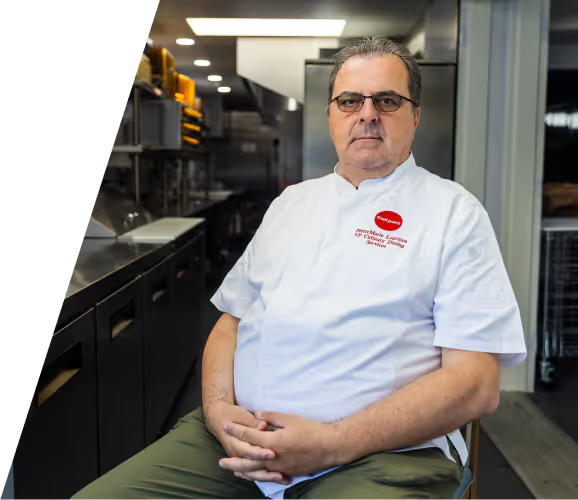
"What is standing out when you look at the mobile kitchen operation is the efficiency that we can really achieve because it's built for that."
Tell us about your kitchen needs and request a quote.
.png)
Turnkey mobile kitchen
Proudly made in-house in the USA
Commercial grade kitchen equipment
Code-compliant
Trusted by Industry Leaders