.gif)
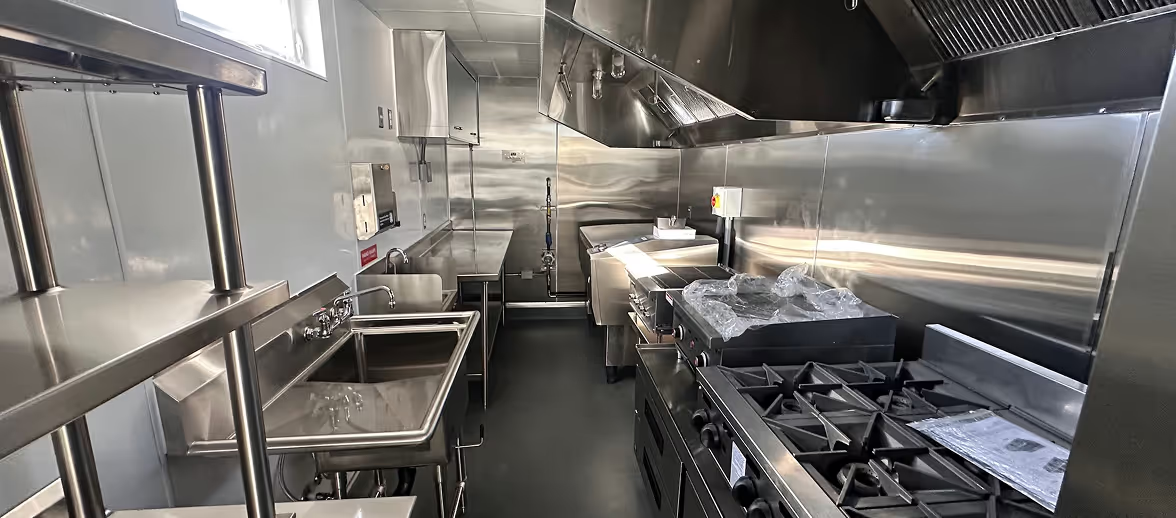
An F&B director planning back-to-back renovations at two Washington resorts — one on the Kitsap Peninsula, one in Chelan County — discovers halfway through scoping that the same mobile kitchen trailer needs two separate permits. Two applications, two inspections, two Local Health Jurisdictions operating under one state code, but with different fee schedules, timelines, and interpretations.
Washington's decentralized permitting model shapes every kitchen trailer inspection checklist Washington operators build for a hospitality deployment. This guide walks through the framework: how a hospitality trailer is classified under WAC 246-215, what each local health jurisdiction inspection covers, how fire and trailer requirements layer on top, and what documentation a code-compliant rental unit should bring to every jurisdiction it enters.
Why Washington's Inspection Landscape Looks Different
35 Local Health Jurisdictions Under One State Code
Washington's food safety rules are set at the state level under WAC 246-215, but enforcement is delegated to the state's 35 Local Health Jurisdictions (LHJs) — county and multi-county health departments that each issue their own mobile food unit permits. The Washington State Department of Health's mobile food unit program sets the statewide floor, but the LHJ where the trailer physically operates conducts the plan review, the pre-operational inspection, and any follow-up visits.
This stands in direct contrast to states like Texas, where DSHS now issues a single statewide mobile food permit recognized across jurisdictions, or Oregon, whose state-specific inspection process follows a different regional model entirely. Washington offers no equivalent — a trailer approved in King County is not automatically approved to operate in Pierce County. Any Washington mobile food unit inspection has to account for this jurisdiction-by-jurisdiction reality from the outset.
What This Means for Multi-Property Hospitality Operators
For a hotel group or resort operator running renovation projects across county lines, this translates into real planning overhead:
- Separate applications for each LHJ where the trailer will be sited, even for the same physical unit
- Independent inspection scheduling — one LHJ's calendar has no bearing on another's
- Varying fee structures, since each LHJ sets its own permit fee schedule
- Different interpretations of WAC 246-215 provisions in edge cases, particularly around commissary approval and equipment substitutions
Note: Some LHJs extend reciprocity for short-term deployments under 14 days, but this is not guaranteed statewide. Confirm reciprocity directly with the receiving jurisdiction before assuming a prior approval will transfer.
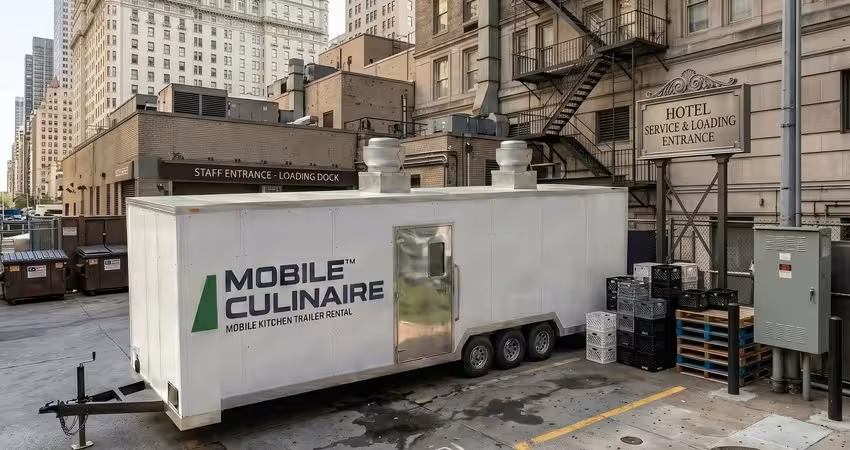
How a Hospitality Mobile Kitchen Is Classified Under WAC 246-215
Mobile Food Unit vs. Temporary Food Service Establishment
WAC 246-215 distinguishes between a mobile food unit (a vehicle-mounted or trailer-mounted kitchen designed to move between locations) and a temporary food service establishment (typically tied to a single event of limited duration). Washington's code is itself an adaptation of the FDA Food Code, which most states use as their baseline. A hospitality kitchen trailer deployed for the length of a renovation — often several months — is classified as a mobile food unit, which carries more extensive plan review and inspection requirements than a short-term temporary permit, but also allows longer-term, repeatable operation once approved. This is the classification every Washington mobile food unit operator in the hospitality space should confirm before submitting a permit application.
The Commissary Requirement for Extended Deployments
Under WAC 246-215-09305, mobile food units must operate from an approved commissary or servicing area for daily cleaning, potable water refill, waste discharge, and supply storage. For a hospitality mobile kitchen deployed during a renovation, the host property's existing permitted kitchen typically qualifies — but written authorization from the permit holder and confirmation by the LHJ are required before the mobile unit can begin operating.
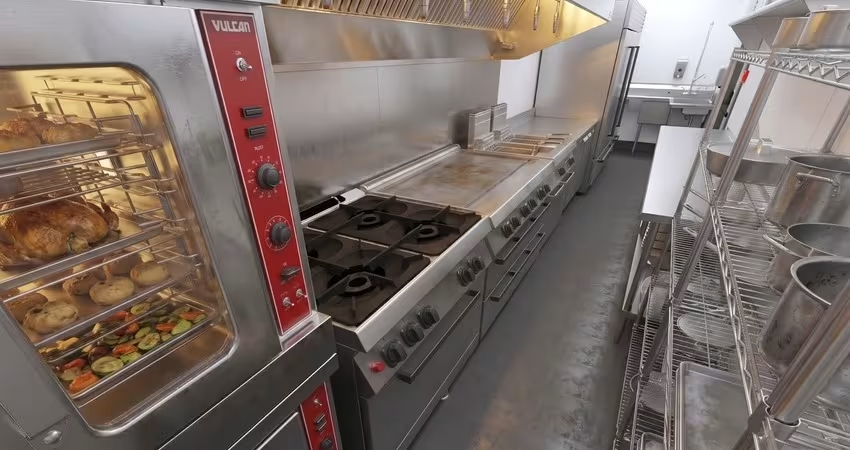
The Washington LHJ Mobile Food Unit Inspection Checklist
Every LHJ inspects against the same WAC 246-215 baseline, even though procedures vary in scheduling and documentation format. Building a reliable kitchen trailer inspection checklist Washington operators can reuse across sites means understanding what stays constant across jurisdictions versus what shifts locally. The core Washington mobile food unit inspection covers four categories.
Water and Waste Systems
Inspectors verify potable water tank capacity and labeling, backflow prevention, wastewater tank capacity (typically sized at 15% greater than potable capacity), and a documented servicing schedule tied to the approved commissary.
Equipment, Surfaces, and Construction
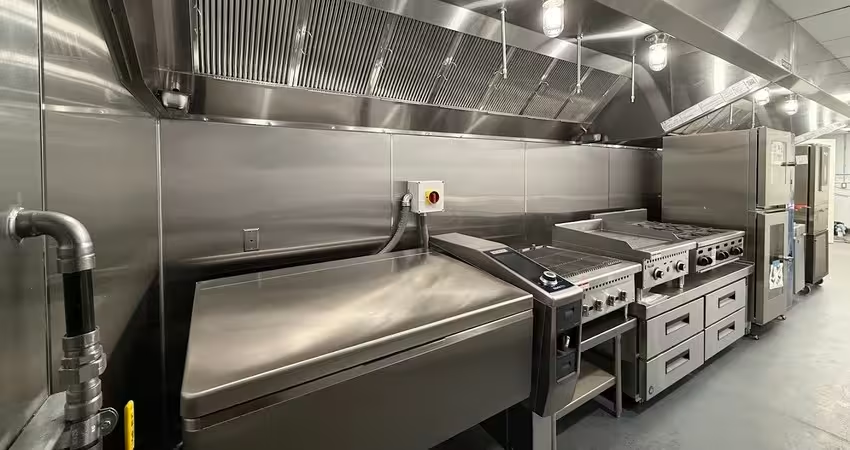
All food-contact surfaces and equipment must meet NSF or equivalent third-party certification standards. Inspectors check for smooth, non-absorbent, cleanable surfaces throughout the unit, proper equipment spacing for cleaning access, and secured equipment mounting appropriate for a mobile structure.
Refrigeration, Temperature Control, and Food Worker Cards
Cold-holding units must maintain 41°F or below and hot-holding units 135°F or above, with calibrated thermometers in place. Inspectors also confirm that on-site staff hold current Food Worker Cards — a credential distinct from other states' food handler certifications.
Tip: Confirm every staff member's Food Worker Card status before the inspection date, not after. A single lapsed card can delay approval by a full inspection cycle.
Documentation Required at Inspection
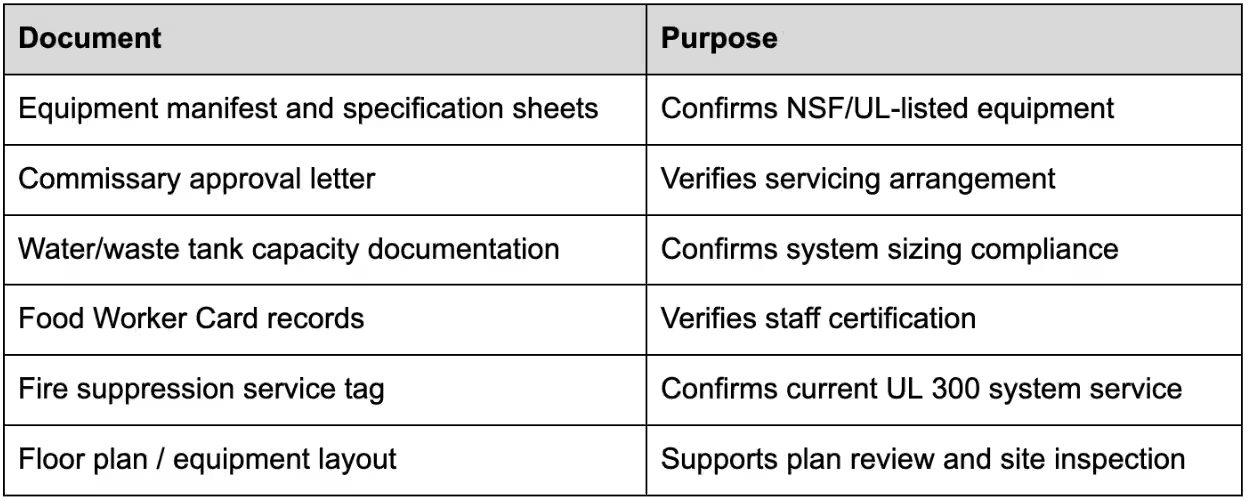
LHJs typically request a standardized documentation package at inspection. The table below summarizes what's commonly requested, though exact requirements vary slightly by jurisdiction.
Fire Code Inspection — IFC and NFPA 96 as Adopted in Washington
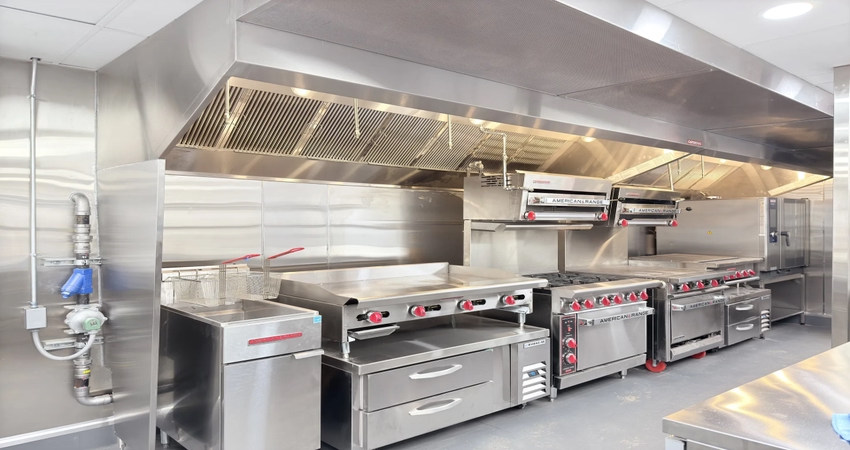
Washington adopts fire code differently than many states. Rather than direct NFPA adoption, the state uses the International Fire Code (IFC), adopted and amended by the Washington State Building Code Council. Within that IFC framework, kitchen exhaust and suppression requirements still reference NFPA 96 for commercial cooking ventilation and fire suppression — meaning a compliant unit needs a UL 300 wet chemical suppression system, semi-annual professional servicing, and a current service tag, in addition to whatever local fire marshal review the AHJ (authority having jurisdiction) requires at the deployment site.
Because fire inspection authority in Washington sits with the local fire marshal rather than a single statewide fire agency, this is a second point — alongside health permitting — where multi-property deployments require separate local sign-off at each site. It's a detail every mobile kitchen Washington inspection plan needs to account for early.
Trailer Safety — Department of Licensing and Washington State Patrol
Titling and Registration
Kitchen trailers operating on Washington roads must be titled and registered through the Washington Department of Licensing. Trailers above the state's weight threshold trigger additional registration classes, and out-of-state trailers relocating into Washington for a deployment need their titling transferred or a non-resident permit secured before operation.
Commercial Trailer Standards
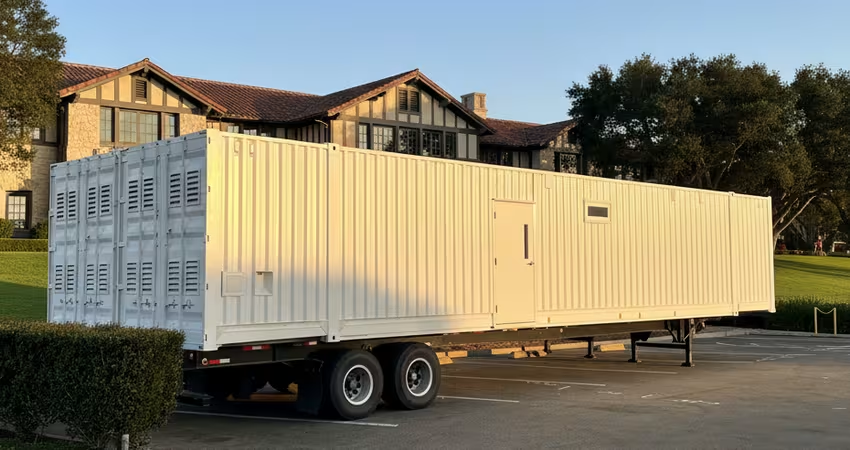
The Washington State Patrol's Commercial Vehicle Enforcement division enforces roadworthiness standards for commercial trailers, including brake systems, lighting, tire condition, and load securement. A trailer moving between LHJ jurisdictions during a multi-site renovation project may be subject to roadside inspection each time it relocates, so maintaining current documentation in the unit itself is standard practice for compliant operators. This mechanical layer sits alongside the health and fire requirements covered earlier in this kitchen trailer inspection checklist Washington guide, and all three need sign-off before a unit is fully cleared for a hospitality deployment.
The Pre-Deployment Kitchen Trailer Inspection Checklist Washington Operators Should Use
Before committing to a site and a start date, hospitality operators building a kitchen trailer inspection checklist Washington deployment requires should confirm the following against their own Washington mobile food unit plan:
- LHJ identified for each deployment site, with permit application submitted ahead of the local processing timeline
- Commissary agreement documented and confirmed with the LHJ in writing
- Fire suppression system current on UL 300 service tag and NFPA 96 compliant
- Local fire marshal contacted for site-specific review requirements under the adopted IFC
- Trailer titling and registration current with the Washington Department of Licensing
- Food Worker Cards current for all assigned staff
- Full documentation package assembled and ready ahead of the scheduled inspection date
What a Code-Compliant Rental Provider Brings to a Multi-Jurisdiction Deployment
Washington's fragmented permitting model raises the cost of getting compliance wrong — a rejected inspection in one LHJ can stall a renovation timeline that a hospitality operator can't easily absorb. This is where the difference between a purpose-built unit and a retrofitted trailer becomes operationally significant, not just a quality distinction.
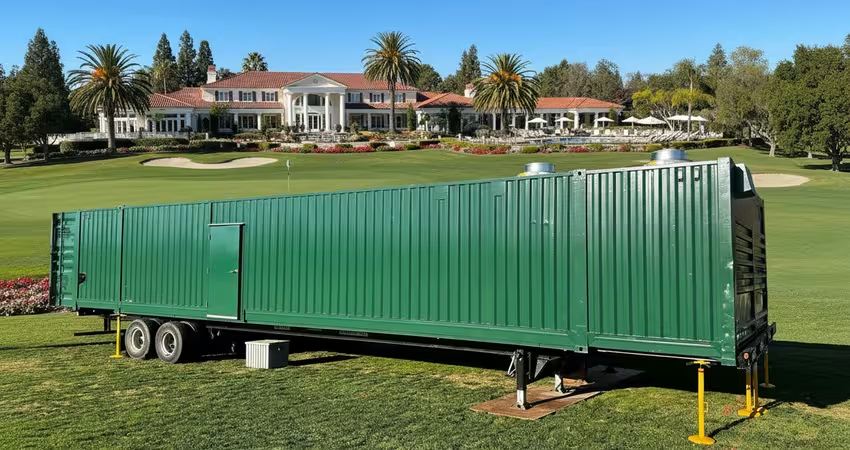
Mobile Culinaire's mobile kitchen rental units are engineered from the ground up with NSF-certified equipment, documented fire suppression service history, and complete engineering documentation assembled before the unit ever leaves the yard — the same documentation package LHJs request at inspection. Combined with our fire safety and suppression standards and potable and waste water system design, that means less scrambling to assemble records when a second LHJ inspection is added mid-project.
For background on how permitting fits into the broader planning timeline, our mobile kitchen rental permits guide covers the process in more depth, and our in-house design and manufacturing approach explains why that documentation exists from day one rather than being pieced together after the fact.
Planning a Washington Deployment Across LHJs
Washington's multi-jurisdiction model rewards operators who plan ahead. A complete kitchen trailer inspection checklist Washington deployment can rely on starts with confirming the LHJ, commissary agreement, and fire marshal requirements at each site before a start date is set — doing so will save weeks compared to discovering permit gaps mid-project.
Explore Mobile Culinaire's mobile kitchen rental units to see the documentation and construction standards that support compliant deployment across multiple Washington jurisdictions, or contact our team to scope a specific renovation timeline.
Disclaimer
This guide is informational and reflects Washington state and local health jurisdiction requirements as understood as of mid-2026. Permit fees, application procedures, commissary standards, and local fire marshal requirements vary by jurisdiction and are subject to change. Confirm current requirements with the applicable Local Health Jurisdiction, the Washington State Building Code Council, and local fire authorities before scoping any project.
People Also Ask (FAQ)
Do I need a separate permit for each Washington county where my mobile kitchen will operate?
Generally yes. Washington's food safety code (WAC 246-215) is administered by the state's 35 Local Health Jurisdictions, and each LHJ issues its own mobile food unit permit. A trailer deployed at a hotel in King County requires a King County permit; if the same trailer relocates to Pierce County or Spokane County, a new permit under that jurisdiction is required. Some LHJs offer reciprocity for short-duration visits, but reciprocity is not universal and should be confirmed with the receiving jurisdiction.
What is a Food Worker Card and who needs one?
A Food Worker Card is issued by Washington's Local Health Jurisdictions after the applicant passes an online food safety test. It's valid for two years for the first card and three years for renewals. Every person who handles unpackaged food, food equipment, or utensils in a mobile food unit operating in Washington must hold a current Food Worker Card — this includes chefs, prep cooks, and line staff on a mobile kitchen deployed for a hotel renovation.
Does Washington require a commissary for mobile food units?
Yes. Under WAC 246-215-09305, mobile food units must operate from an approved commissary or servicing area for daily cleaning, potable water refill, waste discharge, food storage, and supply. For a hospitality mobile kitchen deployed during a renovation, the host hotel's existing permitted kitchen typically qualifies as the commissary, but written authorization from the permit holder and confirmation by the LHJ are required before the mobile unit can operate.
What documentation should the rental provider supply for a Washington inspection?
Engineering drawings, equipment manifest, UL 300 fire suppression listing and current service tag, NFPA 96 hood compliance records, NSF certification for food-contact equipment, potable and waste tank labeling and capacity documentation, propane system compliance, and the most recent third-party inspection certificate. A code-compliant provider supplies this package before the trailer arrives on site.

Testimonial

"What is standing out when you look at the mobile kitchen operation is the efficiency that we can really achieve because it's built for that."
Tell us about your kitchen needs and request a quote.
.png)
Turnkey mobile kitchen
Proudly made in-house in the USA
Commercial grade kitchen equipment
Code-compliant
Trusted by Industry Leaders