.gif)
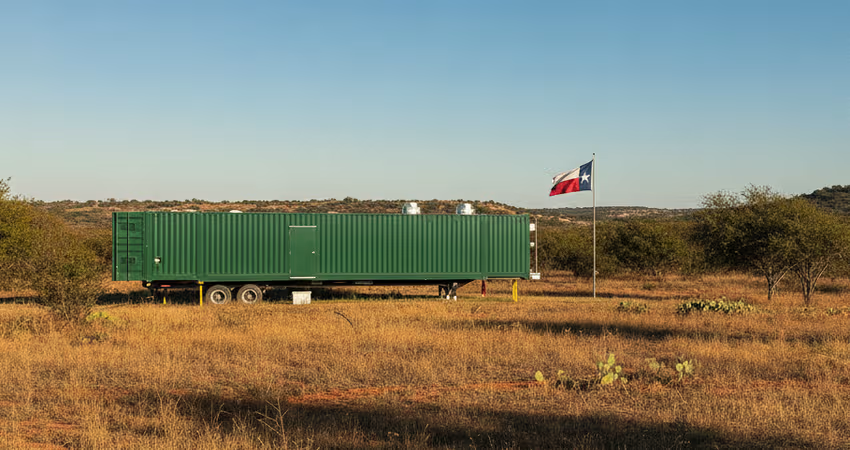
On July 1, 2026, Texas's mobile food unit permitting system changes for the first time in over a decade. Under Senate Bill 1008, every mobile food establishment operating in the state — including trailer-mounted kitchens deployed at hotels, resorts, and country clubs during renovations — must hold a single Texas Department of State Health Services permit recognized statewide. Local medallions issued by Houston, Tarrant County, Dallas County, and other authorities lose effect.
For hospitality operators planning a mid- to long-term renovation in Texas this year, the regulatory shift adds a new layer to an already multi-agency inspection process. This kitchen trailer inspection checklist Texas guide walks through the three parallel regimes — DSHS health, fire marshal, and trailer safety — and what a code-compliant rental unit should bring to each.
Why Texas Inspections Look Different in 2026
For more than a decade, Texas operated on a fragmented model. Houston issued its own mobile food medallions. Tarrant County, Dallas County, and Travis County each ran independent permitting tracks. An operator running the same trailer across three jurisdictions might hold three permits and three inspection schedules.
SB 1008 and the Move to a Statewide Permit
Senate Bill 1008, enacted in 2025, preempts that fragmentation. The law gives Texas DSHS exclusive authority to issue mobile food unit permits and aligns local fee schedules with the state's risk-based model. Regulatory alignment began September 1, 2025, and the statewide permit becomes the only valid mobile food unit credential on July 1, 2026.
Local health departments still inspect — they just do it on behalf of the state. Houston Health Department, Tarrant County Public Health, and Dallas County DCHHS continue conducting field inspections, but under a single state framework rather than parallel city ordinances.
For an F&B director planning a hotel kitchen renovation in late 2026, three things change in practice:
- Permit application moves to DSHS. Apply through the Texas DSHS Regulatory Services online licensing system — not the city.
- Fees follow the DSHS risk-based structure. Local permit categories not recognized by DSHS have been repealed.
- Local medallions expire on their original term. A trailer arriving on site in August 2026 needs the new state permit.
Note: The transition does not change what's inspected — only who issues the permit. The inspection checklist itself, governed by the Texas Food Establishment Rules, is unchanged by SB 1008.
How a Hospitality Mobile Kitchen Is Classified Under TFER
Before the kitchen trailer inspection checklist Texas operators rely on can be applied, the classification has to be settled. TFER recognizes three retail food establishment categories, and the classification dictates which checklist applies.
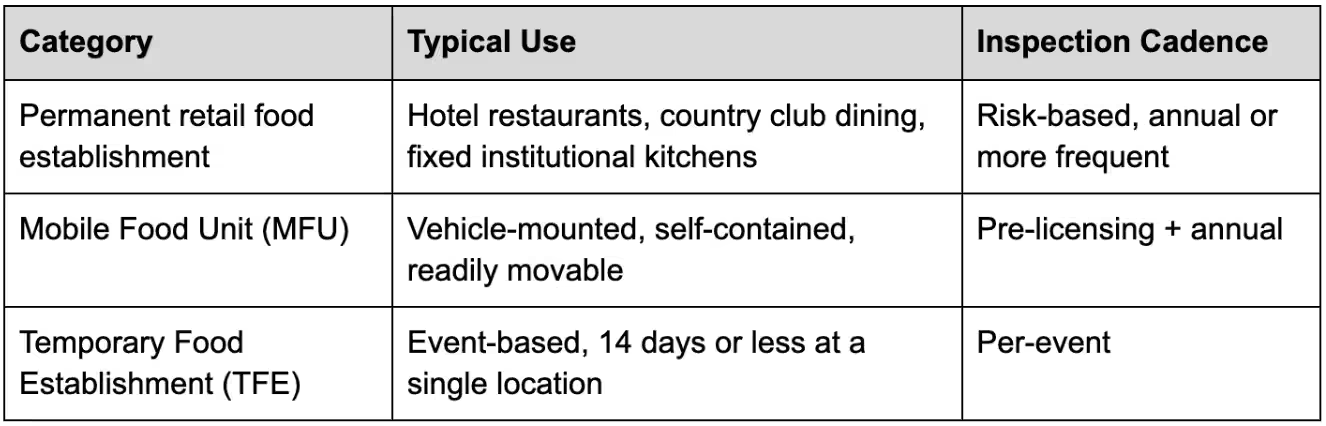
A trailer-mounted hospitality kitchen rented for a six-month renovation falls squarely into the Mobile Food Unit definition under TFER §228.2: a vehicle-mounted, self-contained food service operation designed to be readily moveable. It is not a Temporary Food Establishment — TFE permits cap at 14 days — and it cannot operate under the host hotel's permanent permit unless the local health authority issues written confirmation.
The Central Preparation Facility Question
TFER §228.221 requires every Mobile Food Unit to operate from a permitted Central Preparation Facility (CPF) for daily servicing — supplies, cleaning, and waste discharge. For a hospitality renovation, the host hotel's existing permitted kitchen typically serves as the CPF, but written authorization from the hotel's permit holder must be submitted at pre-licensing inspection. If no CPF is available, DSHS allows a variance request when the trailer's onboard storage and preparation capacity is sufficient.
Tip: Sort the CPF designation before the trailer ships. A missing letter of authorization is one of the most common reasons pre-licensing inspections fail on the first attempt.
The Texas DSHS Mobile Food Unit Inspection Checklist
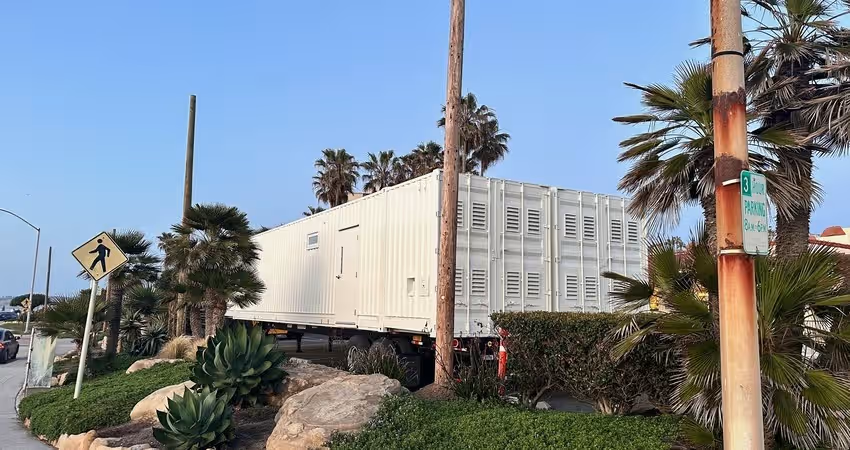
The state's pre-licensing inspection follows Publication EH-22, which mirrors TFER Chapter 228 and the 2022 FDA Food Code Texas has adopted by reference. The trailer must be fully operational at the time of inspection — water flowing, refrigeration at temperature, hoods running — without relying on shore power or city water hookups during the inspection itself.
Water and Waste Systems
The potable and waste water configuration is the most commonly cited deficiency on Texas pre-licensing inspections:
- Potable water tank labeled "Potable Water," installed sloped to drain
- Potable water inlet of ¾-inch or smaller, with a connection that cannot be used for any other purpose
- Distribution pipes constructed to public health and plumbing standards, under pressure to all sinks
- Liquid waste retention tank with capacity at least 15% larger than the potable tank, installed sloped to drain
- Three-compartment sink large enough to immerse the largest piece of equipment or utensil in use
- Handwashing sink with hot and cold water under pressure, soap, and single-use towels
Equipment, Surfaces, and Construction
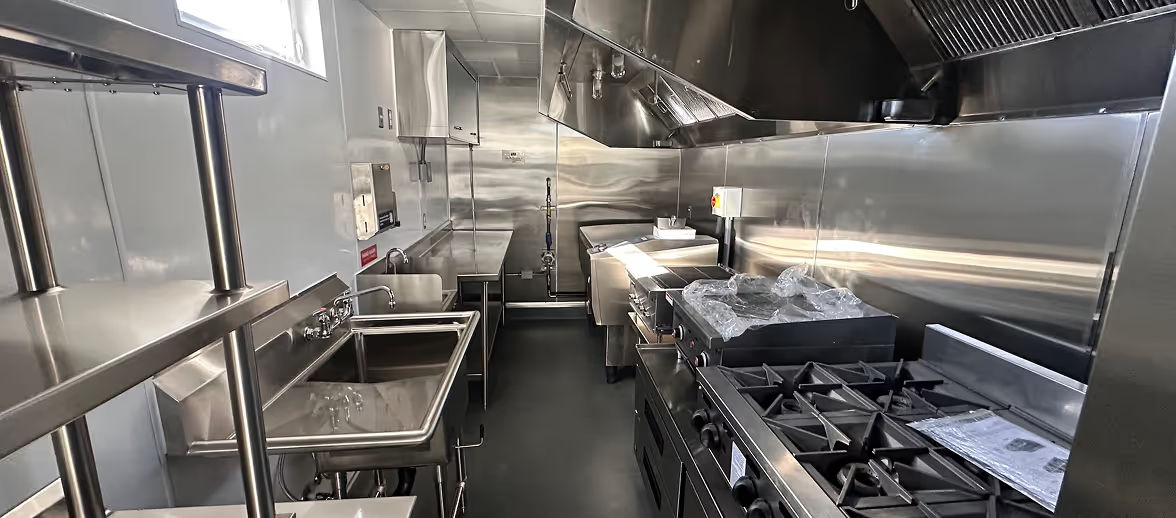
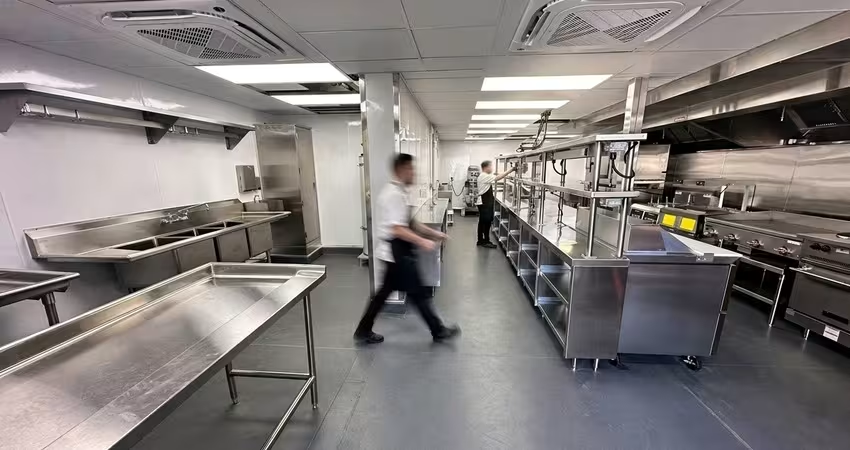
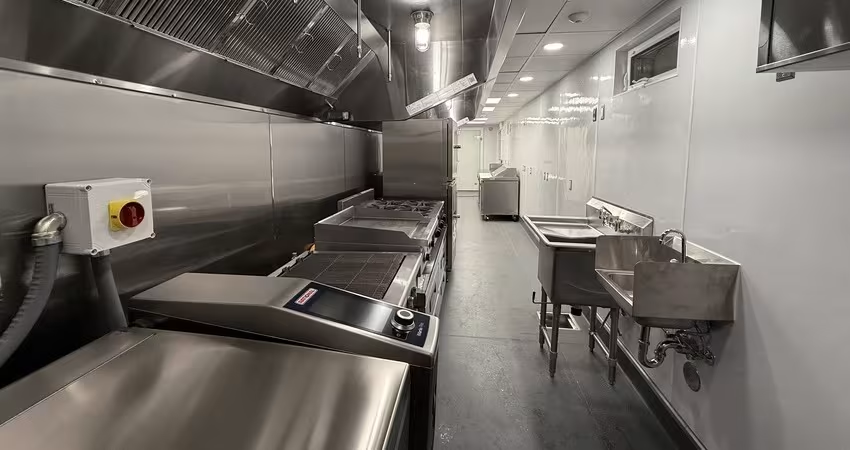
Interior surfaces and equipment must meet NSF (or equivalent) standards for food-contact use, and the structure itself must be built to commercial kitchen finish standards. Mobile Culinaire's mobile kitchen rental units are finished to the same assemblies as permanent commercial kitchens, which eliminates most surface-related deficiencies seen on retrofitted trailers.
- Walls, floors, and ceilings: solid, light-colored, smooth, easily cleanable
- Sealed against weather, rodents, insects, and other animals
- Cooking equipment commercially listed and installed with manufacturer clearances
- Trailer-mounted structures permanently affixed to the chassis
Refrigeration, Temperature Control, and Handwashing
- Cold-TCS refrigeration holding at 41°F or below at the time of inspection
- Hot holding units verified at 135°F or above where applicable
- Calibrated probe thermometers accessible for staff use
- Handwashing station within the food preparation area, separate from warewashing
Documentation Required at Inspection
The inspector expects the following on-site:
- Texas Sales Tax ID
- CPF letter of authorization plus the CPF's most recent inspection report
- Certified Food Manager certification
- Food handler certifications for all staff
- Complete menu with proteins, processes, and TCS food list
Fire Marshal Inspection — NFPA 96 as Adopted in Texas
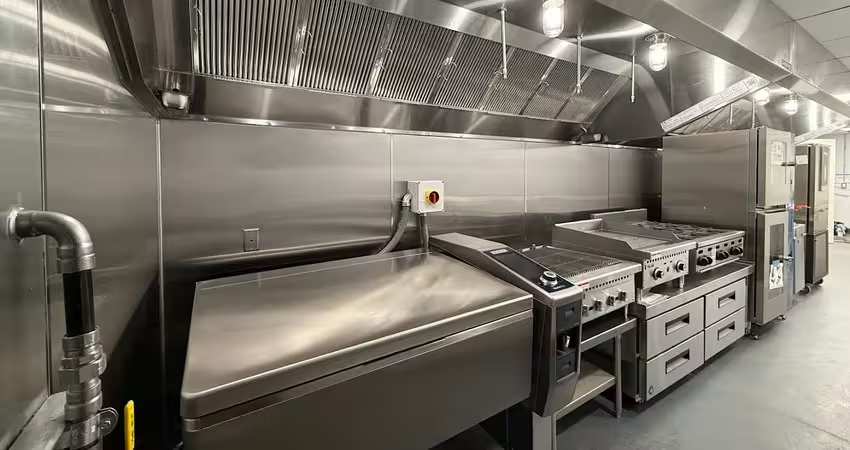
DSHS handles food safety. Fire safety is a separate, locally administered inspection — and it follows NFPA 96, which Texas jurisdictions adopt either directly or through the International Fire Code. For deeper coverage, see our companion guide on mobile kitchen fire safety standards.
The fire marshal verifies five core elements before issuing clearance:
- Type I exhaust hood with grease filters sized to the cooking line
- UL 300 listed wet-chemical suppression system with a current semi-annual service tag
- Suppression nozzle layout matching the installed cooking equipment
- Class K extinguisher mounted and within service date
- Clearances to combustibles per NFPA 96 Chapter 5
Coordination is local. Schedule the fire marshal walk-through at least two weeks before go-live — earlier in jurisdictions with longer queues. Many Texas municipalities require fire clearance before the DSHS permit activates, so sequencing matters.
Tip: Ask the fire marshal whether the jurisdiction requires a pre-installation plan review in addition to the on-site inspection. Some Texas cities — including parts of Harris and Bexar Counties — do.
Trailer Safety — TxDMV Titling and Commercial Vehicle Inspection
The mobile kitchen is a kitchen, but it is also a trailer. Two state agencies regulate the trailer side.
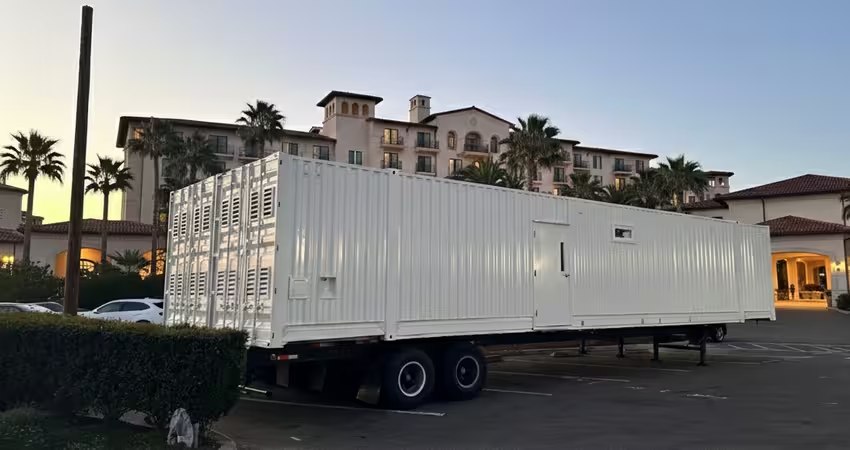
A loaded mobile kitchen trailer exceeds 4,500 lbs by an order of magnitude, which puts it in the titling and inspection regime managed by the Texas Department of Motor Vehicles. Trailers over 4,000 lbs gross weight must be titled. For a rental unit, the provider holds the title — but the operator should verify the trailer arrives with current Texas registration.
Trailers over 4,500 lbs actual or registered gross weight also fall under Texas DPS commercial vehicle inspection — annual inspection of brakes, tires, wheel assemblies, lamps, reflectors, and structural elements. The provider should supply a current inspection certificate at delivery.
Note: Texas eliminated annual safety inspections for non-commercial passenger vehicles in January 2025, but the commercial trailer inspection regime is unchanged. A mobile kitchen trailer is a commercial vehicle.
The Pre-Deployment Kitchen Trailer Inspection Checklist Texas Operators Should Use
Use this consolidated kitchen trailer inspection checklist Texas hospitality operators can run in the two weeks before the trailer arrives:
- DSHS Mobile Food Unit permit application submitted; risk-based fee paid
- CPF letter of authorization signed by the host kitchen's permit holder
- Certified Food Manager and Food Handler certifications in hand for all staff
- Menu, TCS food list, and cooking processes documented
- Fire marshal walk-through scheduled at least two weeks before go-live
- UL 300 suppression service tag current within six months
- Class K extinguisher current
- Trailer registration current; commercial vehicle inspection certificate on file
- Potable and waste tank labels visible; waste capacity verified at +15%
- Three-compartment sink, handwash sink, and refrigeration operational without shore connections at inspection
- Engineering drawings, equipment manifest, and propane system compliance documentation accessible
For more on the underlying systems behind these line items, see our guides on mobile kitchen rental permits and potable water and wastewater systems.
What a Code-Compliant Rental Provider Brings to the Inspection
The difference between a clean first-attempt inspection and a return visit is usually documentation, not equipment. A rental provider operating at hospitality standard arrives with engineering drawings, the UL 300 suppression listing and most recent service tag, NFPA 96 hood compliance records, NSF certifications, tank specs, propane compliance per NFPA 58, and the most recent third-party inspection certificate.
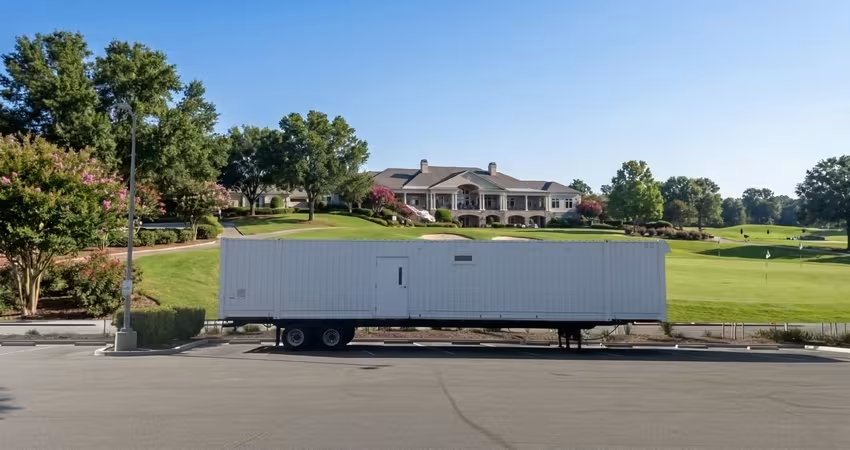
Mobile Culinaire's units are designed and manufactured in-house to commercial kitchen finish standards, with the documentation package delivered before the trailer ships. The same baseline applies whether the unit supports a country club renovation, a hotel kitchen rebuild, or a seasonal capacity expansion — and parallels the approach used in our Oregon state-specific inspection process.
Planning a Texas Deployment Under the New Framework
In Texas, compliance is what separates a smooth deployment from a delayed one — and on July 1, 2026, the bar moves. The kitchen trailer inspection checklist Texas hospitality operators rely on is the same in substance, but the permit issuer, fee structure, and statewide framework have all changed. Browse recent Mobile Culinaire deployments for hospitality projects that have cleared the full health, fire, and trailer inspection stack, or contact our team to walk through Texas-specific requirements for an upcoming renovation.
Disclaimer
This guide is informational and reflects Texas regulations and SB 1008 implementation as of June 2026. Permit fees, application procedures, and local inspection schedules are subject to change. Confirm current requirements with the Texas Department of State Health Services and the local health and fire authorities with jurisdiction over the deployment site before scoping any project.
People Also Ask (FAQ)
Do I need a separate Texas mobile food unit permit if my mobile kitchen is parked at a hotel during a renovation?
In most cases, yes. TFER classifies a vehicle-mounted, self-contained food service operation as a Mobile Food Unit regardless of whether cooked food is served on-premises through an attached permanent restaurant. The operator must hold a DSHS-issued Mobile Food Unit permit, and the trailer must pass pre-licensing inspection before food preparation begins. Some jurisdictions may allow the trailer to operate as an extension of the permanent establishment's permit, but only with written confirmation from the local health authority.
What changed for mobile kitchen inspections in Texas in 2026?
Senate Bill 1008, effective in stages between September 1, 2025 and July 1, 2026, centralizes Mobile Food Unit permitting under Texas DSHS. After July 1, 2026, city- and county-issued mobile food medallions are no longer valid. A single DSHS permit is recognized statewide, and local health authorities inspect on behalf of the state under a risk-based fee structure.
Who inspects a kitchen trailer in Texas — the state or the city?
After July 1, 2026, DSHS issues the permit and the local health authority conducts the on-site inspection on the state's behalf. Fire marshal inspections remain a local function. Commercial trailer mechanical inspections fall under the Texas Department of Public Safety for trailers over 4,500 lbs gross weight.
What documentation should the rental provider supply for a Texas inspection?
Engineering drawings, the equipment manifest, a UL 300 fire suppression listing with current service tag, NFPA 96 hood and duct compliance records, NSF certification for food-contact equipment, potable and waste tank labeling and capacity records, propane system compliance per NFPA 58, and the most recent third-party inspection certificate.

Testimonial

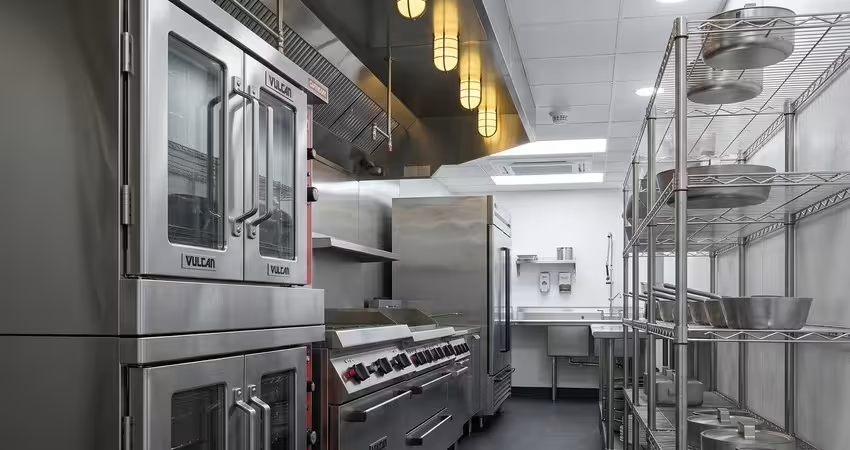
"What is standing out when you look at the mobile kitchen operation is the efficiency that we can really achieve because it's built for that."
Tell us about your kitchen needs and request a quote.
.png)
Turnkey mobile kitchen
Proudly made in-house in the USA
Commercial grade kitchen equipment
Code-compliant
Trusted by Industry Leaders