.gif)
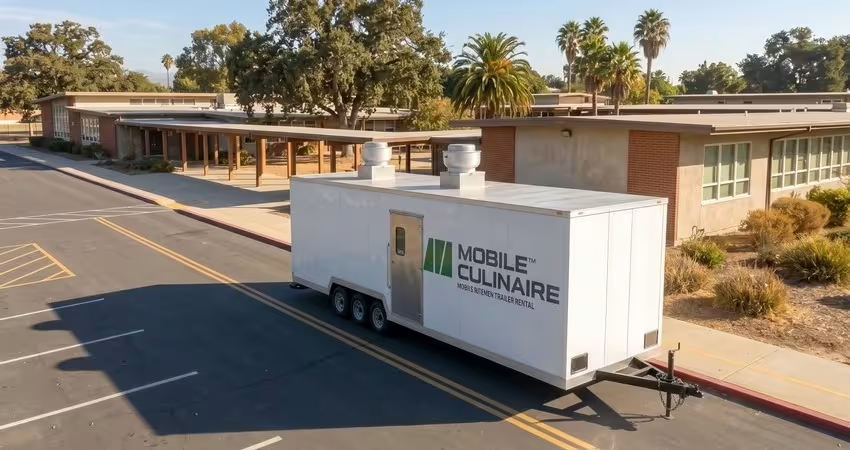
What happens when a mobile kitchen trailer passes inspection in Maricopa County, then the same renovation project needs it operating in Pima County three months later? In most states, that's a second application from scratch. In Arizona, it's a permit — not a new license.
That distinction matters for any hospitality operator planning a mid- to long-term renovation across multiple Arizona properties, whether the deployment involves Mobile Culinaire's mobile kitchen rental units or another provider's equipment. Arizona runs a hybrid model: one statewide mobile food unit license, issued and inspected by a single county, paired with lighter-weight permits for every additional county where the unit operates.
This kitchen trailer inspection checklist Arizona guide walks through that structure — the state-license and classification rules, the fire marshal standard used statewide, and the trailer safety requirements enforced by ADOT and Arizona DPS.
Why Arizona Inspections Look Different From Neighboring States
Compare Arizona to the other states covered in this series. Texas recently centralized its permitting under a single DSHS-issued statewide permit. Washington runs 35 fully independent Local Health Jurisdictions, each with its own inspection cycle. Arizona sits in between: a single license with statewide legal effect, but enforcement and inspection delegated to the county level — a structure closer in spirit to Oregon's approach, though Arizona's reciprocity mechanics are distinct from both.
One State-License, County-by-County Enforcement Under A.R.S. § 36-1761
Under A.R.S. § 36-1761, a mobile food vendor obtains a state-license from the county where the unit's commissary is located. That license includes a statewide inspection and is valid for operation anywhere in Arizona — but only in the issuing county without further paperwork. To operate in any other county, the vendor needs an annual permit from that county, authorizing the already-licensed unit to work within its borders.
A.A.C. R9-8-110 — the state's mobile food unit rule — lays out the mechanics: the license and any cross-county permits must be displayed in the unit, the vendor must maintain a signed commissary or servicing-area agreement, and units are subject to random statewide inspections at no additional cost, aside from limited exceptions under A.R.S. § 11-269.24.
What This Means for Multi-Property Hospitality Operators
A single kitchen trailer inspection checklist Arizona compliance requires two layers of paperwork whenever a renovation touches more than one county — a state-license from the commissary's home county, plus a permit for each additional county of operation. Neither replaces the other.
For a hospitality group renovating a resort kitchen in Scottsdale and a second property in Tucson using the same trailer, that means one Maricopa County state-license and one Pima County permit — not two full applications. Planning this sequencing early avoids delays once the trailer needs to relocate mid-project.
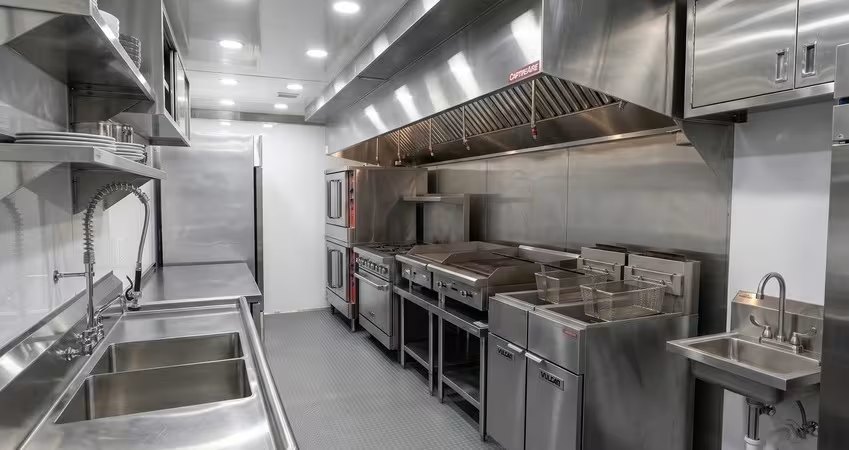
How a Hospitality Mobile Kitchen Is Classified Under R9-8-110
Before any kitchen trailer inspection checklist Arizona operators use can be applied correctly, the unit has to be classified. This step comes before water, fire, or trailer inspection — the classification determines which version of the kitchen trailer inspection checklist Arizona inspectors will run. R9-8-110 sorts mobile food units into three tiers based on how much food handling and preparation happens on board.
Type I, Type II, and Type III Mobile Food Units

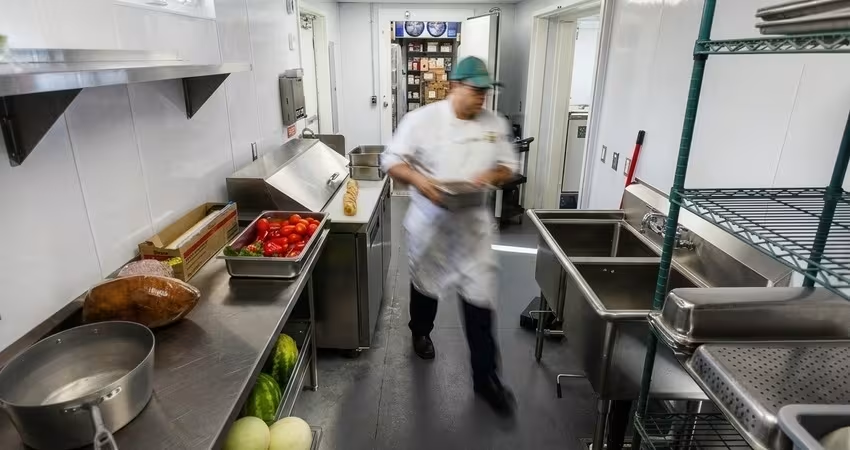
Most renovation-driven deployments at hotels, resorts, and country clubs fall under Type III, since they need to replicate a full-service kitchen's cooking and prep capability. Type III units carry the heaviest equipment requirements at inspection, including a three-compartment sink with a minimum 30-gallon pressurized potable water supply.
The Commissary Agreement Requirement for Extended Deployments
Every mobile food unit needs a signed agreement with an approved commissary or other servicing area in the county issuing its state-license. The agreement must document the commissary's name, address, permit number, and the specific services it provides — water recharge, wastewater disposal, refuse disposal, or equipment cleaning. Units must report to a commissary or servicing area at least every 96 hours during operation.
Tip: Line up the commissary agreement before scheduling the inspection. Inspectors will not complete a statewide inspection without a documented, signed servicing arrangement on file.
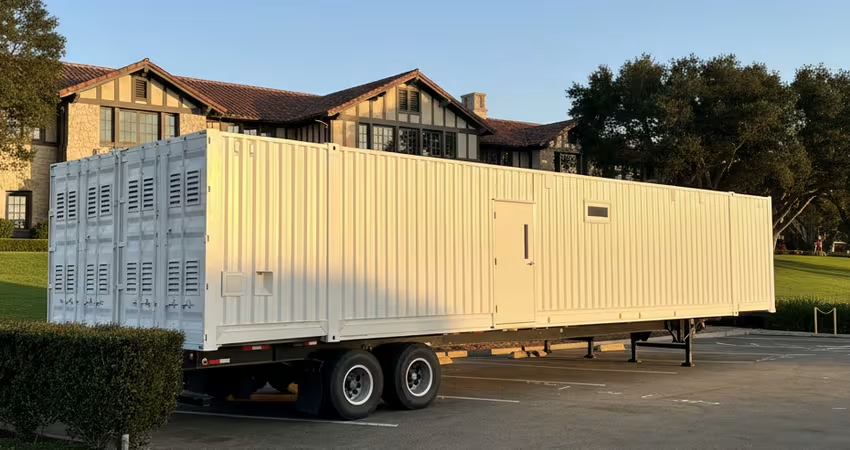
The Arizona Statewide Inspection Checklist for Mobile Food Units
R9-8-110 sets out the physical and operational standards a Type III unit must meet at inspection, layered on top of the baseline FDA Food Code that Arizona has adopted by reference.
Water and Waste Systems
Arizona's water and waste requirements track closely with the potable and wastewater system standards that apply across our other state-specific inspection guides:
- Potable water system under pressure, minimum 30-gallon capacity, supplying both hot and cold water
- Wastewater tank capacity at least 15% greater than the potable water tank
- Minimum flow rate of one-half gallon per minute at all fixtures
- Quick-disconnect fittings for both potable water and wastewater lines
Equipment, Surfaces, and Construction
- All compressors, generators, and mechanical equipment bear NSF or ANSI approval
- Unit and equipment free of dirt, debris, insects, and vermin
- Surfaces maintained in good repair per manufacturer specifications
- Adequate ventilation throughout the unit
Refrigeration, Handwashing, and Food Handler Cards
- Cold-holding units verified to maintain food at 41°F or below
- Dedicated handwashing sink with a combination hot/cold mixing faucet
- Soap and single-use paper towels stocked and accessible
- All employees carry a valid food handler card or accredited training certificate
Documentation Required at Inspection
- Current state-license, displayed in a conspicuous location
- Any additional county permits, if the unit operates outside its licensing county
- Signed commissary or servicing-area agreement
- Service log documenting the type and date of services received, kept on board for at least 30 days
Fire Marshal Inspection — NFPA 96 and the AFMA Statewide Checklist
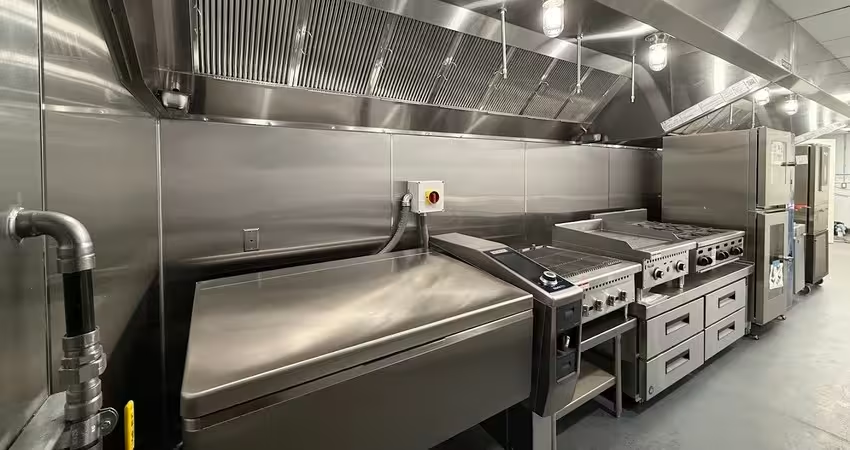
The fire marshal portion of the kitchen trailer inspection checklist Arizona jurisdictions apply runs separately from the health inspection above, but the two are typically scheduled together for a renovation deployment. Fire inspection in Arizona runs through local fire departments and districts, but the standards are unusually harmonized statewide. The Arizona Fire Marshals Association publishes a consensus mobile food unit inspection checklist adopted by member jurisdictions across the state, built around NFPA 96 — the same standard covered in our guide to fire safety and suppression systems for mobile kitchens.
Arizona's propane requirements are folded into the same fire inspection — see our propane safety and regulations guide for the national baseline these Arizona-specific line items build on.
Suppression, Hood, and Class K Extinguisher Verification
- Operational Class K fire extinguisher for grease fires, tagged and certified by a licensed contractor
- Standard ABC extinguisher as a secondary unit
- Exhaust hood and grease filters clean and free of residue buildup
- Minimum 10-foot clearance from buildings, structures, vehicles, and combustible materials
- Propane and LPG lines pressure-tested and verified leak-free
The 12-Month Reciprocity Window Across Jurisdictions
Under Arizona Fire Marshal Association guidelines, a passing fire inspection from one Arizona city or town fire department is generally recognized across other jurisdictions for up to 12 months.
That reciprocity is what makes a multi-county hospitality deployment workable on a fire-safety basis — the trailer doesn't need a fresh fire inspection every time it crosses a jurisdiction line within that window, though local fire officials retain authority to inspect on request.
Trailer Safety — ADOT MVD Titling and DPS Commercial Vehicle Standards
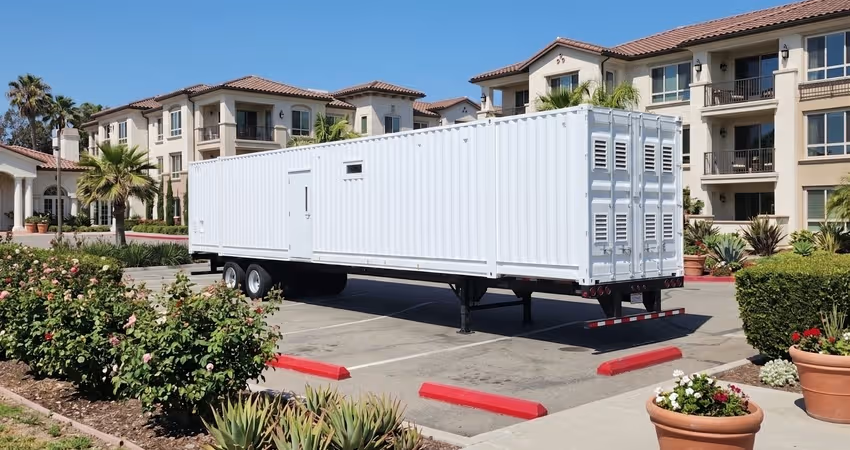
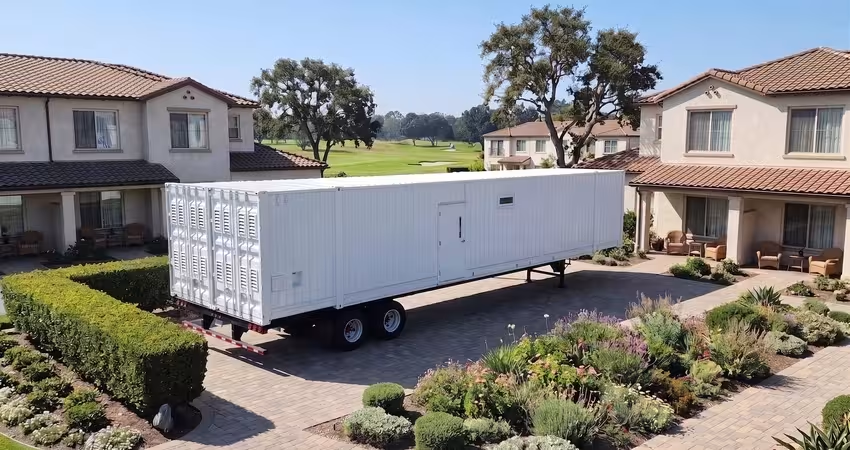
Beyond food and fire compliance, the trailer itself has to clear Arizona's vehicle titling, registration, and commercial inspection requirements — the same category of standards covered in our towing requirements guide for mobile kitchen trailers.
Titling, Registration, and the 10,000-lb GVW Threshold
The Arizona Department of Transportation Motor Vehicle Division requires trailers with a declared gross vehicle weight over 10,000 lbs to carry permanent registration, paid as a one-time fee rather than an annual renewal. Trailers below that threshold generally qualify for standard or permanent plates depending on weight class. Every kitchen trailer needs a valid title and current registration displayed before it can be deployed to a job site.
Commercial Vehicle Inspection for Mobile Kitchen Trailers
Combination units — a towing vehicle plus a loaded kitchen trailer — that exceed a combined gross weight of 26,000 lbs fall under Arizona's commercial vehicle registration and inspection requirements, enforced in coordination with the Arizona Department of Public Safety's commercial vehicle enforcement program. Operators should confirm combined weight ratings before transport, since crossing that threshold changes both the registration class and the driver licensing requirements involved.
Pre-Deployment Kitchen Trailer Inspection Checklist for Arizona Operators
Use this consolidated kitchen trailer inspection checklist Arizona hospitality operators can run through in the two to three weeks before a trailer arrives on site. Individual counties, including Maricopa County's Environmental Services Department, may add minor local documentation requirements on top of the statewide baseline below, so confirm with the issuing county before the inspection date:
- State-license confirmed and current for the commissary's home county
- Permit obtained for every additional county where the unit will operate
- Commissary or servicing-area agreement signed and on file
- Type I/II/III classification matches the planned menu and service style
- Water, waste, and refrigeration systems tested to R9-8-110 specifications
- Food handler cards current for all staff
- Class K and ABC extinguishers tagged and certified
- Exhaust hood and filters cleaned; propane lines leak-tested
- Fire inspection reciprocity confirmed if crossing jurisdiction lines within 12 months
- Trailer title, registration, and weight class verified with ADOT MVD
- Service log ready for inspector review

What a Code-Compliant Rental Provider Brings to a Multi-County Deployment
A rental provider that has already run this process across multiple Arizona counties brings more than a compliant trailer — it brings the documentation package inspectors expect to see when running the kitchen trailer inspection checklist Arizona counties require.
Mobile Culinaire's units are purpose-built with commercial-grade water, waste, and refrigeration systems designed to clear R9-8-110 inspection on the first visit, and our propane systems are engineered and tested to the same NFPA 96 standard referenced by Arizona fire marshals statewide. Mobile Culinaire's project coordinators also handle the commissary agreement and multi-county permit sequencing directly, rather than leaving that paperwork to the hospitality operator.
For hospitality operators managing renovations across more than one Arizona county, that means less time reconciling paperwork between a state-license and county-level permits, and a project coordinator who has already been through the sequencing before.
Planning an Arizona Deployment Across Counties
Working through the kitchen trailer inspection checklist Arizona requires, county by county, is easiest when it's planned before the trailer ships rather than after it arrives. Browse recent Mobile Culinaire deployments for hospitality projects that have cleared the full state, fire, and trailer inspection stack across multiple counties, or contact our team to walk through Arizona-specific requirements for an upcoming renovation.
Disclaimer
This article is for general informational purposes and reflects Arizona regulations as of the time of writing. Requirements vary by county and municipality and are subject to change. Hospitality operators should confirm current requirements directly with the relevant Arizona county health department, local fire marshal, and ADOT MVD before finalizing a deployment plan.
People Also Ask (FAQ)
What permits does a mobile kitchen need to operate in Arizona?
A mobile kitchen operating in Arizona needs a state-license from the county where its commissary is located, which includes a statewide inspection under R9-8-110. To operate in any additional county, the unit needs an annual permit from that county — the state-license itself doesn't need to be reissued.
What is a Level 1 inspection for a trailer in Arizona?
A Level 1 inspection is required by Arizona MVD when titling or registering a trailer for the first time, particularly homemade or modified units. It verifies the trailer's identity, weight, and construction before a title is issued, separate from the health and fire inspections a mobile kitchen unit undergoes.
Does a fire inspection in one Arizona city count in another?
Generally, yes. Under Arizona Fire Marshals Association guidelines, a passing fire inspection from one Arizona jurisdiction is recognized across other participating jurisdictions for up to 12 months, though local fire officials can still inspect on request.
Who needs a food handler card in Arizona?
Every employee working on a mobile food unit in Arizona needs a valid food handler card or a certificate from an accredited food handler training provider, as required under the state's adopted Food Code and verified during the statewide inspection.

Testimonial

"What is standing out when you look at the mobile kitchen operation is the efficiency that we can really achieve because it's built for that."
Tell us about your kitchen needs and request a quote.
.png)
Turnkey mobile kitchen
Proudly made in-house in the USA
Commercial grade kitchen equipment
Code-compliant
Trusted by Industry Leaders