.gif)
When the rental quote comes in, the weight, hitch ratings, and CDL rules aren't usually on your radar — until something on delivery day goes sideways. A bridge with a posted weight limit on the access road. An oversize permit that wasn't pulled. A driver shortage that pushes deployment back two weeks.
Most hospitality operators never tow a mobile kitchen themselves. But understanding mobile kitchen towing requirements is what separates a clean Monday-morning install from a delayed renovation kickoff. This guide breaks down the weight thresholds, hitch and tow-vehicle specs, CDL rules under FMCSA, and the oversize-load regulations that govern how a commercial mobile kitchen actually gets to your site — and what questions to ask your provider before delivery day.
Why Hospitality Operators Need to Understand Mobile Kitchen Towing Requirements
You aren't going to hitch a 40-foot kitchen trailer to a pickup. So why does this matter for a hotel GM or country club F&B director?
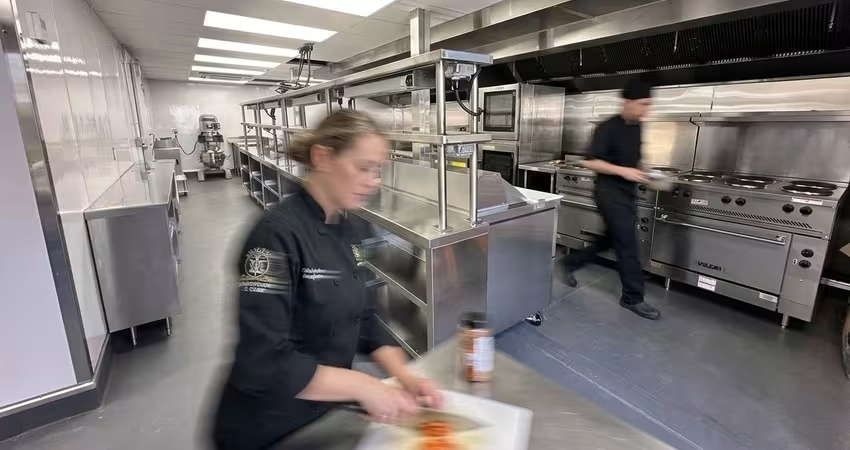
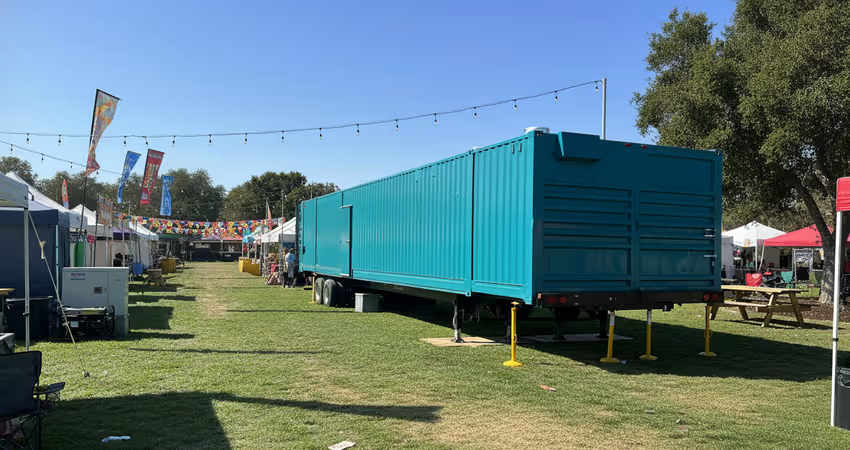
- Site planning. Trailer weight, length, and turning radius dictate where the unit can sit and what your access road must handle.
- Schedule risk. Oversize permits, route surveys, and CDL driver availability are real lead-time variables. Misjudge them and the renovation start slips.
- Contract clarity. Knowing what falls under the provider's transport scope — and what's left to your team — prevents disputes about insurance, escort vehicles, and site damage.
Mobile kitchen towing requirements are the upstream constraint that decides whether a turnkey rental actually lands turnkey. For how transport fits into the broader process, see our step-by-step mobile kitchen rental process.
Mobile Kitchen Weight Classifications and GVWR Thresholds
Weight is where every other variable starts — hitch class, CDL applicability, oversize permits, and pavement requirements all branch from it.
Curb Weight vs. GVWR vs. GCWR
Three terms govern transport rules:
- Curb weight — the unit dry, with installed equipment only.
- GVWR (Gross Vehicle Weight Rating) — maximum total weight the trailer is rated to carry.
- GCWR (Gross Combination Weight Rating) — combined rated weight of tow vehicle plus trailer.
For regulatory purposes, the mobile kitchen GVWR — not the curb weight — triggers federal and state rules. A 53-foot unit that weighs 38,000 lbs but is rated to 45,000 lbs is treated as a 45,000-lb trailer by FMCSA. Mobile kitchen GVWR is also what your provider's carrier uses to determine licensing class.
Note: Ask your provider for the unit's GVWR and the loaded shipping weight separately. The first determines licensing and permits; the second determines pavement and pad requirements.
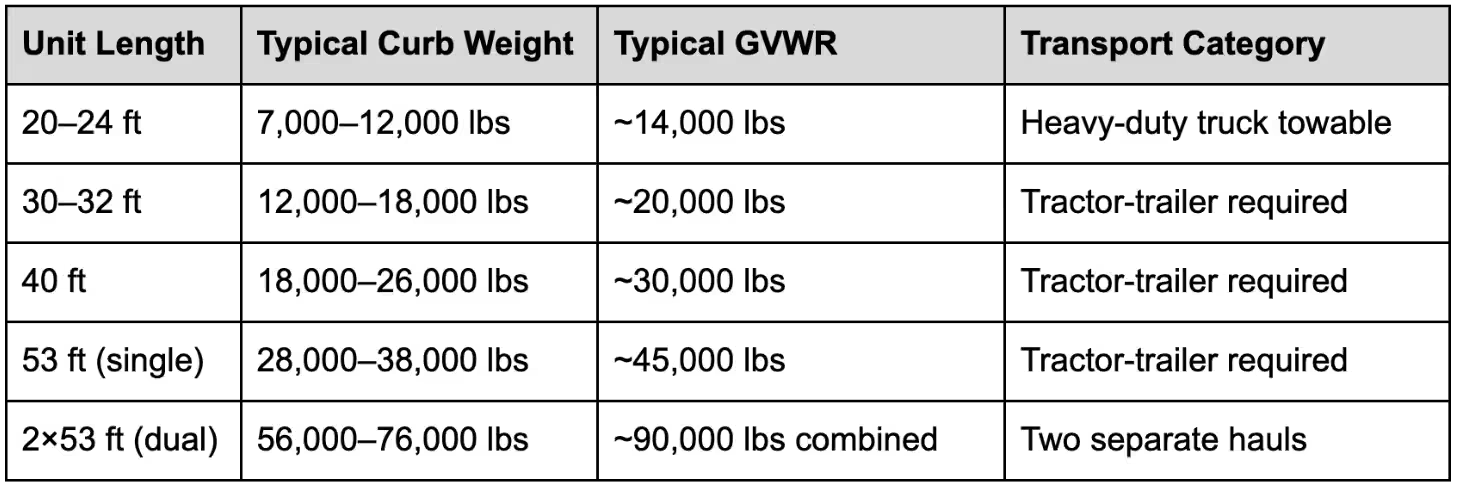
Typical Mobile Kitchen Weight Ranges by Unit Size
Commercial-grade units — not retrofitted food trucks — fall into these ranges:
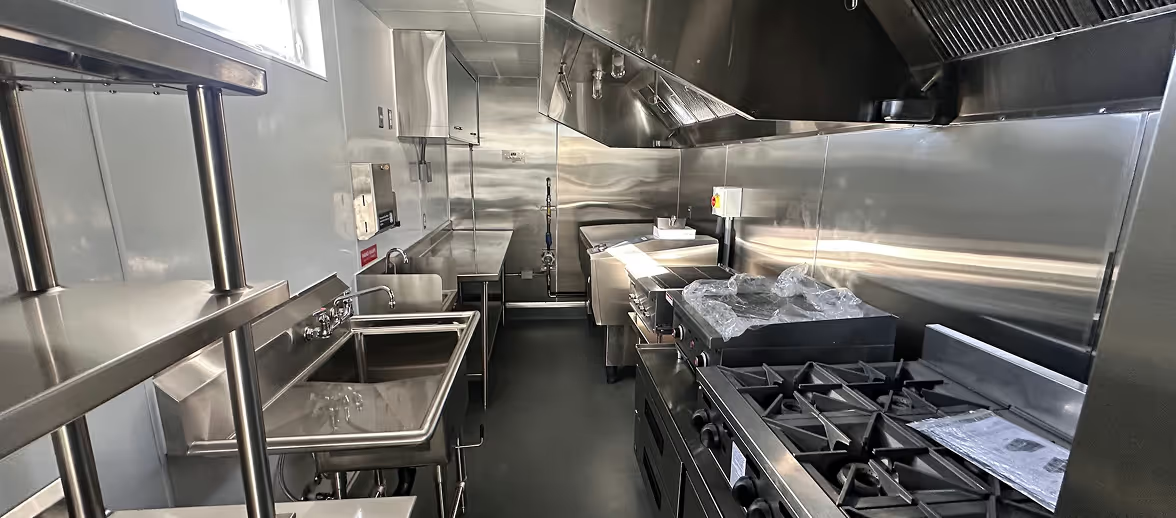
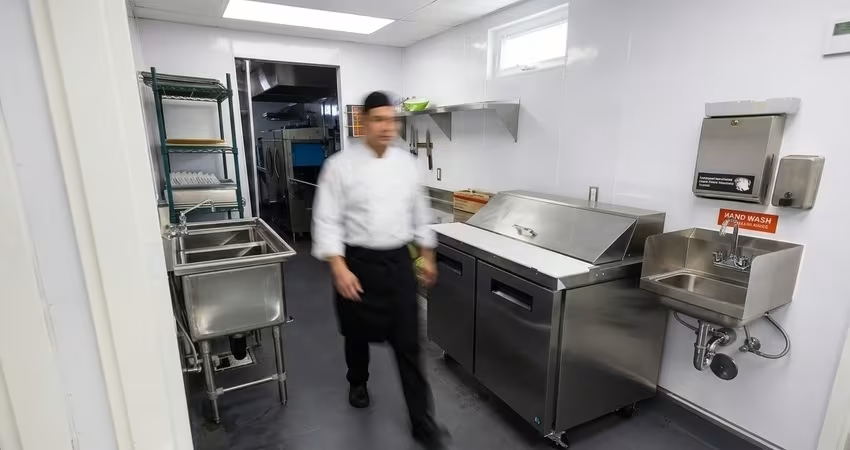
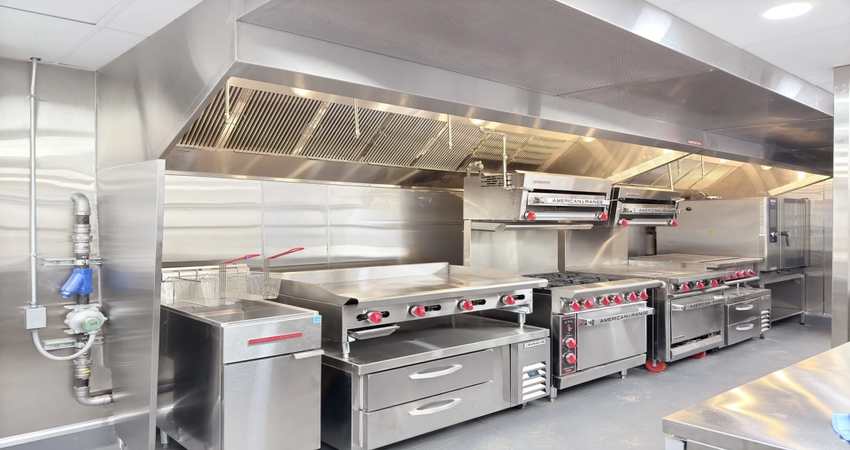
For what's inside these units, see our overview of mobile kitchen trailer features and equipment.
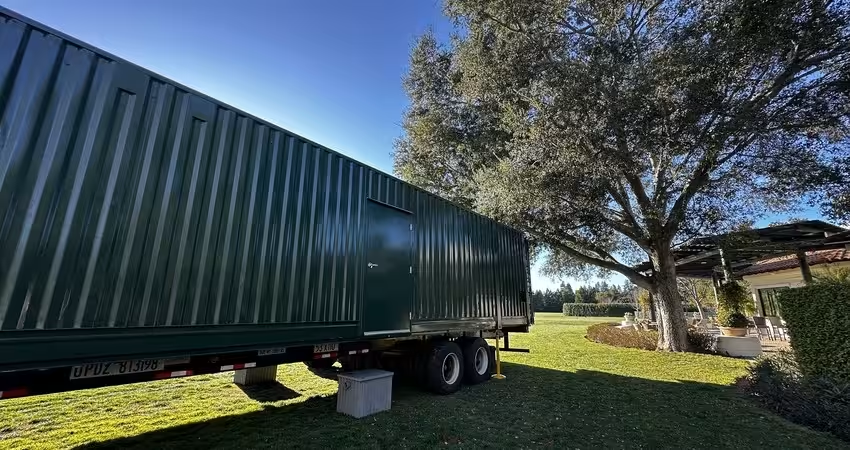
How Mobile Kitchen Weight Affects Site Access
A loaded 45,000-lb trailer plus tractor can put 70,000–80,000 lbs on the access route:
- Posted bridge weight limits on private drives, country-club entrances, or campus loops can disqualify routes.
- Hot summer asphalt under a tandem-axle load can rut. Concrete is preferred for the final pad.
- Underground utilities — septic tanks, storm drains, and irrigation lines aren't always rated for commercial loads.
Tip: Have facilities confirm the load rating of any private road or driveway before the route survey. State DOT roads handle 80,000 lbs by default; private infrastructure often won't.
Mobile Kitchen Trailer Hitch and Tow Vehicle Requirements
For light-duty trailers, mobile kitchen trailer hitch specs follow the SAE J684 standard, which classifies receiver hitches from Class I through Class V. Commercial mobile kitchens almost never use a receiver hitch — they need professional tractor units.
Hitch Classes Explained
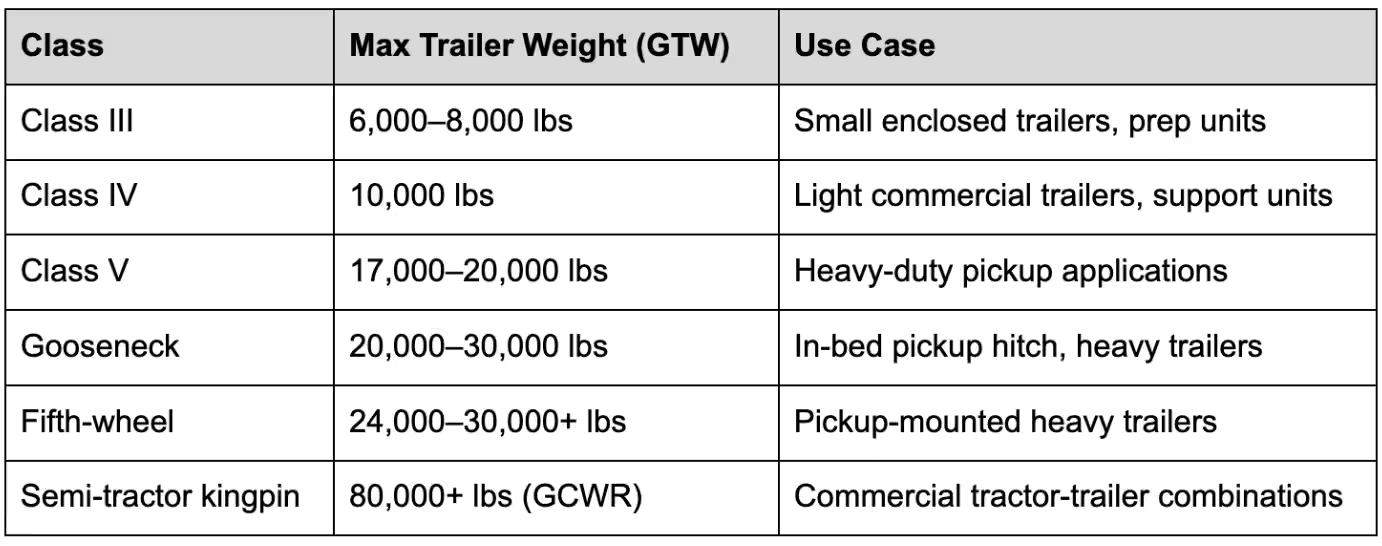
Standard mobile kitchen trailer hitch ratings derive from industry safety standards published by NATM, the National Association of Trailer Manufacturers.
Matching the Tow Vehicle to the Trailer
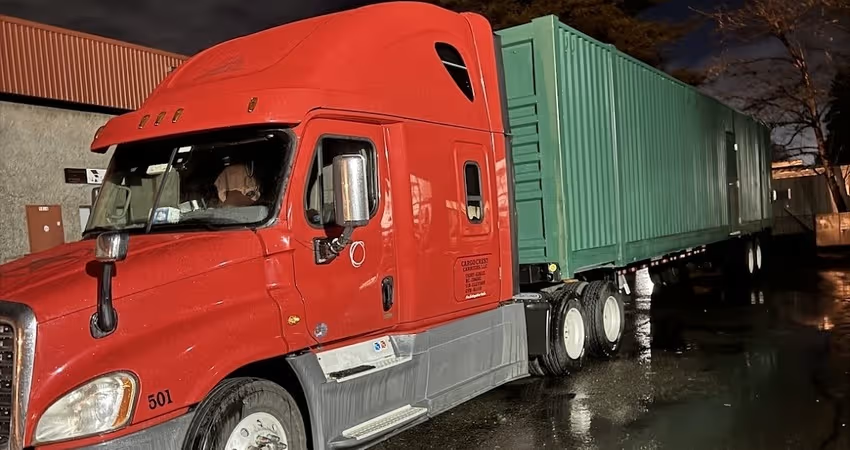
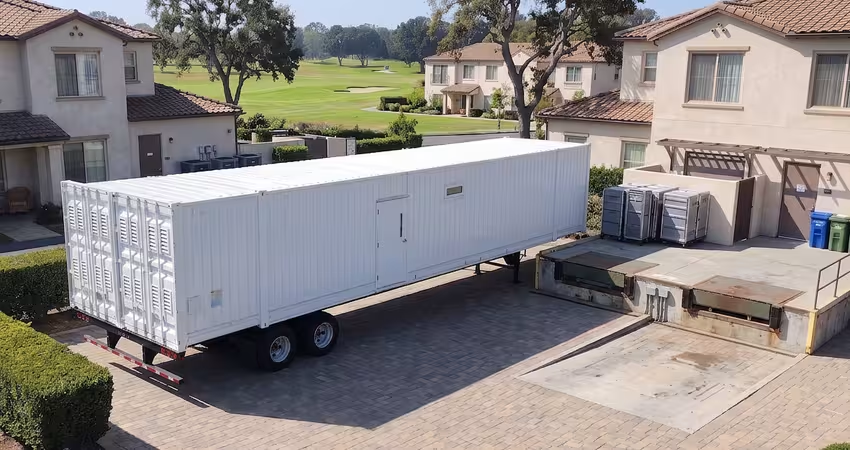
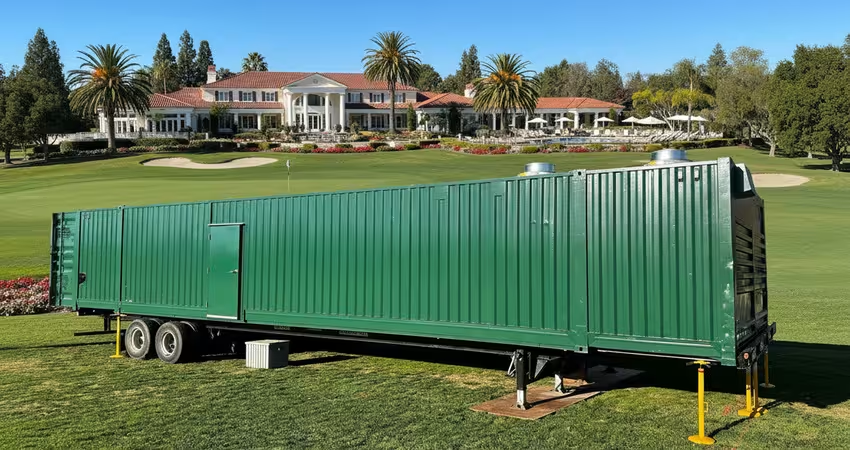
A 53-foot trailer with a 45,000-lb GVWR is hauled by a Class 8 semi-tractor, not a one-ton pickup. The kingpin connection — not a ball hitch — handles the loads. Three things must align:
- The tow vehicle's manufacturer-assigned GCWR must exceed the combined loaded weight.
- Braking capacity must match — commercial trailers use air brakes coupled to the tractor's system.
- Axle weight distribution must comply with federal bridge formula limits.
Note: If a provider quotes a 40-foot+ unit and proposes pickup-truck delivery, treat that as a red flag for compliance and safety. A proper mobile kitchen trailer hitch on commercial units is built around the kingpin, not the bumper.
CDL Regulations for Mobile Kitchen Transport
Whether a driver needs a Commercial Driver's License is governed by the Federal Motor Carrier Safety Administration under 49 CFR Part 383, and the rules are weight-based.
When a CDL Is Required
Per FMCSA, a driver must hold a CDL based on these thresholds:
- GCWR of 26,001 lbs or more, with towed unit GVWR over 10,000 lbs → Class A CDL
- Single vehicle with GVWR of 26,001 lbs or more → Class B CDL
- Vehicles transporting hazmat or 16+ passengers → Class C CDL
A CDL for mobile kitchen transport is virtually always required when a tractor pulls a 40-foot or 53-foot trailer. The tractor alone often exceeds 26,000 lbs GVWR; with a 30,000–45,000-lb trailer behind it, the combination is well into Class A territory.
Class A vs. Class B CDL for Mobile Kitchen Hauls

Most commercial CDL for mobile kitchen hauls is Class A, sometimes with additional endorsements depending on cargo, route, or state-specific rules.
Entry-Level Driver Training and Provider Lead Times
Since February 2022, new Class A and Class B CDL applicants must complete Entry-Level Driver Training (ELDT) before the skills test. The rule, under 49 CFR Part 380, tightened the new-driver supply — a tightening reinforced by the American Trucking Associations reporting persistent industry driver shortages. Securing a CDL for mobile kitchen delivery on schedule means working with providers who control their own driver pool.
Tip: Ask whether transport is handled by in-house CDL drivers or subcontracted. The answer shapes lead-time reliability and chain-of-custody for your unit. Manufacturer-providers like Mobile Culinaire that build and deliver their own units typically maintain direct control over driver scheduling.
Federal and State Mobile Kitchen Transport Regulations
Federal weight and dimension limits — and where mobile kitchens cross them — drive most of the permit complexity in mobile kitchen transport regulations.
Federal Width, Height, and Weight Limits
FHWA and FMCSA rules set these defaults on the Interstate System:
- Width: 8 feet 6 inches (102 inches)
- Height: typically 13 feet 6 inches (state-set; no federal max)
- Gross weight: 80,000 lbs, subject to the federal bridge formula
- Single axle: 20,000 lbs
- Tandem axle: 34,000 lbs
A standard 53-foot mobile kitchen trailer at 8'6" width stays within federal limits and can move without an oversize permit. Wider, taller, or heavier units cross the threshold and trigger state-by-state mobile kitchen transport regulations.
When Oversize Permits and Escort Vehicles Are Required
Each state's DOT issues its own oversize and overweight permits. Common triggers:
- Width over 8'6" → oversize permit required in every state
- Width over 12' → pilot car / escort vehicle generally required
- Height over 13'6" → route survey for overhead clearances
- Weight over 80,000 lbs gross → overweight permit, additional axle requirements
California illustrates the framework: Caltrans issues transportation permits for loads exceeding 8'6" wide, 14' tall, or 80,000 lbs. Other states follow similar — but not identical — mobile kitchen transport regulations.
Note: A multi-state delivery requires a permit from each state crossed. Travel curfews — daylight only, no major holidays, often weekend restrictions — apply in most jurisdictions.
Insurance and DOT Compliance
Mobile kitchen towing requirements extend beyond drivers and permits to the carrier's compliance posture. A compliant carrier should carry:
- USDOT Number issued by the U.S. Department of Transportation for interstate operation above 10,001 lbs GVWR
- MC (Motor Carrier) Operating Authority for for-hire interstate hauling
- Commercial auto liability — FMCSA minimums start at $750,000; reputable carriers carry $1M+
- Cargo insurance covering the unit's value in transit
Coverage typically splits at arrival: transport liability covers the unit on the road and during positioning; site liability (your operational insurance) covers it once stationary and connected.
Tip: Request a Certificate of Insurance naming your property as additional insured for the deployment period. For overlap with operational compliance, see our guide on essential permits for mobile kitchen trailers.
Site Access Checklist Before a Mobile Kitchen Arrives
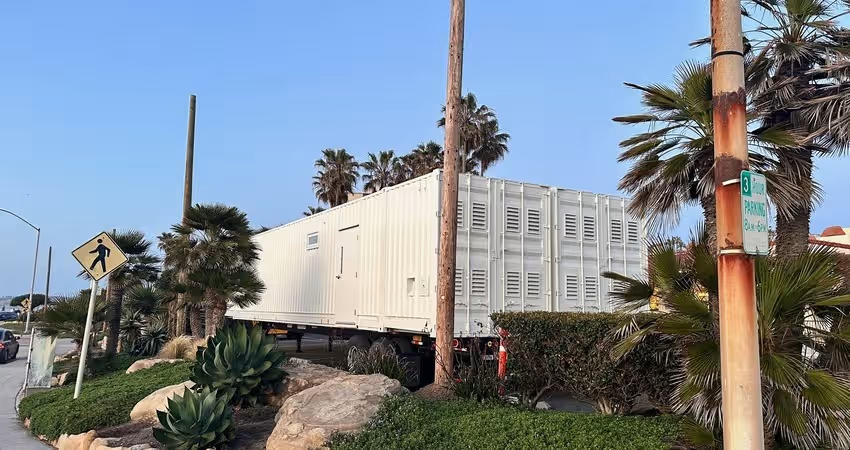
The most expensive towing problems happen at the last 200 yards. A professional provider's route survey should verify:
- Overhead clearance along the full route (low branches, awnings, banners, utility lines, garage entrances)
- Turning radius at all entry points — a 53-foot trailer needs ~55 feet of swing
- Posted weight limits on bridges, private roads, and parking decks
- Width restrictions on driveways, gated entries, and shared-use lanes
- Surface condition — gravel, mud, and steep grades can stop a tractor-trailer
The site itself needs a level pad sized for the unit footprint plus a 3–5 foot working perimeter, maneuvering space for the tractor to detach and depart, utility connection proximity, and ADA-compliant approach where required. For the deployment-side picture, see our breakdown of the mobile kitchen rental event lifecycle, and for cost implications, our article on hidden costs in mobile kitchen rentals.
Plan Transport Before It Becomes a Problem
Mobile kitchen towing requirements aren't your problem to solve — they're ours. Mobile Culinaire's purpose-built mobile kitchens arrive turnkey, with all transport logistics, DOT compliance, CDL-licensed drivers, and oversize-permit coordination handled in-house. The trailers are engineered, manufactured, and delivered as integrated systems — not retrofitted shells hauled by spot-market carriers.
See the units engineered for hospitality-grade deployment, or browse completed deployments to see what arrives on site.
Disclaimer
This article is for informational purposes only and does not constitute legal, transportation, engineering, or regulatory compliance advice. Mobile kitchen towing requirements, CDL rules, oversize-load permits, and transport regulations vary by jurisdiction, route, equipment configuration, and AHJ requirements. Always consult qualified transport professionals, your insurance carrier, applicable DOT/FHWA/FMCSA regulations, and local authorities before transporting or deploying a mobile kitchen trailer.
People Also Ask (FAQ)
Do you need a CDL to tow a mobile kitchen trailer?
It depends on the unit's GVWR. FMCSA rules require a Class A CDL when the combined truck-and-trailer GCWR exceeds 26,001 lbs and the trailer's GVWR is over 10,000 lbs — applicable to virtually every commercial-grade mobile kitchen. Hospitality operators don't drive these units themselves; a reputable provider supplies the CDL-licensed driver as part of turnkey delivery, with DOT compliance and insurance built in.
How much does a commercial mobile kitchen trailer weigh?
Purpose-built commercial mobile kitchens range from 7,000–12,000 lbs for compact 20-foot units up to 28,000–38,000 lbs for fully equipped 53-foot trailers, with GVWRs reaching 45,000 lbs. Mobile kitchen weight directly affects pavement load requirements, pad preparation, and tractor configuration. Curb weight and mobile kitchen GVWR are distinct — the GVWR drives regulatory classification.
What permits are needed to transport a mobile kitchen on public roads?
Standard units within federal limits — under 8'6" wide, 13'6" tall, and 80,000 lbs gross — don't need a special oversize permit beyond the carrier's USDOT registration and MC authority. Wider, taller, or heavier units require state-issued oversize-load permits for every state crossed, sometimes paired with pilot cars or escorts. Travel curfews on holidays, weekends, and urban rush hours apply across most jurisdictions.

Testimonial

"What is standing out when you look at the mobile kitchen operation is the efficiency that we can really achieve because it's built for that."
Tell us about your kitchen needs and request a quote.
.png)
Turnkey mobile kitchen
Proudly made in-house in the USA
Commercial grade kitchen equipment
Code-compliant
Trusted by Industry Leaders