.gif)
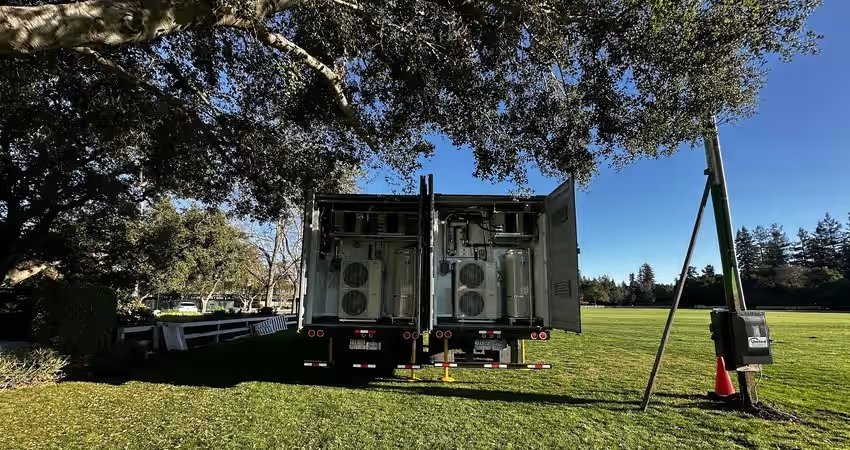
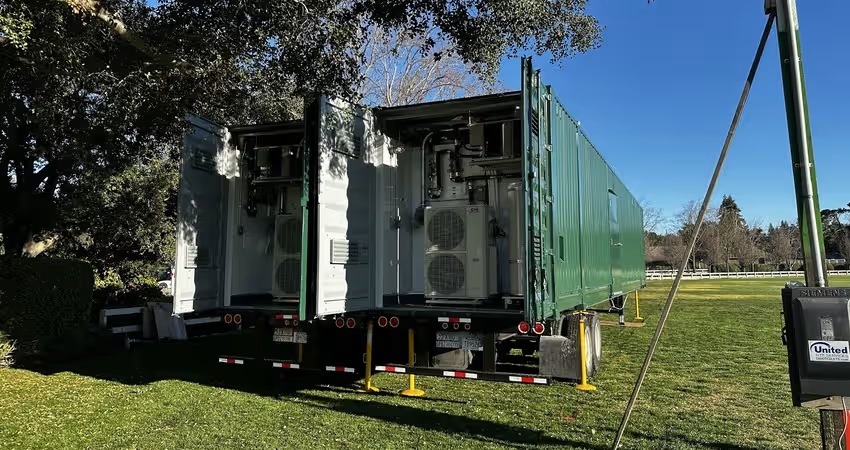
The delivery truck pulls in. The unit is on its jacks — leveled, stabilized, utilities staged at the connection panel. The driver hands over the keys, and there's a polite question hanging in the air: are we good? This is the moment most operators inherit informally, and it separates a working kitchen at 5pm from a deferred problem that surfaces during first service. A proper mobile kitchen commissioning checklist turns that handoff into a structured, defensible verification — not a handshake.
This guide walks through what to verify, who should sign off, and how to catch the failures that quietly cost service.
What Commissioning Actually Means for a Mobile Kitchen
Commissioning vs. Installation vs. Inspection
These three terms get used interchangeably, and they shouldn't be. Installation ends when the unit is positioned, leveled, and physically connected to utilities. Inspection is what the local Authority Having Jurisdiction (AHJ) does to issue an occupancy permit. Commissioning sits between them — the structured verification that every system actually performs as designed under operational load.
The discipline isn't new. ASHRAE Guideline 0, The Commissioning Process defines it as the quality-focused process for verifying that a facility meets the owner's project requirements. For mobile kitchens, the principles compress into a single day — but the rigor should not.
Why the Day-One Handoff Sets the Operational Baseline
Day one becomes the reference point for everything that follows. If the walk-in isn't pulled down to temperature before product loads, you'll spend 48 hours chasing food-safety holds. If the exhaust hood isn't balanced, the makeup-air relationship is off for the entire rental. Running a proper mobile kitchen commissioning checklist on day one is cheaper, faster, and safer than diagnosing the same issues mid-service.
Before the Walkthrough: Site & Documentation Readiness
Site Conditions That Should Already Be Confirmed
By the time commissioning starts, the leveling and stabilization phase should be fully complete. Verify the following are settled before powering anything on:
- Unit is level within ±¼" across the long axis (re-verified after utility connection)
- Stabilization jacks bear evenly on rated pads
- Skirting installed where deployment exceeds 30 days
- Utility connections terminated and pressure-tested, not just made up
- Site drainage clear of any condensate or wastewater discharge points
Documents to Have on Hand
A defensible commissioning record starts with the right paperwork on the table:
- Manufacturer's commissioning checklist for the specific unit
- Equipment manuals for cooking, refrigeration, and warewashing equipment
- Fire suppression system certification (current within the last 6 months)
- Propane tank delivery slip and most recent tank certification date
- Electrical one-line diagram and panel schedule
- Local health department pre-operational inspection schedule
Tip: Request the manufacturer's commissioning checklist before delivery day, not during it. Reviewing it 48 hours ahead lets your team flag anything missing while there's still time to act.
The Day-One Mobile Kitchen Commissioning Checklist
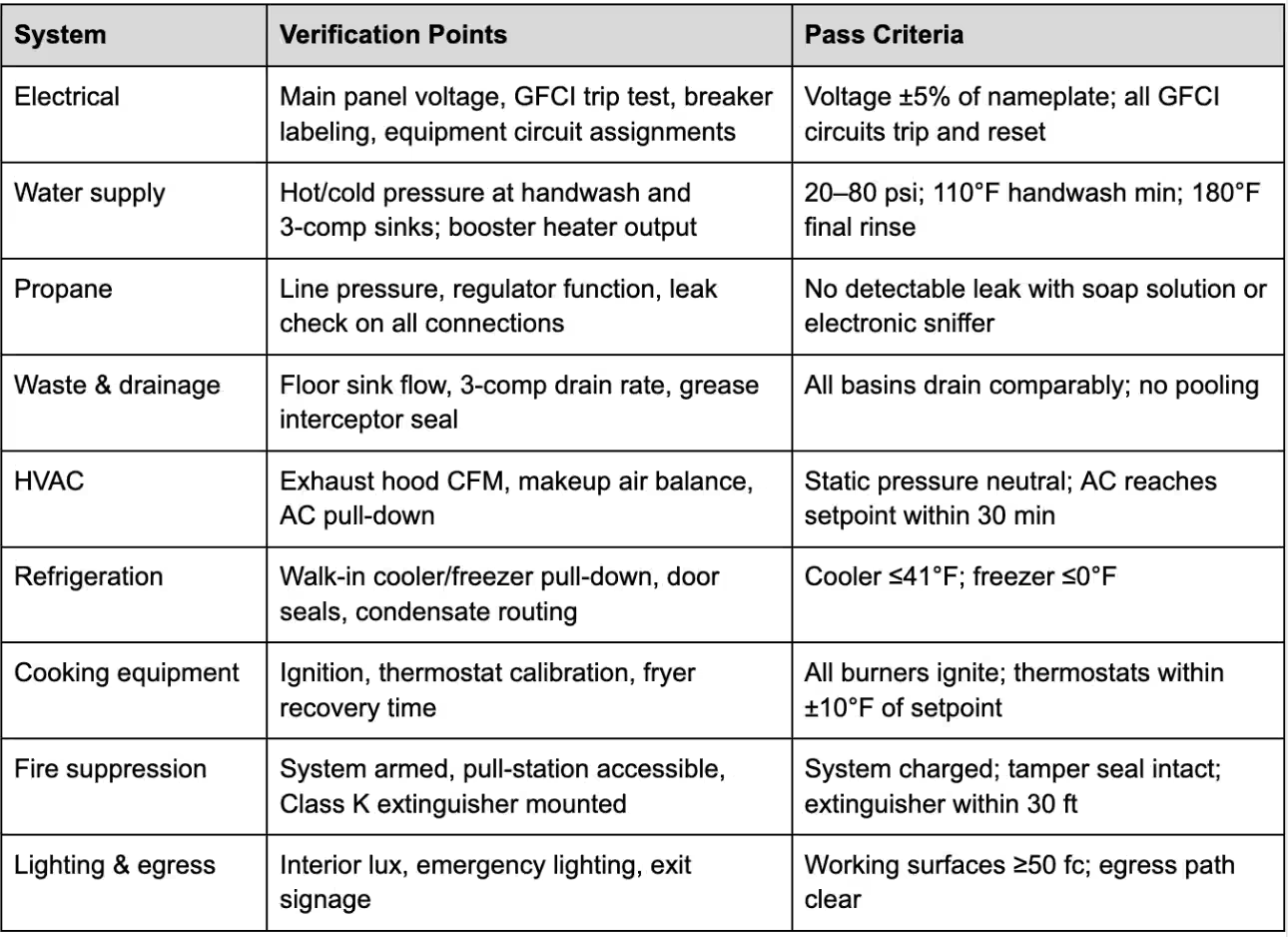
This is the centerpiece — the verification your executive chef or kitchen manager should walk through alongside the delivery technician. Work systematically. The order below exists because each system depends on the one before it.
Utilities — Electrical, Water, Propane, Waste
Electrical commissioning follows NFPA 70 (National Electrical Code) — verify GFCI protection on all 125-volt receptacles in the kitchen environment and confirm breaker assignments match the panel schedule. Before any energization, follow OSHA's lockout/tagout requirements (29 CFR 1910.147) so anyone working on connections is protected from unexpected start-up.
Water pressure and flow verification should test every fixture under realistic load — not just sequentially. Run the 3-comp sink and dishwasher simultaneously to confirm the hot water system doesn't sag. For propane commissioning, the technician should pressure-test the line, verify regulator output, and conduct a leak check at every joint before any burner is lit.
HVAC & Ventilation Balance
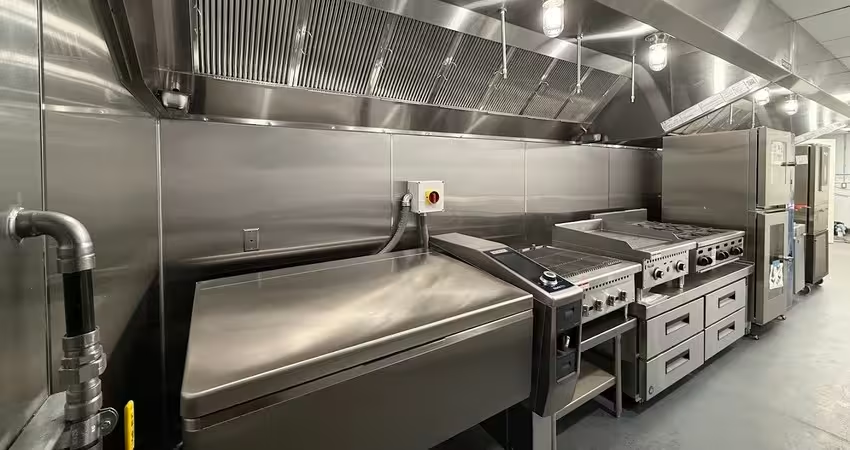
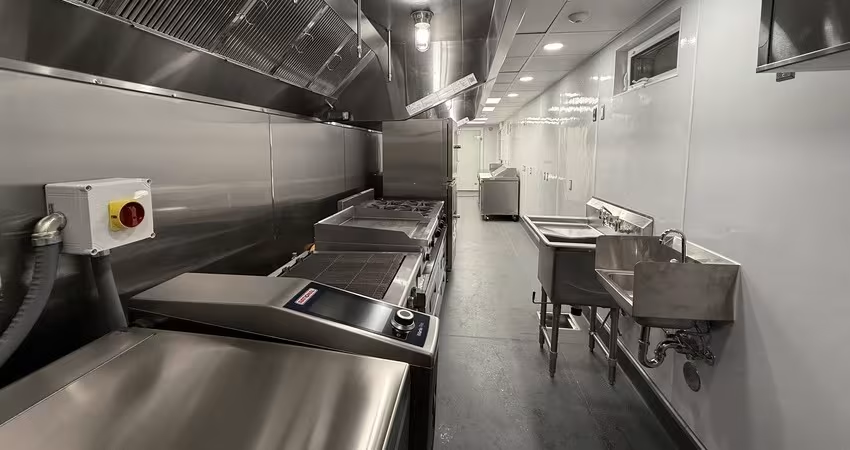
Hood exhaust and makeup air must be balanced as a system — exhaust pulling without sufficient makeup air starves combustion appliances and pulls combustion gases out of draft. The IAPMO Uniform Mechanical Code governs commercial kitchen ventilation design, and commissioning is when those design assumptions get verified against reality. A balanced hood should hold a neutral static pressure relationship across the kitchen envelope.
Refrigeration & Cold Storage Verification
Walk-in coolers and freezers must reach and hold the FDA Food Code thresholds — 41°F (5°C) for cold-holding and 0°F (−18°C) for frozen storage — before product is loaded. A common day-one failure is loading product into a unit that's still pulling down, which lets perishables drift through the temperature danger zone.
Note: Compressor pull-down time is not the same as the unit reaching operating temperature with mass inside. Pre-loading by a full cycle (typically 4–6 hours) is the conservative practice.
Cooking Equipment Calibration
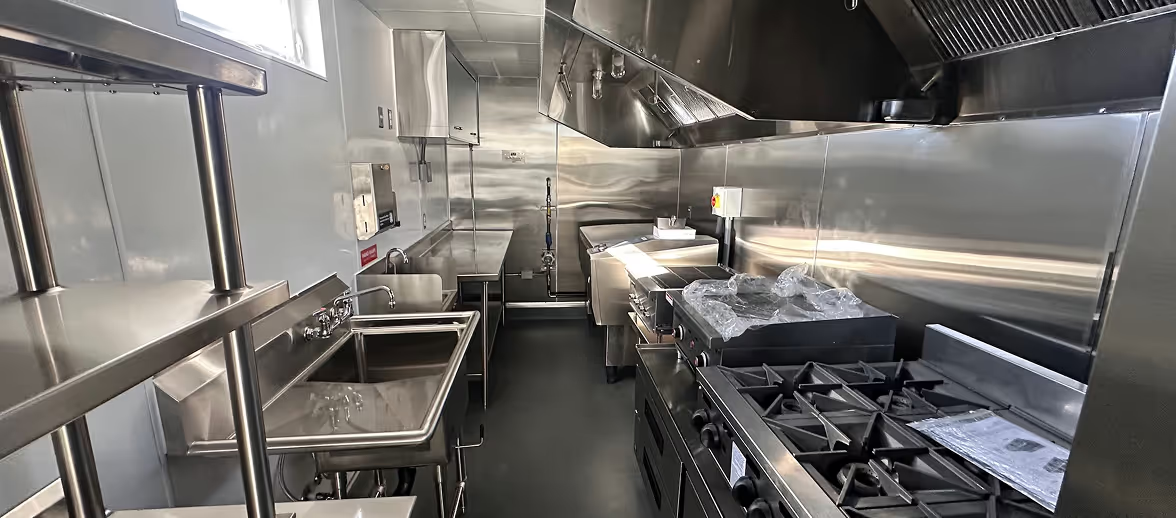
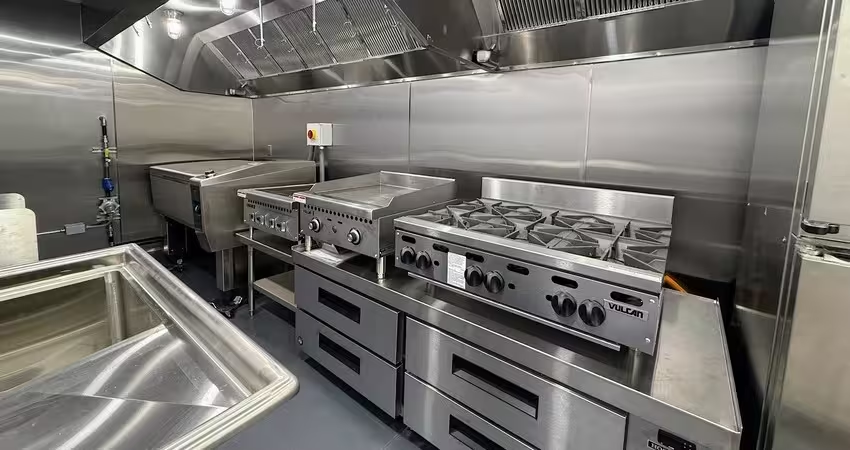
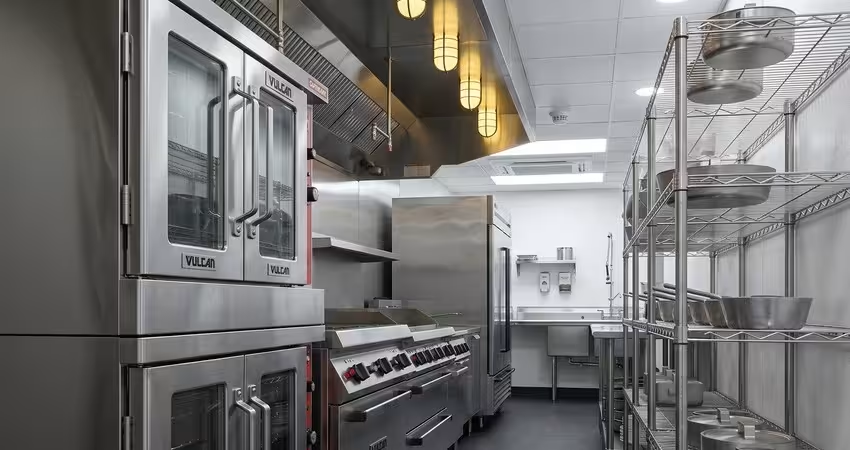
Per NSF/ANSI 2 (Food Equipment), foodservice equipment must perform within manufacturer specifications. Commissioning is when "specs on paper" become "specs in this kitchen." Verify fryer recovery time, oven thermostat accuracy with a calibrated probe, and griddle surface evenness — three measurements that quietly determine whether the line can hit ticket times.
Fire Suppression Arming & Life Safety
Wet-chemical suppression systems for commercial cooking operations are governed by NFPA 17A. The system must be charged, the manual pull-station must be in the egress path, the fusible links must be appropriate to the hood temperature class, and a Class K extinguisher must be mounted within 30 feet of cooking equipment. Full fire safety and suppression specifications cover the design side; commissioning is the verification side.
The Sign-Off: Documenting the Handoff Properly
What a Defensible Commissioning Record Contains
ASHRAE Standard 202 — the formal commissioning process requirements — emphasizes documentation as the deliverable. For a mobile kitchen, a complete record should include:
- Date, time, and unit serial number
- System-by-system pass/fail with measured values, not just checkmarks
- Photos of utility connections, panel labeling, and any deficiency items
- Signatures from the provider's technician and the operator representative
- Any items deferred for follow-up, with owner and deadline assigned
Who Should Be Present at Sign-Off
The executive chef or kitchen manager — not just a logistics coordinator — should witness the walkthrough. They'll catch workflow questions (reach distances, station layout, equipment proximity) that an operations-only handoff misses. Health inspectors may request the commissioning record during a pre-operational inspection, so keep it filed with the unit's compliance paperwork.
Common Day-One Failures and How to Catch Them Early
The same failure patterns repeat across deployments:
- Walk-in not pulled down before product loads — verify with a calibrated probe, not the unit's own display
- Hood unbalanced with makeup air — visible by paper-test at any exterior door (should be neutral, not slamming or sucking)
- GFCI tripping under load — surfaces when refrigeration and cooking equipment run together, not in isolation
- Fire extinguisher missing or wrong class — Class K is required within 30 feet of any vat or fryer
- Propane regulator set incorrectly — burners ignite but underperform; verify with a manometer, not by eye
- Suppression armed but tamper seal broken — a charged system with a broken seal still requires immediate recertification
Purpose-built units like those engineered at Mobile Culinaire reduce most of these failure modes at the design stage — standardized utility panels, factory-balanced ventilation, and pre-commissioned suppression — but day-one verification still belongs to the operator. Once commissioning passes, staff onboarding becomes the next operational priority.
Plan Your Day-One Handoff
Mobile Culinaire's project team walks every client through a complete commissioning handoff before the keys are signed over — system by system, with a documented record for the operator's compliance file. If you're planning a renovation, seasonal deployment, or emergency response and want to scope what a defensible day-one handoff looks like for your operation, reach out for a commissioning consultation. Our specialists can walk through unit specifications, site requirements, and the verification framework you'll inherit on delivery day.
Disclaimer
The standards and codes referenced in this article — including ASHRAE, NFPA, NSF/ANSI, OSHA, FDA Food Code, and IAPMO — are subject to periodic revision. Verify all requirements against the current published edition and confirm applicability with the Authority Having Jurisdiction in your operating location before deployment.
People Also Ask (FAQ)
What's the difference between mobile kitchen installation and commissioning?
Installation ends when the unit is positioned, leveled, and connected to utilities. A mobile kitchen commissioning checklist verifies that every system actually performs to specification under operational load. A unit can be fully installed and still fail commissioning — a walk-in that won't hold temperature is installed but not commissioned.
How long does mobile kitchen commissioning take?
A complete commissioning walkthrough on a single-trailer unit typically takes 3–6 hours, including refrigeration pull-down time. Multi-trailer deployments or units with complex ventilation runs can extend to a full day. Compressing the schedule is the most common source of deferred-failure mode.
Who should sign the commissioning checklist?
At minimum, the provider's lead technician and the operator's executive chef or kitchen manager. For deployments involving health department pre-operational inspection, the AHJ inspector may request a copy of the signed commissioning record before issuing the permit.
What happens if commissioning fails on the day of delivery?
Document the specific failure with measured values and photos, then determine whether the issue is correctable on site (most are — regulator adjustment, breaker re-labeling, condensate routing) or requires repositioning or swapping the unit. Never proceed to service against a documented commissioning failure.

Testimonial

"What is standing out when you look at the mobile kitchen operation is the efficiency that we can really achieve because it's built for that."
Tell us about your kitchen needs and request a quote.
.png)
Turnkey mobile kitchen
Proudly made in-house in the USA
Commercial grade kitchen equipment
Code-compliant
Trusted by Industry Leaders