.gif)
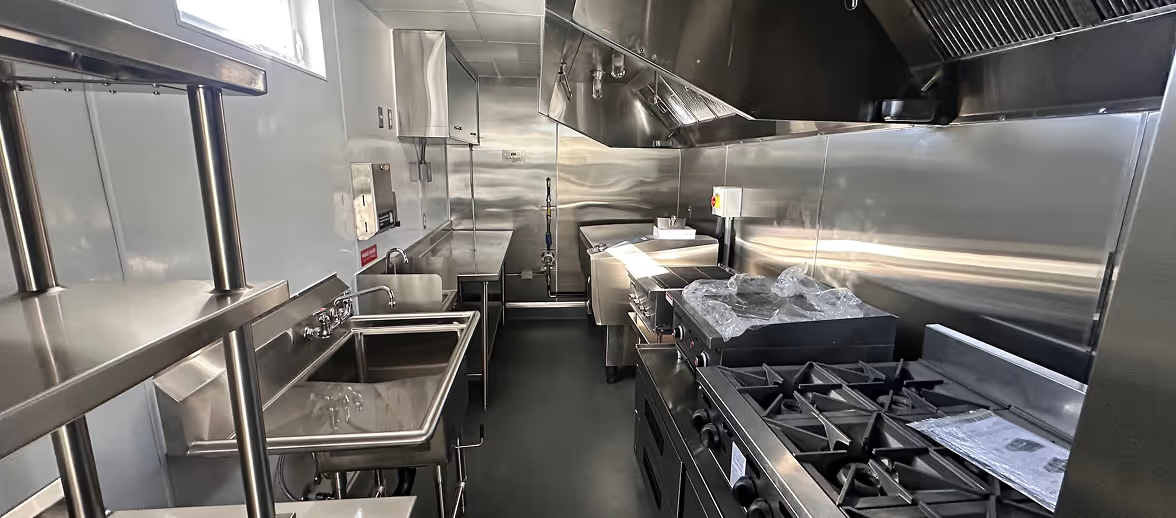
What happens to a $30,000 walk-in cooler when the unit housing it sits a half-inch off level for six months?
For any operator renting a mobile kitchen for a renovation, expansion, or seasonal peak, the answer matters more than most realize. Proper mobile kitchen setup procedures — specifically mobile kitchen leveling and stabilization — separate units that perform like permanent commercial kitchens from units that quietly degrade equipment, fail inspections, and create workflow friction.
This guide covers the mobile kitchen setup procedures that matter: site conditions, how leveling and stabilization work, what tolerances commercial equipment demands, and how to verify the work before signing off. Done right, your mobile kitchen performs from day one.
Why Leveling and Stabilization Are Non-Negotiable
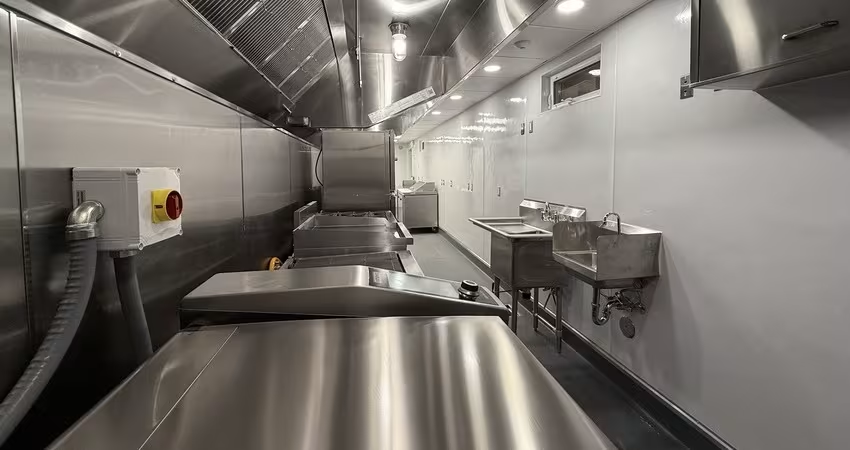
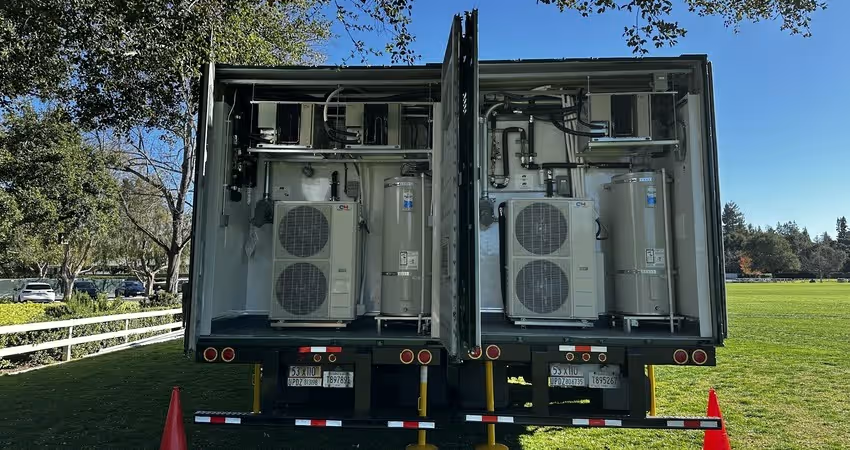
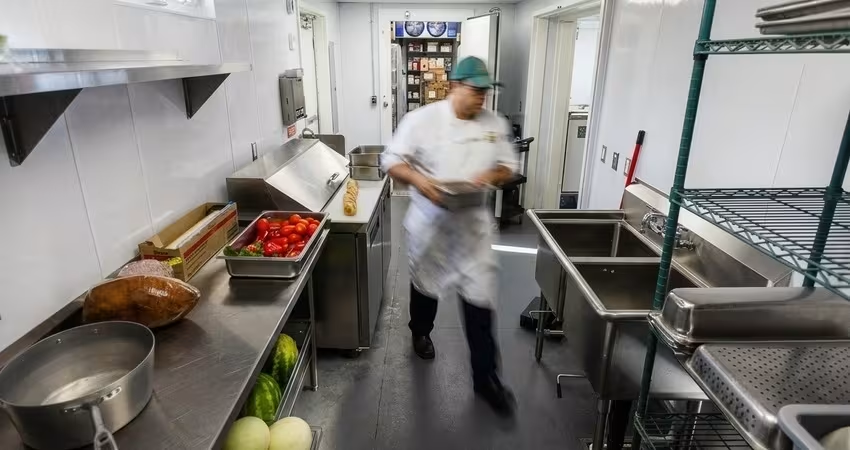
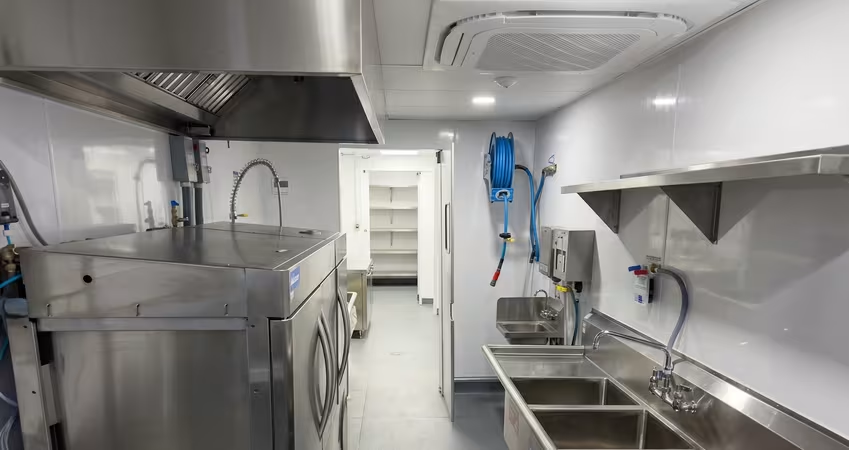
A commercial mobile kitchen is not an RV. It carries refrigeration, gas-fired equipment, exhaust hoods with fire suppression, and a working crew — assemblies engineered for a level floor. When mobile kitchen leveling falls short, problems compound:
- Refrigeration: Walk-ins depend on gravity-fed condensate drainage. Off-level units create standing water, mold, ice on coils, and compressor wear.
- Cooking equipment: Fryers, woks, and griddles use liquid cooking media — even small tilts cause uneven heat zones.
- Drainage: Floor sinks and dishwasher waste lines require designed slope. Reversed slope means standing wastewater — a sanitation violation.
- Exhaust hoods: NFPA 96 requires grease ducts to slope toward grease reservoirs. An un-level unit puts the duct out of compliance.
Note: Working tolerance for commercial mobile kitchen operation is approximately ±¼ inch over 10 feet — tighter than RV or residential standards.
Levelness is tied to code compliance. The FDA Food Code requires refrigeration at or below 41°F, which depends on level evaporators. OSHA 1910.22 requires safe walking-working surfaces; sloped floors create slip hazards. Where the unit meets a public-access path, ADA guidelines limit threshold slopes to 1:48.
Mobile Kitchen Site Preparation: The Foundation
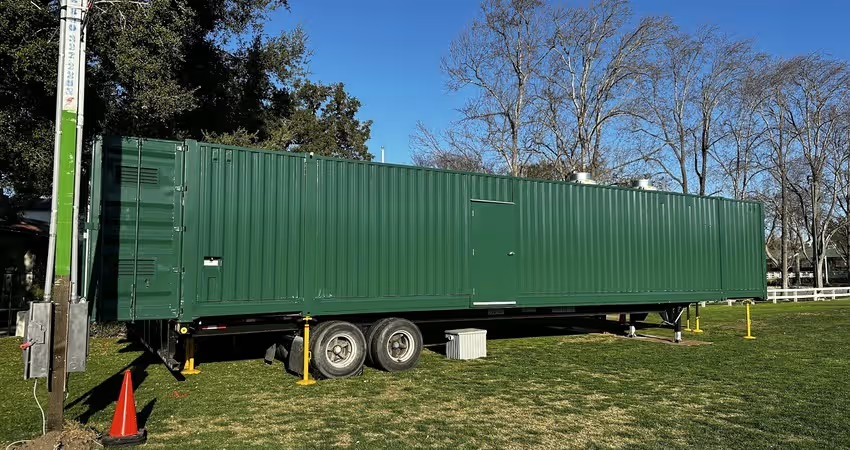
Mobile kitchen site preparation determines how smoothly leveling goes — and whether the unit stays level. Skip it and you'll fight settling for months.
Surface and Load-Bearing Capacity
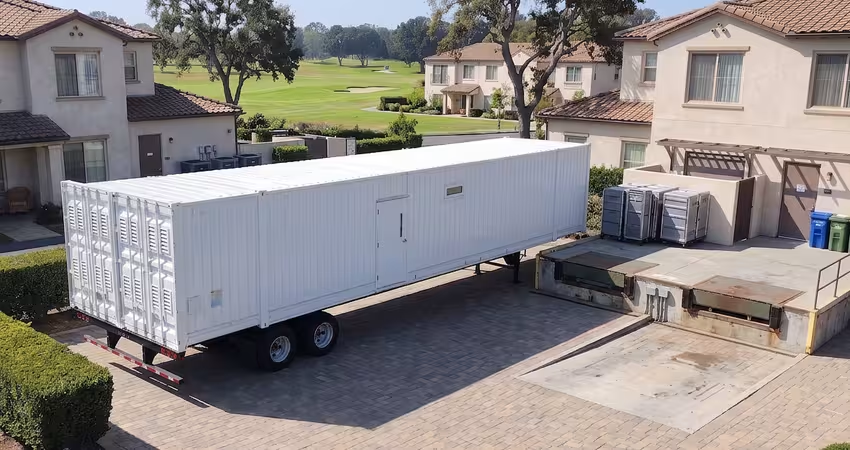
A commercial mobile kitchen typically weighs 20,000 to 40,000 pounds across the chassis and jack points. The surface must carry this load without settling.
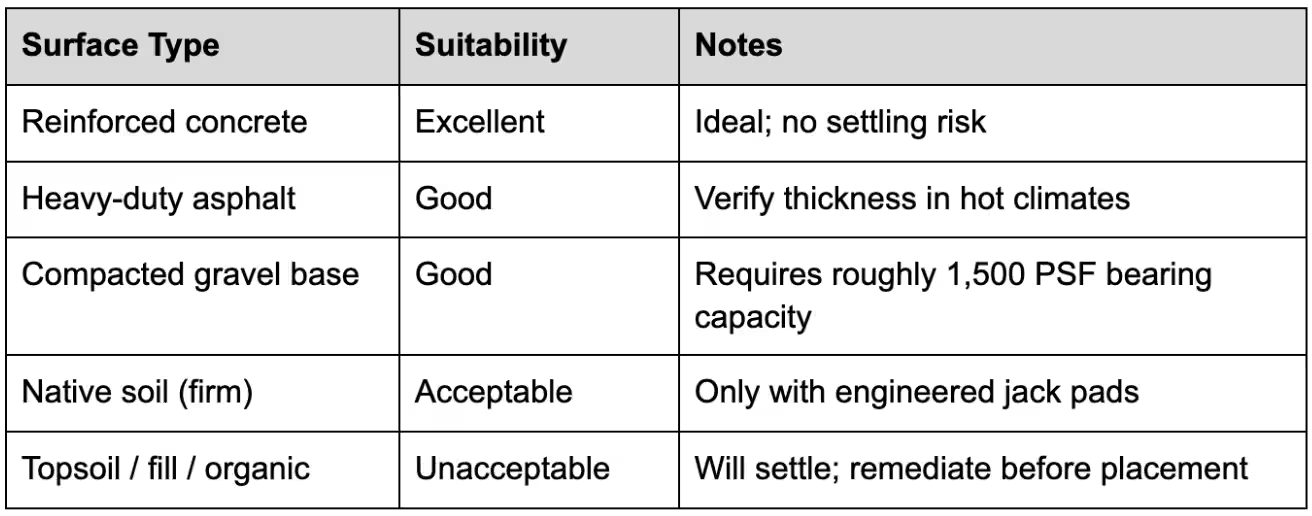
The International Building Code Chapter 18 provides presumptive load-bearing values when the venue can't confirm what's beneath the surface.
Drainage, Clearance, and Utility Staging
Site readiness extends beyond the pad:
- Drainage: Slope the area at least ⅛ inch per foot away from the unit footprint. Never place at the bottom of a drainage path.
- Delivery access: Clear approach, swing radius, and 14 feet minimum overhead clearance for the transport truck.
- Working envelope: 3–5 feet of clearance on at least three sides for utility connections and crew movement.
- Utility staging: Power, water, gas, and waste terminated within reach of the unit's standardized hookup points before delivery. Temporary electrical must meet NEC (NFPA 70).
Tip: Ask your provider for a site-plan PDF showing the unit footprint, utility connections, and clearance envelope. Walk it with your facilities manager before delivery week.
The Mobile Kitchen Setup Procedures: Step-by-Step
A professional mobile kitchen installation follows a disciplined sequence:
Step 1 — Pre-Arrival Site Verification. The lead installer confirms the surface meets spec, identifies the placement footprint, and verifies utility terminations. Deficiencies are resolved here — not after the unit is on the ground.
Step 2 — Positioning the Unit. The transport driver maneuvers the unit into its final coordinates with spotters on all sides. Position determines utility runs, door swing, and crew traffic flow.
Step 3 — Deploying Leveling Jacks and Cribbing. Hydraulic or screw-type jacks deploy at engineered points along the chassis. On firm surfaces, jacks bear directly. On gravel or marginal substrate, engineered jack pads (typically 12×12 inches, steel or hardwood) distribute the load. Cribbing — stacked hardwood blocking — bridges larger height differentials. Lift incrementally; rushing risks frame torque.
Step 4 — Verifying Level. Check multiple planes:
- Long axis (front-to-back) with a long mason's level or laser level
- Short axis (side-to-side) at minimum two stations along the unit length
- Equipment-specific: refrigeration, fryers, and dishwashers individually checked, since internal mounting can shift in transit
Adjust incrementally until tolerance is met across all axes.
Mobile Kitchen Stabilization: Locking the Unit in Place
Leveling positions the unit; mobile kitchen stabilization keeps it there. A leveled unit can still rock, drift, or settle if jacks aren't loaded evenly. Proper mobile kitchen stabilization confirms each support point bears weight equally — no float, no wobble. The floor should feel like a permanent kitchen.
For rentals beyond a few weeks — typical for renovation or seasonal use — add:
- Re-check level at the 7-day mark. Initial settling is normal; correct once and it usually stays put.
- Wheel chocks and frame locks prevent horizontal movement.
- Skirting and weather protection prevent jack-pad erosion in heavy rain.
- Periodic re-verification for deployments over 90 days, especially after freeze/thaw cycles.
Commissioning Checks Tied to Levelness
Once leveled and stabilized, commissioning confirms the unit performs as a commercial kitchen. Several systems give immediate feedback:
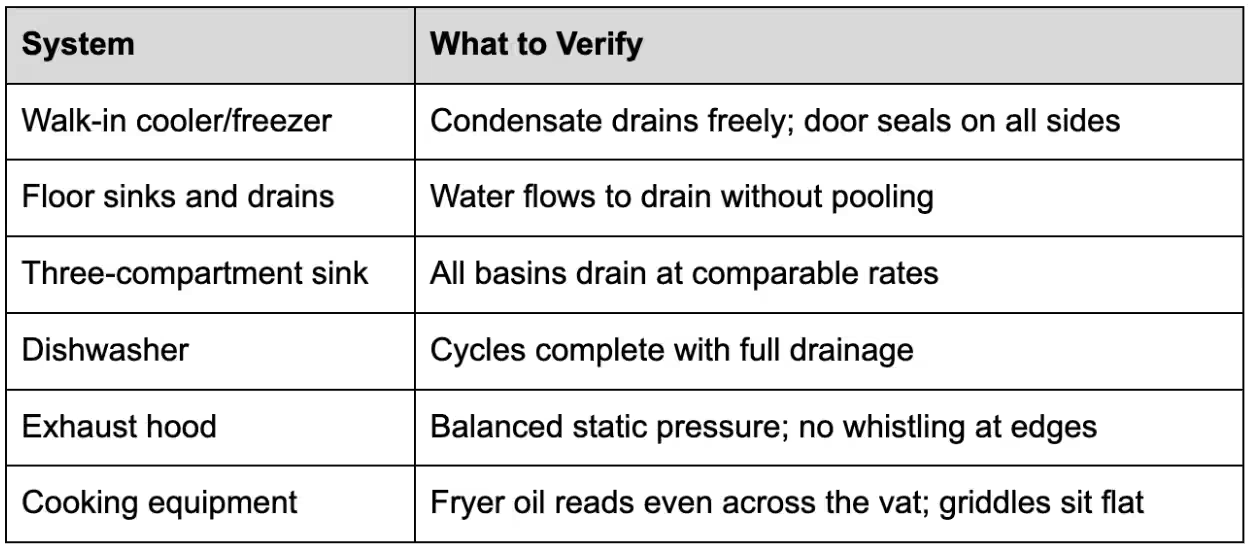
Equipment must meet NSF International standards for foodservice — which assume level installation. A proper handoff includes a commissioning checklist signed by both provider and client, documenting level verification, utility testing, fire-suppression arming, and emergency shutoffs.
Note: Have your executive chef present at the handoff. They'll catch workflow questions a logistics coordinator might miss.
Common Mobile Kitchen Setup Mistakes
Even with the right unit, these mistakes degrade performance:
- Skipping the site survey and discovering substrate problems on delivery day
- Using inadequate jack pads on soft surfaces, causing slow settling
- Connecting utilities before level is verified — re-leveling means re-doing connections
- Accepting "close enough" leveling for short rentals, then watching refrigeration fail at week three
- Treating mobile kitchen stabilization as optional for deployments under 30 days
- No documented commissioning checklist
These show up most often in retrofitted units. Purpose-built commercial mobile kitchens are engineered with standardized jack points, integrated leveling systems, and a defined delivery and setup process that eliminates most failure modes.
Setup Done Right, From Day One
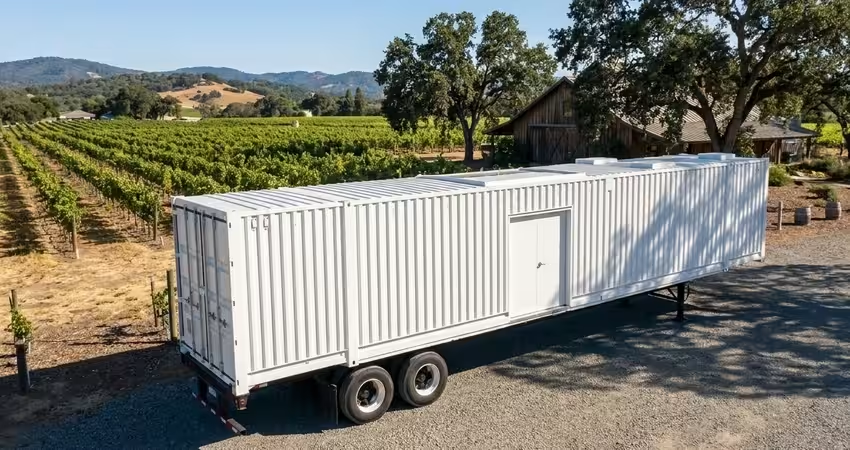
Mobile kitchen setup procedures aren't logistical formalities — they're the prerequisite for everything else the kitchen needs to do. Done properly, the unit performs like a permanent facility for the full rental. Done casually, every system on board fights you for months.
Mobile Culinaire's purpose-built modules are engineered for fast, repeatable mobile kitchen installation: standardized utility connection points, integrated leveling systems, and a project coordinator on-site to oversee positioning, leveling, stabilization, and commissioning.
Explore Mobile Culinaire's mobile kitchen models to see the engineering behind the setup. Browse our project portfolio, review our guide to choosing the right unit, or explore the hospitality markets we serve.
Disclaimer
This article is for informational purposes only and does not constitute engineering, legal, or code-compliance advice. Site conditions, load requirements, and regulatory standards vary by jurisdiction. Always consult your provider, a qualified engineer, and your local authority having jurisdiction (AHJ) before mobile kitchen installation.
People Also Ask (FAQ)
How long does it take to level and stabilize a mobile kitchen?
A professionally manufactured commercial mobile kitchen can be leveled and stabilized in two to four hours on a properly prepared site. Full commissioning extends total deployment to six to twelve hours. Site condition is the biggest variable: a concrete or asphalt pad accelerates setup dramatically compared to graded gravel.
Does a mobile kitchen need a concrete pad?
A concrete pad isn't strictly required, but the surface must support the unit's 20,000–40,000 pound gross weight without settling. Reinforced concrete, heavy-duty asphalt, and compacted gravel meeting roughly 1,500 PSF bearing capacity are all viable. Soft soil, organic ground, or recently filled areas should be remediated first.
What happens if a mobile kitchen isn't perfectly level?
Cascading failures: walk-in refrigeration loses condensate drainage, fryers and griddles tilt cooking media, dishwashers fail to drain, exhaust hoods lose balanced airflow, and ADA-accessible thresholds may exceed code. Commercial tolerance is roughly ±¼ inch over 10 feet — far tighter than residential standards.

%20(1).avif)
Testimonial

"What is standing out when you look at the mobile kitchen operation is the efficiency that we can really achieve because it's built for that."
Tell us about your kitchen needs and request a quote.
.png)
Turnkey mobile kitchen
Proudly made in-house in the USA
Commercial grade kitchen equipment
Code-compliant
Trusted by Industry Leaders