.gif)

Most disputes over mobile kitchen rental returns have little to do with actual damage. According to the American Rental Association, equipment return disputes in the broader rental industry are overwhelmingly driven by missing documentation rather than genuine equipment failure — operators can't prove what condition the unit was in when they took possession versus when they handed it back. That gap is exactly where move-out fees get created, contested, and, in many cases, avoidably lost.
A mobile kitchen rental return checklist closes that gap. Returning a mobile kitchen trailer in good condition isn't just about leaving it clean — it's a sequenced process of documentation, deep cleaning, utility disconnection, and physical teardown that determines whether your final invoice matches what you expected.
This guide walks through each stage of that process, from the paperwork you need before the trailer leaves the site to what an inspector actually checks during the final walkthrough — everything you need to follow a complete mobile kitchen rental return checklist without surprises.
Building Your Mobile Kitchen Rental Return Checklist: Why the Process Determines Your Final Bill
Every mobile kitchen rental agreement includes condition standards the unit must meet at handback. Those standards aren't ambiguous — they're typically tied to the same baseline documented at commissioning. The problem is that most disputes happen in the gap between "we think we left it fine" and "here's proof we left it fine."
Operators who treat the return as a single afternoon task, rather than a process that starts days before the trailer actually leaves are the ones who see unexpected line items on their final invoice. Cleaning deficiencies, undocumented wear, and missed utility disconnections are the three most common charge-back categories, and all three are preventable with the right sequence.
Note: If your deployment ran long — six months or more — expect the move-out inspection to be more thorough. Extended deployments accumulate more wear points that need clear documentation to distinguish normal use from damage.

Before the Trailer Leaves: Documentation You Need First
Documentation should start well before the physical teardown begins, ideally as soon as a return date is confirmed. This is the first item on any mobile kitchen rental return checklist, and it's the one operators skip most often.
The Original Commissioning Report as Your Baseline
Your mobile kitchen commissioning checklist from the start of the rental is the single most useful document you have at return time. It establishes the baseline condition the unit is measured against, and pulling it out early lets you compare current condition against day-one condition systematically rather than from memory.
- Locate the original commissioning report and any equipment inspection photos
- Cross-reference known wear items (floor scuffs, minor equipment marks) that were already present
- Flag anything that's changed materially since commissioning for discussion with the provider before the final walkthrough, not during it
Photo and Video Walkthrough Timing
Timing matters here. A walkthrough recorded after cleaning crews have finished, but before the provider's inspector arrives, gives you an independent record that isn't dependent on the inspector's own documentation.
- Photograph or video every interior surface, piece of equipment, and utility connection point
- Timestamp the walkthrough and store it separately from the provider's records
- Include exterior condition — siding, steps, ramps, and towing hardware
Tip: Do the walkthrough with the same person who did the commissioning walkthrough if possible. They'll spot discrepancies faster than someone seeing the unit for the first time.
Deep Cleaning Standards Before Return
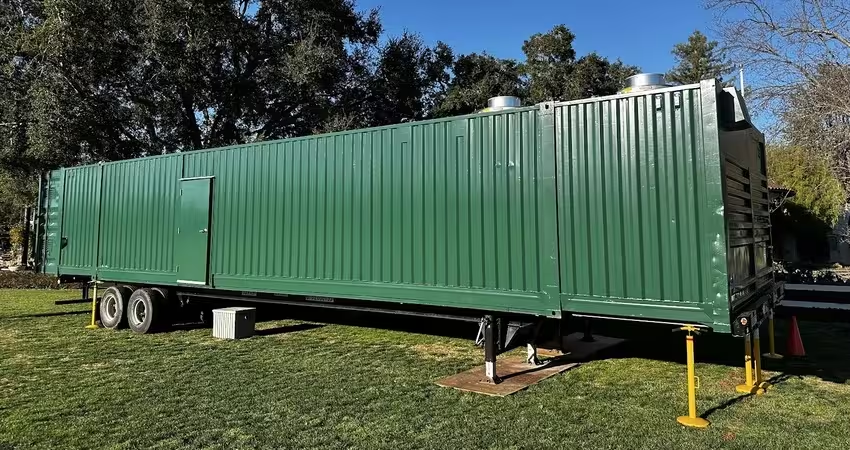
Cleaning deficiencies are the single most common source of move-out charge-backs, largely because "clean" is judged against a commercial kitchen sanitation standard, not a general tidiness standard.
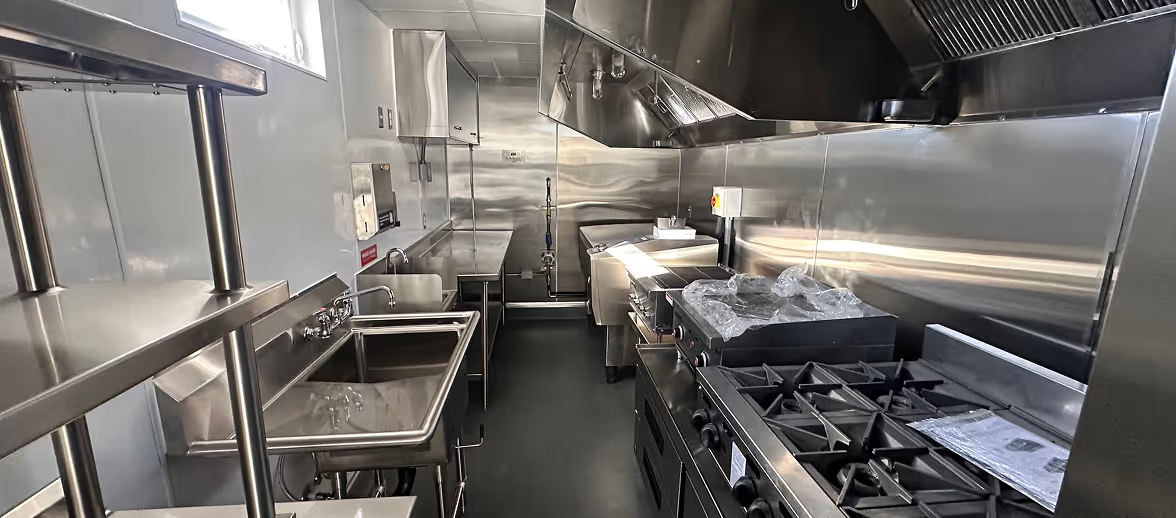
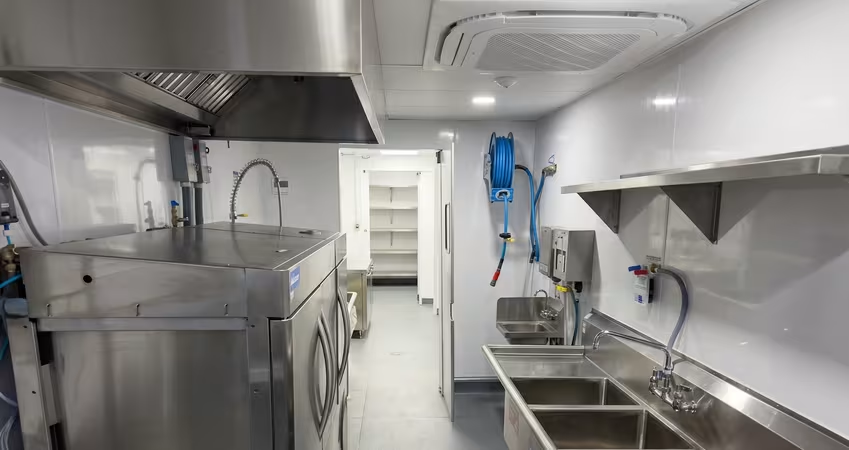
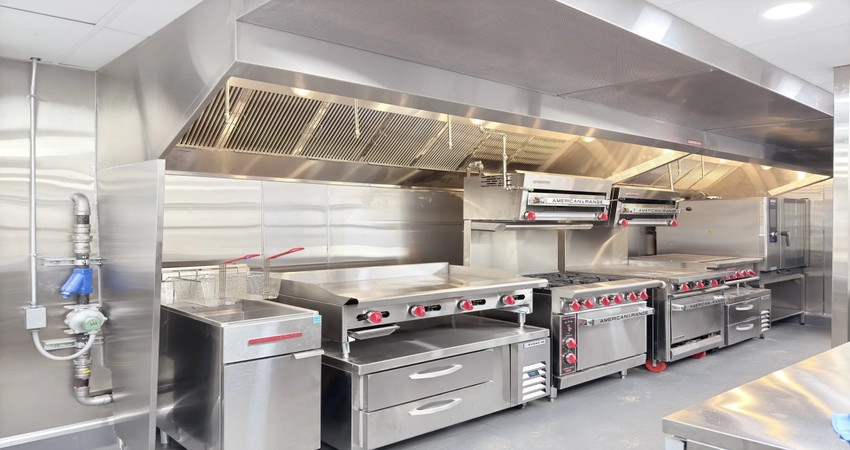
Kitchen Surfaces, Hood, and Equipment
Return-condition cleaning needs to meet the same sanitation bar as an active commercial kitchen passing inspection, referencing standards consistent with the FDA Food Code for food-contact surfaces.

Exhaust systems are worth particular attention. Hood and duct grease buildup is one of the most frequently cited items in commercial kitchen exhaust cleaning standards published by NADCA, and a hood that hasn't been cleaned to that standard since the last scheduled service is an easy, visible charge-back item for an inspector to flag.
Sanitation Sign-Off Requirements
- Request a written cleaning sign-off from whichever crew — in-house or contracted — performs the final clean
- Keep the sign-off with your other return documentation
- If a third-party cleaning service is used, confirm their scope explicitly covers hood/duct interior, not just visible surfaces, and that the crew follows cleaning protocols consistent with IICRC standards for commercial facility cleaning
Note: Cleaning the trailer yourself is possible for shorter deployments, but for units that ran a full renovation cycle, a professional commercial kitchen cleaning service is almost always worth the cost relative to the charge-back risk.

Disconnecting Utilities in the Right Order
Utility disconnection has a correct sequence, and doing it out of order creates both safety risk and documentation gaps.
Propane System Shutdown and Tank Handling
Propane systems require a specific shutdown sequence, and mishandling it is both a safety issue and a common source of return delays.
- Shut off the appliance valves first, then the tank or manifold valve
- Never disconnect a pressurized line — confirm the system reads zero pressure before disconnecting fittings
- Coordinate tank pickup or exchange according to guidance from the National Propane Gas Association on safe tank handling and transport
- Document tank fill level at disconnection if your agreement bills for propane separately
This sequencing matters more than it might seem. Our guide to propane safety for mobile kitchen trailers covers the shutdown procedure in more technical depth, including valve locations and pressure verification steps specific to trailer-mounted systems.
Water Supply and Wastewater/Greywater Tank Pump-Out
- Schedule greywater and blackwater pump-out before the trailer is moved, not after
- Confirm pump-out complies with local wastewater discharge requirements — see EPA guidance on wastewater discharge for the regulatory framework most local requirements are built on
- Flush and sanitize potable water lines per the process outlined in our mobile kitchen water supply guide
- Inspect grease interceptors and confirm they've been pumped and cleaned — our mobile kitchen grease trap guide covers interceptor maintenance standards that apply equally at teardown
Tip: Grease interceptor condition at return is one of the more overlooked charge-back items. An interceptor that wasn't pumped on schedule during the deployment will show it clearly at final inspection.
Electrical Disconnect Sequence
- De-energize distribution panel circuits before disconnecting shore power or generator feed, following lockout sequencing consistent with OSHA's electrical safety guidance
- Confirm panel labeling matches as-built condition — mismatched labeling from mid-deployment changes is a common inspection flag
- Document panel condition photographically before disconnection
Physical Teardown: Leveling, Access, and Site Restoration
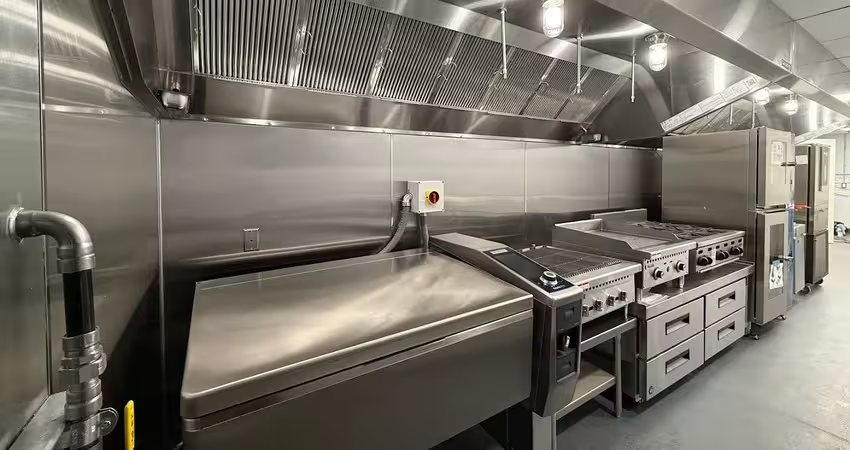
Once utilities are disconnected, physical teardown follows in reverse order of setup, mirroring the sequence outlined in our leveling and stabilization guide, just run backward.
- Retract or remove leveling and stabilization jacks according to manufacturer sequence
- Disassemble and stage access structures — stairs, decks, ramps — for pickup, consistent with the setup steps in our mobile kitchen trailer access guide
- Inspect the pad or ground surface beneath the unit for damage the trailer's footprint may have caused
- Confirm no anchoring hardware, blocking, or shims are left embedded in the site surface
- Photograph the vacated site condition as part of your return documentation
Site restoration matters because many rental agreements hold the operator responsible for ground condition, not just trailer condition. Industry closeout guidance from Hotel Business on renovation project wrap-up echoes the same point: the site itself, not just the equipment on it, is part of what gets inspected at handback. A pad that shows oil staining, cracking from improper leveling, or debris left behind can generate its own line item independent of the trailer's condition. Mobile Culinaire's project teams can walk through site restoration expectations with you ahead of the final walkthrough if you want a second set of eyes before the provider's inspector arrives.
The Move-Out Inspection Walkthrough
The final walkthrough is where everything above either holds up or doesn't.
What the Inspector Checks

Common Charge-Back Items and How to Avoid You
- Residual grease in hood or ductwork — avoid by scheduling professional exhaust cleaning before the walkthrough, not during it
- Undocumented equipment wear — avoid by cross-referencing your commissioning photos in real time during the walkthrough
- Incomplete tank pump-out — avoid by scheduling pump-out with enough lead time to confirm completion before the inspector arrives
- Site damage — avoid by inspecting the pad yourself before the inspector does, so nothing is a surprise
Note: If you disagree with an inspection finding, raise it on the spot with photo evidence rather than after the invoice arrives. Our mobile kitchen rental terms guide covers how dispute and notice provisions typically work if a disagreement isn't resolved at the walkthrough itself.
Planning Your Next Deployment
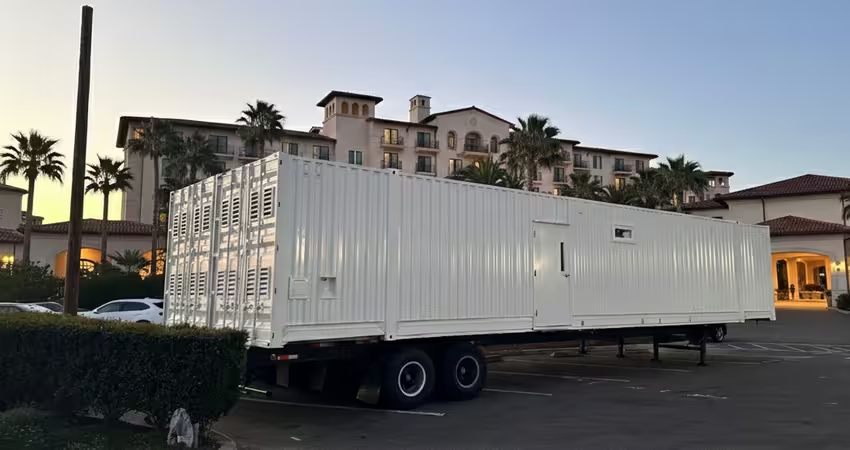
A well-executed return isn't just about avoiding fees on the current deployment — it's the foundation for a faster, smoother setup next time. Mobile Culinaire's turnkey rental service includes support through both ends of the process, from initial commissioning through final walkthrough, because a documented, well-maintained return history makes every future deployment easier to plan and price.
If you have an upcoming renovation, expansion, or seasonal deployment on the calendar, schedule a consultation to walk through your timeline, or explore our mobile kitchen rental solutions to see what a purpose-built unit brings to both ends of your rental period.
Disclaimer
This article is intended for general informational purposes and does not constitute legal, regulatory, or contractual advice. Rental return requirements, cleaning standards, and utility disconnection procedures vary by provider, jurisdiction, and equipment type. Always consult your specific rental agreement and a qualified professional before performing utility disconnection or making decisions that affect your final invoice.
People Also Ask (FAQ)
What happens if a mobile kitchen trailer is returned damaged?
Damage beyond normal wear typically triggers a charge against the security deposit or a separate invoice, based on repair cost estimates. Most rental agreements distinguish between normal wear (covered by standard rental terms) and damage from misuse or neglect. Clear photo documentation from both commissioning and return is the deciding factor in how a disputed charge gets resolved.
Do I need to professionally clean a mobile kitchen before returning it?
It depends on deployment length and your specific rental agreement, but professional cleaning is strongly recommended for any deployment longer than a few weeks. Return cleaning is judged against commercial kitchen sanitation standards, and hood/duct interior cleaning in particular is difficult to execute correctly without commercial-grade equipment.
How long does mobile kitchen demobilization typically take?
A single-unit demobilization — cleaning, utility disconnection, and physical teardown — generally takes one to three days depending on unit size and cleaning scope. Multi-unit deployments or units that require extensive site restoration can extend this timeline; build it into your renovation project's closing schedule rather than treating it as a same-day task.
What's included in a move-out inspection for a rented kitchen trailer?
A move-out inspection covers cleanliness against sanitation standards, functional condition of major equipment, confirmation that all utility systems were disconnected properly, structural condition of the trailer itself, and a comparison against the original commissioning documentation.

Testimonial

"What is standing out when you look at the mobile kitchen operation is the efficiency that we can really achieve because it's built for that."
Tell us about your kitchen needs and request a quote.
.png)
Turnkey mobile kitchen
Proudly made in-house in the USA
Commercial grade kitchen equipment
Code-compliant
Trusted by Industry Leaders