.gif)
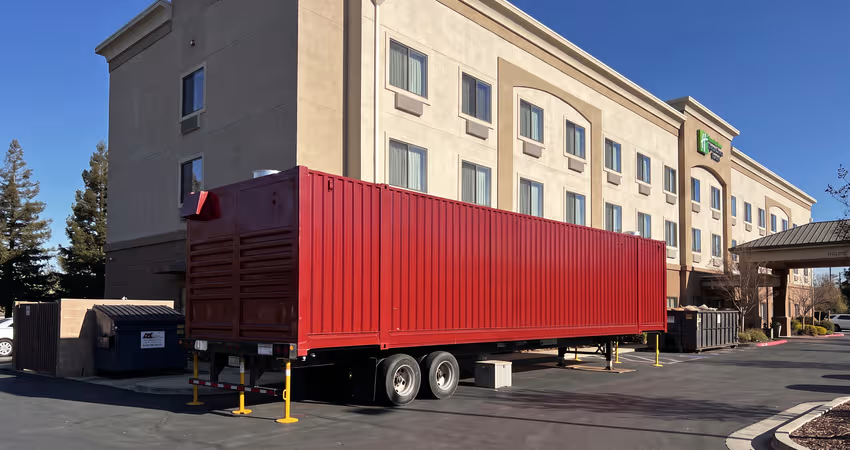
It's day one of the kitchen renovation. The mobile kitchen trailer is on the pad, the crew is prepping the first service, and a city inspector pulls into the loading dock with a question about where the wastewater is going. If the answer isn't already documented — with permits, hauler contracts, and a grease control log — the temporary kitchen doesn't open.
Mobile kitchen wastewater disposal is one of the most under-planned parts of a hospitality renovation, and it's where operators most often get caught. This guide covers what counts as wastewater in a mobile kitchen, which federal and local rules apply, and the four practical options for keeping a temporary kitchen fully compliant from the first meal to move-out.
Why Wastewater Compliance Trips Up Even Experienced Operators
Three assumptions cause most of the trouble:
- Volume is underestimated: LA hotel-scale mobile kitchen can generate 500 to 2,000+ gallons of wastewater per day — closer to the load of a permanent restaurant than a food truck. Sizing tanks, interceptors, or tie-ins for restaurant volumes rather than trailer volumes is a common mistake.
- The words "greywater" and "wastewater" get used interchangeably: They aren't. The legal definitions determine which disposal options are on the table, and misreading them creates unpermitted work.
- "Temporary" is read as "exempt": It isn't. Municipal wastewater authorities apply the same discharge limits to a mobile unit as they do to the permanent kitchen it's replacing.
Note: Every wastewater decision in a mobile kitchen deployment is a local jurisdiction decision. Federal rules set the floor. State and municipal rules set the ceiling — and there's often significant distance between them.
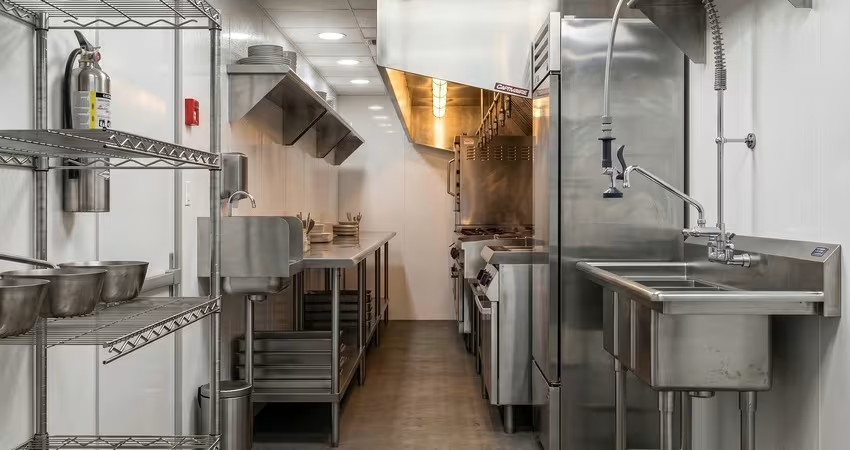
What Counts as Wastewater in a Mobile Kitchen (And What Doesn't)
Greywater vs. process wastewater — the legal definitions
Under model plumbing codes maintained by IAPMO and the International Code Council, greywater is untreated wastewater from bathtubs, showers, bathroom sinks, clothes washers, and laundry sinks. It's regulated because it can sometimes be reused for subsurface irrigation, flushing, and similar low-contact uses.
Process wastewater — sometimes called dark greywater — is everything a commercial kitchen produces at its sinks, dishwashers, and prep stations. It carries food solids, fats, and pathogens at concentrations greywater systems aren't designed to handle.
Why kitchen sink and dishwasher discharge is almost never "greywater" under US code
This is the single most consequential distinction for temporary kitchen operators. The IAPMO Uniform Plumbing Code, most state codes, and municipal codes in cities like Los Angeles explicitly exclude kitchen sinks and dishwashers from the greywater definition. That means a mobile kitchen's discharge cannot be routed to a landscape irrigation system, a graywater reuse tank, or an on-site absorption field the way shower or laundry water sometimes can. It has to go to the sanitary sewer, to a proper holding tank for hauling, or to a permitted commercial wastewater disposal facility.
Fats, oils, and grease (FOG) as its own regulatory track
FOG runs on a separate regulatory track from wastewater volume. Even if the trailer's tie-in is fully permitted, discharge concentrations above local limits still trigger violations. The Boston Water and Sewer Commission, for example, caps FOG discharge at 100 mg/L — a limit typical of large municipalities. Meeting that limit requires a grease interceptor sized correctly for the trailer's fixture count and menu.
The Federal Baseline: EPA, Clean Water Act, and the Pretreatment Program
Federal wastewater law sets the outer boundary. Under the Clean Water Act, discharging any material into a publicly owned treatment works (POTW) that interferes with treatment, passes through untreated, or causes a violation of the POTW's own permit is prohibited.
40 CFR 403.5 and what it actually mandates
The EPA's National Pretreatment Program, codified at 40 CFR Part 403, delegates enforcement to local water authorities but sets national prohibitions. Section 403.5 specifically bans discharges that:
- Create fire or explosion hazards
- Are corrosive (pH below 5.0)
- Contain solids or viscous pollutants that obstruct flow
- Discharge at rates that upset treatment operations
For a mobile kitchen, the practical impact is that any FOG concentration high enough to solidify in the sewer line or accumulate in the POTW's grease abatement equipment falls under this prohibition.
FOG discharge limits (why 100 mg/L keeps showing up)
The 100 mg/L benchmark appears in dozens of municipal codes because it's the practical concentration below which properly-sized grease interceptors can consistently discharge. It's not a federal mandate — but it is the de facto national standard for pretreatment.
State and Local Rules: Where Compliance Actually Happens
Health department vs. municipal utility jurisdiction
Two agencies typically regulate a mobile kitchen deployment simultaneously:
- The local health department oversees food safety, sanitation of the unit, and permitting the trailer to operate as a temporary food establishment — the same body that inspects the permanent kitchen. The FDA Food Code is the model most states adopt.
- The municipal wastewater utility oversees the tie-in, discharge quality, and any grease interceptor requirements. Utility rules are separate from health code and often stricter.
Both must sign off before service begins. Coordination between the two is the operator's responsibility.
How "mobile food unit" rules differ from temporary commercial food service classifications
Most state food codes have specific provisions for mobile food units — the classification most food trucks operate under. Hotel and resort mobile kitchen deployments usually don't fit here because they operate stationary on private property, at commercial-kitchen volumes, for months at a time. Instead, they fall under temporary food establishment or satellite kitchen classifications, which trigger commercial pretreatment rules rather than food truck rules.
Stricter-jurisdiction snapshot
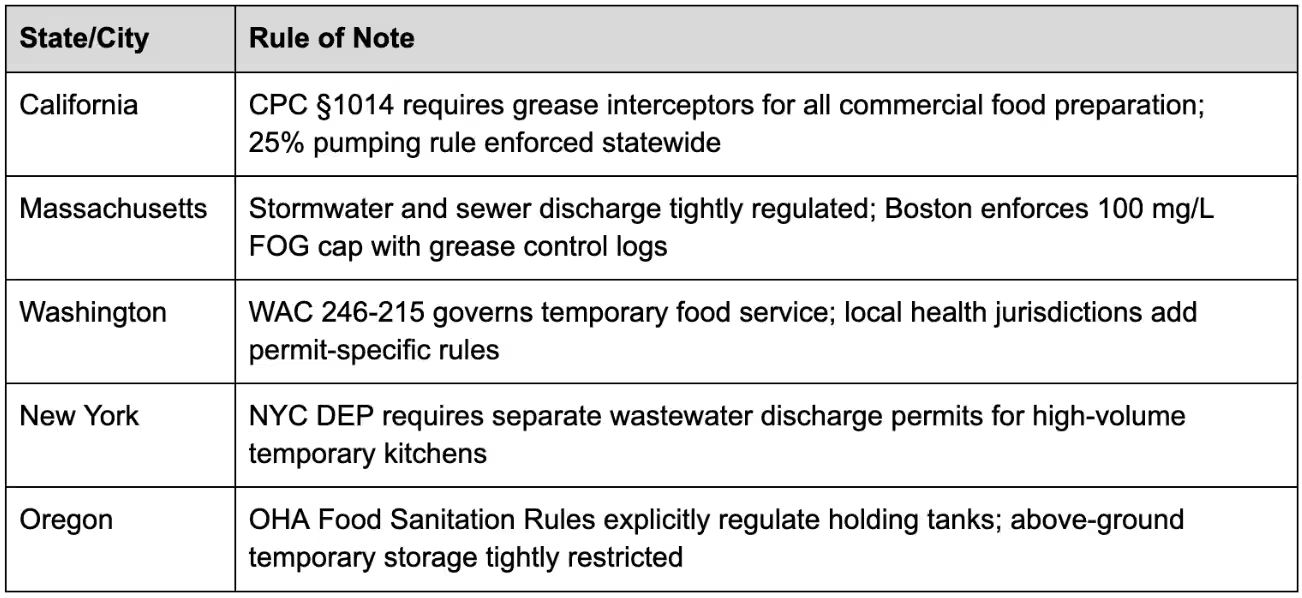
Washington deployments in particular carry a heavy inspection load — our kitchen trailer inspection checklist for Washington operators walks through the WAC 246-215 requirements alongside local health jurisdiction expectations. Oregon operators should reference the state's Mobile Unit Water Disposal Fact Sheet directly — its restrictions on above-ground temporary storage tanks have caught more than one out-of-state operator off guard.
Four Options for Handling Wastewater from a Mobile Kitchen
Option 1 — Direct sewer tie-in from the trailer
The trailer's plumbing connects to a cleanout or lateral on the property, discharging directly to the municipal sewer. This is the most operationally simple option — no hauling, no pumpouts — but it requires a plumbing permit and often a discharge permit from the utility. It only works when the building's lateral has capacity to absorb the additional load.
Best for: Deployments longer than 60 days, on properties with confirmed lateral capacity and an existing grease abatement system.
Option 2 — Onboard holding tanks with scheduled pumpouts
Wastewater collects in an onboard tank, and a licensed septic hauler pumps it on a set schedule (typically daily or every other day at hotel volumes). This option skips the plumbing permit for a tie-in and works on sites where the lateral is inaccessible or overloaded.
Best for: Short-duration deployments, remote sites, and properties where the sewer connection would require significant excavation.
Tip: Every pumpout should generate a hauler manifest. These documents are your primary evidence during a utility audit — file them alongside your grease control logs from Day 1.
Option 3 — Portable grease interceptors combined with a tie-in
A stand-alone grease interceptor is placed between the trailer and the sewer connection, pretreating the discharge before it enters the utility line. This is often the compromise solution when the property has a lateral connection available but no permanent interceptor sized for kitchen volumes.
Best for: Deployments where the permanent kitchen's grease interceptor is offline for renovation, or where the property was never sized for full commercial kitchen discharge.
Option 4 — Hauling to an approved wastewater disposal facility
All wastewater is collected on-site and transported by a licensed hauler to a commercial disposal facility that accepts high-strength food service waste. This is the most expensive option per gallon but the least dependent on local infrastructure.
Best for: Rural resort deployments, temporary event kitchens, or sites where no municipal sewer connection exists.
Grease Trap and Interceptor Requirements for Temporary Kitchens
When a grease trap is required
If the mobile kitchen operates a commercial dishwasher, a three-compartment sink, or high-FOG cooking equipment (fryers, griddles, wok burners, charbroilers), a grease interceptor is almost always required. A few jurisdictions permit onboard interceptors sized for the trailer's flow; most require an exterior interceptor with dedicated maintenance access.
Sizing based on flow rate and fixture count
Sizing generally uses one of two methods:
- Fixture unit method — count drainage fixture units for each connected fixture and cross-reference to the required interceptor volume in the local plumbing code
- Meal-count method — multiply projected meals per day by a waste flow factor (typical: 20–30 gallons per meal for full-service)
Undersized interceptors reach the 25% grease-and-solids threshold within days rather than weeks, triggering emergency pumpouts and potential violations. This is one reason how a mobile kitchen is designed and engineered directly affects its compliance profile — a trailer built for commercial output has interceptor capacity to match.
The 25% rule and maintenance log requirements
Nearly every US jurisdiction enforces the same maintenance standard: when combined grease and solids reach 25% of the interceptor's total liquid depth, the trap must be pumped. Waiting past that threshold allows incoming wastewater to short-circuit the baffles, sending FOG downstream. A grease control log — recording each pumpout date, volume removed, and technician signature — must be kept on-site and available on request.
Permits, Documentation, and Inspection Readiness
Plumbing permits for temporary sewer connections
Any physical connection between the trailer and the building's plumbing system requires a plumbing permit from the local building department. The application should identify the trailer's peak discharge rate, the grease interceptor arrangement, and the disconnection plan at move-out. Skipping this step is the most common source of red-tag violations on mobile kitchen deployments.
Grease control logs and waste hauler manifests
Two documents keep an operator compliant:
- The grease control log — pumpout dates, volumes, and technician signatures for the interceptor
- The waste hauler manifest — pickup dates, volumes, and destination facility for each tank pumpout, if using Option 2 or Option 4
Both should be maintained from Day 1 and stored for the duration required by local code — often three years.
How a Purpose-Built Mobile Kitchen Reduces Compliance Risk
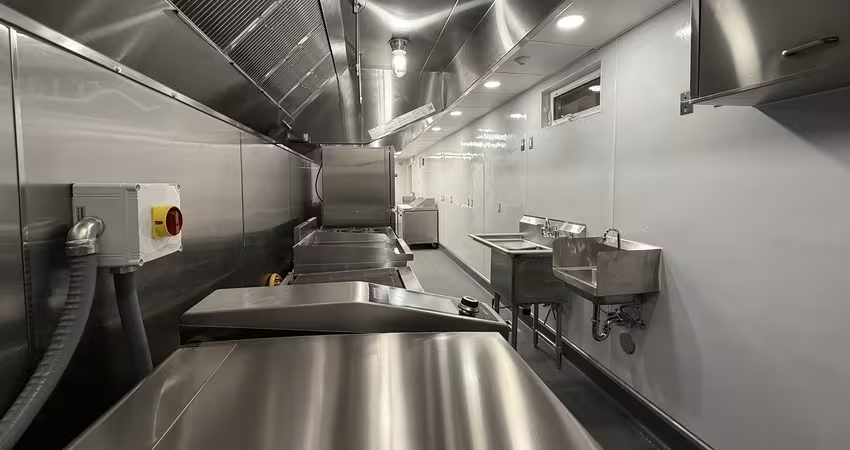
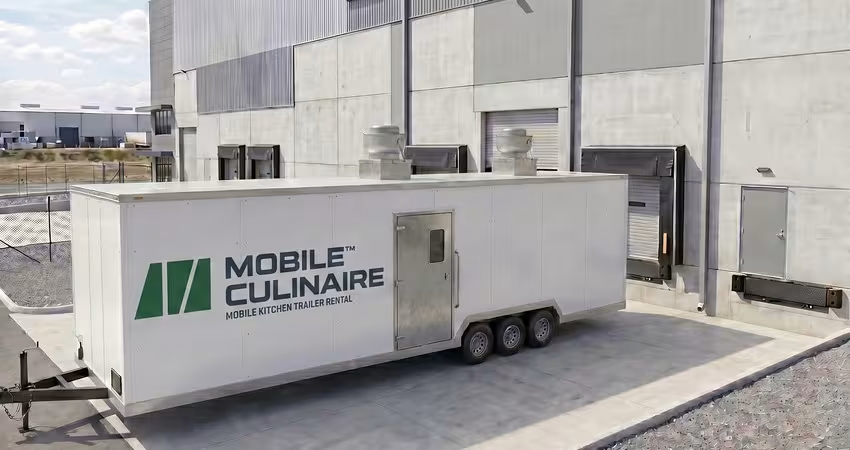
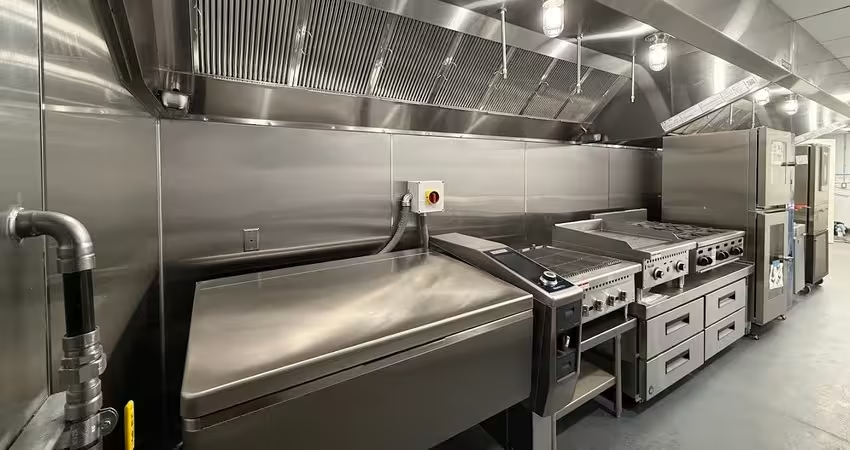
The wastewater path a temporary kitchen relies on isn't decided at the utility office — it's decided by how the trailer itself was engineered. Our purpose-built mobile kitchen trailers are designed with commercial-grade plumbing, integrated grease management infrastructure, and tank capacities sized for full hotel and resort service volumes.
That means every one of the four disposal options above is available from the same trailer, rather than being locked in by hardware limitations. When we deploy a unit across the hospitality, healthcare, and institutional markets we serve, our team works with the property's contractor and the local utility on the connection plan before Day 1 — so the inspector's question at the loading dock has a documented answer. Our past project deployments show the range of site configurations this has covered.
Conclusion
Wastewater compliance isn't a same-day fix, and it isn't optional. The trailer, the tie-in, the interceptor, and the paperwork all have to line up before service begins — and the operators who get this right treat it as a Week 1 planning conversation, not a Day 1 problem. If a mobile kitchen deployment is on your horizon, talk to our team about permitting, site prep, and the right tank or tie-in configuration for your property.
People Also Ask (FAQ)
Is kitchen sink water considered greywater?
In almost every US jurisdiction, no. Model plumbing codes maintained by IAPMO and the ICC exclude kitchen sinks and dishwashers from the greywater definition because their discharge carries far higher concentrations of fats, food solids, and pathogens than shower or laundry water. Most codes classify kitchen wastewater as process wastewater or dark greywater, which requires stricter treatment and cannot be used for landscape irrigation. A few jurisdictions permit kitchen sink discharge in greywater systems only with a building official's written approval and enhanced treatment.
Do mobile kitchens require a grease trap?
In most cases, yes. Any commercial kitchen — mobile or permanent — that operates a commercial dishwasher, three-compartment sink, fryer, or griddle typically triggers grease trap requirements under EPA-driven local pretreatment programs. Some jurisdictions permit portable or onboard grease interceptors for mobile units; others require a fixed exterior interceptor sized to peak flow. Sizing depends on the number of fixtures, meal volume, and menu type. Always confirm requirements with the local water authority before deployment.
Can I connect a mobile kitchen to my building's existing sewer line?
Usually yes, but the connection requires a plumbing permit from the local building department and, in many cities, notification to the wastewater utility. The tie-in must go downstream of any required grease interceptor and cannot bypass existing pretreatment. The building's lateral capacity also matters: adding 500 to 2,000+ gallons per day of high-strength kitchen wastewater to an already-loaded line can cause backups. A pre-deployment site assessment identifies whether direct tie-in, an onboard tank system, or a portable interceptor is the right path.
What happens if a temporary kitchen discharges wastewater illegally?
Enforcement is fast and expensive. Municipal utilities can issue notices of violation, per-day fines, and — in repeat cases — cut off water service or revoke the food service permit. Under the Clean Water Act, willful discharge violations can carry federal penalties exceeding $37,500 per day. Beyond fines, illegal discharge frequently triggers a health department shutdown of the food service operation, which defeats the entire purpose of running a temporary kitchen through a renovation.

Testimonial

"What is standing out when you look at the mobile kitchen operation is the efficiency that we can really achieve because it's built for that."
Tell us about your kitchen needs and request a quote.
.png)
Turnkey mobile kitchen
Proudly made in-house in the USA
Commercial grade kitchen equipment
Code-compliant
Trusted by Industry Leaders