.gif)
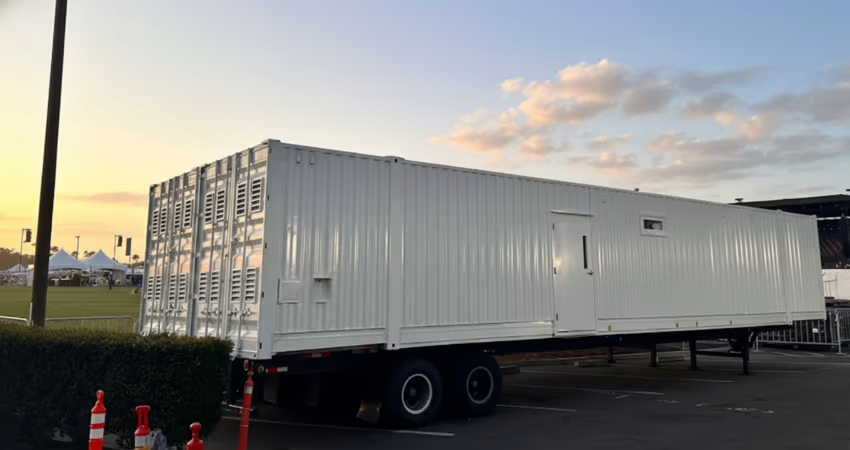
Your venue just booked a 400-person outdoor gala. The site is stunning — but there's no commercial kitchen within 200 yards of the tent. A rented mobile kitchen solves the production gap, but getting the unit on-site is only half the equation. The real challenge starts the moment the trailer doors open: How does your culinary team adapt to an unfamiliar layout? Where does the server pickup happen? Who manages the utility connections during a 6-hour service window?
Most content about mobile kitchens for events focuses on why you need one. This guide focuses on how you actually integrate one into your venue's operations — from site prep and staff coordination to guest experience and compliance — so that from the first plate to the last, service runs as seamlessly as it would from your permanent kitchen.
Why Event Venues Need an Integration Plan for Mobile Kitchens
The Operational Gap Between Delivery and Service
A mobile kitchen for events arrives as a fully equipped, self-contained production unit. But "fully equipped" doesn't mean "fully integrated." Without a deliberate integration plan, the kitchen sits as an isolated asset — disconnected from your front-of-house workflow, your staff's muscle memory, and the event's service timeline.
The operational gap between trailer delivery and first plate out is where most venues lose time, efficiency, and guest satisfaction. According to the National Restaurant Association, foodservice disruptions can cost operators up to $1,900 per day in lost revenue — a figure that compounds rapidly when event timelines are measured in hours, not days.
What Goes Wrong Without Coordination
The most common failures aren't equipment-related. They're workflow-related:
- Disconnected BOH-to-FOH pathways — servers don't know where the pass is, expo gets bottlenecked
- Utility surprises — power drops mid-service because amperage requirements weren't confirmed
- Permitting gaps — a health inspector arrives and the temporary food service license isn't posted
- Menu misalignment — the chef planned dishes requiring a combi oven, but the unit has convection only
Each of these is preventable. It starts with treating mobile kitchen integration as a project management exercise, not a plug-and-play scenario.
Site Assessment and Preparation for Mobile Kitchen Placement
Evaluating Access, Surface, and Utility Requirements
Before the trailer arrives, conduct a thorough site survey. The goal is to confirm that the physical environment supports both delivery logistics and sustained kitchen operations.
Site Assessment Checklist:
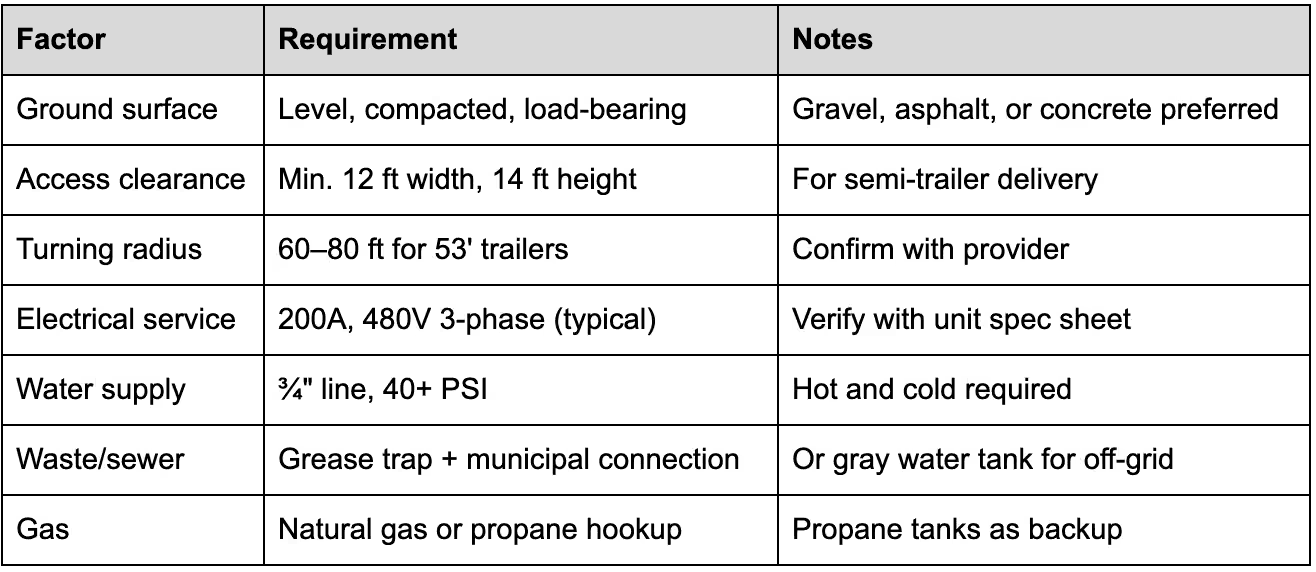
Tip: If your venue hosts recurring events, consider installing semi-permanent utility stubs (power panel, water line, sewer connection) at the designated mobile kitchen zone. This can reduce future setup time from 48+ hours to under 12.
For a deeper look at utility and infrastructure requirements, see our guide to choosing the right mobile kitchen unit.
Positioning the Unit Within the Event Layout
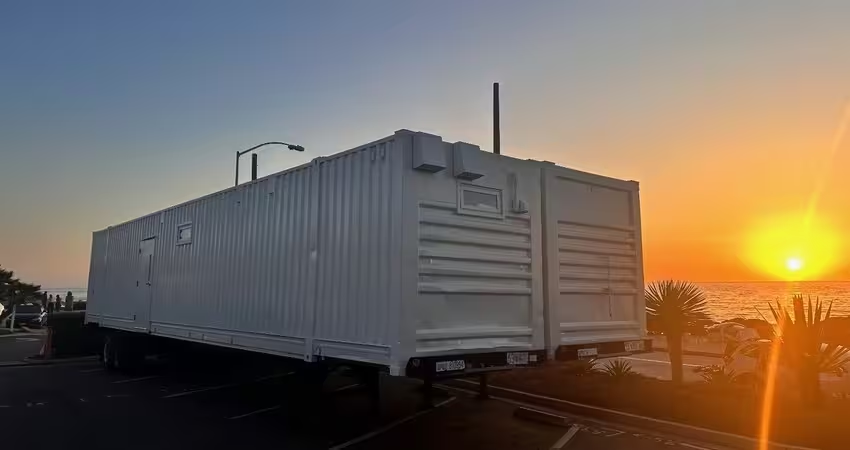
Placement isn't just about where the trailer fits — it's about how it connects to the event's service architecture. Key principles:
- Minimize the distance between kitchen and service point. Every additional 50 feet between the pass and the buffet or plating station adds service lag and temperature loss.
- Keep the trailer out of guest sightlines when possible, but prioritize function over concealment if forced to choose.
- Orient the service window or exit toward FOH traffic flow, not away from it.
- Allow at least 10 feet of clearance around the exhaust hood discharge side for fire code and air quality reasons, per NFPA 96 ventilation and fire suppression requirements.
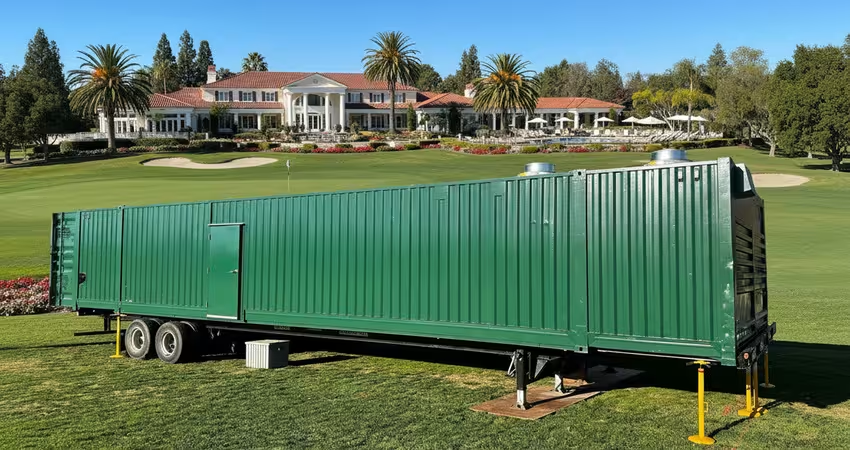
Note: For venues with multiple event zones (e.g., cocktail terrace + seated dinner tent), a single 53-foot trailer can serve both if the site plan accounts for dual service pathways. For complex operations, adding a dedicated prep or refrigeration trailer creates a modular kitchen ecosystem that scales with demand.
Coordinating Staff Workflow Between Mobile and Permanent Kitchens
Back-of-House Role Assignments and Station Mapping
Staff who are efficient in your permanent kitchen may need deliberate reorientation in a mobile unit. The layout is compact, station adjacencies are different, and the flow from walk-in to prep to line may be reversed or compressed.
Before the event, assign roles that account for the mobile kitchen's specific configuration:
- Designate a kitchen lead who has walked through the unit and understands station positions, equipment placement, and utility controls.
- Map station assignments visually — post a simple floor plan inside the trailer showing who works where, where ingredients are stored, and where the fire extinguisher and first aid kit are located.
- Establish a clear expo/pass zone at the trailer's service window or door, with dedicated space for plating, garnishing, and quality checks.
Tip: Request the unit's layout diagram from your rental provider in advance. Mobile Culinaire provides detailed equipment and floor plan documentation with every deployment to accelerate this process.
Onboarding Culinary Teams to a Temporary Kitchen Environment
Schedule a 60–90 minute walkthrough with your culinary team before the event — ideally the day before or morning of. Cover:
- Equipment locations and how to operate any unfamiliar appliances
- Gas, electric, and water shutoff locations
- HVAC and ventilation controls (exhaust hoods, makeup air, AC)
- Waste disposal and grease trap procedures
- Emergency protocols: fire suppression system activation, exit routes
This walkthrough isn't optional. According to the FDA's 2022 Food Code, all temporary food establishments must have a designated Person in Charge (PIC) who understands the operation's food safety protocols — and that PIC needs to know this specific unit, not just general principles.
Adapting Menus and Service Styles for Mobile Kitchen Operations
Matching Equipment Capabilities to Menu Complexity
Not every menu translates directly into a mobile kitchen environment. The smart approach: design the event menu around the unit's equipment, not the other way around.
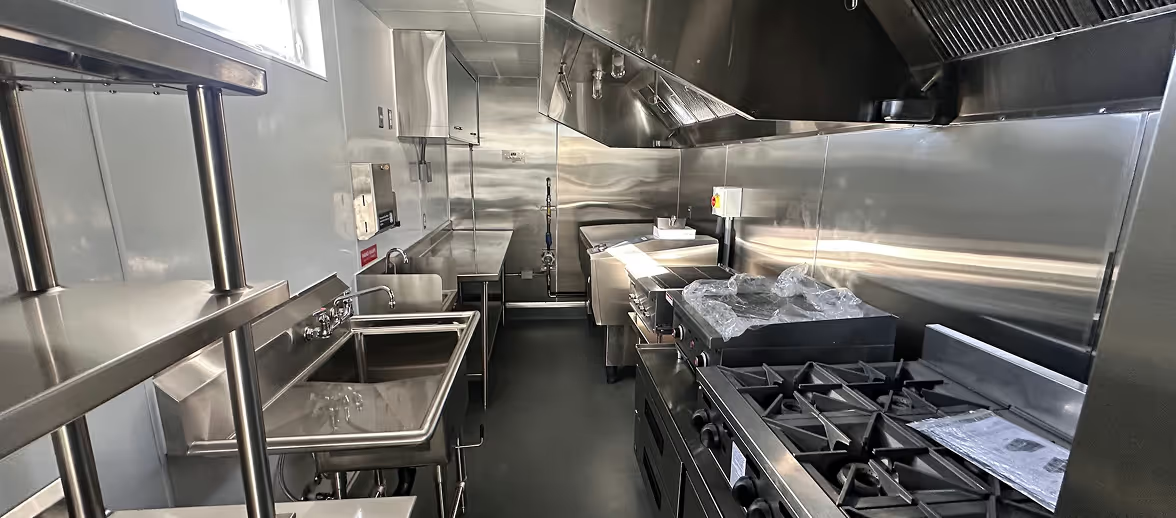
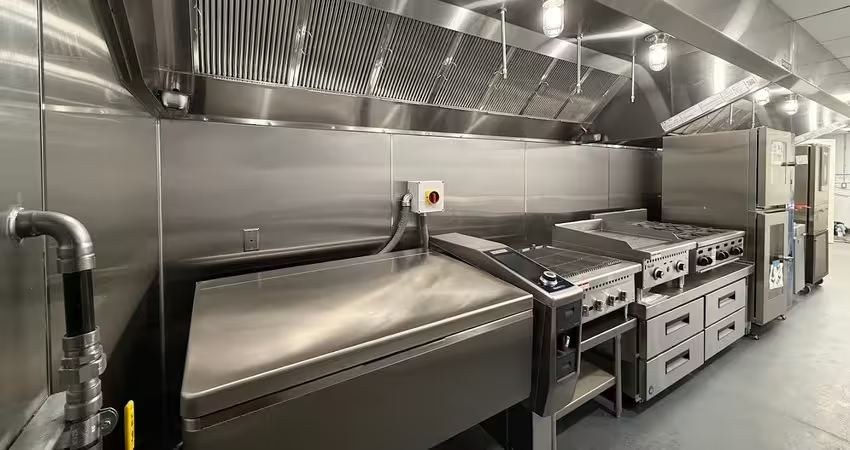
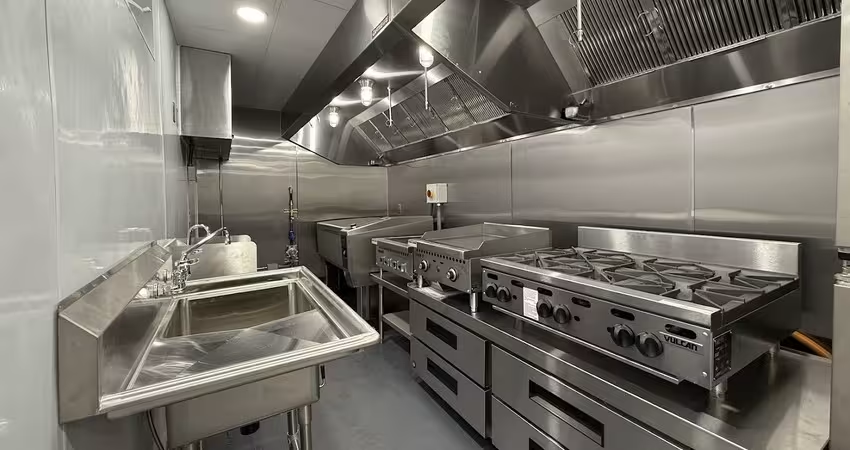
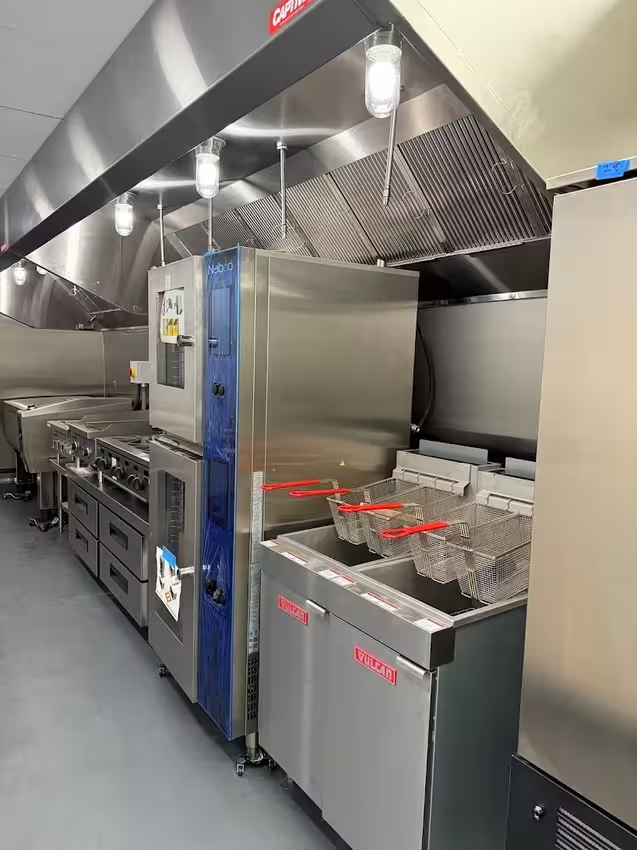
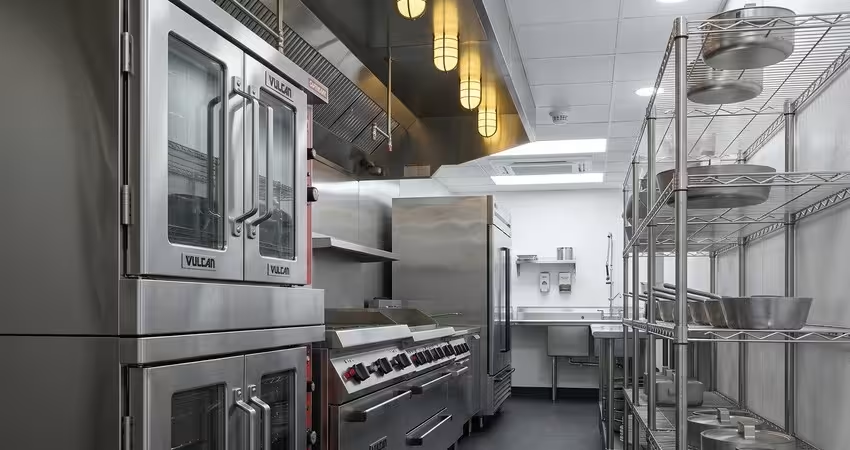
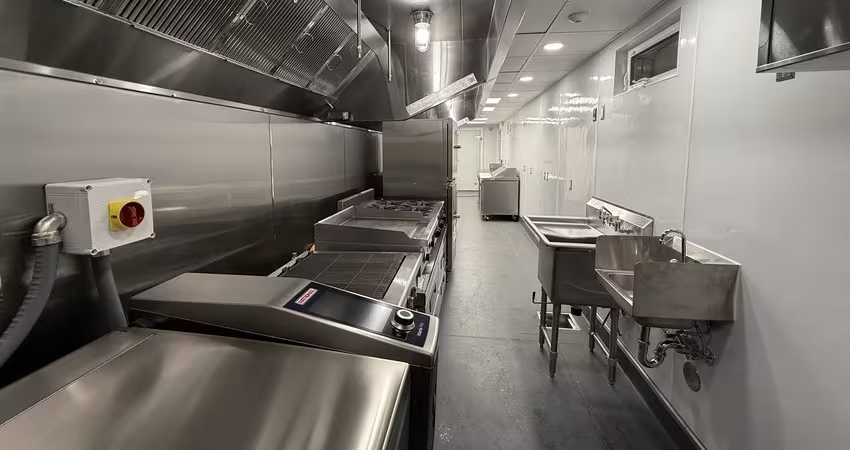
A standard 53-foot mobile kitchen trailer typically includes:
- Commercial convection ovens (double-stacked)
- 36" griddle and/or range with under-oven
- Deep fryers
- Walk-in cooler/freezer combination
- Three-compartment sink and handwash stations
- Prep counters and dry storage
This configuration supports most banquet, buffet, and à la carte service models. However, menus requiring specialized equipment — tandoor ovens, wood-fired grills, sous vide circulators — may need supplemental equipment or menu adjustments.
Note: Confirm the exact equipment manifest with your provider at least 2–3 weeks before the event. Providers like Mobile Culinaire allow equipment schedule modifications based on available inventory, ensuring the unit matches your menu's technical demands.
Designing Service Flow — Buffet, Plated, and Hybrid Models
The service style dictates how food moves from kitchen to guest. Each model requires a different physical relationship between the mobile kitchen and the event space:
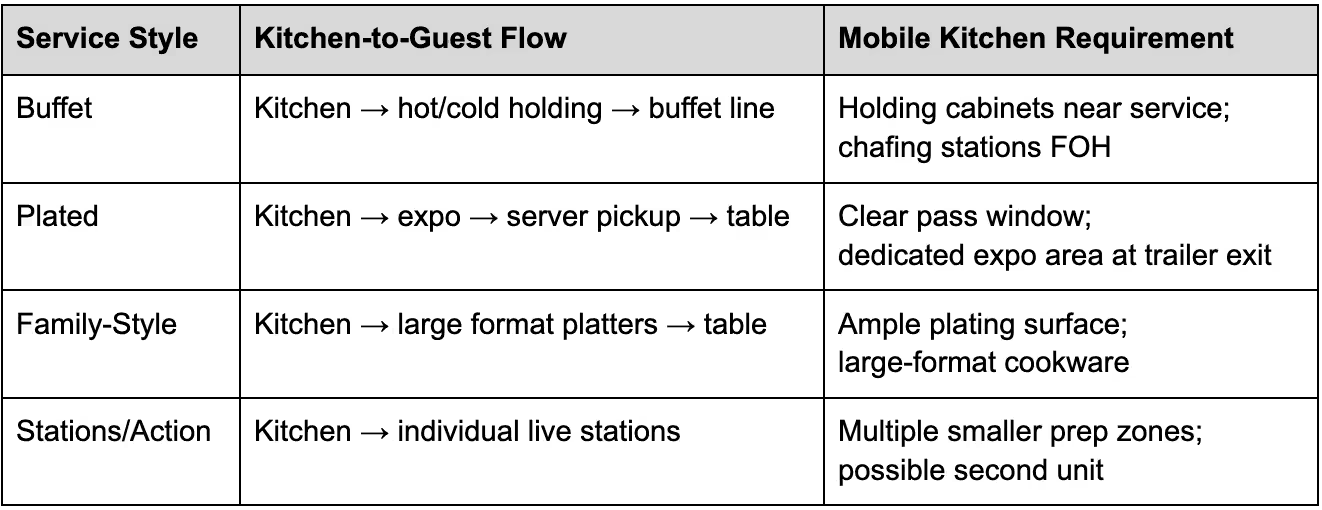
For high-guest-count events (300+), the American Hotel & Lodging Association recommends establishing a staging area between the kitchen and service point — a transitional zone where plated items are organized by course, table, or zone before servers enter the dining area.
Compliance and Inspections for Temporary Event Kitchens
Health, Fire, and Zoning Requirements for On-Site Units
A mobile kitchen at an event venue must meet the same regulatory standards as a permanent commercial kitchen. The three core compliance areas:
1. Health Department — Temporary Food Service Permit
Most jurisdictions require a temporary food service establishment (TFSE) permit for any event-based food preparation. The FDA Food Code serves as the baseline model that state and local agencies adopt (in full or in part) for these permits. Requirements typically include a plan review showing equipment layout, a designated PIC, and documentation of food sources and storage protocols.
2. Fire Safety — NFPA 96 Compliance
Any mobile kitchen with a cooking line must include a Type I exhaust hood with an integrated fire suppression system, per NFPA 96. The local fire marshal may require an on-site inspection before operations begin. Ensure suppression system inspection tags are current and accessible.
3. Zoning / Temporary Use Permits
Some municipalities require a separate temporary use or special event permit for placing a commercial trailer on-site. Start this process 4–6 weeks in advance — permit processing times vary significantly by jurisdiction.
Tip: Professional mobile kitchen providers typically supply compliance documentation — including unit spec sheets, fire suppression certifications, and third-party inspection reports — that streamline the permitting process. For a comprehensive breakdown, read our mobile kitchen permits and regulations guide.
Managing Guest Experience Around a Mobile Kitchen
Concealment, Noise Mitigation, and Traffic Flow
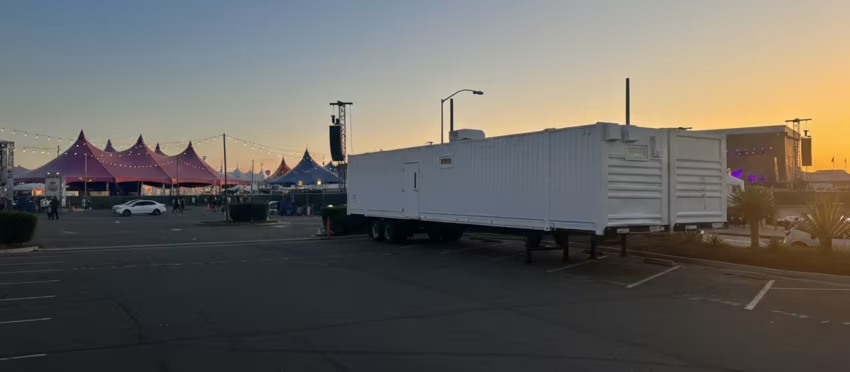
A mobile kitchen is a production asset, not a design element. For premium events — galas, weddings, corporate receptions — managing the visual and acoustic impact of the unit is essential.
Practical strategies include:
- Skirting and screening: Use branded fabric panels, hedging, or temporary fencing to screen the trailer body while keeping service access unobstructed.
- Noise management: Position the generator (if used) on the side opposite the guest area. Generator exhaust should discharge away from dining zones and HVAC intakes.
- Traffic separation: Establish dedicated pathways for staff, deliveries, and waste removal that don't intersect with guest circulation. Mark these clearly during site setup.
Integrating the Mobile Kitchen Into the Venue's Brand Identity
For venues with a strong brand identity — especially resorts, country clubs, and luxury event spaces — the goal is for guests to never notice the kitchen is "temporary." This means:
- Plate presentation, serviceware, and garnish standards match your permanent kitchen's output
- Server scripts don't reference the mobile unit ("the kitchen" is "the kitchen," period)
- Menu cards and event collateral reflect the same quality tier as any in-house event
Note: According to the AHLA's 2025 State of the Industry report, guest spending across hospitality reached record levels in 2024, with food and beverage remaining a primary driver of satisfaction. Guests judge the plate, not the kitchen it came from — and that's exactly the point.
Plan Your Next Event With Confidence
Integrating a mobile kitchen into event operations isn't about improvising — it's about planning the same way you'd plan any high-stakes culinary production. Site prep, staff coordination, menu alignment, compliance, and guest experience management are the five pillars that separate a seamless event from a chaotic one.
Mobile Culinaire's team works directly with venue operators and F&B directors to design integration plans tailored to your site, menu, and service model. Every unit ships with full technical documentation, and a dedicated project coordinator oversees setup, utility connections, and final inspection on-site.
Contact our event kitchen specialists to discuss your upcoming project, or explore our mobile kitchen fleet to see which unit fits your operation. For event venue inspiration, browse our project showcase.
People Also Ask (FAQ)
How long does it take to set up a mobile kitchen at an event venue?
Most commercial-grade mobile kitchen trailers can be delivered and fully operational within 24 to 72 hours, depending on site readiness, utility access, and permitting requirements. Pre-leveled sites with established electrical (typically 200A, 480V three-phase), water, and waste connections accelerate setup significantly. Venues hosting recurring events can establish semi-permanent utility stubs to reduce future deployment time to under 12 hours. For a detailed walkthrough, see our step-by-step rental guide.
What permits are required to operate a mobile kitchen at an event?
Requirements vary by jurisdiction but typically include a temporary food service permit from the local health department, a fire safety inspection (verifying NFPA 96-compliant hood and suppression systems), and potentially a zoning or temporary use permit. Some municipalities also require a separate electrical inspection for temporary power connections. Begin the permitting process at least 4–6 weeks before your event to avoid delays.
Can a mobile kitchen match the output of a permanent event venue kitchen?
Yes. Commercial-grade mobile kitchens equipped with convection ovens, fryers, griddles, and walk-in coolers can produce 150 to 450+ meals per service depending on unit size. A 53-foot trailer with a full cooking line replicates the output of a mid-sized permanent commercial kitchen. The key is matching unit size and equipment configuration to your event's menu complexity and expected guest count.
Do mobile kitchens work in off-grid or remote event locations?
Yes. Self-contained mobile kitchens can operate independently using onboard propane systems, portable generators, and fresh/gray water tanks. This makes them viable for vineyard dinners, mountaintop weddings, beachfront galas, and other infrastructure-limited venues. For extended off-grid deployments, coordinate fuel and water resupply schedules with your provider in advance. For more on when and why events use mobile kitchens, see our dedicated article.

Testimonial
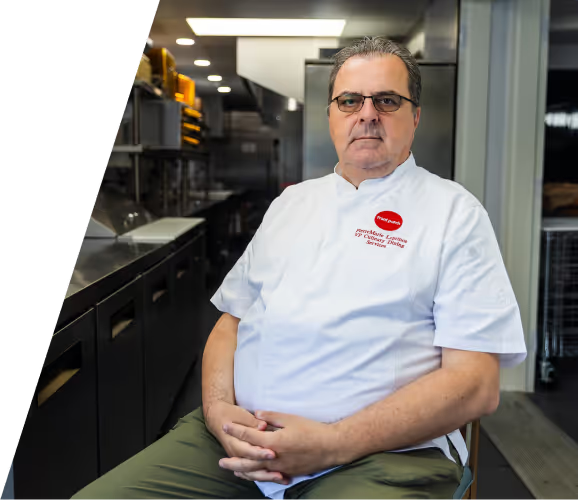
"What is standing out when you look at the mobile kitchen operation is the efficiency that we can really achieve because it's built for that."
Tell us about your kitchen needs and request a quote.
.png)
Turnkey mobile kitchen
Proudly made in-house in the USA
Commercial grade kitchen equipment
Code-compliant
Trusted by Industry Leaders