.gif)

You've booked the venue, confirmed the caterer, and locked in the date — but when the mobile kitchen trailer arrives, the site isn't ready. The electrical panel can't handle the load. The access road is too narrow for a semi-truck. The health department hasn't signed off. What was supposed to be a 48-hour setup becomes a week-long scramble that threatens your entire event timeline.
Mobile kitchen site preparation is the most overlooked step in event foodservice planning — and the most consequential. A well-prepared site means your temporary kitchen is operational within hours. A poorly prepared one means delays, cost overruns, and compliance failures.
This guide walks event organizers through every mobile kitchen event setup requirement: utilities, surface conditions, delivery logistics, permitting, and staff coordination — so your mobile kitchen is operational the moment it arrives.
Why Mobile Kitchen Site Preparation Determines Performance
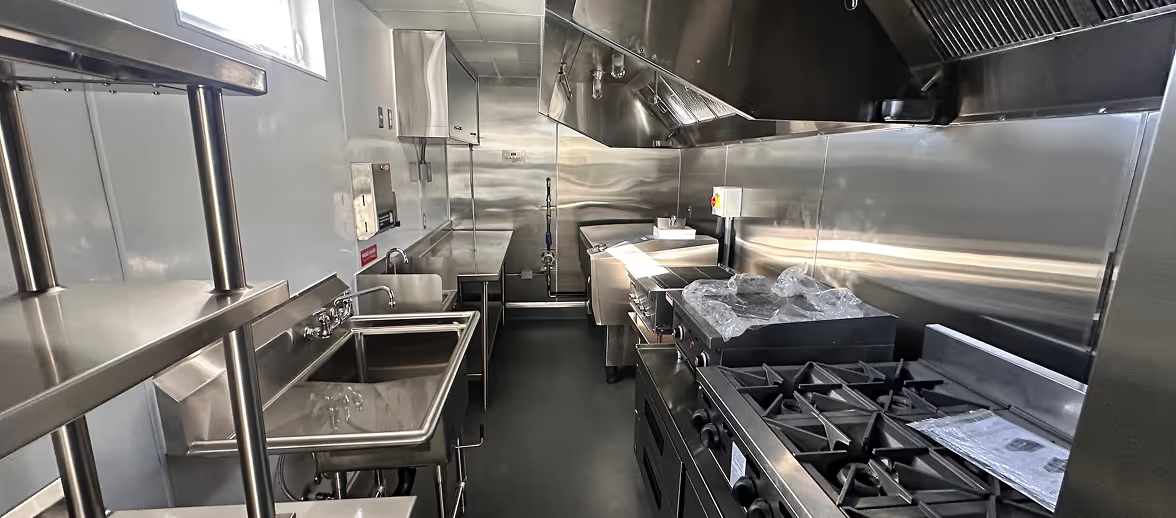
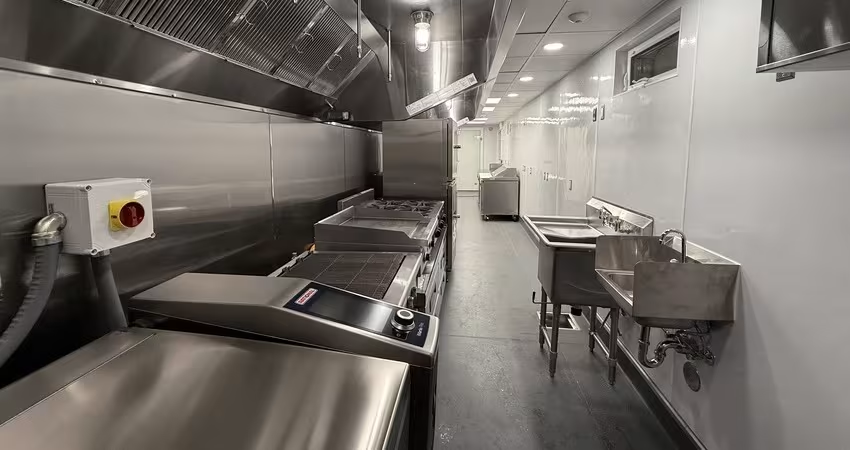
A mobile kitchen trailer is a fully equipped commercial kitchen — not a plug-and-play appliance. It requires the same utility infrastructure, code compliance, and spatial planning as a permanent facility, compressed into a much tighter deployment window.
When mobile kitchen site preparation falls short, the consequences compound fast:
- Delayed setup: Incomplete utility connections or unresolved permits can push a 48-hour installation to a week or more.
- Failed inspections: Health departments and fire marshals will not approve operations on sites that don't meet FDA Food Code requirements for temporary food service.
- Budget overruns: Emergency electrical upgrades, last-minute grading, or expedited permit fees can add thousands to project costs.
- Operational compromises: Undersized power supply forces equipment limitations, affecting menu execution and meal output.
Tip: Start your mobile kitchen site preparation at least 6–8 weeks before the event date. Permitting alone can consume 4–6 weeks in many jurisdictions, and temporary kitchen utility requirements often require electrician or plumber coordination that adds lead time.
Understanding when and why mobile kitchens are rented for events is only the first step. Preparing the site to receive one is where mobile kitchen event setup success is won or lost.
Assessing Your Venue's Utility Infrastructure
Utility readiness is the single most critical element of mobile kitchen site preparation. Commercial kitchen equipment draws significant power, water, and gas — and your venue must supply it reliably.
Electrical Supply and Load Capacity
A commercial mobile kitchen typically requires 200-amp, 3-phase electrical service to operate cooking equipment, refrigeration, HVAC, and lighting simultaneously. Standard residential or light-commercial panels will not suffice.
Before delivery, confirm the following with a licensed electrician:
- Available amperage at the connection point nearest the planned kitchen location
- Voltage compatibility (most commercial units require 208V or 480V 3-phase power)
- Distance from the panel to the hookup point — long cable runs cause voltage drop, reducing equipment performance
- GFCI protection in wet or outdoor areas, as required by OSHA electrical safety standards
Note: For event venues without adequate electrical infrastructure, a generator is the most practical alternative. A 100–150 kW diesel generator can power a full-size mobile kitchen, but it must be positioned at least 20 feet from the unit to manage noise, exhaust, and heat.
Water Supply and Drainage Connections
Mobile kitchens require both potable water supply and wastewater drainage. Minimum requirements include:

If your event venue lacks municipal water and sewer — common at outdoor festival grounds, vineyards, or estate properties — fresh water tanks (250–500 gallons) and waste holding tanks can sustain multi-day operations, though they require scheduled servicing.
Tip: Confirm your local health department's temporary wastewater disposal requirements. Some jurisdictions require a licensed hauler contract before issuing a temporary food service permit.
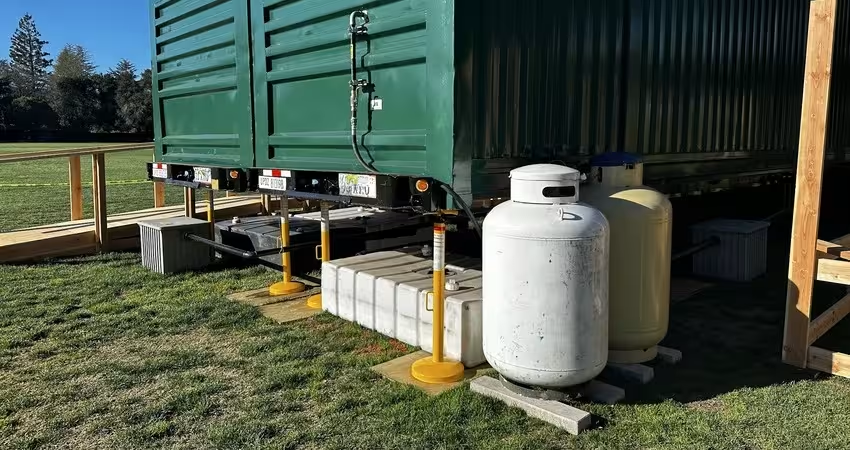
Gas Supply or Propane Staging
Many mobile kitchens use propane or natural gas for cooking ranges, ovens, and griddles. Your site preparation must account for:
- Natural gas: Confirm available BTU capacity and ensure a licensed plumber handles the hookup.
- Propane: Designate a staging area meeting NFPA 58 setback requirements — typically 10 feet from the unit and any ignition sources.
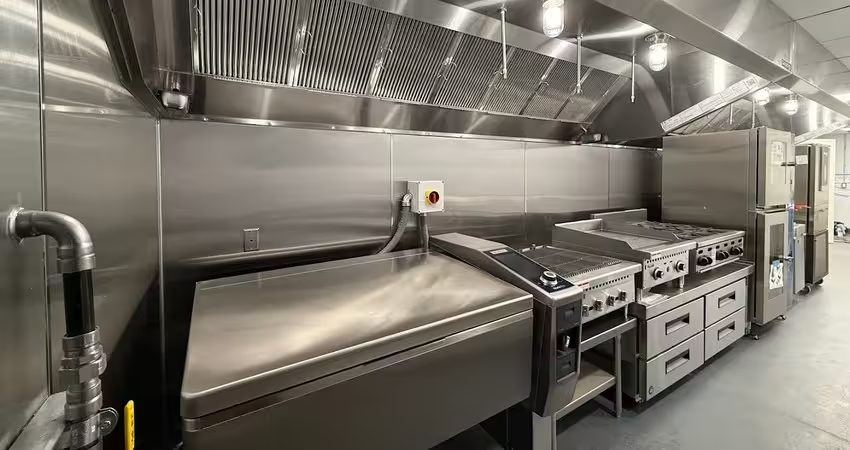
- Ventilation clearance: Exhaust hoods must vent freely per NFPA 96, with no obstructions above or adjacent to the discharge point.
Surface, Grading, and Placement Requirements
Beyond utilities, the physical site conditions are a critical part of mobile kitchen site preparation. The surface must support the unit's weight, provide stability, and manage water runoff.
Load-Bearing Capacity and Leveling
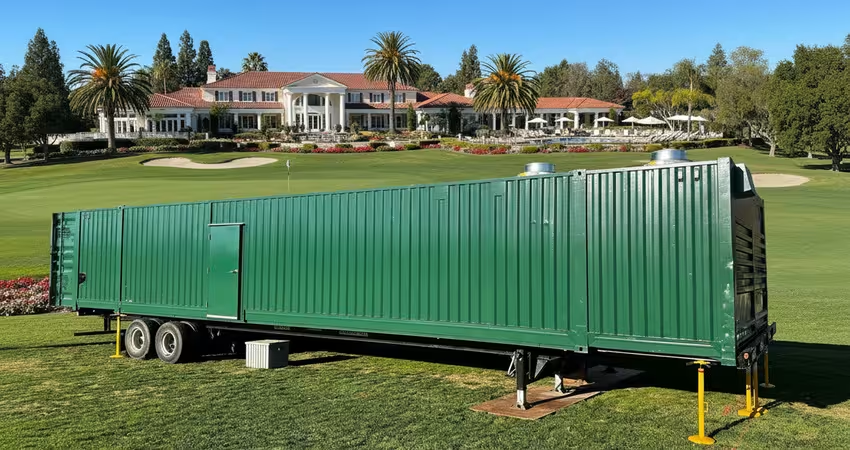
A fully equipped 53-foot mobile kitchen trailer can weigh 35,000–45,000 lbs. The placement surface must be:
- Level within 1–2 degrees — unlevel surfaces cause equipment malfunction, door misalignment, and drainage issues
- Load-bearing — asphalt, concrete, or compacted gravel are acceptable; soft turf, sand, or rain-saturated soil are not
- Free of underground utilities — call 811 (the national "Call Before You Dig" line) to mark buried lines before placement
Tip: If your venue surface is grass or unpaved, consider temporary ground protection — steel plates or heavy-duty ground mats — to distribute the load and prevent sinking.
Minimum Clearance and Setback Distances
Your site plan should account for clearance beyond the trailer footprint:
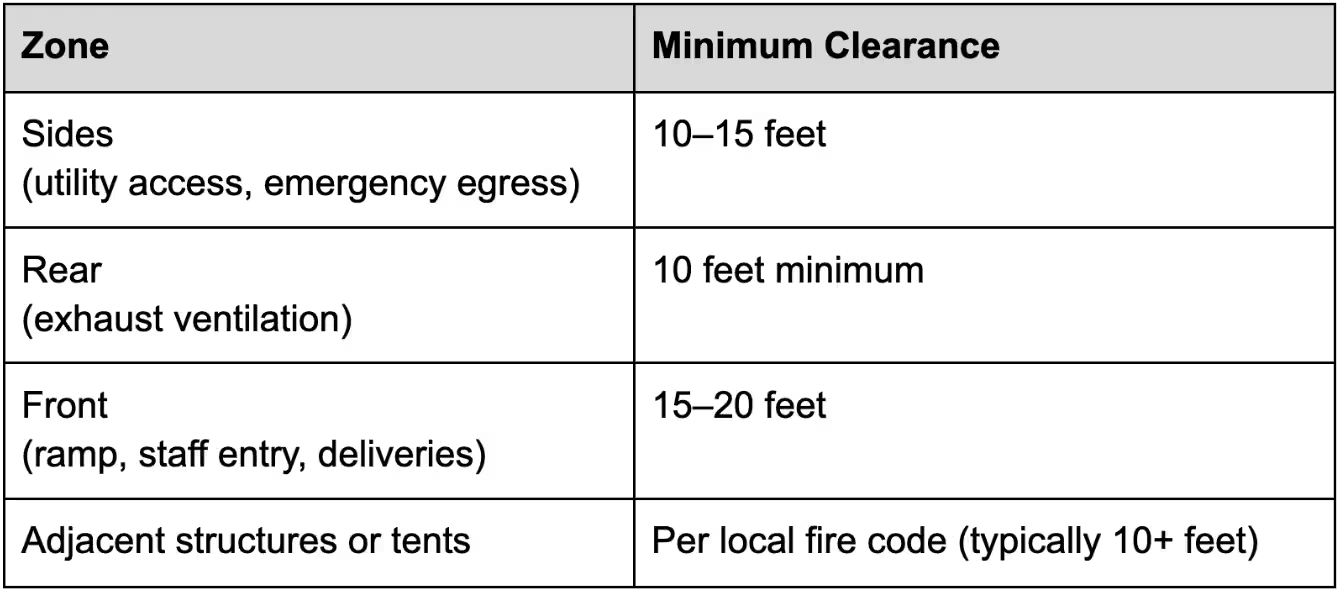
These clearances ensure safe operation, allow emergency access, and satisfy fire marshal requirements during inspection. Plan for site grading to direct rainwater away from the unit and utility connection points.
Mobile Kitchen Delivery Access and Logistics Planning
No mobile kitchen site preparation checklist is complete without a thorough delivery access assessment. Getting a mobile kitchen to your venue is a commercial trucking operation — if the delivery vehicle can't reach the site, nothing else matters.
Vehicle Clearance and Routing
A standard mobile kitchen arrives on a semi-truck or is towed as a trailer. Confirm your venue access route can accommodate:
- Vehicle height: 13.5 feet minimum overhead clearance (watch for low branches, awnings, utility lines)
- Road width: 12 feet minimum lane width
- Turning radius: A 53-foot trailer requires a minimum 55-foot turning radius — tight venue driveways or gated entries may be impassable
- Weight restrictions: Some private roads or bridges have posted limits below the unit's loaded weight
Note: Conduct a physical walkthrough of the delivery route with your rental provider before confirming the site plan. A satellite view is not sufficient — overhead clearances, unpaved sections, and seasonal conditions must be verified in person.
Timing and Staging
Coordinate mobile kitchen delivery access to avoid conflicts with other event logistics:
- Schedule delivery 2–5 days before the event to allow time for utility hookups, inspection, and staff orientation
- Plan a staging area large enough for the delivery vehicle to maneuver, unhitch, and depart
- Position the unit as close to electrical panels, water mains, and gas connections as possible to minimize hookup costs
Permits, Inspections, and Compliance for Event Venues
The regulatory dimension of mobile kitchen site preparation is non-negotiable. Operating a temporary kitchen at an event venue requires the same approvals as any commercial food service operation.
Temporary Food Service Permits
Most jurisdictions require a Temporary Food Facility (TFF) permit for any food service at a public or private event. Requirements typically include:
- Proof of food handler certification for all operating staff
- A site plan showing kitchen placement, utility connections, handwashing stations, and waste disposal
- Evidence of NSF equipment certification and fire suppression standards
- Application fees (typically $100–$500 depending on jurisdiction)
Tip: Apply at least 30 days before your event. High-demand jurisdictions have longer processing timelines. For a comprehensive overview, see our guide on essential permits for mobile kitchen trailers.
Inspections and ADA Compliance
Expect two separate inspections before your mobile kitchen can operate:
- Fire marshal inspection: Verifies fire suppression certification, propane compliance, exhaust clearances, and emergency egress per NFPA 96.
- Health department inspection: Confirms food safety protocols, handwashing facilities, water supply, wastewater disposal, and equipment sanitation.
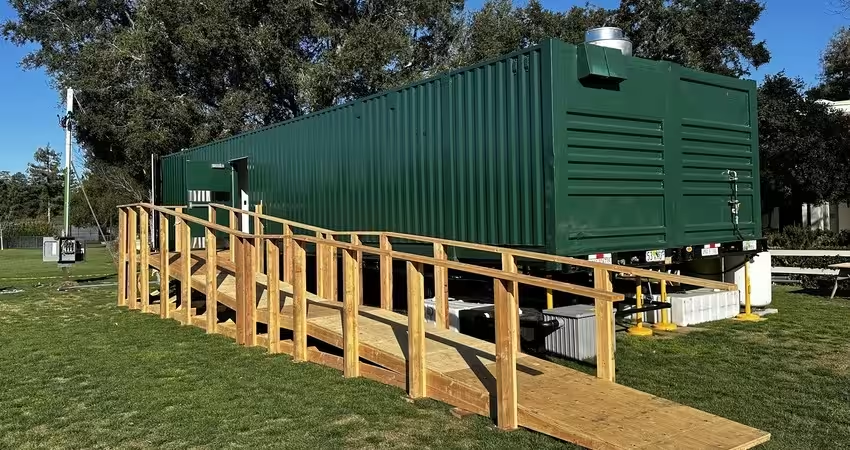
Under the Americans with Disabilities Act, any food service at a public event must also provide accessible entry points — ADA-compliant ramps with non-slip surfaces and accessible service counters where applicable.
Note: Failed inspections delay your event by 1–2 weeks. The most common failure points are incomplete utility connections, missing documentation, and inadequate handwashing stations.
Coordinating Staff and Operational Handoff
Even a perfectly prepared site requires effective coordination between your team and the mobile kitchen rental provider to ensure a smooth mobile kitchen event setup.
Pre-Arrival Communication
Before the unit ships, confirm with your provider:
- Exact utility specifications — amperage, voltage, water pressure, gas type
- Site survey or assessment — reputable providers like Mobile Culinaire conduct pre-deployment site evaluations to flag issues before they become problems. Request a complimentary assessment.
- Delivery logistics — date, time window, access route, and on-site contact
- Technical documentation — equipment manuals, connection diagrams, and emergency shutoff procedures
For the complete end-to-end process, see our step-by-step mobile kitchen rental guide.
On-Site Staff Orientation
Once installed and inspected, your culinary team needs time to acclimate:
- Schedule a walkthrough covering equipment operation, fire suppression activation, and emergency procedures
- Map the workflow between the mobile kitchen and service area — food transfer routes, staging points, staff traffic patterns
- Assign utility monitoring roles (generator fuel, water tank levels, waste capacity) throughout the event
- Establish a communication protocol with your provider's support team for troubleshooting
Tip: Plan at least one full day between inspection approval and first service to run test preparations. Reviewing the essential kitchen trailer equipment list beforehand helps chefs prepare their mise en place strategy for the temporary layout.
Ready to Start Your Mobile Kitchen Site Preparation?
Thorough mobile kitchen site preparation is the foundation of every successful deployment. The time invested in utility assessment, surface preparation, mobile kitchen delivery access planning, and permit coordination pays for itself many times over in avoided delays, reduced costs, and seamless event execution.
Mobile Culinaire's team conducts complimentary site assessments to ensure your venue is ready for seamless deployment — from utility specifications to delivery routing. Our project coordinators go on-site to oversee setup, utility connections, and final inspection, ensuring everything operates as planned.
Contact our specialists to start planning your next event, or explore our mobile kitchen models to find the right unit for your venue's requirements.
People Also Ask (FAQ)
What utilities does a mobile kitchen need to operate?
A standard commercial mobile kitchen requires three core connections: electrical service (typically 200-amp, 3-phase), a potable water supply (minimum 20 PSI), and wastewater drainage or a holding tank. Gas-fueled units also need a natural gas hookup or properly staged propane. For venues without municipal utilities, generators, fresh water tanks, and waste holding tanks can substitute with additional planning.
How much space do you need for a mobile kitchen trailer?
Plan for the trailer footprint (a 53-foot unit is roughly 53' × 8.5') plus 10–20 feet of clearance on each side for utility access, ramp entry, and emergency egress. Total site area typically ranges from 1,200 to 2,500 square feet. The surface must be level, load-bearing, and accessible by semi-truck.
How long does it take to set up a mobile kitchen for an event?
With proper mobile kitchen site preparation completed in advance, a temporary kitchen can be operational within 24 to 72 hours. The most common cause of delays in event venue kitchen rental is inadequate site readiness — incomplete hookups, unresolved permits, or insufficient mobile kitchen delivery access.

Testimonial

"What is standing out when you look at the mobile kitchen operation is the efficiency that we can really achieve because it's built for that."
Tell us about your kitchen needs and request a quote.
.png)
Turnkey mobile kitchen
Proudly made in-house in the USA
Commercial grade kitchen equipment
Code-compliant
Trusted by Industry Leaders