.gif)
The catering company is booked. The florals are confirmed. The AV setup is dialed in. But the venue doesn't have a kitchen or the one it has can't handle the volume. It's a scenario event venue operators face more often than they'd like to admit. Whether you're opening a new event space, expanding your catering capacity, or bridging a gap while a permanent kitchen is under construction, the decision between building a commercial kitchen and renting a temporary mobile unit is more consequential — and more nuanced — than it first appears. This guide breaks down both paths with the cost data, timelines, and compliance realities event venue operators actually need when evaluating temporary kitchen rental for events against a permanent build.
The Core Question: Do You Need a Kitchen, or Kitchen Capacity?
Before comparing costs and timelines, it's worth reframing the decision entirely. The question isn't always "should we build or rent?" — it's often "what level of kitchen infrastructure does our event model actually require?"
Who This Decision Actually Affects
This comparison is written for a specific type of operator: event venue managers, F&B directors, and general managers at properties that host catered functions — banquet halls, wedding venues, conference centers, golf clubs, resorts, and hotel event spaces. These operators face a recurring challenge: food service is central to their revenue model, but kitchen capacity doesn't always match event demand.
Common triggers for this decision include:
- Opening a new venue with no existing kitchen infrastructure
- Expanding an existing venue to accommodate larger events or higher volume
- Bridging a gap during a permanent kitchen renovation or build-out
- Adding seasonal capacity for peak event periods without year-round overhead
- Testing in-house catering before committing to a full kitchen investment
The Two Paths: Permanent Build vs. Temporary Rental
Each path comes with a distinct financial profile, regulatory process, and operational reality. Understanding both — in full — is the only way to make a decision that serves your venue long-term.
Building a Permanent Commercial Kitchen for Your Event Venue
A permanent commercial kitchen is a capital project. It involves construction, permitting, inspections, equipment procurement, and a multi-month buildout process. Done right, it delivers a fully controlled, purpose-designed facility. Done without adequate planning, it becomes a costly overrun.
What a Full Build Actually Costs
Commercial kitchen build costs for event venues vary significantly based on kitchen size, equipment level, and local construction rates. According to a detailed event venue cost breakdown, here's what operators can realistically expect:
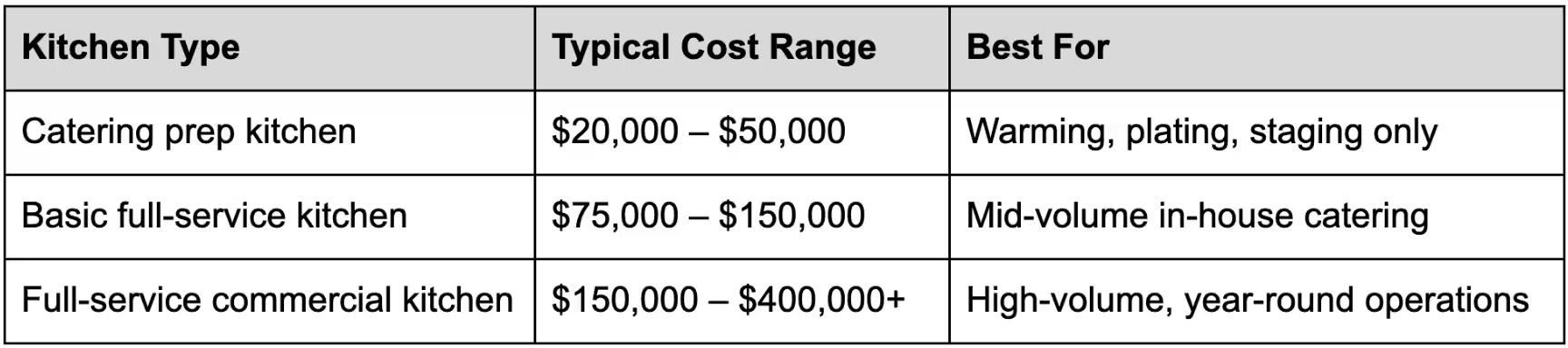
Note: These figures cover equipment and fit-out only. Permitting, ventilation systems, grease trap installation, and structural modifications are separate line items that routinely add 20–30% to the base budget. A restaurant build-out cost analysis from EB3 Construction confirms that kitchen equipment alone can run $15,000 to $250,000 depending on concept and scale.
Key equipment cost benchmarks for a full-service event kitchen:
- Commercial refrigeration: $5,000 – $15,000
- Cooking ranges and ovens: $10,000 – $30,000
- Ventilation and hood systems: $15,000 – $50,000
- Dishwashing equipment: $8,000 – $25,000
- Walk-in cooler/freezer: $4,000 – $30,000
Tip: Most first-time event venue owners start with a prep kitchen and upgrade to a full-service build once event volume and in-house catering demand justify the capital outlay. This staged approach reduces initial risk without locking you out of future expansion.
Permitting, Inspections, and Code Compliance
A permanent commercial kitchen is subject to a layered compliance process before it can operate. Expect to navigate:
- Local health department approval — kitchen design review, equipment specifications, and operational procedures
- NFPA 96 compliance — the National Fire Protection Association's standard for ventilation control and fire protection governs exhaust hoods, fire suppression systems, and grease removal devices
- FDA Food Code alignment — covering food safety, temperature control, sanitation, and facility design
- Building permits — structural, electrical, plumbing, and mechanical permits filed separately
- Zoning and land use approvals — particularly relevant for new venue builds or property expansions
Permitting fees alone typically range from $10,000 to $50,000 depending on municipality and project scope, according to venue construction cost data. In high-regulation markets, multi-agency review processes can extend timelines considerably.
Construction Timeline: What to Expect
Building a commercial kitchen is not a quick process. A realistic timeline from design approval to operational kitchen looks like this:
- Design and planning: 2–4 months
- Permitting and approvals: 1–3 months (longer in major markets)
- Construction and build-out: 3–6 months
- Equipment installation and testing: 2–4 weeks
- Final inspections and sign-off: 2–4 weeks
Total: 8–18 months from concept to operational kitchen — during which your venue either cannot host catered events or must rely on outside caterers with their own equipment.
Note: Equipment lead times for commercial-grade appliances are currently running 10–16 weeks in many markets, which can extend the overall timeline if procurement is not sequenced correctly.
Renting a Temporary Kitchen for Events
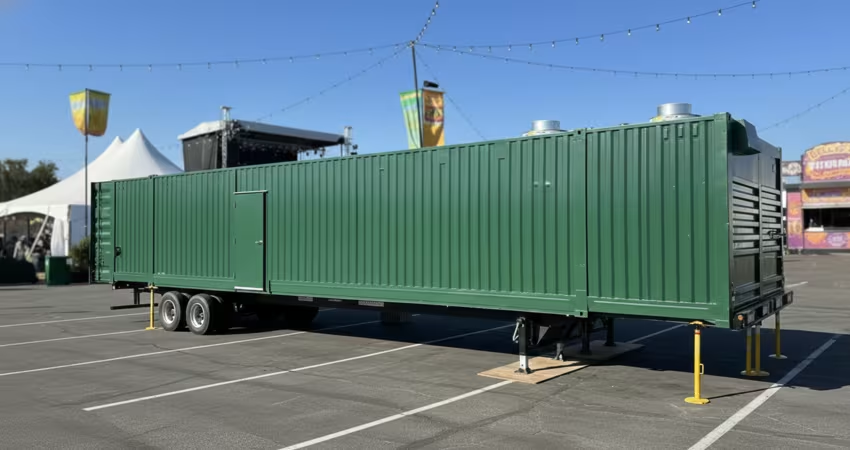
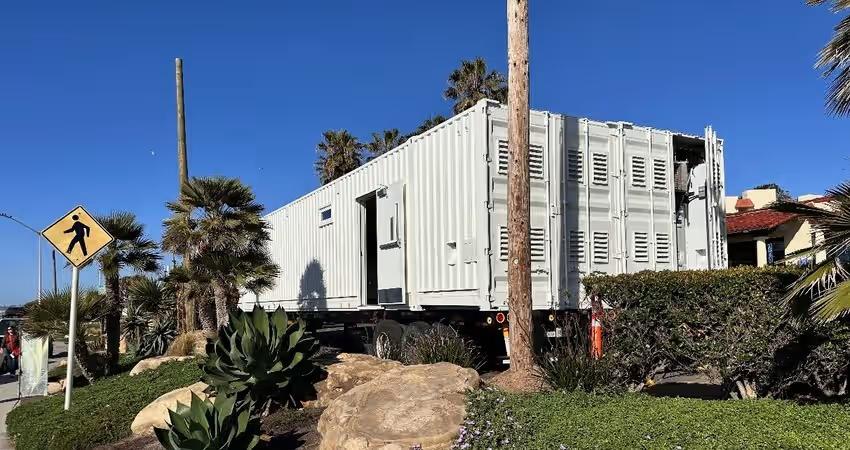
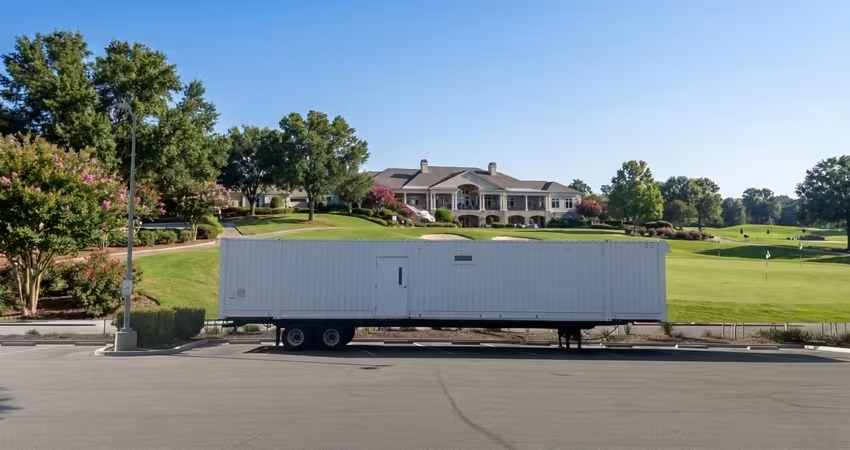
A temporary kitchen rental for events operates on an entirely different logic. Instead of a capital project, it's an operational deployment — a fully equipped, code-compliant kitchen unit that arrives on-site, connects to utilities, and is ready to operate within days.
What's Included in a Mobile Kitchen Rental
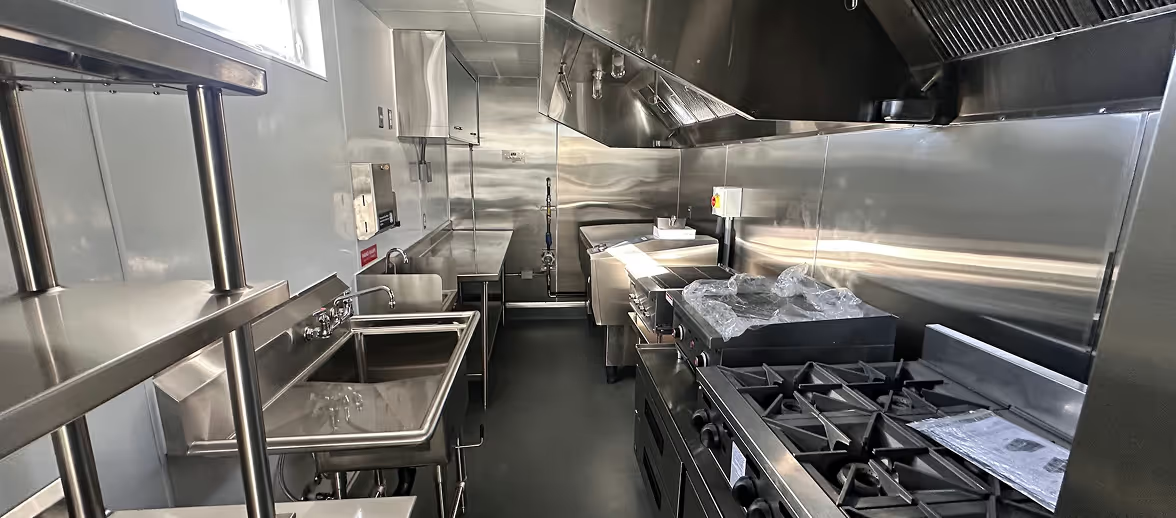
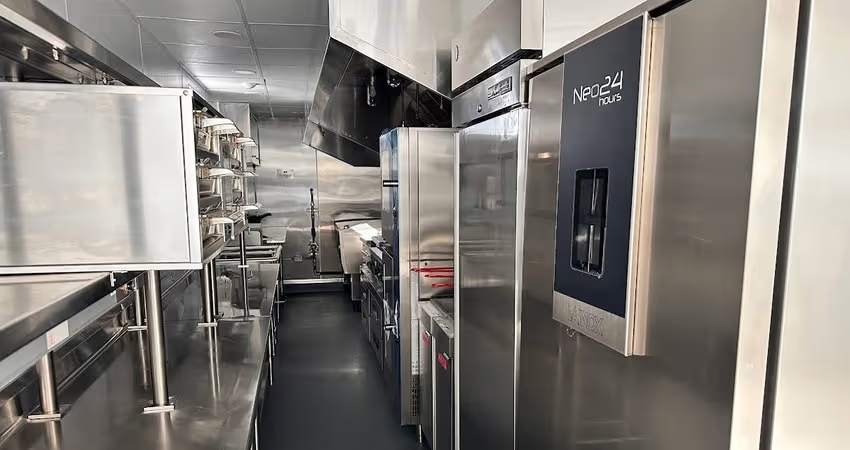
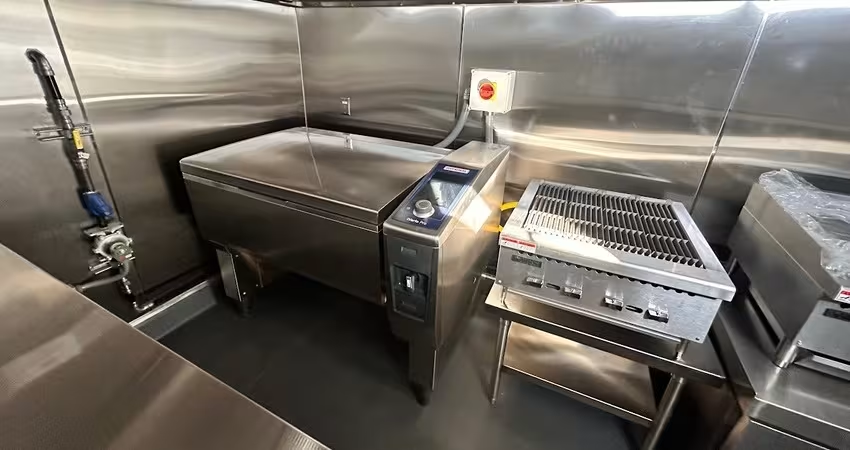
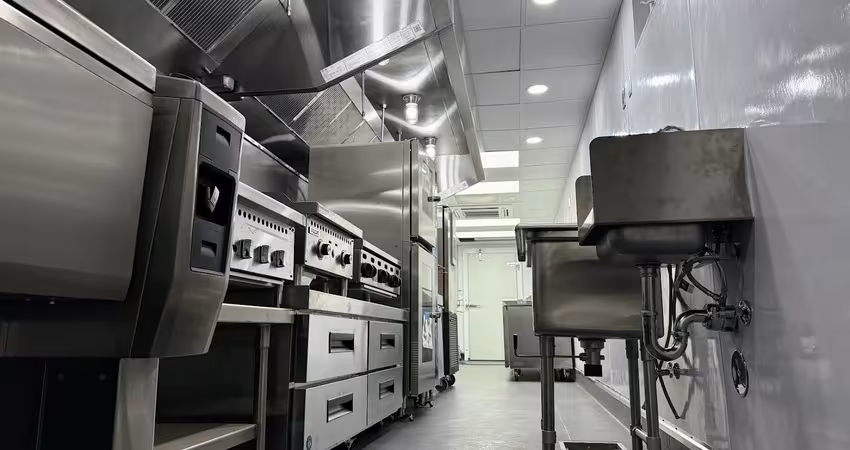
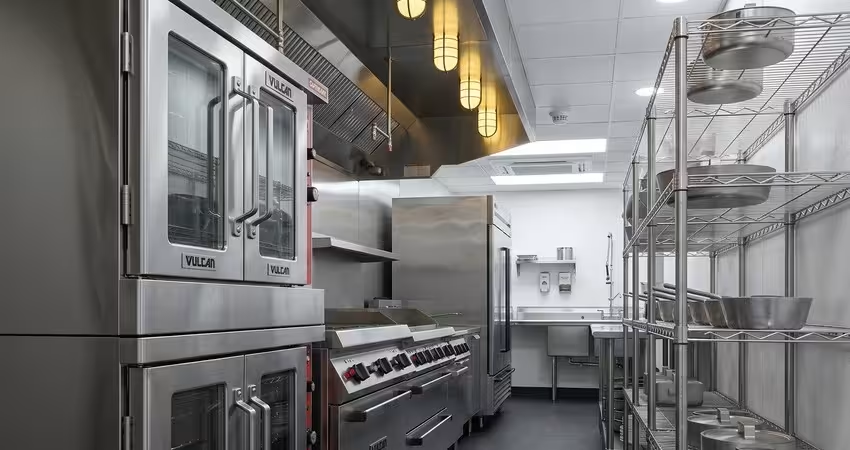
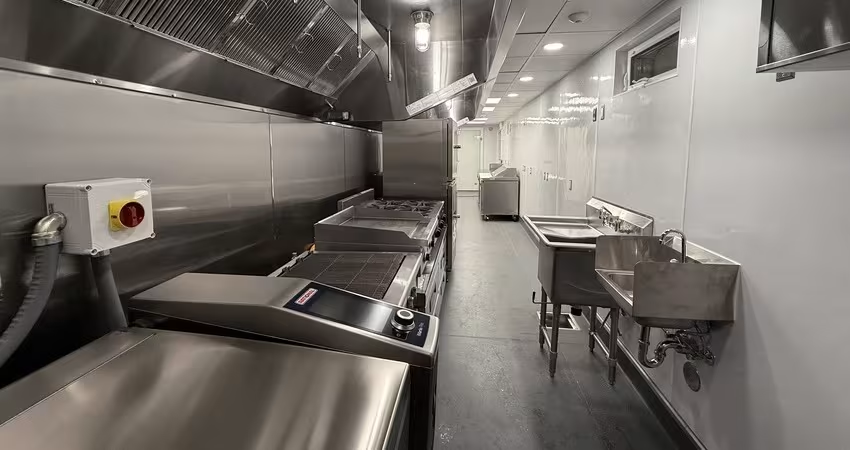
Purpose-built mobile kitchens — as distinct from cheaply retrofitted trailers — arrive as turnkey facilities. A high-quality unit typically includes:
- Commercial-grade cooking equipment: ranges, ovens, fryers, griddles, and prep stations
- Refrigeration and cold storage: reach-in units, walk-in coolers, and freezer capacity
- HVAC system: exhaust hoods with fire suppression, makeup air, and air conditioning
- MEP pre-installed: water, electrical, and waste connection points pre-configured for rapid utility hookup
- Full insulation and weather-resistant structure built for extended outdoor or semi-outdoor deployment
Note: Not all mobile kitchens are created equal. Retrofitted trailer conversions may look similar on the surface but are not built for mid- to long-term commercial use. Purpose-built modular kitchen units use the same steel-framed assemblies and commercial finishes as permanent facilities — a distinction that matters when your event reputation is on the line.
For a detailed breakdown of what equipment should be in any rental unit, see our guide on essential kitchen trailer equipment.
Deployment Speed and Site Requirements
This is where mobile kitchen rental for event venues decisively outpaces a permanent build. A well-prepared site can have a fully operational temporary kitchen within 24–72 hours of unit delivery.
Site requirements are minimal:
- Utility connections: Standardized hookups for water supply, power (typically 200–400A three-phase), and wastewater
- Ground surface: Level, stable surface capable of supporting trailer weight
- Access clearance: Sufficient turning radius and clearance for trailer delivery and positioning
- Minimal site prep: No excavation, foundation work, or structural modification required
Tip: Work with your rental provider early to conduct a site assessment. Identifying utility connection points and access constraints before delivery day prevents last-minute delays and ensures the unit is operational before your first event.
For a full site planning checklist, refer to our guide on choosing the right mobile kitchen.
Compliance and Code Readiness
A premium mobile kitchen rental arrives pre-inspected and built to meet or exceed local health and safety codes. Compliance typically covers:
- Third-party agency inspection before delivery
- NFPA 96-compliant exhaust hoods and fire suppression systems pre-installed
- FDA Food Code-aligned food preparation surfaces, handwashing stations, and storage systems
- Full technical documentation and installation guides provided for local health department review
Note: Operators are still responsible for securing a Temporary Food Establishment (TFE) permit from the local health department and any applicable zoning approvals before operating on-site. A reputable rental provider will supply all compliance documentation to streamline this process.
For a deeper look at how mobile kitchens support events and festivals across different venue types, our dedicated guide covers real-world deployment scenarios in detail.
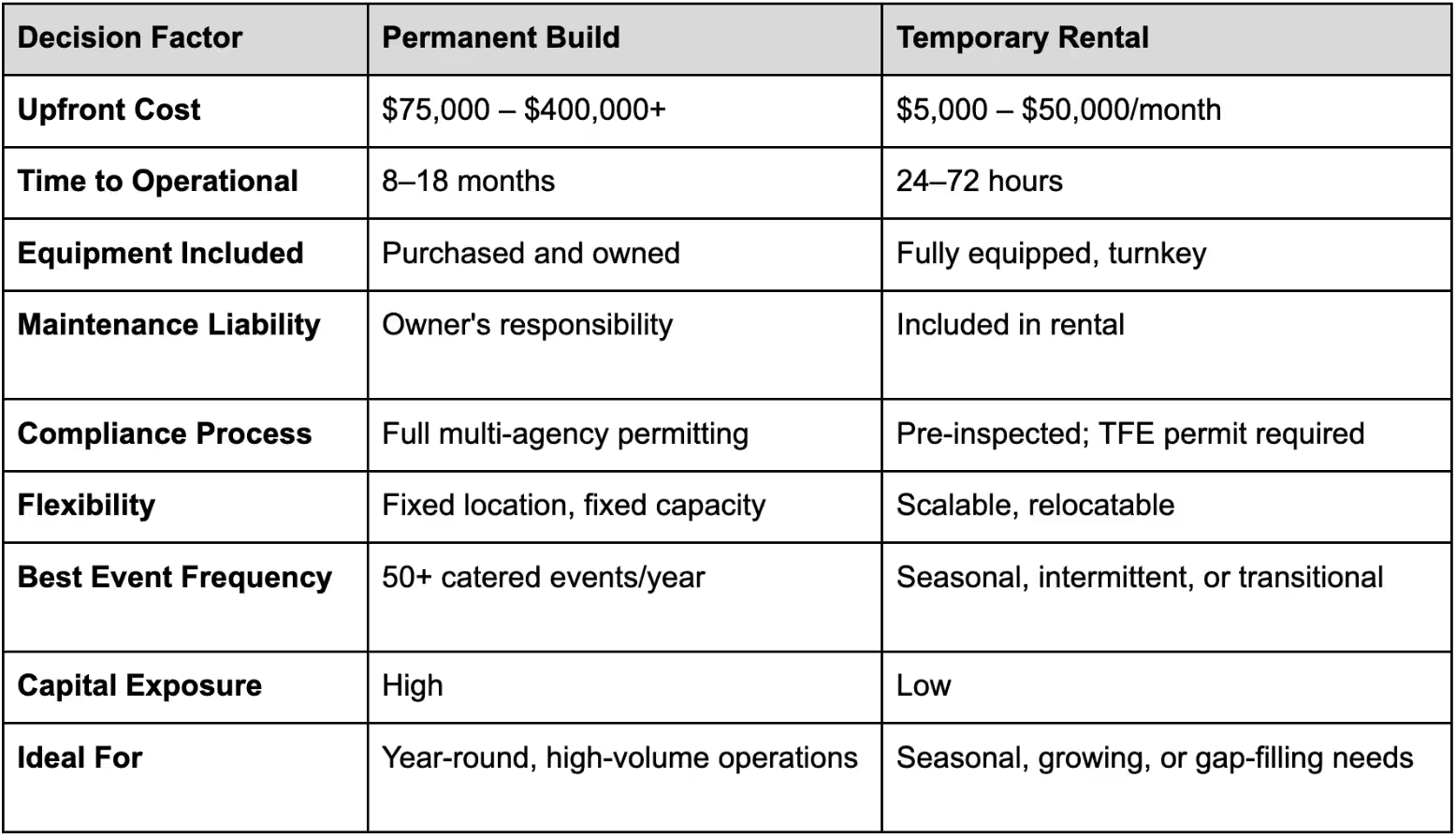
Head-to-Head Comparison: Renting vs. Building
Hidden Costs That Tip the Scale
The headline numbers rarely tell the full story. Both paths carry costs that don't appear on the initial quote.
The Hidden Costs of Building
- Design and architecture fees: Typically 10–20% of total project cost
- Engineering: Structural, electrical, and mechanical systems design adds $15,000–$100,000
- Utility upgrades: Bringing adequate power, gas, and water service to the kitchen location can require significant infrastructure work, especially in older venues
- Equipment downtime: Commercial kitchen equipment failures during the warranty period are common; replacement and repair costs fall to the owner
- Compliance re-inspections: Failed inspections trigger re-inspection fees and project delays
- Opportunity cost: 8–18 months without a functional kitchen means either lost catering revenue or continued dependency on outside caterers
The Hidden Costs of Renting (and How to Avoid Them)
- Delivery and removal fees: Distance from the provider's depot directly affects logistics cost — confirm this upfront
- Utility connection work: If your site lacks adequate power or water hookups, connection costs are the operator's responsibility
- Generator costs: If grid power is unavailable or insufficient, onsite generation adds to the monthly total
- TFE permit fees: Jurisdiction-dependent, but factor these into every deployment budget
Tip: Request a fully itemized quote from any rental provider before signing. A transparent provider will detail delivery, setup, removal, utility requirements, and any add-on costs in writing before contract execution. Review our breakdown of mobile kitchen rental costs in 2025 to benchmark what a well-structured rental budget should look like.
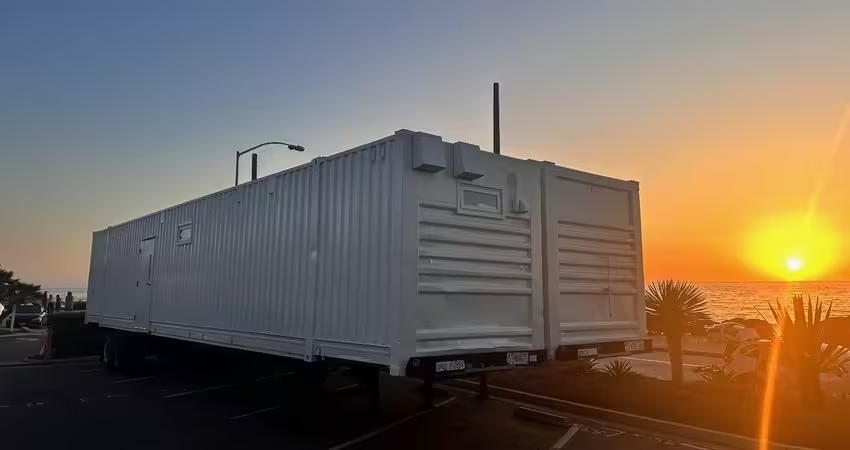
Which Option Is Right for Your Event Venue?
High-Frequency, Year-Round Venues
If your event calendar runs 50 or more catered events per year with consistent volume, a permanent kitchen build becomes financially justifiable over a 5–10 year horizon. The capital outlay is significant, but the per-event cost amortizes over time, and you gain full operational control, brand consistency, and the ability to offer in-house catering as a differentiator.
Build if:
- You operate year-round with predictable, high-density event volume
- In-house catering is a core revenue stream, not an add-on
- You have the capital, the timeline, and the site infrastructure to support a full build
- Your menu requires specialized equipment configurations that standard rental units don't accommodate
Seasonal, Growing, or Expanding Venues
For venues that are growing into their event capacity, operating seasonally, or navigating a kitchen renovation, a temporary kitchen rental for events is frequently the more rational economic choice — and not just in the short term.
Rent if:
- Your event schedule is seasonal or growing but not yet at year-round density
- You need kitchen capacity within weeks, not months
- You're evaluating whether in-house catering justifies the permanent investment
- Your current kitchen is offline for renovation and continuity is non-negotiable
Note: These two paths are not mutually exclusive. Many venue operators use a mobile kitchen rental to bridge the gap during a permanent kitchen build — maintaining full catering service and protecting revenue while construction runs its course. Explore our projects showcase to see how operators across hospitality have deployed this strategy in practice.
Conclusion
The choice between a temporary kitchen rental for events and a permanent build is not simply a cost question — it's a question of timing, event frequency, capital availability, and operational risk. For high-volume, year-round venues with the runway to build, a permanent kitchen is a sound long-term investment. For seasonal operators, growing venues, or any property facing a gap in kitchen capacity, a mobile kitchen rental delivers the same professional-grade output at a fraction of the upfront commitment — and in a fraction of the time.
The most successful venue operators don't treat these as binary options. They use temporary kitchen rentals strategically: to bridge construction gaps, test catering models, or expand capacity for peak season without taking on permanent overhead they're not yet ready to justify.
Planning an event and weighing your kitchen options? Mobile Culinaire's specialists can help you assess whether a temporary kitchen rental makes more sense than a permanent build for your specific venue model. Contact our team to discuss your event requirements, timeline, and site — or explore our mobile kitchen solutions to see what a turnkey deployment looks like in practice.
People Also Ask (FAQ)
How much does it cost to build a commercial kitchen for an event venue?
A full-service commercial kitchen for an event venue typically costs between $75,000 and $400,000 depending on size, equipment level, and local construction rates. A basic catering prep kitchen — used for warming, plating, and staging — can be built for $20,000–$50,000. These figures exclude permitting fees ($10,000–$50,000), ventilation systems, and grease trap installation, which routinely add another 20–30% to the total project budget.
Can you rent a fully equipped commercial kitchen for a single event?
Yes. Purpose-built mobile kitchen rentals can be deployed for a single event or a multi-day engagement. Turnkey units arrive pre-equipped with commercial-grade cooking appliances, refrigeration, fire suppression, and HVAC systems, and can be operational within 24–72 hours of delivery. Rental terms range from a few days to several months, making them well-suited for seasonal or one-off events where a permanent build cannot be justified financially.
What permits are required to operate a temporary kitchen at an event venue?
Requirements vary by jurisdiction, but operators typically need a Temporary Food Establishment (TFE) permit from the local health department, NFPA 96-compliant fire suppression documentation, and potentially a zoning variance if the unit is placed on a site not previously permitted for food service. Premium mobile kitchen providers supply pre-inspected units with full compliance documentation to expedite the permitting process. See our complete guide to licenses and permits required for commercial kitchen rentals for a jurisdiction-by-jurisdiction breakdown.

Testimonial
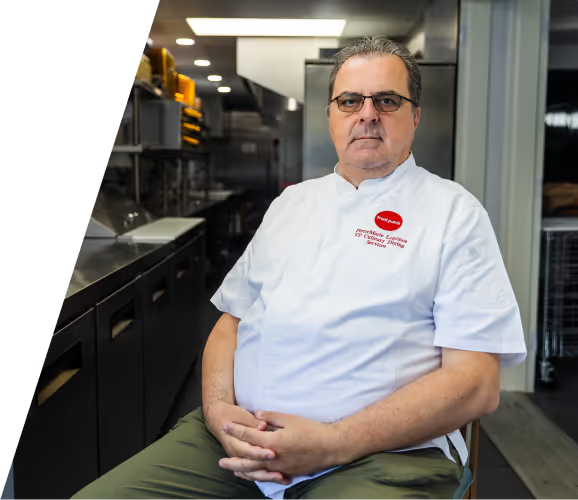
"What is standing out when you look at the mobile kitchen operation is the efficiency that we can really achieve because it's built for that."
Tell us about your kitchen needs and request a quote.
.png)
Turnkey mobile kitchen
Proudly made in-house in the USA
Commercial grade kitchen equipment
Code-compliant
Trusted by Industry Leaders