.gif)
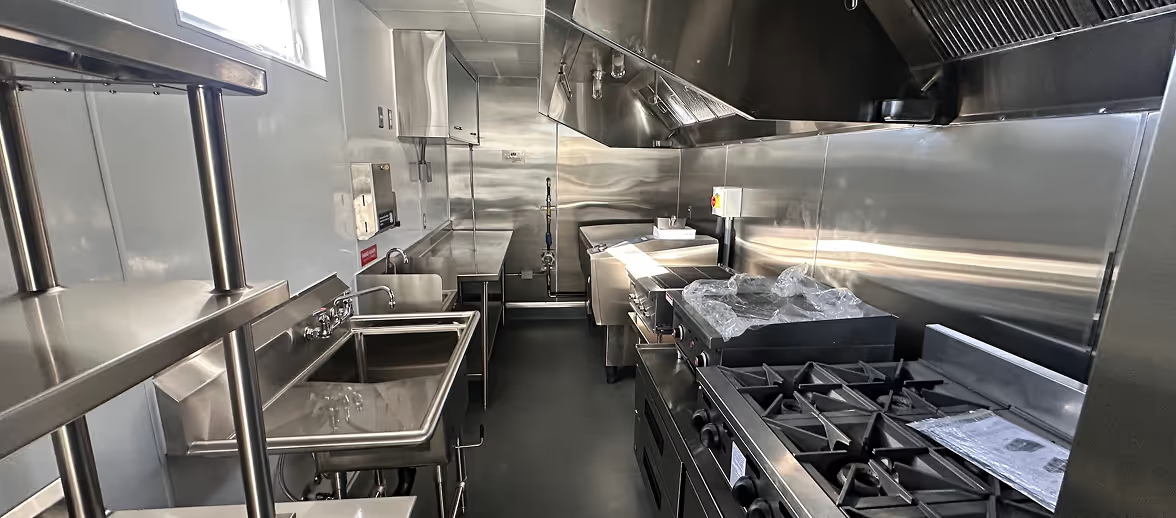
Any retrofitted trailer can run a kitchen for the first few weeks. The real test of mobile kitchen trailer durability starts at month three, once the equipment is running on the schedule a licensed dining program actually keeps: three meals a day, every day, with the gap between dinner and breakfast that most states treat as a licensure condition, not a service-quality target.
That's when undersized HVAC, thin insulation, and consumer-grade equipment start to show what they're made of. For a senior living community, a kitchen that can't hold up under sustained commercial use isn't just an inconvenience. It's a dietary program that can't meet its own license. Here's what actually breaks, and what a purpose-built mobile kitchen does differently.
Why Month Three Is the Real Test of Mobile Kitchen Trailer Durability
A retrofitted trailer rarely fails in week one. It fails once parts never built for daily commercial load wear out: compressors cycling constantly, insulation never rated for months of use, wiring sized for occasional use, not a full production line. Month three is when the gap between "passed the delivery inspection" and "can run a licensed kitchen" becomes visible.
A short event rental doesn't expose this. A multi-month renovation does, because the trailer is now standing in for the permanent kitchen, meal after meal, with no slack in the schedule and no second kitchen to fall back on if it falters.
Note: A renovation that starts as a four-month project rarely finishes on four months. Budget the equipment for the extension, not just the plan.
The Three Ways a Retrofitted Trailer Fails Under Sustained Load
Retrofitted trailers fail in three predictable places once they're running a real dining program: undersized climate control, consumer-grade equipment, and documentation gaps that surface at inspection. Each one gets worse with time, not better, because a retrofit was engineered for occasional use, not for a kitchen that can't afford to go dark.
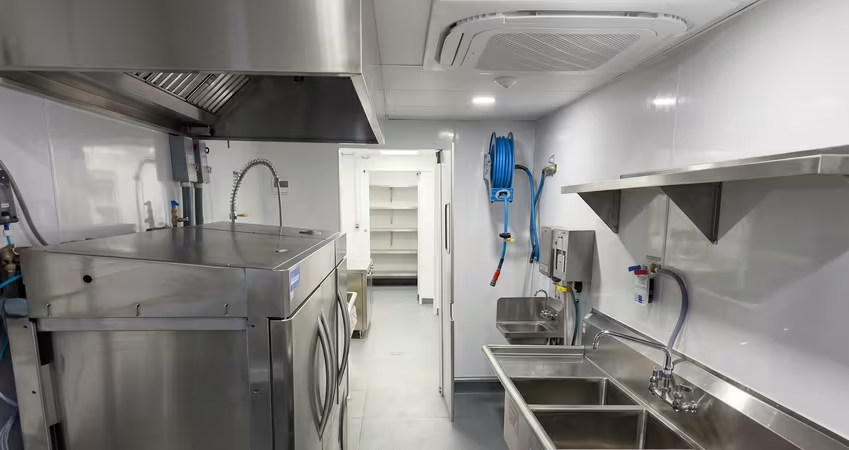
- Climate control: Insulation and HVAC sized for a weekend event can't keep pace with a kitchen running breakfast, lunch, and dinner back to back. Staff comfort drops, and so does the consistency of food held at temperature. Designing to dietary and code requirements from the start is what prevents this.
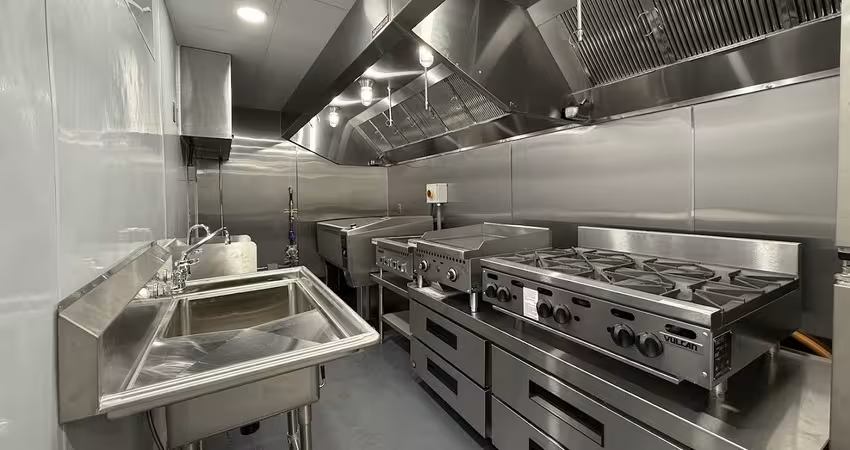
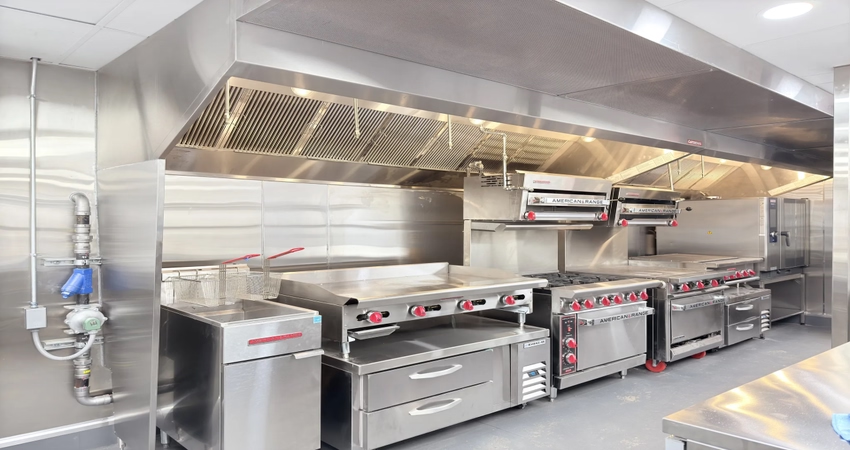
- Equipment grade: Cooking and refrigeration equipment not built to NSF/ANSI 4 and NSF/ANSI 7 runs hotter and cycles harder than commercial-grade units, and it shows it first under daily, sustained load rather than light use. See what equipment a therapeutic-diet kitchen actually needs to hold up for months, not weeks.
- Documentation and compliance: A unit without a clean inspection and maintenance history, the kind NSF/ANSI 4 requires equipment to carry, creates exactly the kind of gap a health department inspection flags during a multi-month deployment. Every Mobile Culinaire unit ships third-party inspected, with that documentation in hand before delivery.
%20(1).avif)
Tip: Ask any trailer vendor for the maintenance and inspection records on the specific unit you'd receive, not a brochure spec sheet. A gap in that history is the clearest early warning of a month-three failure.
The Reliability Gap, by the Numbers
A 2024 industry survey reported by RFMA's Facilitator magazine put the average downtime for a single piece of critical commercial kitchen equipment at about six hours, and found that 78.1% of foodservice operators said downtime directly affects the people they serve. A retrofitted trailer concentrates that same equipment-failure risk inside a single box with no redundancy.
What That Costs When Meals Are a License Condition
In most states, the gap between a resident's evening meal and the next breakfast is capped by dietary-services regulation, not house policy. Federal rules for intermediate care facilities set that cap at 14 hours, with limited exceptions for a bedtime snack, and a retrofit that can't hold equipment uptime through a full service day risks pushing a community past it.
That's a different consequence than a bad guest review. A kitchen outage that stretches the meal interval is a documented deficiency risk during a state survey, on top of the obvious resident-welfare concern. The specific interval figures vary by state, so confirm the exact number with your state's Department of Health before planning around it.
What a Purpose-Built Kitchen Does Differently at Month Three and Beyond
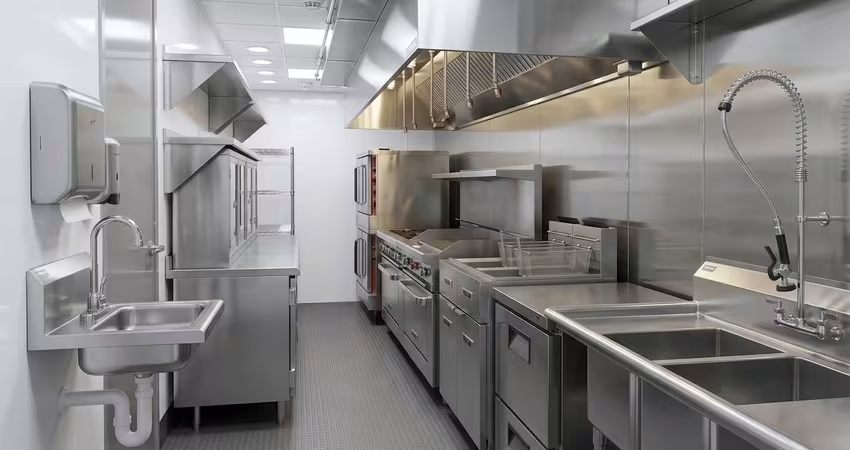
A purpose-built mobile kitchen is engineered for the full length of a renovation, not just its opening week, which is why it still performs on day 150 the way it did on day one. Commercial-grade, steel-framed construction, not a retrofit, is what makes an extended, reliable run possible for a licensed dining program.
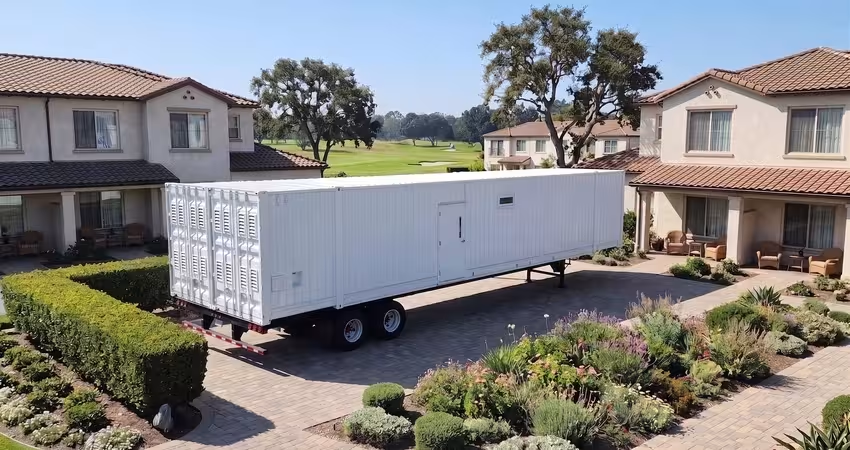
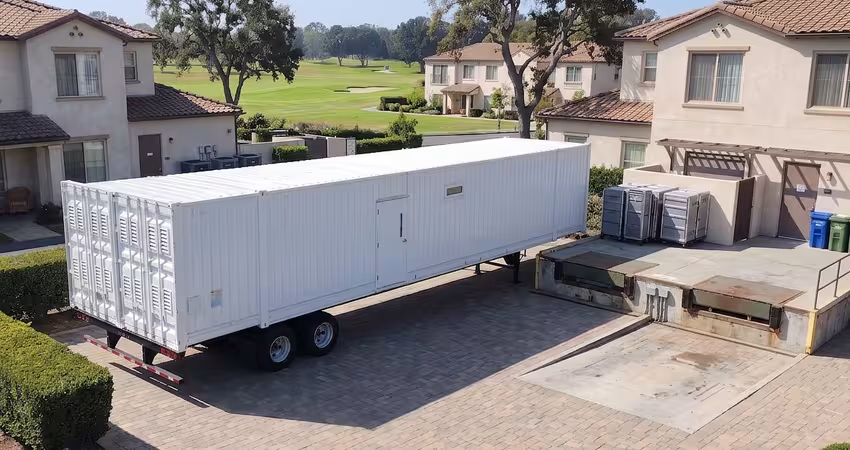
Front Porch Communities, a senior-living nonprofit operating 20-plus communities in California, ran a Mobile Culinaire 2×53' unit for five months at 400 to 500 meals a day, including walk-in cooler and freezer capacity and a conveyor dishwasher, while also using the space to train staff on new menus and equipment ahead of the permanent kitchen's reopening. That's the proof point this persona needs: not a brochure claim, but a five-month deployment at full therapeutic-diet volume with no reported reliability failure. For how that reliability weighs against the upfront price difference, see the full cost picture for a senior living renovation rental.
When a Cheap Retrofit Is Genuinely Enough
A retrofitted trailer can be the right call for a true short stopgap: a single event, a weekend closure, or a gap measured in days rather than months. The failure modes above are about sustained commercial load, and a brief one-off doesn't put equipment under that kind of stress.
The line to watch is duration. Once a kitchen-down period stretches past a few weeks on a licensed dining program, the math shifts from "cheapest option" to "what survives the whole project." Weigh your own timeline against the full range of scenarios senior living communities actually deploy mobile kitchens for before deciding which category yours falls into.
Disclaimer
Meal-interval and dietary-licensure requirements vary by state and facility type. The figures referenced here illustrate the general pattern; confirm the exact requirement with your state's Department of Health or equivalent licensing authority before making a renovation or staffing plan around it.
Mobile kitchen trailer durability isn't a brochure claim; it's whether the kitchen still runs the same way in month four as it did in week one. Talk to Mobile Culinaire about sizing a unit to your renovation timeline.
People Also Ask (FAQ)
How long can a senior living community legally go without a working kitchen?
There's no blanket limit on the renovation itself, but most states cap the gap between a resident's evening meal and the next breakfast, commonly around 14 hours with limited exceptions. The real constraint is keeping meal service running on schedule throughout the renovation, not the renovation's length.
What causes a mobile kitchen trailer to break down after a few months?
The most common causes are HVAC and insulation undersized for daily use, consumer-grade cooking and refrigeration equipment running past its duty cycle, and electrical systems not built for a full production kitchen's continuous draw. All three get worse the longer the deployment runs.
Can a retrofitted trailer be upgraded to handle a long-term renovation?
Some components can be swapped, but a retrofit's core limits are structural: the insulation, electrical capacity, and frame weren't engineered for extended commercial use. Upgrading equipment inside an undersized shell doesn't fix the climate-control and load-capacity gap underneath it.

Testimonial

"What is standing out when you look at the mobile kitchen operation is the efficiency that we can really achieve because it's built for that."
Tell us about your kitchen needs and request a quote.
.png)
Turnkey mobile kitchen
Proudly made in-house in the USA
Commercial grade kitchen equipment
Code-compliant
Trusted by Industry Leaders