.gif)
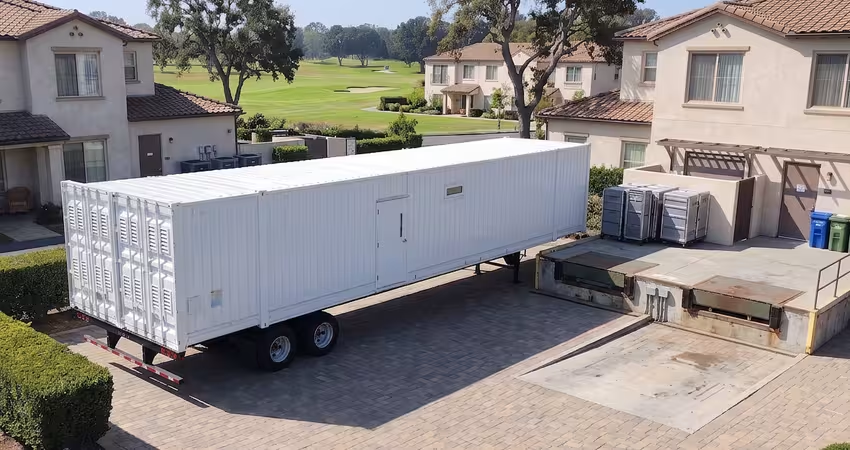
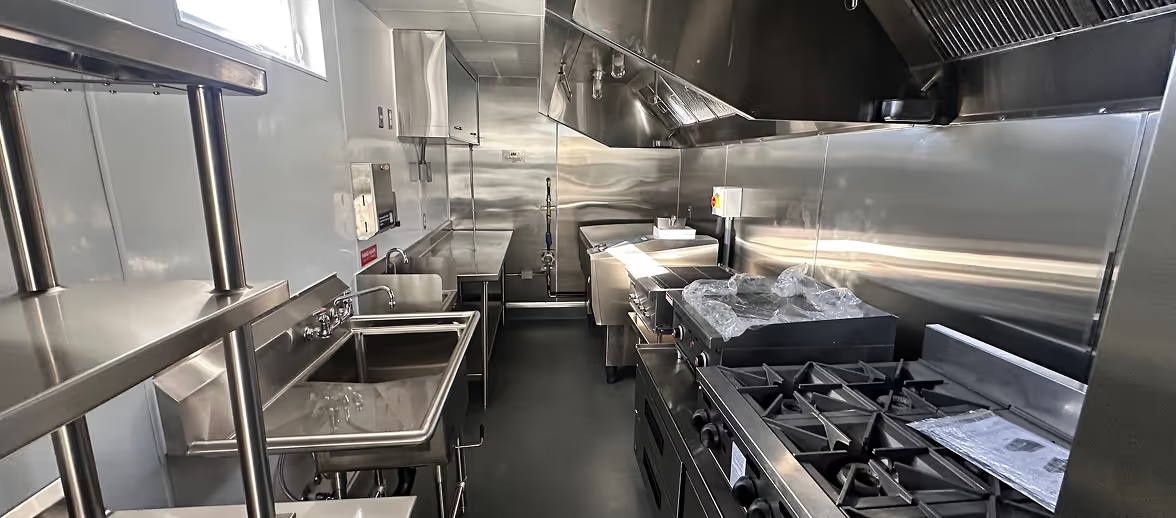
A mobile kitchen trailer looks the same on delivery day whether it's running a weekend fundraiser or a five-month renovation. What changes is everything that happens after day one.
For a Director of Nutrition & Culinary Services running texture-modified, low-sodium, and diabetic production on a legally mandated three-meals-a-day schedule, the question isn't whether a mobile kitchen can plate a correct therapeutic diet meal once. It's whether it can do it, correctly, every day, for five months straight, through summer heat and a dining staff that didn't sign up to work in a trailer.
Why Five Months Is a Different Problem Than a Weekend Rental
A mobile kitchen built for a single event only has to perform once. One standing in for your permanent kitchen has to hold full therapeutic-diet volume, every meal, for months. That changes what "working" means: not whether the HVAC runs on install day, but whether it still holds steady temperature and airflow in week sixteen, with the same staff and no slack to recover from a bad week.
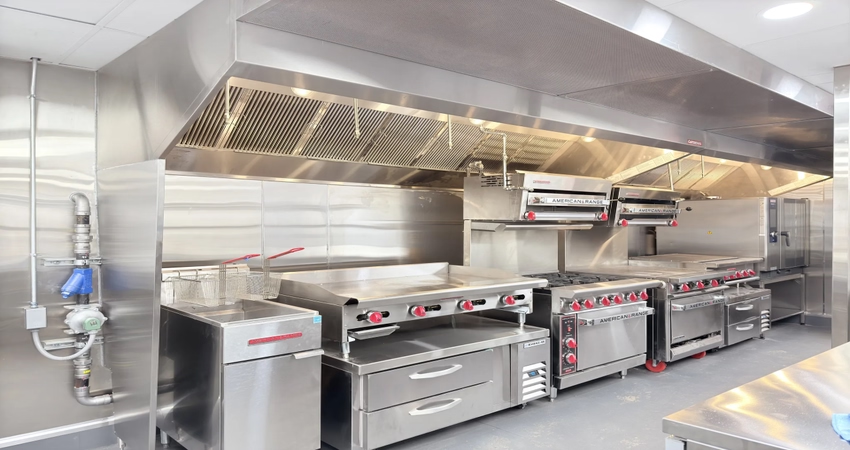
This is the gap that a cheap, retrofitted trailer rental cannot close. A unit built to survive a weekend of light cooking was never engineered for sustained commercial-kitchen duty cycles. Purpose-built mobile kitchens, the category Mobile Culinaire builds to, close it differently: the same insulation, makeup-air, and equipment specification a permanent commercial kitchen would carry, built into a rental. The distinction matters most exactly where a weekend-grade trailer is least tested: the fourth month, not the first week.
The Three Forces That Compound Over a Multi-Month Deployment
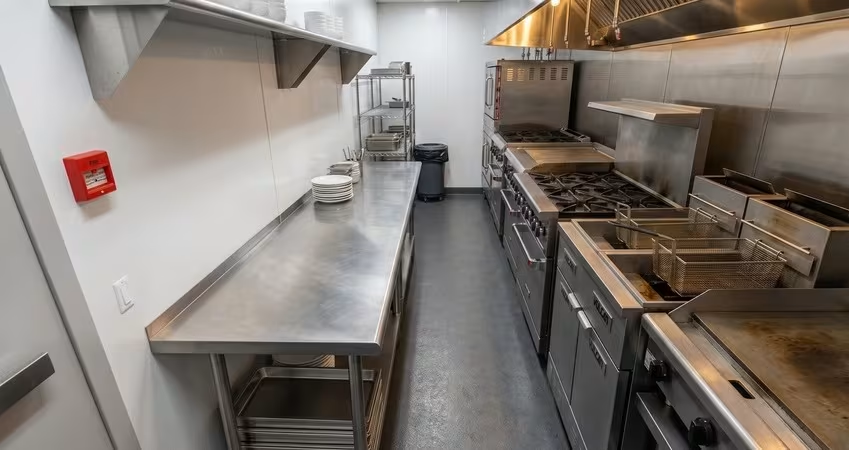
Heat, airflow, and staff comfort rarely fail on day one. They degrade gradually, so a kitchen that looked fine at commissioning can be a different environment by August. Each force compounds the other two: poor insulation drives harder AC cycles, inadequate makeup air pulls hot kitchen air back toward the line, and both together wear down the people cooking in it over a five-month stretch.
Heat and insulation
A commercial kitchen's cooking equipment generates substantial ambient heat on its own, and OSHA names kitchens among the highest-risk indoor environments for heat-related illness, a risk significant enough that the agency's proposed Heat Injury and Illness Prevention in Outdoor and Indoor Work Settings rule would extend new protections to an estimated 36 million indoor and outdoor workers if finalized. A weekend-grade trailer's thin walls and minimal insulation hold that heat in. A purpose-built unit uses the same wall assemblies and insulation values as a permanent kitchen, so the heat load an AC system has to fight stays constant across a five-month lease instead of climbing as summer arrives. For a deeper look at how insulation and ventilation choices affect heat gain across a full season, see this breakdown of managing heat gain in a commercial kitchen.
Airflow and makeup air
Every hood exhaust pulls air out of the kitchen, and that air has to be replaced from somewhere, a requirement formalized in ANSI/ASHRAE Standard 154, Ventilation for Commercial Cooking Operations. In an undersized trailer, the replacement air comes from wherever it can, often pulling hot, grease-laden air back across the cook line. A dedicated makeup-air unit, standard on every Mobile Culinaire trailer, replaces that exhausted air with conditioned air instead, so airflow stays consistent whether it's week one or week twenty.
Staff comfort and retention
Heat and poor airflow don't just make a shift uncomfortable. The National Institute for Occupational Safety and Health names food service workers specifically among those at elevated risk from sustained heat exposure, and dining services roles already carry some of the highest turnover in senior living: a 2026 Ziegler CFO Hotline survey put annual turnover for dining staff at 40.0%, among the highest of any role surveyed. A five-month stretch in an uncomfortable kitchen gives a dining team one more reason to leave mid-renovation, right when continuity matters most.
Note: None of these three forces shows up on a spec sheet as a single number. They show up as a pattern over the course of a deployment, which is exactly why a short rental history doesn't predict a long one.
.avif)
%20(1).avif)
What Five Months of Therapeutic-Diet Production Actually Demands
A kitchen running regular menus for five months needs capacity. A kitchen running texture-modified, low-sodium, and diabetic diets for five months needs capacity and precision, meal after meal, with no room for the kind of improvisation a short-term rental invites.
The error risk is already measured, not hypothetical
Diet errors aren't a hypothetical risk category. A 2024 study in Frontiers in Rehabilitation Sciences found a median of 29% of nursing-home residents across surveyed facilities were on a texture-modified diet, and the same research flagged how often modified diets are started or changed without the review a resident's care plan calls for. That's the backdrop a temporary kitchen steps into: a meaningful share of residents depend on the prep station getting their order right every single time, not most of the time.
Food safety doesn't pause for the renovation
A cramped, poorly laid-out trailer makes precision harder in ways that compound over months: cross-contamination risk between texture levels, staff improvising workarounds under pressure, and consistency drifting as fatigue sets in. The FDA's model Food Code sets the baseline safe food-handling practices every commercial kitchen, temporary or permanent, is expected to meet, and a five-month deployment has to hold that baseline on its worst week, not just its first one.
Tip: If you're evaluating a provider, ask what changes about their kitchen's layout and equipment between a 32-foot single-line unit and a two-trailer configuration built for full therapeutic-diet production. The answer should be specific, not a shrug.
Why dedicated prep zones aren't optional
This is where dedicated prep zones stop being a nice-to-have. Separating texture-modified prep from regular-menu prep, with its own storage and cold-holding capacity, is what keeps diet errors from becoming a function of how tired the kitchen is in month four. The specific equipment this requires, from food processors to dedicated cold storage, is covered in full in this senior living mobile kitchen equipment guide; the zoning and dietary-code requirements behind the layout itself are covered in this guide to designing a senior living mobile kitchen.
What Front Porch's Five Months Looked Like in Practice
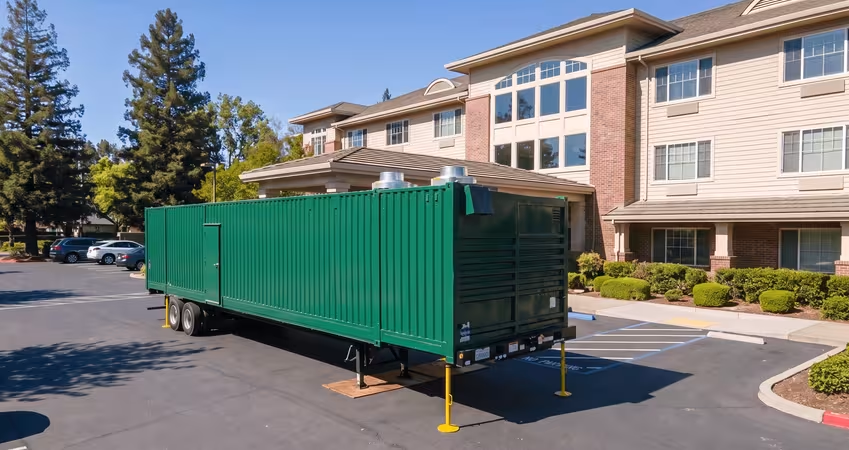
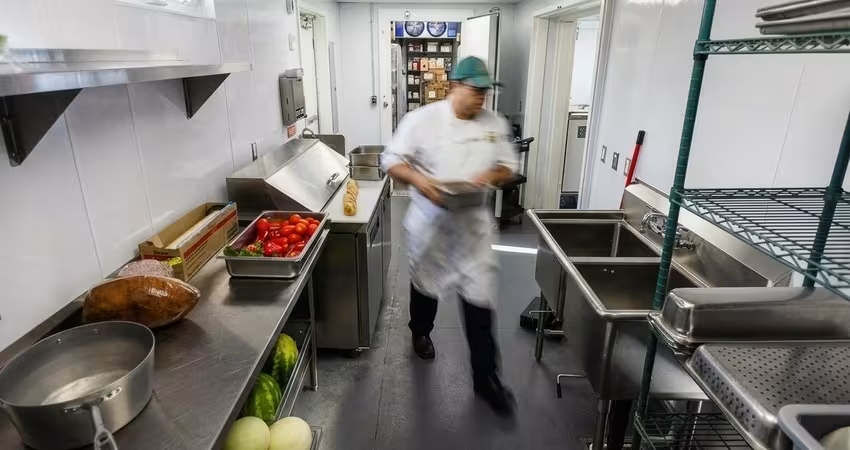
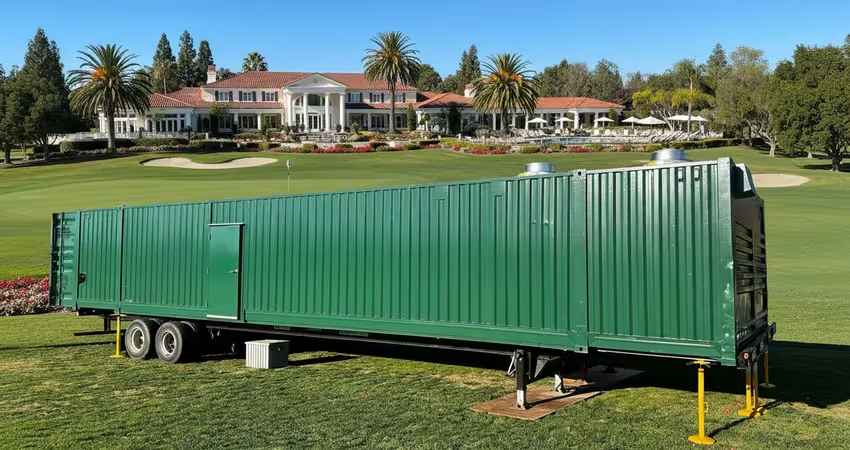
The clearest proof point for sustained operation at this scale is Front Porch Communities, a nonprofit senior-living operator with 20-plus communities in California. Front Porch ran a two-trailer, 850-square-foot Mobile Culinaire configuration for five months, producing 400 to 500 meals a day with a walk-in cooler, freezer, and conveyor dishwasher on site.
The deployment did double duty: staff also used it to train on new menus and equipment ahead of the permanent kitchen's reopening, a second return on the same five months. That's confirmed proof of capacity and duration at full volume. What it doesn't yet prove, on its own, is a documented track record of therapeutic-diet-specific outcomes over that stretch; that's a reasonable question to ask a provider directly, not an assumption to take on faith. The honest answer is that the operational capacity is demonstrated and the therapeutic-diet-specific claim is still a hypothesis worth pressure-testing with your own requirements.
What to Ask Before You Commit to a Multi-Month Stopgap
A single site visit or spec sheet won't tell you how a kitchen performs in month four of a therapeutic-diet deployment. The questions below are built to surface what a brochure won't: the insulation and airflow design, the lease flexibility, and whether the provider can point to a comparable deployment rather than just a capacity chart.
- What's the wall and insulation assembly, specifically (not just "insulated")? A permanent-kitchen-grade assembly is the difference between a stable environment and one that degrades as outside temperatures climb.
- Is there a dedicated makeup-air unit, or does the system rely on passive replacement air? This is the single biggest driver of whether the kitchen stays breathable through a long deployment.
- Will staff actually be able to run a full therapeutic-diet program in it for months? Ask for a reference deployment at comparable volume and duration, not just a brochure photo.
- What's the minimum lease term, and what happens if the renovation runs long? A one-month minimum with flexible extension terms protects you against a schedule slip.
- Who owns the permitting process, and what documentation ships with the unit? A code-compliant, third-party-inspected unit should come with the paperwork that makes your local inspection straightforward, even though the permit itself is yours to hold.
Note: Renting is rarely the expensive option once you weigh it against the realistic cost of a failed stopgap: agency staffing, re-catering, and the slower, harder-to-price cost of a dining team that burns out mid-renovation. This budget breakdown for a senior living mobile kitchen rental walks through where the money actually goes.
The Bottom Line
A kitchen that looks capable on delivery day and one still performing at full therapeutic-diet volume in month five aren't automatically the same thing. The gap is heat, airflow, and the people working the line, three forces a weekend-grade trailer was never built to manage over a multi-month stretch. Front Porch shows what sustained capacity looks like; the questions above pressure-test whether a provider can deliver it for your diet orders.
Ready to scope what a multi-month deployment would look like for your community? Read the complete guide to mobile kitchens for senior living for the full planning picture, from budget to timeline.
People Also Ask (FAQ)
How long can a mobile kitchen trailer run therapeutic diets without a drop in performance?
There's no fixed ceiling, but performance over time depends on build quality more than duration alone. A purpose-built unit with permanent-kitchen-grade insulation and dedicated makeup air is designed to hold steady performance across a multi-month lease; a retrofitted trailer tends to show strain well before the five-month mark as heat and airflow issues compound.
What's different about running a mobile kitchen for months versus a short-term event?
A short-term event tests whether a kitchen can cook once. A multi-month deployment tests whether it can hold consistent temperature, airflow, and output every day for an extended stretch, with the same staff absorbing any gaps in comfort or design over that whole period.
Can a mobile kitchen trailer handle texture-modified, low-sodium, and diabetic meals at the same time?
Yes, with the right layout and equipment: dedicated prep zones and adequate cold storage keep texture levels and diet types from cross-contaminating or competing for the same station. The equipment specification that supports this is a separate question from capacity alone, and it's worth confirming directly with a provider.
What should a senior living community ask before signing a multi-month mobile kitchen lease?
Ask about the wall and insulation assembly, whether makeup air is dedicated or passive, the provider's reference deployments at comparable volume and duration, the minimum lease term and extension flexibility, and who owns permitting versus what documentation ships with the unit.

Testimonial
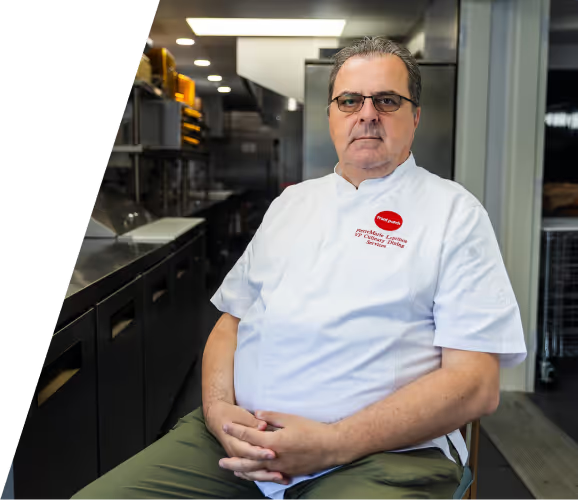
"What is standing out when you look at the mobile kitchen operation is the efficiency that we can really achieve because it's built for that."
Tell us about your kitchen needs and request a quote.
.png)
Turnkey mobile kitchen
Proudly made in-house in the USA
Commercial grade kitchen equipment
Code-compliant
Trusted by Industry Leaders