Every general contractor running an occupied-facility renovation already knows the drill: temporary partitions, dust walls, a crew that has to clear the corridor every time a meal cart rolls through. What rarely gets priced at bid is what that drill does to the metric you're actually judged on. A phased kitchen renovation doesn't just cost schedule days. It multiplies the number of times your crew crosses paths with guests, residents, or staff, and every one of those crossings is a safety-record line item nobody wrote down.
This article walks through what changes when the kitchen comes fully offline instead of staying phased around live service, and where that belongs in your bid.
What "Fully Offline" Actually Means on a Phasing Plan
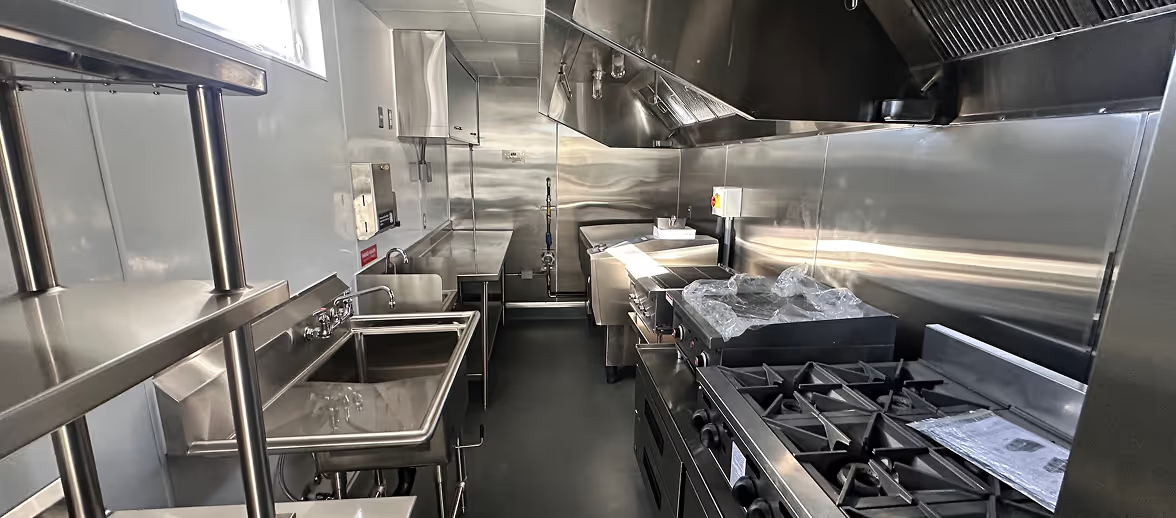
Taking a kitchen fully offline means the existing kitchen stops serving entirely for the renovation's length, while a separate, purpose-built mobile kitchen trailer carries the operation on the same menu, at the same capacity, for guests, residents, or staff. Phasing means the opposite: the crew works around a kitchen that never fully stops.
Phasing breaks the work into sections, on a schedule set by service hours rather than construction logic.
The difference isn't cosmetic. A phased renovation keeps your crew and the facility's operation sharing one footprint for the entire job. Taking the kitchen fully offline removes that shared footprint on day one: one continuous work front, no night shifts built around dinner service, no re-entering a space you thought you'd finished.
Fully Offline vs. Phased, on the Metrics You Actually Carry
Most GCs default to phasing because it's the industry norm for occupied work, not because anyone compared the two side by side on the metrics that actually matter to a Project Manager or Superintendent. A side-by-side look at phased renovation versus a full shutdown walks through the operator's cost and timeline side of that comparison; the table below does the GC-side version, on the metrics a Project Manager or Superintendent actually carries.
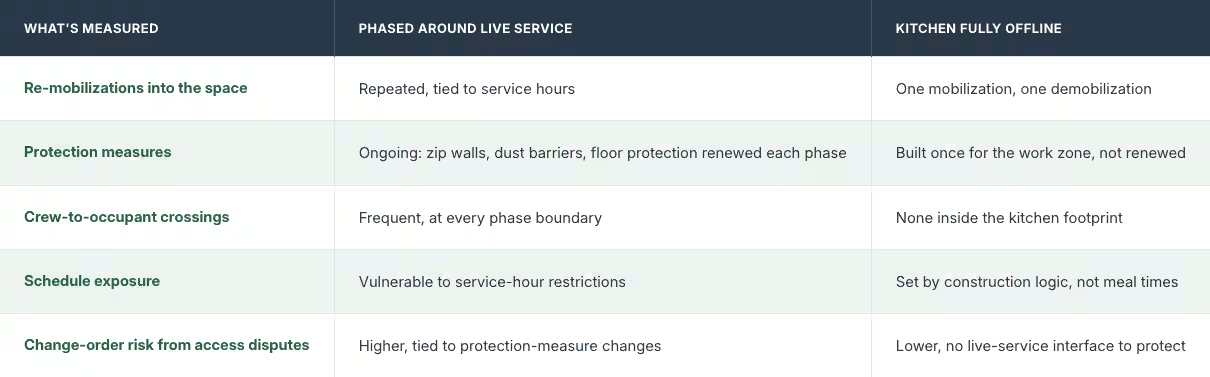
Note: None of this requires a cost or savings figure to make the case. The mechanism is the argument: fewer crossings, fewer re-mobilizations, fewer places for a change order to start.
Why Phasing Around Live Service Costs More Than the Schedule Line Shows
Dust control, repeated mobilizations, and trades working around live service are what phasing actually costs a GC, and none of it shows up as a single line item on a bid. It surfaces instead as protection-measure change orders, re-mobilization delays, and the coordination load that eats a Superintendent's week.
A kitchen demolition inside an occupied facility is a coordination problem before it's a construction problem. According to Thomas Giannelli of RM-MCI, occupied-building construction carries risks that don't exist on a vacant site: dust and noise affecting operations, restricted work hours, and coordination with a business that never stops. His fix, separating construction zones from occupied areas with barriers and controlled access, is the same logic a fully offline kitchen applies to an entire trade at once.
A senior-living general contractor writing for New England Real Estate Journal put it more specifically: meal time triggers a full halt to hall construction, and noisy work has to be scheduled around medication rounds and rest periods. None of that disappears with a better phasing plan; it's the structural cost of sharing a footprint with a live kitchen.
Tip: If your phasing plan still has the kitchen scope broken into stages tied to service windows, that's the signal to price a fully offline alternative before buyout, not after the first protection-measure change order.
The Safety Record Nobody's Pricing at Bid
Safety record is one of the metrics a Project Manager or Superintendent is personally measured on, alongside substantial completion and change-order volume, and a phased kitchen renovation adds exposure to it that a fully offline kitchen removes entirely by taking the live-service interface out of the work zone.
Substantial completion and general-conditions cost control get priced at every bid. Safety record usually doesn't, because it reads as a given rather than a variable. But every re-mobilization into a live kitchen is a new access point, a new set of trades crossing a corridor guests or residents are using, a new chance for a near-miss that never makes it into a report but still shows up when an owner reviews your firm's history on the next pursuit.
Why Specialized Builders Treat This as a Metric, Not a Given
Specialized construction managers in food and beverage facilities build their reputations around exactly this. Dennis Group, which manages construction exclusively for food and beverage plants, markets its safety record as a direct result of keeping documentation rigorous and risk assessment proactive on projects where the line between construction and operations stays thin. That's the same line a phased kitchen renovation keeps thin for montfhs at a time, and a fully offline kitchen closes.
This isn't an argument for inventing an incident number. It's an argument for naming the exposure your current phasing plan is carrying, so it gets priced and discussed before it becomes the thing a post-project review flags.
What Changes When the Kitchen Comes Off the Critical Path
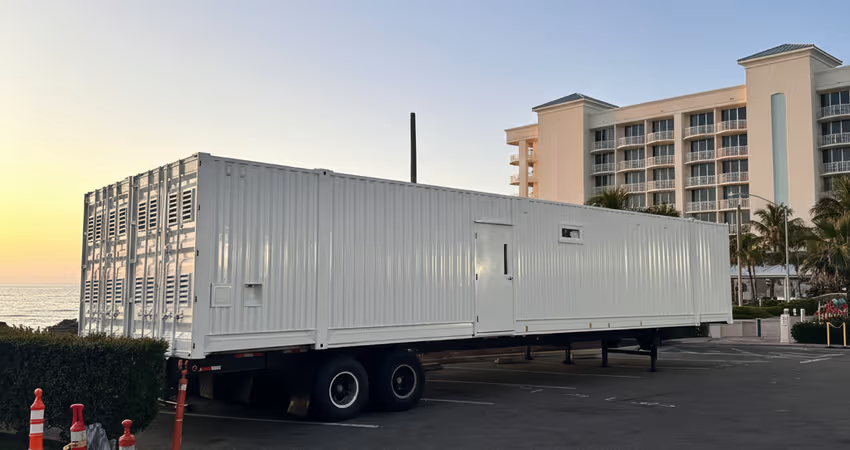
Once the existing kitchen is fully offline, the work zone and the facility's live operation stop sharing a footprint, which is the gap between a retrofitted-trailer workaround and a purpose-built mobile kitchen: one is a compromise everyone tolerates, the other runs the actual menu at full capacity for the length of the job.
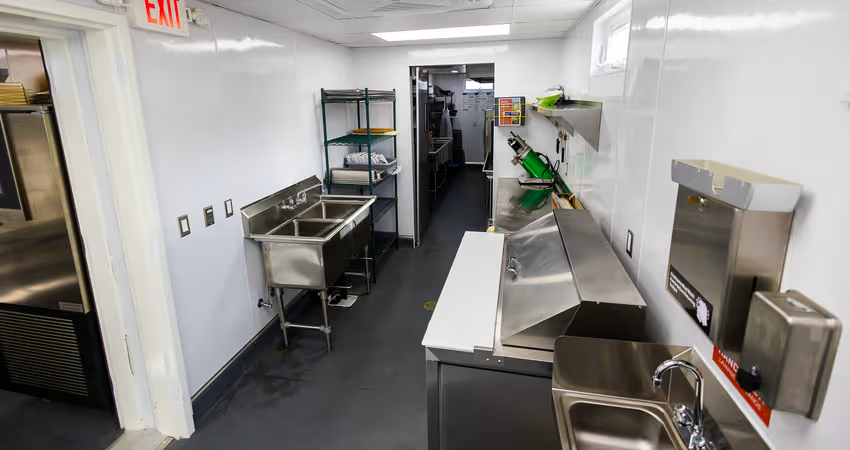
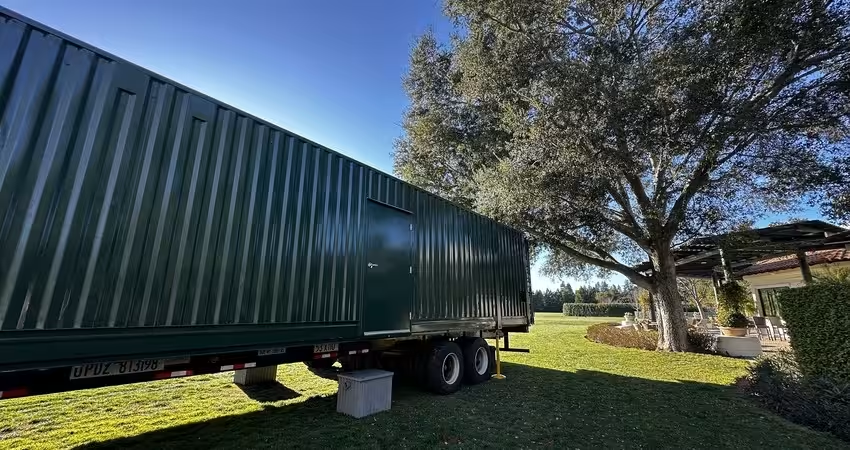
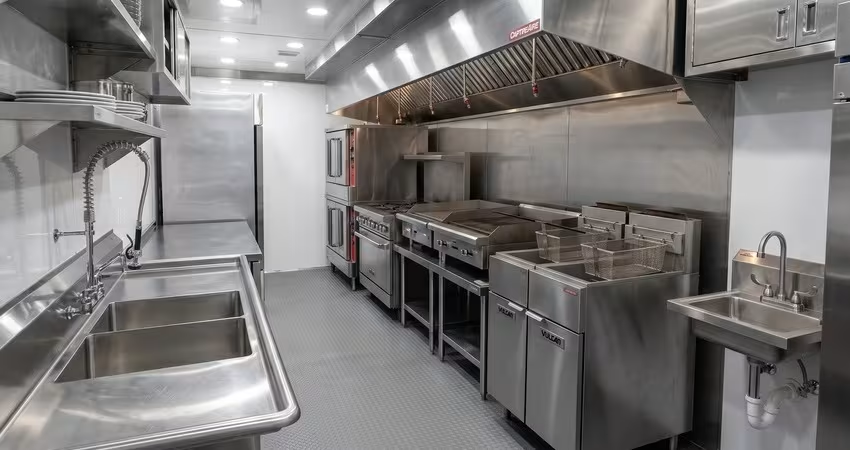
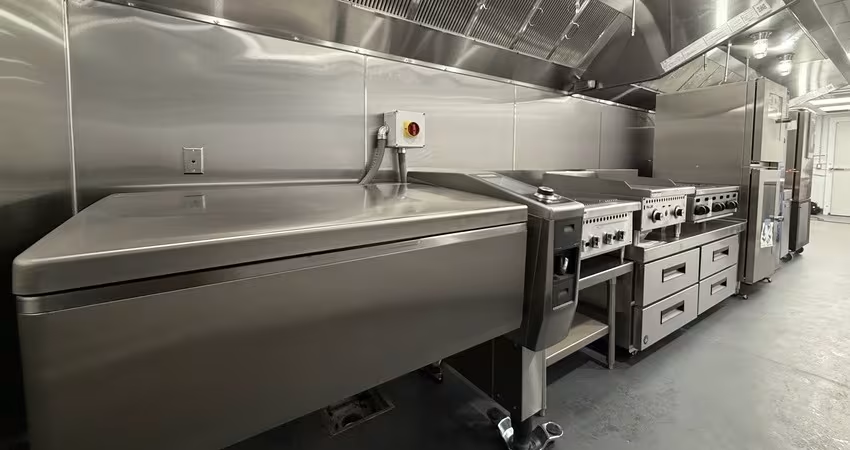
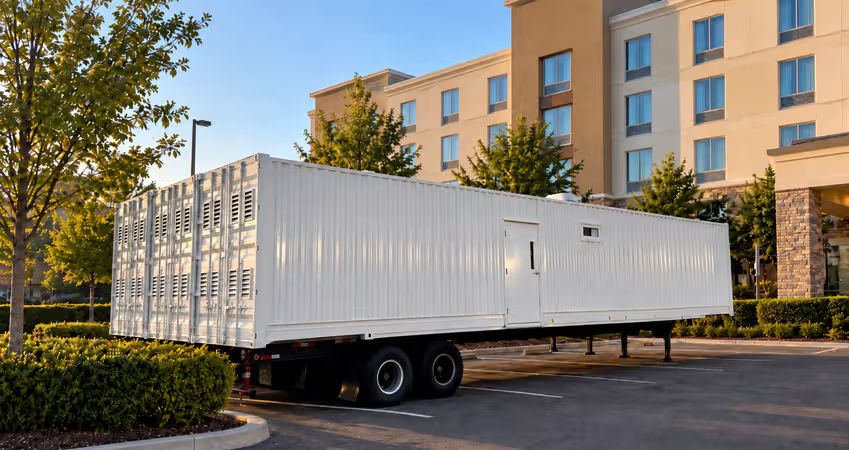
Most GCs who've dealt with a cheap trailer rental expect the same compromises from any temporary kitchen: cramped, underbuilt, one more thing to manage. A purpose-built mobile kitchen trailer, engineered from manufactured kitchen modules rather than retrofitted, is a different proposition: full commercial kitchen equipment and capacity, electrical, plumbing, and gas connections pre-installed, running the facility's actual menu for the length of the job.
A hotel renovating an occupied property faces the same shared-footprint problem from the guest side; the mechanism is identical, just measured in guest complaints instead of a safety record.
Two Renovations That Prove the Mechanism
At Menlo Circus Club, a private country club in California, a 2×53′ Mobile Culinaire unit ran a full menu, including a burner range, fryers, and a double-deck oven, at 400–500 meals a day for a five-month renovation, connected to a grease trap and fully California code-compliant.
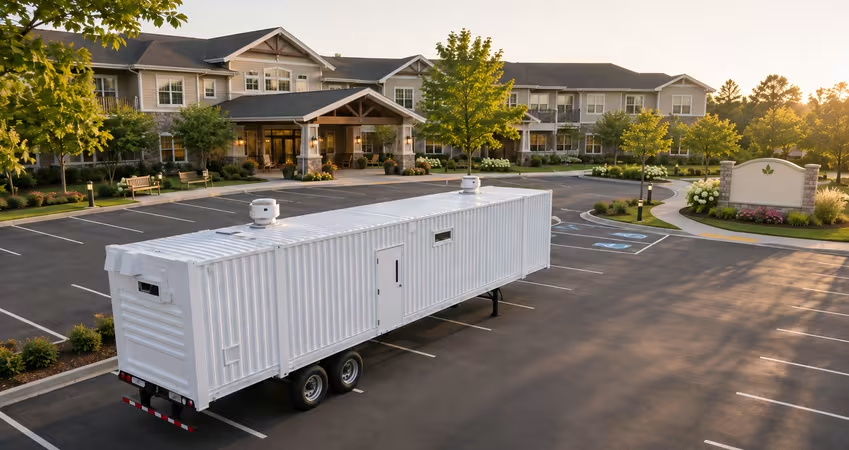
At Front Porch Communities, a senior-living operator, a similar 2×53′ configuration at 850 square feet fed the community at 400–500 meals a day for five months, while doubling as a training space for staff learning new equipment before the renovated kitchen reopened.
Neither project phased the kitchen scope around live service. Both took it fully offline and ran one continuous work front for the length of the job, which is the single-mobilization outcome the earlier table describes. The same mechanism is why hotels and resorts increasingly turn to mobile kitchen rentals for renovation-era continuity, whatever the facility type behind the kitchen.
Where This Belongs in Your Phasing Plan
A temporary kitchen decision belongs in preconstruction and the phasing plan, priced at bid, because bid stage is the last point at which the cost can still be carried by someone. After buyout, the same decision becomes a change order, and the exposure it was meant to remove comes back in through that door.
Once buyout happens, the same decision becomes a change order. The ask at bid stage is specific: a model and footprint sized to the operator's actual menu and headcount, the connection requirements and site-prep envelope so utilities get priced rather than discovered, and an introduction to the facility's F&B decision-maker so the spec matches what they actually serve. Getting that model recommendation and connection envelope before you price the bid is a short conversation — start one.
Mobile Culinaire units ship with electrical, plumbing, and gas connections already built in, the same split covered in what a GC prices at bid.
The Boundary You Still Own
Permitting stays the client's responsibility, and if the GC is the one signing the lease, the GC owns it: the Health Department, Fire Marshal, and Building Department review, and the inspection that follows, all land on whoever signed. Stating that plainly up front beats discovering it at inspection.
Why This Sits in Preconstruction, Contractually
Construction manager and general contractor agreements commonly require the CM to recommend project phasing and temporary-facilities provisions to the owner as a matter of contract, not preference, which is part of why this decision sits inside preconstruction rather than outside it. Washington State's own criteria for alternative public-works contracting name the same two conditions that make a temporary kitchen relevant in the first place: complex scheduling or phasing, and construction at a facility that must continue to operate during the work.
Who Owns the Permit, Plainly
None of that changes who owns the permit. A mobile kitchen trailer arrives code-compliant and third-party inspected, which makes the local Health Department, Fire Marshal, and Building Department review straightforward, but the client, or the GC if the GC signs, still works through that process and owns the inspection that follows. A full breakdown of the permits a temporary kitchen touches is worth reading before that conversation happens, not during inspection week.
Note: A general contractor who has already separated a work crew's access from an occupied population has solved a version of this problem before. Plano-Coudon's renovation of an occupied senior-living community during 2020 routed workers through a temporary exterior stairwell specifically to keep them out of the resident common areas they would otherwise have crossed daily. A fully offline kitchen applies the same logic to the kitchen scope specifically, before it becomes an on-site improvisation.

Next Step
Raise a fully offline kitchen when you build the phasing plan, not after the first protection-measure change order lands on your desk.
Disclaimer
Permitting requirements for a temporary commercial kitchen vary by state, county, and locality. Confirm requirements with the local Health Department, Fire Marshal, and Building Department having jurisdiction before finalizing a phasing plan that includes one.
People Also Ask (FAQ)
Does a temporary kitchen actually reduce change orders on an occupied renovation?
It removes the category of change order tied to protection-measure changes and re-mobilization disputes, since there's no live-service interface inside the kitchen footprint left to protect. It doesn't eliminate change orders from other trades or scope changes elsewhere in the project.
Who owns the permit if the general contractor signs the mobile kitchen lease?
The party that signs the lease owns the local permit. If the GC signs, the GC works through the Health Department, Fire Marshal, and Building Department and owns the inspection that follows. If the facility operator signs, that responsibility stays with them.
How long does it take to get a mobile kitchen trailer on site once permitting clears?
Delivery and installation take about a week once permitting is in hand. Permitting itself typically runs one to six weeks and varies by jurisdiction, so it's the long pole in the schedule, not the install.

Testimonial

"What is standing out when you look at the mobile kitchen operation is the efficiency that we can really achieve because it's built for that."
Tell us about your kitchen needs and request a quote.

Turnkey mobile kitchen
Proudly made in-house in the USA
Commercial grade kitchen equipment
Code-compliant
Trusted by Industry Leaders