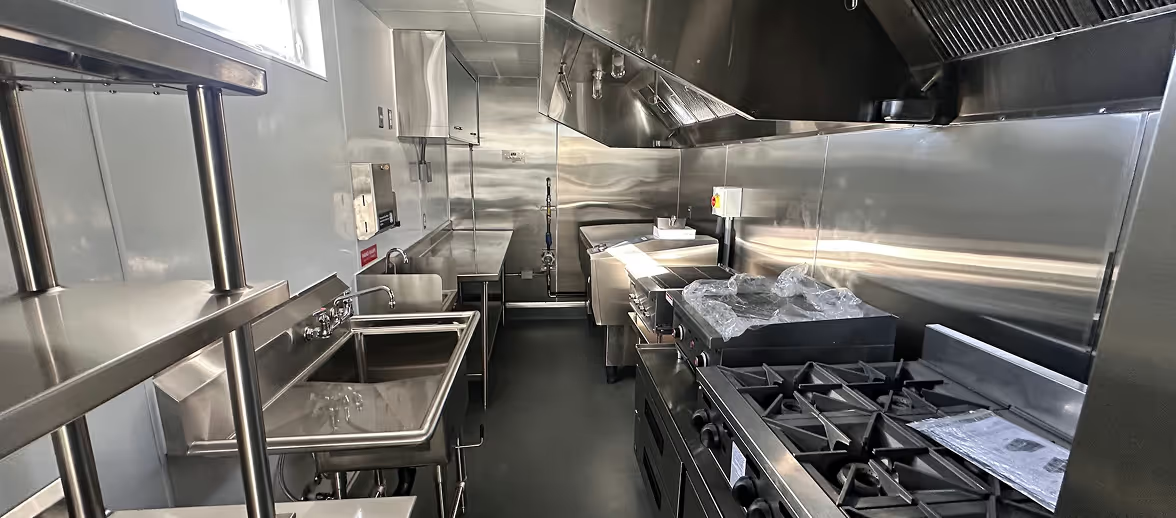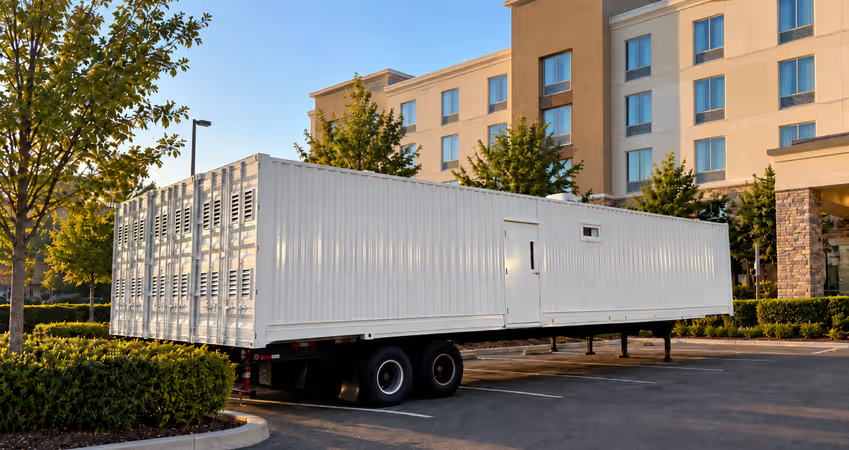
"I'm not owning the permit or the inspection." If you're the general contractor signing the lease on a temporary kitchen instead of the facility owner, that's a fair thing to say, and you'd be right to say it. Who owns the permit on a mobile kitchen rental isn't a gray area. It tracks who signs the lease.
Here's that boundary stated plainly, what Mobile Culinaire actually handles, and what to settle before you carry this at bid.
The Objection, Stated Plainly
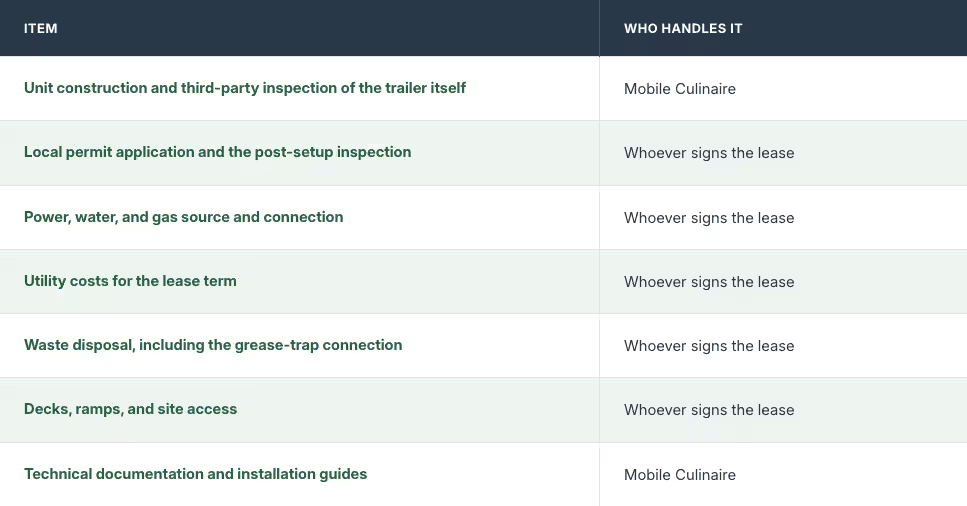
When a GC signs the lease on a mobile kitchen instead of the facility owner, the GC, not Mobile Culinaire, owns the local permit, the inspection that follows, the utility connections, and the site responsibilities that come with them. That's the same rule that applies to any permit pulled under a contractor's name, and renting the kitchen instead of building one doesn't change it.
Signing the lease hands you:
- The local permit application and the inspection that follows setup
- Power, water, and gas connections, plus all utility costs for the lease term
- Waste disposal, including connecting the grease trap we supply if the menu needs one
- Decks, ramps, and site access
Note: Off-grid sites follow the same split. If the location runs on water tanks and generators instead of mains service, you still provide, connect, and pay for them, off-grid changes what you connect to, not who connects it.
Why It's a Fair Thing to Worry About
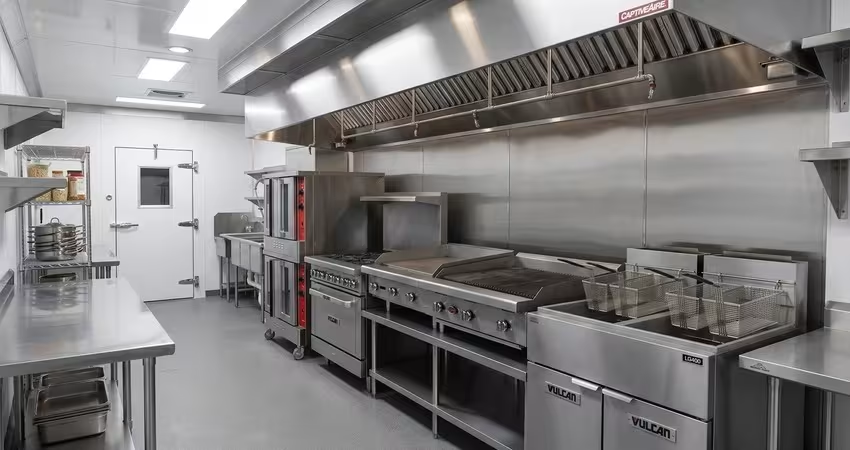
A temporary kitchen like this one sits on your Division 1 general conditions line, your own indirect-cost budget, priced at bid. According to Procore, general conditions are exactly where a contract assigns who is responsible for obtaining permits and licenses, and who carries the regulatory load that comes with them. A permit nobody priced at bid becomes a change order discovered at mobilization, and that's the moment it costs the most.
This is also where your own exposure sits. You're the one chasing substantial completion on a fixed date, and a permit delay that surfaces late eats into the same schedule the temporary kitchen was supposed to protect.
Tip: Ask for the permit-path guidance and connection requirements at bid stage, before buyout. It turns an open-ended risk into a line item you can actually price.
The Boundary, By Line Item
What Mobile Culinaire Actually Handles
We deliver a code-compliant, third-party-inspected unit with full technical documentation and installation guides, and we can walk you through the permit path. We do not pull the permit, sit in on the inspection, or carry the budget line for it.
Promising otherwise is the fastest way to lose credibility with a superintendent who finds out differently once the unit is on site.

A Live Example: The Same Question, On a Real Project
This isn't a hypothetical ambiguity. A 2025 bid addendum from the Dormitory Authority of the State of New York, issued for a modular temporary-kitchen procurement at the College of Staten Island, fielded a bidder question asking whether the equipment vendor or the general contractor would be the one pulling the permit for the interim facility.
The project team answered with the contractor's own master permit, not the vendor's. This exact question gets asked on real procurements, and the answer lands on the party who signs, not the party who built the trailer.
What to Establish Before Bid
- Who signs — you or the facility owner? Settle this before the phasing plan is finalized, not after.
- If you're signing, build the permit path, utility connections, and the grease-trap hookup into your Division 1 line now.
- Confirm state, county, and local requirements directly with the Health Department, Fire Marshal, and Building Department.
- Put the post-setup inspection on your critical path instead of treating it as a formality.
- Ask for connection requirements and permit-path guidance at bid stage, not at mobilization, and see the full health-department permitting walkthrough for senior living facilities if the facility side of this is also yours to coordinate.
Disclaimer
Permit requirements vary by state, county, and locality. Nothing here substitutes for confirming specifics with the Health Department, Fire Marshal, Building Department, or other authority having jurisdiction before you bid or sign.
Let’s Talk!
Tell us early who will sign, you or the owner, so the permit and the budget land on the right desk. Talk to us!

Testimonial
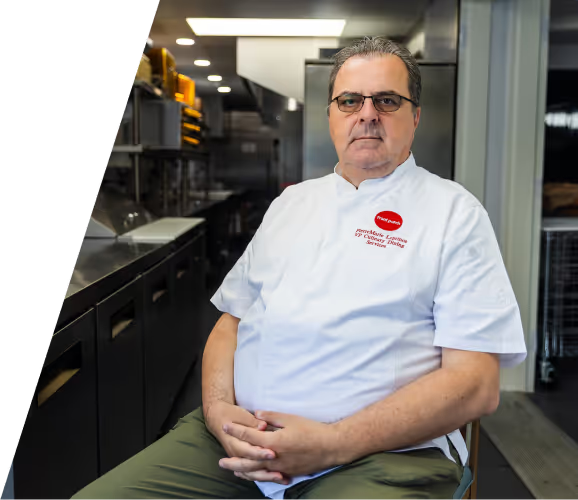
"What is standing out when you look at the mobile kitchen operation is the efficiency that we can really achieve because it's built for that."
Tell us about your kitchen needs and request a quote.

Turnkey mobile kitchen
Proudly made in-house in the USA
Commercial grade kitchen equipment
Code-compliant
Trusted by Industry Leaders