A general contractor renovating an occupied senior living community already knows the schedule math: phase the kitchen around live dining service, or find another way to feed residents while you demolish and rebuild. Phasing a senior living kitchen renovation around three meals a day, every day, for the length of a multi-month job is the default answer, and it is the slowest one. Night and weekend shifts, temporary partitions, repeated re-mobilizations into a live space: that is what the standard approach costs before a single trade issue shows up.
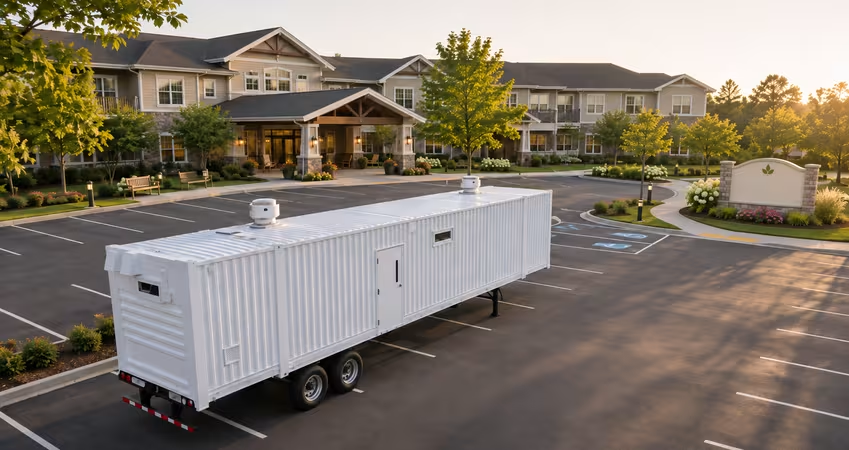
A purpose-built temporary kitchen changes the decision by taking the kitchen fully offline instead. Front Porch Communities ran a 5-month renovation this way, serving 400–500 meals a day out of 850 square feet, with no gap in dining service. This guide walks through where that option belongs in your phasing plan and your bid (if you need the broader case for mobile kitchens in senior living first, start here).
The Phasing Decision You're Already Pricing
A temporary kitchen on an occupied senior living job is not a convenience item. It is a Division 1 general conditions line, priced at bid like security, temporary power, or a job site trailer.
General conditions are not small money. According to NH Home Magazine, general conditions can run 10 percent or more of total project cost, depending on the site's logistics, access, and complexity. On an occupied senior living renovation, the site logistics are the complication: there is no empty building to work in, no off-hours window long enough to matter, and a dining room that cannot go dark.
So the real question isn't whether phasing costs something. It's whether you price a temporary kitchen once, at bid, or absorb the cost of phasing in pieces, for months, as change orders.
Note: Price the kitchen as its own line item, separate from the trades it displaces. Bundling it into "temporary facilities, miscellaneous" is how it gets value-engineered out before anyone sees the tradeoff.
What Phasing Around a Working Dining Room Actually Costs
Phasing is the industry default for a reason: it's familiar, and it doesn't require bringing in another vendor. It's also slow, by design, because the work has to happen without touching live operations.
According to BLD UP, occupied senior living renovation requires designating laydown areas that don't interfere with building operations, phasing schedules that protect unencumbered use of the space, and low-VOC materials with ductwork blocked off so fumes don't travel into occupied areas. None of that is optional in a community where residents and staff are present every hour of the job.
What that adds up to on a kitchen scope specifically:
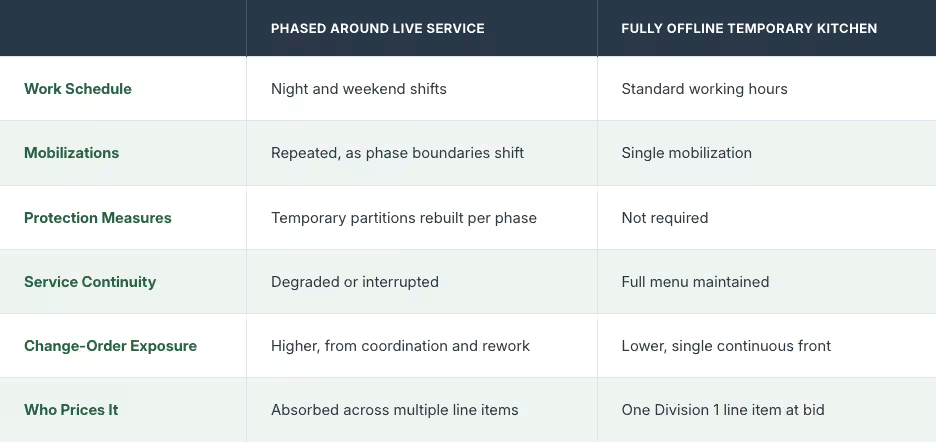
- Temporary partitions and protection measures rebuilt as the phase boundary moves
- Night and weekend shifts to avoid service hours
- Repeated mobilizations and demobilizations into the same footprint
- Dust and air control measures that have to hold up to daily inspection by staff, not just a punch list
- Trade coordination that has to work around meal service three times a day
Each of those is a line your super has to manage personally, and each one is a place a schedule slips without anyone making a single bad decision.
The Alternative: Take the Kitchen Fully Offline
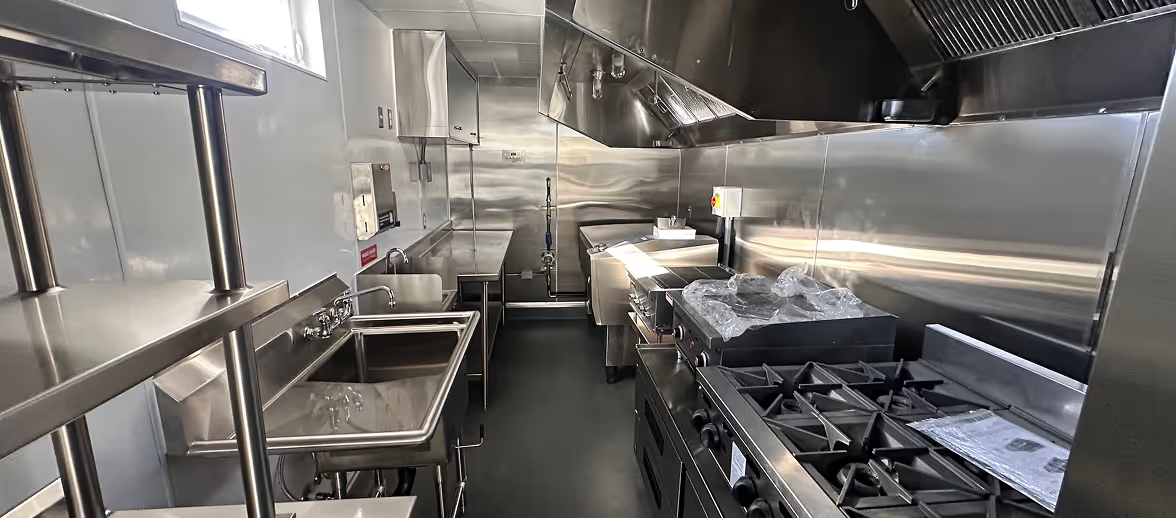
A purpose-built temporary kitchen, not a retrofitted trailer, lets you take the permanent kitchen fully offline and demolish and rebuild it as one continuous work front. No live-service choreography. No night shifts built around a 6 a.m. breakfast service. One mobilization, one footprint, one schedule that runs like any other gut renovation.
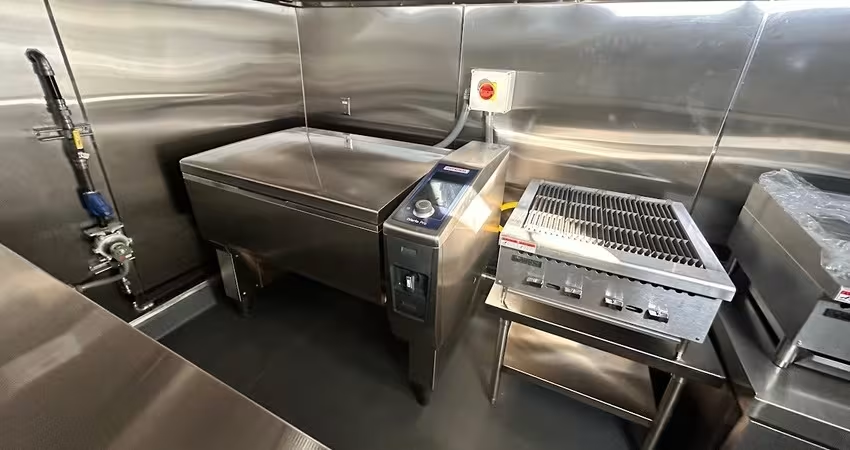
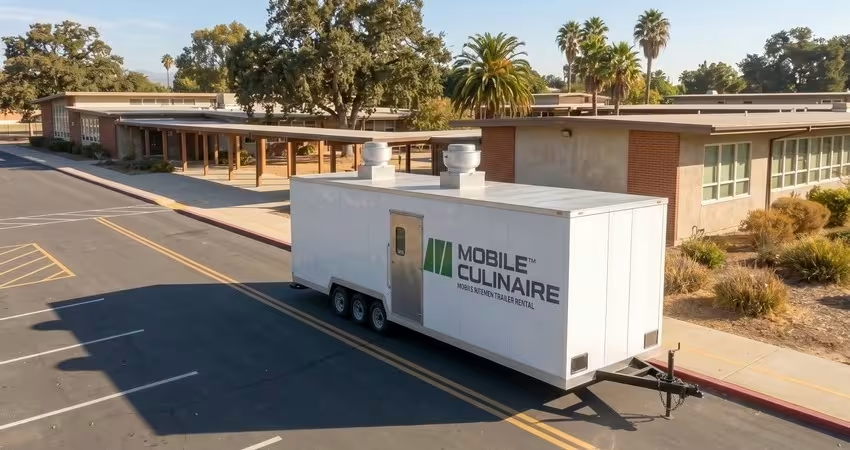
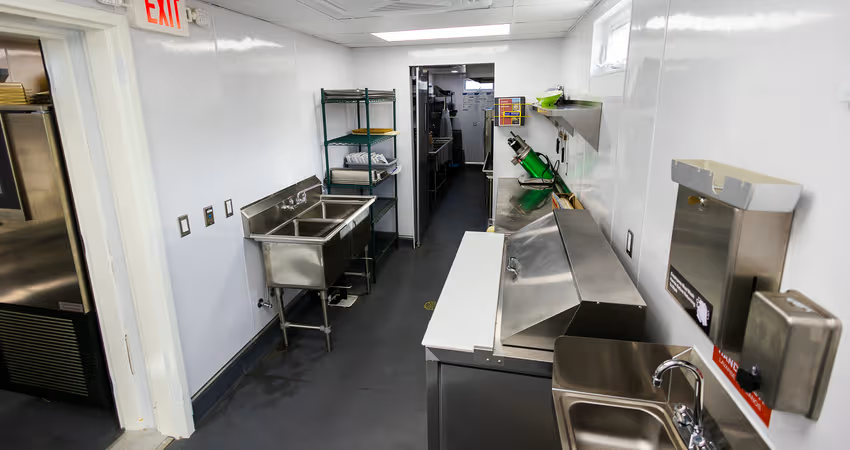
The distinction matters: a cheaply retrofitted trailer is built to survive a weekend, not a five-month renovation with a kitchen staff working in it daily. A purpose-built unit is engineered from manufactured kitchen modules to the same standard as a permanent commercial kitchen: full HVAC, fire suppression, walk-in cold storage, and layouts that mirror the kitchen it's replacing.
Tip: Bring the facility's dietary or culinary lead into the sizing conversation early. The unit gets matched to menu and headcount, not to whatever footprint happens to be available, and that conversation goes faster when it starts at preconstruction instead of after you've already priced a phasing plan.
Where This Belongs in Your Phasing Plan and Bid
This isn't a decision you make once construction starts. It belongs in preconstruction, before buyout, while the cost can still be carried by someone.
On a CM-at-risk or GC/CM contract, recommending it may not be optional. Washington State's GC/CM statute is a useful illustration of why: MRSC lists "construction at an occupied facility which must continue to operate during construction" as one of the criteria that qualifies a project for the GC/CM delivery method at all. Other jurisdictions define eligibility differently, but the pattern holds: this delivery method exists partly because this exact situation needs it. Standard CM/GC agreements go further: a sampled project phasing clause requires the construction manager to "recommend to Owner Parties Project phasing and Work prioritization," taking into account factors including "provisions for temporary facilities." On a CM contract, this recommendation is written into your scope, not left to initiative.
The Associated General Contractors of America defines CM at-risk by exactly this early-involvement structure, which is what makes the phasing conversation yours to start rather than something handed to you after design.
Why the Timing Matters
Bid stage is the last point at which the cost can still be carried by someone without a change order. Once buyout closes, a temporary kitchen added mid-construction competes with every other unbudgeted item for the owner's attention, and it loses that fight more often than it wins.
Proof: How Front Porch Communities Did It
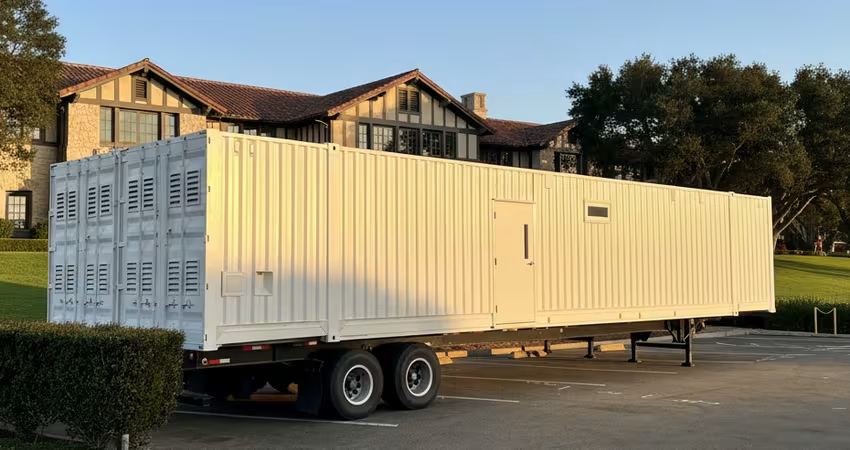
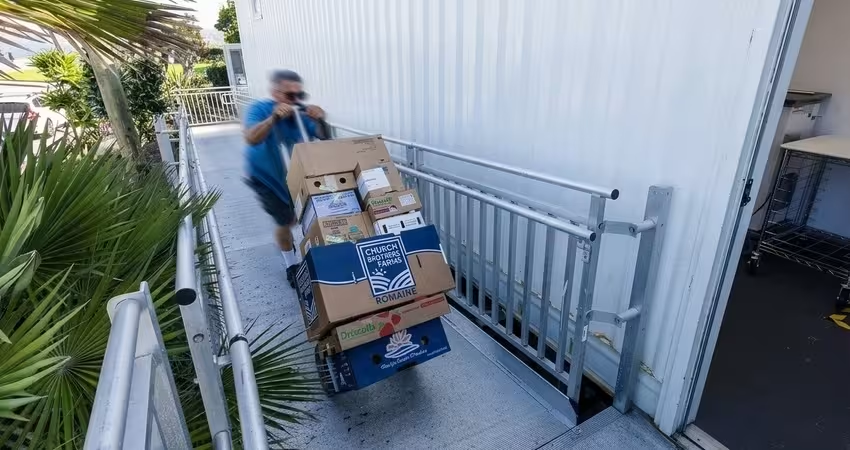
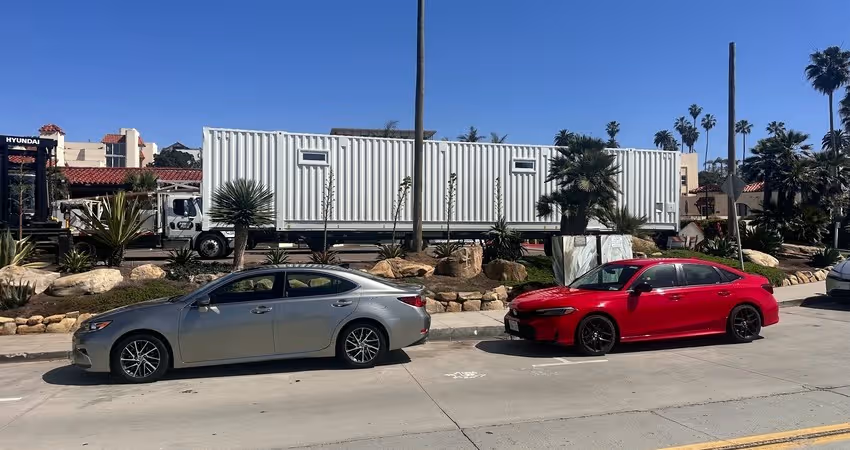
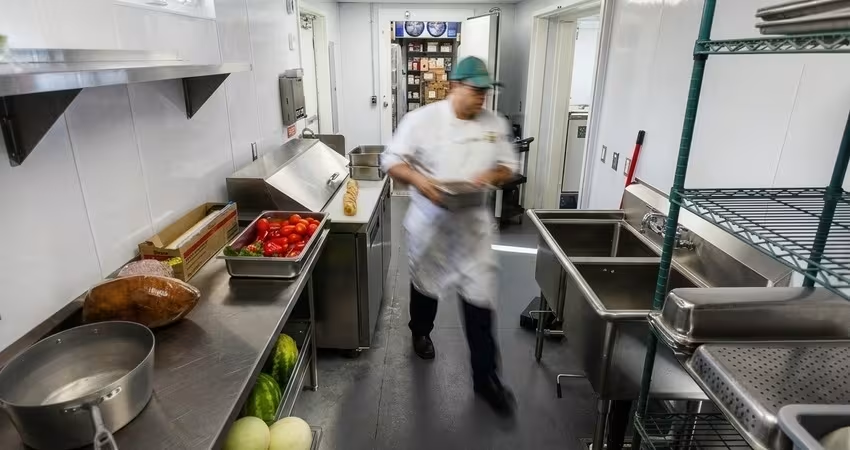
California nonprofit Front Porch Communities, which operates more than 20 senior living communities, is the clearest case of this in practice. Over a 5-month renovation, two 53-foot units joined by an interior door gave the facility 850 square feet of kitchen, including a walk-in cooler, a freezer, and a conveyor dishwasher, and the operation turned out 400–500 meals a day the entire time. The community used the same deployment window to train staff on new equipment, so the temporary kitchen carried both ongoing service and the transition into the renovated space at once.
That's the proof point for "fully offline instead of phased": a full-menu dining operation ran without interruption while the permanent kitchen was rebuilt, with no phased partitions or night-shift workarounds in the mix.
What Schedule Risk Looks Like If You Don't Solve This Early
Phased night-and-weekend kitchen work is slower and less predictable than open-shop construction. If that scope slips, it can take your substantial completion date with it.
AIA Contract Documents notes that liquidated damages are predetermined sums a contractor agrees to pay when project milestones such as substantial completion are missed, and that they typically begin accruing as soon as that milestone date passes. A kitchen scope that's still being phased around live service three weeks before your target date is exactly the kind of slippage that triggers that clause.
Taking the kitchen fully offline compresses that exposure: delivery and installation run about a week once permitting clears, with no night-and-weekend workarounds required. That's a schedule number, not a lead-time promise. The full canonical process (discovery and agreement, planning and design, permitting, delivery and install) runs longer than a week start to finish, and permitting is the long pole in it.
What You Still Own
A temporary kitchen doesn't remove every piece of scope from your plate, and claiming otherwise is the fastest way to lose credibility with your own super.
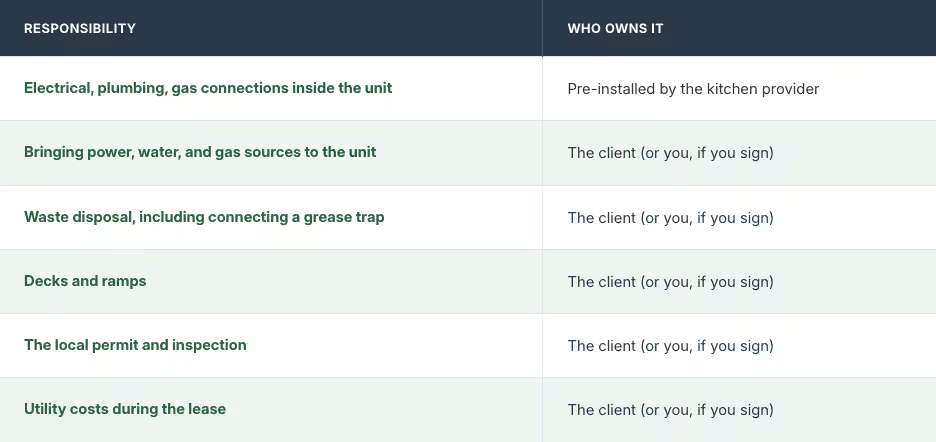
Note: Which column is "you" depends on whether you're recommending the unit or signing the lease yourself. That varies project to project, so settle it early rather than assuming.
Permitting and Site Prep Still Need Their Own Line
Permitting in particular is not something the kitchen provider can own on your behalf: requirements vary by state, county, and locality, and an inspection typically follows setup. That's worth a close read before you price it into your schedule, especially if you're the one signing the lease.
Site prep and utility connections are their own pricing exercise, and we've broken that down separately into the full connection and lay-down envelope you'd need to price at bid.
Phasing vs. Fully Offline: A Side-by-Side
Next Step
If you're pricing an occupied senior living renovation, put a temporary kitchen in the phasing plan before buyout, not after. Tell us who signs: you, or the facility's owner. We'll size the unit to the menu and headcount, and work from there.
Disclaimer
Permitting requirements, contract delivery method eligibility, and liquidated damages enforceability vary by state, county, and contract. Confirm permitting requirements with the local Health Department, Fire Marshal, and Building Department, and confirm delivery-method eligibility and liquidated damages terms with your own legal counsel before relying on anything above for a specific project.
People Also Ask (FAQ)
Does a temporary kitchen replace the need to phase anything?
Not entirely. Taking the kitchen fully offline removes the phasing problem for food service specifically, but other scopes on an occupied renovation, resident-facing common areas, egress, utilities, still need their own phasing plan. The kitchen is usually the hardest piece to phase because it can't pause even for a day, which is why it's often the first scope worth solving this way.
Who decides whether to recommend a temporary kitchen on a renovation?
It depends on the contract. On a CM-at-risk or GC/CM agreement, recommending temporary facilities provisions is frequently part of the construction manager's contracted preconstruction scope. On a lump-sum job, it's more often a judgment call the GC makes at bid, weighing whether the owner will allow for it.
How long does it take to get a temporary kitchen on site once the decision is made?
Delivery and installation run about a week once permitting clears, but permitting itself runs longer and varies by jurisdiction. Budget the full process, not just the install week, when building your schedule.


Testimonial
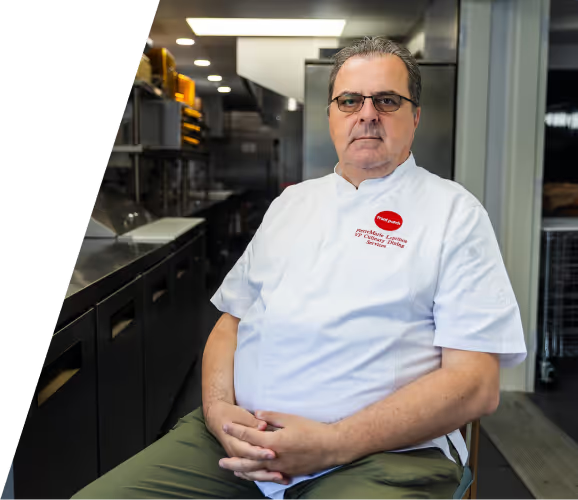
"What is standing out when you look at the mobile kitchen operation is the efficiency that we can really achieve because it's built for that."
Tell us about your kitchen needs and request a quote.

Turnkey mobile kitchen
Proudly made in-house in the USA
Commercial grade kitchen equipment
Code-compliant
Trusted by Industry Leaders