.gif)
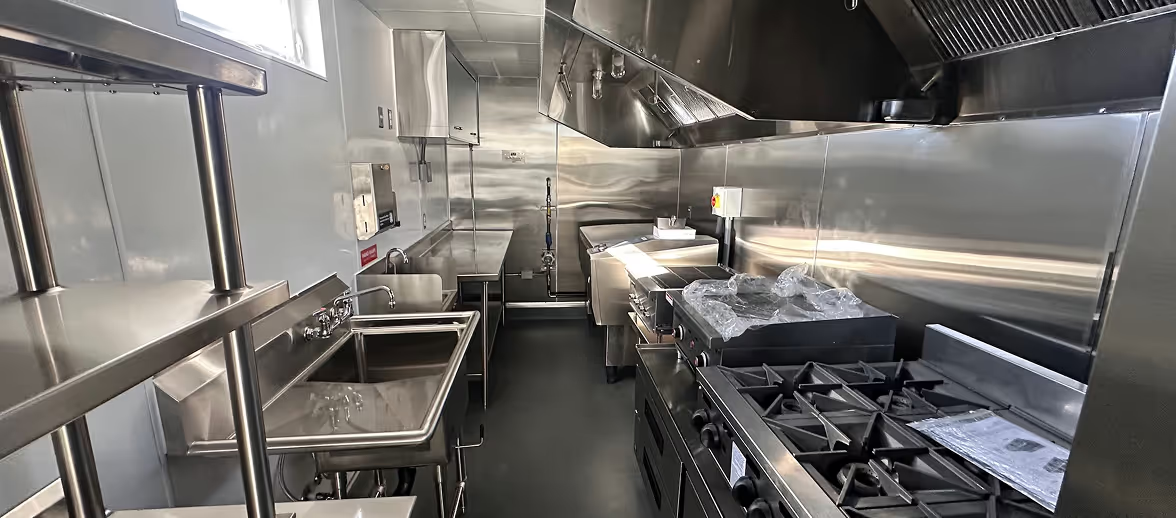
Three meals a day isn't a service standard at a senior living community. In most states, it's a license condition. Miss the window between dinner and breakfast by too many hours, and what looks like a scheduling slip to the kitchen is a meal interval requirement violation to the state. For a Director of Nutrition & Culinary Services mid-renovation, that's the real stake a stopgap kitchen has to meet.
This piece walks the actual rule, cited by code and section, and what a kitchen outage does to the clock it's built around.
Why a Kitchen Outage Here Is a Compliance Event
Residents can't "go home" the way a country club member can when the kitchen goes down. The meal schedule is a condition of the facility's license, so a renovation, fire, flood, or equipment failure that interrupts it risks a survey deficiency, not just an unhappy resident.
A delayed clubhouse dinner is a complaint. A delayed senior living dinner, taken far enough, is a documented gap in a legally mandated schedule, the kind surveyors specifically check for. That's why this role weighs a temporary kitchen differently than most commercial-foodservice buyers: the standard it has to hit during a renovation is the one it has to hit every other day of the year.
The Federal Floor: CMS's 14-Hour Rule
Any skilled-nursing wing certified for Medicare or Medicaid, common inside a CCRC alongside assisted living, is bound by a federal rule: no more than 14 hours between a substantial evening meal and breakfast, extendable to 16 hours only if a nourishing snack is served and residents agree.
Under 42 CFR §483.60(f)(2), CMS sets this as a condition of participation, not a best practice. Surveyors cite it under F-tag F809, and a violation becomes part of the facility's public CMS record.
Note: This federal rule covers the nursing side of a Life Plan Community. The assisted living side is governed separately, state by state, which is where the real variation shows up.

How State Codes Pick This Up, and Where They Don't
Some states write the 14/16-hour numbers directly into assisted living law. Others require the same outcome through a different mechanism, or specify no number at all. A dining program built to one state's wording can fail inspection in a neighboring one.
.avif)
According to the Missouri Code of State Regulations, the 14/16-hour standard applies directly to assisted living facilities, not only nursing homes. Washington's code sets the same 14-hour ceiling but doesn't write in Missouri's 16-hour exception. Ohio's rule skips the hour count and requires a nourishing snack after the evening meal instead, a different lever aimed at the same outcome.
Tip: Don't assume your state's number until you've read the current assisted living chapter specifically. A rule correct for a nursing home license is sometimes wrong for the assisted living license next door, in the same community.
Why Minnesota Looks Different, and Why That Matters for a CCRC
Minnesota's current Assisted Living Licensure law, in effect since 2021, sets no numeric meal-interval requirement for assisted living, only "three nutritious meals daily." The 14-hour standard still exists in Minnesota, but it lives in the older supervised-living rule and the nursing-home rule, not the law most assisted living communities are licensed under today.
For a single-license operator, that's simpler. For a CCRC running assisted living and skilled nursing under one roof, a common fit-account shape for a mobile kitchen deployment, it means satisfying two clocks at once: no explicit interval on the assisted living side, a strict 14/16-hour window on the nursing side. A temporary kitchen serving both wings should default to the stricter number, since a schedule that works for one license can still fail the other.
What an Outage Does to That Clock
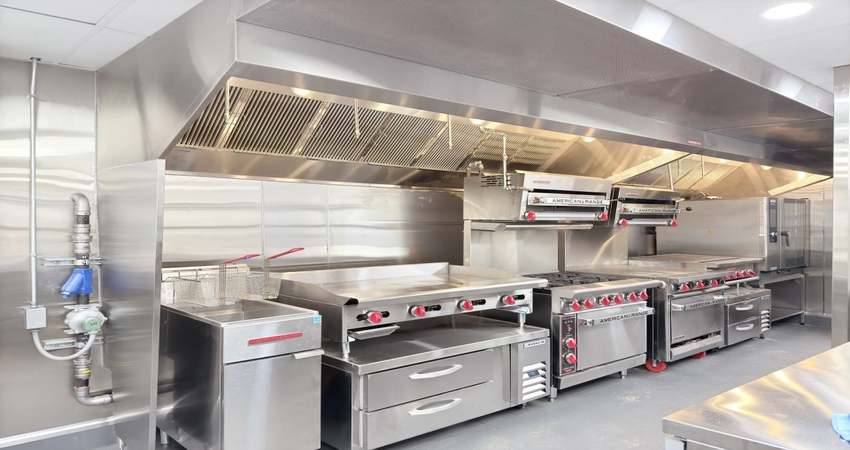
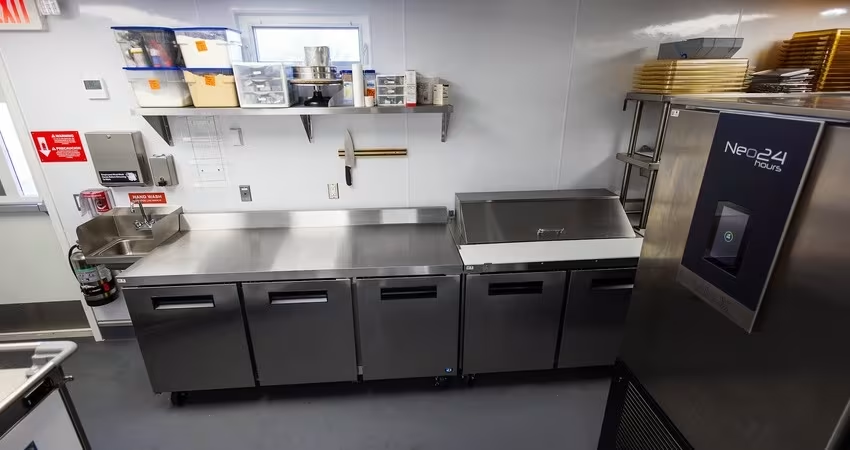
A retrofitted trailer that overheats, loses a reach-in, or goes down mid-service doesn't just delay one meal. It risks pushing the evening-to-breakfast gap past whatever ceiling applies to that facility's license, planned renovation or not.
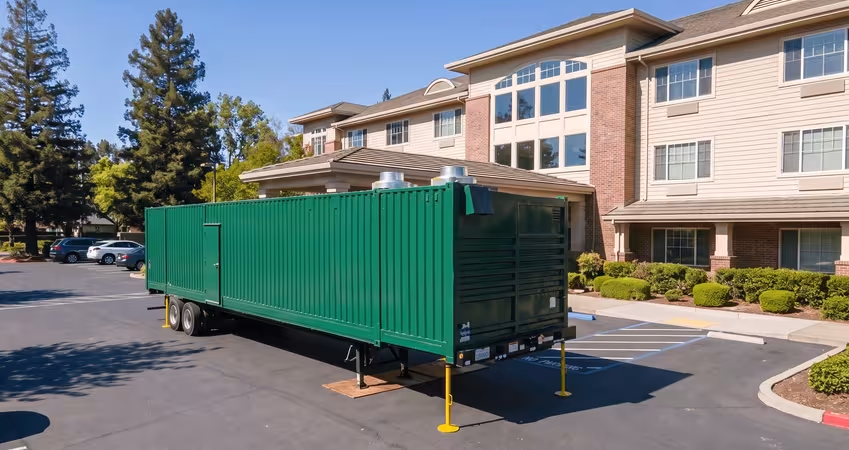
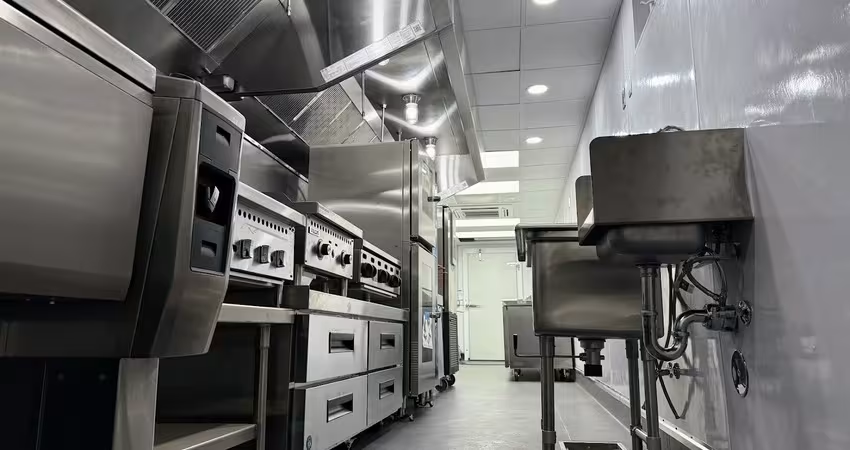
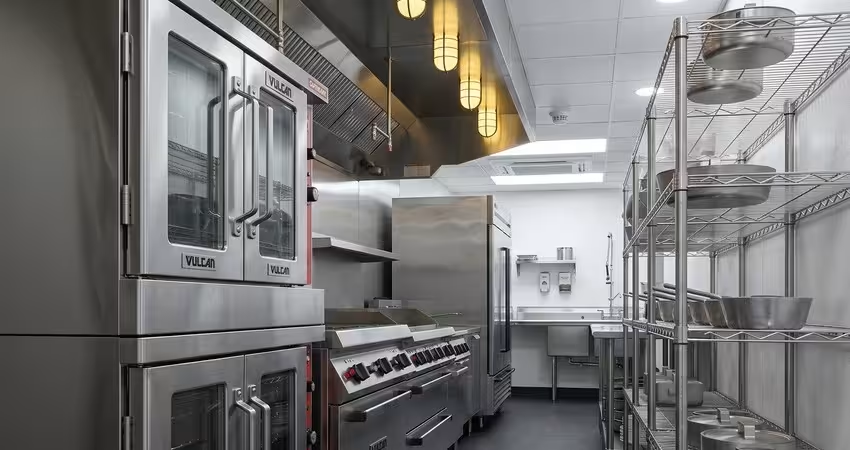
This is where the equipment underneath the rental matters. A trailer built to survive a weekend of event catering wasn't engineered for five months of daily commercial load, and a breakdown at 9 p.m. doesn't wait for a convenient hour. Mobile Culinaire's units are purpose-built from manufactured kitchen modules rather than retrofitted, with full HVAC, pre-installed MEP, and commercial-grade equipment engineered for sustained daily use, the same standard a permanent kitchen is held to. At Front Porch Communities, a 2×53′ unit ran a full production schedule, 400–500 meals a day, for five months during a California renovation, without the meal clock slipping once.
What the Inspection That Follows Actually Checks
A surveyor reviewing dietary services during or after a renovation checks posted meal times against actual service logs, confirms a bedtime snack was offered where the state's rule requires one, and looks for a pattern of late service, not a single bad night.
- Posted schedule vs. served times. Surveyors compare the facility's own posted meal times against kitchen logs and resident interviews.
- Snack documentation, where the state's rule depends on one (Ohio, and Missouri or Washington past 14 hours).
- A pattern, not an incident. One late dinner during a generator swap rarely triggers a deficiency. A renovation-long pattern of a kitchen that can't hold its own schedule does.
- Therapeutic-diet accuracy alongside timing. A late meal that also arrives at the wrong texture or sodium level compounds into a more serious citation.
For the broader approval sequence, health department, fire marshal, and building department, in the order that matters, see the senior living permitting walkthrough, which covers the inspection process this section assumes.
Conclusion
The meal-interval rule isn't the same rule everywhere, and treating it as if it were is itself a risk. Missouri and Washington write the clock into assisted living law. Ohio enforces the same concern through a mandatory snack. Minnesota's current assisted living statute sets no number at all, though its nursing-home rule still does, which matters for any CCRC running both licenses under one dining program. Know which rule actually governs your license, size the kitchen to hold it under full therapeutic-diet volume, and the clock holds through the renovation.
For the full renovation-planning picture beyond this one rule, the complete guide to mobile kitchens for senior living and the design requirements for a compliant senior living mobile kitchen cover the rest of what this role has to plan for. Weighing the numbers on a renovation-length rental? The ROI breakdown for senior living renovations is the companion piece. Questions about sizing a unit to your license and diet mix: talk to the team.
Disclaimer
Meal-interval and dietary-licensure requirements vary by state, by license category, and by the edition of the code currently adopted in your jurisdiction. This article reflects the cited sources as verified at the time of writing. Confirm current requirements with your state's health department or licensing authority before relying on them for compliance planning.
People Also Ask (FAQ)
Does the 14-hour meal rule apply to assisted living or only nursing homes?
It depends on the state. Missouri and Washington write the 14-hour standard directly into their assisted living codes. Minnesota's current assisted living law sets no interval at all; the 14-hour number there applies only to its legacy supervised-living rule and its nursing-home rule. Check your state's assisted living chapter specifically rather than assuming a nursing-home standard carries over.
What happens if a senior living facility misses the meal interval during a renovation?
A single missed window during a documented equipment failure is unlikely to trigger a citation alone, but a pattern across a renovation is exactly what a surveyor is trained to look for during a dietary services review, comparing the posted meal schedule against kitchen service logs directly.
Can a snack substitute for the 14-hour rule everywhere?
Not uniformly. Missouri and Washington allow a bedtime snack to extend the window to 16 hours. Ohio requires a snack after the evening meal regardless of timing, as its primary mechanism rather than an exception. Confirm which model your state's code uses before building a dining schedule around a snack as the fix.


Testimonial

"What is standing out when you look at the mobile kitchen operation is the efficiency that we can really achieve because it's built for that."
Tell us about your kitchen needs and request a quote.
.png)
Turnkey mobile kitchen
Proudly made in-house in the USA
Commercial grade kitchen equipment
Code-compliant
Trusted by Industry Leaders