.gif)
Mid-service is the wrong moment for a walk-in to lose power. But a mobile kitchen breakdown during service happens — sometimes because a rental was undersized for the load, sometimes because equipment simply fails. What separates a chef who saves the shift from one who cancels covers isn't luck. It's a playbook.
This blog walks through the six moves an executive chef makes in the first fifteen minutes of a mobile kitchen breakdown, and the follow-ups that decide whether it happens again.
What "Service Completed, Incident Logged" Looks Like
The win isn't a fixed appliance — it's a finished shift. Every cover leaves the pass. No TCS food sits outside its safe window without a discard time on it. Front-of-house holds the room. By the last plate, you have a documented incident report — times, actions, failed equipment tagged out.
Fixing the equipment happens on the vendor's timeline. Running the shift happens on yours. The chef who conflates the two ends up standing over a technician instead of over the pass. A guest leaving the room shouldn't be able to tell you which piece of equipment failed.
What Every Chef Needs on Hand Before Service Starts
Before every service, four things need to be pinned somewhere accessible — the rental provider's 24-hour service line, a laminated one-page failure protocol, a station-by-station equipment inventory with model numbers, and a food-safety timing chart marked with the FDA Food Code §3-501.19 four-hour discard window.
- The 24-hour service line — the emergency dispatch number, not a general contact form. Written down, not just saved in a phone.
- A one-page failure protocol — the six steps below, laminated, posted where the chef and sous chef can both see it.
- A station-by-station inventory — model numbers and which circuit each appliance draws from.
- A food-safety timing chart — cold, hot, and TPHC windows, with marker pen and adhesive labels within reach.
Tip: Every chef on the line should know where the laminated contact list lives. If only one person knows the number, you have a single point of failure, not a protocol.
The Six-Step Response to a Mobile Kitchen Breakdown
The six-step response to a mobile kitchen breakdown runs in strict order — safety, diagnostics, internal communication, re-plating, vendor call, and incident log. Doing these out of order is what turns a fifteen-minute recovery into a canceled shift. It's the single most common mistake in operator write-ups.
Step 1 — Isolate and Assess Safety
Cut power or gas at the failed station before anyone touches it — OSHA lockout/tagout (29 CFR 1910.147) applies. If suppression discharged, NFPA 96 §8.7 has already shut off fuel and power and requires manual reset — do not override it. Check for smoke, gas smell, or water contact with electrical. Nobody works that station until it's cleared.
Step 2 — Identify What Failed and What Still Runs
Walk the station. Is it the appliance, the circuit, the ventilation, or the utility feed? A tripped breaker resets in thirty seconds. A failed compressor doesn't. Define the failure envelope — one burner, one hood, one walk-in, or the whole unit. That answer decides workaround or re-plate.
Step 3 — Communicate Before You Call the Vendor
Your first two calls are internal — the expediter and the front-of-house manager. Give them three sentences. What failed. What still works. How many minutes until you'll know more. They translate for the room. Delay this and misinformation gets there first.
Step 4 — Re-Plate the Service Around What's Working
Pull the affected items and reweight remaining stations. If the walk-in is warming, pull TCS items, mark the time per §3-501.19, and route them to the hot line for use within four hours. The table below covers fast substitutions.
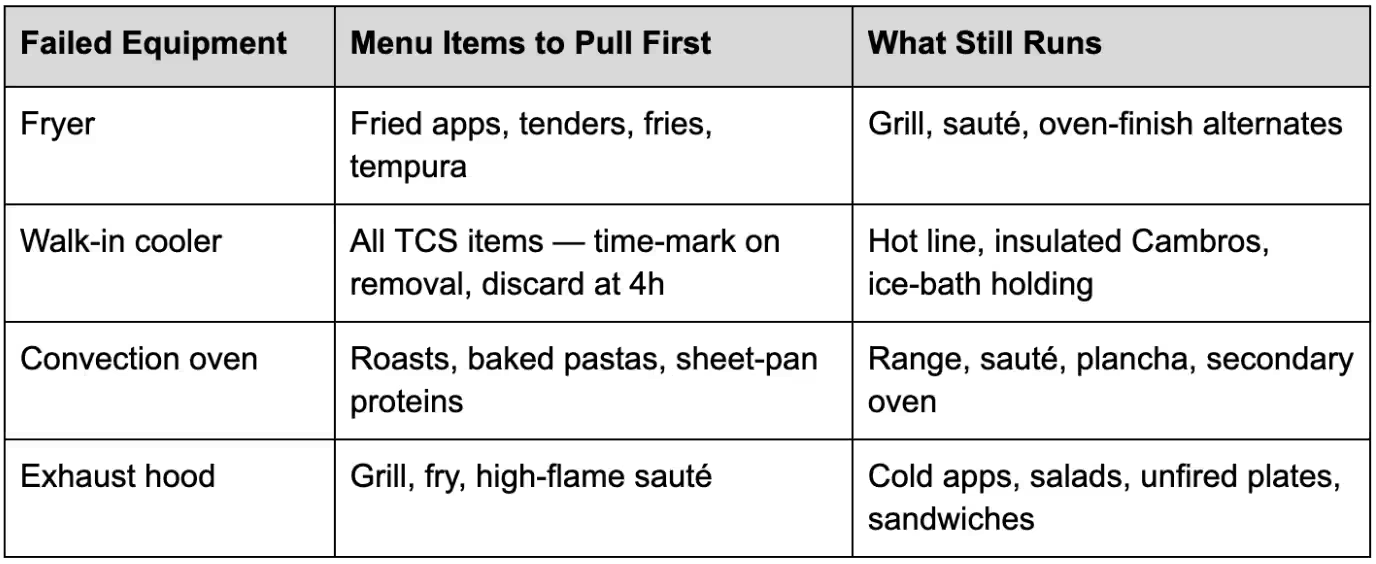
Note: Once TPHC starts, the food cannot return to refrigeration. Mark it, use it within four hours, or discard it. Unmarked TCS food gets discarded on sight per §3-501.19.
Step 5 — Contact the Rental Provider
Now — not before Step 3. A credible provider runs a documented service protocol — response-time SLA, technician dispatch, and, if the fix takes longer than one shift, options for interim equipment or a swap unit. If they can't tell you within twenty minutes whether you have a technician tonight or a replacement tomorrow, that's your answer on next time. Mobile Culinaire's team can walk you through the service-protocol questions worth asking any provider.
Step 6 — Log the Incident Before You Close Down
Capture time of failure, station, what failed, actions taken, TCS food discarded, guest impact, and technician response time. This document proves food-safety compliance, supports service-credit conversations, and — if the failure looks equipment-specific — decides whether the unit stays on the line tomorrow.
Tip: Photograph the incident log before you close down — paper walks off, timestamps don't.
How to Know the Shift Is Over Safely
The shift is over safely when three checks land clean — every cover has been served or refunded, no TCS food sits outside its safe window without a discard time on it, and the failed equipment is tagged "do not use" until vendor sign-off. Only then does the incident log get filed.
For an executive chef, the metrics that matter are event execution and guest satisfaction — not equipment uptime. A shift that ended thirty minutes late but sent every guest out fed is a well-handled breakdown. One that ended on time because you canceled the last hour of covers is a canceled shift.
The Mistakes That Turn a Small Failure Into a Canceled Shift
Four mistakes account for most canceled shifts after a mobile kitchen breakdown — and only one is about the equipment itself.
- Calling the vendor before running triage: The vendor can't cook. Steps 1–4 happen without them.
- Saving the dish instead of the shift: Menu-building is a chef's whole career, and the instinct is to protect the menu. The re-plate is the win.
- Under-communicating with front-of-house: A three-sentence update every ten minutes is the difference between guest patience and refund requests.
- Trusting a rental that was undersized in the first place: Not a service-shift decision — a procurement one, made months earlier.
The fourth one gets skipped by every ranking page on this topic. It shouldn't. According to envigilance's summary of 86 Repairs' 2024 State of the Restaurant Industry report, a restaurant losing four hours to equipment failure loses roughly $3,000–$4,000 in that window alone. Emergency service calls run 27% more than scheduled ones. That's the cost of the wrong rental.
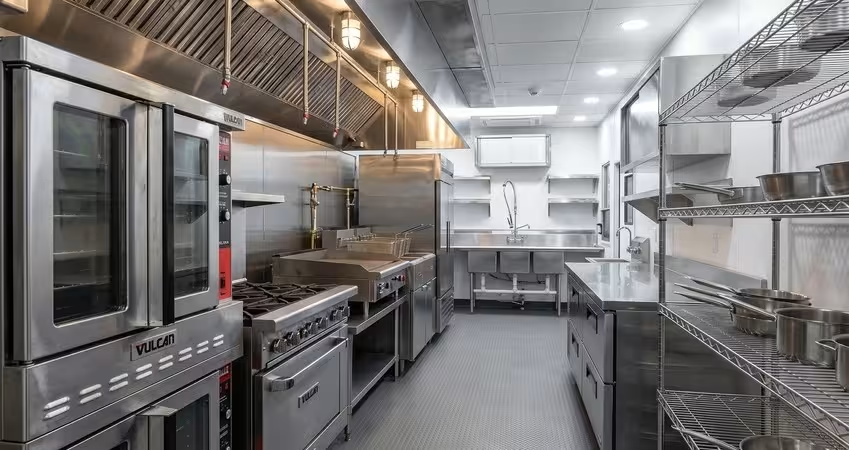
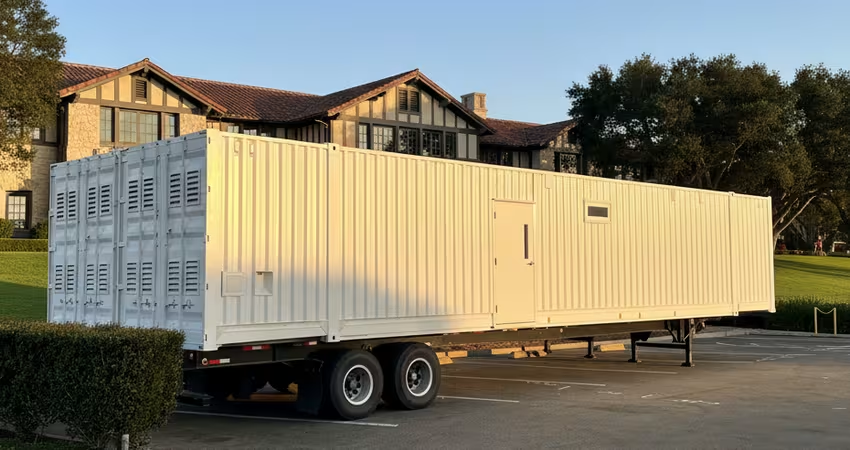
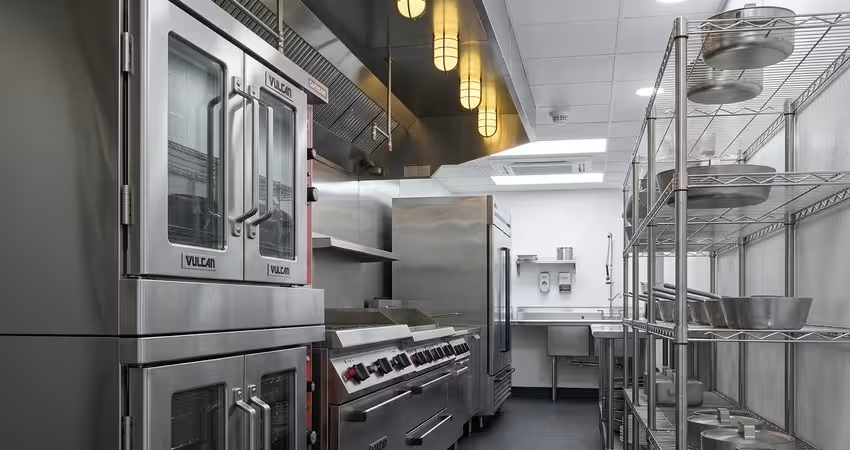
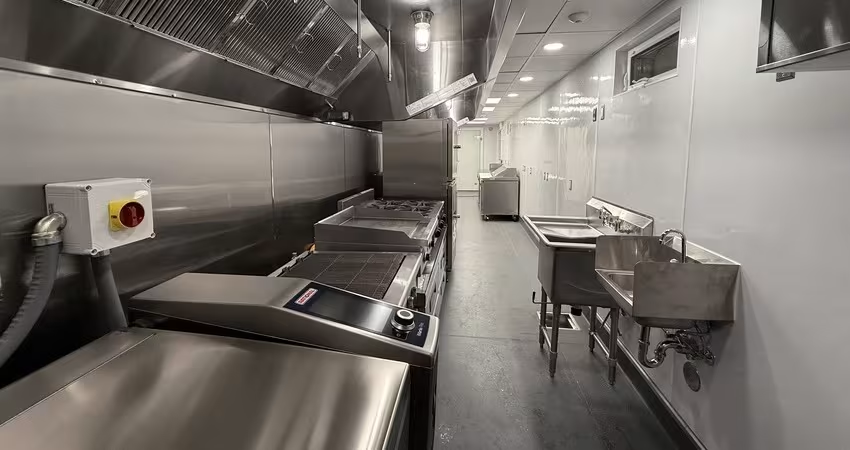
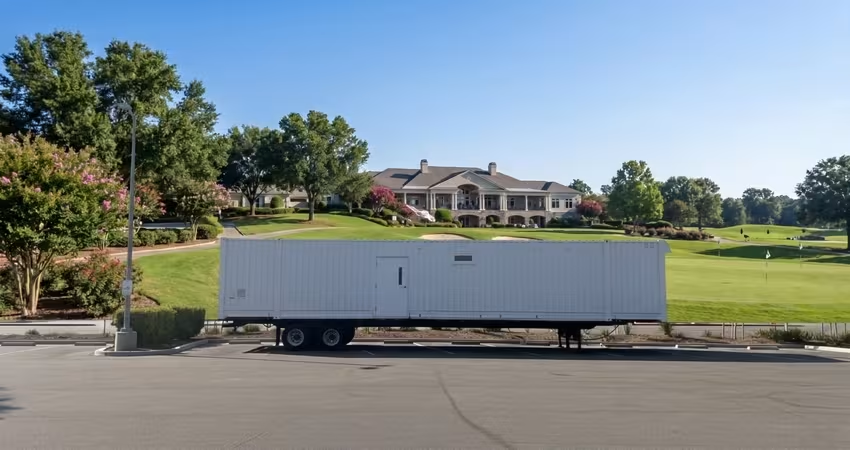
Retrofitted trailers built to survive a weekend fail predictably under multi-month commercial load — undersized generators, single-circuit electrical, residential-grade HVAC. Purpose-built mobile kitchens are built the other way: commercial-grade HVAC and fire suppression, full MEP, code-compliant electrical for the full kitchen's draw. According to Foodservice Equipment Reports, the walk-in that fails "usually in the middle of the night on a weekend" is almost always one that was under-specified at purchase or rental. Mobile Culinaire has delivered 400+ units to that standard, every one code-compliant and third-party inspected.
Before the Next High-Stakes Shift
Walk the protocol before the shift where the stakes are high — a wedding, a member event, a full house — not after the first failure. To prevent the next mobile kitchen breakdown during service, ask the next provider what their last three service calls were and how long they took. See how operators kept service running through disruptions.
Disclaimer
Food-safety timings cited here come from the 2022 FDA Food Code and its §3-501.19 TPHC framework. Local health jurisdictions may adopt earlier editions or add stricter local rules. Confirm the requirements in force with your local health department, and — for hood, duct, and fire-suppression questions — with your local fire marshal, before relying on these timings and protocols.
People Also Ask (FAQ)
What should I do first when my mobile kitchen fails mid-service?
Cut power or gas at the failed station and clear people away. Check for smoke, gas smell, or water on electrical before anyone touches it. OSHA lockout/tagout discipline applies — the station stays isolated until it's cleared. Diagnostics come second, not first.
How long can a walk-in cooler stay off before food safety is compromised?
Under FDA Food Code §3-501.19, TCS food removed from proper cold holding at or below 41°F may be held without temperature control for up to four hours. At hour four, use it or discard it — the food cannot return to refrigeration once TPHC has started.
Who is responsible for fixing a broken rental mobile kitchen — the operator or the rental company?
Equipment repair is the rental provider's responsibility under any credible lease. The operator provides utilities, site conditions, and owns the local permit and inspection. Confirm the service protocol and response-time SLA in writing before the lease starts — not after the first failure.
Can you keep serving during a mobile kitchen breakdown?
Usually yes, if the failure is isolated to one station or one appliance. Pull the affected menu items, reweight remaining stations, and update front-of-house every ten minutes. A shift ending late but with every guest fed is a well-handled breakdown, not a canceled one.

Testimonial

"What is standing out when you look at the mobile kitchen operation is the efficiency that we can really achieve because it's built for that."
Tell us about your kitchen needs and request a quote.
.png)
Turnkey mobile kitchen
Proudly made in-house in the USA
Commercial grade kitchen equipment
Code-compliant
Trusted by Industry Leaders