.gif)
An event planner at a 400-guest waterfront wedding venue gets a mobile kitchen rental proposal. They glance at the quote, picture a food truck by the reception tent, and book a marquee with propane burners instead. That ninety-second decision will cost them service quality, staff morale, and probably a fire marshal headache.
Mobile kitchen rental for events is one of the most misunderstood decisions in hospitality, and the myths driving those rejections are almost always wrong. This article breaks down seven of the most persistent ones.
Why Mobile Kitchen Myths Still Shape Event Planning Decisions
Temporary foodservice has a reputation problem. For decades, "mobile kitchen" meant a retrofitted trailer with a fryer bolted in the back, or a tent with propane burners. Those setups still exist, and they still fail inspections — and buyers conflate them with purpose-built mobile kitchens, a category that didn't exist in a serious form until recently. The result: F&B Directors dismiss mobile kitchen rental for events based on assumptions that were accurate fifteen years ago, and they pay for it in food quality, inflated piecemeal budgets, and compliance risk.
Myth #1: "Mobile Kitchens Are Just Upgraded Food Trucks"
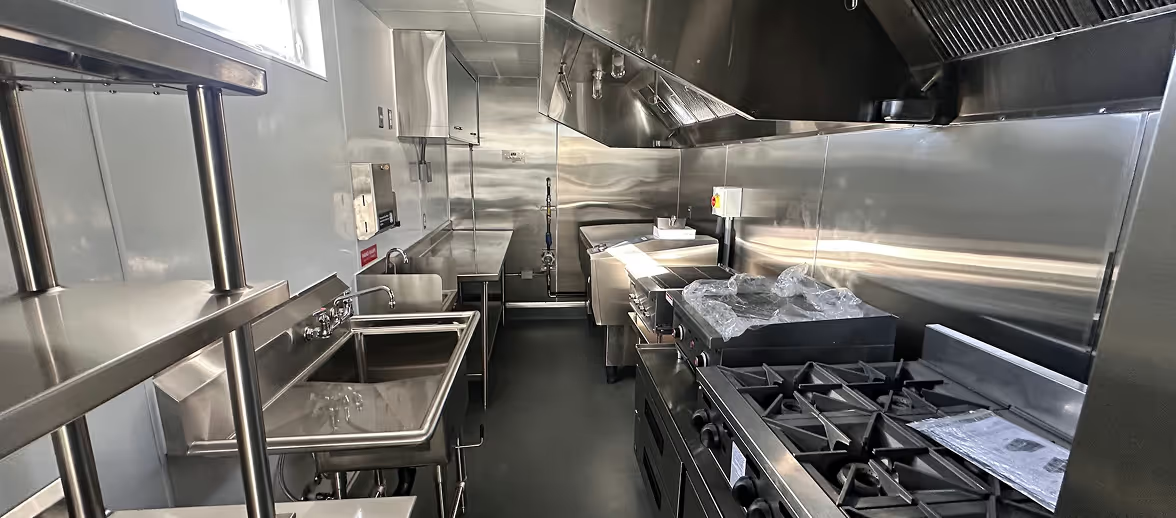
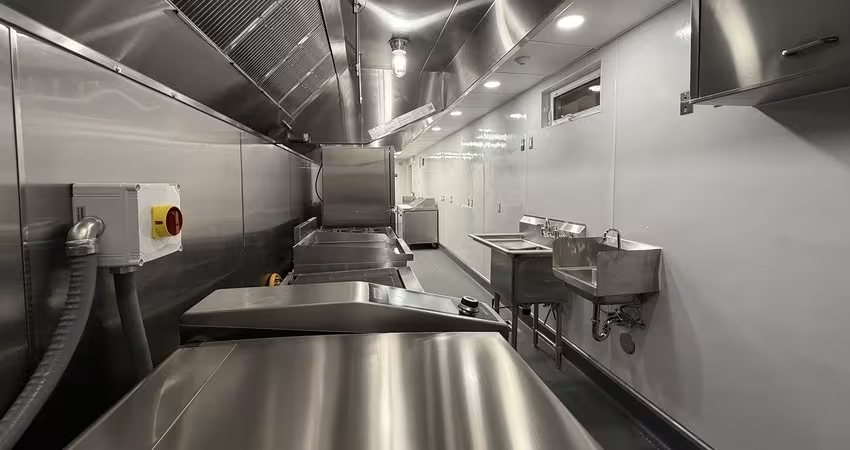
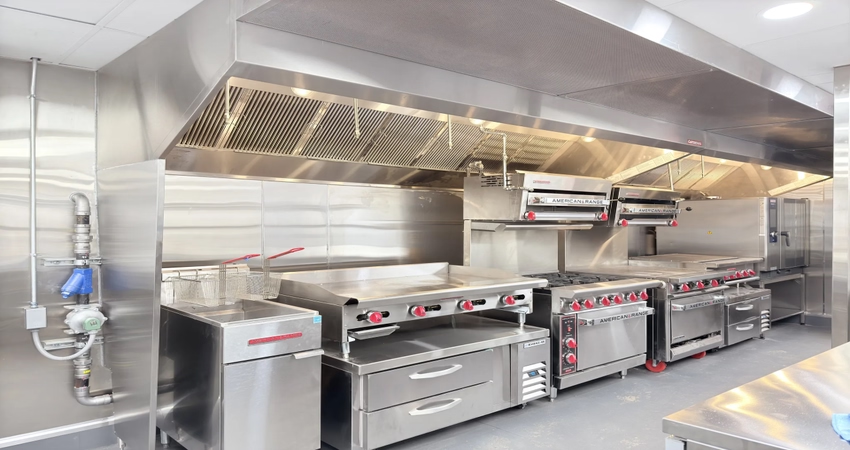
This is the most common misconception — corrected the moment someone walks inside a purpose-built unit. Food trucks are retail vehicles designed for walk-up service with a small cookline. A purpose-built mobile kitchen is a production facility engineered from the ground up with steel-framed modular construction, commercial cooklines, walk-in refrigeration, dedicated prep zones, and integrated HVAC.
The Reality: Purpose-Built Commercial Infrastructure
A serious event venue kitchen rental includes, at minimum:
- Commercial cooking equipment sized for production, not street vending
- Walk-in refrigeration and freezers — real cold storage
- Full MEP pre-installed — electrical, plumbing, and gas rated for commercial loads
- HVAC with exhaust hoods, fire suppression, and make-up air
- Dedicated prep, cook, and dish zones — workflow separation food trucks cannot provide
The design work behind these units is detailed in our guide on how mobile kitchens are designed and built for rental use.
Note: If a provider can't show you engineering drawings, NSF certifications, and HVAC specifications, you're looking at a retrofit, not a purpose-built unit.
Myth #2: "You Can't Pass Health and Fire Inspections With a Temporary Kitchen"
This myth is why many venues default to off-site catering even when on-site cooking would produce dramatically better food. It's wrong. NFPA 96 — the standard for ventilation control and fire protection of commercial cooking — has a dedicated chapter on mobile and temporary cooking operations. The 2021 edition moved that content from the annex into the main body of the standard, reflecting the maturity of the category.
The Reality: Code-Compliant by Design
A purpose-built temporary kitchen for events typically meets or exceeds:
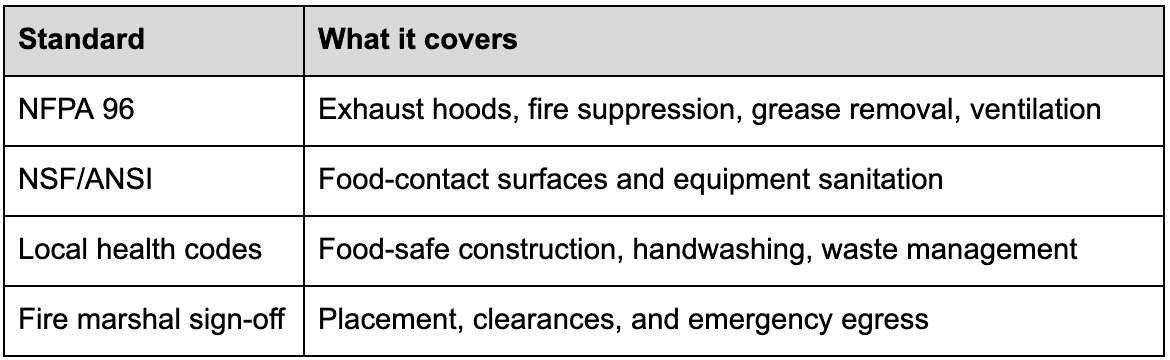
The CDC estimates 48 million Americans get sick from foodborne pathogens each year, which is why health departments scrutinize temporary foodservice. Inspectors look for the same things they check in permanent kitchens — and purpose-built units meet those requirements by design.
Permitting still matters. Most jurisdictions require a temporary food establishment permit, a health inspection, and fire marshal approval. Our guide on permits and licenses for commercial kitchen rentals covers the full process.
Tip: Ask providers whether they supply engineering documentation and inspection-ready configurations upfront. Quality providers hand you a compliance package; weak providers hand you a phone number.

Myth #3: "Renting a Mobile Kitchen Costs More Than Building a Temporary Structure"
This myth survives because a mobile kitchen rental's sticker price looks larger than a marquee-and-equipment quote on paper. The sticker price is not the total cost. When venues compare a mobile kitchen rental for events against a tent-based alternative, they usually miss several cost categories entirely.
The Reality: The Hidden Math of Tented Kitchens
A piecemeal event venue kitchen rental involves eight line items most planners underestimate: a tent or marquee with sidewalls and flooring, individual equipment rentals from multiple vendors, generator rental with fuel, a separate reefer trailer, portable sinks and waste tanks, fire suppression, coordination labor, and permit consulting — because no single vendor owns compliance.
Each line item carries delivery fees, deposits, and coordination overhead. By the time everything is wired together, the piecemeal approach often lands in the same range as a turnkey mobile kitchen trailer rental — sometimes higher. There are also hidden costs to understand before signing, but the honest comparison is total landed cost against total landed cost.
Note: Request fully itemized quotes for both options. The gap is usually smaller than planners expect.
Myth #4: "Chefs and Staff Hate Working in Mobile Kitchens"
This one used to be true. A 150-square-foot trailer with poor ventilation, no AC, and equipment squeezed against the walls is miserable to work a 12-hour event. That's a retrofit problem, not a mobile kitchen problem.
The Reality: Ergonomic Layouts and Full MEP
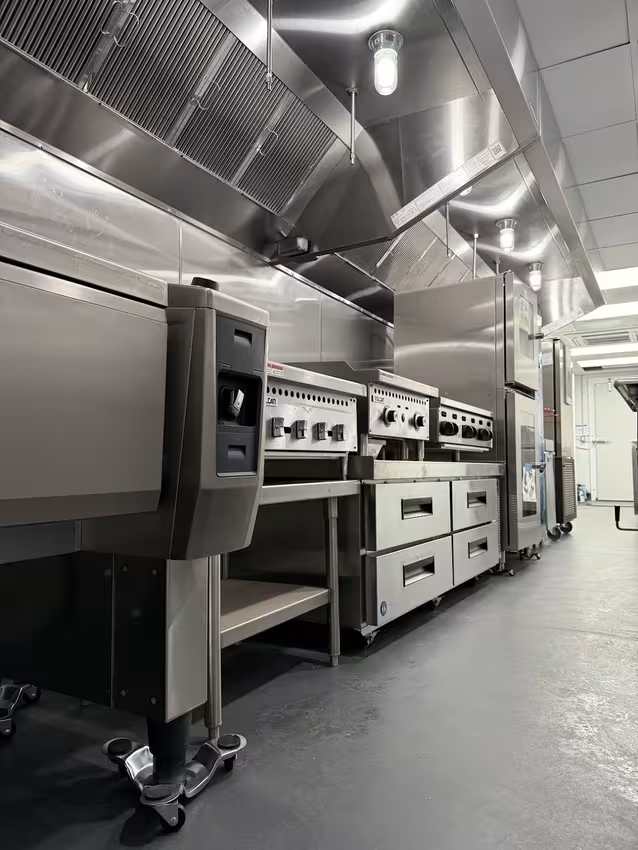
Purpose-built mobile kitchens are designed by foodservice consultants who start with workflow:
- Dedicated zones for prep, cooking, plating, and dishwashing with logical adjacencies
- Walk-in refrigeration positioned near the cookline
- HVAC with make-up air that keeps the cookline workable during summer events
- Non-slip flooring, ADA egress, and ergonomic equipment placement aligned with OSHA restaurant workplace safety standards
For staff comparing a well-designed mobile unit against a hot tent with folding tables, the mobile kitchen wins on every dimension that matters to a working chef.
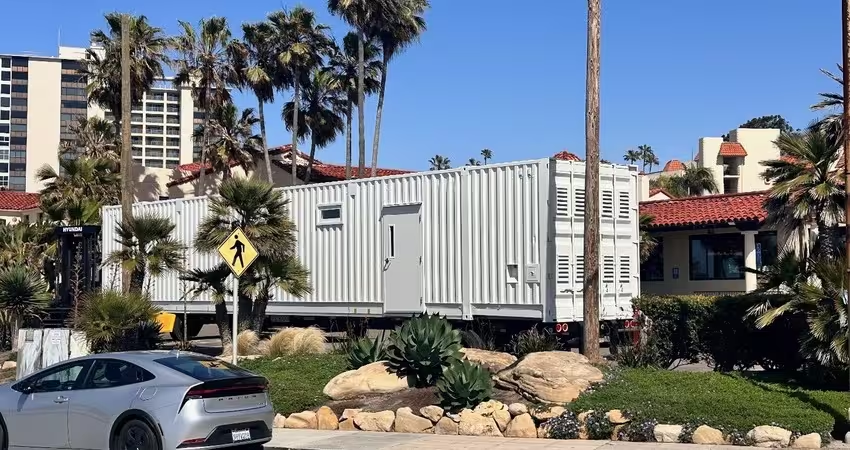
Myth #5: "Deployment Takes Weeks and Disrupts the Venue"
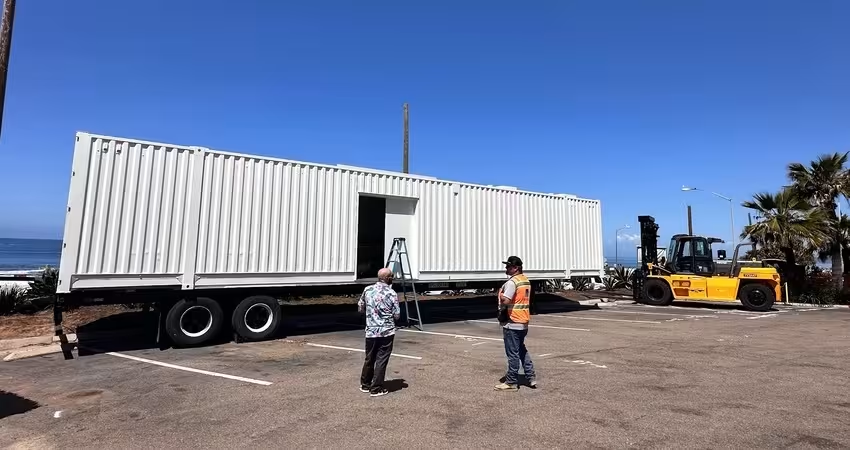
Event planners on tight timelines assume mobile kitchen rental for events means weeks of site work and construction coordination. That's not how rental deployment works.
The Reality: Hours, Not Weeks
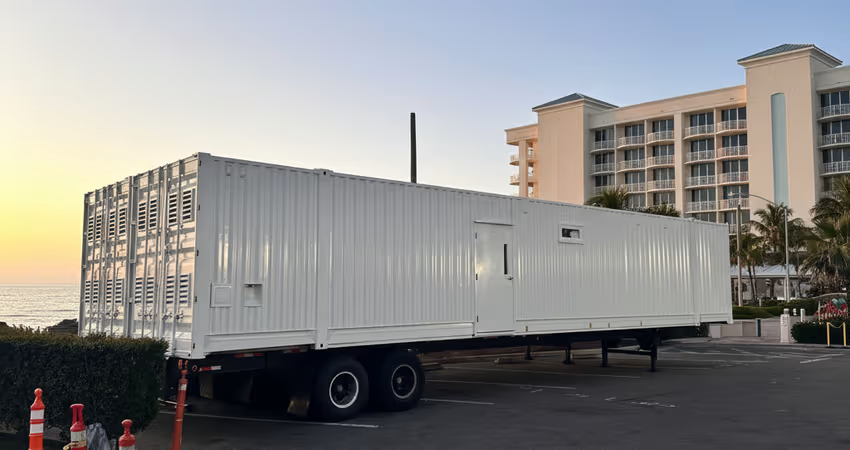
A purpose-built mobile kitchen is delivered pre-equipped, pre-wired, and pre-inspected. Site prep is typically limited to:
- A level pad — compacted gravel, asphalt, or concrete with footprint clearance
- Utility hookups — power, water, waste, and gas if applicable
- Delivery access — turning radius and clearance for trailer positioning
- Permit paperwork — submitted in advance with provider support
Once on-site, commissioning usually takes hours. Utility connections are tested, equipment is verified, and a provider representative walks the client's team through operation.
Tip: Advance planning still matters. Submit permits early, confirm site access, and lock down utility sources before delivery day.
Myth #6: "Mobile Kitchens Can't Handle High-Volume Events"
This assumes mobile kitchens are small trailers with a handful of burners. At the high end of the category, that's not the reality.
The Reality: Production Capacity of a Permanent Kitchen
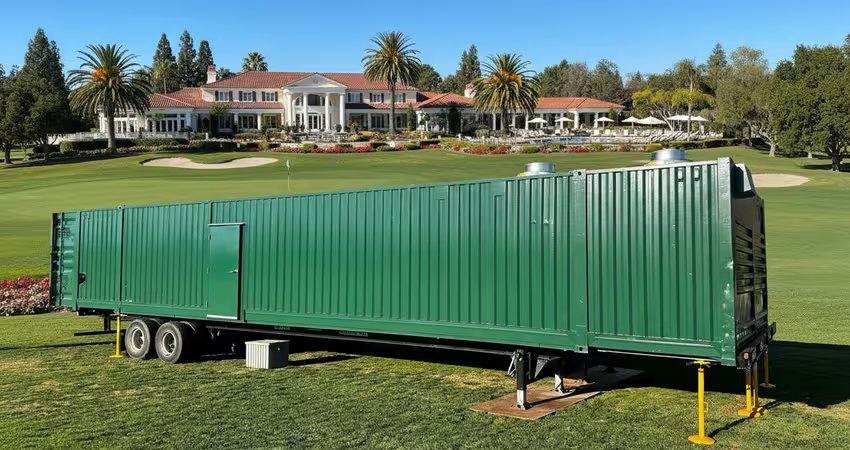
Large mobile kitchen units — 48 to 53 feet and beyond — support production for thousands of meals per day. FEMA's national response framework and its mobile kitchen unit resource typing recognize units capable of hundreds of meals per hour, which is why federal emergency response uses them for disaster feeding. The same capacity exists in the commercial mobile kitchen trailer rental market.
Production capacity depends on three variables:
- Unit size and equipment configuration — combi ovens, kettles, griddles, hot-holding
- Staffing levels — enough chefs and line cooks to run equipment at full tilt
- Utility headroom — generator or shore power sized to run everything simultaneously
Multiple units can also be connected for very large events, creating a full production kitchen with separate prep, cook, and dish trailers.
Myth #7: "Mobile Kitchen Rental for Events Is Only for Festivals"
Festivals are what most planners picture when they hear "mobile kitchen rental for events," and that narrow picture rules out every other application.
The Reality: Weddings, Galas, Conferences, Sporting Events, and More
Purpose-built mobile kitchens deploy across a much broader range of events:
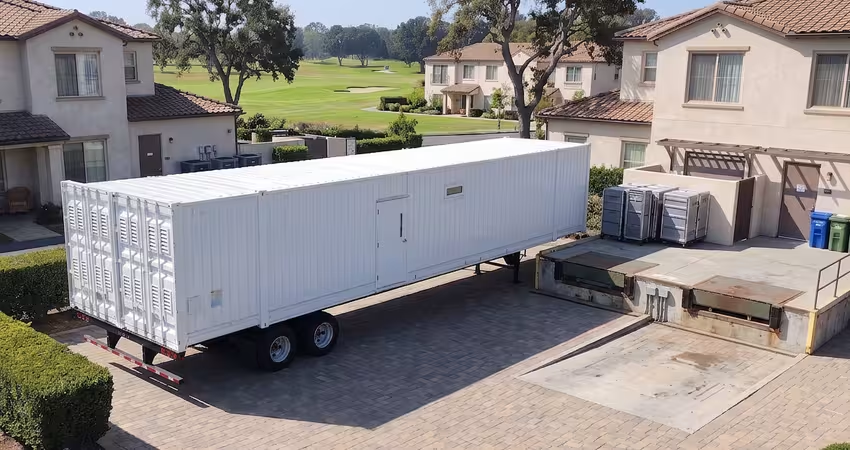
- Destination weddings at venues without permanent kitchen infrastructure
- Corporate galas and fundraisers where the venue kitchen is undersized
- Golf tournaments and member-guest events at clubs with limited clubhouse capacity
- Food and wine festivals with multiple chef stations needing code-compliant cooking
- Sporting events hosting large game-day crowds
- Brand activations and product launches where food quality is part of the experience
- Conference catering and pop-up restaurant experiences at hotels and resorts
Our article on when and how events and festivals use mobile kitchens covers the festival use case in depth.
How to Evaluate a Mobile Kitchen Rental Provider
Disarming the myths is step one. Step two is knowing what to ask:
- Engineering drawings and NSF certifications — not marketing brochures
- Compliance documentation — NFPA 96 ventilation, fire suppression, local permit support
- Full cost breakdown — rental, delivery, permits, fuel, waste, support units
- Purpose-built confirmation — the single most important question to ask
The difference between a bad mobile kitchen experience and a great one usually comes down to whether the provider took the infrastructure seriously before the client ever called.
Rethinking Temporary Kitchens for Modern Events
Every myth on this list exists because at some point it was true. Retrofitted trailers really did fail inspections. Tented kitchens really were more cost-effective than the mobile units available in the 2000s. The category has moved on; the assumptions have not.
Mobile kitchen rental for events in 2026 is purpose-built, code-compliant, production-grade commercial infrastructure. It handles wedding receptions, corporate galas, golf tournaments, and festival stages with equal capability, and it produces the food quality event guests actually remember.
Before dismissing a mobile kitchen for your next event, see what purpose-built units look like in action. Explore Mobile Culinaire's project showcase to see how hotels, resorts, and event venues have deployed our mobile kitchens — or contact our team to scope a unit for your upcoming event.
People Also Ask (FAQ)
Is a mobile kitchen rental worth it for a one-time event?
For events serving 200+ guests with on-site cooking, a mobile kitchen rental typically beats assembling individual equipment rentals, tents, and separate refrigeration. A single turnkey unit eliminates vendor coordination, arrives code-compliant, and reduces permit complexity.
How much does it cost to rent a mobile kitchen for an event?
Short-term rentals typically start around $450 per day for compact trailers and scale to $1,600+ per day for large units, with monthly rates offering better value for multi-day events. Pricing depends on unit size, equipment package, delivery distance, and ancillary needs. Always request a total landed cost — transport, setup, permits, and utilities.
Do I need permits to set up a mobile kitchen at my event venue?
Yes. Most jurisdictions require a temporary food establishment permit, a health inspection, and fire marshal sign-off. Texas DSHS charges $52 for a single-event permit; California classifies mobile units under CalCode Section 113831 with their own requirements. Quality providers support permitting with engineering documentation and inspection-ready configurations.

Testimonial
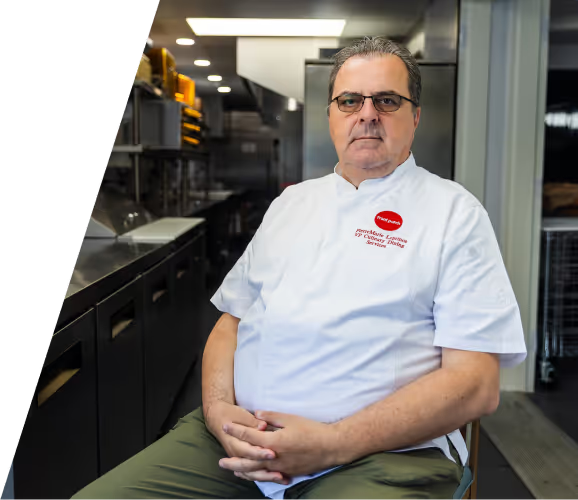
"What is standing out when you look at the mobile kitchen operation is the efficiency that we can really achieve because it's built for that."
Tell us about your kitchen needs and request a quote.
.png)
Turnkey mobile kitchen
Proudly made in-house in the USA
Commercial grade kitchen equipment
Code-compliant
Trusted by Industry Leaders