.gif)
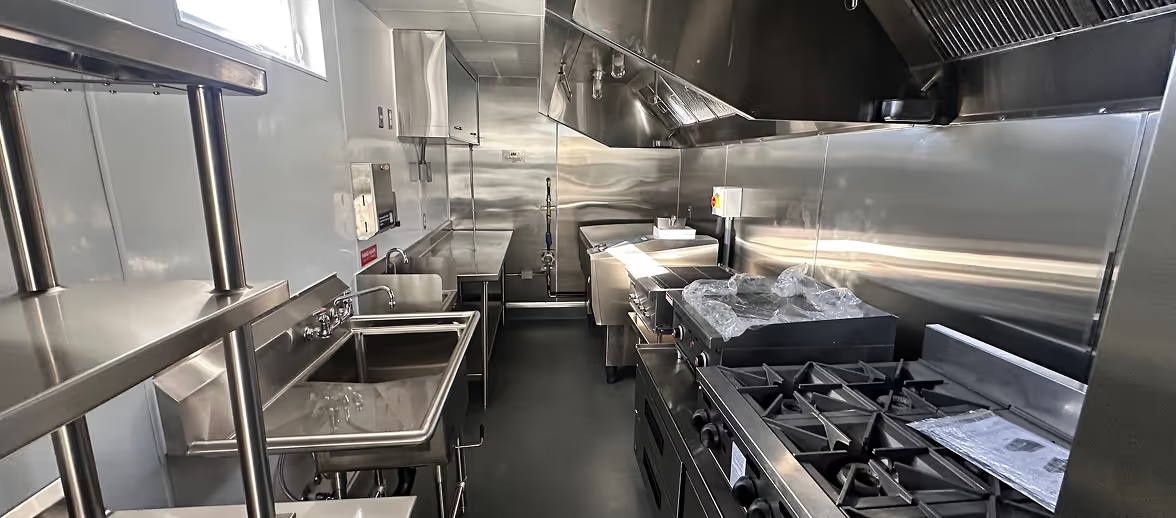
Commercial refrigeration in a mobile kitchen is where a rental quietly succeeds or publicly fails. Health inspectors probe food temperature, not thermostats. A walk-in that reads 38°F on the door but 45°F on the chicken salad will shut down service just as fast during a renovation as it would in your permanent kitchen.
For an executive chef running through a multi-month kitchen closure, the refrigeration package decides three things: whether your food cost holds, whether the health-inspection score stays clean, and whether the prep line moves when the covers stack up.
This guide walks through the components, the configurations, sizing by meals per day, and the cold-chain and compliance work that turns spec into a working operation.
What Good Looks Like in a Commercial Refrigeration Package for a Mobile Kitchen
A good commercial refrigeration package for a mobile kitchen mirrors what you'd expect from a permanent line: dedicated walk-in cooler and freezer, prep-line refrigeration at every station that needs it, a sized reach-in stack, and dry storage adjacent to cold storage. Anything less forces workarounds that eat labor and put temperature compliance at risk.
The default expectation for a temporary kitchen is set by decades of cheap retrofits. It's a converted trailer with a residential-grade reach-in and a chest freezer bolted into a corner. You shouldn't have to make it work.
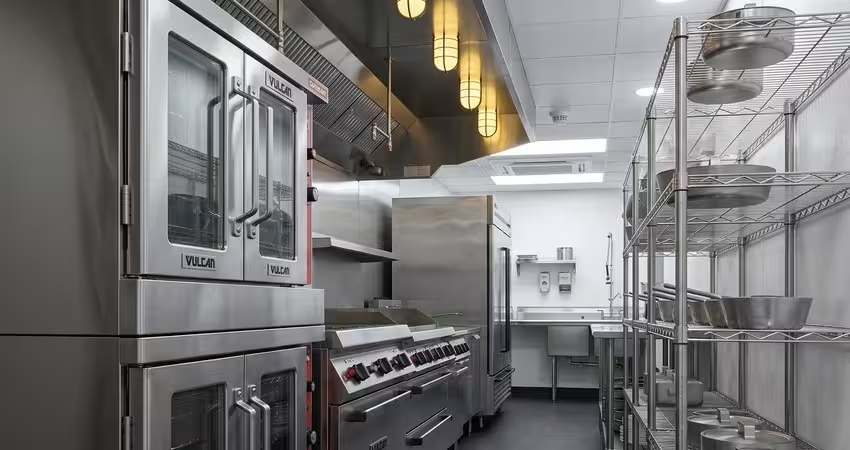
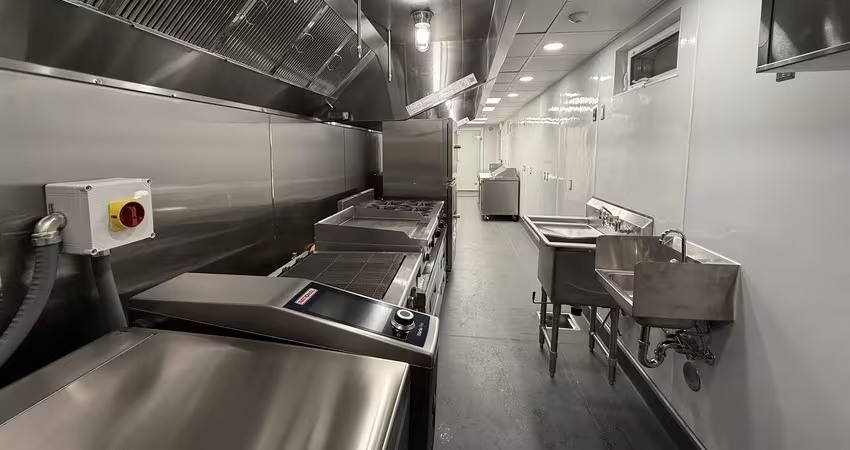
A purpose-built mobile kitchen inverts that expectation. Refrigeration is specified at the module level, not fitted afterward. Prep-line worktop refrigeration sits under the cutting boards. Sandwich prep coolers sit at the assembly station. The walk-in cooler and freezer are integrated into the module envelope with the same insulation as a permanent walk-in.
Two things separate the categories:
- Retrofitted trailer: Residential-grade components pressed into commercial duty. Reach-in temperature drifts under load. No walk-in, or one shoehorned in without proper compressor sizing. Short-cycle failures under sustained ambient heat.
- Purpose-built: Commercial-grade compressors sized for continuous duty, walk-in insulation matched to the trailer envelope, prep-line refrigeration at every station that needs it, and dry storage laid out beside cold storage so the cold chain doesn't break at hand-off.
Tip: When comparing quotes side by side, ask each provider to list the refrigeration package by station, not by piece count. "Three refrigerators" tells you nothing; "one 6′ worktop at the prep station, one sandwich prep at the pass, one chef base at the range, plus a walk-in cooler and freezer" tells you whether the workflow will hold.
The Refrigeration Components You’ll See on a Spec Sheet
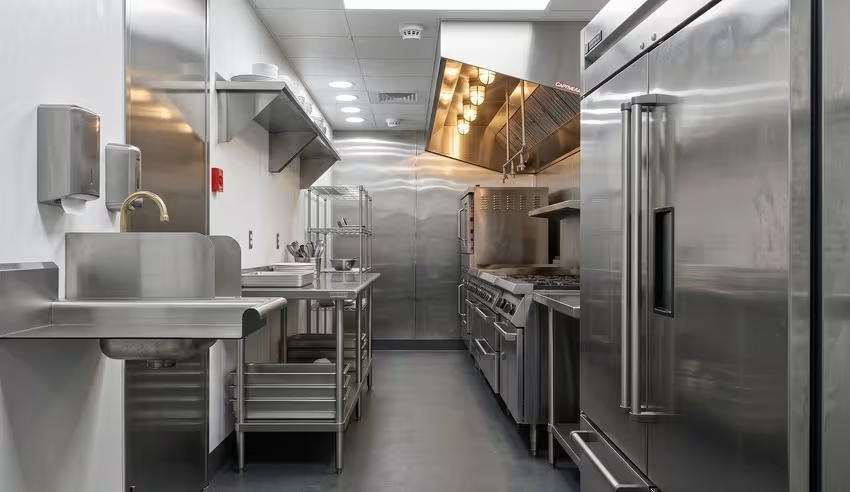
A full mobile-kitchen refrigeration package covers five categories: reach-in refrigerators and freezers for the day's active inventory, prep-line refrigeration (worktop, sandwich prep, chef base) for hot-line and cold-line assembly, walk-in coolers for produce and proteins in volume, walk-in freezers for held product, and dry storage adjacent to cold.
Reach-In Refrigerators and Freezers
Reach-ins handle the day's active inventory — proteins for tonight's service, prepped mise en place, and dressings on rotation. They typically run 20–80 cubic feet per cabinet with swing or sliding solid doors for insulation.
Worktop and Sandwich Prep Refrigeration
Worktop refrigerators put a cold cabinet directly under an insulated cutting-board work surface. Six-foot units are the standard for a full prep station. Sandwich prep units add a rail of top-mounted 1/6- and 1/9-pan wells, so cold assembly happens at the cold surface without a hand-carry from a reach-in. For an executive chef, these are what make the prep line move without the assembly cook walking every ninety seconds.
Chef Base Refrigeration
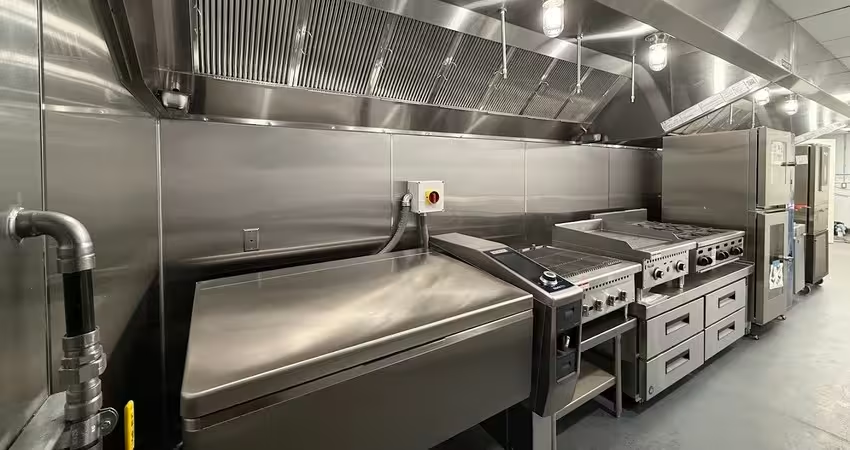
A chef base is a low-profile refrigerated cabinet designed to sit under a cooking suite — ranges, griddles, charbroilers. It puts a cold pull directly beneath the hot line. The line cook reaches down for the next protein and closes the drawer. It compresses movement, and movement is what stretches a shift.
Dry Storage
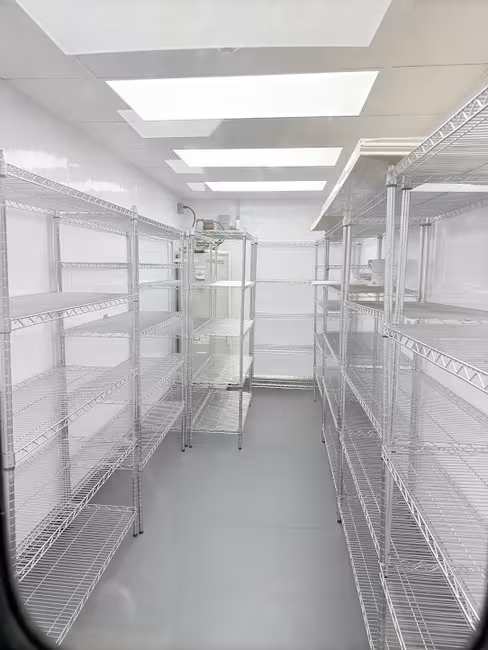
Dry storage isn't refrigeration, but it belongs in the same conversation because the cold chain fails at the interface between cold and shelf-stable inventory. A properly-planned mobile kitchen carries dry shelving adjacent to walk-in access.
Walk-In Coolers and Walk-In Freezers
Walk-in coolers are volume storage for produce, proteins, dairy and prep. Walk-in freezers hold longer-cycle frozen product. According to Foodservice Equipment & Supplies, walk-in coolers typically run at 34–38°F while freezers operate around –10°F. Both use 4-inch-thick wall panels as standard. In a mobile kitchen the walk-in is integrated inside the module envelope for larger configurations, or supplied as an attached support trailer for smaller ones. See the full mobile kitchen equipment list for the active inventory.
How Commercial Refrigeration Is Packaged in Each Mobile Kitchen Configuration
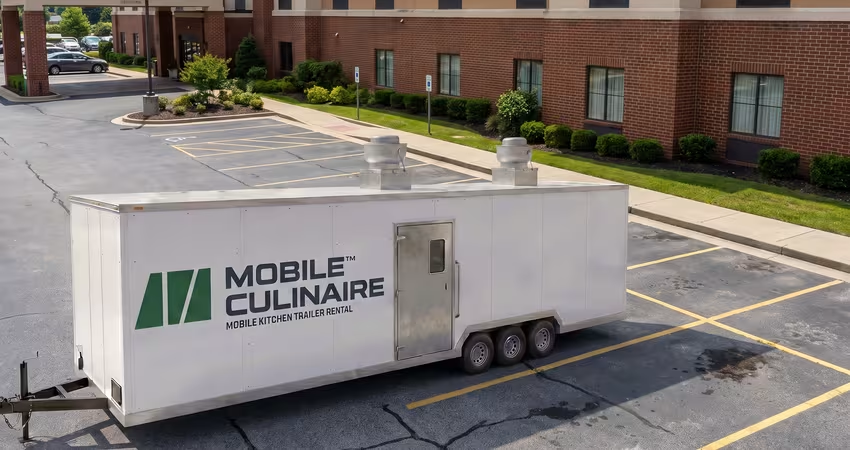
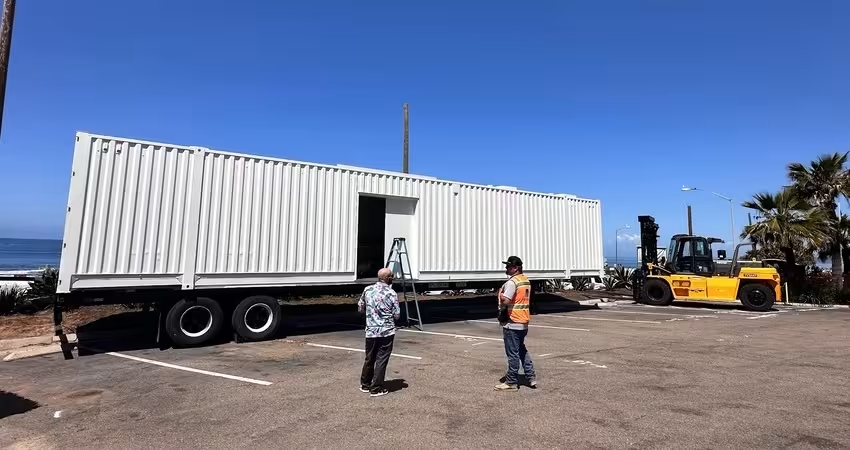
Mobile Culinaire builds commercial refrigeration into each of its four mobile kitchen configurations — 32-foot, 40-foot, 53-foot, and 2×53-foot — with scale matching meals-per-day capacity. The smallest carries a reach-in fridge and freezer; the largest carries a full walk-in cooler and walk-in freezer plus chef base, worktop, and sandwich prep refrigeration.
The right configuration is the smallest one that carries your service load without turning refrigeration into the bottleneck. The below is the catalog baseline; delivered configurations can differ based on the equipment schedule.
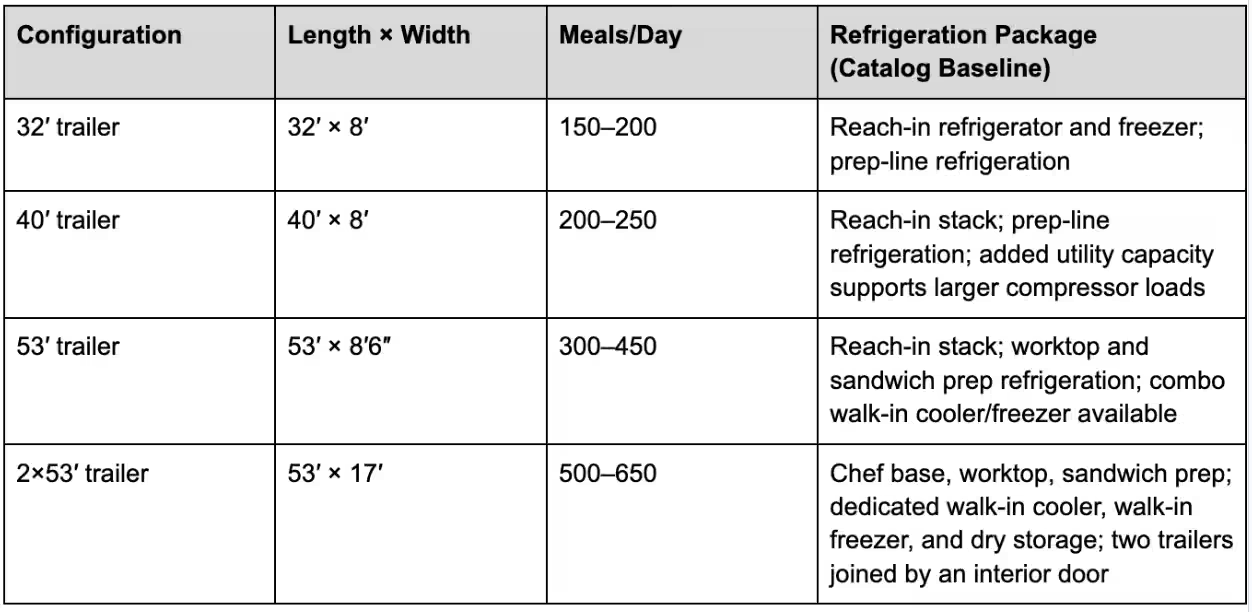
The step-up from 40-foot to 53-foot isn't primarily more cooking capacity — it's more refrigeration, which determines menu complexity. The 2×53-foot adds the walk-in cooler, walk-in freezer and dry storage that let you run a multi-outlet operation or a banqueting menu at scale.
Sizing Refrigeration by Meals per Day
Mobile kitchen refrigeration sizing starts with meals-per-day output, adjusts for menu complexity and delivery cadence, and adds a receiving buffer most operators under-spec. A working baseline is roughly 20–40 cubic feet of cold storage for a 100–200-meal service, scaling to 80+ cubic feet at 400+ meals — before accounting for menu and delivery.
Three variables move the number:
- Meals per day: A quick-service operation running 100–200 meals typically needs 20–40 cubic feet of cold storage; 400+ meals needs 80 cubic feet or more.
- Menu complexity: A single-menu operation needs less cold storage than a multi-outlet operation running breakfast, lunch, banquet and event service off the same rental. Every additional cold-line SKU adds inventory that has to hold at 41°F.
- Delivery cadence: Daily receiving lets you run leaner than twice-weekly. For a mid-to-long-term rental you're often shifting the receiving schedule, because the rental site can't accommodate the usual pattern. The walk-in absorbs that.
Reach-ins (15–80 cubic feet) suit prep-station turnover; walk-ins (100–500+ cubic feet) suit bulk storage. According to the Foodservice Equipment & Supplies walk-in guide, box-load calculations assume 80°F ambient at 50% relative humidity with two door openings per hour — outdoor placement in warmer climates raises the load.
Tip: The number chefs most often under-spec is receiving buffer. When your permanent walk-in is offline for a five-month renovation, the rental has to hold not just today's inventory but the receiving surge that used to spread across two connected walk-ins. Confirm the pattern before you sign.
The Cold Chain, End to End — Receiving Through Service
The cold chain covers every temperature-controlled step from delivery truck to service pass: receiving, storage, prep, holding, and service. Each handoff in a mobile kitchen sits in a smaller physical footprint than a permanent line, which means every handoff needs to be planned rather than improvised so temperature doesn't drift.
Five stages, each with its own temperature target and its own inspector-flagged failure mode:
- Receiving: Cold TCS food arrives at 41°F or below. The FDA Food Code 2022 makes narrow exceptions — milk at 45°F, live shellfish, shell eggs at 45°F ambient — but the default is 41°F. Probe deliveries before you sign for them.
- Storage: Walk-in coolers run 34–38°F for produce and dairy, dedicated meat coolers around 34°F, walk-in freezers at 0°F or below per USDA FSIS refrigeration guidance.
- Prep: Cold TCS food out for prep should return to 41°F or move through within four hours if held under time control per FSIS handling standards.
- Holding: Prep-line refrigeration — worktop, sandwich prep, chef base — holds cold-line product at 41°F while it's being assembled. Ambient air in the cabinet doesn't matter to the inspector; product temperature does.
- Service: Cold food to the pass at 41°F or below; on a service line without refrigeration, the four-hour time-control clock starts.
Note: Inspectors don't check the thermostat readout on the walk-in door — they probe product temperature. A cooler set at 38°F holding chicken salad reading 45°F is out of compliance regardless of what the display says. This is the most common failure point when a rental is under-spec'd for the service load: the box holds at rest but drifts under continuous door-open volume.
FDA Food Code, NSF Certification, and What Your Health Inspector Will Actually Check
Health inspectors verify three things: product temperature meets FDA Food Code holding standards (41°F cold, 135°F hot), the refrigeration equipment carries NSF/ANSI Standard 7 certification, and temperature logs prove the equipment holds those numbers between inspection visits. All three sit on the client's side of a rental.
FDA Food Code Cold Holding
The 2022 Food Code sets cold holding for TCS (Time/Temperature Control for Safety) foods at 41°F (5°C) or below under Section 3-501.16. Nearly every US state adopts the Code, though some jurisdictions adopt earlier editions or amend specifics — FDA guidance makes clear inspectors measure product temperature directly.
NSF/ANSI Standard 7
The certification your inspector expects on the refrigeration equipment nameplate. It sets minimum food-protection and sanitation requirements for materials, design, manufacture, construction and performance of commercial refrigerators and freezers — reach-ins, walk-ins, prep units, displays.
Temperature Logs
Most jurisdictions require continuous or periodic logging of walk-in and prep-line temperatures. Whether that's a four-times-daily log sheet or a digital monitor, the record must exist. A rental arriving without a documented monitoring plan is an inspection risk regardless of how well the equipment performs.
Third-Party Inspection
Mobile Culinaire units are code-compliant and third-party inspected before delivery, which makes local sign-off smoother — but the permit itself is the client's responsibility. Local Health Department, Fire Marshal and Building Department requirements vary by state and county.

Site Readiness — Power, Condensate Drainage, and Ambient Temperature
Refrigeration is the piece of a mobile kitchen most sensitive to site conditions. Power has to match compressor phase and load, condensate has to drain somewhere legal, and ambient temperature around the trailer affects how hard the compressors work. Getting any one wrong shows up as temperature drift within the first week.
1. Power
Commercial refrigeration compressors — especially walk-in cooler and freezer units — draw significant load, and the largest often run on 208V three-phase. Undersizing the generator or drawing single-phase power to a three-phase piece creates the two most common early failures: nuisance breaker trips and compressor short-cycling. See our mobile kitchen generator sizing guide for the utility-planning walkthrough.
2. Condensate drainage
Every refrigerated cabinet produces condensate; every walk-in freezer produces defrost water. Both have to drain somewhere — typically a floor drain routed through the site's plumbing, not a bucket that fills overnight and floods the module.
3. Ambient temperature
Sizing calculations typically assume 80°F ambient at 50% relative humidity. Outdoor placement in July across most of the US pushes both up, and compressor load rises accordingly. According to Foodservice Equipment Reports, higher-R-value insulation lets the compressor work less hard — worth confirming on any walk-in you're being offered.
What Retrofitted Trailers Get Wrong About Refrigeration — and What a Spec Sheet Won’t Tell You
Retrofitted trailers typically fail on three refrigeration fronts: residential-grade compressors that can't handle continuous commercial duty, undersized reach-in capacity that forces cold-line workarounds, and no walk-in — which means the cook's mise en place has to live in whatever cabinet space exists. None of these show up on a photo.
The trailer you rented before may have run on a residential-grade compressor. It struggled every time ambient temperature climbed above 85°F. The 2×53′ mobile kitchen is spec'd differently: chef base, worktop, sandwich prep, walk-in cooler and walk-in freezer. It carries the same commercial refrigeration package as a permanent line.
Three things to check before you sign:
- Compressor duty rating — commercial (continuous) or residential (intermittent)?
- Walk-in cooler and freezer — integrated into the trailer envelope, or bolted-on afterthought?
- Prep-line refrigeration — dedicated worktop and sandwich prep at every station that needs them, or a shared reach-in doing double duty?
For how hospitality operations pair refrigeration spec with service load, see how hotels and resorts use mobile kitchens.
A Decision Checklist Before You Sign a Rental
Before you sign, run the refrigeration package against ten checkpoints: capacity matches meals-per-day plus receiving buffer, the walk-in cooler mobile kitchen configuration matches menu complexity, prep-line stations are covered, NSF/ANSI Standard 7 certification is on every unit, and site power and drainage plans are documented.
Ten binary checks the engineering team should answer inside one call:
- Meals-per-day capacity confirmed against the configuration
- Menu complexity accounted for in cold-line SKU count
- Receiving buffer sized for delivery cadence during the rental window
- Walk-in cooler and walk-in freezer sized for peak inventory
- Prep-line refrigeration (worktop, sandwich prep, chef base) covers every station
- NSF/ANSI Standard 7 nameplates present on all units
- Compressor phase (single or three-phase) matches site power
- Generator sized for total refrigeration load plus cooking equipment
- Condensate drainage plan documented
- Temperature-log procedure specified for inspection
For broader planning context, our mobile kitchen rentals guide walks through the wider rental decision — configurations, contracts, and deployment logistics.
The Takeaway
The commercial refrigeration package on a mobile kitchen rental is not a spec-sheet checkbox. It decides whether service holds standard through the rental window or turns into a running crisis. A purpose-built configuration solves it upfront; a retrofitted trailer becomes the problem you're managing on top of the renovation. Talk to Mobile Culinaire's engineering team about matching a configuration to your service load, delivery cadence, and site conditions.
Disclaimer
Regulatory citations in this article — FDA Food Code Section 3-501.16, NSF/ANSI Standard 7, USDA FSIS guidance — reflect federal-level standards. State and local jurisdictions may adopt earlier Food Code editions or add specific amendments. Confirm cold-holding, receiving, and equipment-certification requirements with the local Health Department, Fire Marshal, and Building Department having jurisdiction before any mobile-kitchen installation.

People Also Ask (FAQ)
What refrigeration comes standard in a mobile kitchen trailer?
Standard refrigeration scales with configuration. A 32-foot trailer carries a reach-in refrigerator and freezer plus prep-line refrigeration. A 40-foot adds utility capacity that supports larger compressor loads. A 53-foot adds worktop and sandwich prep refrigeration, with a combo walk-in cooler/freezer available as a support unit. A 2×53-foot configuration adds chef base refrigeration and a dedicated walk-in cooler, walk-in freezer, and dry storage. Equipment is configurable to available inventory — the schedule can be modified to match menu and service load.
How do you size refrigeration for a temporary commercial kitchen?
Sizing starts with meals-per-day output. A quick-service operation running 100–200 meals typically needs 20–40 cubic feet of cold storage. A full-service operation running 400+ meals needs 80 cubic feet or more. Adjust for menu complexity — a multi-outlet operation running breakfast, lunch, banquet and event service off the same rental needs more than a single-menu operation. Then add receiving buffer. When your permanent walk-in is offline for a renovation, the rental has to hold today's inventory plus the receiving surge that used to spread across two connected walk-ins.
Do mobile kitchens meet FDA Food Code cold-holding requirements?
Yes, when they're purpose-built. FDA Food Code Section 3-501.16 sets cold-holding for TCS foods at 41°F (5°C) or below. Refrigeration equipment must carry NSF/ANSI Standard 7 certification for food-protection and sanitation. Health inspectors probe product temperature directly, not thermostats, so the equipment must hold under continuous service load, not just at rest. Purpose-built units are third-party inspected before delivery to code-compliant standards. The client still owns the local permit, and Health Department, Fire Marshal, and Building Department sign-offs vary by state and county.

Testimonial

"What is standing out when you look at the mobile kitchen operation is the efficiency that we can really achieve because it's built for that."
Tell us about your kitchen needs and request a quote.
.png)
Turnkey mobile kitchen
Proudly made in-house in the USA
Commercial grade kitchen equipment
Code-compliant
Trusted by Industry Leaders