.gif)
A hotel's banquet kitchen goes down for renovation two weeks before a golf tournament weekend. The mobile kitchen trailer arrives on schedule, the equipment is commissioned, and service starts strong. Then, halfway through a Saturday dinner rush, the walk-in compressor kicks on at the same moment the combi oven cycles its heating elements — and the generator trips. That failure isn't a bad generator. It's the wrong generator size for mobile kitchen operation at hospitality scale, chosen from a spec sheet instead of a load calculation.
This guide walks through how to determine generator size for mobile kitchen deployments the way an electrical load calculation actually works — not a flat lookup chart borrowed from food-truck sizing guides that top the search results. Hospitality-scale kitchens draw more power, run heavier equipment simultaneously, and can't tolerate a mid-service trip.
By the end, you'll know how to calculate connected load, apply the correct safety margin, and choose between prime and standby ratings for a mid- to long-term rental.
Why Generator Sizing Isn't a Lookup Table for Hospitality Kitchens
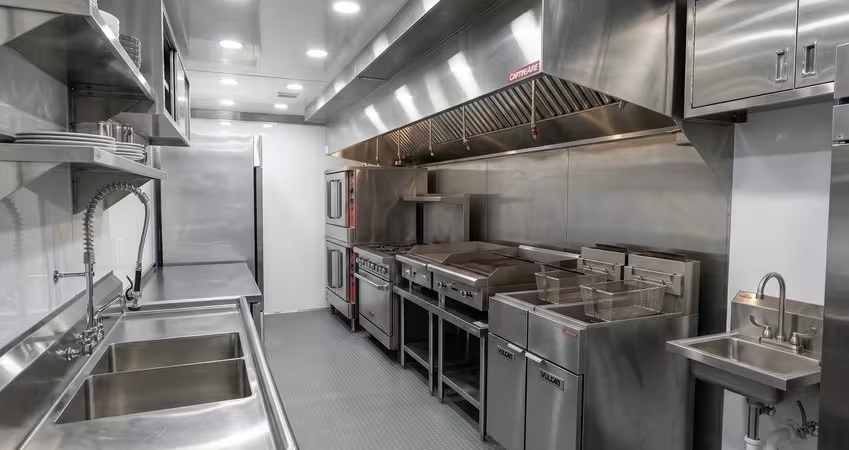
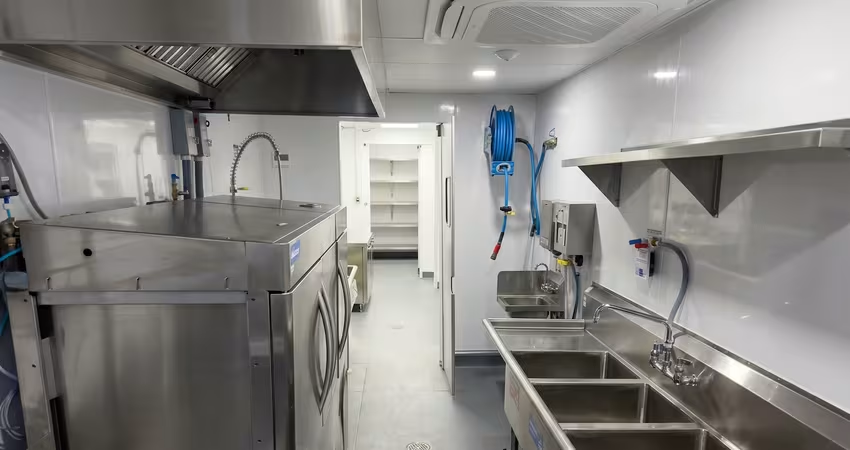
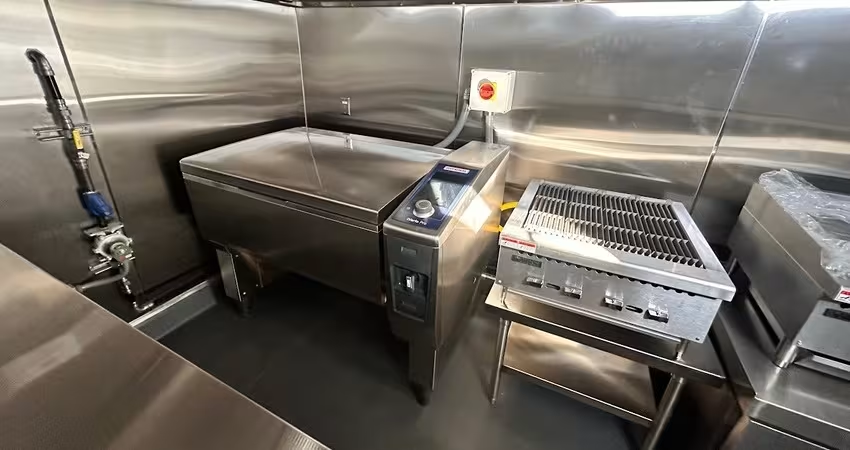
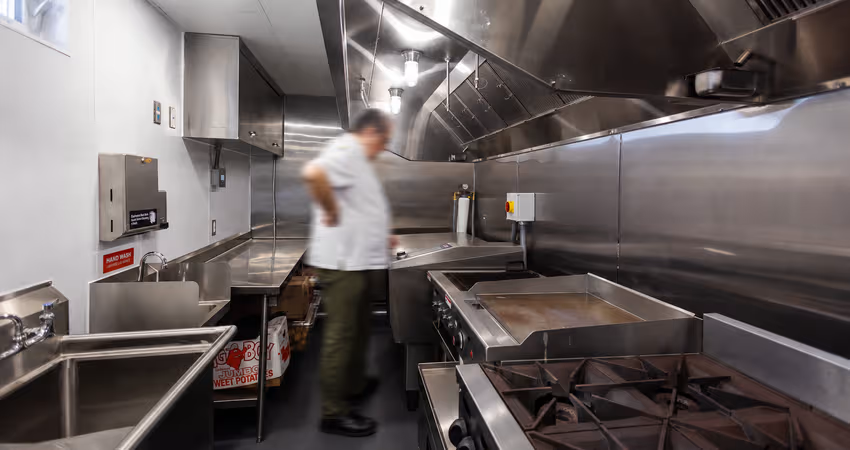
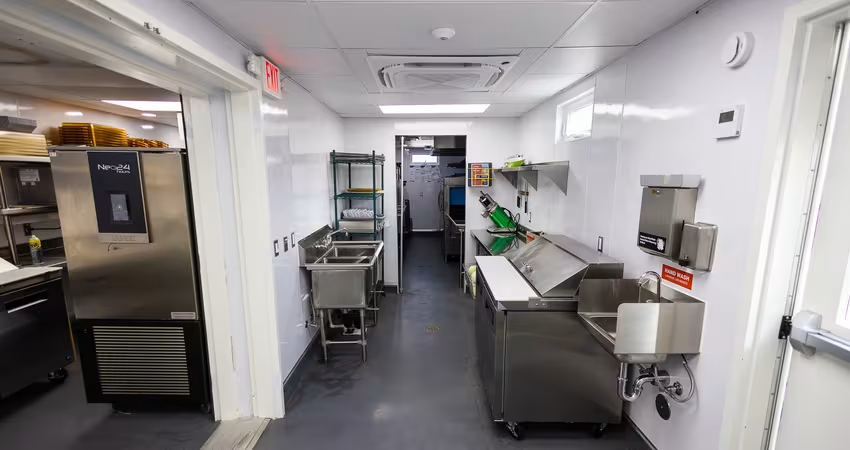
Most generator sizing content online is written for single-operator food trucks and coffee carts — a 12–20 kW range covers a fryer, a griddle, and a point-of-sale system. A hospitality-grade mobile kitchen serving a hotel, resort, or country club during a renovation is a different animal entirely. It typically runs combi ovens, multiple refrigeration compressors, exhaust hood fans, HVAC, and full lighting loads concurrently, often pulling the 200–400A range covered in our mobile kitchen electrical requirements guide.
Note: A generator sized off a manufacturer's "typical use case" chart, rather than your actual equipment list, is the single most common cause of nuisance trips and brownouts in temporary hospitality kitchens.
Generator size for mobile kitchen operation has to start with connected load — not with a size picked because it "should be enough." The same equipment inventory used for the commissioning process in our mobile kitchen commissioning checklist is exactly what a proper generator sizing calculation should be built from.
Start With Connected Load, Not the Generator Spec Sheet
Every reliable generator size for mobile kitchen calculation starts in the same place: connected load.
Calculating Total Connected Load
Connected load is the sum of nameplate amperage across every piece of equipment that could run simultaneously, converted to kW. The National Electrical Code, specifically NEC Article 220, governs how commercial kitchen load calculations are structured, including demand factors for kitchen equipment that doesn't run at 100% duty cycle continuously.
The formula:
Full Load kW = (Total Connected Amps × Voltage) ÷ 1,000
For three-phase systems, multiply by 1.732 (√3) to account for the phase relationship.
Duty Cycle and Diversity Factors
Not every appliance draws its nameplate rating at the same moment. A walk-in compressor cycles on and off; a combi oven pulls peak current at startup, then settles into a lower maintenance draw. NEC demand factor tables allow some load diversification, but hospitality kitchens with tight service windows should size conservatively rather than aggressively — a generator running near its ceiling during a full-house dinner service has no margin left for anything unplanned.
From Load to kW: The Sizing Formula
Once connected load is calculated, reserve capacity gets added on top. Industry guidance from generator manufacturers and sizing references generally recommends a 20–25% reserve above calculated full load kW.
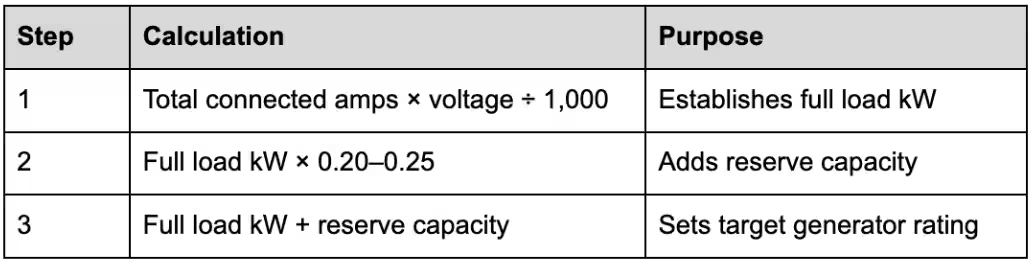
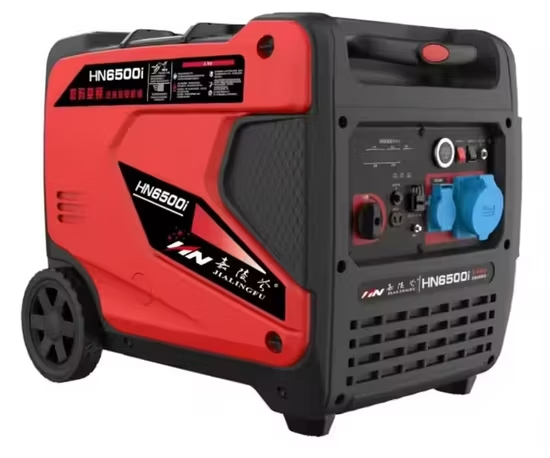
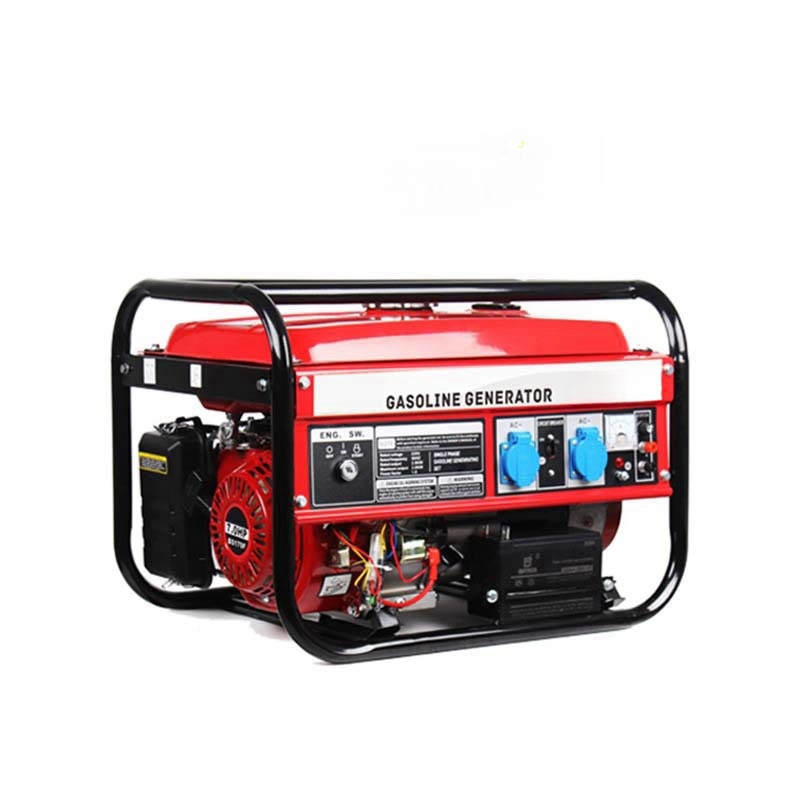
Worked example: A mid-size hospitality mobile kitchen with a 240A connected load at 240V single-phase calculates to roughly 57.6 kW full load. Adding a 25% reserve brings the target generator size to approximately 72 kW — not the 20 kW food-truck-tier unit most generic guides recommend. This is the generator size for mobile kitchen deployments that hospitality properties should actually be planning around, and it's a figure hospitality operators are increasingly building into renovation budgets rather than treating as an afterthought.
Tip: Always calculate reserve capacity off the full equipment list provided with your rental agreement, not an estimate. Undersized reserve capacity is the most common reason a generator that "should have been enough" isn't.
Single-Phase vs. Three-Phase Generator Requirements
Kitchen equipment selection drives phase requirements, not operator preference. Combi ovens, larger refrigeration compressors, and heavy-duty exhaust fans are frequently built for 208V three-phase service. A generator sized correctly in kW but delivered in the wrong phase configuration still won't run the equipment as designed.
- Single-phase (240V): Adequate for smaller mobile kitchens with lighter cooking loads
- Three-phase (208V or 480V): Required for most full-service hospitality equipment lines, including multi-compressor refrigeration and combi steam ovens
The phase requirement should be confirmed against the equipment cut sheet before the generator is ever specified — a mismatch here is a deployment delay, not a quick fix on site. This is especially critical across the hospitality markets Mobile Culinaire serves, where equipment lines vary between hotel banquet kitchens, resort F&B operations, and country club dining rooms.
Sizing for Equipment Type, Not Just Total Load
Total connected load tells only part of the story. Motor-driven equipment — walk-in compressors, exhaust hood fans, HVAC condensers — draws a starting current, or inrush current, that can run 2 to 3 times higher than its running amperage for a fraction of a second at startup.
A generator sized only for steady-state running load can stall or trip when two motor loads start simultaneously — a scenario inrush current calculations account for but flat kW totals miss entirely. This is why hospitality kitchen generator sizing has to account for:
- Compressor startup surges (walk-in coolers and freezers)
- Combi oven and convection oven heating element cycling
- Exhaust hood fan motor starts
- HVAC compressor starts, particularly during peak summer cooling demand
Note: If your mobile kitchen includes multiple refrigeration units, stagger their startup sequencing where possible. Simultaneous compressor starts are a leading cause of generator overload events that have nothing to do with total connected load math.
Prime Power vs. Standby Rating: Why It Matters for Mid- to Long-Term Rentals
Generators carry different ratings depending on how long and how continuously they're expected to run, a distinction defined by standards from the Electrical Generating Systems Association, the trade body that sets generator performance and rating classifications. NEC Article 700 further governs emergency and standby power systems, distinguishing legally required standby duty from the continuous-use profile a rental mobile kitchen actually needs.
- Standby rating: Designed for intermittent use during utility outages — not appropriate for a mobile kitchen running full service for weeks or months
- Prime power rating: Designed for continuous variable-load operation, exactly the profile of a renovation-duration mobile kitchen deployment
A generator sized correctly in kW but rated for standby duty will underperform and wear prematurely under the sustained, variable load of daily hospitality service. Mid- to long-term rental deployments should specify prime-rated units, not standby-rated ones repurposed for extended use.
Where the Generator Fits: Shore Power vs. Generator Decision
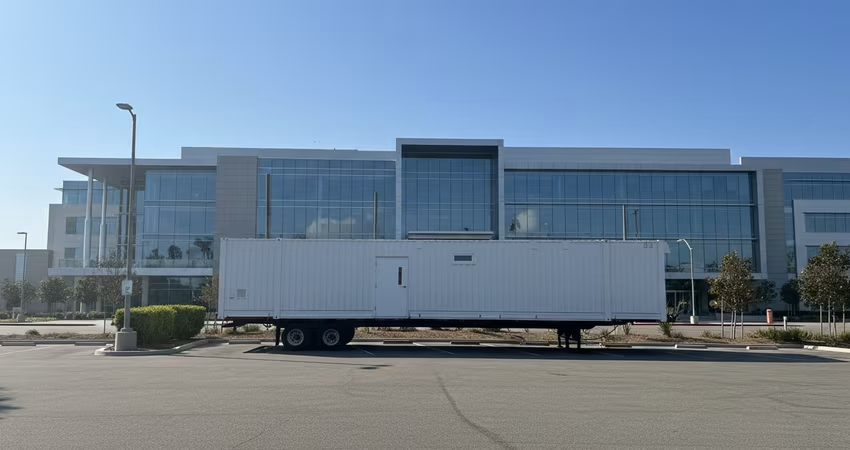
Not every hospitality property needs a generator at all, and confirming that is itself part of determining the right generator size for mobile kitchen deployment — sometimes the correct answer is zero. Where existing utility infrastructure can support the calculated load, shore power connection through a properly sized distribution panel — detailed in our electrical distribution panel guide — is typically more cost-effective and quieter than generator power for the duration of a renovation.
Generators become the practical choice when:
- Site utility service can't support the calculated connected load
- The kitchen pad sits too far from the nearest service point for a cost-effective cable run
- Backup power redundancy is a property requirement during renovation
Fuel, Runtime, and Placement Considerations
Fuel type affects runtime planning and site logistics. Diesel remains the standard for prime-rated units at the kW range hospitality kitchens typically require, offering longer runtime between refueling than smaller portable units.
Generator installation, including fuel storage and engine placement, also falls under NFPA 37, the standard governing stationary combustion engines and gas turbines. Placement also matters for code compliance — generators require clearance from combustible surfaces and exhaust routing that complies with OSHA 29 CFR 1910.303 electrical safety provisions, plus manufacturer-specified ventilation clearances to prevent exhaust recirculation into occupied kitchen space.
Tip: Confirm sound attenuation requirements with the property early. Hospitality venues — especially resorts and country clubs — often have noise ordinances or guest-experience standards that limit generator placement closer than expected to guest-facing areas.
Common Sizing Mistakes That Cause Mid-Service Failures
Mobile Culinaire sees the same handful of generator size for mobile kitchen sizing errors repeat across renovation projects, most of them traceable back to skipping the load calculation step entirely. Every one of these is preventable when generator sizing is tied to the property's actual MEP requirements rather than a generic chart:
- Sizing off total connected load with no reserve capacity margin
- Using a standby-rated generator for continuous prime-power duty
- Ignoring inrush current from simultaneous compressor and motor starts
- Matching kW without confirming phase configuration
- Sizing off a generic food-truck chart instead of the property's actual equipment list
Size It Right the First Time
Generator size for mobile kitchen deployments isn't a spec-sheet decision — it's a load calculation tied to your actual equipment list, duty cycle, and rental duration. Mobile Culinaire's purpose-built mobile kitchens are delivered with full MEP documentation and a completed load calculation, so the power question is answered before the unit ever arrives on site.
Explore completed hospitality deployments or see how mobile kitchens support renovation and seasonal use cases, then request a consultation to size power requirements against your property's actual equipment list.
Disclaimer
This article is for informational purposes only. Generator sizing, electrical load calculations, and installation must be performed by a licensed electrician in accordance with the National Electrical Code and the requirements of the local authority having jurisdiction.
People Also Ask (FAQ)
What size generator do I need for a food service trailer?
Generator size for mobile kitchen and food service trailer applications depends entirely on connected load, not a fixed number. A light-duty setup with one or two appliances might run on 20–30 kW, while a full hospitality-scale kitchen with combi ovens, multiple compressors, and HVAC often requires 60–100+ kW. The only reliable figure comes from calculating your actual equipment's connected load, then adding a 20–25% reserve margin.
What's the difference between prime power and standby power ratings?
Standby-rated generators are built for intermittent, short-duration use during utility outages. Prime-rated generators are engineered for continuous, variable-load operation — the profile a mobile kitchen needs during weeks or months of renovation-duration service. Using a standby unit for prime-duty service leads to premature wear and reliability issues.
Can one generator run an entire mobile kitchen?
Yes, provided it's sized to the full connected load plus reserve capacity and rated for prime, continuous-duty operation. Undersizing — often from using a generic food-truck sizing chart — is the most common reason a single generator fails to run a full hospitality kitchen reliably.
How much does generator size affect fuel consumption?
An oversized generator running well below its rated capacity burns fuel less efficiently than a correctly sized unit operating near its optimal load range. Undersizing, on the other hand, risks overload trips. Accurate load calculation avoids both problems and keeps fuel consumption predictable across a renovation-length rental.

%20(1).avif)
Testimonial

"What is standing out when you look at the mobile kitchen operation is the efficiency that we can really achieve because it's built for that."
Tell us about your kitchen needs and request a quote.
.png)
Turnkey mobile kitchen
Proudly made in-house in the USA
Commercial grade kitchen equipment
Code-compliant
Trusted by Industry Leaders