.gif)
Kitchen renovation budgets in senior living carry a stubborn line item that rarely gets its own row until it's too late: what it costs to keep dining running while the walls come down. Mobile kitchens are the honest answer to that line — but for a General Manager or COO defending a renovation package to the board, "we'll rent a trailer" is not a budget.
This piece breaks down the true cost of renting a mobile kitchen for a senior living renovation — which drivers move the number most, what a cheap retrofit quietly adds back, and where the community's own scope of work still sits.
What the Cost of Renting a Mobile Kitchen for a Senior Living Renovation Actually Covers
A mobile kitchen rental budget is not a single line item — it is a category of spend covering the base unit, site preparation, utility connections, permitting support, and any add-on equipment the community's meal program requires. Understanding what falls inside this category is the first step toward building a defensible number.
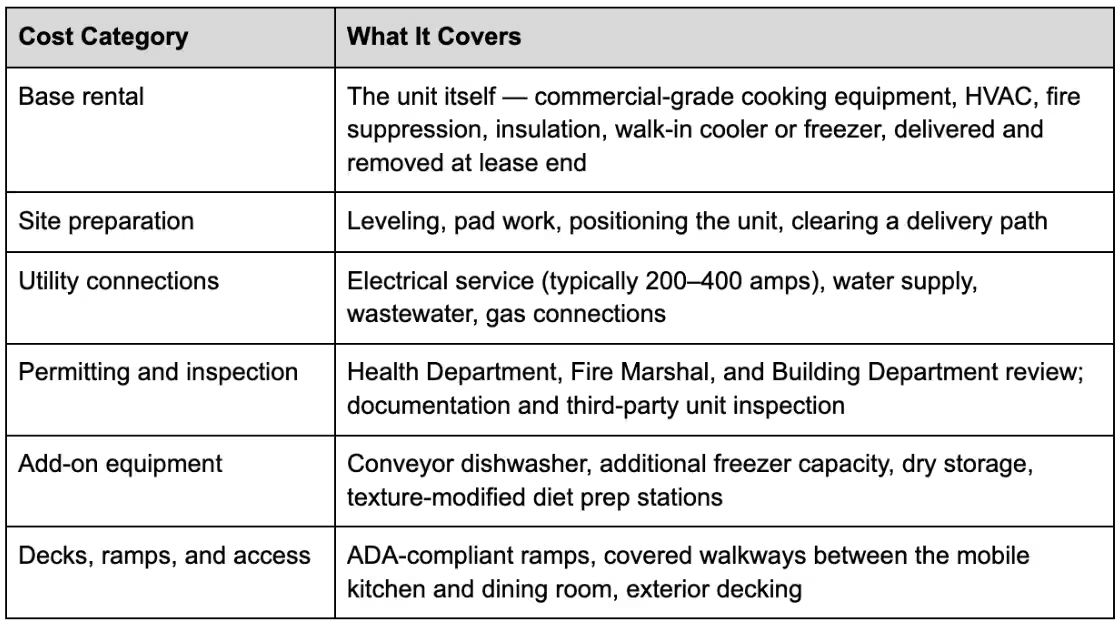
Note: Not every community needs every line. A 120-bed assisted living community renovating a single kitchen carries a different cost shape than a 300-resident CCRC replacing mechanical systems across multiple dining venues.
The Four Drivers That Move a Mobile Kitchen Rental Budget Most
Four variables determine where the budget lands: meal volume, renovation timeline, site readiness, and equipment configuration. A GM who understands these can pressure-test a vendor's quote line by line before the board meeting.
Meals per Day and Unit Footprint
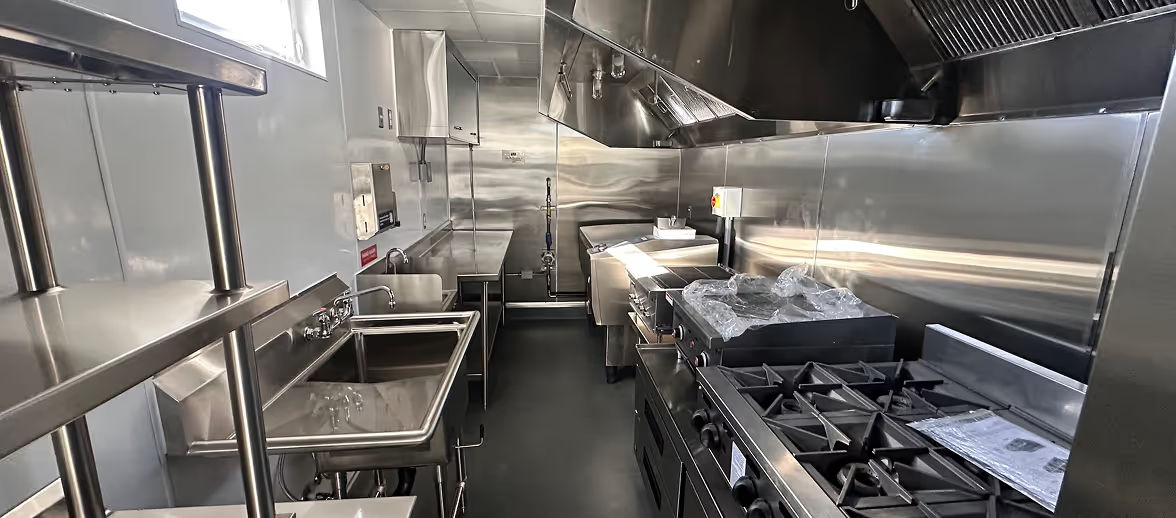
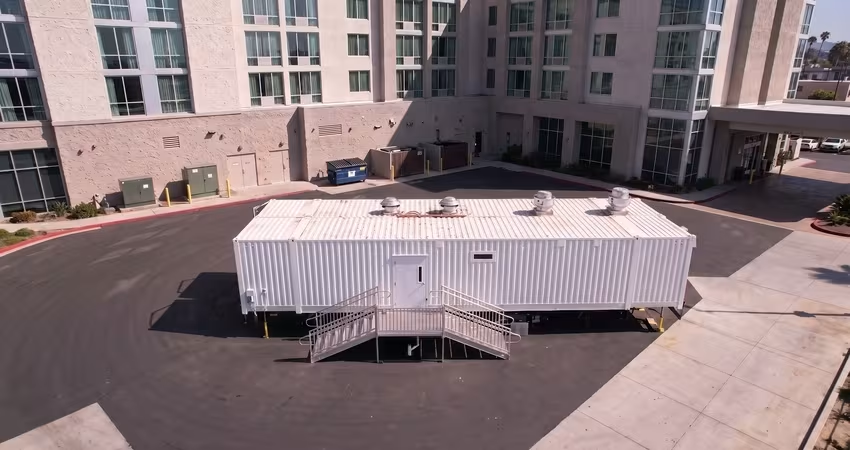
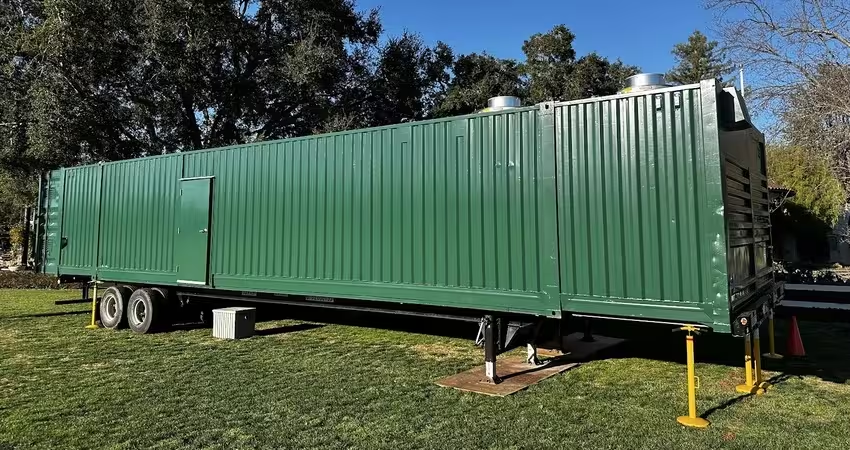
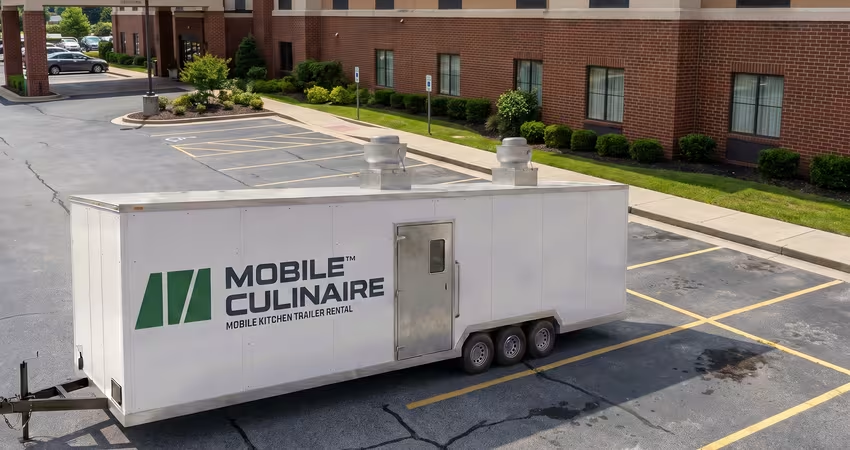
Meal volume determines the unit size. A community producing 150–200 meals per day can operate from a 32-foot trailer (256 SF). One producing 400–500 meals per day across texture-modified diets — the volume Front Porch Communities sustained during their renovation — needs a 2×53-foot joined configuration (up to 900 SF). Larger footprints carry higher rental rates, electrical loads, and site-prep costs.
Renovation Duration
Senior living kitchen renovations typically run three to six months, per estimates cited by the American Health Care Association. Longer leases spread mobilization costs across more months — but the total outlay is higher. Budget for the realistic timeline; an underestimated duration that forces a mid-project extension is more expensive than building in an extra month from the start.
Tip: If your renovation scope touches HVAC, plumbing, or electrical mains, a full kitchen shutdown with a dedicated mobile kitchen is almost always faster than phasing the work. Phased mechanical renovations routinely extend timelines by 40–60%, as noted in Mobile Culinaire's senior living renovation guide.
Site Readiness
A community with existing utility infrastructure close to the placement site — a 400-amp panel, water and sewer within 50 feet, a grease-trap tie-in — will spend less on site preparation than one that needs to trench new utility runs across a campus. A site visit from the provider before the quote is finalized prevents the most common budget surprise.
Equipment Configuration
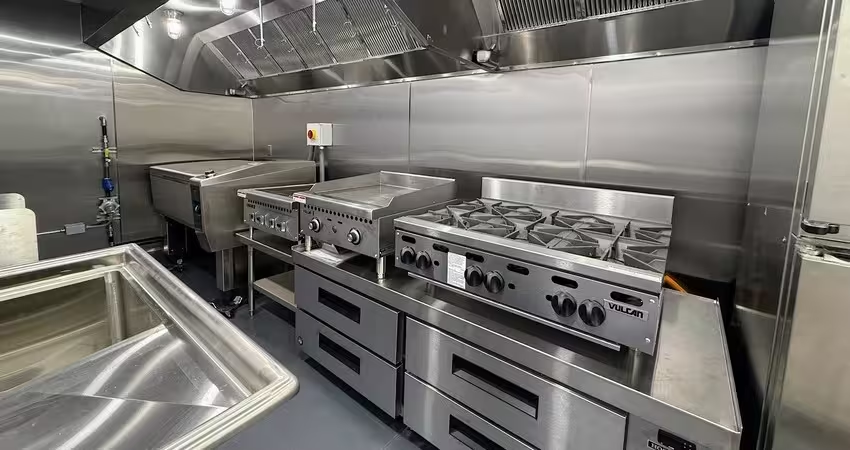
The FDA Food Code (2022) classifies older adults in custodial settings as a "highly susceptible population" requiring enhanced food-safety controls. That means the equipment schedule has to support texture-modified diets, therapeutic diet production, and potentially segregated allergen-prep zones. Walk-in freezer capacity, conveyor dishwashers, and dedicated prep stations for puréed preparations are not luxuries — they are compliance requirements that belong in the base specification, not in a change order after installation.
What a Cheap Retrofit Hides That Shows Up on Your P&L
A purpose-built mobile kitchen and a cheaply retrofitted trailer will both appear on a quote as "temporary kitchen rental." The sticker prices may look similar for month one. The total cost over a four-to-six-month senior living renovation is where the gap opens.
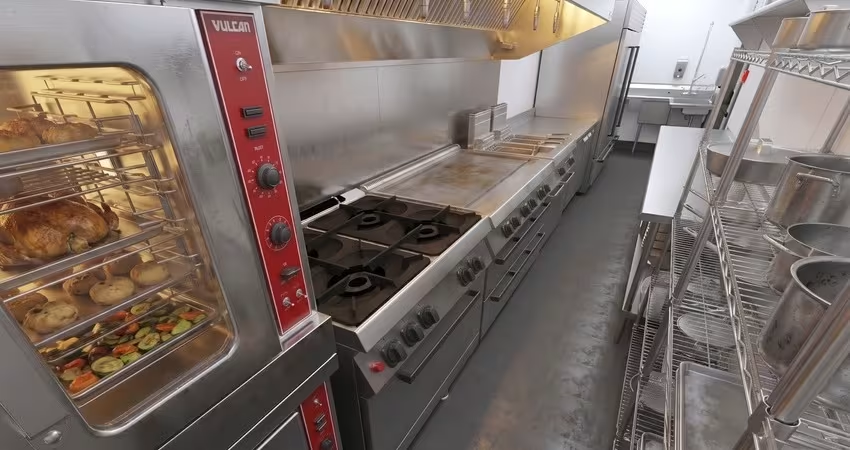
Retrofitted trailers — units originally built for short-term event use, then minimally converted for extended commercial service — carry hidden costs that accumulate over a multi-month deployment:
- Mid-lease equipment replacement: Light-commercial equipment in a retrofitted trailer was not designed for 400+ meals per day, seven days a week, for months. Compressor failures and refrigeration outages mid-service carry emergency-repair bills and service interruptions that ripple through the resident dining schedule.
- HVAC failures and staff attrition: Retrofitted trailers are under-insulated and under-ventilated. Staff working extended shifts without adequate makeup air and air conditioning do not stay — and turnover during a renovation introduces food-safety risk from undertrained replacements.
- Failed health inspections: Under 42 CFR §483.60, facilities serving Medicare or Medicaid residents must meet federal food-service standards. A temporary kitchen that fails inspection creates a deficiency citation on the community's survey record, affects its CMS star rating, and is visible to every family researching the community online.
- Downtime as a care failure: Residents cannot drive to a restaurant. A day without a functioning temporary kitchen means emergency catering, disposable-service workarounds, or — worst case — a reported failure to provide meals. With NIC MAP data (Q1 2026) showing average senior living occupancy at 89.5% and climbing, any resident dissatisfaction during a renovation has a direct line to referral rates and future move-ins.
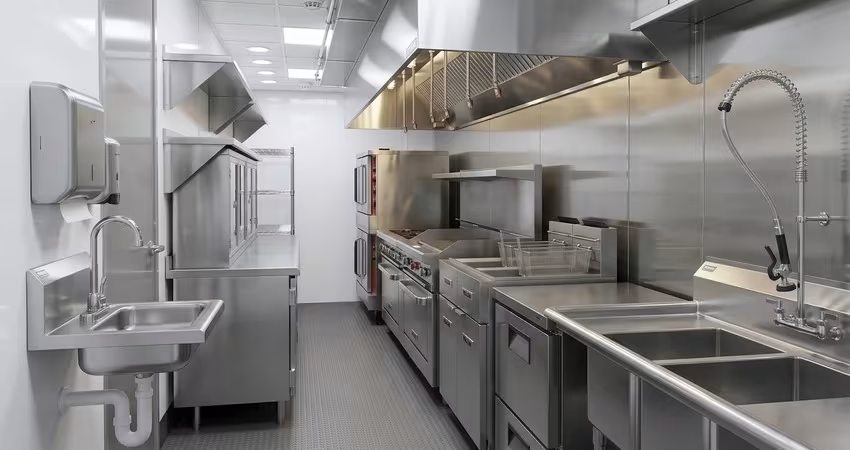
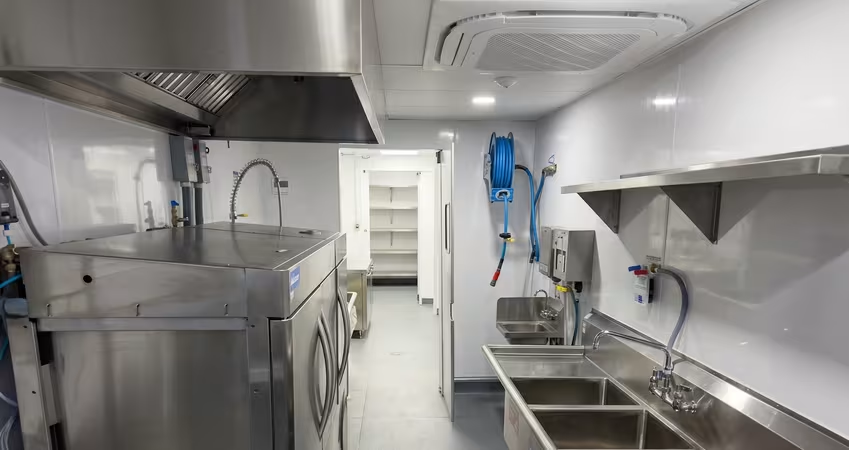
Note: Mobile Culinaire's purpose-built mobile kitchens are steel-framed, built in-house from manufactured kitchen modules — the same assemblies used in permanent commercial kitchens. They arrive with pre-installed HVAC (including makeup air), commercial-grade equipment rated for sustained use, fire suppression, and full insulation. That structural difference between a purpose-built rental and a retrofitted trailer is the difference between a predictable line item and an open-ended budget exposure.
What Sits on Your Community's Side of the Ledger
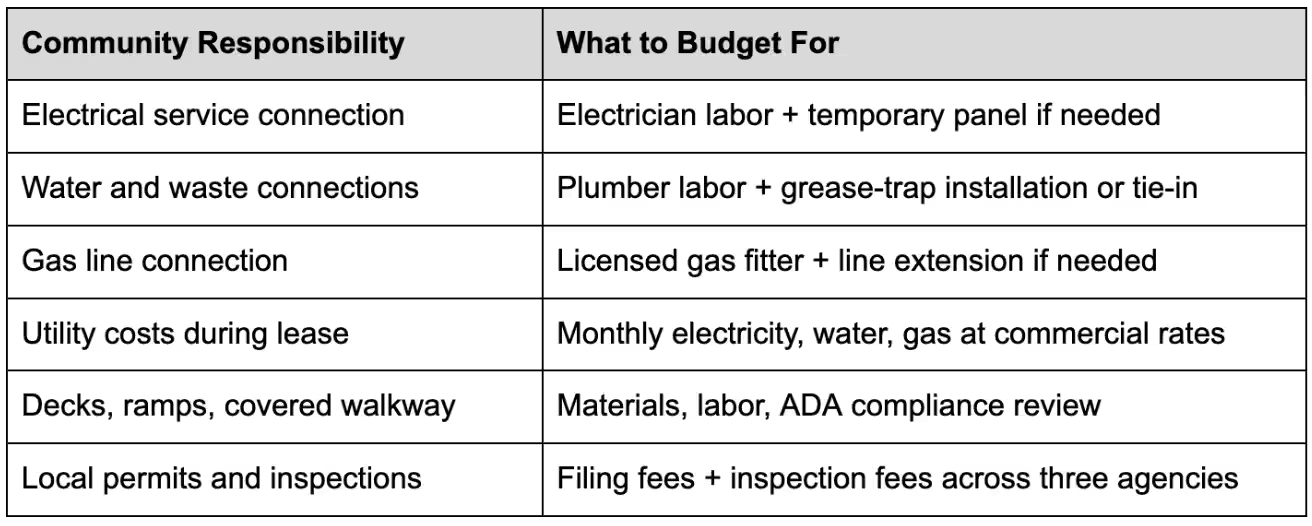
Not every cost is the rental provider's. A clear understanding of the community's own scope prevents the two most common budget errors: understating the total cost to the board, and discovering mid-installation that a critical item was never assigned.
Utility Connections and Costs
The mobile kitchen arrives with electrical, plumbing, and gas connections pre-installed. The community provides and connects the power source (typically 200–400 amps), water supply, gas line, and waste-disposal system including a grease trap. All utility costs during the lease are the community's operating expense. Reference the mobile kitchen electrical requirements guide for the technical specifications your electrician will need.
Decks, Ramps, and Covered Access
ADA-compliant ramps, exterior decking, and any weather-protected walkway between the mobile kitchen and dining room are the community's responsibility. For a senior living campus — with residents using mobility devices, staff transporting food carts, and state accessibility inspectors — this is not optional.
Local Permitting
The community owns the local permit. Coordinate with three agencies: the local Health Department, the Fire Marshal, and the Building Department. A code-compliant, third-party-inspected unit simplifies this process — the documentation is ready and the unit is built to pass — but the permit is the community's to file and hold.
Tip: Budget 1–6 weeks of permitting lead time. Communities in states with complex healthcare-facility licensing should begin the application the same week they sign the rental agreement — not after delivery.
A Real-World Reference: A Senior Living Community Budget Shape
Seeing how a comparable community structured its deployment is the most useful input a GM can bring to a board presentation. A nonprofit senior living provider operating 20+ communities in California — provides that reference.
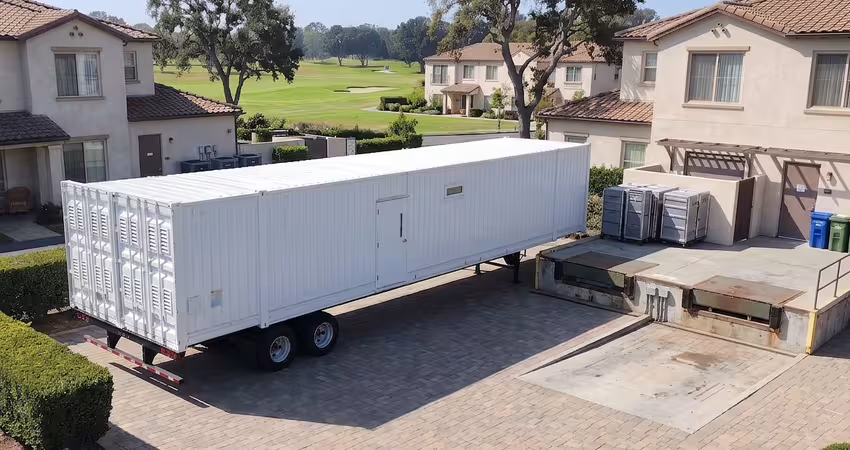
During a kitchen renovation, they continued producing 400–500 meals per day without interrupting resident service. Mobile Culinaire deployed two connected 53-foot trailers configured as an 850-square-foot production environment over five months. The configuration included walk-in cooler and freezer, conveyor dishwasher, a full commercial cooking line, and two trailers joined by an interior door for continuous workflow.
The budget takeaway is the dual-use deployment: Front Porch used the mobile kitchen rental simultaneously to feed the community and train staff on the new menu and equipment being installed in the renovated permanent kitchen. That dual use compressed the post-renovation ramp-up and eliminated the re-learning curve that follows a kitchen handover. The mobile kitchen line item absorbed training and onboarding that would otherwise need separate budget rows and additional post-renovation weeks.
Note: Front Porch's configuration was 850 SF — slightly smaller than the standard 2×53 catalogue specification of 900 SF, reflecting the delivered layout. Always confirm the delivered configuration with the provider; catalogue specs are the baseline.
How to Compare Two Mobile Kitchen Quotes Without Being Fooled by the Sticker
The lowest monthly rate on a quote is rarely the lowest total cost over a senior living renovation. A GM reviewing competing bids needs to compare what is included, what is excluded, and what will become a change order the moment the unit arrives.
What Every Quote Should Itemize
If a vendor quotes a single "all-in" rate without breaking it down, you cannot compare it. At minimum, demand:
- Base rental rate with unit size and equipment schedule attached
- Delivery, installation, and removal fees (separately stated)
- Equipment schedule by name and capacity — not "cooking equipment included"
- Third-party inspection documentation
- Delivery and installation timeline in business days
- Minimum lease term and extension terms
- What is excluded (site prep, utilities, permits, decks/ramps)
Red Flags in a Competitive Bid
- No equipment schedule by name and model
- No mention of HVAC, makeup air, or insulation specs
- No code-compliance documentation or third-party inspection report
- Delivery timeline wider than one week
- Walk-in cooler or freezer listed as "optional" for a 300+ meal/day community
- No clear statement of what falls outside the rental scope
Tip: Request a site visit before signing. A provider who will quote without seeing the site is a provider who will issue change orders after delivery.
Conclusion
The cost of renting a mobile kitchen for a senior living renovation is not a single number — it is a budget structure that a GM or COO can build, defend, and control. The six cost categories, the four drivers, the community's own scope of work, and the comparison framework above give you exactly that.
What separates a predictable renovation budget from one that unravels mid-project is whether the temporary kitchen was purpose-built for the load it has to carry, or whether it was a retrofitted trailer chosen on price alone. For a community serving a highly susceptible population under CMS oversight, that distinction is not a preference. It is a fiduciary decision.
Request a budgetary quote from Mobile Culinaire to get a site-specific cost breakdown for your community's renovation.
Disclaimer
Costs, utility requirements, permitting timelines, and code obligations vary by state, county, and municipality. The categories and regulatory references in this article are general guidance for U.S.-based senior living operators. Before finalising a renovation budget, confirm requirements with the authority having jurisdiction — your local Health Department, Fire Marshal, and Building Department — and with your CMS surveyor if the community participates in Medicare or Medicaid.
People Also Ask (FAQ)
How much does a mobile kitchen cost per month for senior living?
Monthly costs depend on unit size, equipment configuration, and duration. A community producing 150–200 meals per day requires a smaller unit and lower electrical load than one producing 400–500 meals across multiple dietary programs. Request an itemised quote tied to your community's meal volume, renovation timeline, and site conditions rather than relying on a generic range.
What does a mobile kitchen rental include for a senior living renovation?
A professional mobile kitchen rental typically includes the unit (commercial-grade cooking equipment, refrigeration, HVAC, fire suppression, insulation), delivery, installation assistance, project management, and removal. It does not typically include utility connections, utility costs during the lease, decks and ramps, or local permitting.
Is renting a mobile kitchen cheaper than shutting down during renovation?
Shutting down dining is rarely realistic for a licensed senior living community — CMS regulations under 42 CFR §483.60 require facilities to provide nourishing, palatable meals. The relevant comparison is the total cost of a purpose-built mobile kitchen versus the total cost of a cheap retrofit that accumulates hidden expenses over a multi-month deployment.
Who pays for site prep and permits?
The community. Utility connections, utility costs, decks and ramps, and the local permit are the community's responsibility. The rental provider delivers a code-compliant, third-party-inspected unit with documentation to support the permit application — but the permit is filed and held by the community.

%20(1).avif)
Testimonial

"What is standing out when you look at the mobile kitchen operation is the efficiency that we can really achieve because it's built for that."
Tell us about your kitchen needs and request a quote.
.png)
Turnkey mobile kitchen
Proudly made in-house in the USA
Commercial grade kitchen equipment
Code-compliant
Trusted by Industry Leaders