.gif)
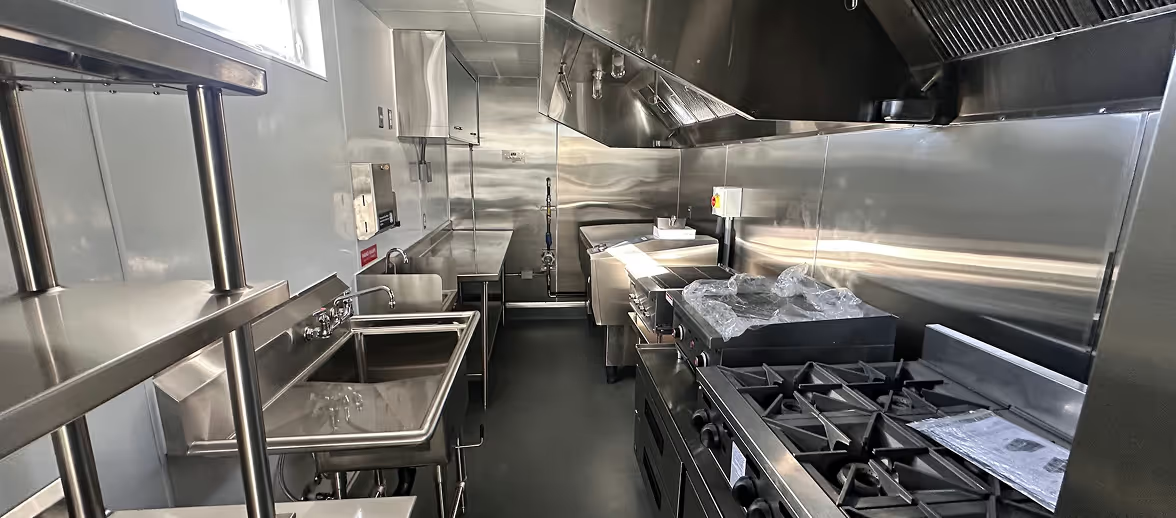
You can spec a mobile kitchen with the same ranges, refrigeration, and ventilation as a permanent facility — and still fail inspection over the 30 inches between the trailer floor and the ground. Mobile kitchen trailer access is the part operators plan last and regret first. Stairs, decks, and ramps aren't accessories; they're regulated structures that determine whether your crew can work safely, whether staff and guests with disabilities can reach the unit, and whether a fire marshal signs off on your egress. This guide breaks down the three access components, the ADA, OSHA, and IBC codes that govern them, and how to plan compliant mobile kitchen access around your specific site.
Why Mobile Kitchen Access Is the Most Overlooked Part of a Deployment
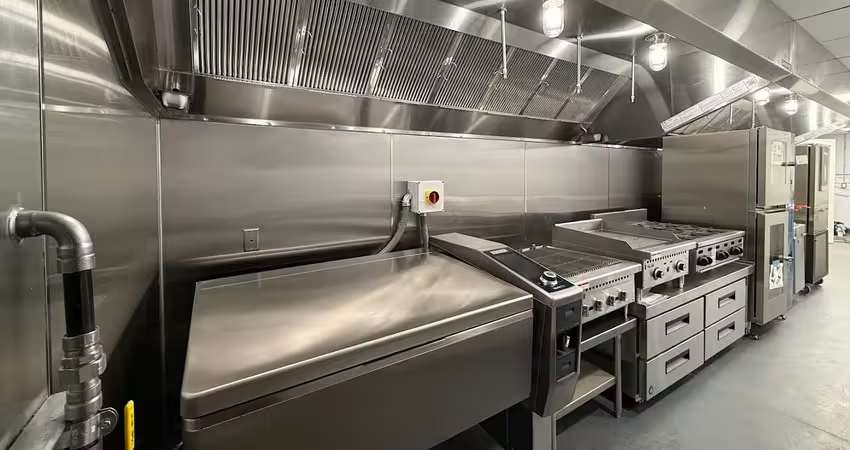
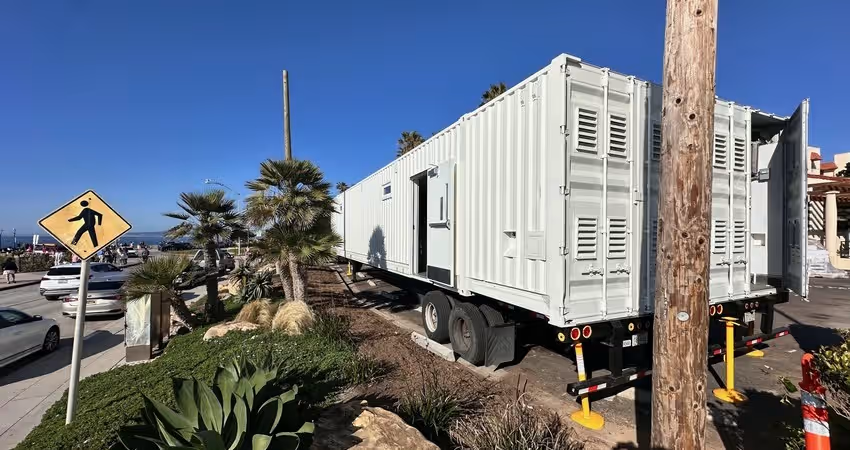
A semi-trailer-based kitchen sits high. The finished floor of a purpose-built mobile kitchen typically lands two to four feet above grade once the unit is leveled. That gap has to be bridged for every person and cart that enters — line cooks during a rush, a dish crew hauling racks, deliveries, and any staff member who uses a mobility device.
Get it wrong and the consequences are immediate:
- Workplace injuries: Slips and falls on improvised steps are among the most common and most preventable commercial kitchen incidents.
- Failed inspections: Officials routinely flag inadequate access and egress before they ever look at your hood system.
- No accessible route: Without a compliant ramp, you may be excluding employees or guests in violation of federal law.
Note: The 2010 ADA Standards apply to temporary facilities, not just permanent ones. As the ADA National Network explains, minimum requirements cover temporary buildings and outdoor circulation paths — so "it's only a rental" is not a defense.

The Three Components of Mobile Kitchen Trailer Access
Access is rarely one structure. A well-planned deployment coordinates stairs, a deck or platform, and a ramp, each doing a different job.
Stairs — the primary crew route
Stairs carry the bulk of foot traffic and must handle staff moving quickly with both hands full. Aluminum modular stair systems dominate because they are light, corrosion-resistant, adjustable to the trailer floor height, and fast to deploy.
Decks and platforms — the connective tissue
A deck or landing platform turns separate access points into a coherent workflow. Mobile kitchens often have several doors — main entry, a dish or prep entrance, a waste route. A connecting deck:
- Provides the level landing every set of stairs and every ramp legally requires at the door.
- Links doorways so staff and carts move between zones without going down to grade and back up.
- Creates safe staging space for deliveries and waste handling outside the production area.
Ramps — accessibility and equipment movement
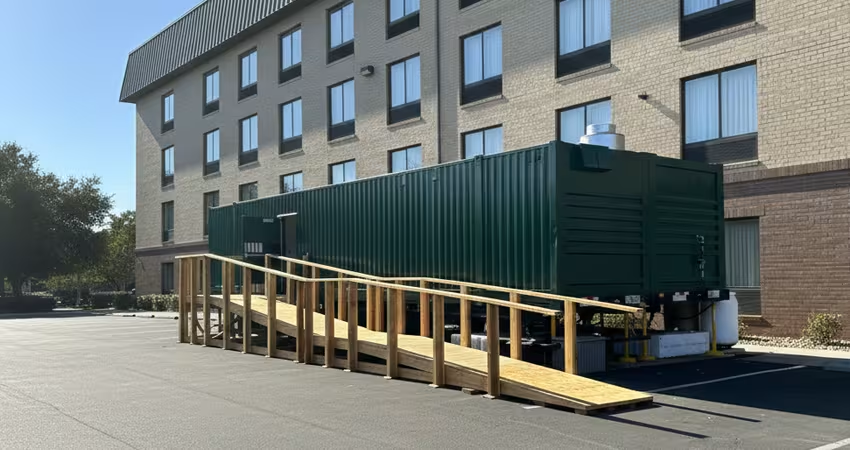
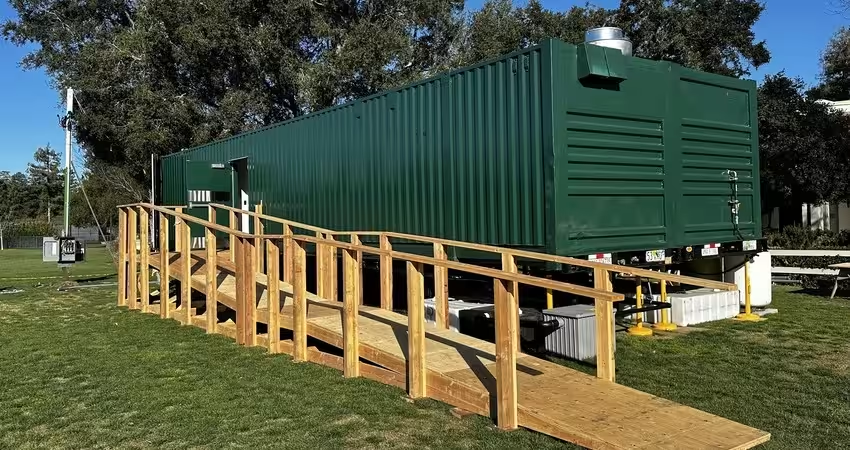
Ramps serve two purposes stairs cannot: they provide the accessible route for anyone who can not use steps, and they let staff roll carts and deliveries straight into the unit — an efficiency and injury-prevention win.
Tip: Don't treat the ramp as a stairs substitute. The U.S. Access Board recommends providing stairs alongside ramps, because a long ramp is harder than steps for some people — including those with limited stamina or cardiac conditions. Pair them.
The Codes That Govern Mobile Kitchen Access
Three rulebooks apply, and they differ because they protect different people. Crew access falls under workplace safety law; any route used by the public or by people with disabilities falls under accessibility and building law.
ADA — the accessible route
The ADA governs the accessible route from the site arrival point to the unit. Per the U.S. Access Board's guide to accessible routes, any portion exceeding a 1:20 slope must be built as a compliant ramp. The ramp requirements are specific: a maximum running slope of 1:12, a clear width of at least 36 inches, level landings top and bottom, and a maximum vertical rise of 30 inches per run before another landing. Handrails are mandatory on both sides whenever the rise exceeds 6 inches.
OSHA — crew safety
Stairs used by your staff are a workplace walking-working surface, governed by OSHA 29 CFR 1910.25. The standard sets stair geometry — minimum 22-inch width, defined riser and tread dimensions, and at least 6 feet 8 inches of vertical clearance — and requires each stair to support a 1,000-pound concentrated load. The full text lives in the eCFR. Handrails are triggered by height and riser count, so multi-step access almost always needs them.
IBC — means of egress
The International Building Code governs egress — the safe exit of everyone inside if something goes wrong. IBC Chapter 10 sets the number, arrangement, and size of exits based on occupancy. The practical implication: your access structures must preserve a clear, unobstructed second way out, and accessible spaces need an accessible means of egress — not just an accessible entrance.
Here's how the core dimensional requirements line up:
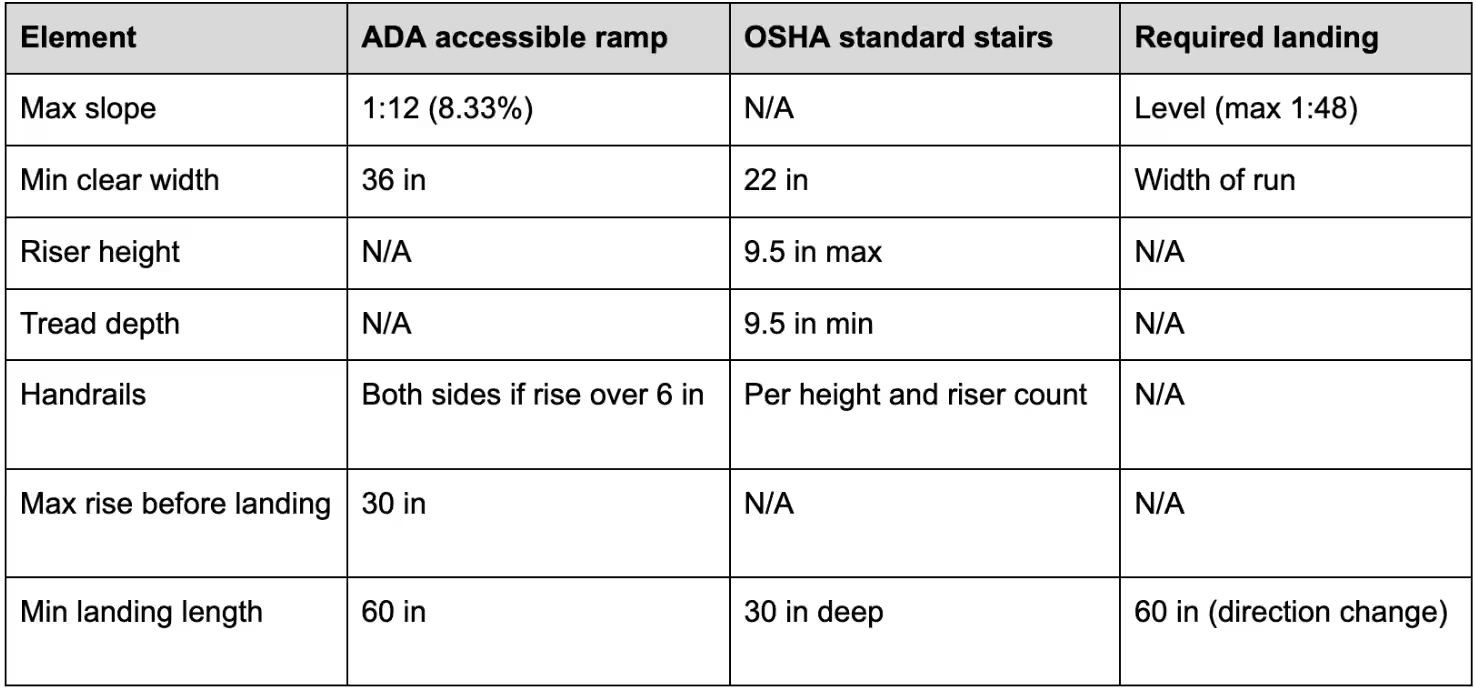
Note: These are federal minimums. State and local building and health codes are frequently stricter, and the authority having jurisdiction makes the final call. Confirm local amendments before committing to a layout.
Planning Mobile Kitchen Access Around Your Site
Code compliance is the floor, not the finish line. The structures have to fit your actual ground.
- Door locations and floor height: Map every door and measure the leveled floor height. This drives the number of stairs, the ramp length (a 30-inch rise at 1:12 needs 30 feet of ramp plus landings), and where the deck goes.
- Grade and surface: Sloped or soft ground changes everything. Ramps need a stable, slip-resistant surface with proper drainage so water doesn't pool on the run or landing.
- Material and weather: Aluminum resists corrosion and sheds water; wood is cheaper but weathers; steel is heavy. Match the material to your climate and rental duration.
- Site logistics: Access structures share the pad with utility connections and fire suppression clearances. Plan them together, not in isolation.
This matters most in markets with high accessibility stakes — senior living and healthcare facilities, where an accessible route isn't optional and the population served depends on it.
Whose Job Is Access — Operator or Provider?
This question decides whether access becomes your problem at 6 a.m. on opening day. With a retrofitted trailer, access is usually left to the operator to improvise; with a turnkey provider, it should be engineered in from the start. Before signing, ask:
- Are compliant stairs, decks, and ramps included and sized to my site, or am I sourcing them?
- Are the access structures part of the third-party inspection?
- Who handles delivery, installation, and removal of the access system?
Plan Access Before the Unit Arrives, Not After
A mobile kitchen is only as good as the path into it. Stairs, decks, and ramps decide whether your team works safely, whether your deployment passes inspection, and whether everyone who needs to reach the unit actually can. The operators who avoid opening-day surprises treat access as engineering, not improvisation.
Mobile Culinaire builds units with compliant, site-matched mobile kitchen access designed in from the start. Explore our mobile kitchen models to see how a turnkey deployment handles stairs, decks, and ramps — or request a quote and we'll plan access around your exact site.
Disclaimer
This article is for general informational purposes only and does not constitute legal, engineering, or code-compliance advice. Code requirements vary by jurisdiction and edition, and the authority having jurisdiction has final say. Verify all access, accessibility, and egress requirements with a qualified professional and your local officials before deployment.
People Also Ask (FAQ)
Does a mobile kitchen trailer ramp need to be ADA compliant?
If the ramp is part of an accessible route used by employees or the public, yes. The 2010 ADA Standards apply to temporary facilities, so a rental doesn't escape the requirement. A compliant ramp needs a maximum 1:12 slope, a 36-inch minimum clear width, level landings top and bottom, and handrails on both sides where the rise exceeds 6 inches. State and local codes may add requirements, so verify with the authority having jurisdiction.
What is the maximum slope for an accessible ramp?
The ADA caps the running slope at 1:12 — one inch of vertical rise for every 12 inches of horizontal run. A single run can rise no more than 30 inches before a level landing is required, and the cross slope can't exceed 1:48. Existing sites with space limitations may use steeper slopes (up to 1:10 for a 6-inch rise), but new installations should target the gentlest slope practical.
Do mobile kitchen trailer stairs require handrails?
For crew stairs, OSHA requires handrails and stair rail systems based on height and riser count. In practice, any multi-step access into a mobile kitchen should have handrails on both sides. Stairs that form part of an accessible means of egress carry additional requirements under the IBC.

%20(1).avif)
Testimonial

"What is standing out when you look at the mobile kitchen operation is the efficiency that we can really achieve because it's built for that."
Tell us about your kitchen needs and request a quote.
.png)
Turnkey mobile kitchen
Proudly made in-house in the USA
Commercial grade kitchen equipment
Code-compliant
Trusted by Industry Leaders