.gif)
When a hotel or resort schedules a kitchen renovation, the question of where to cook during construction becomes a decision with real financial and operational weight. Two options tend to surface in the same conversation: a mobile kitchen parked on-site, or a ghost kitchen — an off-site production facility — supplying food back to the property. Both promise continuity. Both cost real money. But they operate on completely different assumptions about how hospitality food service actually works.
This article breaks down the mobile kitchen vs. ghost kitchen comparison for renovation decision-makers — covering guest experience, menu scope, permitting, food safety, and true cost structure — so F&B directors and general managers can pick the model that fits their property, not the one that sounds cheaper on paper.
Two Different Models, Two Different Assumptions
The terms are used loosely in industry conversation, and the looseness leads to bad decisions.
The Mobile Kitchen Approach
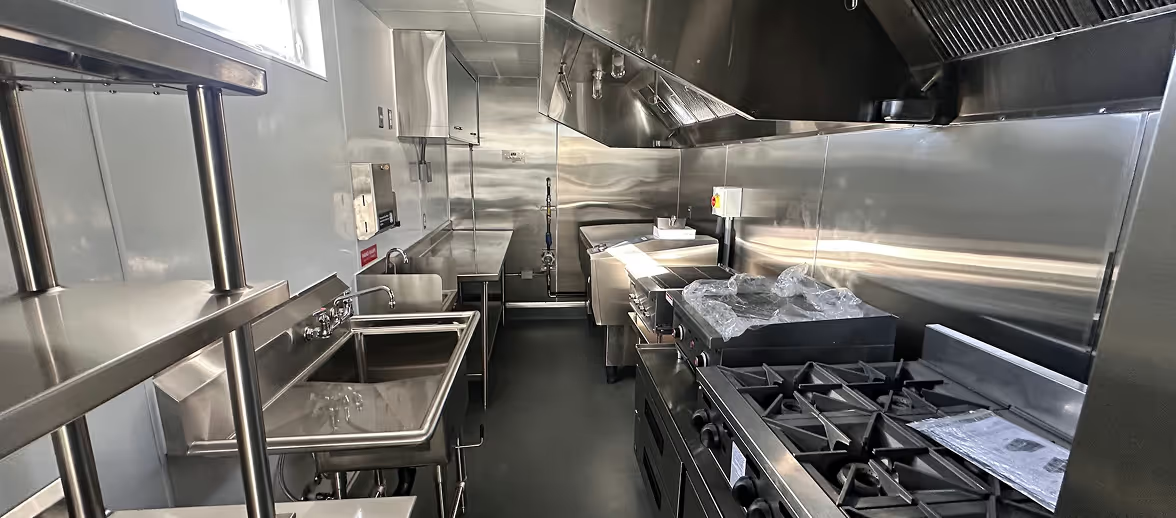
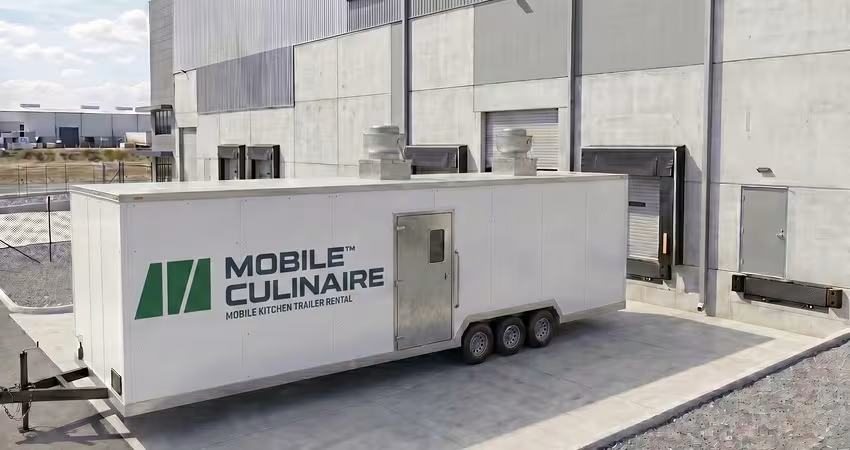
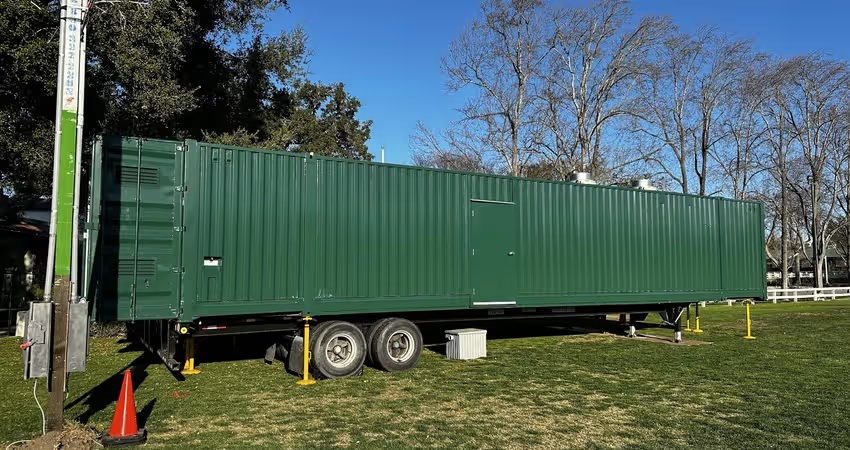
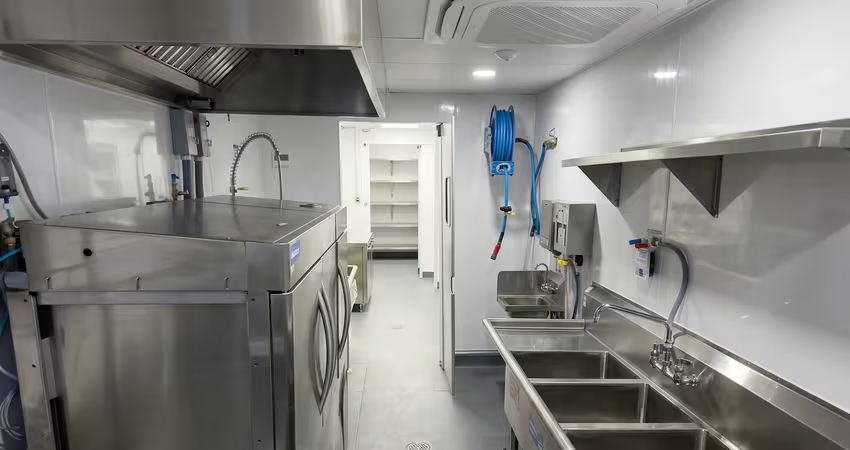
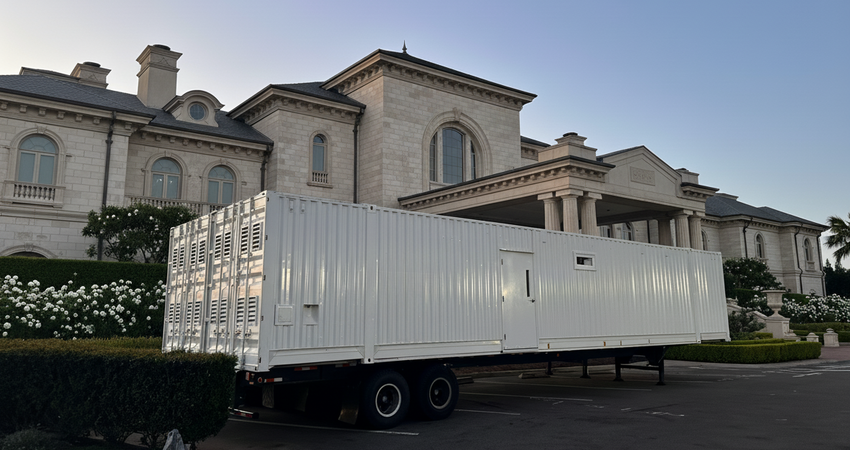
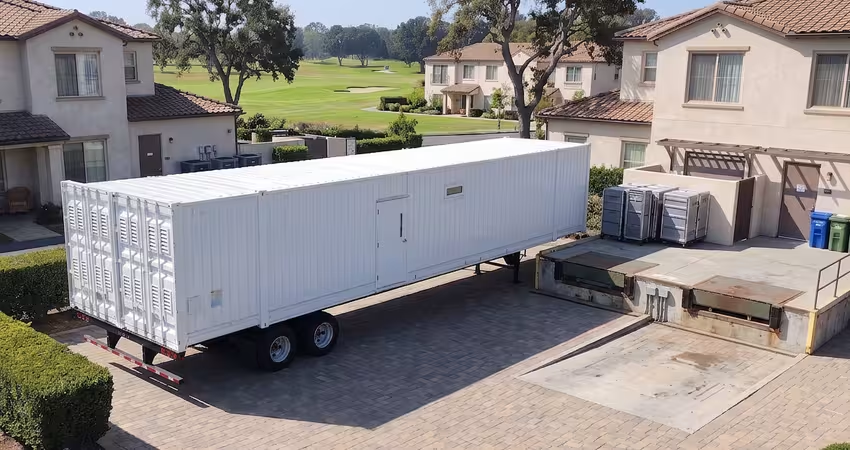
A mobile kitchen is a self-contained, transportable commercial kitchen delivered to the property and operated on-site for the duration of a renovation. Purpose-built hospitality units include commercial-grade cooking equipment, refrigeration, ventilation with fire suppression, plumbing, and climate control — the same core assemblies found in a permanent commercial kitchen. Mobile Culinaire's mobile kitchen rental units are propane-powered and manufactured from purpose-designed modules, which distinguishes them from the model covered in our retrofitted trailer vs. purpose-built comparison.
The defining characteristic is location: chefs cook, plate, and expedite in the same physical location where guests are dining.
The Ghost Kitchen Approach
A ghost kitchen — also called a cloud kitchen, dark kitchen, or virtual kitchen — is a production kitchen located off-site with no dine-in component. The National Restaurant Association tracks the sector as an outgrowth of the delivery economy, and Technomic projects continued expansion of off-premises formats.
For a renovating hotel or resort, "using a ghost kitchen" typically means one of three arrangements:
- Renting shared commissary space at an existing ghost kitchen operator by the hour or month
- Contracting a nearby restaurant or catering commissary to produce food to spec
- Setting up a dedicated off-site production kitchen and transporting food to the property for service
In all three, food is produced away from the guest and then transported — the single fact driving most of the comparison that follows.
Where Mobile Kitchen vs. Ghost Kitchen Diverges in Practice
The decision breaks down along four practical axes: guest experience, menu scope, permitting path, and true cost.
Guest Experience and Service Format
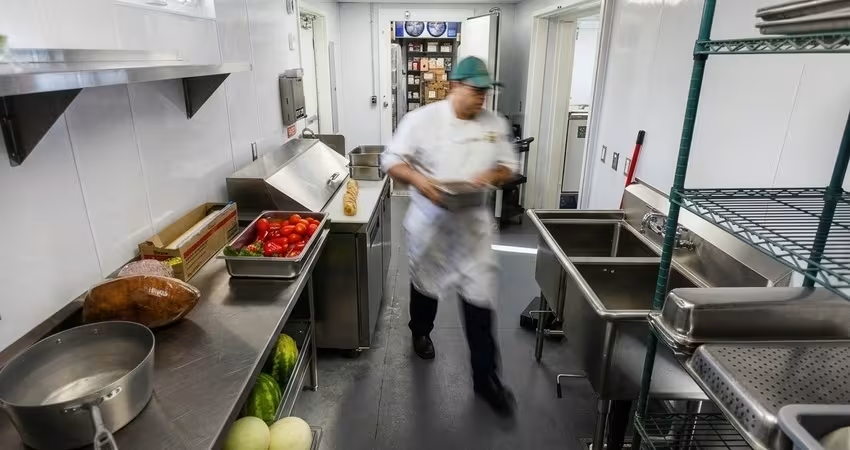
Hospitality food service is about when, how, and at what temperature, not just about getting food to the guest. Room service, banquet events, à la carte, breakfast buffets, and poolside service all have different pacing and hot-hold requirements.
- On-site cooking allows chefs to fire to ticket, plate to service, and adjust in real time. Sear-to-order proteins, breakfast eggs, and made-to-order stations remain viable.
- Off-site production compresses menus toward items that hold after transport — braises, stews, roasted proteins, cold preparations. Anything requiring à la minute cooking either disappears or is finished in a small on-property pantry.
For a full-service hotel or country club with banquet events, this difference often settles the question. The American Hotel & Lodging Association has reported that F&B quality is a primary driver of guest satisfaction and repeat bookings.
Menu Scope and Kitchen Capacity
Mobile kitchens are sized in modules configurable with hot line, cold line, prep, dish, and dry storage zones to match the property's outlet count. Ghost kitchens are typically single-purpose production spaces optimized for volume output of a defined menu.
Permitting and Regulatory Path
A mobile kitchen used on-site during a renovation is generally permitted as a mobile food unit under state and local health codes, with plan review, inspection, and commissary requirements varying by jurisdiction. Ventilation and fire suppression follow NFPA 96 standards for commercial cooking operations, which purpose-built mobile kitchens are engineered to on delivery.
A ghost kitchen arrangement carries its own regulatory footprint:
- The off-site production facility must be a licensed food establishment in its jurisdiction
- Food transport requires compliance with the FDA Food Code time and temperature control provisions for TCS (time/temperature control for safety) foods
- Any on-property final assembly area may still require permitting as a food service establishment or satellite operation
- Cross-jurisdictional transport can introduce additional inspection points
Note: Neither model is inherently "easier" to permit. Both require plan review, documentation, and inspection. The difference is what is being permitted and where.
True Cost Structure Beyond the Monthly Rate
Sticker prices do not map cleanly. A monthly ghost kitchen rate looks lower on paper than a mobile kitchen rental — until the full logistics stack is added. Consider what actually shows up on the invoice.
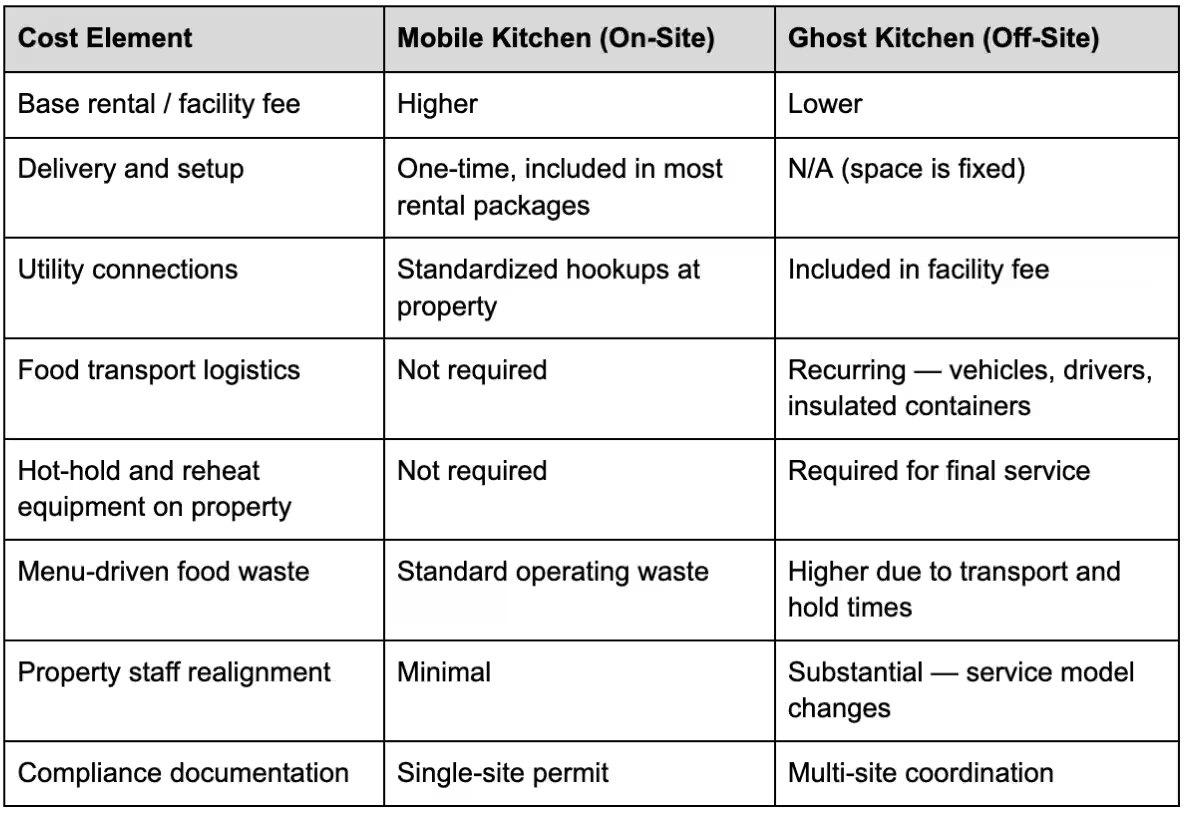
This mirrors what we have documented in the hidden costs of a kitchen renovation shutdown and in how kitchen downtime affects revenue. For fuller ROI framing, our resource on mobile kitchen ROI for hospitality operators breaks the math down by segment.
Tip: When requesting quotes for either option, ask for a total cost of continuity across the full renovation window — not a monthly rate in isolation. Transport, hot-hold equipment, additional labor, and permitting fees are where budgets quietly break.
Food Safety and Temperature Control
Food safety is where the two models diverge most sharply from a regulatory and operational standpoint. On-site cooking eliminates most transport-related risk. Off-site production introduces it as a permanent operating variable.
HACCP Realities of Off-Site Production
Any ghost kitchen arrangement transporting hot food to a property requires a functional HACCP plan for the transport step. The Centers for Disease Control and Prevention identifies improper holding temperatures as a leading contributor to foodborne illness outbreaks in commercial food service. For hot TCS foods, the FDA Food Code requires holding at 135°F or above; cold TCS foods at 41°F or below.
Sustaining those temperatures across delivery vehicle, loading dock, service corridor, and final hot-hold cabinet is operationally solvable — but not free, and every additional touchpoint is an audit surface.
FDA Food Code Considerations for Hot-Holding and Transport
The Food Code allows time as a public health control in limited circumstances, but time-based control at scale across a multi-month renovation is a demanding compliance posture. On-site cooking keeps food inside a single permitted operation from receipt to service.
When Each Model Fits
Mobile kitchen vs. ghost kitchen fit is scenario-dependent — ghost kitchens are not universally the wrong choice.
Where a Ghost Kitchen Can Work
- Delivery-only concepts repositioning around off-premises revenue during the renovation window
- Very short renovations (two to four weeks) with a limited or delivery-forward menu
- Small properties with modest F&B volume and no banquet or event obligations
- Properties with adjacent capacity — a sister property nearby that can absorb production without service degradation
Where a Mobile Kitchen Is the Clearer Fit
Most hospitality operators fall into the mobile kitchen category:
- Full-service hotels with breakfast, lunch, dinner, room service, and banquet operations
- Resorts with poolside and multiple restaurant outlets
- Country clubs and private clubs where member experience is the primary product — our resource on private club renovation continuity covers this segment in detail
- Senior living communities with mandated meal service and dietary compliance
- Any property whose renovation extends beyond four to six weeks
The commercial kitchen renovation timeline resource provides context on why extended windows dominate the renovation reality.
A Decision Framework for F&B Directors and GMs
Before committing to either model, work through five questions with the operations team.
- What percentage of our current menu can be executed after off-site production and transport? If under 60 percent, on-site cooking is the safer path.
- Do we have banquet, event, or outlet-based service obligations during the renovation window? If yes, ghost kitchen fit narrows sharply.
- What is the renovation duration? Short (under four weeks) may tolerate compressed service; longer windows compound every transport inefficiency.
- What is our total cost of continuity per week — not per month? Include transport, hot-hold equipment, permitting, and staff realignment.
- What guest experience standard have we set, and what can we modify? Some properties can absorb menu compression; others cannot.
Tip: Run this framework early — ideally during pre-construction planning, not after demolition begins. Late-stage decisions typically default to whichever option is available on short notice, and that default is rarely the best one.
Trade coverage from Hotel Business and research from the Cornell Center for Hospitality Research reinforce this insight.
Choosing the Model That Protects Continuity
The mobile kitchen vs. ghost kitchen decision is ultimately about what a property is trying to protect through a renovation: menu breadth, service format, guest experience, and staff continuity. Ghost kitchens work in narrow scenarios — mostly short, delivery-forward, or limited-menu contexts. For most hotels, resorts, and clubs running full-service operations through a mid- to long-term renovation, an on-site mobile kitchen preserves more of the operating model than any off-site arrangement can replicate.
The right choice depends on property size, service format, duration, and regulatory context. For a case-specific comparison, our team is available for a scoping conversation, and recent Mobile Culinaire projects show how on-site continuity has worked across renovations of varying scope.
Disclaimer
This guide is informational and reflects general regulatory and operational conditions as understood as of mid-2026. Permit requirements, food safety regulations, and cost structures vary by jurisdiction and property. Confirm current requirements with the applicable state and local health authorities, fire authorities, and licensed food service consultants before scoping any project.
People Also Ask (FAQ)
What is the difference between a mobile kitchen and a ghost kitchen?
A mobile kitchen is a fully equipped commercial kitchen delivered to the property and operated on-site during a renovation, allowing full-service cooking, plating, and service. A ghost kitchen is an off-site production facility with no dine-in service, feeding food back to the property or into delivery channels. The mobile kitchen preserves the property's normal service model; the ghost kitchen fundamentally changes it.
Can a ghost kitchen replace an on-site kitchen during a hotel renovation?
For a full-service hotel, resort, or country club with banquet events, breakfast operations, and multiple outlets, a ghost kitchen typically cannot replicate the service model without visible degradation. Menu compression, hold-time constraints, and transport logistics make it functionally unsuitable for made-to-order and event-driven service. A mobile kitchen preserves the on-property cooking model and is the closer functional match.
How does the cost of a mobile kitchen compare to a ghost kitchen for a renovation?
Mobile kitchen monthly rental rates for hospitality-grade, purpose-built units are generally higher than a ghost kitchen facility fee in isolation. Once transport, on-property hot-hold equipment, labor, and food waste are added to the ghost kitchen side, total cost of continuity often converges — and for full-service properties with multi-outlet operations, the mobile kitchen typically comes out lower on a per-cover basis over the full renovation window.
Is a ghost kitchen legal for hotel food service in the United States?
Yes, provided the off-site production facility is a licensed food establishment, food transport complies with FDA Food Code temperature control requirements, and any on-property assembly or service area meets local health department requirements. The regulatory path is workable but adds documentation and audit surface compared to a single-site permitted mobile kitchen operation.

%20(1).avif)
Testimonial
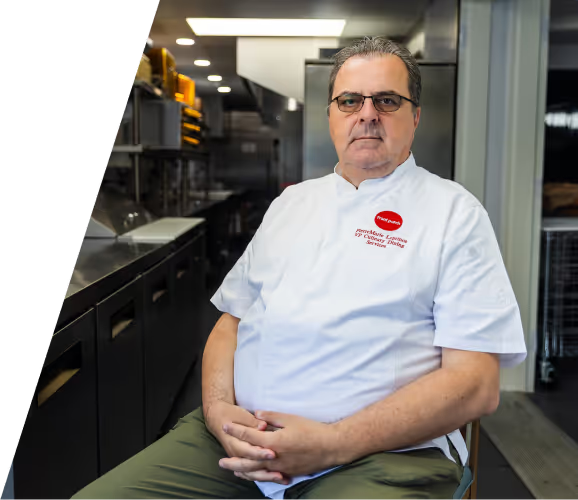
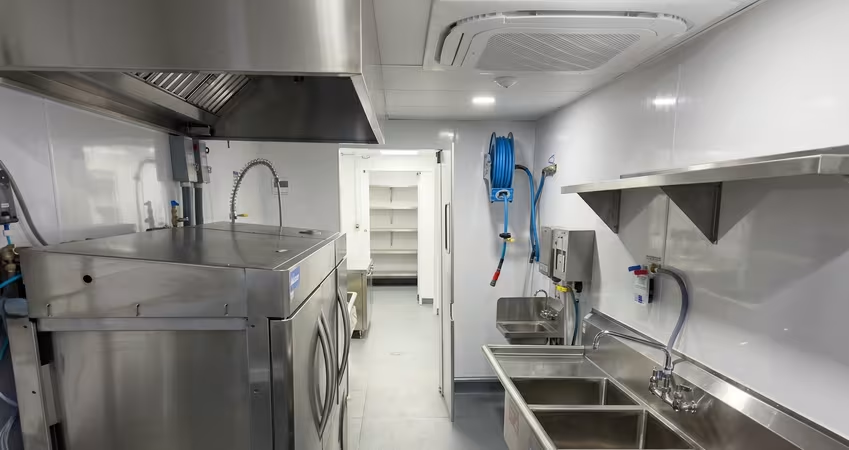
"What is standing out when you look at the mobile kitchen operation is the efficiency that we can really achieve because it's built for that."
Tell us about your kitchen needs and request a quote.
.png)
Turnkey mobile kitchen
Proudly made in-house in the USA
Commercial grade kitchen equipment
Code-compliant
Trusted by Industry Leaders